

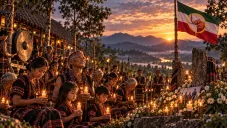
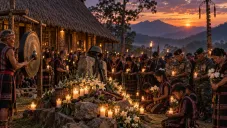
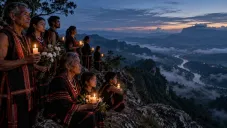
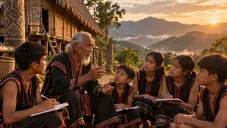
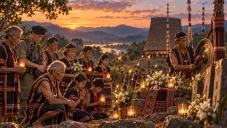




Protestant missionaries came to the highlands in 1929, and within forty years a large part of the Dega had become Christian. They also brought the first hospitals many of our villages had ever seen. During the war the mission compounds and the clinics were on the same ground as everything else, and some of the people who ran them died there.
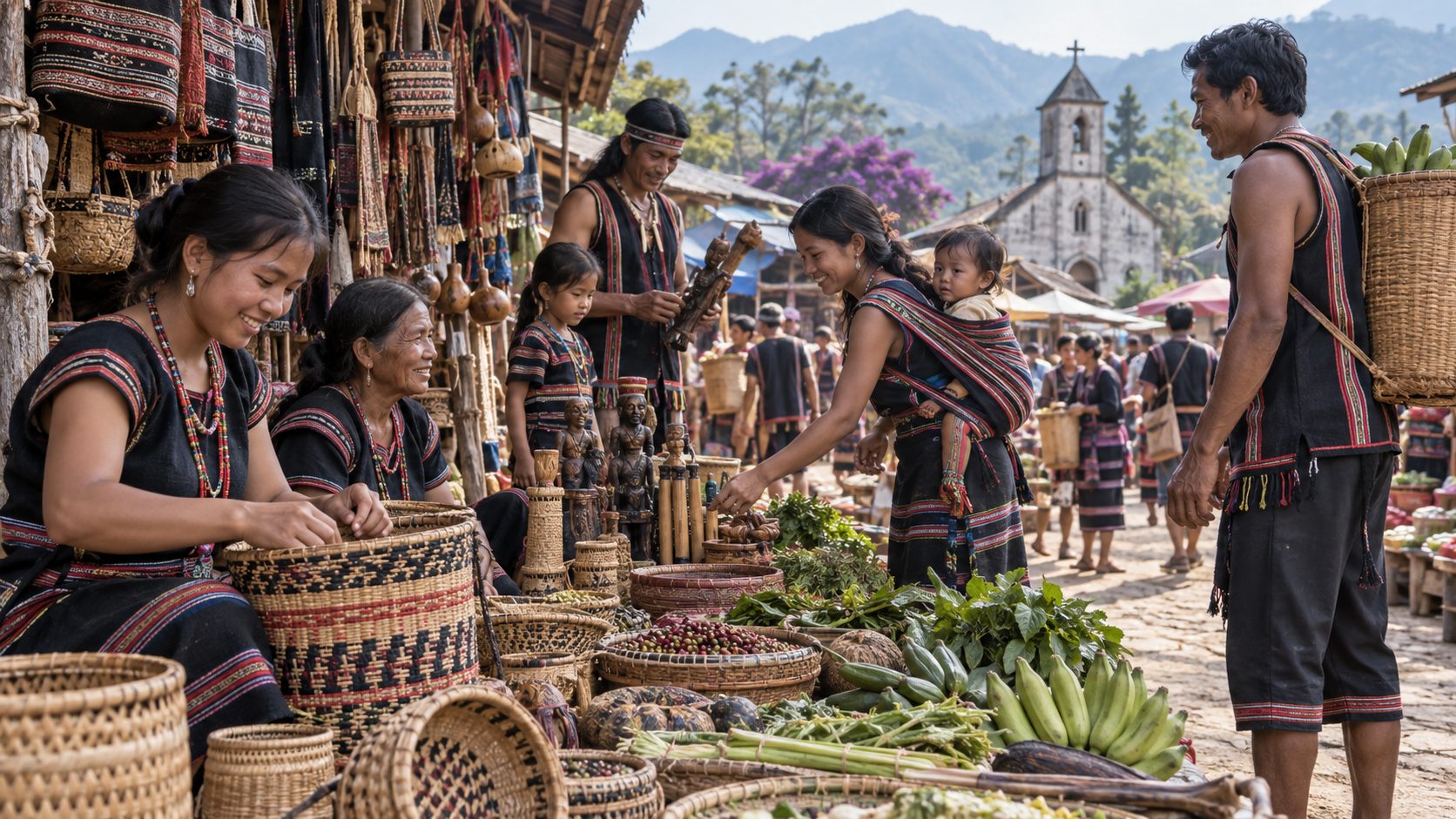
The Protestant missions
The Catholic mission at Kon Tum was the first to reach our country, in 1851 (see The Kon Tum mission). The Protestant Christian and Missionary Alliance followed in 1929, working first around Dalat and among the Koho, and then at Ban Me Thuot among the Rhade. Wycliffe and the Summer Institute of Linguistics followed after the Second World War, putting highland languages into writing so that the Bible could be translated into them. By the 1960s Protestant churches existed in villages across the plateau; according to Christianity Today in 1968, Protestant church membership in the whole of South Vietnam had grown from about 14,000 in 1948 to about 44,000 in 1967, and much of that growth was highland.
That is the origin of the church that the Socialist Republic would later close and call an “evil way.” See The church they closed.
The leprosarium at Ban Me Thuot
Among the Alliance’s works was a leprosarium outside Ban Me Thuot, which by the 1960s could care for up to about two hundred inpatients and some two thousand outpatients. In 1962 the Viet Cong came to it and took away three Americans: Dr. Ardel Vietti, a surgeon; the Reverend Archie Mitchell; and Daniel Gerber, a Mennonite volunteer. None of the three was ever seen again.
Tet, 1968
In the first hours of the Tet Offensive, on the night of January 30–31, 1968, fighting reached the mission compound at Ban Me Thuot. Six Americans were killed: the nurse Ruth Wilting, who had worked in Vietnam since 1952; the Reverend Robert Ziemer; the Reverend Edward Thompson and his wife Ruth; and Leon Griswold, who was visiting, with his daughter Carolyn, a missionary, who died later of her wounds. Marie Ziemer was wounded. The Ziemer and Thompson children had left for school in Malaysia three days before.
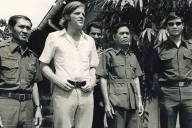
Two more were taken prisoner: the nurse Betty Olsen and Henry Blood, a Wycliffe translator, together with an American aid worker, Michael Benge, who was captured nearby. Olsen and Blood did not come home; Benge was released in 1973 and spent the rest of his life speaking for the Montagnards.
Minh Quy hospital, Kontum
In 1959 Dr. Patricia Smith, an American Catholic doctor from Seattle, opened a small hospital for highlanders near Kontum. Minh Quy moved into the town in 1968. By one account of its history, in the early 1970s it had about a hundred inpatients, treated 150 to 200 outpatients a day, and employed about a hundred local staff, most of them highlanders she had trained, with seven Catholic sisters. In May 1972, with Kontum under siege, she evacuated half the hospital to Pleiku. It returned in late 1973 and closed in April 1975. She adopted Montagnard children, and to many highland families in Kontum her name was simply the name of the hospital.
Why this belongs in our library
The missions were outsiders, with their own purposes, and some of what they did to our religious life is argued about among Dega to this day. But the people named on this page lived in our villages, treated our sick when nobody else would, and in several cases died there. Our history is not complete without them, and neither is theirs without us.
See also: Tet 1968 in the highlands, Highland women in the war.
Further reading
- Christianity Today, “Viet Nam: The Vulnerable Ones,” March 1968, and “Six Missionaries Martyred” (same issue) — the Tet 1968 deaths and the 1962 kidnapping
- TIME, “Missions: Ordeal in Viet Nam,” March 8, 1968
- James and Marti Hefley, No Time for Tombstones: Life and Death in the Vietnamese Jungle (Tyndale, 1974) — the missionaries killed and captured in 1968
- TIME, “Doctors: Healing the Montagnards” — Dr. Pat Smith and Minh Quy
- Hilary Smith, Lighting Candles: Hospital Memories of Vietnam’s Montagnards (Northlight Studio Press, 1988) — a nurse’s memoir of a highland hospital
- Homer E. Dowdy, The Bamboo Cross: Christian Witness in the Jungles of Viet Nam (Harper & Row, 1964) — the Protestant mission among the Koho
- Paul Seitz, Men of Dignity: The Montagnards of South Vietnam (1975), translated from Des hommes debout — by the Catholic bishop of Kon Tum
Compiled September 2026. We would welcome accounts from Dega families who worked at the leprosarium or at Minh Quy, and photographs of either.