










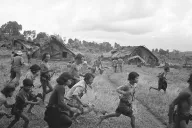



































In the early hours of January 30, 1968, the Tet Offensive reached the highland towns of Ban Me Thuot, Kontum and Pleiku; Dalat was attacked on February 1. For a week or more the fighting was in the streets. The towns were our market towns and provincial capitals, and the villages around them carried the war before, during and after.

The towns
| Town | Fighting | What the record says |
|---|---|---|
| Ban Me Thuot | January 30–February 6 | Attacked by three North Vietnamese battalions and local forces. A CIA situation report of February 2: “all parts of the town have been badly damaged from mortar fire and B-40 rockets.” By March most of the provincial government had stopped working. |
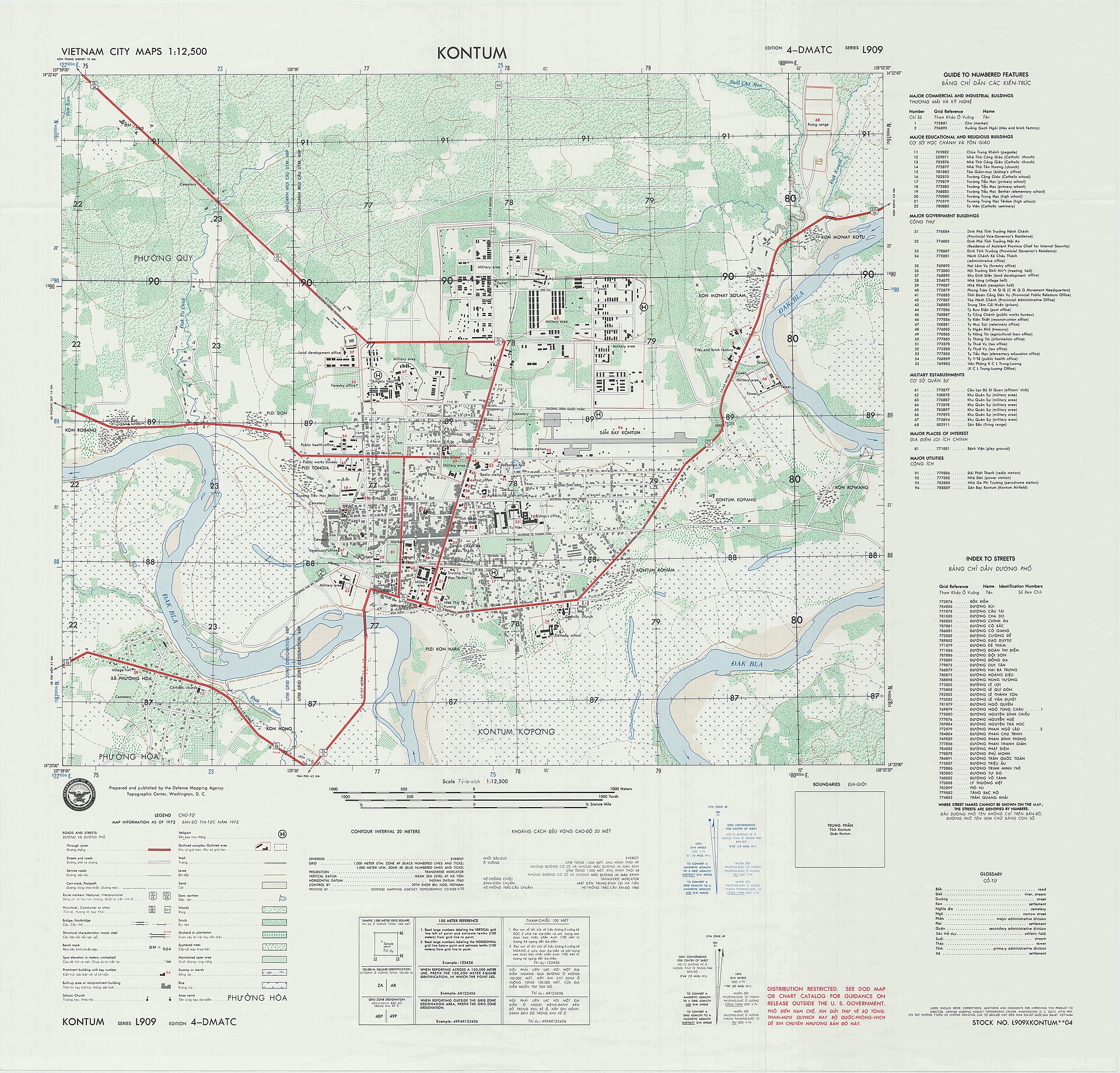
| Kontum | From January 30 | Attacked early on January 30 by three battalions of the 24th North Vietnamese Regiment with a local-force and a sapper battalion; the CIA reported that they had apparently occupied several government installations. US 4th Infantry Division troops fought them in the city, and on February 2 the CIA reported that control “remained in doubt.” |
| Pleiku | January 30–February 4 | A rocket barrage on the airfield, then an assault into the town. On February 7–8 the Montagnard Training Center was mortared. |
| Dalat | February 1–11 | Attacks on the railway station, two US billets, a South Vietnamese Army outpost and the sector headquarters. |
The enemy dead the US command reported for the four towns total nearly 2,800. It did not break down civilian losses by town. For the whole of II Corps, which included the coastal provinces as well as the highlands, its report counted 814 civilians killed, 2,919 wounded, 97,101 made homeless and more than 10,000 homes destroyed.
Highlanders in the fighting
Highland soldiers of the Civilian Irregular Defense Group, recruited and trained in the Special Forces camps, were brought into the towns: the US field report records that at Kontum two CIDG companies and Montagnard scout companies met the first assault, and that at Dalat on February 4 three CIDG companies reinforced the hard-pressed regional forces. Across South Vietnam there were 108 highland (“Trường Sơn”) Revolutionary Development teams, some 6,770 men, in January 1968 (see Mike Force and SOG and The American years).
In the villages
A CIA field report from Darlac, written in March 1968 from information gathered in the weeks before Tet, records what the Viet Cong asked of the villages: highland men would “have to carry food and ammunition for the Army of Liberation when the time came and also to act as guides”; villagers were told to save rice for the soldiers and eat vegetables instead; and a man could leave the village only alone, his family staying behind “in bond so to speak.” They had, the report says, been promised victory every year since 1964. After Tet a US observer reported that people in Ban Me Thuot who had spoken for the government before had “adopted a neutral attitude,” and that fear pervaded the town.
Also in the same weeks
Eight weeks before Tet, on December 5, 1967, the village of Đắk Sơn was burned with flamethrowers (see Đắk Sơn, 1967). At Ban Me Thuot the fighting also reached the mission compound (see Missions and doctors).
What is missing
No source we have found counts the highland civilians killed or made homeless in the Tet battles, as distinct from the lowland provinces. The numbers above come from American military and intelligence reports, which counted what their authors needed to count. If your family lived in or near one of these towns in 1968, we would like to hear what happened.
See also: Highland women in the war.
Sources
- I Field Force Vietnam, Operational Report – Lessons Learned for the period ending April 30, 1968 (DTIC AD0392589)
- CIA: The Situation in South Vietnam, January 30, 1968; No. 3, January 30, 1968; No. 11, February 3, 1968; II Corps situation report, February 2, 1968; Effect of the VC Tet Offensive on the GVN Pacification Program, February 7, 1968; Pacification in the Wake of the Tet Offensive, March 19, 1968
- CIA field report, Montagnard Disenchantment with the Viet Cong in Darlac Province, March 13, 1968
Compiled September 2026. Enemy casualty figures are those claimed by the US command at the time and are given only as the record states them.