










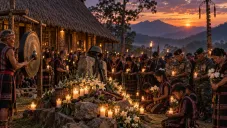
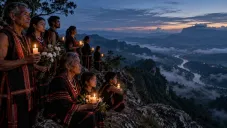















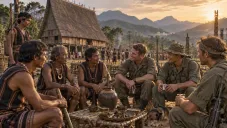
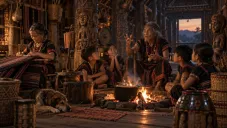




Among the Jarai and the Bahnar a death is not finished at the funeral. The dead are given a house of their own, fenced with carved wooden figures, and fed there for years. Only when the family can afford the feast that abandons the grave is the dead person truly released — and the living set free to go on.
The house of the dead
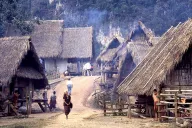
When a Jarai person dies, the family builds over the grave a small house — the pơsat — and puts in it the dead person’s belongings: jars, baskets, tools, cloth. It is the dead person’s household in the other world, and the family bring food to it. Around it runs a fence of wooden posts, and on the posts stand carved figures: mourners squatting with their heads in their hands, men and women, birds, drums and, in recent decades, figures taken from modern life. The figures keep the dead company and guard the house.
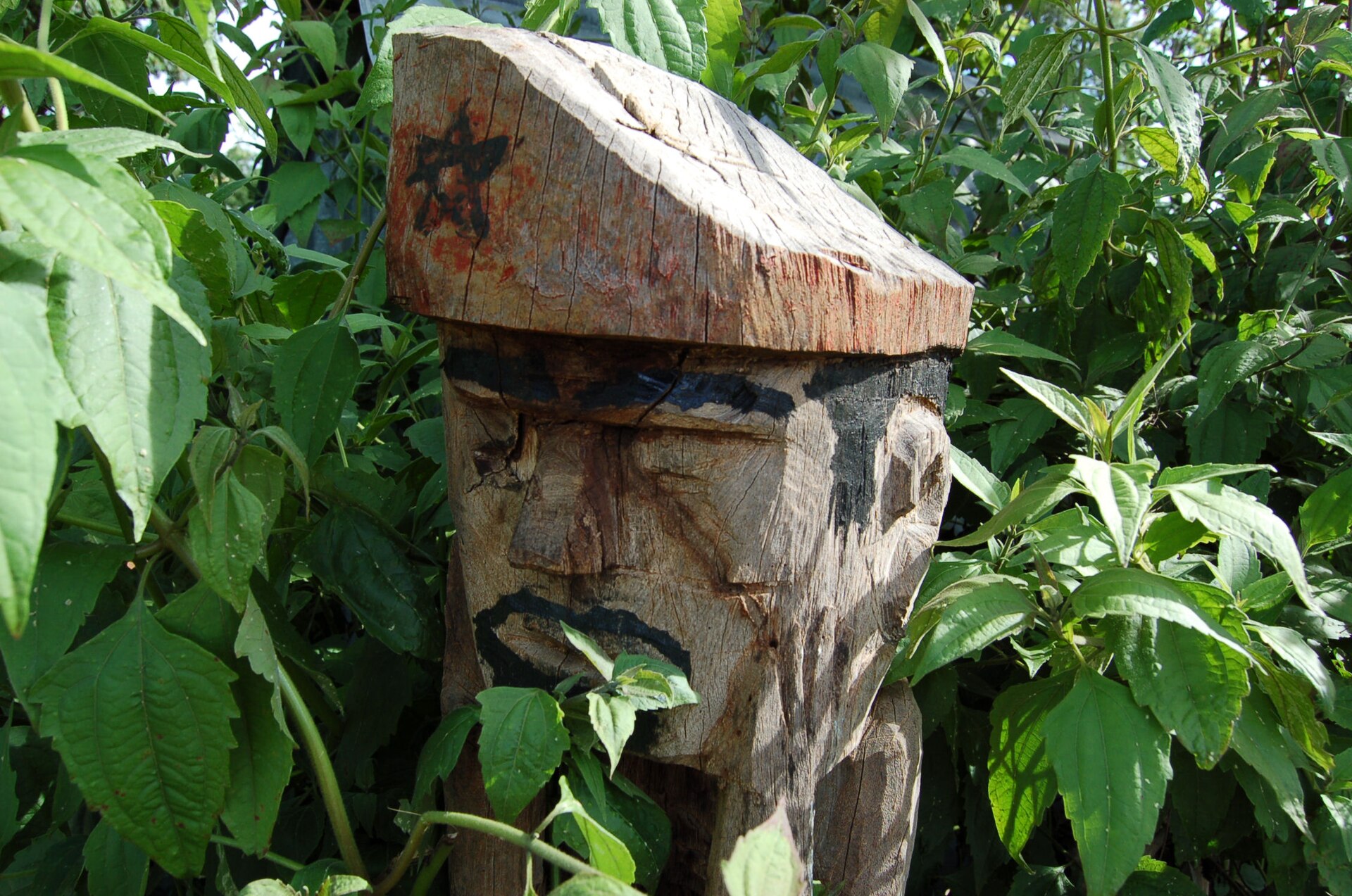

The Bahnar and several neighboring peoples build tomb houses in the same tradition. The carvings are the best-known Dega art outside the highlands, and they are the part of it most often taken away: they are in museum collections abroad, and some are sold.
The abandonment of the grave
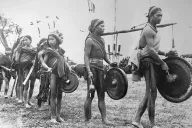
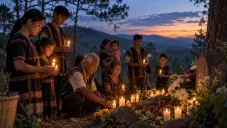
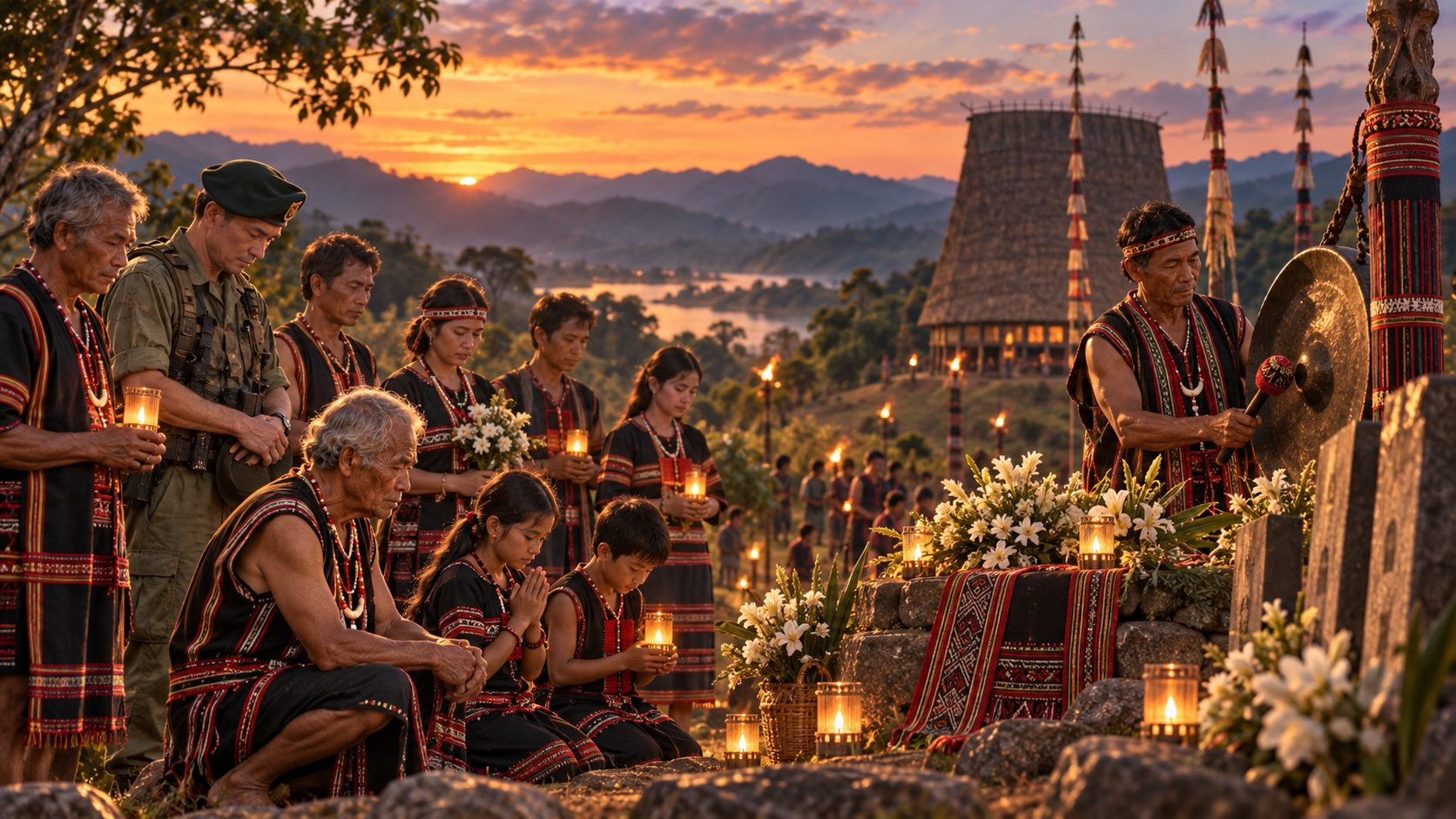
Years later — when the family has gathered the rice, the jars and the animals it needs — they hold the pơthi, the ceremony of abandoning the grave. Buffalo are sacrificed, the gongs are played, the village eats and drinks for days. After it the tomb house is left to fall into the forest; the dead person has gone on, and no longer needs to be fed. The widow or widower is free to remarry. It is the most important feast in a Jarai life, and it belongs to the dead.
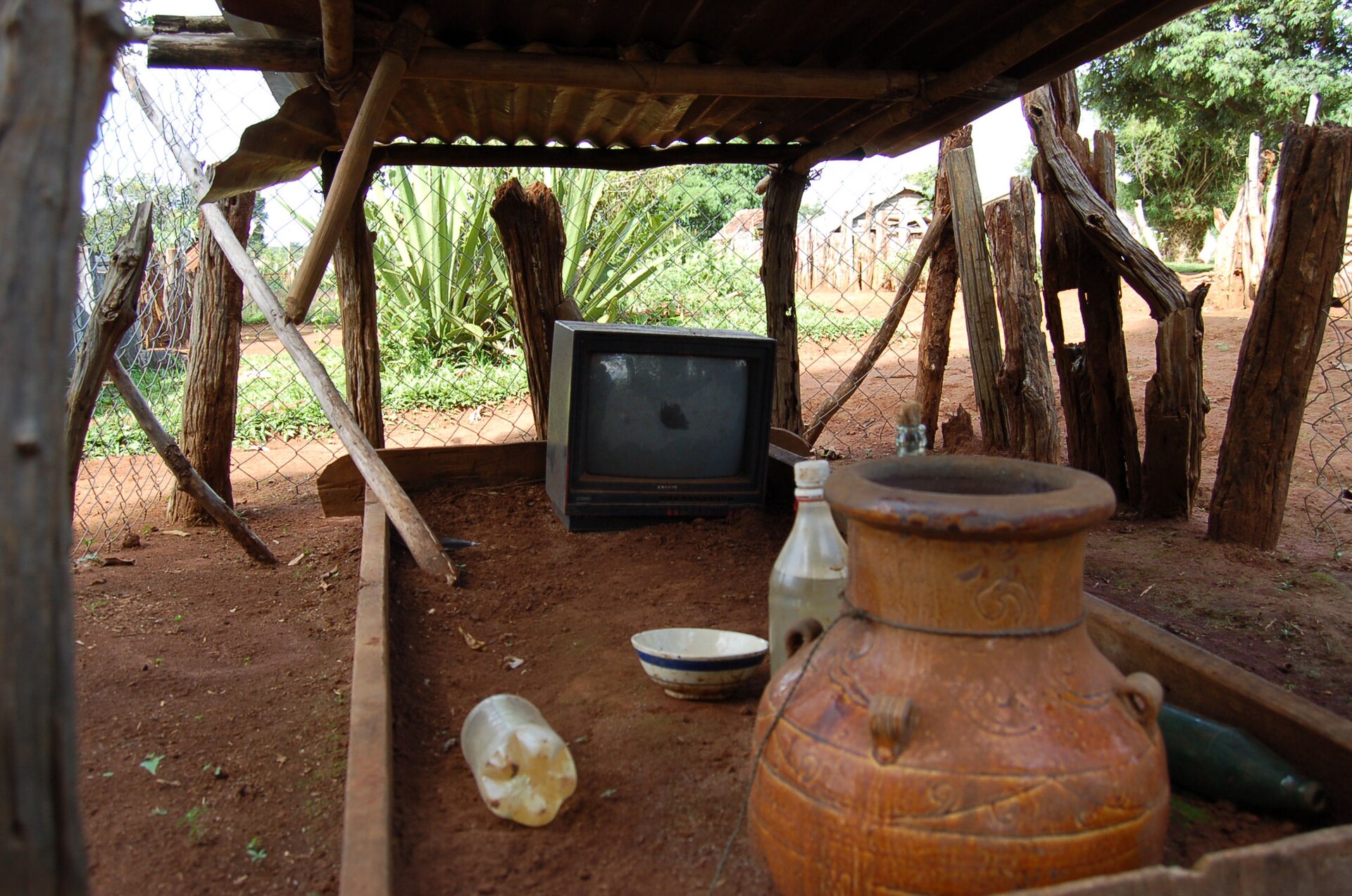

The cost has always been high, and it is part of what outsiders have condemned. French administrators, missionaries and the Vietnamese state have all at different times called the buffalo sacrifices wasteful. In Ratanakiri, across the border in Cambodia, Jarai families now often offer motorcycles and other goods where buffalo once were given.
What is happening to it
A tomb house needs a village that stays where its dead are, forest to carve from, and families that still hold to the old religion. All three have been under pressure since 1975: resettlement, the loss of forest to coffee and rubber, and conversion. Researchers who have compared new carvings with old ones find the tradition changing fast — sometimes carried on, sometimes performed for visitors, and in many villages simply ended. Where the carvings survive they are now often made to be sold.
See also: Jars, rice wine and the buffalo feast.
Further reading
- Jacques Dournes, Forêt, femme, folie: une traversée de l’imaginaire Jörai (Aubier Montaigne, 1978) — the Jarai world of the dead, by the ethnologist who knew it best
- Hô Nhân T. T., “Wooden Funeral Sculptures of the Jrai and Bahnar in the Vietnam Central Highlands: Conservation or Destruction?” in Nguyen and Hens (eds), Springer, 2022
- “The Tomb and the Abandonment of the Tomb,” Mortality 29:4 (2024), doi 10.1080/13576275.2023.2230913
- “Notes sur les cérémonies funéraires des Jarai et des Bahnar,” Arts Asiatiques 42 (1991)
- Jarai people — summary of the tomb house and the pơthi
Compiled September 2026. We have not been able to confirm the usual interval between burial and abandonment, or the number of buffalo required, from a source we trust; both vary by village and by family. If your family has held a pơthi, we would like to record how.