

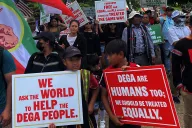

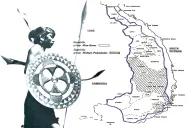





























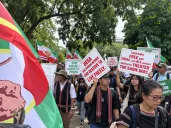













A Rhade man from Dak Lak who fled to Thailand in 2018, was recognized as a refugee by the United Nations, founded an organization that documents what happens in the highlands, was sentenced to ten years for terrorism by a Vietnamese court he never appeared before, and on November 28, 2025, was handed back to Vietnam by Thailand. His case is the clearest single illustration of what it now means to be a Dega who speaks.
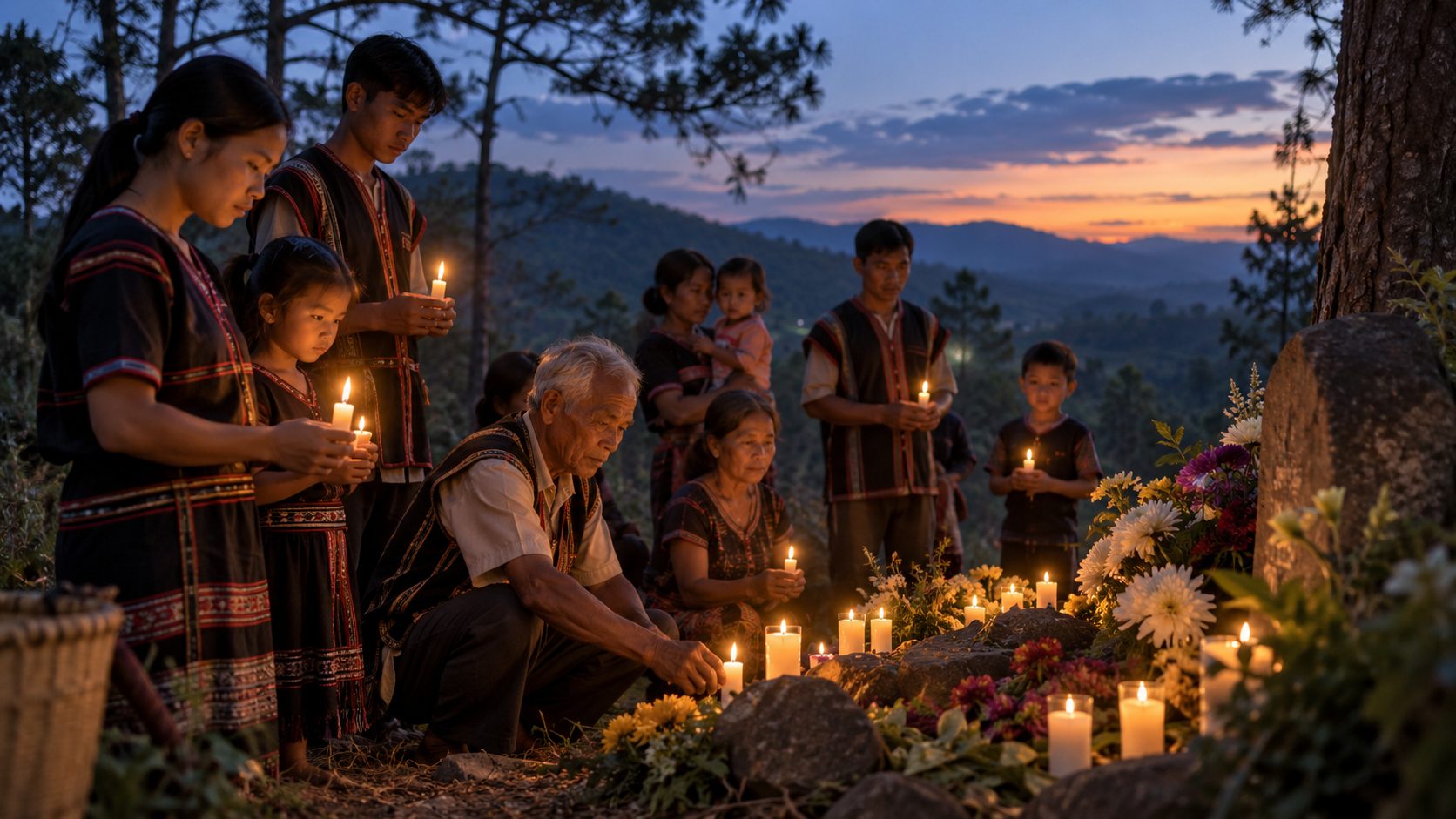
Before he left
According to Human Rights Watch, Y Quynh Buondap was held for five months in 2012 without access to a lawyer and publicly denounced in 2013. In 2016 he attended an international conference on religious freedom; the pressure on him afterward was the reason he left Vietnam for Thailand in 2018. The United Nations refugee agency recognized him as a refugee.
Montagnards Stand for Justice
In Bangkok he co-founded Montagnards Stand for Justice, which collects and publishes evidence of religious persecution and rights abuses in the Central Highlands and brings it to the United Nations, foreign governments and journalists. Its members are Dega refugees and asylum seekers. Its methods are documentary: testimony, photographs, lists of names, submissions to UN bodies.
The case, in order
- June 11, 2023 — Attacks on two commune headquarters in Cư Kuin, Dak Lak. See Cư Kuin, 2023.
- January 20, 2024 — Convicted in absentia, with ninety-nine others, at a mobile court; sentenced to ten years for terrorism.
- March 6, 2024 — Vietnam designates Montagnards Stand for Justice a terrorist organization.
- June 11, 2024 — Arrested in Bangkok on Vietnam’s extradition request; held at Bangkok Remand Prison.
- July 4, 2024 — UN special rapporteurs and working groups warn Thailand of a risk of torture and enforced disappearance if he is returned.
- August 16–30, 2024 — The International Commission of Jurists files a legal brief on non-refoulement with the Bangkok Criminal Court; hearings follow.
- September 30, 2024 — The Bangkok Criminal Court grants the extradition request.
- December 25, 2024 — Vietnamese officials visit his wife’s family in Dak Lak with a letter urging him to surrender. His father’s answer, as reported: the family will not let him return.
- February 2025 — Thai police raid a funeral service near Bangkok organized by his wife; sixty-eight Montagnards are detained. See Asylum today.
- July 24, 2025 — Ten UN mandates write to Vietnam about his case and those of other Montagnard defenders.
- November 26, 2025 — The Thai Court of Appeal upholds the extradition.
- November 28, 2025 — He is handed to Vietnam.
- December 2025 — UN experts say the transfer violated non-refoulement and that his whereabouts are unknown. FIDH notes the Thai court relied on Vietnam’s diplomatic assurances. Seventeen organizations sign a joint statement through Freedom House.
- February 2026 — He is named at the International Religious Freedom Summit in Washington. The Raoul Wallenberg Centre for Human Rights reports that he is imprisoned in Vietnam, serving the ten-year sentence.
What his case shows
Every step in this sequence used an ordinary legal instrument: a criminal trial, a terrorism designation, an extradition request, an appeal. None of them required anyone to break a law. That is what makes the pattern so hard to name and so effective. A man who wrote reports was turned, by paper, into a terrorist; the label then did the work of an extradition treaty in a country that is bound by its own anti-torture law and by international law not to send anyone back to a real risk of torture.
We have no evidence that Y Quynh Buondap ever held a weapon, and none has been published by the state that convicted him. We have a great deal of evidence that he collected testimony.
What we are asking for
Independent access to Y Quynh Buondap; disclosure of where he is held and on what legal basis; a fair retrial in his presence, or his release; and the removal of the terrorist designation from Montagnards Stand for Justice. These are the same requests made by the United Nations experts who have followed his case.
See also: Thailand’s screening mechanism.
Sources
- Human Rights Watch, “Thailand: Don’t Return Montagnard Activist to Vietnam,” June 13, 2024
- OHCHR, “Experts alarmed by possible extradition of refugee and human rights defender Y Quynh Bdap,” July 4, 2024
- International Commission of Jurists, legal brief on non-refoulement, August 2024
- Radio Free Asia, “Thai court grants Vietnam’s request for activist’s extradition,” September 30, 2024
- Human Rights Watch, “Thailand: Vietnamese Activist at Risk of Forced Return,” October 22, 2024 — the 2012 detention and the 2016 conference
- Radio Free Asia, “Vietnam asks Y Quynh Bdap’s family to urge his surrender,” January 10, 2025
- UN special procedures, communication AL VNM 3/2025, July 24, 2025
- Amnesty International, November 26, 2025
- Human Rights Watch, “Thailand: Montagnard Activist Extradited to Vietnam,” December 2, 2025
- OHCHR, “UN experts alarmed by Y Quynh Bđăp’s extradition by Thailand to Viet Nam,” December 2025
- FIDH, December 3, 2025 and Freedom House joint statement, December 8, 2025
- Raoul Wallenberg Centre for Human Rights, February 24, 2026
Compiled September 2026. This case is live, and this page will go out of date. If you have reliable news of where Y Quynh Bđăp is held or of his health, please tell us safely.