



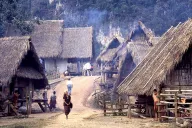

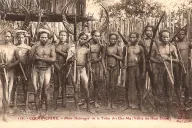









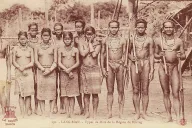



























Before any state reached the highlands, our villages had law: rules on land, marriage, debt and injury, judged by the headman and elders and enforced by fines paid in buffaloes, jars and gongs. The French wrote some of it down and built courts on it; the Saigon government set out to replace it and then, after the 1964 revolt and the highland leaders’ demands, restored it in 1965. What it became after 1975 is one of the gaps in the record.

Law in the village
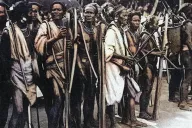
“Justice is largely in the hands of the village headman and the council,” wrote Gerald Hickey in 1964. The details differed from people to people, but the pattern was shared.
- Rhade. Rhade law demanded strict obedience to the village chief, with set fines for any breach. A person who had been robbed reported it to a village “magistrate” — usually anyone who would plead the case — who went to the suspect’s house to confront and question him. The law set out that no one might enter another’s house alone, that a man who built a tomb on another’s land owed the value of that person’s harvest, and that fields must be fenced.
- Land. Among the Rhade the clan’s land was held by senior women, the po lan, who gave permission to farm it and demanded the penalty when it was violated (see Dega women).
- Stieng. Serious cases — those with penalties above the value of two buffaloes — went to a tribunal of the headman and two elders versed in custom. If partiality could be proved, the decision was canceled and a new tribunal formed.
- Sedang. A man who refused to pay a fine could be expelled from the village.
- Jarai. A wrongdoer might pay the injured party in property or livestock, or sacrifice pigs, chickens or buffaloes to the spirits.
Fines were counted in the same goods as wealth: buffaloes, jars, gongs, cloth (see Jars, rice wine and the buffalo feast).
The French courts
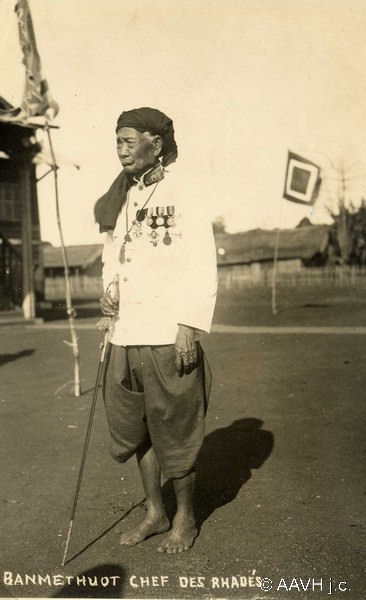
The French built courts on this law. Hickey records that they “organized tribunals for most of the larger ethnic groups, using codified native customs and appointing indigenous judges.” In Darlac, according to later accounts, Léopold Sabatier set up a Rhade customary court in the 1920s and had Rhade law collected; the collection was published in Hanoi in 1940 as the Recueil des coutumes rhadées du Darlac (see Sabatier and the Rhade code).
The 1966 US Army handbook describes how the system worked for the Rhade. Cases the village chief could not settle went to the Tribunal Coutumier, which sat for the first seven days of every month at Ban Me Thuot, and was presided over by a man from Bản Đôn known as the “King of the Rhade,” who, the handbook says, apparently had no political function. The tribunals heard only cases in which both parties were highlanders, and judged them by highland law.
Undermined, demanded, restored
- 1951 — Bảo Đại’s special statute for the highlands promises, Human Rights Watch records, that customary tribal law will be retained.
- 1950s — Under Ngô Đình Diệm the government attempts to substitute Vietnamese law for highland custom. Hickey writes that it planned at one time to abolish the tribunals, though he did not know whether this had been done.
- 1958 — BAJARAKA sets out the highlanders’ grievances and demands autonomy (see BAJARAKA).
- October 1964 — After the September revolt in the Special Forces camps (see FULRO), the Saigon government holds a conference of highland leaders at Pleiku. Among their requests is the “reinstatement of customary highland law.”
- March 1965 — A decree restores the legal status of highland law and courts. Village courts — the chief of the village administrative committee with two highland assistants — are to sit weekly; district courts, under the district chief with two highland assistants, are to hold “bi-monthly” sessions, hearing appeals and serious cases.
- After 1975 — We have found no independent source on what became of the courts.
Why it matters now
Customary law is not only history. It is the evidence that our land had owners before any state issued a title, and it is what the UN Declaration on the Rights of Indigenous Peoples means when it speaks, in Article 34, of peoples’ “distinctive customs, spirituality, traditions, procedures, practices and, in the cases where they exist, juridical systems or customs.” See Land law and customary land and Vietnam and the Declaration.
Sources
- Gerald C. Hickey, The Major Ethnic Groups of the South Vietnamese Highlands, RAND RM-4041 (1964) — text copy
- Department of the Army, Minority Groups in the Republic of Vietnam, Pamphlet 550-105 (1966) — the Rhade, Bahnar and Jarai chapters, and the March 1965 decree
- Human Rights Watch, Repression of Montagnards (2002), chapter III — BAJARAKA’s demands and the Pleiku conference
- UN Declaration on the Rights of Indigenous Peoples, Article 34
- Léopold Sabatier, Recueil des coutumes rhadées du Darlac (Imprimerie d’Extrême-Orient, Hanoi, 1940)
- Gerald C. Hickey, “Comments on recent GVN legislation concerning Montagnard common law courts in the Central Vietnamese Highlands,” RAND memorandum, June 8, 1965 (not online)
Compiled September 2026. We are looking for anyone who sat on, or brought a case to, a highland court before 1975.