







Dega Central Highlands Organization Dega Central Highlands Organization
Knowledgebase

The Koho, Maa, Churu and Raglai

The southern end of the highlands, from the Lang Biang plateau around Đà Lạt down toward the coast, is the country of four peoples: the Koho and the Maa, who speak Mon-Khmer languages, and the Churu and Raglai, who speak Chamic languages and have the closest ties of any highlanders to the old kingdom of Champa. This page brings them together until we can write each at the length it deserves.
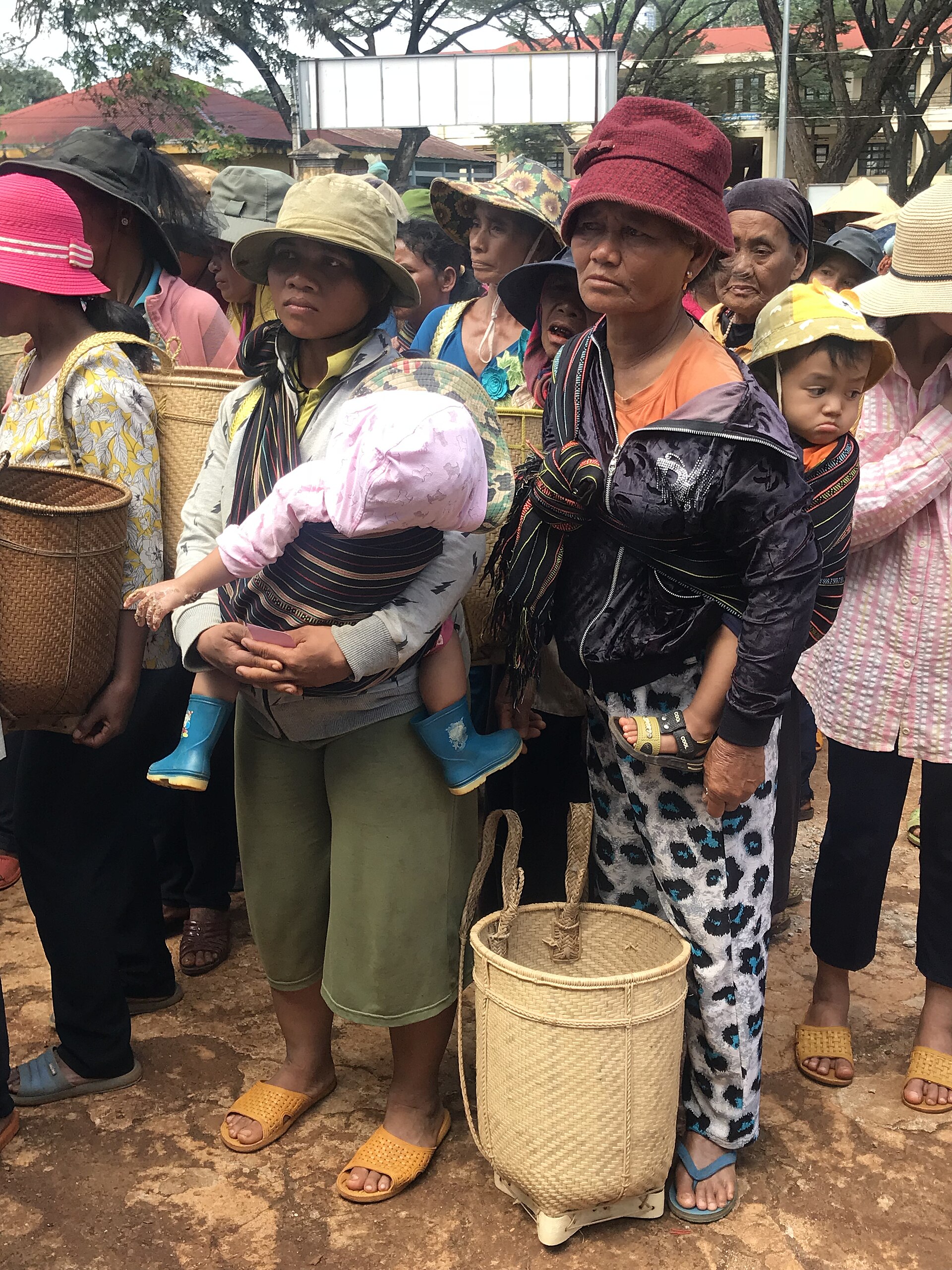
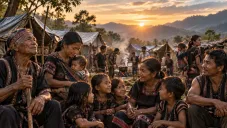
A group of Koho Nop women and children
Koho Nop people, 2019. Photo: Sgnpkd, via Wikimedia Commons, CC BY 4.0.

The Koho

Names Koho, K’Ho, Cơ Ho; subgroups include the Sre, Lat (Lạch), Chil, Nop and T’ring

Language Koho, South Bahnaric branch of Austroasiatic (ISO 639-3 kpm)

Homeland Lâm Đồng: the Lang Biang plateau around Đà Lạt, the Di Linh plateau and the country toward Bảo Lộc

The Koho were one of the four peoples who founded BAJARAKA in 1958 — its name is Bahnar, Jarai, Rade and Kaho (Koho). Human Rights Watch, in 2002, gave their number as about 122,000. The Lat gave Đà Lạt its usual etymology (see Four highland towns); the Sre are the Koho of the Di Linh plateau. The missionary Jacques Dournes lived among the Sre from 1946 to 1954 and compiled a Sre dictionary before moving to the Jarai.
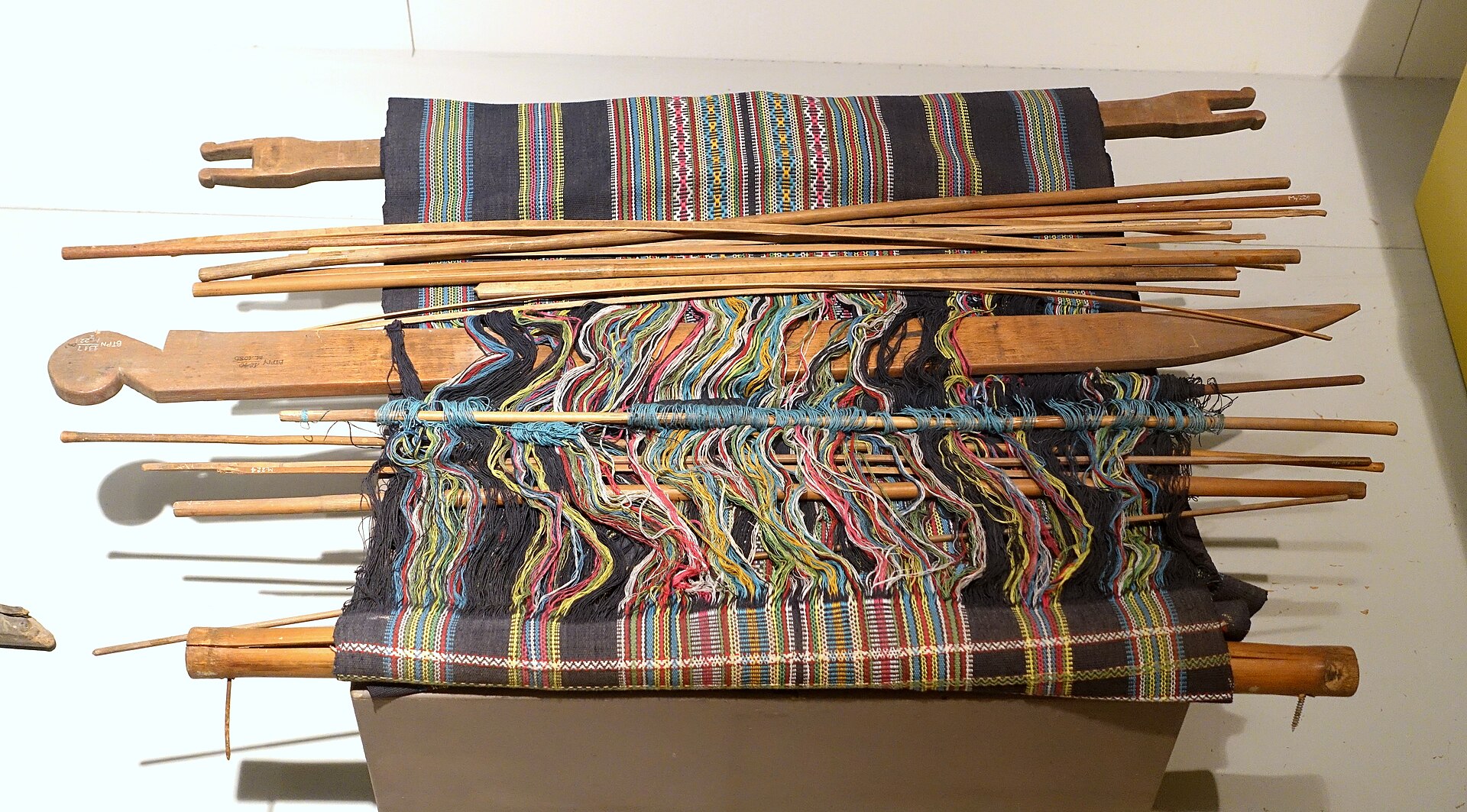
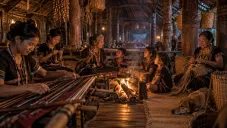
A backstrap loom with a length of patterned cloth
A Lat (Koho) backstrap loom from Lạc Dương, Lâm Đồng, 1994. Vietnamese Women’s Museum, Hanoi. Photo: Daderot, via Wikimedia Commons, CC0.

The Maa

The Maa (Mạ) speak a language linguists place within the Koho branch (ISO cma) but keep a separate identity, and are counted separately in Vietnam. They live to the south-west of the Koho. The French ethnographer Jean Boulbet wrote a study of their country, Pays des Maa’, domaine des génies.

The Churu

Names Churu, Chru, Chu Ru

Language Chru, Chamic branch of Austronesian (ISO 639-3 cje)

Homeland Lâm Đồng, around the Đa Nhim valley, and neighboring Bình Thuận

The Churu are the highland people closest to the Cham: their language is Chamic, and they farm wet rice in the valleys, which is unusual among highlanders. Glottolog describes Chru as threatened, being replaced by Vietnamese in many uses; many Churu also speak Koho. Their origin among Cham who moved up from the coast is widely told, and the Cham king Po Rome, who reigned in the seventeenth century, is often said to have been of highland birth; we have not yet found an independent source that settles either point.

The Raglai

Names Raglai, Ra Glai, Roglai

Language Roglai, Chamic branch of Austronesian (ISO 639-3 rog, rgs, roc)

Homeland The uplands of Khánh Hòa, Ninh Thuận and Bình Thuận, behind the old Cham coast

The Raglai live in the hills behind the coast that was once the heart of Champa, and their language is Chamic. The stone lithophones found in Raglai country are described mainly in Vietnamese state sources, which we do not use.
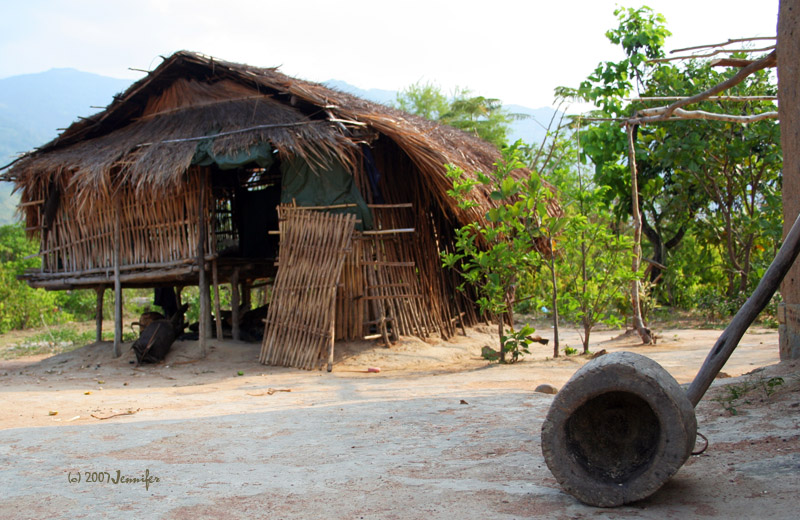
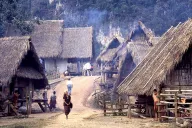
A raised thatched house with a wooden mortar in front
A Raglai family house, Bác Ái district, Ninh Thuận. Photo: Jennifer Le, via Wikimedia Commons, CC BY-SA 2.0.

See also: The smaller peoples.

Sources

Compiled September 2026. This is a short page because independent sources on these four peoples are scarce. If you are Koho, Maa, Churu or Raglai and can help us write fuller pages, we would welcome it.

Was this answer helpful?

Related Articles

Dega culture A village, the land around it held in common, kinship that decides obligation, and a moral order older than any state that has claimed us. Around thirty peoples, each with its own building, weaving, music and dance, held together by an animist thread that runs through all of them — and by a gong tradition UNESCO has recognized as a masterpiece o... Spotlight 58 views Read More How many Dega there are Nobody knows exactly. The published figures disagree with one another by a factor of six, and the disagreement is itself part of the story. What is not in dispute is the direction of travel: there are far fewer of us than there were, in a homeland now holding many times the people it did, and we are a minority in every province of our own country. Reference 68 views Read More The country itself A plateau country of red basalt soil, forest and river valleys, between 500 and 1,500 meters above the sea, some 54,548 square kilometers of it. Its boundaries were drawn on May 27, 1946, by the colonial power itself — and the drawing left out the coast we had already been driven from. Reference 42 views Read More The tribes and their languages Around thirty tribes, in two language families that are not related to one another. The Chamic-speaking peoples — Jarai, Rhade, Raglai, Chu Ru — are Austronesian, cousins of the Cham of the coast and, further out, of Malay and Indonesian. The rest speak Bahnaric languages of the Mon-Khmer family, related to Khmer. Below: who is who, where, how m... Glossary 48 views Read More Dega women, and a record written about men Among the Rhade and the Jarai, land, livestock and the heirloom jars pass through women. Yet almost every source this library is built from is about men — because soldiers, prisoners and petitioners are who got written down. This page sets out what we can establish, and is explicit about the shape of what is missing. Explainer 39 views Read More The Jarai The Jarai are, on Vietnam’s census counts, the largest of the Central Highlands peoples: the people of the Pleiku plateau and the Ayun valley, and across the border in Cambodia’s Ratanakiri. Like the Rhade they speak a Chamic language and reckon descent through women. Their ritual masters of fire and water were known to the kings of Cambodia, an... Reference 15 views Read More

Powered by WBAMS