





















Coffee is the crop most people associate with the highlands, and we write about it in Land taken for coffee. Rubber is the older story. It came with the French, it was worked by people who died in large numbers doing it, and in our own time it has taken highland land in Vietnam and in Cambodia and Laos, where our kin live.

The colonial plantations
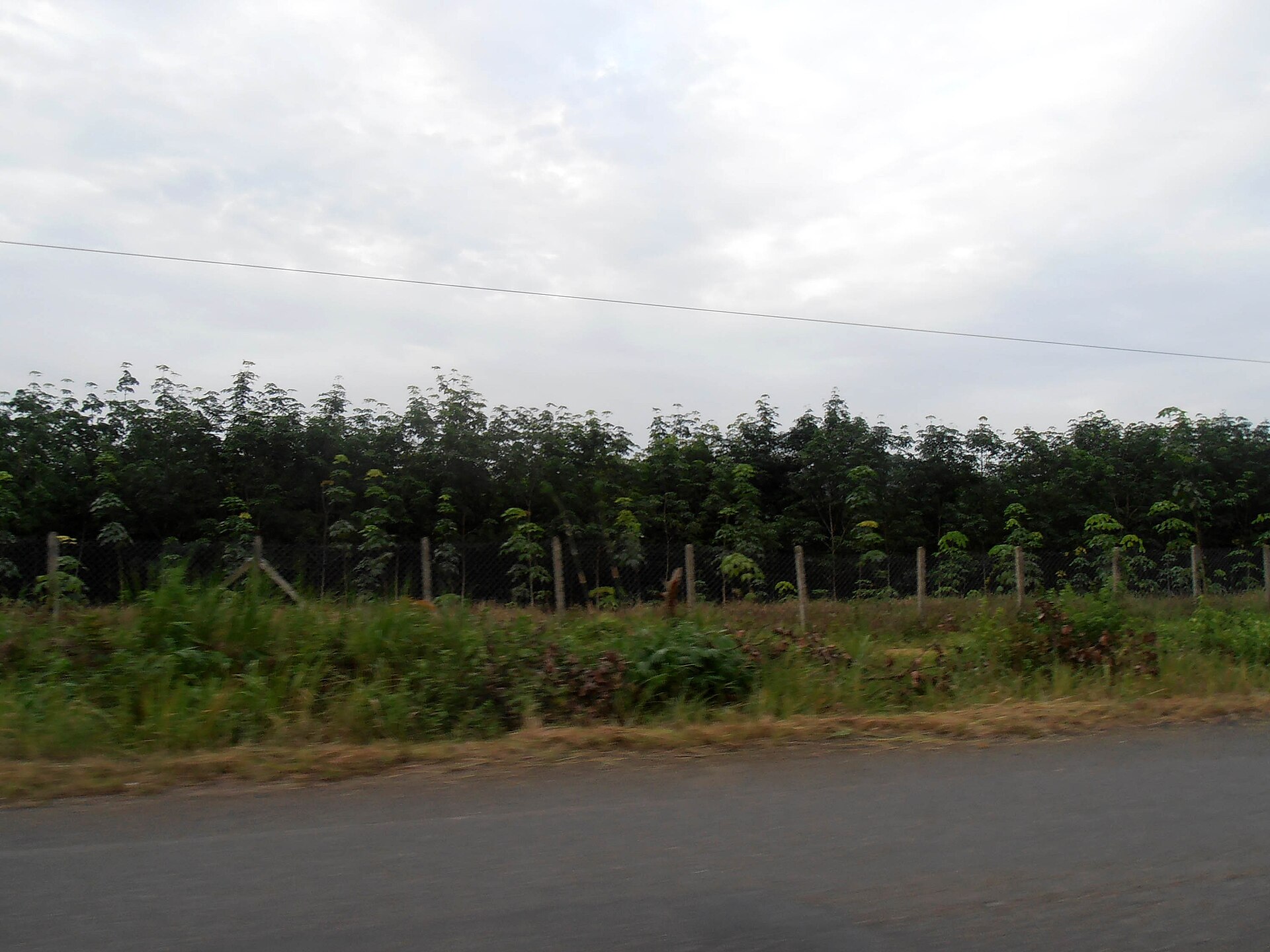
Hevea seeds reached the botanical garden in Saigon in 1897. Within thirty years French companies had cleared forest across the red soils north of Saigon for plantations. The largest were Michelin’s: the Đầu Tiếng estate grew to about 12,400 hectares, and the Phú Riềng estate, in the country of the Stiêng people, covered some 5,500 hectares by 1930.
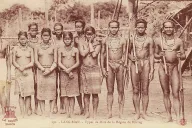
The labor was brutal. Colonial inspections for 1926–27 recorded death rates on plantations of between 12 and 47 percent. At Phú Riềng most workers were reported to have malaria. By 1928 more than half the workforce were contract laborers recruited from the North. In early 1930 — the date usually given is February 4 — workers at Phú Riềng struck; the strike was put down by troops.
Historians of rubber, notably Michitake Aso, have shown how the plantations reshaped the land and the people on it. For highlanders the lesson of the colonial period was simple: when a plantation comes, the forest goes, and so does the land that a village had farmed and rested in turn.
After 1975
The new state nationalized the French estates and built its own. Through the 1980s and 1990s state rubber companies planted large areas of Gia Lai, Kon Tum and Đắk Lắk, often on land that highland villages regarded as theirs (see Pushed off our land). Vietnam is now among the world’s largest rubber exporters.
One of those plantations was the scene of the clashes at Chư Prông, Gia Lai, in 2010. According to Human Rights Watch, the trouble began on June 10 when young men from a nearby village clashed with plantation guards over an alleged theft of latex. Over the following two weeks villagers entered the plantation, two people were injured, and plantation property was destroyed. On August 25 police arrested four men they named as Dega Protestant leaders. See The years between.
Across the border
Hoàng Anh Gia Lai (HAGL) was founded in Pleiku in 1990 as a furniture workshop and grew into one of Vietnam’s largest agribusinesses, with rubber at its center. In the 2000s it and the state-owned Vietnam Rubber Group expanded into Cambodia and Laos.
- May 13, 2013 — Global Witness publishes Rubber Barons. It finds that HAGL and the Vietnam Rubber Group together held more than 200,000 hectares of land concessions in Cambodia and Laos, and names the banks and investors behind them, among them Deutsche Bank and the IFC, the World Bank’s private-sector arm. Deutsche Bank later divests.
- February 10, 2014 — Indigenous communities in Ratanakiri, Cambodia — Jarai, Kachok, Tampuan and Kreung — file a complaint with the IFC’s Compliance Advisor Ombudsman. HAGL companies there held more than 20,000 hectares, affecting 14 villages.
- September 2015 — HAGL apologizes and makes commitments to the communities, including sparing more than 10,500 hectares of forest from conversion.
- 2019 — A second complaint follows.
- June 2024 — An agreement is signed returning more than 700 hectares of land to twelve communities.
The Jarai of Ratanakiri are the same people as the Jarai of Gia Lai; the border between them is a colonial line. See Kin across the border. The Ratanakiri case is one of the very few in which highland communities have taken a Vietnamese company to an international body and won something back.
See also: Forests, logging and the sacred groves, Roads, taxes and forced labor.
Sources
- Michitake Aso, Rubber and the Making of Vietnam: An Ecological History, 1897–1975 (University of North Carolina Press, 2018)
- Saigoneer, “The harrowing history of Vietnam’s rubber plantations”
- Wikipedia, “Michelin Rubber Plantation” and “Phú Riềng Đỏ”
- Global Witness, Rubber Barons, May 2013 (PDF), and on Deutsche Bank’s divestment
- Inclusive Development International, “Cambodia: Hoang Anh Gia Lai rubber plantations”
- Human Rights Watch, Montagnard Christians in Vietnam, March 2011
Compiled September 2026.