


























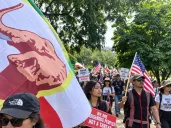












The Dega have been named in United Nations documents for more than thirty years — in our own submissions, in the findings of treaty bodies that examine Vietnam, and in letters from independent experts to the Vietnamese government. This page is a register of the ones we can link to, in order, with what each actually said.
How the UN machinery works, briefly
Treaty bodies are committees of independent experts that examine each state that has ratified a treaty, every few years, and publish concluding observations. The two that matter most for us are the Committee on the Elimination of Racial Discrimination (CERD) and the Human Rights Committee, which oversees the International Covenant on Civil and Political Rights. Special procedures — special rapporteurs and working groups — can write to a government about individual cases at any time; their letters are published after sixty days. The Universal Periodic Review is a review of every state by the others. The legal background is on Indigenous rights at the UN and What Vietnam has signed.
The record
- July 1993 — The Montagnard/Dega International Human Rights Committee — Kok Ksor, Pierre K’briuh and Nay Rong — submits Human Rights Violations: The People of the Dega Republic to the UN Working Group on Indigenous Populations in Geneva. It is the first Dega document placed before the UN in our own name.
- March 2012 — CERD — In its concluding observations on Vietnam the Committee names the “Degar (Montagnard)” and the Khmer Krom, urges Vietnam to respect self-identification and to consider ratifying ILO Convention 169 on indigenous and tribal peoples, criticizes the confiscation of ancestral lands without prior consent, and raises the restrictions on religion under the 2004 Ordinance on Belief and Religion.
- July 21–31, 2014 — Special Rapporteur on freedom of religion — Heiner Bielefeldt visits Vietnam. His planned visits to Gia Lai, Kon Tum and An Giang are disrupted between 28 and July 30; he reports that people he wanted to meet were warned, intimidated and harassed.
- March 2019 — Human Rights Committee — Third review of Vietnam under the Covenant.
- November 22, 2021 — special procedures, AL VNM 6/2021 — Eight mandates, including the Working Group on Arbitrary Detention, write about thirty-nine human rights defenders, among them the Dega prisoners Y Yich (twelve years, health seriously deteriorated), Rah Lan Hip (seven years, for Facebook posts about Dega Protestantism), Ksor Ruk (ten years), Rmah Hlach (twelve years) and Y Ngun Knul (eighteen years, released February 2020).
- February 2022 — Special Rapporteur on human rights defenders — Mary Lawlor expresses “utmost concern” at the long-term detention of defenders, repeating those cases.
- November 2023 — CERD — In its dialogue with Vietnam the Committee raises the arrest of about a hundred Montagnards after the Cư Kuin attacks and some 20,000 stateless households in the Central Highlands. Vietnam rejects the term “indigenous peoples” and says it has no plans to ratify ILO 169. Concluding observations are adopted in December.
- July 4, 2024 — special procedures — Experts warn Thailand against extraditing Y Quynh Bđăp. See Y Quynh Bđăp.
- August 28, 2024 — special procedures — Fourteen UN experts, including the Special Rapporteurs on counter-terrorism, on indigenous peoples and on human rights defenders, condemn the misuse of counter-terrorism law against Montagnards: the January 2024 mass trial, the mobile court, the death in custody of Y Bŭm Byă, and the designation of Montagnards Stand for Justice.
- July 24, 2025 — special procedures, AL VNM 3/2025 — Ten mandates write about Y Quynh Bđăp and other Montagnard defenders, noting that ninety-nine of the hundred defendants in the 2024 trial were Montagnards and that sixty-five Montagnards had been detained in Thailand in February and March 2025.
- July 2025 — Human Rights Committee — Fourth review of Vietnam. The experts name “persistent discrimination” against the Khmer Krom and the Montagnards; Vietnam again rejects the word indigenous. The concluding observations warn against using counter-terrorism laws on religious minorities and condemn transnational repression.
- December 3, 2025 — special procedures — Experts say the extradition of Y Quynh Bđăp violated non-refoulement and that his whereabouts are unknown.
What the record adds up to
Read in order, the documents show the same three things said more and more precisely: that the Dega are a distinct people whose own name should be used; that their land has been taken without consent; and that the law is being used against their religion and their advocates. What they also show is that Vietnam’s answer has not changed in thirty years — it does not accept that it has indigenous peoples, and it does not accept the premise of the questions.
Using these documents
UN findings are not court judgments, but they carry weight with asylum tribunals, foreign ministries and journalists. If you are preparing an asylum claim or a submission, cite the specific document and paragraph, not this page. Where we have only confirmed the listing of a document and not its paragraphs, we have not quoted it.
Sources
- Montagnard/Dega International Human Rights Committee, submission to the UN Working Group on Indigenous Populations, Geneva, July 1993
- CERD, concluding observations on Viet Nam, CERD/C/VNM/CO/10-14, 2012 (text via University of Minnesota Human Rights Library), paragraphs 12, 15 and 16
- OHCHR, end-of-visit statement of the Special Rapporteur on freedom of religion or belief, July 31, 2014, and the full report A/HRC/28/66/Add.4
- Human Rights Committee, CCPR/C/VNM/CO/3, 2019
- UN special procedures, AL VNM 6/2021, November 22, 2021
- Special Rapporteur on human rights defenders, February 3, 2022
- OHCHR, CERD dialogue with Viet Nam, November 30, 2023, and CERD/C/VNM/CO/15-17
- OHCHR, “Experts condemn misuse of counter-terrorism law against Montagnards in Viet Nam,” August 28, 2024
- UN special procedures, AL VNM 3/2025, July 24, 2025
- OHCHR, Human Rights Committee dialogue with Viet Nam, July 2025, and the FIDH summary of CCPR/C/VNM/CO/4
- OHCHR, December 2025
Compiled September 2026. The UN's own search tools — the special procedures communications database and the treaty body database — will find anything newer than this page.