

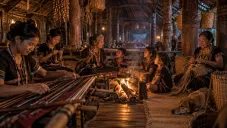
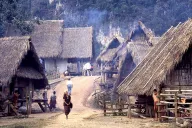

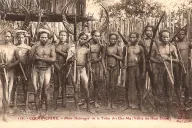
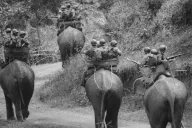




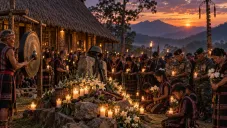
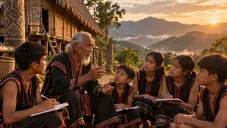



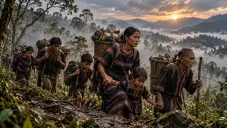




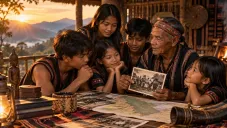
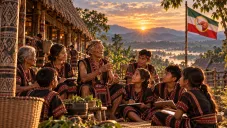



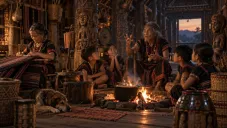


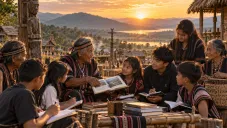

Our food begins with upland rice grown in the forest clearing, and most of what else we eat grows beside it, is raised for the spirits, or is taken from the forest and the rivers. The written record of our kitchens is thin and mostly the work of outsiders; this page sets out what it says, people by people, and where it stops.

Rice first
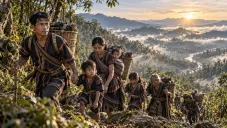
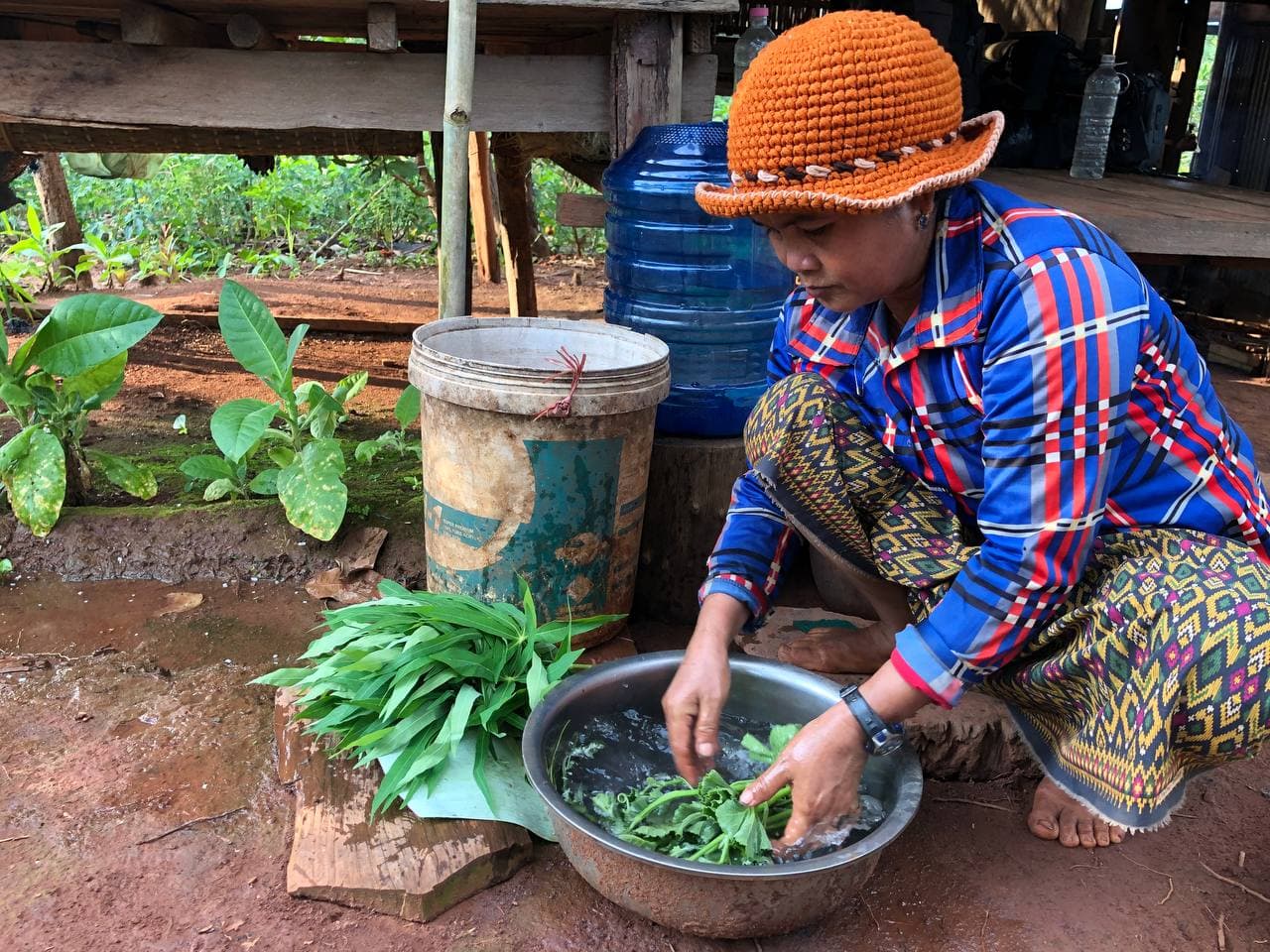
“Upland or dry rice is the staple crop,” Gerald Hickey wrote of all the highland peoples in 1964, grown in fields cut and burned from the forest and planted with a dibble stick. The US Army’s handbook of 1966 says the same of the Rhade: “The basis of the Rhade diet is highland rice.” It records that the Rhade reportedly grew ten kinds, among them a glutinous rice, a fast-growing four-month rice, and rices kept for making wine. Of the Jarai it notes more than seven varieties. The year of the field is told on The rice year.
What grows beside the rice
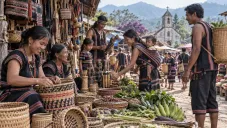
After the harvest, Hickey wrote, every group plants secondary crops in the swidden and keeps kitchen gardens in the village. The 1966 handbook lists for the Rhade corn, sweet potatoes, manioc, peanuts, melons, cucumbers, cabbages, bamboo sprouts, jackfruit, tangerines, oranges, coconuts and pawpaw; for the Jarai, squash, beans, corn, bananas and papayas. Among the Bahnar, it says, corn and squash usually went to the animals, but fed the family when the rice harvest was poor. The forest supplied the rest: bamboo shoots, rattan and other forest products, which Human Rights Watch listed among the things highlanders lost when settlers took the land.

Meat, fish and the sacrifice
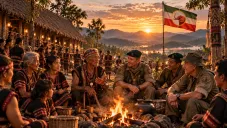
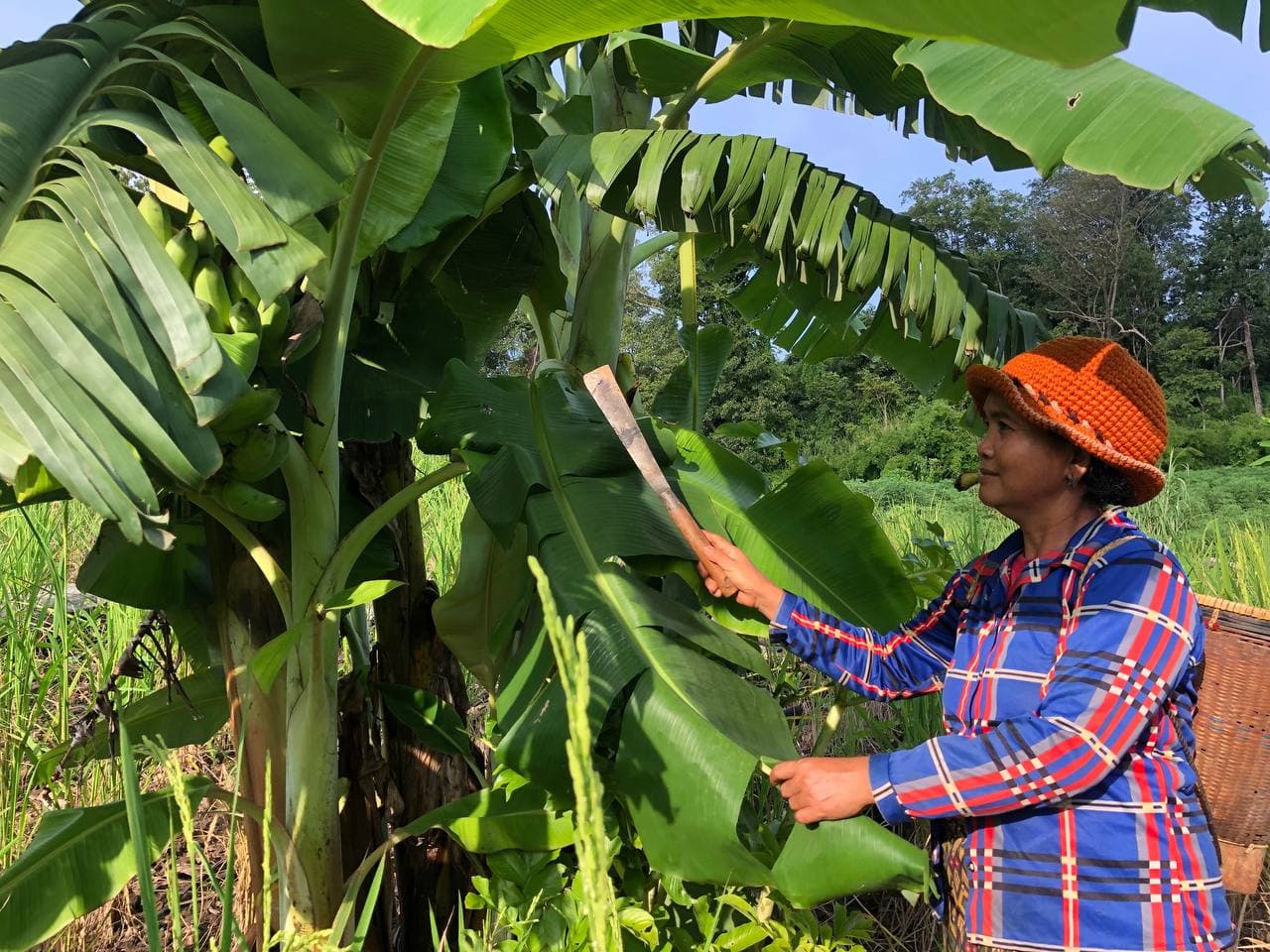
The Rhade, according to the 1966 handbook, ate “beef, venison, chicken, duck, fish, and game, including snakes, lizards, and squirrels.” Much of the meat came by way of the spirits. Of the Sedang the handbook says that chickens, goats, pigs and buffaloes “are raised primarily for sacrificial purposes,” and that the meat of the sacrificed animal is eaten after the ceremony. Among the Jarai, the handbook says, a small ceremony calls for the sacrifice of a chicken and a large one for a buffalo; at one Rhade rice rite, seven boiled chickens and seven jars of rice wine were offered in a miniature hut in the field. The feast itself is described on Jars and the buffalo feast, and hunting on Hunting and the crossbow.
Two meals a day
In a Rhade longhouse, the handbook records, food was cooked twice a day, in the morning before work and in the evening after it, and eaten at noon and on returning to the village at night. Meat and large fish were roasted or boiled; vegetables were eaten raw. Among the Bahnar, women ground the day’s paddy fresh, and cooked rice was served in areca leaves or baskets, with salt. For guests and festivals the Bahnar prepared preserved and pickled fish, meat and manioc leaves.
A guest was fed without asking. “It is not necessary for a traveler to carry food or drink,” the handbook says of Rhade country: the owner of any house would provide, and it was considered very rude to refuse food that had been offered.
Salt
Salt had to be traded for. The Jarai traded pineapples, bananas, rice and baskets for it; the Bahnar traded for salt along with metal goods, cotton, gongs and jars. Among the Jeh, the 1966 handbook says, “when there is no salt, a pinch of wood cinder is used for seasoning.”
Who owns the harvest
Each Rhade longhouse usually had its own granary, built in the same manner as the longhouse, according to the 1966 handbook; Hickey placed the granaries at the rear of the village, raised on piles. The harvest in it belonged to the women. “Under the Rhade social system,” the handbook says, “the women of the tribe own valuable things, like the long house, gongs, jars, and the harvest.” See Dega women.
When the land went
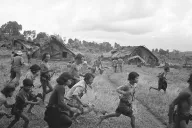
Every part of this depends on land: a field to rest and return to, forest to gather from, grazing for the animals. Human Rights Watch reported in 2002 that families which had once supported themselves on at least one or two hectares were farming rice and perhaps a little coffee and pepper on less than one, and that settlers had taken grazing grounds and the forest where highlanders gathered bamboo shoots and rattan. In a petition of 2000, one village wrote that “we have gotten to the point where we may die of starvation.” A World Bank study of 2019, using survey data from 2014, found that 34.9 percent of children under five in the Central Highlands were stunted; the figure is for all peoples of the region. See Land taken for coffee.
What is missing
The sources we have are almost all American or French, and most describe the Rhade. We have found no published description of cooking rice in bamboo tubes, of the wild greens, fish pastes and forest foods our grandmothers used, or of food in a year of famine, from any source we can cite. Our recipes live in our families, not in books. If you can record an elder cooking, and naming what she cooks, see How to record an elder.
Sources
- Department of the Army, Minority Groups in the Republic of Vietnam, Pamphlet 550-105 (1966) — the Rhade, Jarai, Bahnar, Sedang and Jeh chapters
- Gerald C. Hickey, The Major Ethnic Groups of the South Vietnamese Highlands, RAND RM-4041 (1964) — text copy
- Human Rights Watch, Repression of Montagnards (2002), chapter V and chapter VI
- World Bank, Persistent Malnutrition in Ethnic Minority Communities of Vietnam (2019)
Compiled September 2026.