
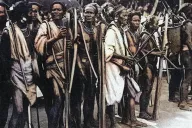

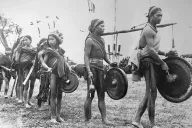
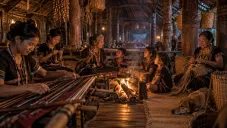
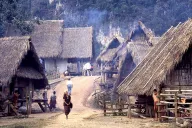

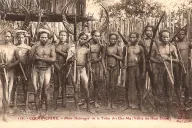
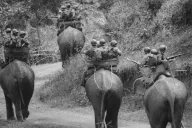
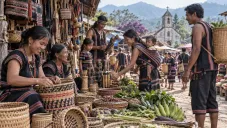
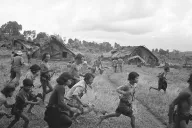

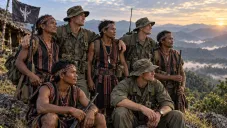

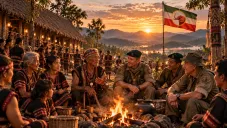
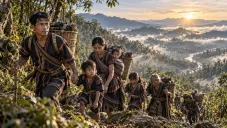

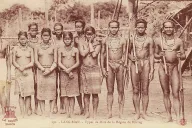
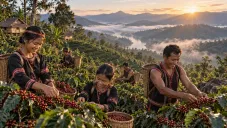
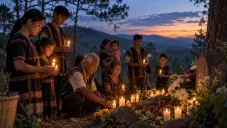
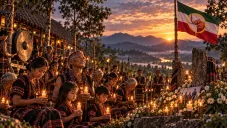
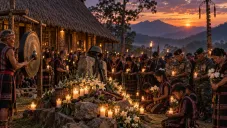
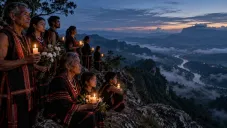
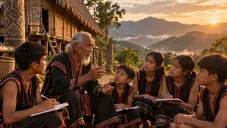
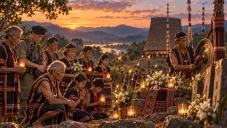


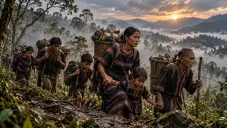
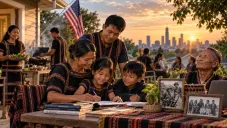
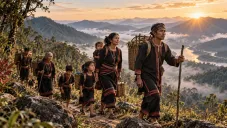
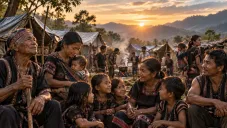



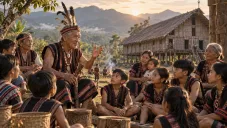
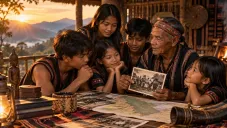
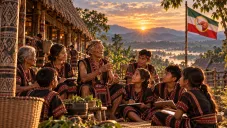
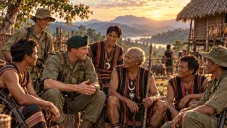

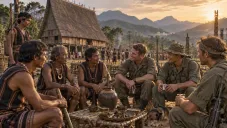
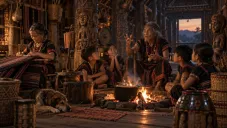


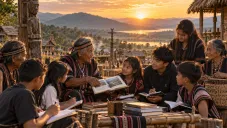
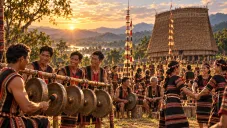
Every highland household farmed, and hunting was part of most men’s lives, with the crossbow as its mark; among the Bru, boys began to learn it at five or six. The forest gave meat, fish, fruit, medicine and poison, and our peoples knew it the way farmers know a field.

The crossbow
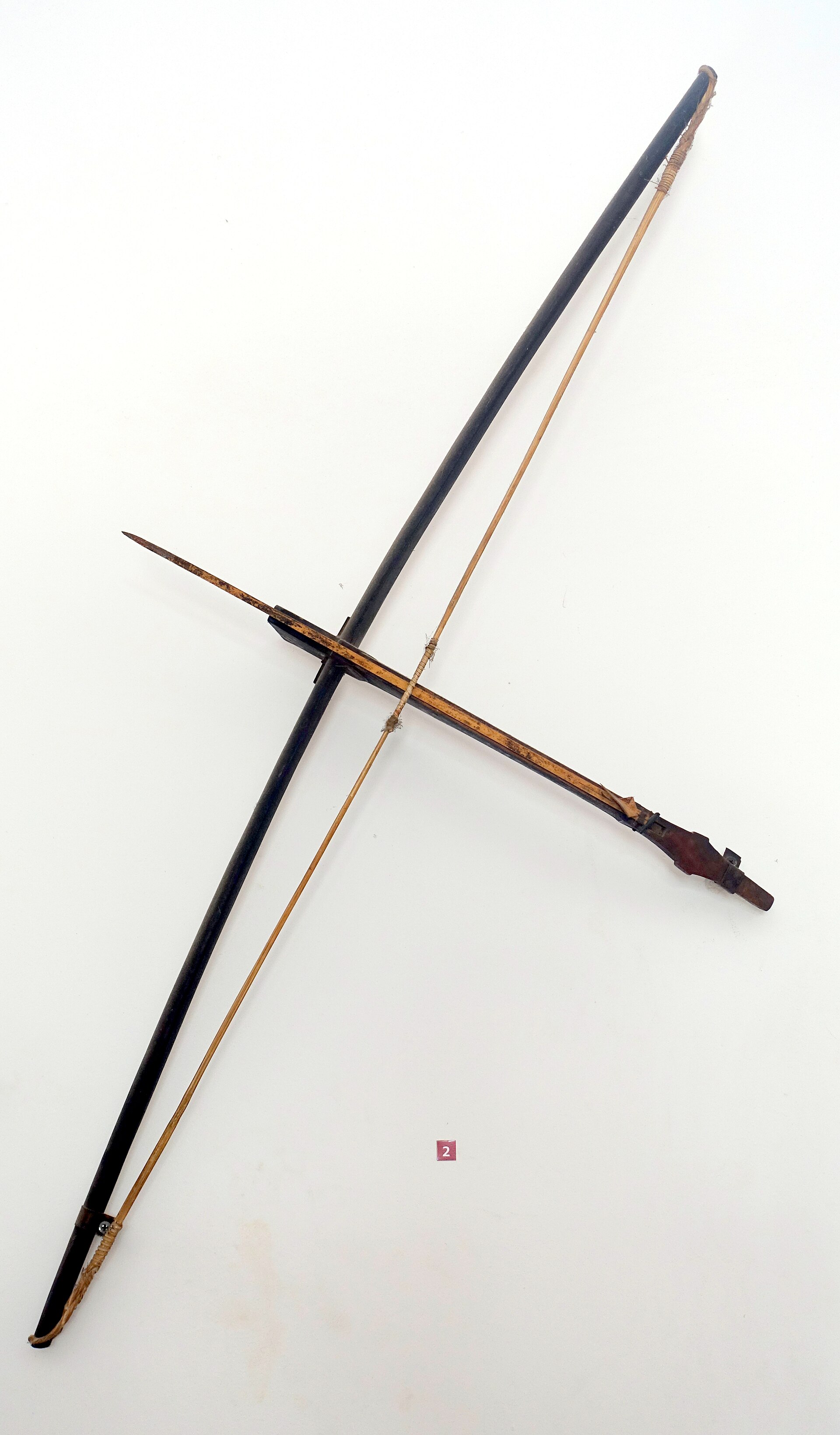
The 1966 US Army handbook on the highland peoples lists the crossbow among the weapons of almost every group it describes, from the Bru in the north to the Stieng in the south. The Hroi, it notes, made crossbows “larger and stronger than those of most other Montagnard tribes,” with arrows of sharpened bamboo and a leaf tied to the other end. Among the Cua, spears and crossbows hung from the roof; among the Rengao, crossbows were sometimes placed on graves.
Among the Bru, boys of five or six began to learn “to shoot crossbows and to identify the forest sounds and wild plants.” What a hunter killed, the handbook says, was shared by his family with the rest of the village.
Poison
For hunting and for war, arrows were poisoned. The handbook records several recipes.
- Hre. Resin of the cam tree heated over a fire with red pepper, centipede teeth and serpent teeth; the arrowheads were dipped and left to dry. The Hre believed spirits lived in poison.
- Hroi. Sap of the cong tree mixed with red pepper.
- Katu. A curare-like poison made from plants of the genus Strychnos.
- Raglai. The poison of the upas tree (Antiaris).
Traps, snares and dogs
Traps were as important as the crossbow: pits, snares, and spiked foot traps of concealed sharpened sticks. Rhade boys learned to make snares and nets as part of being “initiated into the secrets of the bush.” The Katu used bird calls and hunting dogs. Rhade farmers set traps and snares against the birds that raided the rice.
Fishing and gathering
Among the Bahnar and Rengao the whole village fished together: a narcotic was put into the water, and men, women and children together hauled in the netted fish. Jeh, Halang and others gathered berries, vegetables and other wild foods from the forest, and the Cua traded cinnamon bark. See Forests, logging and the sacred groves for what has happened to that forest.
Elephants
The great hunters were the Mnong and Rhade of Bản Đôn, who caught and tamed wild elephants; their story is on The elephants of Bản Đôn. The handbook records that among the Rhade an elephant was capital and talisman at once, with “mystical ties with the clan,” that the Jarai Ro’mah clan would not eat elephant, and that the Stieng would not eat domestic elephants.

In the war
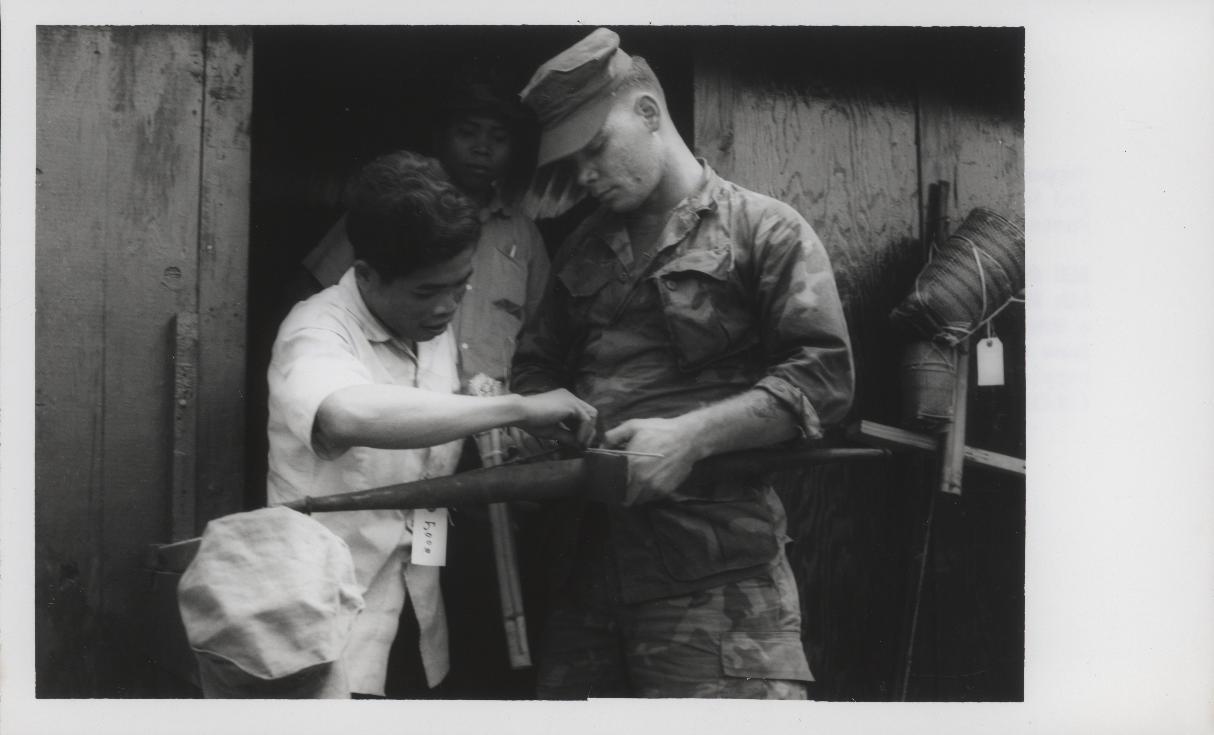
The crossbow went to war too. The handbook records that Sedang villagers had “fought aggressively against the Viet Cong with only crossbows.” In 1969, as the photograph above shows, a highland man at a Bru handicraft shop at Đông Hà showed a Marine how to shoot one (see also The American years).
See also: Food and the highland kitchen.
Sources
- Department of the Army, Minority Groups in the Republic of Vietnam, Pamphlet 550-105 (1966) — the Bahnar, Bru, Cua, Halang, Hre, Hroi, Jarai, Jeh, Katu, Mnong, Raglai, Rengao, Rhade, Sedang and Stieng chapters
- Gerald C. Hickey, The Major Ethnic Groups of the South Vietnamese Highlands, RAND RM-4041 (1964) — text copy — general context
Compiled September 2026. Hunting is restricted in much of the highlands today, and the forests are smaller; we are collecting accounts of how hunting was learned and practiced before 1975.