
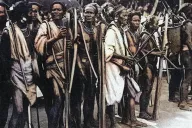
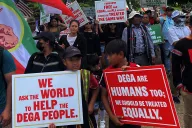





















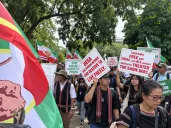
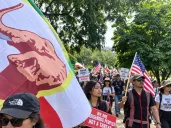
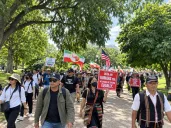











Thousands of our men fought alongside American Special Forces between 1961 and 1975. The United States brought some of them to North Carolina in 1986 and 1992 because of that service. It has never counted them as veterans. This page sets out what the record shows about the men, the Americans who stood by them, and the gap that remains.

The alliance
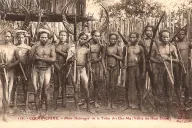
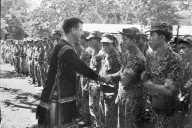
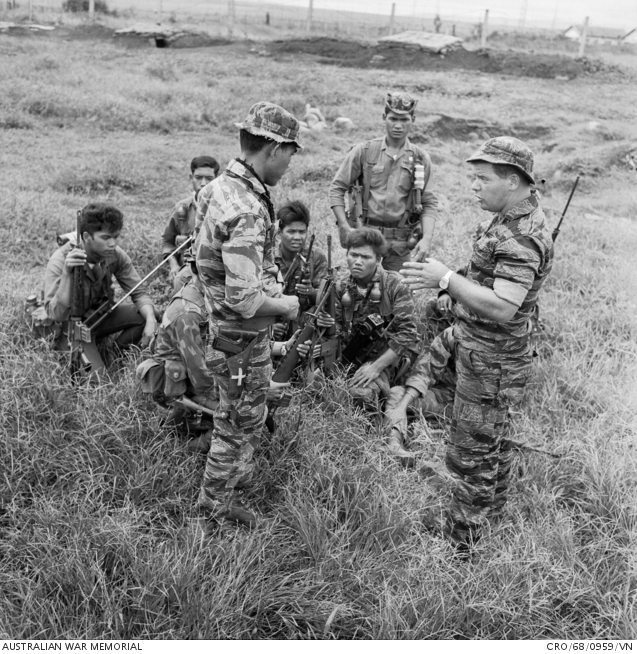
From 1961 highland villages in Darlac were armed and trained by US Special Forces, and the program grew into the Civilian Irregular Defense Group and the Mobile Strike Forces (see Mike Force and SOG and The American years). The Encyclopedia of North Carolina records that the Green Berets “often bonded with the Montagnard militia, who were regarded as courageous fighters and fiercely loyal friends.”
What service cost after 1975
When the war ended, those who had worked with the Americans “were viewed with suspicion,” in the encyclopedia’s words, and many were sent to re-education camps or went to the forest (see Re-education and the forest).
Coming to North Carolina
- 1986 — About two hundred FULRO soldiers and their families (accounts give 201 to 250), who had crossed Cambodia to the Thai border in 1985, are resettled in North Carolina. WUNC reported that they were “granted refugee status in recognition of their support to the U.S. Special Forces during the Vietnam War.”
- 1986 — Vietnam veterans found Save the Montagnard People, which says many of its members were Special Forces soldiers who “lived with and led the Montagnard hill tribes.”
- 1992 — The last FULRO group, about 400 fighters and their families, comes out of Mondulkiri and is resettled in North Carolina (see Mondulkiri, 1992).
- 2002 — Close to 900 more arrive from the Cambodian camps, according to the Center for Applied Linguistics, most of them villagers rather than soldiers (see The 2002 resettlement).
Lutheran Family Services and Catholic Social Services placed the families. The story of the community they built is on North Carolina.
Remembered
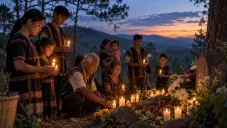
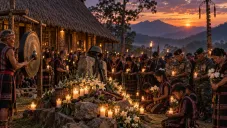
- Save the Montagnard People keeps land near Asheboro, North Carolina, with a Rhade longhouse and a Montagnard cemetery.
- The Airborne and Special Operations Museum in Fayetteville, near Fort Bragg, showed an exhibition, Warrior Bonds: U.S. Army Special Forces & Montagnards in Vietnam, until February 2026.
- When the medic Gary Rose received the Medal of Honor in 2017 for a mission in Laos in 1970, NPR’s account recorded that his team flew into Laos “with their Vietnamese allies, called the Montagnards.”
Not counted as veterans
American veterans’ benefits depend on “active service,” and the federal regulation that lists the groups “considered to have performed active military, naval, air, or space service,” 38 CFR § 3.7, does not include the highland irregulars of Vietnam. For deaths since March 23, 2018, the Department of Veterans Affairs has offered burial in national cemeteries to Hmong veterans and others who served in guerrilla or irregular forces “operating from a base in Laos” between 1961 and 1975. The rule does not mention Vietnam or the Special Forces camps of the Central Highlands.
Help us complete this page
We have not been able to confirm any bill in Congress for the recognition or burial of Montagnard veterans, or any public memorial to them in North Carolina. We are also collecting the names and service of our veterans, and the dates of those who have died, for a roll of honor. If you can help, please contact us.
See also: The bracelet.
Sources
- Surry Roberts, “Montagnards,” Encyclopedia of North Carolina (2006), via NCpedia
- WUNC, “This is my home now,” April 14, 2015
- Save the Montagnard People (the organization’s own account)
- Airborne and Special Operations Museum Foundation, Warrior Bonds
- NPR, “Medal of Honor awarded to Army medic,” October 23, 2017
- 38 CFR § 3.7; US Department of Veterans Affairs, burial eligibility for Hmong and Lao veterans
- Human Rights Watch, Repression of Montagnards (2002), chapter III
- Raleigh Bailey, Montagnards: Their History and Culture (Center for Applied Linguistics, 2002)
Compiled September 2026. This page describes the law as we understand it and is not legal advice.