


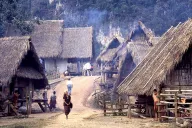

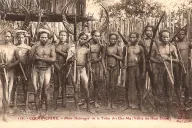
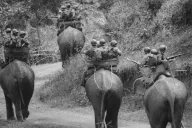

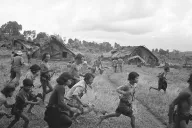
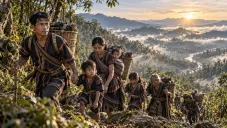

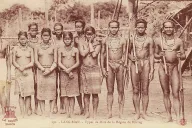

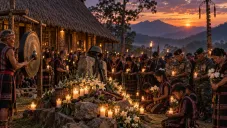
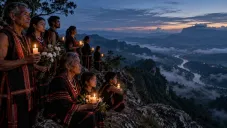




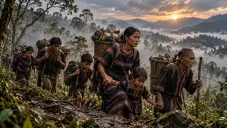

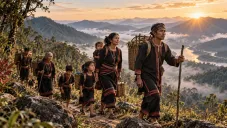
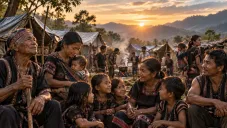










Both armies agreed that whoever held the Central Highlands would decide the war. So the largest battles of the American war, and the offensives that ended it, were fought on the plateau where our villages stood. This page lists them, with the figures that are usually given — and notes, each time, that almost nobody counted the highlanders caught between.

Why the highlands
The plateau controlled the infiltration routes coming in from Laos and Cambodia, the roads down to the coastal cities, and the route south to Saigon. For Hanoi it was the place to cut South Vietnam in half; for Saigon and Washington it was the place that had to be held for the rest to be held. Neither calculation included the people who lived there.

The battles
| When | Where | What happened |
|---|---|---|
| Oct 1965 | Plei Me, Pleiku | A CIDG camp of about 300 mostly Jarai soldiers holds for a week against North Vietnamese regulars. See Mike Force and SOG. |
| Nov 1965 | Ia Drang valley, Pleiku | The first large battle between American and North Vietnamese regular forces, fought by the US 1st Cavalry Division in the valley below the Chu Pong massif. |
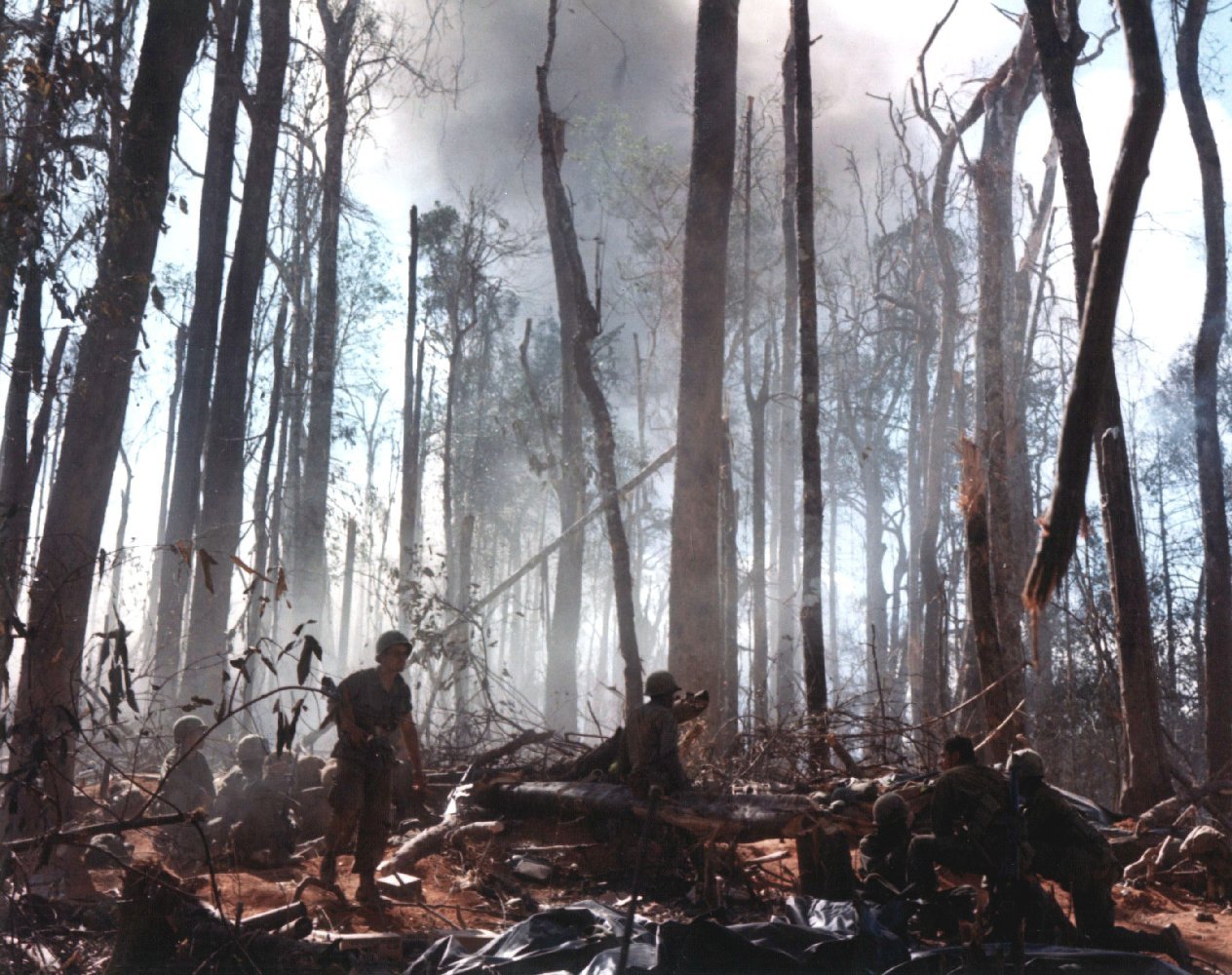
| 3–23 Nov 1967 | Dak To, Kontum | A three-week battle in the hills around Dak To, ending on Hill 875. American losses: 361 killed, 15 missing, 1,441 wounded. The South Vietnamese army lost 73 killed. The American count of North Vietnamese dead was 1,644; Hanoi’s own figure is much lower. On Hill 875 alone one American battalion lost 87 killed, 42 of them in a single friendly-fire bombing. |
| Dec 1967 | Dak Son, Phuoc Long | Not a battle: the burning of a refugee settlement. See Dak Son, December 5, 1967. |
| Jan–Feb 1968 | Ban Me Thuot, Kontum, Pleiku | The Tet Offensive reaches the highland towns. CIDG troops help hold Kontum, Pleiku and Ban Me Thuot. At Ban Me Thuot six American missionaries are killed; see The missions and the doctors. |
| 1969 | Ben Het, Kontum | Months of fighting around the Special Forces camp near the tri-border area; the Mike Force action for which Keith Payne received the Victoria Cross. |
| Apr–Jul 1972 | Kontum | The Easter Offensive. Tan Canh falls on April 24. Kontum is besieged from May and holds; the American adviser John Paul Vann is killed on June 9. North Vietnamese losses at Kontum are put at about 4,000, and across the highland campaign at 20,000–40,000. |
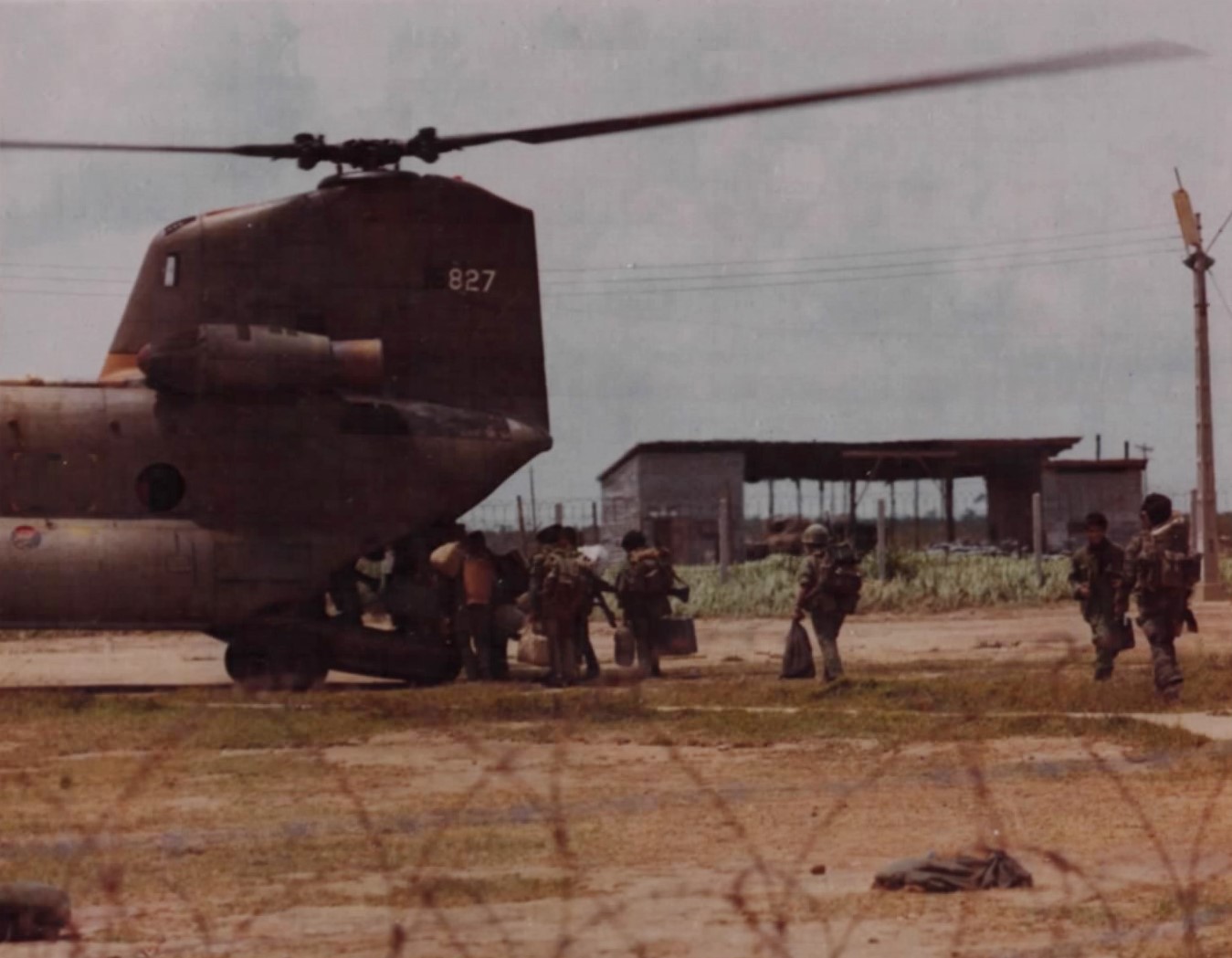
| Mar 1975 | Ban Me Thuot | The North Vietnamese attack on Ban Me Thuot opens the final offensive. The retreat down Route 7B that follows is among the worst civilian catastrophes of the war. See 1975. |
What the tables leave out
Every figure above is a soldier’s figure. The standard account of Dak To says in passing that isolated Montagnard villagers “bore the brunt of the fighting” and gives no number for them at all. That is typical. The villages in the hills around Dak To, Ben Het and Plei Me were bombed, shelled, burned, moved into camps and moved again, and the records that were kept counted weapons captured, not families lost.

The only overall estimates come from people who worked in the highlands. The anthropologist Gerald Hickey put the Dega dead of the war at over 200,000, out of about a million people, with 85 percent of villages destroyed or abandoned. Other estimates for the thirty years of war run higher. None of them can be checked village by village, and that is exactly the problem.
See also: Tet 1968 in the highlands, Highland refugees of the war years.
Further reading
- Battle of Dak To and Battle of Kontum — summaries with the casualty figures above and references to the official histories
- Gerald C. Hickey, Free in the Forest: Ethnohistory of the Vietnamese Central Highlands, 1954–1976 (Yale, 1982), and Shattered World: Adaptation and Survival among Vietnam’s Highland Peoples during the Vietnam War (University of Pennsylvania Press, 1993) — what the war did to highland communities
- Dale Andradé, America’s Last Vietnam Battle: Halting Hanoi’s 1972 Easter Offensive (University Press of Kansas, 2001) — Kontum 1972
- Harold G. Moore and Joseph L. Galloway, We Were Soldiers Once… and Young (Random House, 1992) — the Ia Drang, from the American side
- Chris Lang, “The legacy of savage development,” Watershed 1:2 (1995) — the wartime death and displacement estimates
Compiled September 2026. We would like to replace the silence in this table with names: if your village was moved or destroyed during any of these battles, please tell us what you remember.