
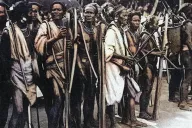


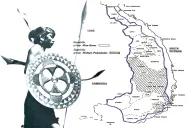
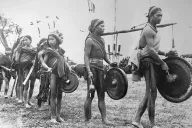





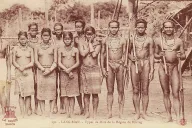


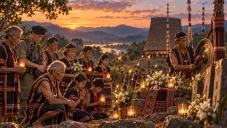

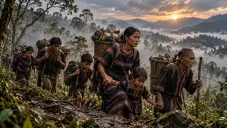

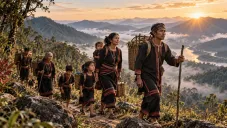
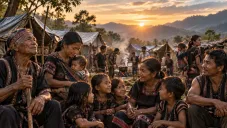



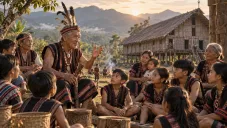

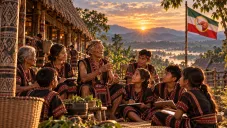


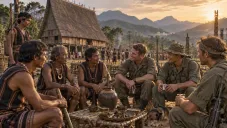
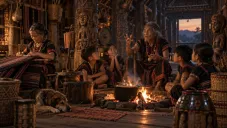




The Sedang live in the mountains north of Kon Tum and across into Quảng Nam and Quảng Ngãi. They speak a North Bahnaric language, and gave their name to the short-lived “Kingdom of the Sedang” that a French adventurer proclaimed in 1888. They strongly resisted French rule.

Language and subgroups
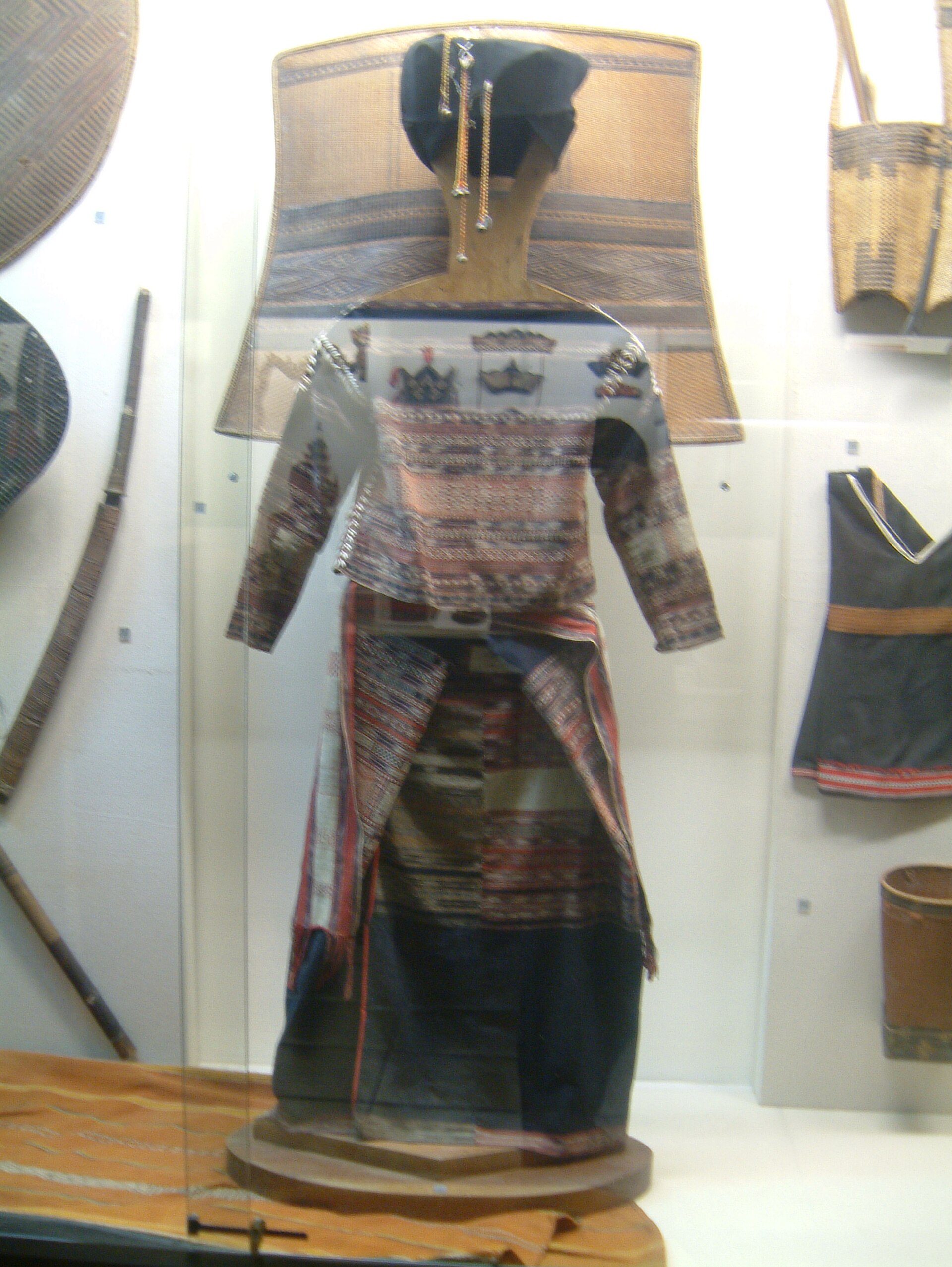
Sedang belongs to the North Bahnaric group of Austroasiatic languages, close to Jeh, Halang and Todrah, and more distantly related to Bahnar. Under the Vietnamese classification, several peoples with their own languages are counted as “Xơ Đăng,” among them the Halang, Todrah and Monom, each of which linguists list separately. Gerald Hickey named the Danja, Todrah, Kmrang, Duong and Cor as Sedang subgroups; the Encyclopedia of World Cultures notes that some authorities also count the Rengao, Ca-Rong, Hre and Halang, and that “the actual composition of the group is unclear.”
How many
| Figure | Year | Source |
|---|---|---|
| 80,000 | 1959 | North Vietnamese estimate, cited by Hickey (1964) |
| 57,376 | 1960 | South Vietnamese figure, cited by Hickey (1964) |
| 96,766 | 1985 | Vietnamese census, per the Encyclopedia of World Cultures |
The difference between the two figures of 1959–60 shows how little anyone knew about the northern highlands at the time. Census figures after 1975 are the Vietnamese state’s own counts, which we reproduce only because no independent count exists; see How many Dega there are.
Village and house
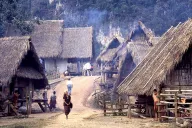
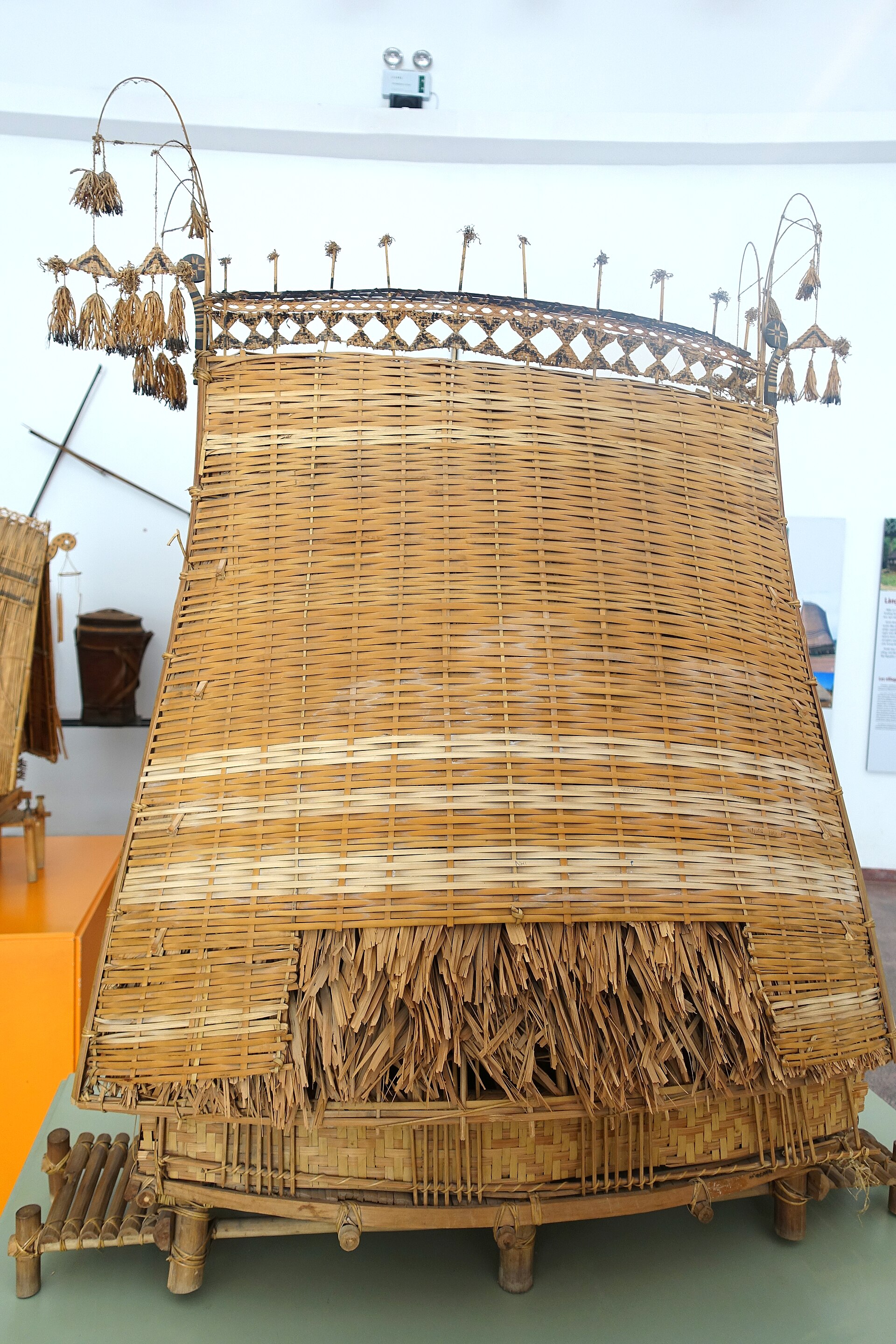
Hickey described Sedang villages of ten to thirty longhouses built on piles around a communal house, the young men’s house, at the center. Each longhouse was divided into compartments for its nuclear families around a common room. Households were large; the Encyclopedia of World Cultures lists a village’s people as its chief and headmen, household heads, shamans, smiths and slaves (on the old slave trade, see The slave raids).

Against the French
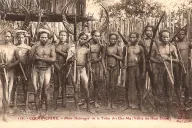
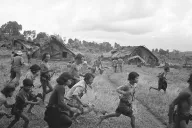
In 1888 the French adventurer David de Mayréna proclaimed himself “Marie I, King of the Sedang” (see The kingdom of the Sedang). The kingdom lasted months; the Sedang’s resistance lasted decades. The Encyclopedia of World Cultures records that they “strongly resisted French colonization,” and Hickey that in the 1930s the Sedang “openly expressed their opposition to the French administration and attacked French outposts.”
Religion
Hickey recorded a creator couple, Grandfather and Grandmother Knda, thunder gods called tara, and the belief that the vital soul, mahua, leaves the body six days after death; the ghosts of the dead were greatly feared. Many Sedang are now Catholic (see The Kon Tum mission and Yang).
See also: The smaller peoples.
Sources
- Gerald C. Hickey, The Major Ethnic Groups of the South Vietnamese Highlands, RAND RM-4041 (1964) — text copy
- Encyclopedia of World Cultures, “Sedang”
- Glottolog, Sedang
- George Devereux, “Functioning units in Ha(rh)ndea(ng) society,” Primitive Man 10 (1937)
Compiled September 2026. We have not found an independent source for a current Sedang population or for Sedang kinship; if you can help, please tell us.