
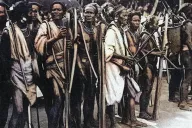
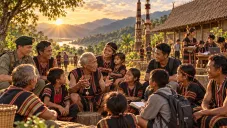
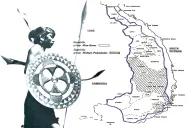
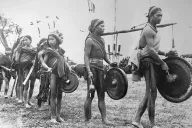
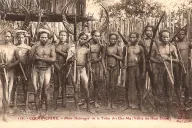
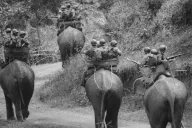
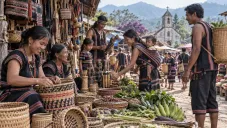
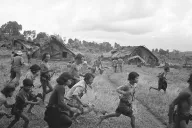

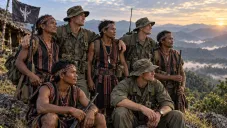
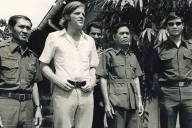
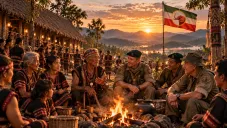
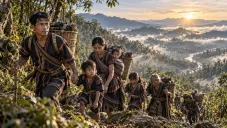
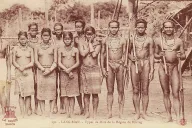
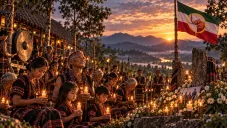
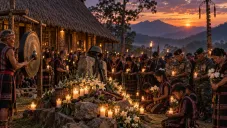
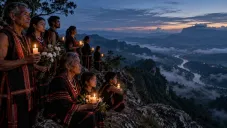
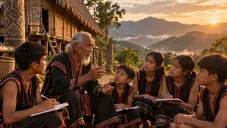
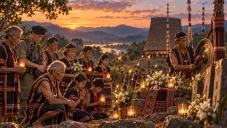
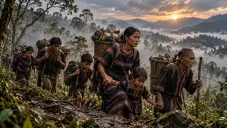





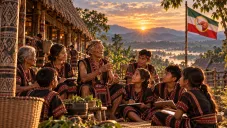
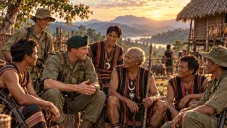

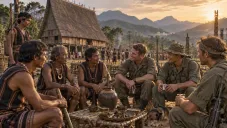
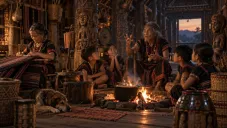
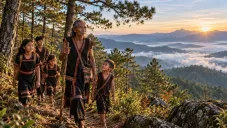
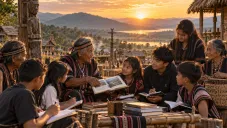
The Mnong live on both sides of the border: in Đắk Nông and southern Đắk Lắk in Vietnam, and in Mondulkiri in Cambodia, where they call themselves Bunong and are the largest of the province’s indigenous peoples. They are the people of Condominas’s We Have Eaten the Forest, of the elephant hunters of Bản Đôn, and of N’Trang Lơng’s resistance of more than twenty years to the French.

Language and subgroups
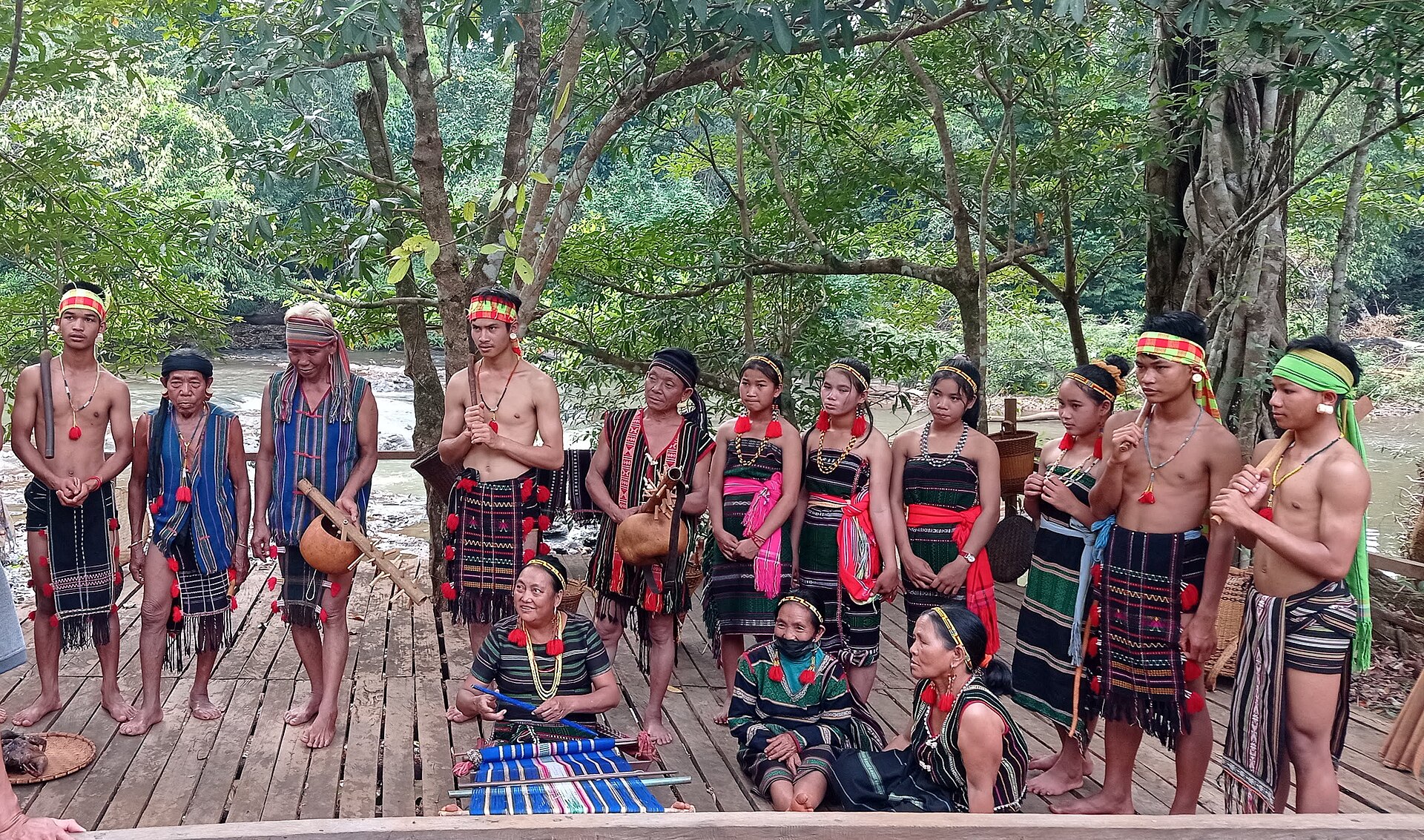
Mnong is South Bahnaric, closely related to Koho and Stieng. Linguists distinguish Central, Eastern and Southern Mnong. Hickey named the Mnong Gar, Cil, Rlam, Prong and Kuen among its many subgroups; in Cambodia the Bunong of Mondulkiri speak the Central variety, written there in Khmer script and in Vietnam in Latin script.
How many
| Figure | Year | Where | Source |
|---|---|---|---|
| 15,876 | 1960 | South Vietnam | South Vietnamese figure, cited by Hickey (1964) |
| 67,340 | 1985 | Vietnam | census, per the Encyclopedia of World Cultures |
| 89,000 | not stated | Vietnam | Human Rights Watch, Repression of Montagnards (2002) |
Hickey also cites a North Vietnamese estimate of 40,000 for 1959, again showing how uncertain the early counts were. Figures for the Bunong of Cambodia differ between sources; they are the largest group in Mondulkiri. Census figures after 1975 are the Vietnamese state’s own counts, which we reproduce only because no independent count exists; see How many Dega there are.
Village, house and kinship
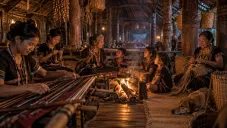
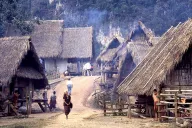
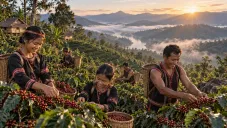
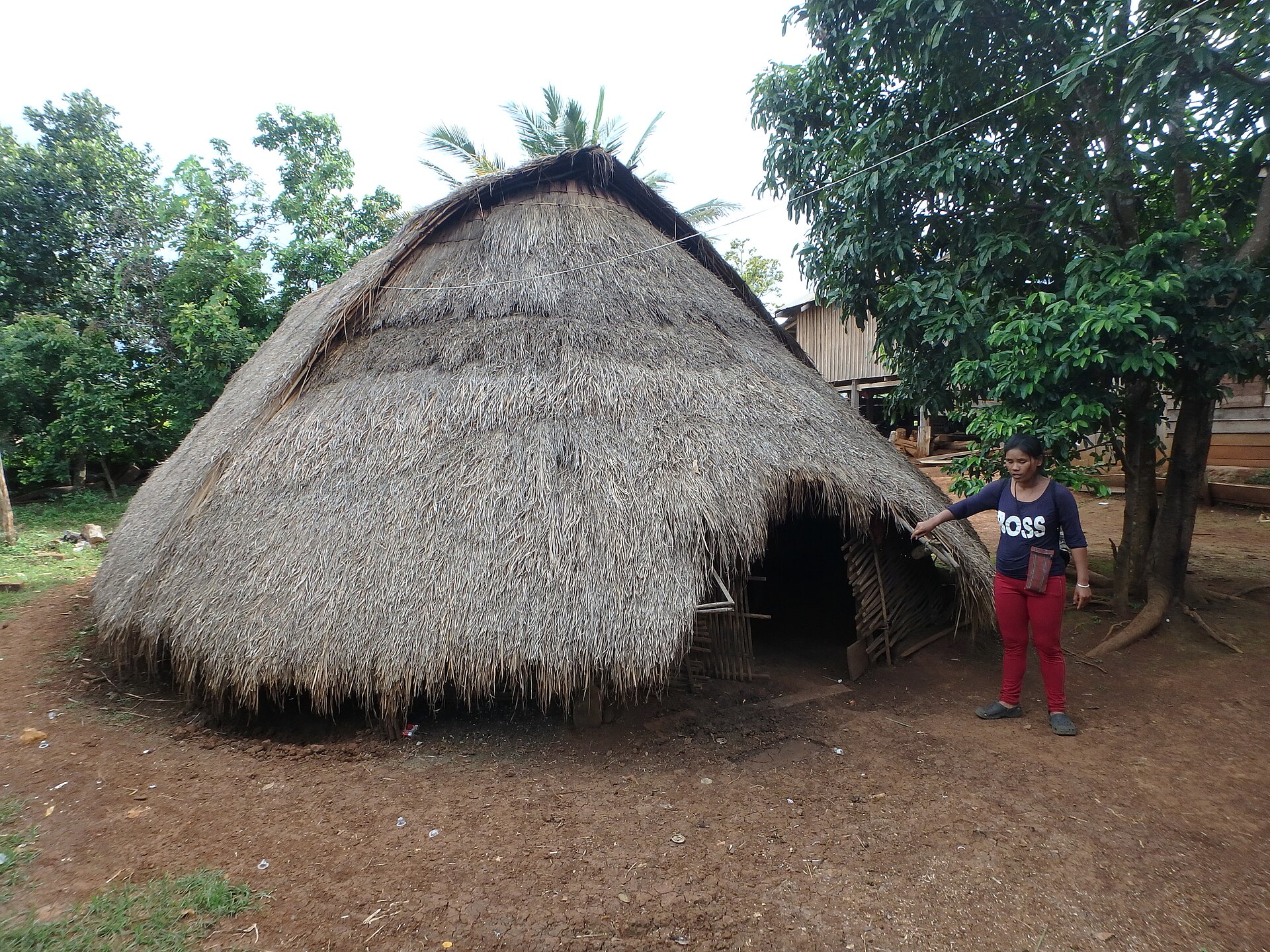
Hickey grouped the Mnong with the Rhade and Jarai as matrilineal peoples. Their houses differed by subgroup: the Mnong Gar built long houses on the ground, the Mnong Rlam on piles. In Mondulkiri the Bunong house has a thatched roof reaching almost to the ground. The Mnong farmed upland rice in the forest, wove cotton dyed with indigo, and traded pigs and poultry for buffalo.

In the record
- The forest year. From 1948 to 1950 Georges Condominas lived in the Mnong Gar village of Sar Luk and wrote the fullest account of a highland year (see The rice year).
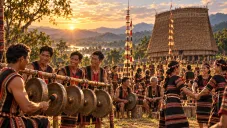
- The stones that sing. In 1949 a lithophone of eleven stone slabs was found near the Mnong Gar village of Ndut Lieng Krak; Condominas recorded its music in 1953.
- Elephants. Mnong hunters at Bản Đôn caught and tamed the elephants of the plateau (see The elephants of Bản Đôn).
- Resistance. From 1912 to 1935 Mnong under N’Trang Lơng held off the French (see N’Trang Lơng). The colonial border divided Mnong country between Cambodia and Vietnam.
- Refuge. After 1975 Mondulkiri was FULRO’s last base, and in 2001–2002 the site of a UNHCR camp for highlanders fleeing Vietnam (see Mondulkiri, 1992 and The 2002 resettlement).

Land in Mondulkiri
Cambodia’s 2001 Land Law allows indigenous communities to register collective land titles, but Minority Rights Group reports that such titles have been difficult to obtain. We are gathering independent sources on the individual concessions before writing about them.
Religion
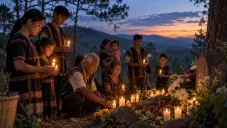
The Mnong recognized spirits in everything, with shamans called njau, sorcerers, and buffalo sacrifice at the great rites (see Yang). Many Mnong in Vietnam are now Christian; in Mondulkiri most Bunong keep the old religion, with Christian and Buddhist minorities.
See also: Lower Sesan 2.
Sources
- Gerald C. Hickey, The Major Ethnic Groups of the South Vietnamese Highlands, RAND RM-4041 (1964) — text copy
- Encyclopedia of World Cultures, “Mnong”
- Georges Condominas, We Have Eaten the Forest (Hill and Wang, 1977)
- CREM-CNRS sound archive, “Jeu du lithophone mnong gar,” Condominas, 1953
- Glottolog, Central Mnong
- Human Rights Watch, Repression of Montagnards (2002)
- Minority Rights Group, “Indigenous peoples” (Cambodia)
Compiled September 2026.