


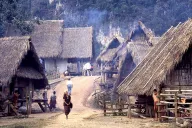

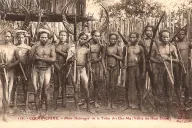
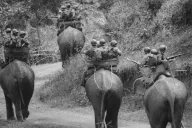

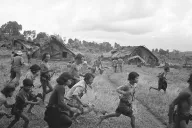


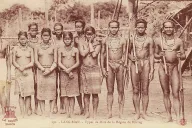











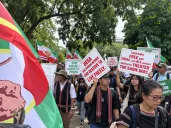
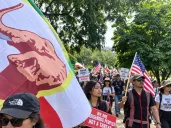
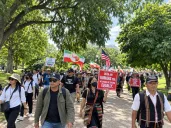











This page is a register of the killings of our people that are documented: who was killed, where, when, by whom, and how we know. It names every kind of killer, because our people were killed by all of them — by the Viet Minh and the Viet Cong, by the North Vietnamese army, by the Khmer Rouge, by the governments of South Vietnam and Cambodia, by American bombs, by the French before them, and by the police of Vietnam today. It is not complete. For every massacre on this page there are villages whose dead were never written down anywhere, and the last part of this page is about how to change that.
A warning before you read further
This page describes killings, and it contains a photograph of the dead. We have not softened it. We have kept to what can be shown from the record, and we say, every time, where the record is thin.
How to read this register
Each entry says who kept the record. Some records were kept by governments and armies, some by journalists, some by human rights organizations, and some by our own people. Our own history, written by Rong Nay, who was second in command of the forest resistance after 1975, is a record like any other: it is testimony, and we print it as testimony. Where two records disagree, we give both. Where the only record is a single sentence, we say so. We do not print numbers that nobody counted.
| When | Where | Who did it | Our dead | Who recorded it |
|---|---|---|---|---|
| May 1904 | Plei Lut, Jarai country | French colonial columns | 50 killed; the village burned | French colonial records, through later scholarship |
| 1949 | the Hre valleys, Quảng Ngãi | a Viet Minh regiment | not counted: “looting, massacring, and burning” | US Army handbook, 1966 |
| 1957–63 | resettlement sites across the highlands | the Diệm government’s land program | “thousands” of hunger, disease and neglect | our history |
| 1961 | an ambush; place not recorded | the Viet Cong | Y Ut Nie Buon Rit, a former National Assembly member | Gerald Hickey, RAND, 1967 |
| 1960s | not recorded | the Viet Cong | Siu Sipp, a Jarai leader, after his release from prison | Gerald Hickey, RAND, 1967 |
| December 27, 1965 | after the rising at Phu Thien | the South Vietnamese government | four FULRO officers, tried and executed | see Y Bham Enuol: president of FULRO |
| December 18–20, 1965 | Darlac | the Viet Cong | almost 1,000 abducted | the CIA |
| March 2, 1967 | Lang Vei, Bru country | two US Air Force aircraft, by mistake | 112 killed, 213 wounded (135 killed in another account) | US Marine Corps history |
| December 5, 1967 | Dak Son, Phuoc Long | the Viet Cong, with flamethrowers | 252, mostly women and children (74 in the CIA’s count that week) | TIME; the CIA; US government photographs |
| January–February 1968 | the highland towns at Tet | the Viet Cong and North Vietnamese army | “thousands” | our history |
| February 1968 | Huế | communist troops | 82 highland students, executed | our history |
| February 1968 | Minh Quy hospital, Kon Tum | attacking troops | women and children shot in the wards | the Associated Press |
| 1968 | Prieng, Ratanakiri | Cambodian government soldiers | 20 or 30, at a wedding | villagers, to the journalist Sara Colm |
| 1968 | villages across the highlands | the Viet Cong and North Vietnamese army | “men, women, children and the elderly huddled in bunkers”; not counted | our history |
| January–March 1971 | Plei De Groi, Pleiku | forced relocation by the South Vietnamese army | 200 to 300 dead of exposure, hunger and disease | US General Accounting Office |
| 1971 | Buon Kli B, Darlac | forced relocation | about 20 dead of sickness and hunger | a spokesman for the people, to the US auditors |
| 1972 | Kon Tum and the villages around it | the Easter Offensive | “by the thousands”; 200 wounded civilians in one hospital | our history; the Associated Press |
| May 1972 | Kon Hring | North Vietnamese troops, as reported | two French priests reported crucified; the fate of their people unknown | the Associated Press, from John Paul Vann; unconfirmed |
| March 11, 1975 | Buon Pa Lam, Darlac | the South Vietnamese air force | 125 killed, 210 wounded | our history |
| March 1975 onward | Buon Ma Thuot | the North Vietnamese | FULRO members executed after the town fell | Michael Benge, 2010 |
| April 17–20, 1975 | Phnom Penh | the Khmer Rouge | Y Bham Enuol, his family and more than a hundred followers; the Bunong soldiers of Chroy Changvar | Human Rights Watch; Catherine Scheer; our history |
| 1973–1979 | Ratanakiri and the northeast of Cambodia | the Khmer Rouge | “thousands” | Sara Colm, 1998 |
| from 1975 | prisons and reeducation camps | the Socialist Republic of Vietnam | “several thousand” executed or dead in prison | our history |
| 1975–1992 | the forests of Vietnam, Cambodia and the Thai border | war, hunger, disease | more than 8,000 of the 12,000 who went into the forest | our history |
| April 10–11, 2004 | Buon Ma Thuot and Gia Lai, Easter week | Vietnamese police and civilians | at least 10; 8 by name; 20 to 25 by witnesses | Human Rights Watch; Amnesty International; witnesses |
| 2006–2013 | police custody, Dak Lak | Vietnamese police | Y Ngo Adrong, Y Ben Hdok, Y Ket Bdap, and others | USCIRF; Human Rights Watch; court records |
Before the American war
Plei Lut, 1904. After the French official Prosper Odend’hal was killed in Jarai country in April 1904, a French inspector brought columns in from May 8. At Plei Lut they met twelve to fifteen hundred Jarai; fifty were killed and the village was burned. The columns stayed until November. The story, and what the villagers said they were refusing, is on Kings of fire and water.
The Hre valleys, 1949. The Viet Minh held the Hre valleys of Quảng Ngãi from 1945. In 1949 the Hre chiefs called on their men in Viet Minh units to desert with their arms. The US Army’s handbook of 1966 records the answer: “a Viet Minh regiment reoccupied Hre territory, looting, massacring, and burning in revenge.” Nobody counted the Hre who died. See Highlanders on the other side.
The land program, 1957–1963. Our history records that when the Diệm government moved our villages to make room for settlers, “thousands of Montagnards died through starvation, disease and neglect.” No government counted them. See Moved by force.
The American war, 1961–1975
Leaders killed by the Front. The Viet Cong killed our leaders who stood in its way. Gerald Hickey, the American anthropologist who worked in the highlands under contract to RAND, recorded two of them in passing in 1967: “Y Ut was killed in a 1961 Viet Cong ambush,” and “Siu Sipp was killed by the Viet Cong after his release from prison.” There were many more whose names are not in any American report.
Executed by Saigon, December 1965. After FULRO’s second rising in December 1965, the South Vietnamese government tried the commander of the 296th Regional Force company and his three platoon leaders, and executed them on December 27. See Y Bham Enuol: president of FULRO.
The kidnappings, December 1965. The CIA recorded that at the end of 1965 our people lived in fear of both governments, and that between December 18 and 20 the Viet Cong were reported to have “kidnapped almost 1,000 Highlanders in Darlac Province.” What became of them is not recorded.
Lang Vei, March 2, 1967. The US Marine Corps’ history: “Two USAF aircraft mistakenly bombed the village, killing 112 civilians, wounding 213, and destroying 140 buildings.” The village was Bru. Another account puts the dead at 135, burned with napalm. See The battles fought on our land.
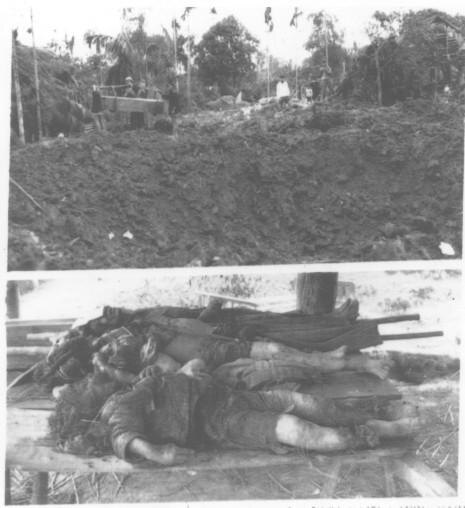
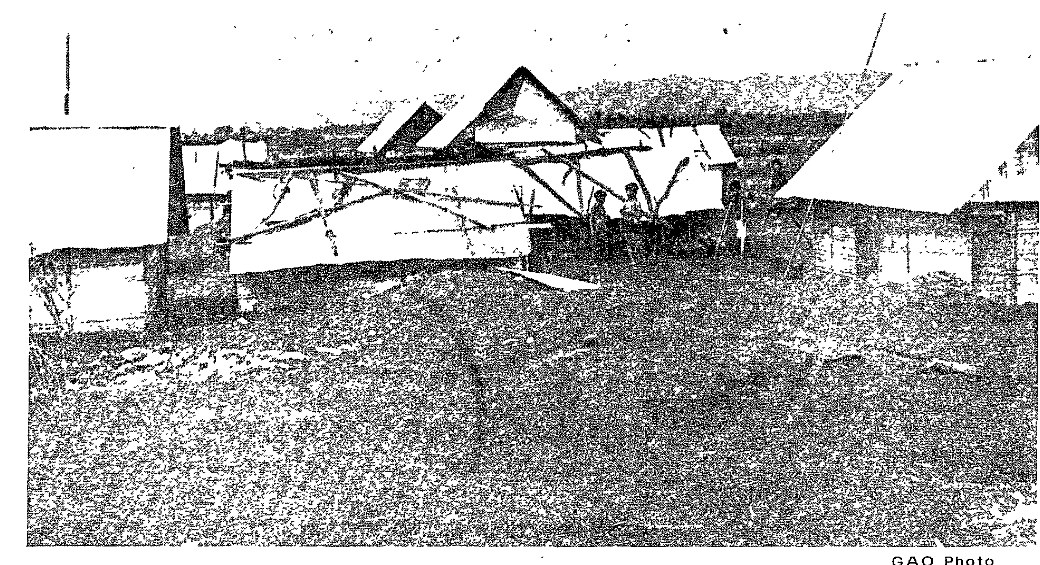
Dak Son, December 5, 1967. In the night two Viet Cong battalions came into Dak Son, a settlement of Stieng who had left the Front’s country, and burned it with flamethrowers, into the family shelters where people were hiding. TIME counted 252 dead; the CIA’s count that week was 74, rising. It is the best documented massacre of our people, and it is the only one for which American cameras recorded the dead. Its full story, the ledger of every count, and thirteen photographs are on Dak Son, December 5, 1967.

Tet, 1968. Our history records that when the Viet Cong and North Vietnamese attacked the highland towns in January 1968, “The Vietnamese Communists used Montagnard villages as shields to cover their assault on the towns and thousands of Montagnard people were killed. In Hue City, Communist troops invaded and executed 82 Montagnard students who were living in a boarding school of the Ministry of Ethnic Minority Development.” At the Minh Quy hospital in Kon Tum, an American wire report recalled, more than thirty Dega staff and patients lay over the American doctor to hide her while the attackers went through the wards “tossing grenades, shooting women and children in the legs.” See Tet 1968 in the highlands.
Prieng, 1968. Across the border in Ratanakiri, Cambodian government soldiers came to the Kreung village of Prieng. A villager told the journalist Sara Colm: “When they got there, there was a wedding going on and they fired into a crowd of people, slaughtering 20 or 30 like pigs.” The survivors went to the forest, and to the Khmer Rouge.
The villages, 1968. Our history records that through 1968 “the Vietnamese Communist forces mounted intensive night assaults on Montagnard villages, killing men, women, children and the elderly huddled in bunkers.” These are the massacres no one knows about. Our history names none of the villages, and no outside record we have found does either.
The relocation camps, 1971. When the South Vietnamese army moved our villages by force in 1970 and 1971, the American auditors who investigated found that at Plei De Groi in Pleiku, “between 200 and 300 Montagnards had died at this camp because of exposure, malnutrition, tuberculosis in older patients, or an influenza-type virus,” within two months of being moved. At Buon Kli B in Darlac a spokesman for the people told them that about twenty had died of sickness and lack of food. These were not killed by bullets. They died because they were moved. See Moved by force.
Kon Tum, 1972. Our history records that in the Easter Offensive of 1972 the North Vietnamese “attacked many Montagnard villages in the Central Highlands. As a result of the fighting, the wounded, homeless, malnourished and displaced Montagnard people died by the thousands.” The Minh Quy hospital held about two hundred wounded highland civilians at the end of May. In the Catholic village of Kon Hring, the Associated Press reported, two French priests who had stayed with their people were crucified; the report came secondhand and has never been confirmed, and what happened to the people of Kon Hring is not known.
Buon Pa Lam, March 11, 1975. Our history: “the South Vietnamese Government’s Air Force bombed Buon Pa Lam, killing 125 Montagnards and wounding 210. The entire village was burned to the ground.” We have found it in no American or South Vietnamese account. It is our record, and we keep it.
1975: the end of the war, and the killings that followed
Buon Ma Thuot. Michael Benge, the American aid officer who was a prisoner of the Front for five years, writes that after Buon Ma Thuot fell in March 1975, “the execution of Montagnards in both FULRO elements began.” He gives no count.
Phnom Penh, April 1975. When the Khmer Rouge took Phnom Penh, Y Bham Enuol, the president of FULRO, was in the French embassy with his family and his followers. The Khmer Rouge made the French hand them over, and they were killed: with his wife, his children and more than a hundred followers, in the community’s account; around a hundred and fifty with their families, in another. The Bunong soldiers of the Khmer Republic, recruited from a refugee camp in our country and stationed across the river at Chroy Changvar, died the same way. The anthropologist Catherine Scheer writes: “On 17 April 1975, those Bunong who had survived to that point were killed by the Khmer Rouge, seemingly with few exceptions.” See Y Bham Enuol in Phnom Penh.
The northeast of Cambodia. In Ratanakiri, where the Khmer Rouge had first recruited among the highland peoples, it turned on them after 1973: collective farms, communal eating, the banning of our rites, and death for those who refused. Sara Colm concluded that Pol Pot’s policies caused the deaths of thousands of people in the northeast. In early 1975 five thousand Brao and Kreung fled to Laos and Vietnam to escape.
The prisons. Our history records that after 1975 “Several thousand Montagnards were captured and executed by the Communist regime or died in ‘re-education’ prisons,” and that the leaders who had believed Hồ Chí Minh’s promise of autonomy were killed among them: Y Bih Aleo, R’com Briu and Y Ngong Nie Kdam. Radio Free Asia’s Dan Southerland wrote in 2018 that the Communists executed some Montagnard leaders while others died in prisons or camps. See Reeducation and the forest and The camps.
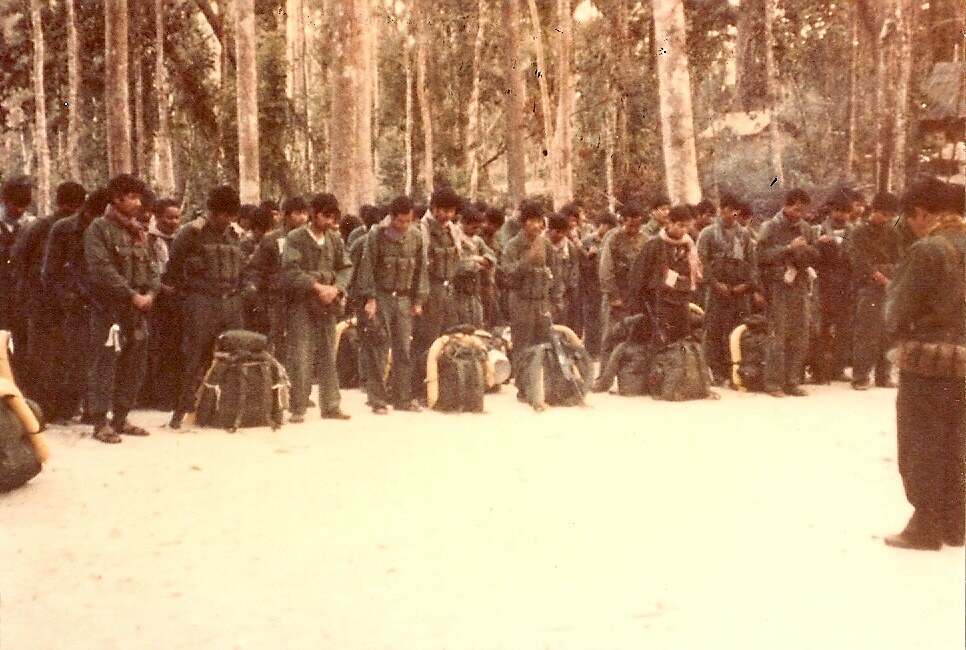
The forest, 1975–1992. More than twelve thousand of our people went into the forest after 1975 with the resistance, under Y Ghok Nie Krieng and Rong Nay. Our history records that “Over 8,000 died in the jungle because of starvation, disease, attack by tiger, and combat wounds.” The last of them came out in Mondulkiri in 1992; see Mondulkiri, 1992.
Since the war
Easter week, 2004. On April 10 and 11, 2004, when tens of thousands of our people marched in Dak Lak and Gia Lai, police and armed civilians met them on the roads. A Rhade woman watching from a window in Buon Ma Thuot said: “Those who tried to hide in the coffee plantation were caught, beaten and killed on the spot.” Human Rights Watch established that at least ten were killed. Amnesty International named eight: H’Lo Kbuor, a blind woman of Cu Mgar; Ksor Hnun, eighteen, of Plei Ring; Siu Plen and Ksor Jo of Ayun Pa; Y’Bhit Enuol, Y’Dlah Eban and Y’Wien of Buon Dah Prong; and Y’Luyen Eban of Buon Cuor Knia. Witnesses who were on the road counted twenty to twenty-five. The government said two. See Easter week, 2004.
In custody. Our people have died in the hands of the police. Y Ngo Adrong, listed by the US Commission on International Religious Freedom among Protestants beaten to death in custody in 2006. Y Ben Hdok, twenty-nine, arrested over the protests of April 2008; the police told his family he had hanged himself, and his family found his head, ribs and leg broken and his teeth knocked out. Y Ket Bdap, thirty-six, arrested in 2013 on suspicion of stealing a cow and dead before his family reached him; two commune police officers admitted beating him and were convicted. Their records, and others, are on the memorial register.
The massacres no one knows about
Every entry above exists because somebody wrote it down: an army, an auditor, a journalist, a human rights researcher, or one of our own people. The villages that no one wrote down are the larger part of the story. The night attacks of 1968 have no village names. The dead of the relocation camps other than Plei De Groi and Buon Kli B were never counted. The forest dead of 1975 to 1992 have no list. The Hre of 1949, the kidnapped of 1965 and the people of Kon Hring have no names at all.
Many of the people who remember are still alive, in the highlands, in Cambodia and Thailand, and in North Carolina. If you know of a killing of our people — a village attacked, a family burned, a relative taken and never returned — please record it. Write down:
- the name of the village, and where it was;
- the date, as closely as you can, or the season and the year;
- who came, and how you know who they were;
- who was killed, by name if you can, and how many;
- who else saw it, and whether any of them are living.
Read How to record an elder and how to document an incident first, and if you or your family are still in Vietnam, read Reporting safely before you send anything to anyone, including us. We will add what we can confirm to this register, with the name of the person who told us only if they want it there.
See also: How we died, The memorial register, Dak Son, December 5, 1967, The battles fought on our land, Highlanders on the other side.
Sources
- Rong Nay, “Summary of Montagnard History” — our own history, written by the second in command of the forest resistance: Tet 1968 and the students at Huế, the night assaults of 1968, Kon Tum 1972, Buon Pa Lam, the prisons and the forest
- Department of the Army, Minority Groups in the Republic of Vietnam, DA Pam 550-105 (1966), at the Internet Archive — the Hre, 1949
- Gerald C. Hickey, The Highland People of South Vietnam, RAND RM-5281/1-ARPA (1967), at the Internet Archive — Y Ut and Siu Sipp
- CIA, The Highlanders of South Vietnam: A Review of Political Developments and Forces (1966), at the Internet Archive — December 1965
- Gary L. Telfer and others, U.S. Marines in Vietnam: Fighting the North Vietnamese, 1967 (US Marine Corps, 1984), at the Internet Archive — Lang Vei
- For Dak Son, the full list of sources on its own page
- Pacific Stars and Stripes and the Associated Press, May 1972, as collected at The Battle of Kontum — Minh Quy and Kon Hring
- Sara Colm, “Pol Pot: the secret 60s,” Phnom Penh Post, April 24, 1998 — Prieng and the northeast of Cambodia
- US General Accounting Office, Follow-Up Review on Assistance to War Victims in Vietnam, B-133001 (1972), copy in our library — Plei De Groi and Buon Kli B
- Michael D. Benge, “The History of the Involvement of the Montagnards” (2010) — Buon Ma Thuot, 1975
- Catherine Scheer, “Surprising Testimonies,” The Newsletter (IIAS) 101 (2025) — Chroy Changvar
- Human Rights Watch, Repression of Montagnards (2002), and its reports on Easter 2004; Amnesty International, ASA 41/005/2004 (April 27, 2004) — the Easter dead; see Easter week, 2004 for the full references
- US Commission on International Religious Freedom, annual reports 2009 and 2011; Human Rights Watch, 2009 and 2011 — deaths in custody; see the memorial register
Compiled September 2026. Every entry on this page comes from a record we have read, and each says whose record it is. Figures that disagree are given side by side. We are adding to this register as families tell us what happened in their villages.