







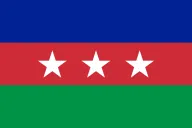
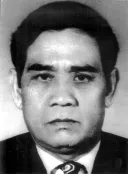

The United States recruited, armed and paid tens of thousands of our men, and since 1986 has given many of their families a home. Congress has come back to us again and again, in hearings, in resolutions and in the reports of its own researchers, and the executive branch has twice treated Vietnam’s religious persecution as a matter of policy. This page sets out that record, including what was only introduced and never voted on, so that anyone writing to their representative can cite what Washington has already said.

What the United States asked of us
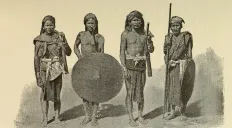
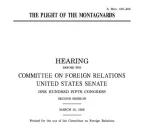
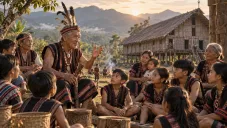
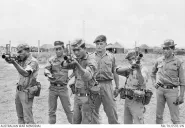
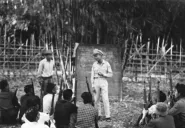
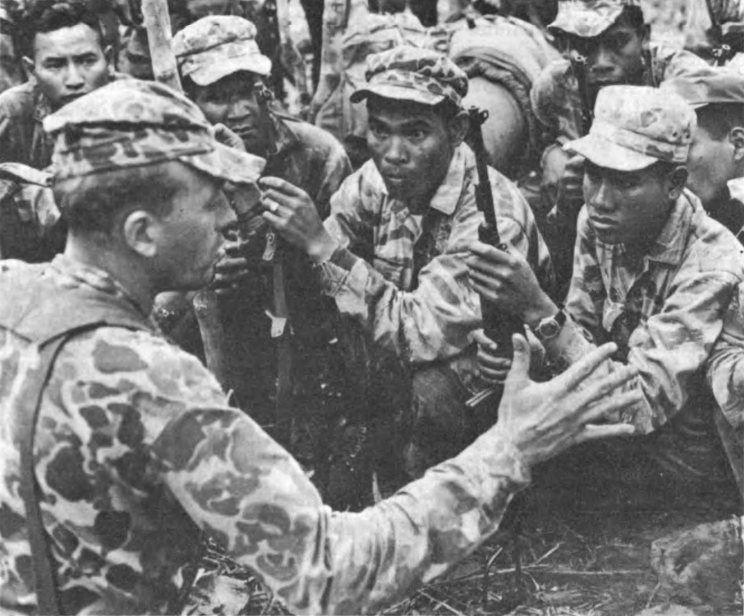
By the count Congress itself has adopted in its resolutions, some 61,000 of our men fought alongside the United States, out of a highland population of about a million: 43,000 in the Civilian Irregular Defense Groups, at about fifty camps each with two American officers and ten enlisted men, and 18,000 more in the mobile strike forces. At the Senate hearing of 1998 the American Legion’s executive director put the rest of the story in one line: the United States recruited us, trained us and armed us, and in 1975 “we left them twisting in the wind.”
What came after is also on the record. In 1985 some two hundred resistance fighters reached the Thai-Cambodian border and came to North Carolina in 1986; in 1992 another 398 were found in Cambodia and brought over. By 1998, 1,042 of our people had been admitted as refugees, most of them from inside Vietnam under the Orderly Departure Program, and in 2002 the United States took more than nine hundred from the camps in Cambodia. See North Carolina, Mondulkiri, 1992 and The 2002 resettlement.

Congress: resolutions and bills
| Date | Document | What it says |
|---|---|---|
| June 28, 2001 | H.Con.Res. 178, Reps. Ballenger and Burr of North Carolina | After the February 2001 protests: tanks and helicopter gunships sent in; the highlands closed to diplomats and journalists for four months; about 250 refugees under UN protection in Cambodia and 38 resettled in the United States; 100 to 200 forced back by Cambodian officials; credible reports that Vietnamese security forces paid $3,200 in gold for the return of 33 asylum seekers. Referred to committee. |
| April 6, 2006 | H.Con.Res. 320, Rep. Christopher Smith, introduced December 16, 2005 | Chiefly a call to free Dr. Phạm Hồng Sơn and other political prisoners. It also records well-founded concerns about Montagnards forced back from Cambodia and asks for UN monitoring and open access to the highlands. Passed by the House, 425 to 1. |
| December 1, 2014 | S.Res. 592, Sen. Burr | The first resolution recognizing the Montagnards’ contributions: 61,000 fought with US forces, 43,000 in the CIDG; condemns the suppression of basic rights and urges Vietnam to end restrictions on religion, land and property, and movement. Referred to committee. |
| April 17, 2015 | H.Res. 210, Rep. Duffy | Honors the Khmer, Laotian, Hmong and Montagnard freedom fighters. Referred to committee. |
| February 4, 2016 | S.Res. 362, Sens. Burr and Tillis | The same resolution, adding children fleeing to Cambodia and forced back, and the right to practice the Christian faith and to keep an ethnic identity. Referred to committee. |
| March 22, 2018 | H.Res. 797, Rep. Budd | The same, adding that Montagnards should have access to the US refugee program. Referred to committee. |
| June 11, 2019 | H.Res. 435, Rep. Budd | Repeats the refugee clause, and quotes the US Commission on International Religious Freedom: “up to 300 Montagnards” fled to Cambodia after October 2014 and only thirteen were recognized as refugees, and the Commission recommends that Vietnam be named a Country of Particular Concern. Referred to committee. |
| October 22, 2019 | S.Res. 369, Sens. Burr and Tillis | The same, adding that some 10,000 people in the Central Highlands are refused identity cards and birth certificates for refusing to renounce their faith. Referred to committee. |
| October 4, 2023 | S.Res. 395, Sens. Tillis and Budd | Restates the 61,000 and 43,000, records that North Carolina has the largest Montagnard community outside Vietnam, and cites the State Department on Montagnard Christians kept from gathering at Easter and Christmas. Referred to committee. |
None of the six resolutions recognizing the Montagnards’ contributions got beyond committee, and we have found none in the Congress elected in 2024. They are listed because they record what members of Congress were told and what they chose to put their names to.

The Vietnam Human Rights Act, written by Representative Christopher Smith, has passed the House five times and never been taken up by the Senate: in September 2001 by 410 to 1, in July 2004, in September 2007 by 414 to 3, in September 2012 and in August 2013 by 405 to 3. The 2007 version found that thousands of Montagnards protesting at Easter 2004 had been met with violence and that many were still serving long sentences, and made it American policy to offer resettlement to Montagnards eligible under the old refugee programs. The 2013 version found that Montagnard Protestants suffered forced renunciations, beatings and reported deaths. The version introduced in April 2025, H.R. 3122, does not, as far as we can find, mention the Montagnards, the highlands or refugees at all.

Hearings
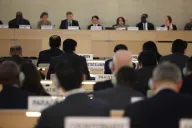
- March 10, 1998 — Senate Foreign Relations Committee, The Plight of the Montagnards, Jesse Helms presiding. We testified, and so did Y Hin Nie of the Montagnard Dega Association, the State Department and the American Legion. In our library.
- June 18, 1998 — House Ways and Means trade subcommittee. Representative Smith said only four of more than eight hundred Montagnards believed eligible for US refugee programs had been cleared; Senator John Kerry said Vietnam had just agreed to let US officials interview all Montagnard cases. Our written submission is in the record. In our library.
- July 18, 2002 — House Ways and Means trade subcommittee on the Jackson-Vanik waiver. The State Department described the flight of more than a thousand Montagnards to Cambodia after the protests of 2001, Vietnam’s attempt to take them back, and their resettlement in the United States. In our library.
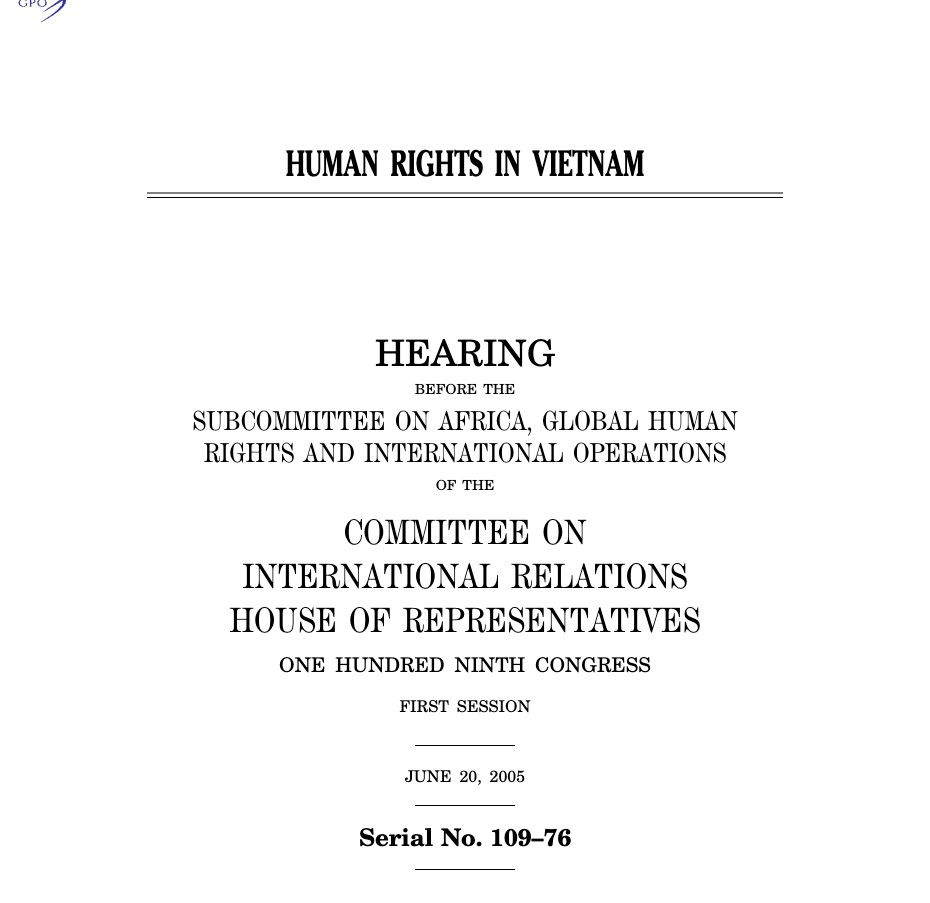
- June 20, 2005 — House International Relations subcommittee, Human Rights in Vietnam. Representative Smith spoke of the crushing of Montagnard protesters at Easter 2004 and more than four hundred churches closed in the highlands; the religious freedom commission reported people asked whether they followed “Dega Christianity” and made to sign pledges to give it up. Our own statement is in the record. In our library.
- March 29, 2006 — House International Relations subcommittees, The Human Rights Dialogue with Vietnam. The State Department’s religious freedom ambassador reported more than two hundred churches and meeting places registered in Gia Lai; we testified, and so did H’Pun Mlo, a Montagnard refugee. In our library.
- November 6, 2007 — House subcommittee, Human Rights Concerns in Vietnam. The record includes the religious freedom commission’s count of more than 45,000 people who demonstrated in 2001 and 2004, and a former prisoner’s account of 225 Montagnard Protestants, some of them minors, in his prison. In our library.
- March 12, 2008 — Senate Foreign Relations subcommittee, The United States and Vietnam. Ambassador Christopher Hill said the United States had pressed for access to the highlands; Senator Barbara Boxer said hundreds of Montagnard Protestants remained in prison. In our library.
- March 23, 2010 — Tom Lantos Human Rights Commission, Human Rights and Religious Freedom in Vietnam, with Y Hin Nie among the witnesses.
- January 24, 2012 — House Foreign Affairs subcommittee, Examining Ongoing Human Rights Abuses in Vietnam. We testified. In our library.
- April 11, 2013 — the same subcommittee, before the US–Vietnam human rights dialogue. We testified. In our library.
- June 5, 2013 — House Asia subcommittee, U.S. Relations with Vietnam. Representative Smith said at the hearing that eight Montagnards had been convicted on May 28 and given seven to eleven years.
- March 26, 2014 — Tom Lantos Human Rights Commission, Persecution of Religious and Indigenous Communities in Vietnam. We testified: some 500,000 Montagnard Christians in the highlands, more than 300 in prison, more than 200 fled to Thailand; we asked that Vietnam be named a Country of Particular Concern again. Representative Frank Wolf said that after that testimony he would never vote for the Trans-Pacific Partnership.
- June 22, 2016 — House Foreign Affairs subcommittee, after President Obama’s visit to Vietnam. Pastor Rmah Loan of Dak Nong testified. In our library.
- June 7, 2018 — House Foreign Affairs subcommittee, A Bad Year for Human Rights in Vietnam. Forced renunciations had cut the Montagnard Evangelical Church of Christ from 1,500 members to 500 in eighteen months.
- January 13, 2026 — US Commission on International Religious Freedom, hearing on Christians abroad. Y Phic Hdok, a founder of Montagnards Stand for Justice, testified that his father had been killed in 2016 and that the organization’s other founder, Y Quynh Buondap, had just been extradited from Thailand.
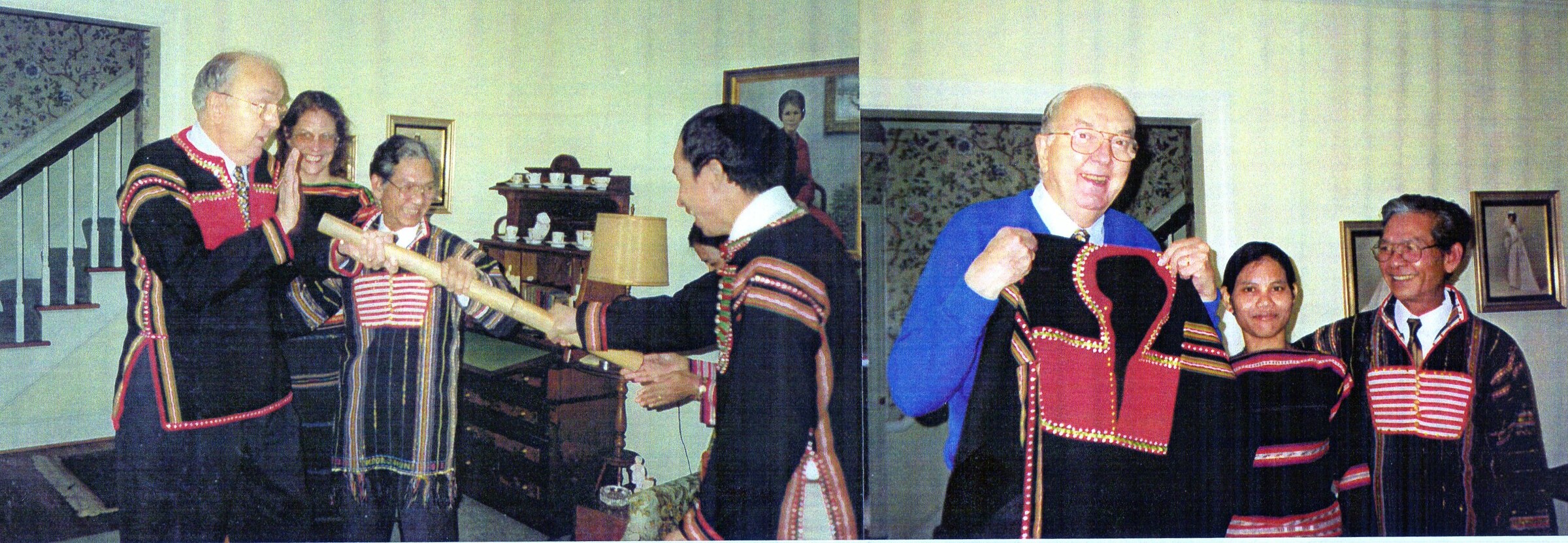
Members of Congress have written as well. On October 11, 2024, Representatives Lou Correa, Zoe Lofgren, Michelle Steel and Christopher Smith of the Congressional Vietnam Caucus asked Secretary of State Antony Blinken to prevent the extradition of Y Quynh Buondap; Representative Steel had written on her own on September 30. We have found no statement from Congress after he was sent back on November 28, 2025. See Y Quynh Buondap.
Congress’s researchers
The Congressional Research Service covered us in its reports on US–Vietnam relations for more than a decade. Its reports from 2001 to 2005 called the February 2001 protests the largest social unrest in Vietnam in years, and recorded the American offer, accepted by Cambodia in 2002, to resettle the more than nine hundred people left in the camps. In 2006 it recorded that President George W. Bush had raised the repression of the highland peoples with Prime Minister Phan Văn Khải in June 2005. In 2011 it cited Human Rights Watch for about a million Montagnards, many of them evangelical Protestants, and linked the loss of our land to the migration of millions of lowlanders and to coffee and rubber; it said scores, if not hundreds, of Montagnards had been imprisoned since 2001, and that some advocates faulted the US government for not pressing for their release. The same year it judged that abuses in the highlands appeared to have fallen since 2004, a judgment Human Rights Watch’s report of that year does not bear out. The reports on Vietnam we have read since 2014 do not mention us.
The executive branch
- The State Department named Vietnam a Country of Particular Concern for religious freedom on September 15, 2004, citing religious prisoners, closed churches, forced renunciations of faith, and beatings and killings of believers, and above all the harassment of ethnic minority Protestants and Buddhists. A binding agreement followed on May 5, 2005, and the designation was renewed that year. It was lifted in November 2006, days before President Bush went to Hanoi; the religious freedom commission called that premature. Vietnam was placed on the Special Watch List in December 2022 and December 2023. No full list of designations has been published since, and as of June 2026 the religious freedom report for 2024 had not been released. The 2023 report records the arrest of Y Krec Bya in Dak Lak and an eight-year sentence for Rlan Thih of Gia Lai as a “Dega Protestant” leader.
- The US Commission on International Religious Freedom, an independent federal commission, has recommended since 2002 that Vietnam be named a Country of Particular Concern, and recommended it again in 2026. Its reports record forced renunciations and the arrests of Montagnard Protestants, most recently in its December 2025 update on Vietnam.
- The White House raised the Central Highlands with Hanoi in June 2005. The statement of September 11, 2023, that raised relations with Vietnam to a Comprehensive Strategic Partnership mentions human rights only in general terms and says nothing of ethnic minorities or the highlands; it came three months after the Dak Lak attacks.
- Refugees. On January 20, 2025, Executive Order 14163 suspended the admission of refugees from January 27, except case by case. The ceiling for 2026 was set at 7,500, mainly for Afrikaners from South Africa, and raised to 17,500 in May 2026 for the same group. Neither decision mentions Vietnam or the Montagnards. What this means for the recognized refugees among our people in Thailand who were waiting to be resettled, no one has published.
We have found no federal law, veterans’ rule or presidential act that recognizes the Montagnard soldiers of the CIDG and the Mike Force.
Writing to your representative
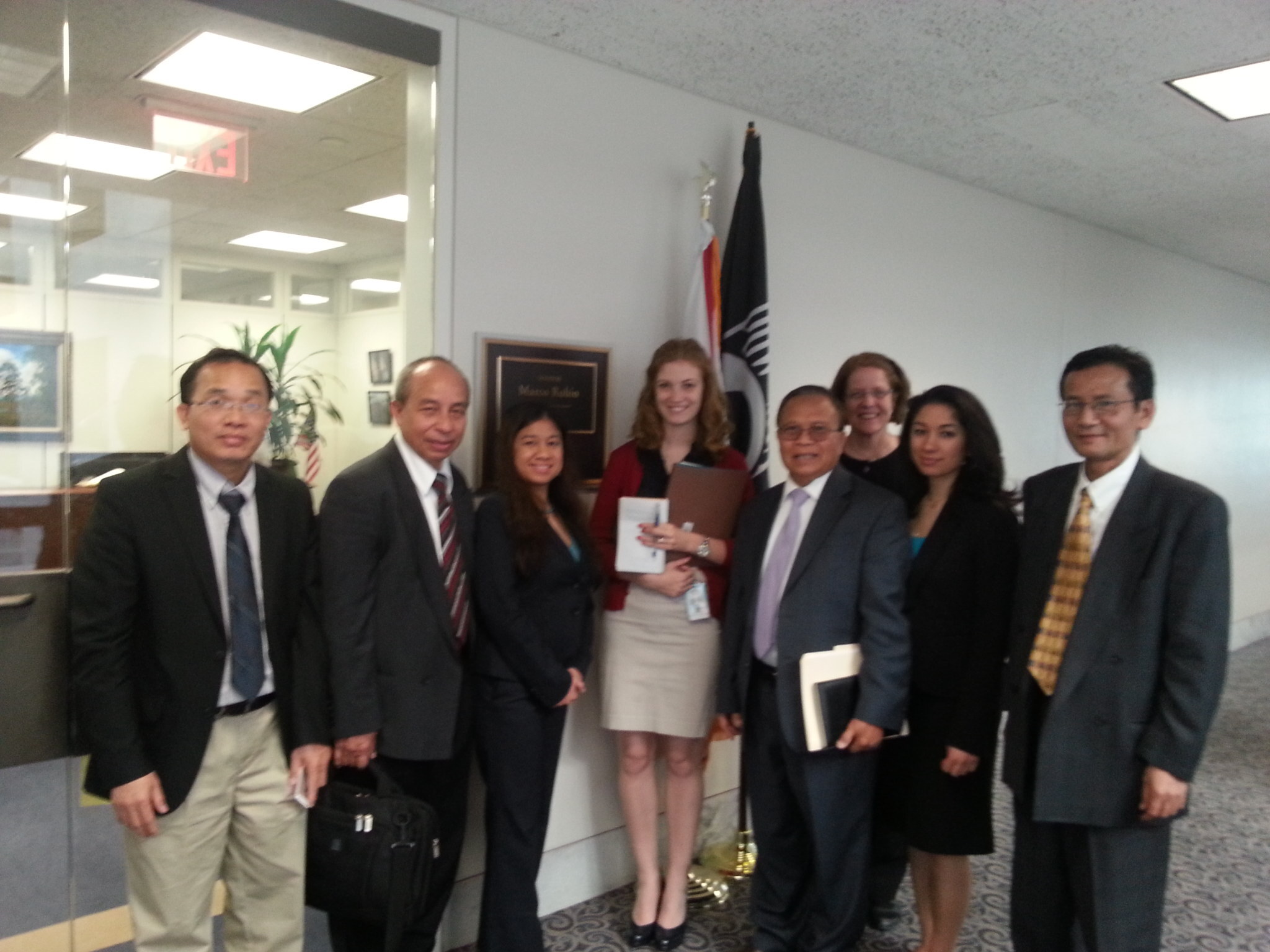
If you live in the United States, the most useful thing you can do is write to your own senators and representative, cite the resolution or hearing above that is closest to your concern, and ask what they are doing about it. North Carolina’s delegation has the longest record on this, from Jesse Helms in 1998 to Richard Burr, Thom Tillis and Ted Budd; every state’s delegation has a vote. A resolution that has died in committee can be introduced again.
What we do not know. Whether the State Department’s human rights report for 2024 says anything about the highlands; we could not read it. Why no religious freedom designations have been published since December 2023. What the United States has said, if anything, about the extradition of Y Quynh Buondap. How many of our refugees in Thailand were in the resettlement pipeline when admissions stopped in January 2025. How many of our people live in North Carolina: the resolutions say several thousand, and we told Congress in 2014 that there were 12,000.
Sources
- US Senate, The Plight of the Montagnards, hearing, March 10, 1998, in our library — the American Legion, the refugee figures, our testimony
- H.Con.Res. 178, 107th Congress
- H.Con.Res. 320, 109th Congress; govinfo, bill status — the vote
- S.Res. 592, 113th Congress; H.Res. 210, 114th Congress; S.Res. 362, 114th Congress; H.Res. 797, 115th Congress
- H.Res. 435, 116th Congress; S.Res. 369, 116th Congress; S.Res. 395, 118th Congress
- Vietnam Human Rights Act: H.R. 3096, as passed by the House, 2007; H.R. 1897, as passed by the House, 2013; H.R. 3122, 2025; govinfo bill status records; Congressional Research Service, IB98033 (2002) — the 2001 vote
- US House hearing records of June 18, 1998; July 18, 2002; June 20, 2005; March 29, 2006; November 6, 2007; January 24, 2012; April 11, 2013; and June 22, 2016; US Senate hearing record of March 12, 2008 — all in our library; US House hearing records of June 5 and June 27, 2013
- Our written statement to the Tom Lantos Human Rights Commission, March 26, 2014, and the commission’s transcript of the hearing; Tom Lantos Human Rights Commission, hearing of March 23, 2010
- House Foreign Affairs subcommittee hearing transcript, June 7, 2018
- US Commission on International Religious Freedom, hearing of January 13, 2026, and the testimony of Y Phic Hdok; Rep. Lou Correa, press release of October 11, 2024
- Congressional Research Service, The Vietnam-U.S. Normalization Process (IB98033, 2001–2005); U.S.-Vietnam Relations: Background and Issues for Congress (RL33316, 2006); U.S.-Vietnam Relations in 2010 (R40208, February 2011) and its July 2011 update; International Religious Freedom Policy (IF10803, June 2026)
- US Commission on International Religious Freedom, Religious Freedom in Vietnam: Assessing the Country of Particular Concern Designation 10 Years After its Removal (2017); releases of September 15, 2004, May 2, 2008, and December 12, 2024; USCIRF, 2026 recommendations; Vietnam Country Update, December 2025, in our library
- US State Department, 2023 Report on International Religious Freedom: Vietnam (via ecoi.net); State Department, designations of December 2022 and December 29, 2023
- The White House, joint leaders’ statement of September 11, 2023; Executive Order 14163, 90 Fed. Reg. 8459 (2025); Presidential Determinations 2025-13 and 2026-14 on refugee admissions
Compiled September 2026. If you testified or wrote to Congress about our people and the record is missing here, tell us.