















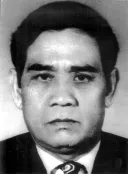

Y Quynh Buondap is a Rhade Christian from Dak Lak who spent his twenties collecting the names of our prisoners and writing down what was done to our churches. He fled to Thailand with his family in 2018, was recognized as a refugee by the United Nations, and helped found Montagnards Stand for Justice. In January 2024 a Vietnamese court he never appeared before sentenced him to ten years for terrorism. On November 28, 2025, Thailand handed him to Vietnam. He is now in a Vietnamese prison that the state has not named. His case shows, one legal step at a time, how a man who wrote reports was turned into a terrorist on paper and then delivered.

His name
Among the Rhade a child belongs to the mother’s clan, so a father and son carry different names: his father is Y Phô Êban. His clan name is written Bdăp in our own spelling and in the UN’s letters, Bdap in English-language reports, Bđăp or B’Đăp in Vietnamese, and Buondap in the way our community in America has long written clan names, as Byă is written Buonya. They are the same name. Anyone searching the record for him needs all of them. See Names and words.
Before he left
His family was already known to the police. His grandfather had worked with the American military during the war. His father served three years in prison for “inciting” a protest. The state press would later present all of this as a family tradition of opposition to the Party.
In 2008, when hundreds of our people were in prison for demonstrating for equal rights, he drew up a list of those who had been prosecuted for their political and religious beliefs and passed it around his community. He was still in his teens. He was arrested a number of times; in 2010, by his own account, he was beaten severely in a police station. In 2012 the police held him for five months without a lawyer on a charge of “undermining national unity” under article 87 of the 1999 Penal Code, and pressed him to sign an undertaking to give up his Protestant faith. He did not sign, and in the end they released him. In December 2013 the local authorities put him through a public denunciation, at which he was made to promise to stop all religious activity.
In 2016 he went to Bangkok for a human rights training; Human Rights Watch describes it as a conference on religious freedom. When he came home the police held him for seven days and questioned him about the trip. Montagnards Stand for Justice says he was detained, interrogated and tortured more than once in that period. After it he lived under close surveillance. In 2018 he took his family and crossed into Thailand. UNHCR recognized him as a refugee, in 2018 by one report and in 2019 by the UN experts’ account.
Montagnards Stand for Justice
In July 2019, in Bangkok, three Montagnard asylum seekers founded Montagnards Stand for Justice, in Vietnamese Người Thượng vì công lý. The group names Y Quynh Buondap, Y Phic Hdok and Y Pher Hdrue as its founders and Y Aron Eban as a co-founder. Y Quynh became its coordinator. The group’s work is documentary. It teaches Montagnards Vietnamese and international law and how to record religious persecution and report it to the United Nations, and it collects testimony from the highlands and turns it into submissions: more than 60 reports by one of its own counts, nearly 200 for the UN special procedures by another. It has about fifteen members in Thailand, Vietnam and the United States, and is registered in the United States.
Shortly before his arrest he recorded a short video. In it he said:
“My activities are peaceful, consisting only of collecting and writing reports on human rights violations in Vietnam.”
June 11, 2023, and the trial
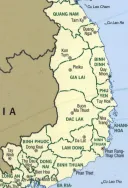
On June 11, 2023, armed men attacked the police stations and people’s committee offices of Ea Tieu and Ea Ktur communes in Cu Kuin district, Dak Lak. Nine people were killed: four police officers, two commune officials and three civilians. Y Quynh Buondap was in Thailand. The arrests that followed swept through our villages; UN experts later described vigilantes from the majority population being encouraged to hunt down suspects, and detainees tortured into confessing. See Cu Kuin, 2023.

The trial opened on January 16, 2024, before a “mobile court” of five judges in Dak Lak. There were 100 defendants. The UN experts counted 99 of them as Montagnards; Radio Free Asia counted 93 from ethnic minorities. Ninety-four were in the dock, represented by 19 lawyers between them. Six were tried in their absence, with no lawyer at all, and he was one of the six. The verdicts came on January 20; The 88 Project gives January 19 for his sentence. Ten defendants were sentenced to life. He was given ten years for terrorism, under article 299 of the 2015 Criminal Code according to the International Commission of Jurists; FIDH and the Vietnam Committee on Human Rights give article 113, terrorism “aimed at opposing the people’s administration.” The UN experts found that the mobile court had no clear legal basis and was not independent, and that the defendants could neither choose their lawyers nor examine the witnesses against them.
What the state says he did is known only from its public statements. In October 2024 a spokesperson for Vietnam’s foreign ministry said that he had “directly recruited, incited, and directed” the attack; Agence France-Presse reported the conviction as one for remotely orchestrating the attacks. The judgment has not been published, and no outside monitor has seen the evidence. He has always denied any part in it. When the UN experts first wrote to Vietnam about the case, in June 2024, they recorded in a footnote that the Dega Central Highlands Organization, and the Central Highlands Protestant Church of Christ, had denied any involvement in the attack. That is our position still.
The designation, and the police who came to Bangkok
On March 6, 2024, Vietnam’s Ministry of Public Security listed Montagnards Stand for Justice as a terrorist organization, together with the Montagnard Support Group in North Carolina. The listing claimed that the group, founded in Thailand in 2019, recruited and trained members, paid for weapons and vehicles and directed a group it called the “Degar Soldiers” to carry out the June attack, all to set up a separate state in the Central Highlands. It warned that anyone who took part in the group’s training, sponsored it or followed its direction would be charged with terrorism. In effect, as the UN experts pointed out, it made a criminal of anyone in Vietnam who had dealings with the group. UN experts called the listing abusive and arbitrary, and said it might violate freedom of expression, association and religion, and the rights of Indigenous Peoples to self-determination.
On March 13, 2024, Vietnam’s Minister of Public Security met the Thai government and proposed an extradition agreement. The next day a Vietnamese police delegation, among them the director of the Gia Lai provincial police, an investigator from Dak Lak, two interrogators and an embassy official, went with Thai police to the neighborhoods where Montagnard refugees live in Nonthaburi province and in Bang Len district of Nakhon Pathom. Thai officers had our people come out of their homes to be questioned. The Vietnamese filmed them, told them to go home, showed arrest warrants and photographs of the six men convicted in absentia, asked where they were, and said they would arrest a hundred more. Y Quynh Buondap and his family had already gone into hiding at the end of 2023, when he learned the Vietnamese police were hunting him. See Asylum today.
Arrest, and the court in Bangkok
On June 4, 2024, Thai police came to his former home and questioned the neighbors. On June 6 they found where he was staying and posted themselves outside. The National Human Rights Commission of Thailand intervened to stop the arrest, met him on June 7, and sent the Immigration Bureau a letter marked most urgent asking that he not be deported. On June 10 he was interviewed at the Canadian Embassy about resettlement, and staff of the International Organization for Migration took him to a safe place to wait for Canada’s decision. On June 11, 2024, the Immigration Police arrested him under the Immigration Act of 1979 on an extradition warrant and put him in Bangkok Remand Prison. It was a year to the day after the attack. He managed to send Y Phic Hdok a text message: he had been arrested. Two days later a Thai prosecutor filed the extradition case with the Bangkok Criminal Court.

The hearings began in July and were put off once, because his lawyers had received the extradition file late, had little time to see him, and asked for the papers in a language he could read. On August 1 he was not brought to court and had to follow his own case from a cell; the next day he was allowed in, in shackles. The International Commission of Jurists filed a brief on the rule against sending anyone back to torture. At the long hearing of August 19, which ran from two in the afternoon until ten at night, the Thai officer who arrested him said he had had no choice, and an official of the Vietnamese prison department told the court that Vietnam’s prisons treat inmates humanely and let their families visit. Nine senior Vietnamese security officials sat in to watch. About fifty observers attended, from Thai and international organizations, the Thai human rights commission, several embassies, the European Union and the UN human rights office.
On September 30, 2024, the court found sufficient grounds to extradite him under section 19 of Thailand’s Extradition Act of 2008. It accepted that section 13 of Thailand’s own anti-torture law forbids sending anyone to a real risk of torture, and then held that it had no authority to judge whether Vietnam’s courts had given him due process. There is no extradition treaty between Thailand and Vietnam, and the final decision rested with the Thai government. Four members of the US Congress asked the Secretary of State to intervene and to consider resettling him in the United States. Thirty-four organizations wrote an open letter to the Thai government. Canada, which had been weighing his resettlement, stalled his application once Vietnam announced the terrorism charges.
On December 25, 2024, a group of officials from Dak Lak visited his wife’s family and handed her father a paper headed “Letter Calling on the Wanted to Surrender,” with a warning that if the family did not sign and bring him home, the authorities would not help them with any trouble in the future. The family refused to sign. His father told reporters that the family would not let him return, because the authorities had called him a terrorist and would show him no mercy. His lawyers lodged an appeal in mid-February 2025. On February 23, 2025, Thai police raided the funeral service his wife had arranged near Bangkok for her mother. Forty-three of the mourners were sentenced to six months in prison.
The United Nations
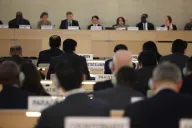
Thirteen UN mandate holders wrote to Vietnam on June 14, 2024, and the experts went public on July 4. They intervened with the Thai court, and after the ruling said in October that Thailand was free to refuse. In December 2024 the UN Committee against Torture named him in its conclusions on Thailand, noting that the court had declared itself unable to assess Vietnam’s due process. On July 24, 2025, ten mandates wrote to Vietnam and twelve to Thailand about him and the other Montagnard refugees there; on August 22 they wrote to the Secretary-General of ASEAN. In July 2025 the UN Human Rights Committee, reviewing Vietnam, recorded its concern at repression by Vietnamese officials in Thailand.

November 2025
On November 26, 2025, Thailand’s Court of Appeal upheld the extradition, at a hearing his lawyers had been told about one day in advance. It found insufficient evidence that he would be in danger of torture or disappearance, and relied on assurances from Vietnam’s Ministry of Public Security that he would be treated according to international standards. On the evening of Friday, November 28, the Thai Department of Corrections took him out of the Bangkok prison and handed him to the Thai police, who handed him to the Vietnamese side. He was flown to Vietnam. For many hours neither his family nor his lawyers could find out where he was. His transfer was confirmed on November 29. He was 33. The decision to enforce the order was the government’s, under Prime Minister Anutin Charnvirakul.
Human Rights Watch said Thailand had violated its own anti-torture law. On December 3 the UN experts condemned the extradition as a breach of the rule against returning anyone to a risk of torture, said his whereabouts in Vietnam were unknown, and asked for an urgent review of his conviction. On December 8 human rights organizations and his lawyers asked Thailand to locate him and visit him in prison, asked the embassies in Vietnam to seek access to him, and asked all governments to give his wife and children a fast route to resettlement, because the reprisals against them were growing.
Since his return
On December 29, 2025, Vietnamese state television broadcast him giving a “confession” implicating Montagnards Stand for Justice in the attacks. Y Phic Hdok told a USCIRF hearing in Washington that the video was staged; the UN special rapporteur on human rights defenders wrote that he had been made to give what were reported to be forced confessions.
By February 2026 rights groups reported that he was serving the ten-year sentence. The US Commission on International Religious Freedom lists him as a religious prisoner of conscience; its 2026 annual report, which again recommends that Vietnam be designated a country of particular concern, describes his extradition. On July 1, 2026, eighteen organizations reported that Thailand and Vietnam had pledged to negotiate an extradition treaty, and that Thai authorities had stepped up surveillance of Montagnard refugee communities around the two governments’ visits. By the reckoning of The 88 Project his sentence runs to January 2034.
What we do not know. Where he is held. Whether he has seen a lawyer or his family since November 28, 2025, and what state his health is in. Whether his conviction in absentia has been reviewed, as the UN experts asked, or whether he has been tried again. The text of the Vietnamese judgment and of the evidence behind it; the text of the Thai appeal judgment and of the Vietnamese assurances it relied on. How and from where he was flown out of Thailand. Where his wife and children are now. The commune he was born in. UNHCR, whose refugee he was, has said nothing in public; it told a reporter in 2024 that it does not comment on individual cases.
What his case shows
Every step used an ordinary legal instrument: a criminal trial, a terrorism listing, an arrest under immigration law, an extradition hearing, an appeal, a set of diplomatic assurances. Each could be defended on its own, and that is why the pattern is hard to name. Together they turned a man whose work was collecting testimony into a terrorist, and the label then did the work of an extradition treaty that does not exist, in a country bound by its own law not to send anyone back to a real risk of torture. We have seen no evidence that he ever held a weapon, and the state that convicted him has published none. We have a great deal of evidence that he wrote reports.
What we ask for. Disclosure of where he is held and on what legal basis; independent access to him by a lawyer, his family and diplomats; review of a conviction handed down without him or a lawyer, or his release; safe resettlement for his wife and children; and the removal of the terrorist listing of Montagnards Stand for Justice. The UN experts who have followed the case ask for the same.
See also
- Asylum today — Cambodia, Thailand, and the reach of the state
- Cu Kuin, 2023 — the attacks and the mass trial
- Our defenders and prisoners — the others in prison
- Thailand’s screening mechanism — what protection Thailand offers in law
- The laws used against us — articles 87, 116, 299 and the rest
- Reporting safely — before you contact anyone about a case
Sources
- Human Rights Watch, “Thailand: Don’t Return Montagnard Activist to Vietnam,” June 13, 2024 — the arrest and Bangkok Remand Prison; “Thailand: Vietnamese Activist at Risk of Forced Return,” October 22, 2024 — his father and grandfather, 2012, 2013, 2016, Canada; “Thailand: Montagnard Activist Extradited to Vietnam,” December 1, 2025
- Office of the UN High Commissioner for Human Rights, press releases of July 4, 2024, August 28, 2024 — the mobile court, torture of detainees, the listing; October 16, 2024 — the court’s reasoning, no treaty; and December 3, 2025 — recognition in 2019, the transfer confirmed November 29
- UN special procedures, communications AL VNM 4/2024 (June 14, 2024) — the listing, the extradition proposal, our denial; AL VNM 3/2025 and AL THA 8/2025 (July 24, 2025) — the trial, the arrest, the Thai human rights commission; AL OTH 84/2025 (August 22, 2025) — Ea Tieu and Ea Ktur, the police visit of March 14, 2024, the six-month sentences
- UN Committee against Torture, concluding observations on Thailand, CAT/C/THA/CO/2 (2024), paragraph 34; UN Human Rights Committee, concluding observations on Viet Nam, CCPR/C/VNM/CO/4 (2025), paragraph 24
- International Commission of Jurists, legal brief to the Bangkok Criminal Court, August 16, 2024 — article 299
- Radio Free Asia, June 13, 2024 — the hiding, the Canadian interview, his text message; August 20, 2024 — the hearing of August 19; September 30, 2024; October 17, 2024 — the foreign ministry’s accusation, 2012; January 10, 2025 — the surrender letter; February 25, 2025 — the funeral raid and the appeal
- The 88 Project, profile of Y Quynh Bdap — date of birth, 2008, 2010, expected release; Amnesty International, November 2025 — 2010, the appeal hearing; Front Line Defenders, case page — the hearings and the observers
- Associated Press, December 1, 2025 — his own words, the Department of Corrections; Christian Solidarity Worldwide, February 2, 2026 — flown to Vietnam; Luật Khoa, December 1, 2025 — the evening of November 28; AFP, November 26, 2025
- Observatory for the Protection of Human Rights Defenders (FIDH–OMCT), December 2–3, 2025 — the diplomatic assurances; joint statement, Freedom House, December 8, 2025; joint open letter of 34 organizations, October 18, 2024; Rep. Lou Correa and others, letter to Secretary Blinken, October 11, 2024
- Montagnards Stand for Justice, About us — the founding, the founders, the 2016 training; Y Phic Hdok, testimony to USCIRF, January 13, 2026 — the broadcast of December 29, 2025
- Raoul Wallenberg Centre for Human Rights, statements of November 28, 2025 and February 24, 2026 — the 2016 training, Prime Minister Anutin, the sentence being served
- US Commission on International Religious Freedom, 2026 Annual Report, Vietnam chapter; joint statement of 18 organizations, July 1, 2026 — the extradition treaty talks; Freedom House, Collaboration and Resistance (April 2026)
- Criminal Code of Vietnam (2015), English translation, in our library
Compiled September 2026. We write his name as our community writes it; every other form in use is given at the top of the page. Dates are those of the documents cited; where two sources give different days, both are given. Anyone with news of where he is held, or of his family, should read Reporting safely before contacting us.