

















How to bring something to us, what we do with it, where it can go, and what we will and will not do. It is written for a family or a witness who has decided to tell someone outside what happened. If you are inside the Central Highlands, read Reporting safely before you do anything on this page.

Before you start
- You have decided the report is worth the risk of sending it
- You have the six things in How to document an incident: who, when, where, what, who else, what followed
- You know whether the people named have consented to being named, and to what
- You have decided what you want from us: publication, a quiet record, or referral onward
Steps
- Write the account first, before you contact anybody
Get it down while it is fresh and before you start thinking about who to send it to. Tell it in your own words and in the order it happened. An account written to persuade is weaker than one written to record: plain facts survive checking, and strong words invite doubt.
- Keep what you saw apart from what you were told
Mark anything you were told rather than saw, and say who told you. We will not treat it as less valuable; we will treat it as what it is. A witness who says “I did not see this myself” is more believable, not less.
- Say whether you have told anyone else
If you have already given the same account to another organization, a journalist or an official, tell us who and when. Families are often asked the same questions again and again, and every retelling is a new risk. If someone has already recorded it, we may be able to work from their record instead of asking you again.
- Choose how to reach us
Our contact page is the main route. If you are inside the highlands, sending it out with a person who is already traveling may be safer than sending it over a network. That is a judgment about your own situation, and Reporting safely sets out what to weigh.
- Say what you want done with it
Tell us in the first line: publish, hold without publishing, or pass to a human rights organization or a UN body. If you do not say, we will hold it and ask.
- Answer the two naming questions
If the account might go to the UN, tell us separately whether the person it happened to may be named to the government concerned, and whether they may be named in a public UN report. The UN asks these two questions, and they have different answers for different families.
- Tell us how, and whether, we may contact you
Including whether it is safe for us to reply at all, and what a reply should not say. If you would rather we never write back, say so and we will not.
- Keep your own copy somewhere safe, if you safely can
If ours is lost or seized, yours is the record. If keeping a copy puts you at risk, do not keep one.
What happens next
We acknowledge receipt if it is safe to. We check what can be checked against what we already hold. We do not publish a name, a village or an identifying detail without the consent of the person it belongs to. Where we cannot settle something, we say so on the page and say whose account it is, rather than leaving it to look established or leaving it out. Where a case is live we may pass it, with your consent, to a human rights organization or a UN special procedure.
What we will not do
We will not publish an accusation against a named individual without giving you a clear account of the risk that creates for you and for them. We will not pass your details to anyone without asking. We will not promise you a safety we cannot give, and we will not pretend to a certainty we do not have in order to make a report land harder. If we are ever compelled to hand over records, we will say so publicly, unless a court has forbidden us to; the section on what we can and cannot protect explains why that limit exists.
What a good account holds
The six things in How to document an incident are not our invention. They are what every body that takes up a case asks for first. The UN’s human rights experts ask for the full name of the person, their age and where they live, the date and place, approximate if the exact date is not known, and a factual description of what happened. The working group on disappearances asks for the full name, the day, month and year, the place, the forces believed responsible, what the family has done to search, and who is sending the case. The human rights documentation standard used by many organizations divides an account the same way: the event, the acts within it, the person it was done to, the people who did it, the person who is telling it, and what anyone did afterward.
Three habits make an account stronger.
- Your own words, in your own order. Trained interviewers let a witness tell the story first and ask questions afterward. Do the same when you write. Do not shape it to fit what you think we want to hear.
- Details that can be checked. Dates, times, names of units, the color of a uniform, the number of a vehicle, the name of an office. Human rights researchers test an account by exactly these details, and they are what make it possible to set one family’s account beside another’s.
- Honesty about gaps. If you do not know something, say so. If you have told the story before and some detail came out differently, say that too. Every person who tells an event more than once tells it a little differently; that is how memory works, not a sign of invention, and the international standards say so.
What makes an account weaker is language that argues. The UN’s experts will not act on a communication that is abusive in tone or rests only on press reports. They will act on a plain, detailed account from a person who was there.
Photographs, recordings and papers
A photograph, a recording or a document can carry an account further than words alone, and it can also expose the person who made it.
- Record the date, the place and who took it, on paper, separately from the file. A photograph with no date and no place is hard to use.
- Keep the original file as it came off the device. Do not edit it, crop it or send it through an app that shrinks it, if you can avoid that; send a copy and keep the original.
- Think before you show a face. A recording of a witness carries their face and their voice, which makes them easy to identify. If the person’s face is not the evidence, leave it out.
- Once something is on the internet, it cannot be taken back. A person who agrees to be filmed may later withdraw that agreement for future use, but a copy that has already spread cannot be recalled.
- Paper matters. A summons, a receipt for confiscated property, a notice of detention or a court paper is often the strongest proof there is. Photograph it, note where the original is, and keep the original if it is safe to.
How we keep what you send
The UN asks its own human rights officers to file an account under a code rather than a name, to keep the names and contact details of the people in it separately, to store material encrypted, to destroy paper notes once they have been typed and stored securely, and never to reveal who pointed them to a witness. That is the standard we hold ourselves to, adapted to a small organization: names apart from accounts, as few people as possible with access to either, and nothing about one family ever told to another.
We also tell you plainly what we cannot do. We cannot protect anyone inside Vietnam. No organization abroad can, and the UN itself says it cannot give physical protection to the people who talk to it. The responsibility for protecting witnesses rests with the state, and in the highlands the state is often the party they fear. That is why the first question is always whether a report is worth the risk, and why the answer is sometimes no.


Where a case can go
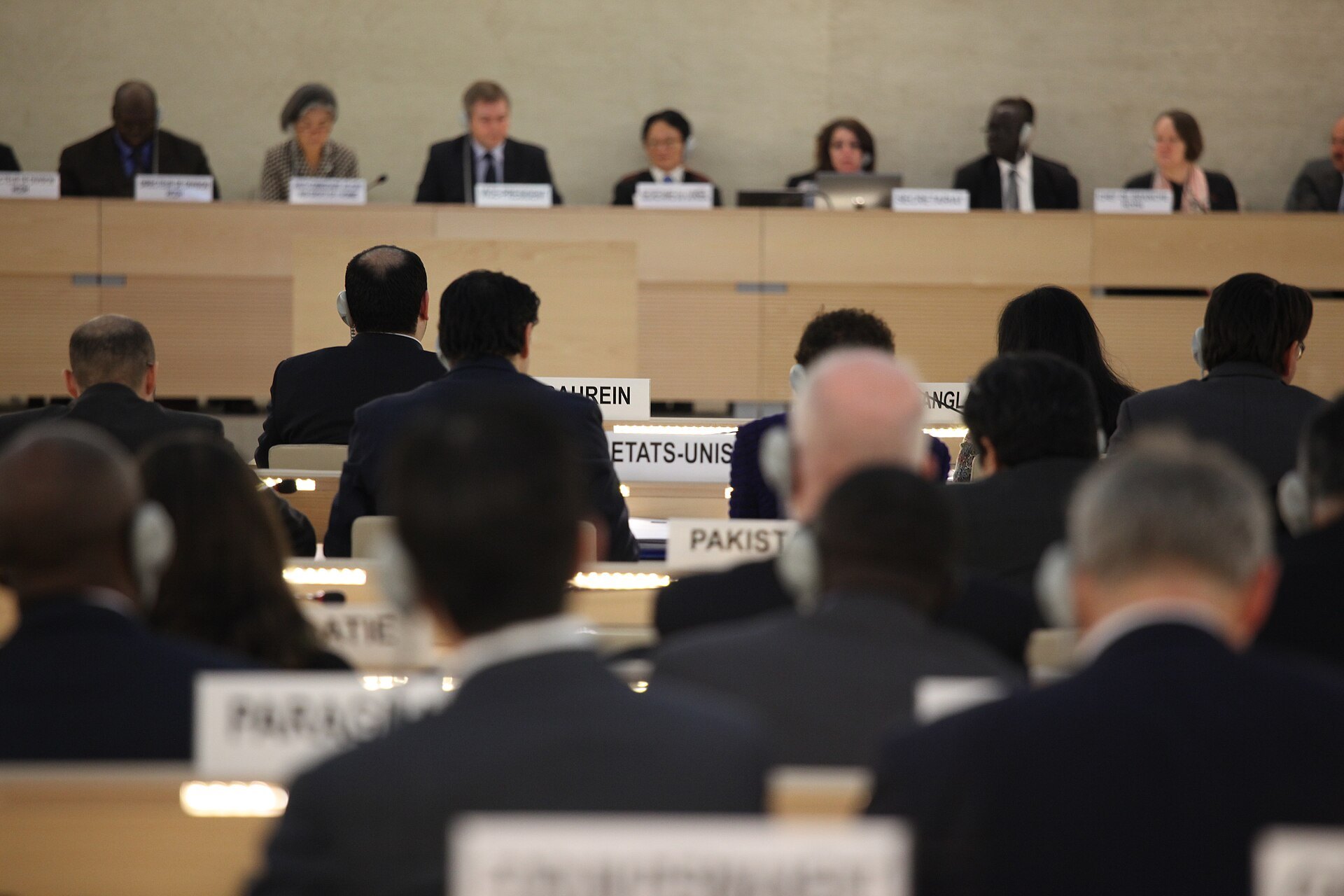
When a family wants more than a record, and consents to it, a case can be taken to bodies that can put questions to a government. Each has its own rules.
- UN special procedures
- The independent experts of the Human Rights Council, among them the rapporteurs on freedom of religion, on human rights defenders and on the rights of indigenous peoples. Anyone may send them information, and they do not require that the victim first try the courts at home. They write to the government concerned, as an urgent appeal where a life or liberty is at stake, or as a letter of allegation about something already done, and they publish the letters and the replies after about sixty days. The UN names victims in those public letters unless the family withholds consent or there is a security concern, except for children and victims of sexual violence, whose names are never published.
- Working Group on Arbitrary Detention
- Takes cases from the detained person, the family, a representative or an organization, but only with the explicit consent of the person or the family. It does not reveal the source to the government or the public. The government is asked to reply within sixty days, and an urgent procedure exists where continued detention endangers a person’s health or life.
- Working Group on Enforced or Involuntary Disappearances
- For a person whose fate or whereabouts the authorities will not disclose. Relatives may submit a case themselves, or an organization may do so with their prior consent. Sources are always kept confidential. If a family suffers reprisals for reporting, the working group can write to the government promptly about that too.
- Committee on the Elimination of Racial Discrimination
- Has an early-warning and urgent procedure for situations of serious, massive or persistent discrimination, and names encroachment on the lands of minority communities among its warning signs.
Our pages on what to do when a family member is detained and what the United Nations has said carry the details. We can help put a case together; we will not send one without the family’s consent to each step.
Why this is dangerous, and what it has cost
We do not ask anyone to report lightly, because telling the outside world has itself been punished.
In July 2014 the UN’s special rapporteur on freedom of religion, Heiner Bielefeldt, visited Vietnam. His planned visits to An Giang, Gia Lai and Kon Tum were cut short between July 28 and 30. People he wanted to meet, he said, had been placed under heavy surveillance by the police, warned, intimidated, harassed or stopped from traveling. In his report to the Human Rights Council in 2015 he went further, recording interrogations and physical injuries suffered by some of the people he met, during and after the visit.
The cases since then follow the same line.
- In August 2016 A Dao, a pastor of the Montagnard Evangelical Church of Christ, was arrested after attending a regional conference on freedom of religion in East Timor. He was sentenced to five years and released in September 2020.
- In November 2022 police stopped Y Khiu Nie and Y Si Eban on their way to a Southeast Asian conference on freedom of religion in Indonesia, where participants could meet UN representatives, and held them for two days of questioning in Buon Ma Thuot. Y Si Eban was then barred from leaving the country. The UN Secretary-General carried their case in his reports on reprisals in 2024 and 2025.
- In early March 2024 the Ministry of Public Security listed Montagnards Stand for Justice, which documents abuses against our people, as a “terrorist organization.” The ministry announced that anyone who engaged with the group or followed its direction would be charged with terrorism or with supporting it, and UN experts wrote to Vietnam that restrictions of this kind are designed to discourage people from giving information to the UN. The Secretary-General’s report of 2025 records the experts’ concern that the listing, and the conviction in absentia of its co-founder Y Quynh Buondap, were reprisals for cooperating with the UN.
- In August 2024 police in Dak Lak arrested Y Po Mlo, aged 63, under article 116 of the penal code, “undermining national unity.” He was accused of using Facebook to contact Montagnards seeking asylum in Thailand and of passing information to our people abroad. He was convicted in 2025; he, Ro Cham Grong and Y Thinh Nie were sentenced by courts in Dak Lak and Gia Lai to between seven and nine years.
- The Secretary-General’s report of 2026 records two Vietnamese women questioned and watched because they told international bodies, the UN among them, about the detention of their relatives. They are not Dega, but their case is the one every family here should know: reporting a relative’s arrest abroad has been treated as an offense in itself.
Human rights organizations know this and work around it. When Human Rights Watch interviewed more than a hundred highlanders for its report of 2002, it wrote that for their own protection they could not be named. When it interviewed asylum seekers in 2015, it withheld where and when the interviews took place, because the people feared for relatives still at home. We hold ourselves to the same care.
What we can protect, and what we cannot
DCHO is a small organization in the United States. American law gives us some protection and not as much as a family might hope, and we would rather tell you the limits now than have you discover them later.
- Records can be ordered handed over. A court can compel an organization to produce its records. In 2013 a federal appeals court required Boston College to hand over oral-history interviews for a foreign government’s investigation, even though every interviewee had been promised confidentiality in writing; the court narrowed what had to be given, but held that breaking a promise of confidentiality was not in itself a reason to refuse. A promise of confidentiality is a promise we will keep as far as the law lets us. It is not a legal shield.
- Records held by our providers can be reached without us. Email and online storage are kept by companies, and the government can obtain records from those companies by subpoena or warrant, wherever in the world the data is stored. A court can order the company not to tell anyone, including us.
- Some demands come with a gag. Some legal demands forbid the person who receives them from saying they have been received. That is why our promise to say publicly that records have been taken carries the words “unless a court has forbidden us to.”
What follows from this is simple. We keep as little as we need. We keep names apart from accounts and under codes. We do not store what a family asks us not to store. And if the safest thing is for you to keep the details and send us only the fact that something happened, we will work that way.
How others do this
Every exile organization documenting a closed country faces the same problem. Tibet Watch, which gathers reports from inside Tibet, never publishes the names of its sources and publishes even eyewitness testimony anonymously. The 88 Project, which keeps a database of political prisoners in Vietnam, draws first on families, colleagues and friends and cross-checks against other lists. The international standards we draw on, from the UN’s monitoring manual to the guidelines the International Criminal Court and Eurojust wrote for civil society in 2022, were written for trained investigators meeting witnesses face to face. None of them was written for a family sending an account out of a closed province to people abroad. We have adapted them, and this page is the result.
If you are not sure
Send us the fact and nothing else: that something happened, roughly when, and roughly where. Say you are not sure what you want done with it. We will hold it, and we will not ask for more than you choose to give. A single line that reaches someone outside is a record that did not exist before.
See also: Reporting safely, How to document an incident, If a family member is detained, The prisoner records.
Sources
- Office of the UN High Commissioner for Human Rights, Manual on Human Rights Monitoring, revised edition (2011), chapters 2 (basic principles), 11 (interviewing) and 14 (protection of victims, witnesses and other cooperating persons) — do no harm, informed consent, codes, storage, the limits of protection
- OHCHR, special procedures, “What are communications?” and the online submission form — who may submit, the criteria, the two consent questions, naming in public reports
- OHCHR, Fact Sheet No. 26, The Working Group on Arbitrary Detention (revised 2024), and the Working Group on Enforced or Involuntary Disappearances, “Reporting a disappearance”
- Committee on the Elimination of Racial Discrimination, early warning and urgent action procedure
- HURIDOCS, Events Standard Formats, revised edition (2001) — event, act, victim, perpetrator, source, intervention
- Eurojust and International Criminal Court, Documenting International Crimes and Human Rights Violations for Accountability Purposes: Guidelines for Civil Society Organisations (2022)
- WITNESS, Obtaining Informed Consent and Video as Evidence: Filming Preliminary Interviews
- Berkeley Protocol on Digital Open Source Investigations (OHCHR and UC Berkeley, 2022), in our library; Istanbul Protocol (2004), in our library
- Heiner Bielefeldt, UN Special Rapporteur on freedom of religion or belief, press statement at the end of his visit to Viet Nam (Hanoi, July 31, 2014), and mission report A/HRC/28/66/Add.2 (January 30, 2015)
- UN Secretary-General, reports on cooperation with the United Nations in the field of human rights (reprisals): A/HRC/57/60 (2024), A/HRC/60/62 (2025) and A/HRC/63/62 (2026)
- UN special procedures, communication AL VNM 3/2025 (July 24, 2025); OHCHR press releases of August 28, 2024, and December 3, 2025
- US Commission on International Religious Freedom, Frank R. Wolf Freedom of Religion or Belief Victims List: A Dao
- Radio Free Asia, reports of March 6, 2024 (the terrorist listing), July 17, 2024 (Y Khiu Nie and Y Si Eban) and August 19, 2024 (Y Po Mlo); BenarNews, August 20, 2024; Human Rights Watch, World Report 2026, Vietnam
- Human Rights Watch, Repression of Montagnards (2002), in our library; Persecuting “Evil Way” Religion (2015), in our library; “Our Research Methodology”
- United States v. Trustees of Boston College, No. 12-1236 (1st Cir., May 31, 2013); 18 U.S.C. §§ 2703, 2705(b), 2709 and 2713
- Tibet Watch, “About Tibet Watch”; The 88 Project, database methodology
Compiled September 2026. The UN’s procedures and the addresses for sending to them change; check them before relying on them.