
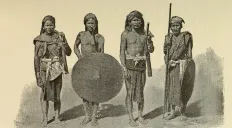





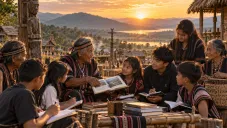










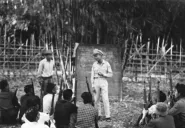
Before there was a flag, there was cloth. A Rhade skirt, a Jarai loincloth, a Maa blanket or a Bahnar skirt hung with seeds told anyone who knew how to read it which people the wearer belonged to. The cloth was woven by women on a loom tied to their own bodies, from cotton they grew and dyed themselves. In North Carolina it still is.

The loom
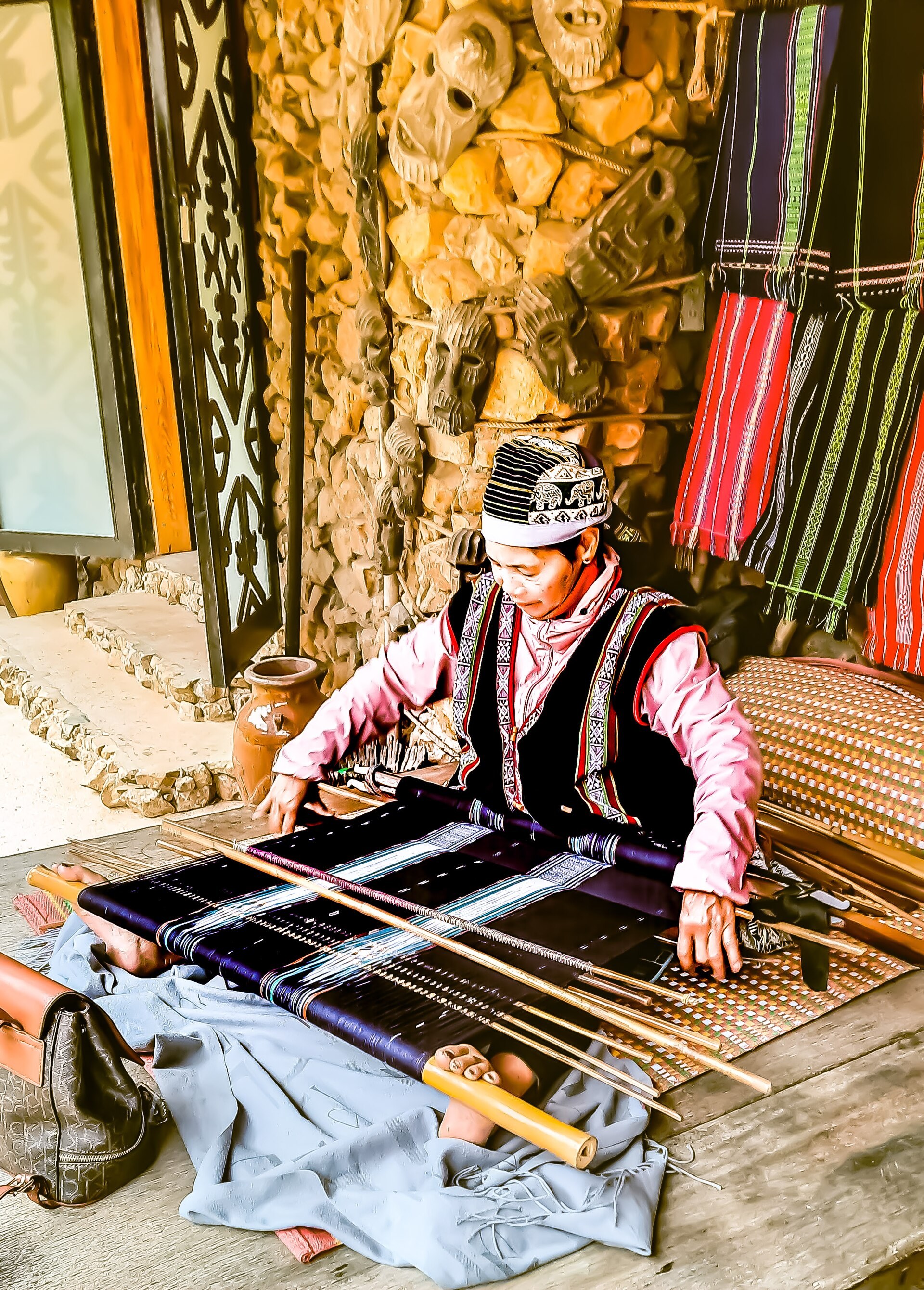
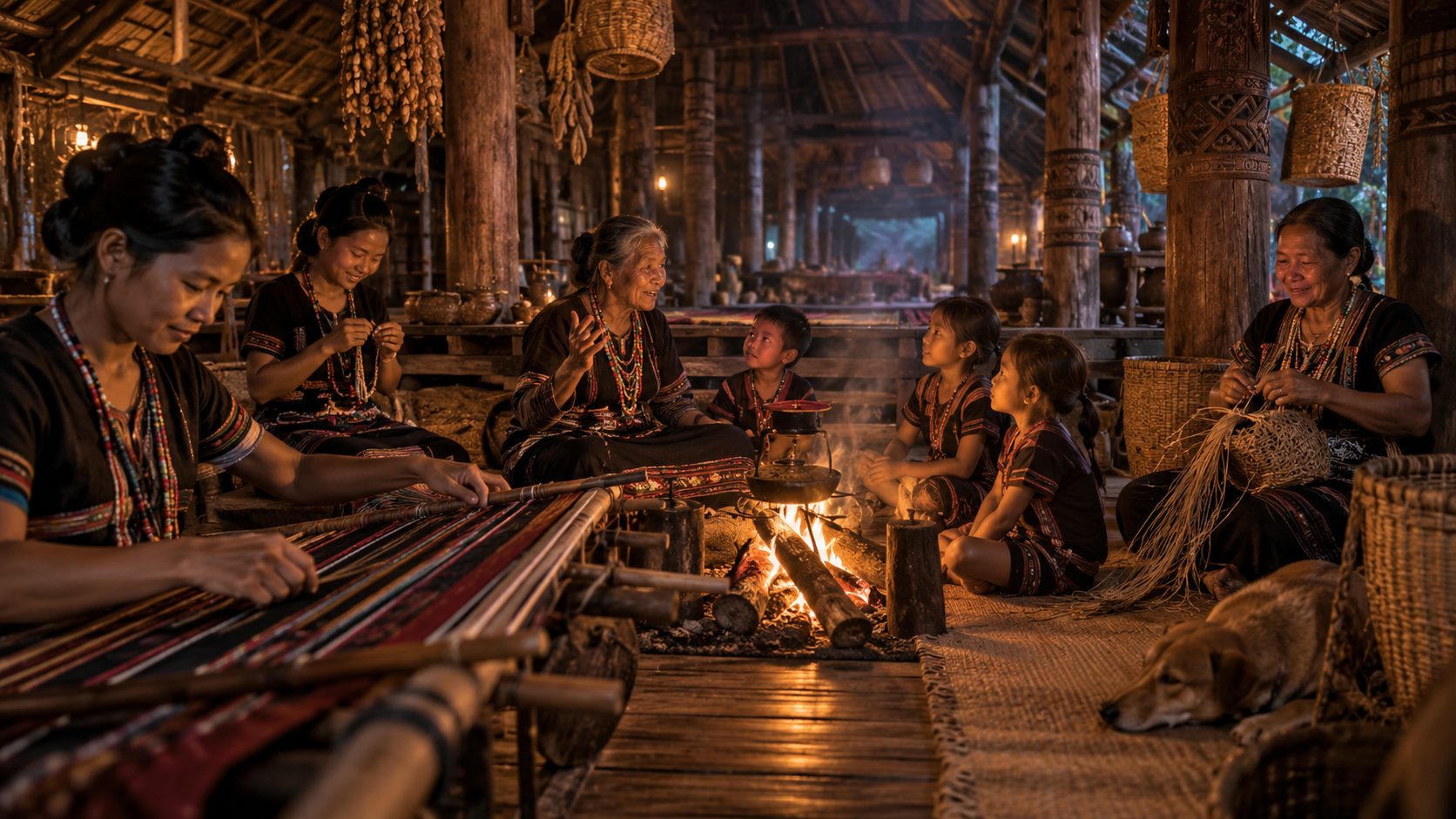
Highland weavers use the backstrap loom, one of the oldest weaving tools in Southeast Asia. The warp runs in a continuous loop between two beams: one is tied to a post or a house beam, or braced by the weaver’s feet, and the other sits in her lap, held by a strap around her back. She sets the tension by leaning back. Rods and a shed stick open the warp; a flat wooden sword beats each row of weft tight. The Army handbook of 1966, describing the Bahnar, the Rengao and the Katu in the same words, called it “a light weaving loom simply constructed from several pieces of wood.” That is the whole of it. There is no frame, because the weaver is the frame.
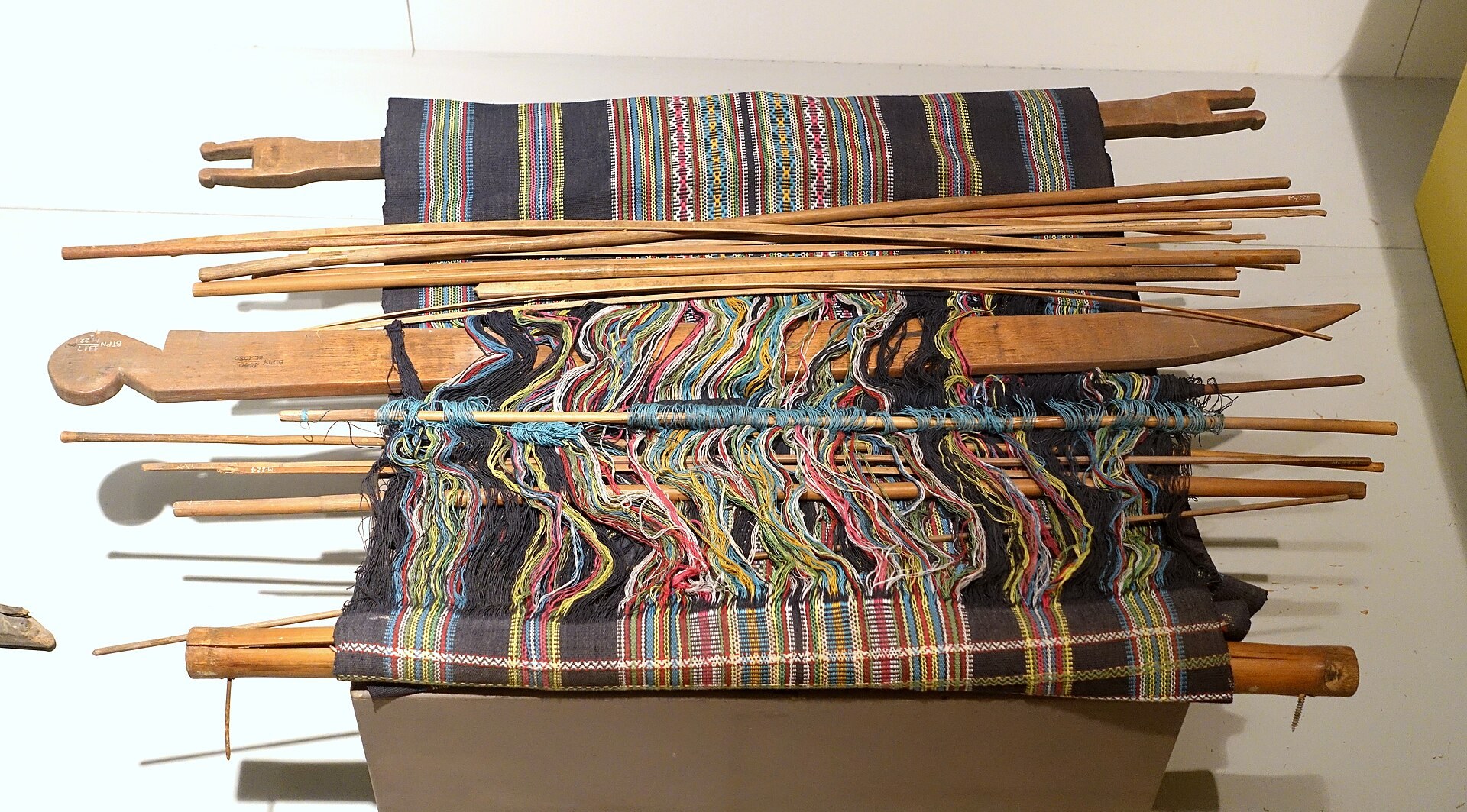

Patterns are made with supplementary weft: colored threads floated over the base weave so that the design stands out on the face of the cloth. Because a backstrap loom is only as wide as a woman can reach, larger pieces — blankets, wide skirts — are woven in panels and sewn together. Among the Rhade a finished piece may be given the kteh, a twined edge in which two threads are wound around the warp ends: a finish that is, in the words of the North Carolina Arts Council, “attractive and nearly indestructible,” and that few women ever learned.
Cotton and indigo
In the villages the whole process was done at home: cotton planted among the rice in the swidden fields (see The rice year), cleaned, spun on a hand spindle, dyed and woven. Indigo gave the deep blue-black that is the ground of most highland cloth; other plants gave red and yellow; the Hre wove ramie as well as cotton, and a poor Halang man’s loincloth was barkcloth, pounded soft. By the 1960s the trade had already reached the loom: the Katu were buying their thread from Vietnamese traders, the Cua were beginning to, and among the Jarai, the handbook noted, weaving had declined since the Second World War as imported cloth came in. Today many weavers, especially in the diaspora, use manufactured color-fast cotton and wool, but the loom and the technique are the same.
Girls learned young. Among the Rhade, the handbook says, “the girls play with small spinning wheels and miniature looms, thus learning the art of weaving and making clothes.” Among the Koho, a woman photographed at her loom in 2023 told the photographer the rule as her people kept it: a girl had to know how to weave before she could take a husband.
Reading the cloth
Each people had its own dress and its own vocabulary of patterns, and an experienced eye can tell them apart. The Army handbook of 1966, whatever its purpose, set down the dress of each people as its officers saw it, and the museum cases in Hanoi hold pieces collected from the 1940s to the 2000s. Between them, this is what the cloth said.
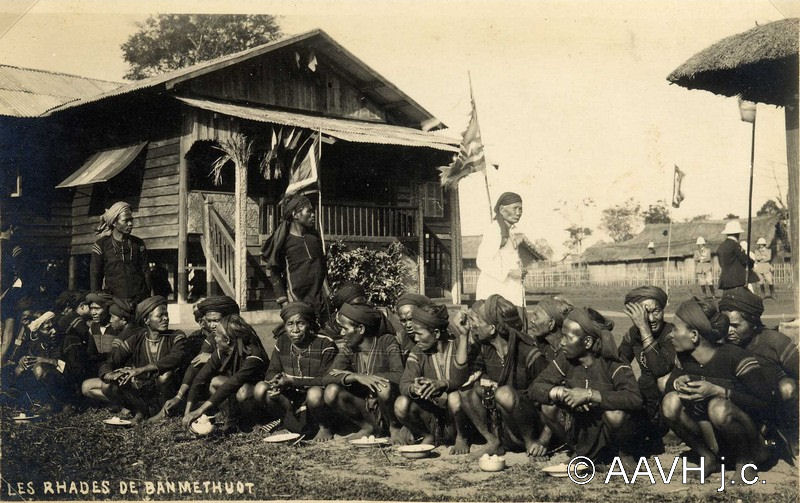

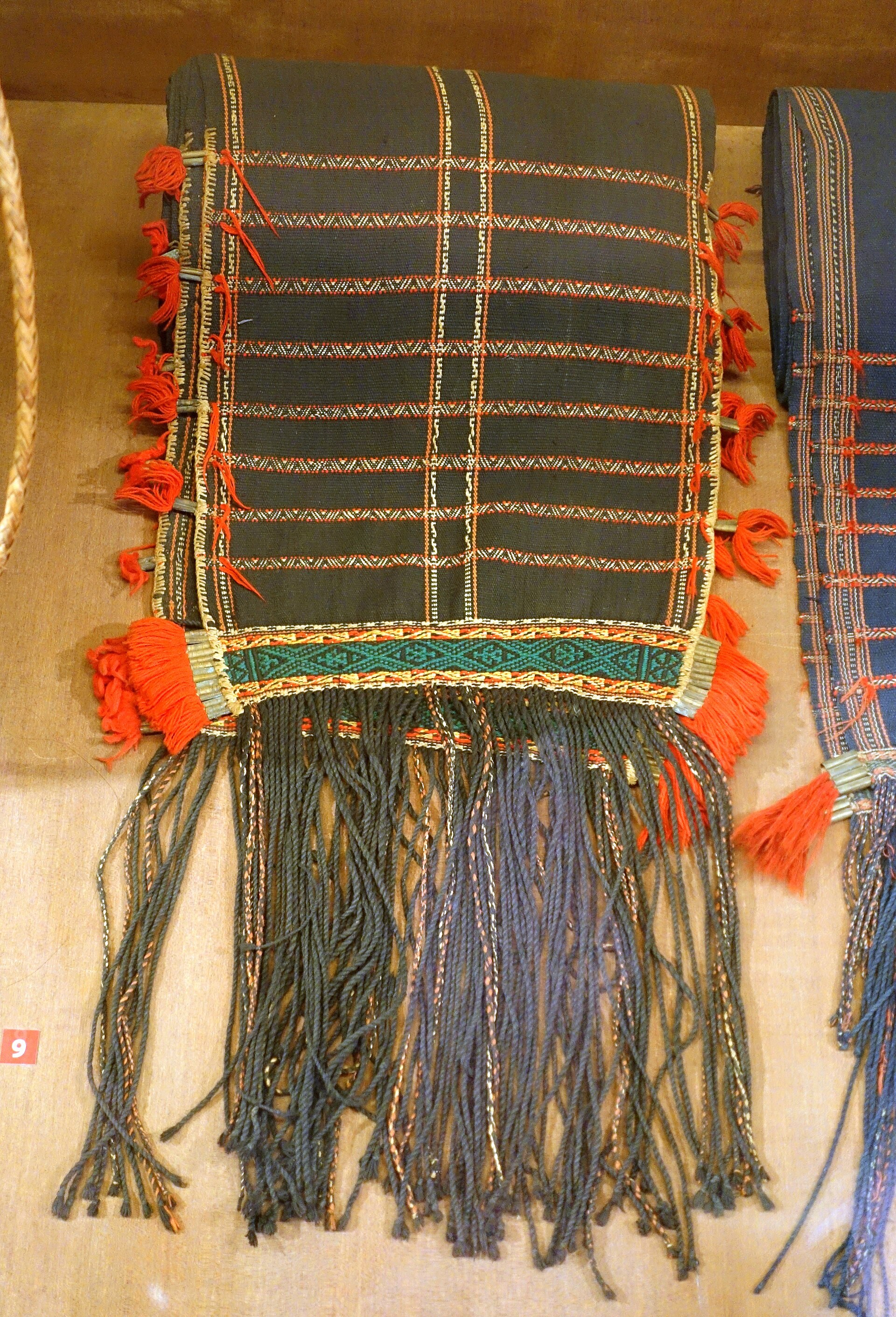
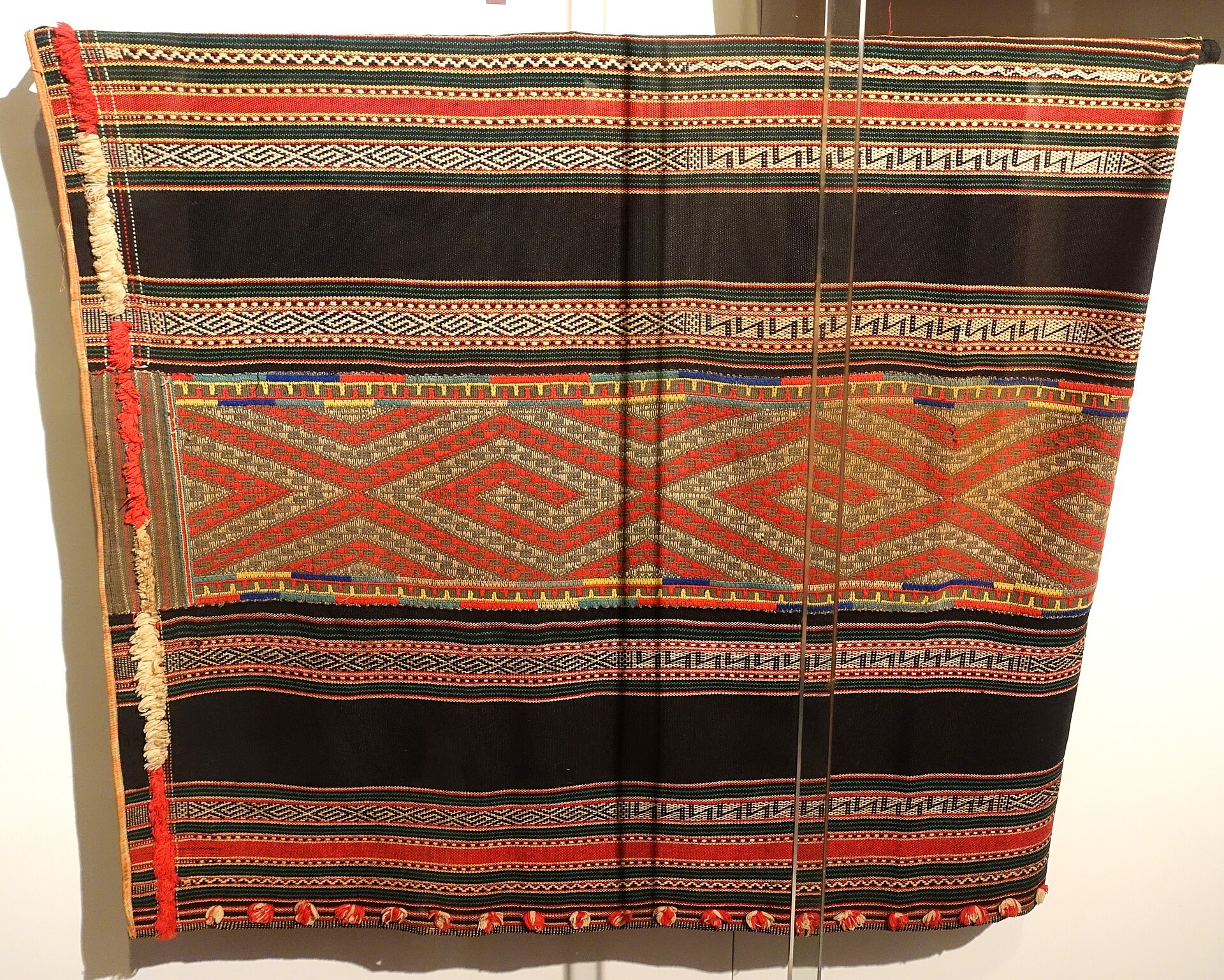
Rhade. Men wore “a standard loincloth, usually blue or scarlet, and an indigo blue shirt with long narrow sleeves and decorated with polychromatic designs woven into the material,” its chest fastened with a row of red hooks and loops on small leather buttons, and a turban. Women wore a wrapped skirt to the ground and a fitted blouse, banded with red, white and yellow at the hem, neck and sleeves. From the Jarai the Rhade bought wide belts with red and white designs and long fringes, and in the winter, “when a biting northeast wind blows across the Plateau, the tribesmen wrap themselves in large cotton blankets, ornamented with a series of motifs in many colors, woven by the women.”
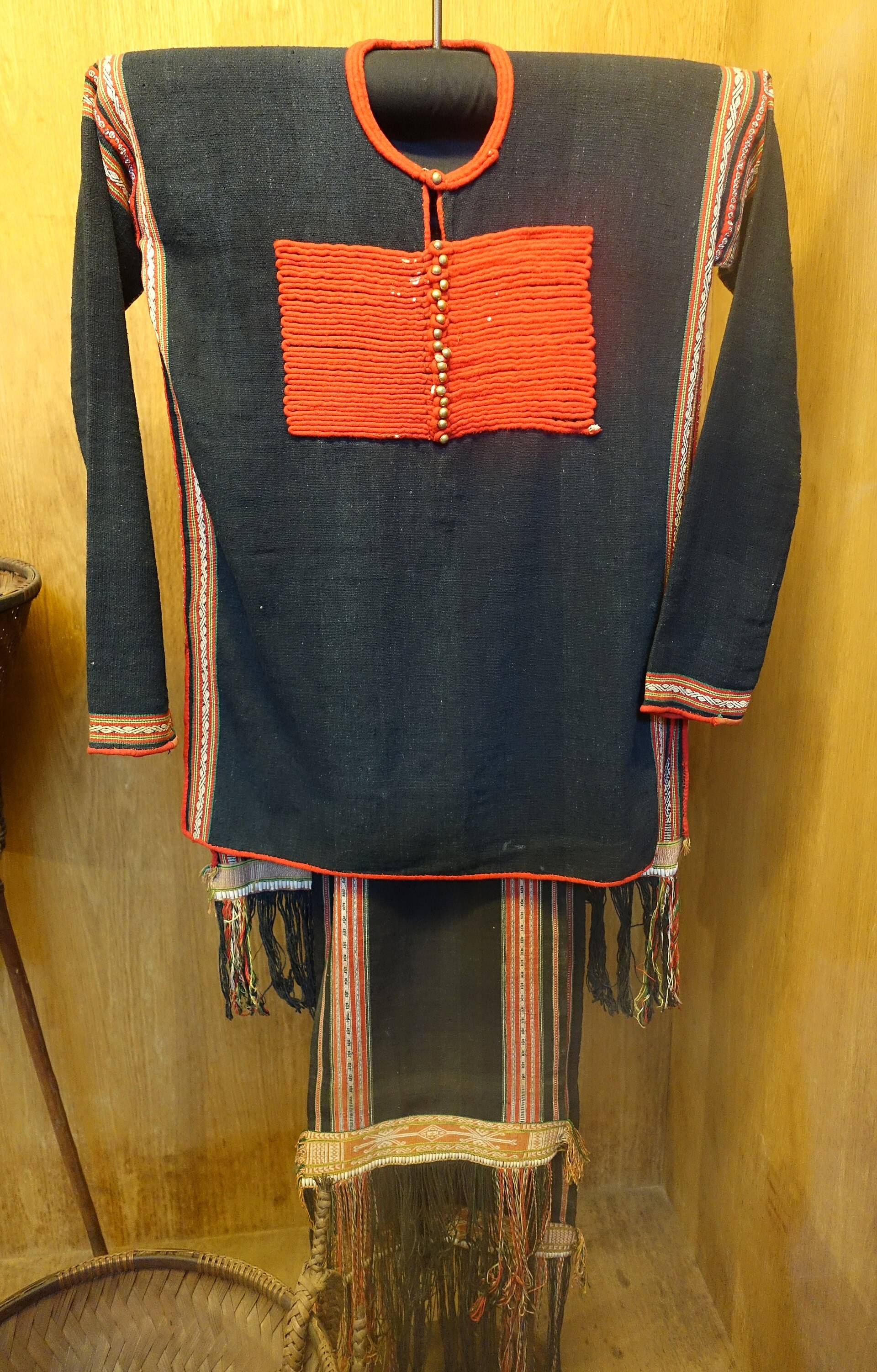

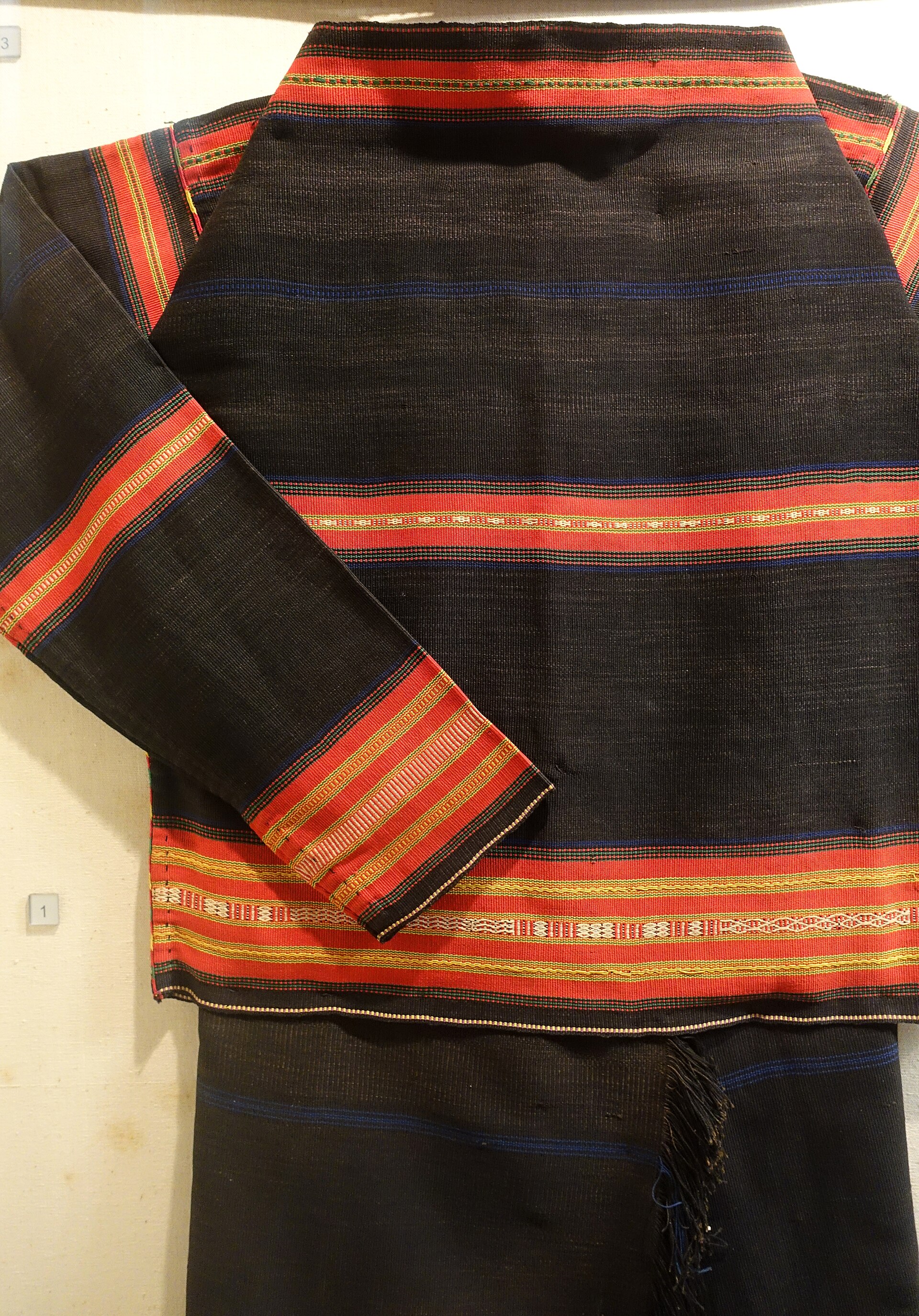

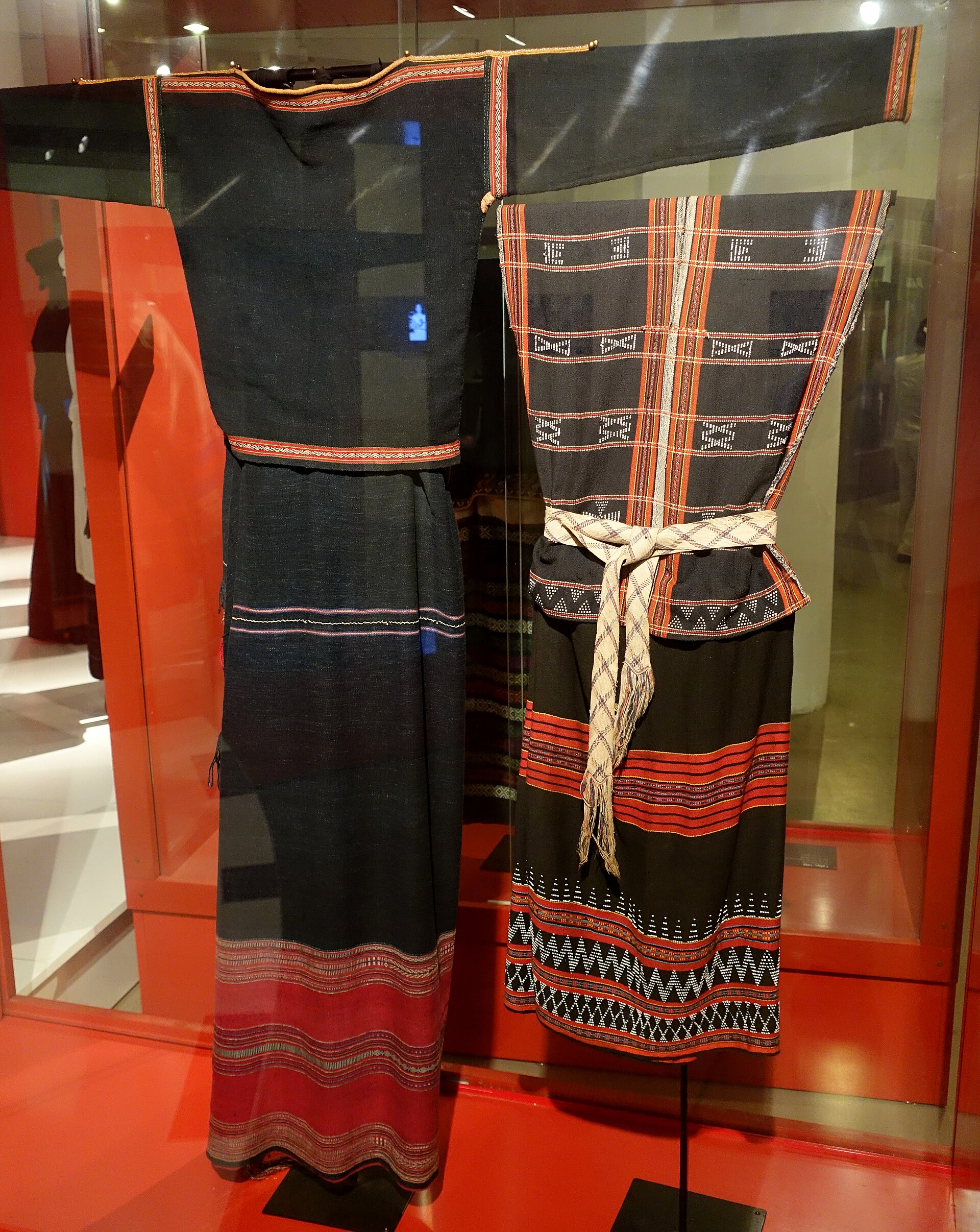
_E_De,_Dac_Lac,_1970,_handmade_cotton_&_natural_dyes,_(right)_Co-tu,_Quang_Nam,_1980,_handmade_cotton,_indigo,_beads_strung_on_weft_-_Vietnamese_Women's_Museum_-_Hanoi,_Vietnam_-_DSC04067.JPG)
Jarai. The men’s loincloth, about eight inches wide, was woven by the women from locally grown fiber and “ornamented with beautiful polychromatic bands woven into the cloth,” with colored fringes and beads at the ends; the finest were long enough to throw over the shoulder. Jarai patterns are geometric — stripes and diamonds — in a restrained palette of indigo and white, and the weavers of Gia Lai say the motifs have no names. The Rhade and the Bahnar both bought Jarai cloth.
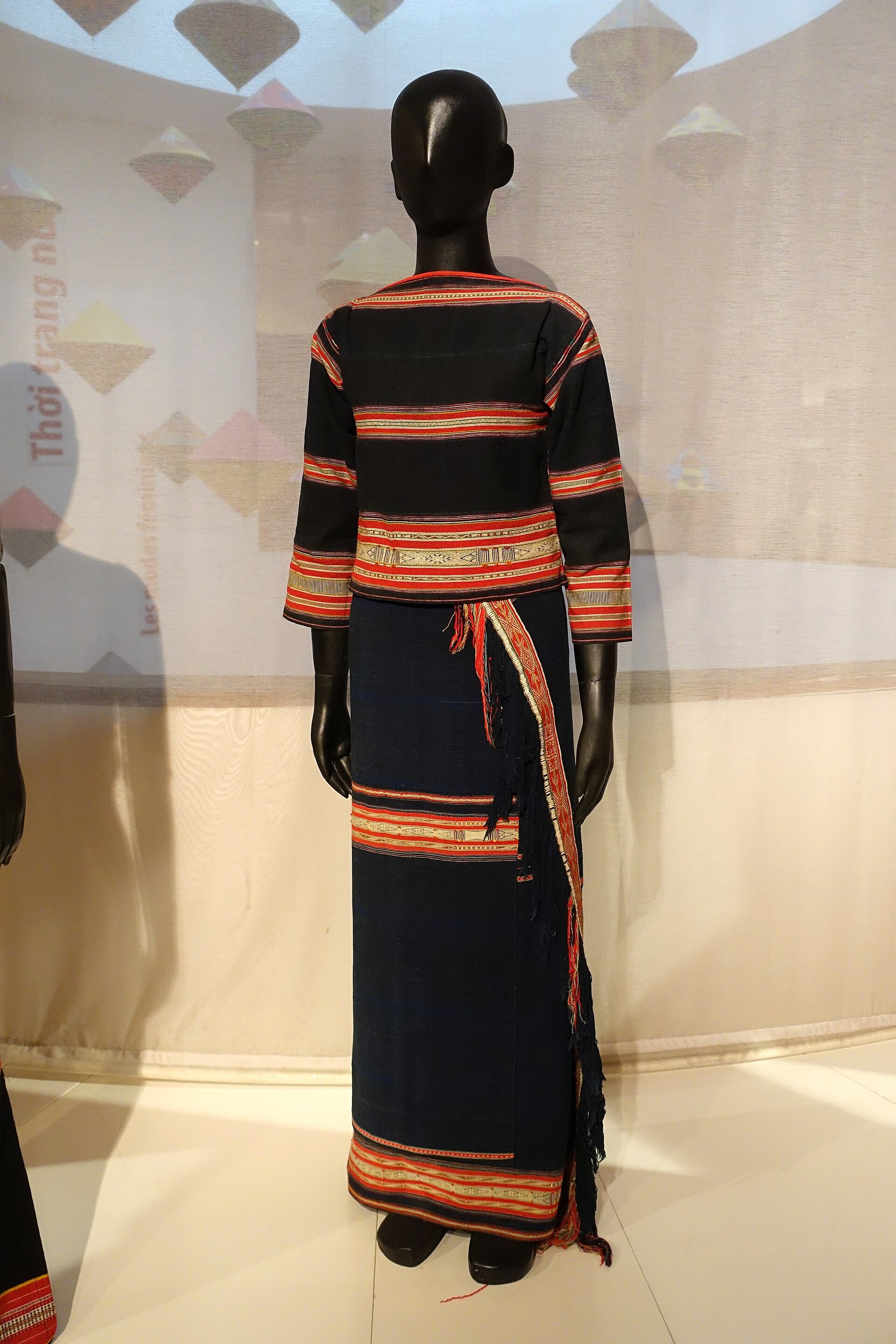

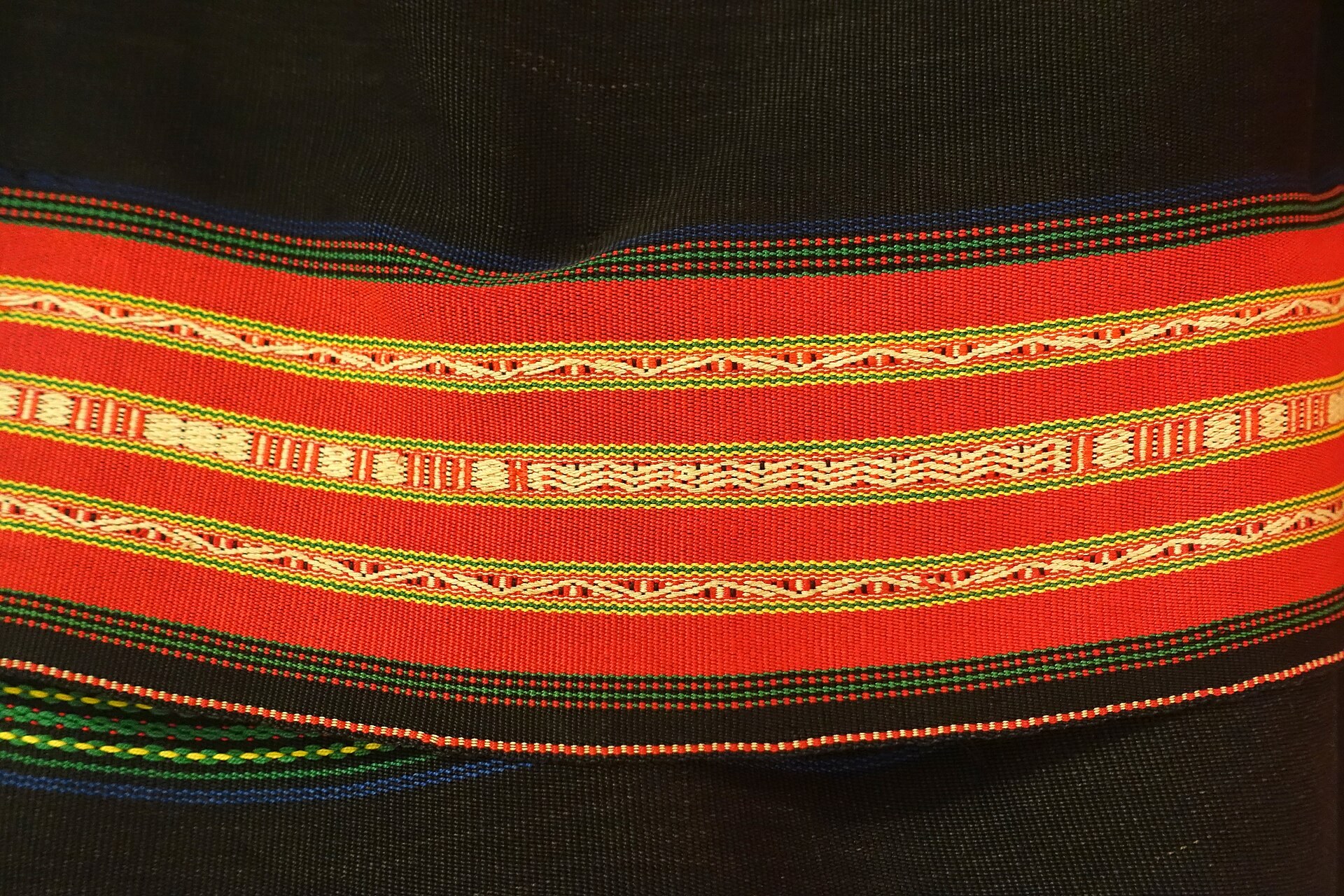

Bahnar. A loincloth for men and a skirt for women; in cool weather a blanket around the body for the men and a sleeveless cotton blouse for the women. The Bonam wore a jacket of bark from the cong tree; the Roh and Tolo wove red stripes running the length of the cloth. The costume from Binh Dinh below carries stars and insect eyes on the shirt and Job’s tears seeds sewn to the skirt.
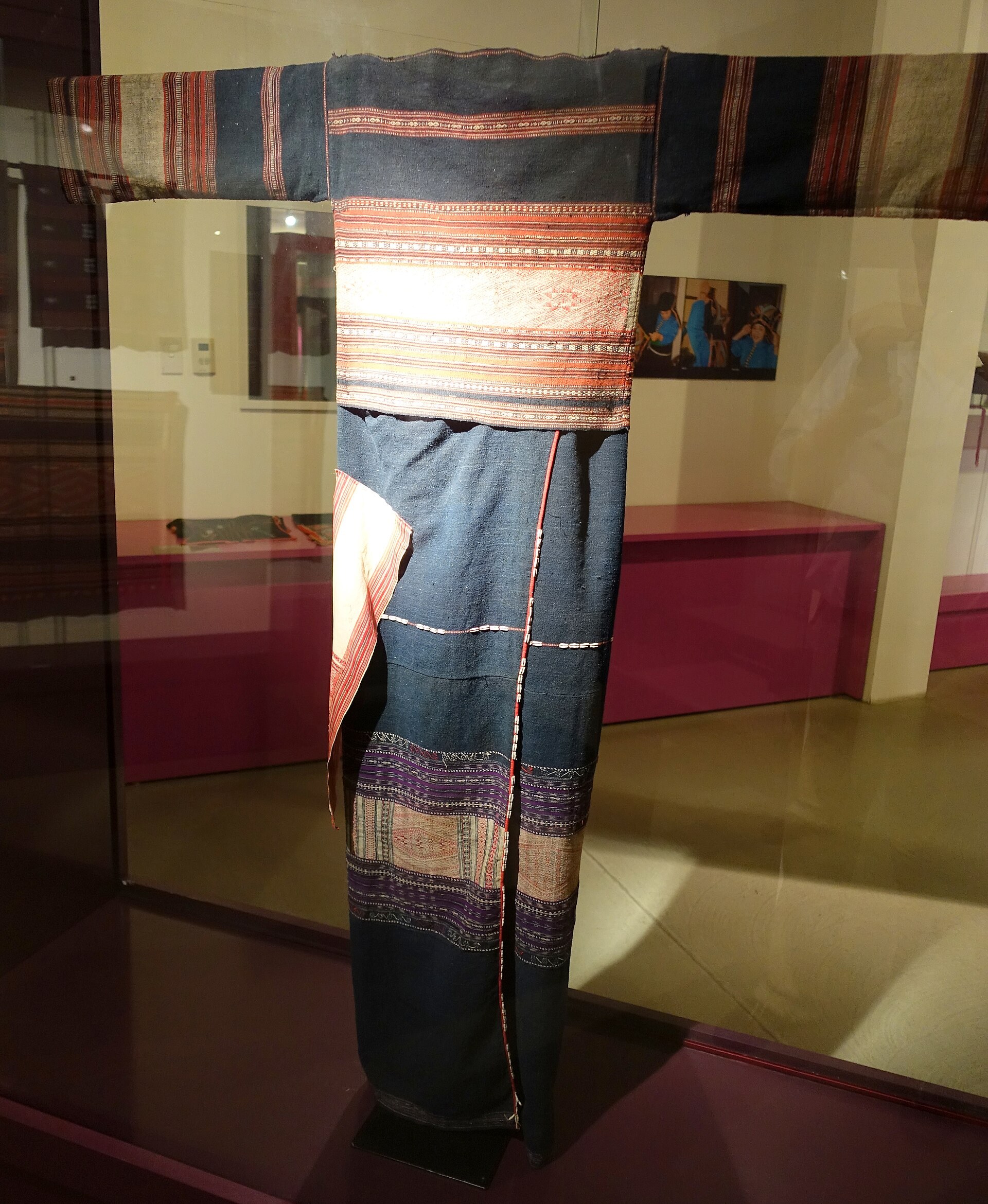

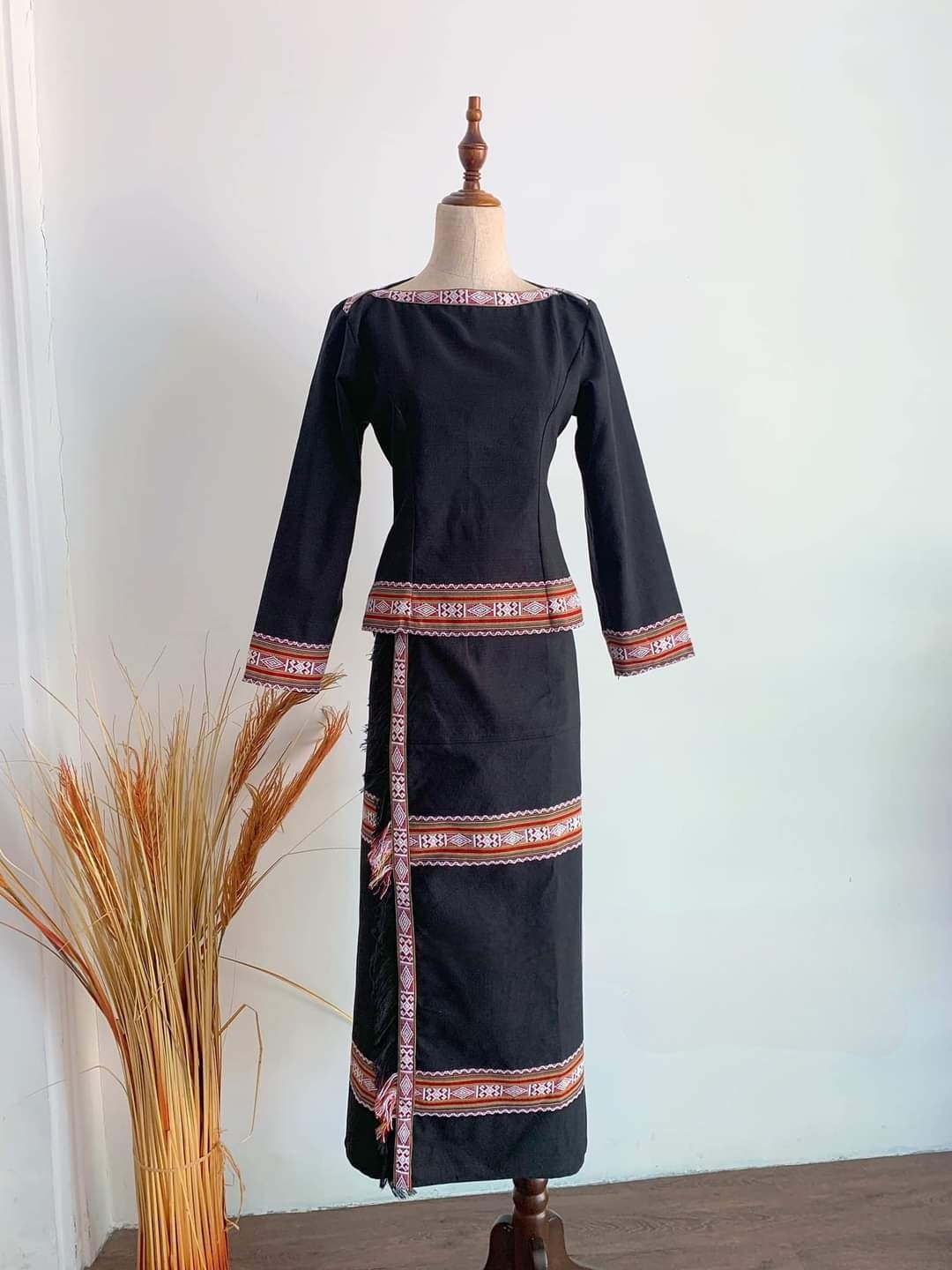

Maa. The Maa were “particularly noted for the designs and colors used in their weaving. Many other Montagnard tribes weave cloth, using designs with little contrasting color. The Ma, however, like sharp, contrasting colors in intricate designs.” Their blankets alternated red and dark blue stripes, and a man’s white sleeveless vest was worked with “the scales of pythons, the mouths of leeches, the footprints of monkeys, the feathering of arrows, the teeth of tigers, flowers, palm leaves, peacocks, chickens, turtle shells.”
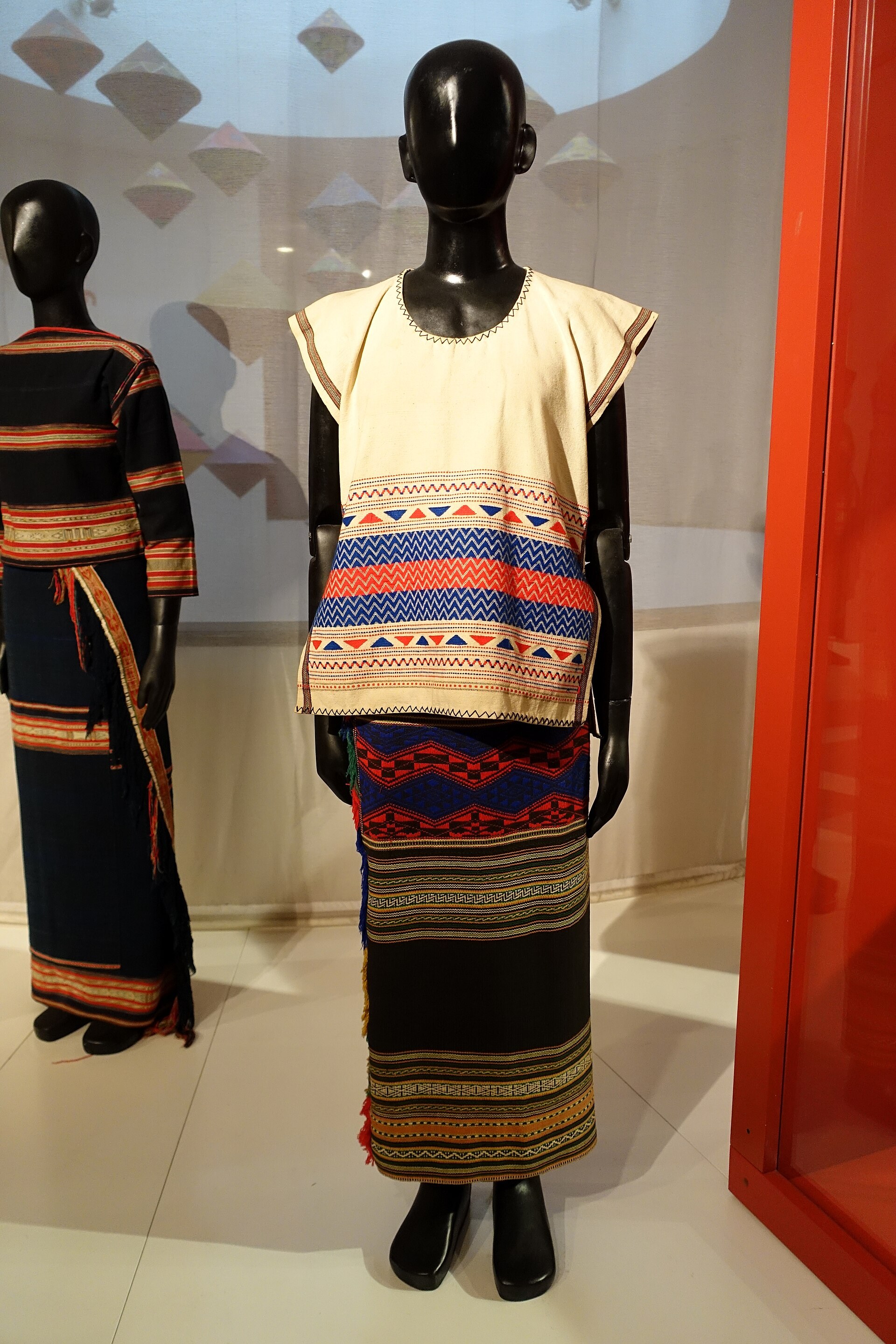

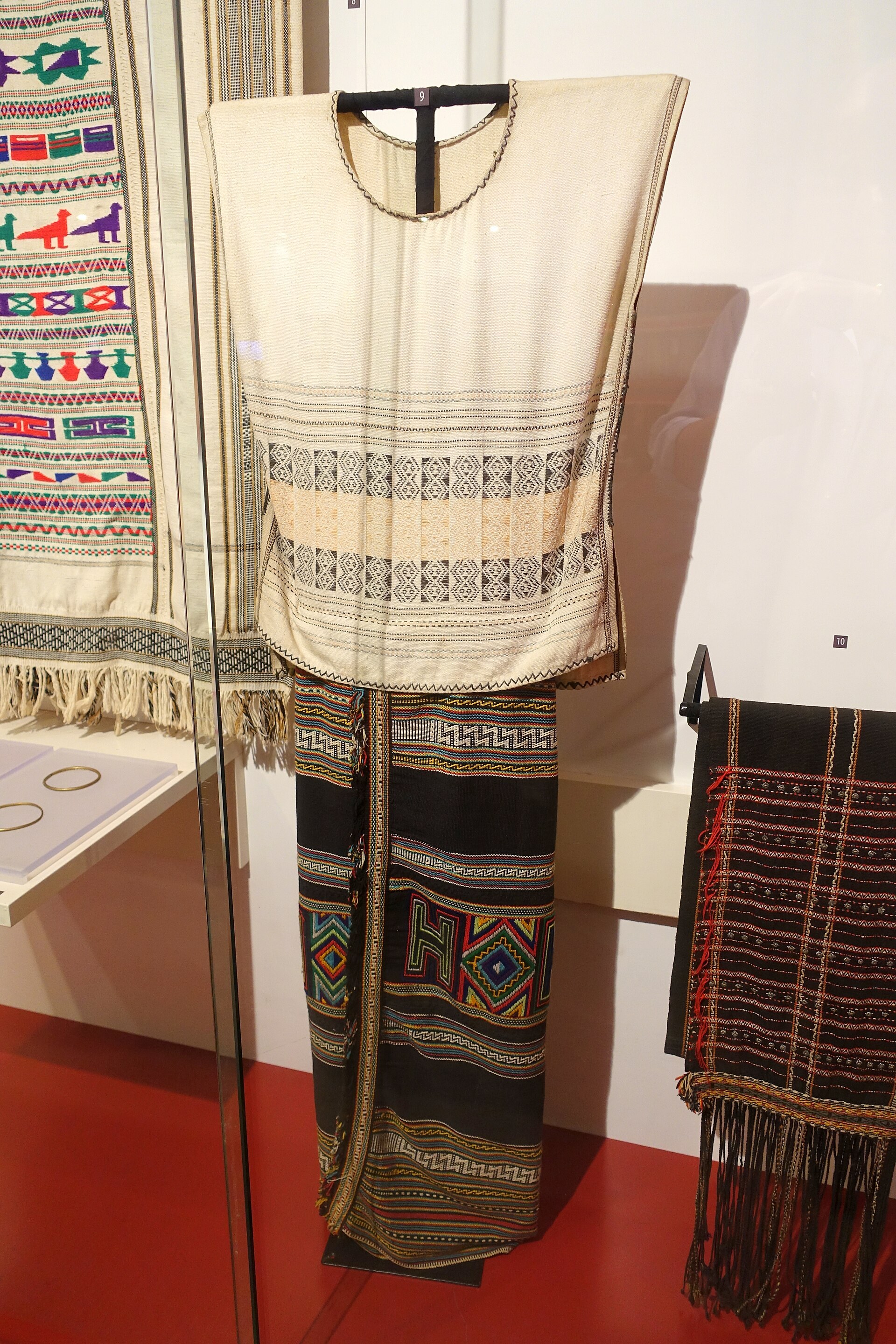

Mnong, Stieng, Koho, Bru, Sedang. Among the Mnong, “clothing is personal and is never sold or given away”; the Gar men’s loincloth is the suu troany, the women wear rectangular skirts secured by belts in front. Stieng women on ceremonial days wore a cloth nine to twelve feet long over one shoulder, and carried their babies in it. Koho men wore the loincloth and women the wrapped skirt, and the Koho counted weaving, basketwork, pottery and ironwork among their crafts. Bru women wore embroidered skirts and sleeveless jackets sewn with rows of coins, and prepared their own dyes, blue above all. Sedang men and women alike wrapped a locally woven blanket around the shoulders, striped and bordered.
_-_Vietnam_Museum_of_Ethnology_-_Hanoi,_Vietnam_-_DSC03235.JPG)

Among the Rhade, as Dega women explains, property passes through women. Cloth was part of that property: woven for marriages, given at funerals, kept with the gongs and jars.
Weaving in North Carolina
The Montagnard community in North Carolina, which began with the first arrivals in 1986 and now numbers more than 12,000, most of them in the Piedmont Triad, has kept weaving alive (see North Carolina).
- In 2016 the North Carolina Arts Council gave its Heritage Award, the state’s highest honor for a traditional artist, to two Rhade weavers of Greensboro, H Ju Nie and H Ngach Rahlan, who “mastered the ancient spinning, dying and weaving traditions of their people while growing up in the central highlands of Vietnam.” H Ju Nie was one of the few women in the community who still knew how to warp a loom; H Ngach Rahlan weaves skirts and women’s shirts and makes the kteh. H Ju Nie died in 2021, at seventy-seven.
- The Montagnard Association of North Carolina in Greensboro, formerly the Montagnard Dega Association, and its youth organization, the Montagnard American Organization, run classes in weaving, music and dance. In 2021 the exhibition The Past is Present: New Montagnard Artists paired backstrap weavers and basket-makers with younger artists working in new media.
- The North Carolina Museum of History holds a Montagnard collection — textiles, tools, weapons and instruments — first given by an American veteran.
Jarai, Bunong (Mnong), Koho, Bahnar and Rhade women all continue to weave on backstrap looms in the United States.
Sources
- Department of the Army, Minority Groups in the Republic of Vietnam, Pamphlet 550-105 (1966), DCHO library, also on the Internet Archive — the loom, the fibers, and the dress of each people, in the Bahnar, Bru, Cua, Halang, Hre, Jarai, Katu, Koho, Ma, Mnong, Rengao, Rhade, Sedang and Stieng chapters
- MDA Exchange, “Montagnard weaving,” February 2009 — the loom, cotton and indigo, and the thread used in the United States
- North Carolina Arts Council, 2016 Heritage Award recipients, and its “Remembering H Ju Nie, North Carolina Weaver” (February 11, 2022) — the two weavers and the kteh
- NBC News, “Young Montagnard generation in the US using art, social media to keep culture alive,” 2022 — the community’s size and The Past is Present
- North Carolina Museum of History, “Collecting Carolina: Montagnards, Vietnam’s Central Highlanders”
- Montagnard Association of North Carolina, traditional arts programs
- Opportunity for Women, on traditional Jarai motifs
- Michael C. Howard and Kim Be Howard, Textiles of the Central Highlands of Vietnam (White Lotus, 2002), and Michael C. Howard, Patterns on Textiles and Other Objects of the Êdê and Mnông in the Central Highlands of Vietnam (White Lotus, 2005) — the fullest published studies; not online
Compiled September 2026. If you weave, or your mother or grandmother did, and you can tell us the names of the patterns in your language, please get in touch.