
























Among the Rhade, the Jarai, the Mnong, the Koho and the Raglai, the house, the land, the livestock and the heirloom jars pass through women. Yet almost every source this library is built from is about men, because soldiers, prisoners and petitioners are who got written down. This page sets out what the record can establish about what our women held, what the land registry did to it, what is documented about harm, and what the health and schooling figures show, and it is explicit about the shape of what is missing. The women who could fill that shape are mostly alive.

What the position was
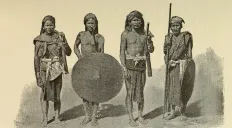
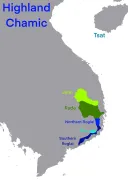
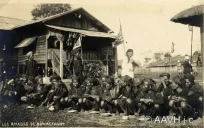
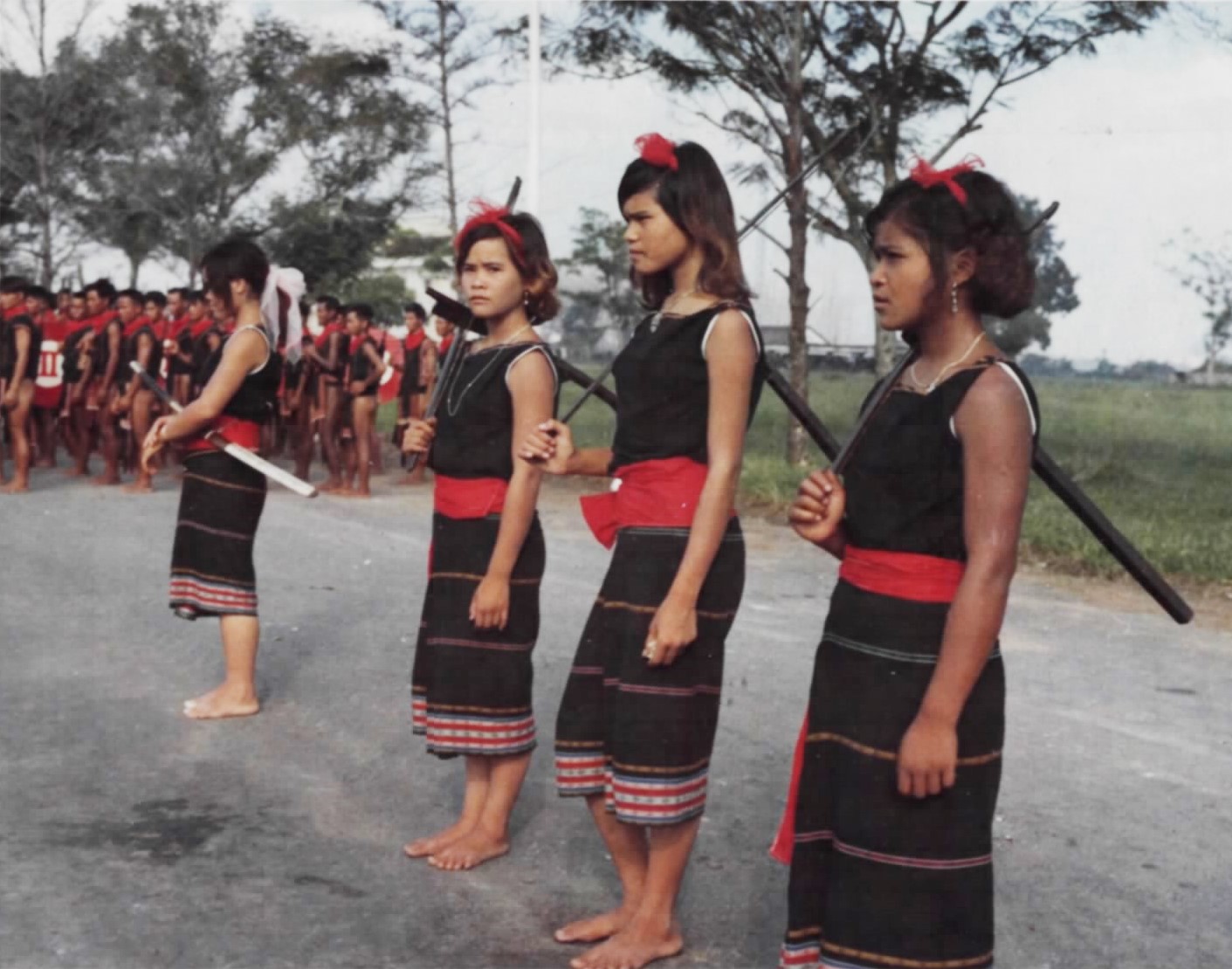
The Chamic-speaking peoples, Jarai, Rhade, Raglai and Chu Ru, are matrilineal, and so are the Mnong and the Koho among the Bahnaric peoples. Descent runs through the mother. A husband joins his wife’s household. The senior women of a longhouse hold the fields, the buffalo and the gong sets, while a male head manages the day’s business, and the longhouse itself is extended at one end as each daughter marries, so that the building is a genealogy in the female line that you can walk down. The American army’s handbook of 1966 set the Rhade position out in a sentence: “the woman’s family proposes marriage to the man’s family; the husband becomes part of the wife’s family; the children take the mother’s family name; and, property belongs to the wife and is inherited by the daughters.” The house, the gongs, the jars, the cattle and the rice “are lineage property, the title to which is held by the senior female.” The oldest woman in the family “controls the disposition of the family property.” The land is the clan’s, and for every tract there is a hereditary guardian, the po lan, the senior woman of the clan, who alone gives permission to cultivate it, who must walk its boundaries at set times, who can recite the boundaries and the names of the fifteen generations of women who guarded it before her, and who, if the territory is violated, is the one who demands the penalty. A bachelor could give his goods only to his mother or his sisters.

Among the Jarai the same rule ran further into the household. A husband living with his wife’s family “is not his own master”: he cannot buy or sell without her and is at the service of her relatives, which is why a Jarai father tried to marry his daughters early, so as to have sons-in-law to help him. The family was directed by a council led by the eldest woman’s brother, so that the men who married in “do not have power within that family.” Among the Mnong the family name was the wife’s and the children were her family’s; among the Koho, society was “matrilineal and matrilocal,” daughters were preferred, because a daughter would bring a son-in-law into the house, and the youngest daughter stayed to care for her parents in old age; among the Raglai all property was “owned and inherited by the women,” though the eldest woman took the advice of her eldest brother. Even where descent went through the father, the women were not without standing: among the Sedang the wife of the household chief was the ritual head of the household, and only she and the eldest daughter could live in the upper part of the house.


It is worth being precise about what this does and does not mean. Matriliny is not matriarchy, whatever the American army’s history of the Special Forces says, and we do not say it. Public authority, the customary courts and dealings with outsiders were male: “although the women of the tribe control land and property, the chief is a man,” the men “manage all political and military affairs,” and the head of the longhouse is a man, usually the husband of the senior woman, who at his death is replaced by a son-in-law or by the husband of one of his wife’s sisters. The same handbook, though, added that the men in that position “are less leaders in their own right than they are instruments of the women.” What matriliny means is that the property a family has, and the continuity of the line, are held by women, and that a system of land tenure which recognizes only a registered male head of household does not merely disadvantage Dega women. It misdescribes who owns the land.
Names carry it too: H’ before a Rhade woman’s name and Y- before a man’s, and among the Jarai, in the handbook’s words, “names of all girls begin with an ‘H.’” A Rhade child took the mother’s clan name and so belonged to her clan. Rhade parents “always wish to have a daughter, especially if it is the first child.”
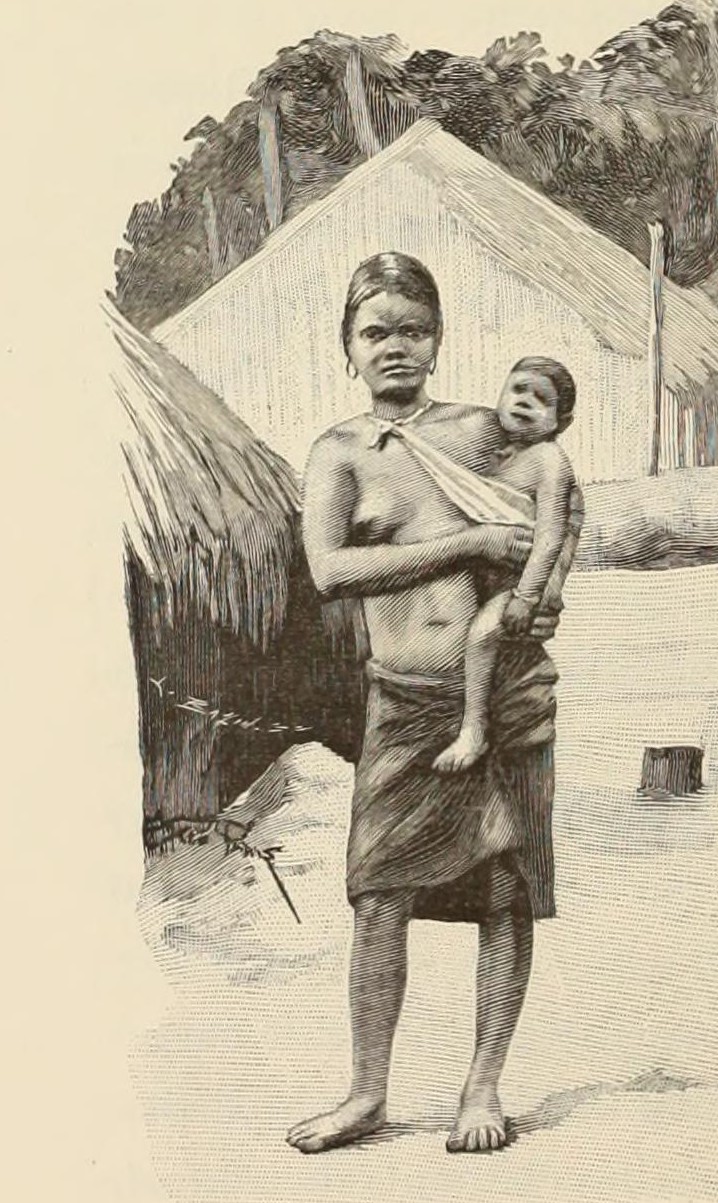
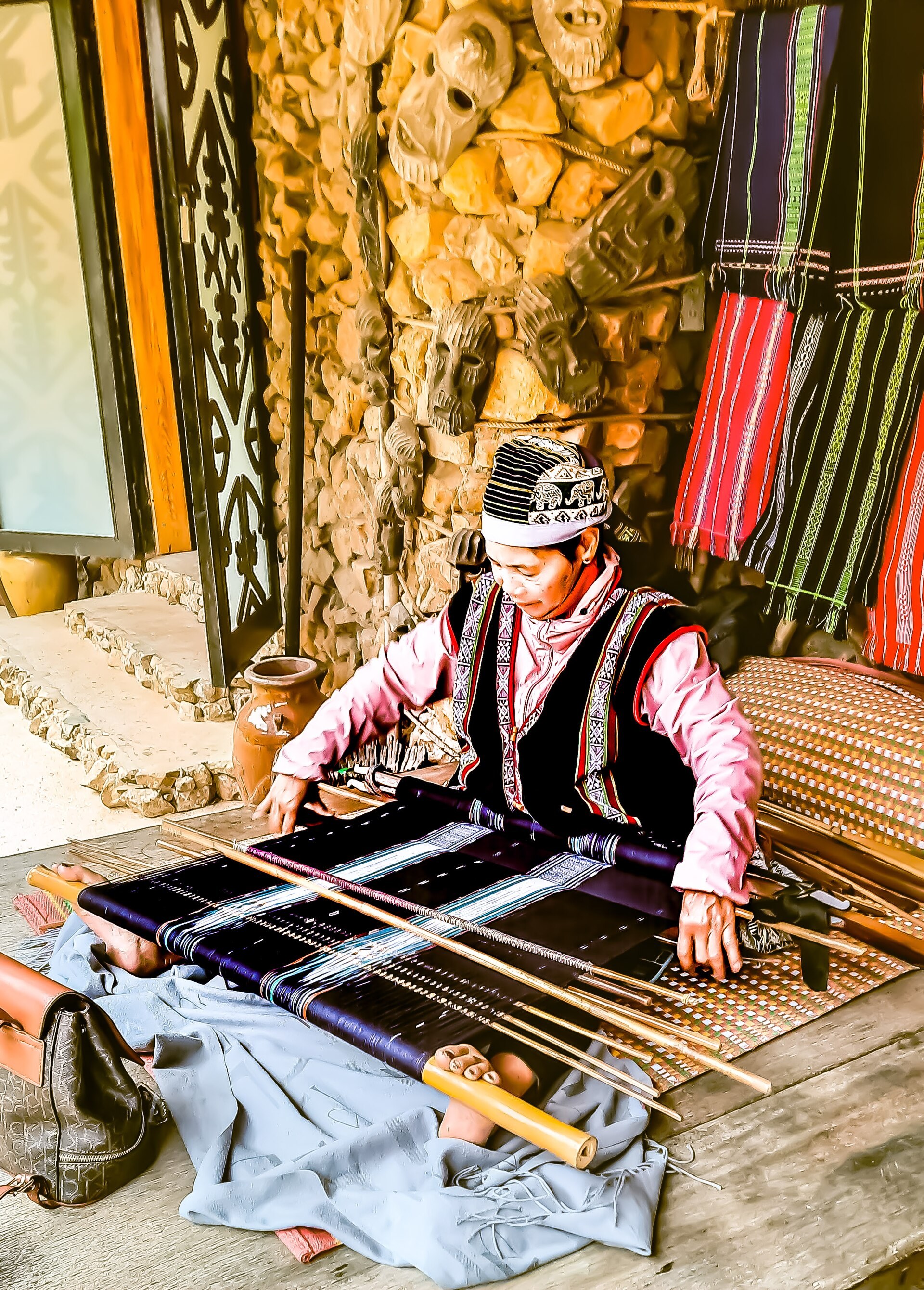
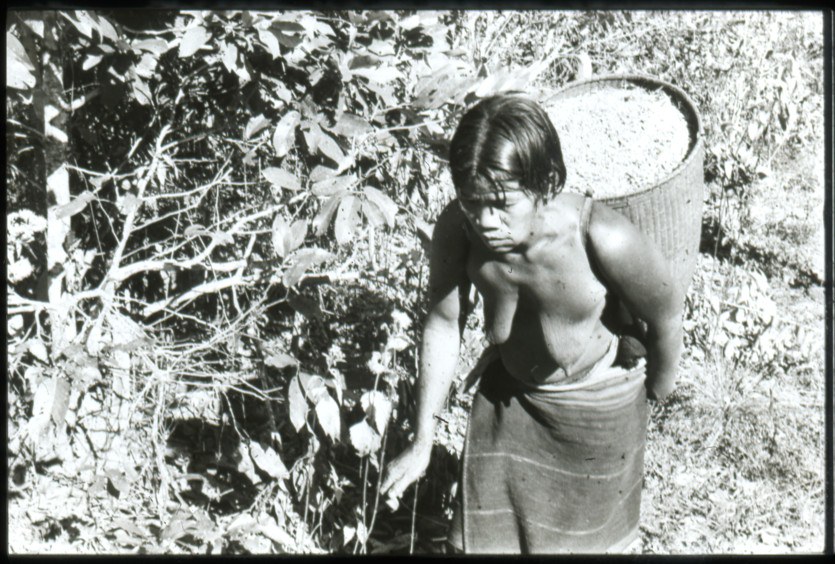
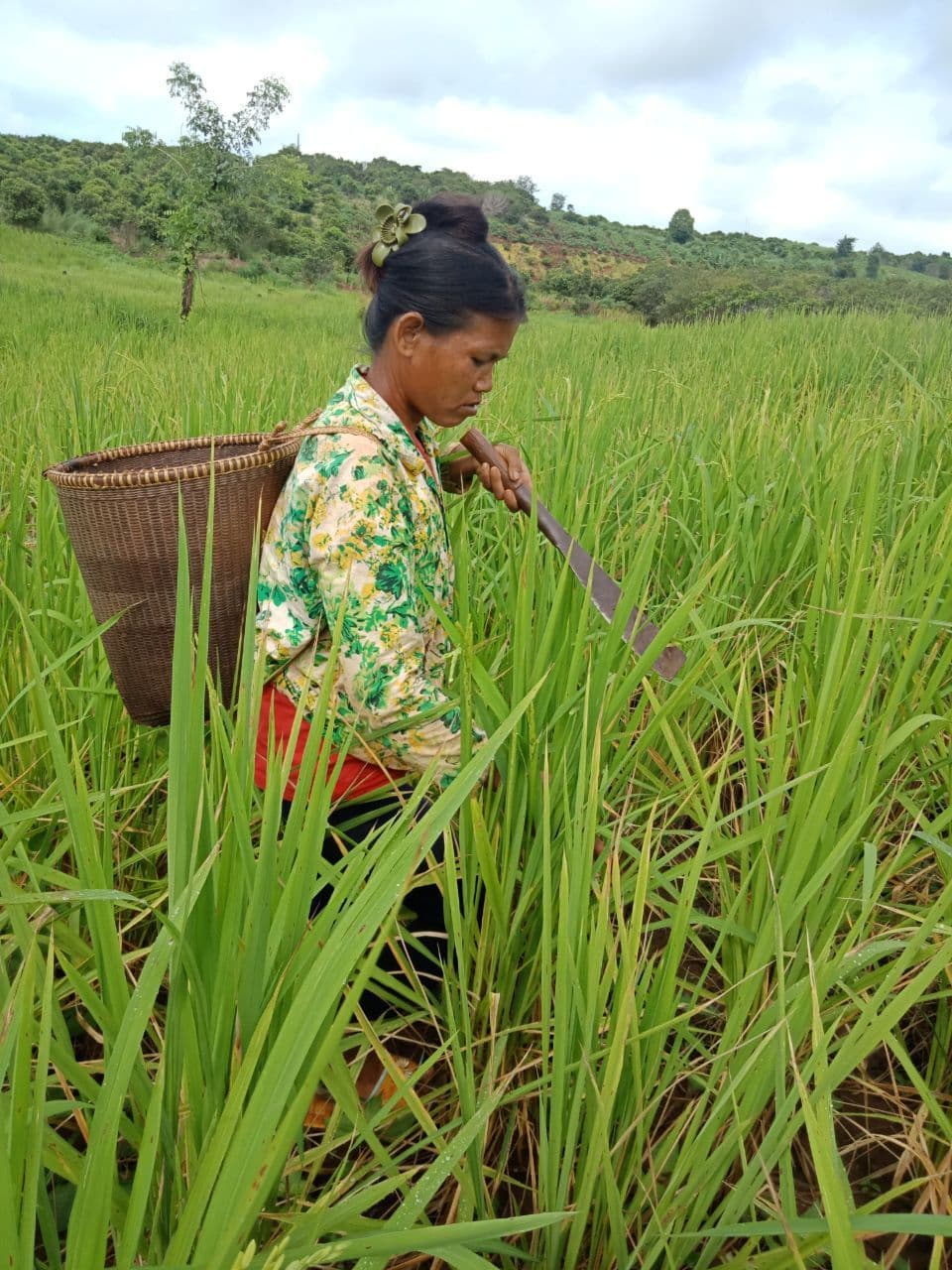
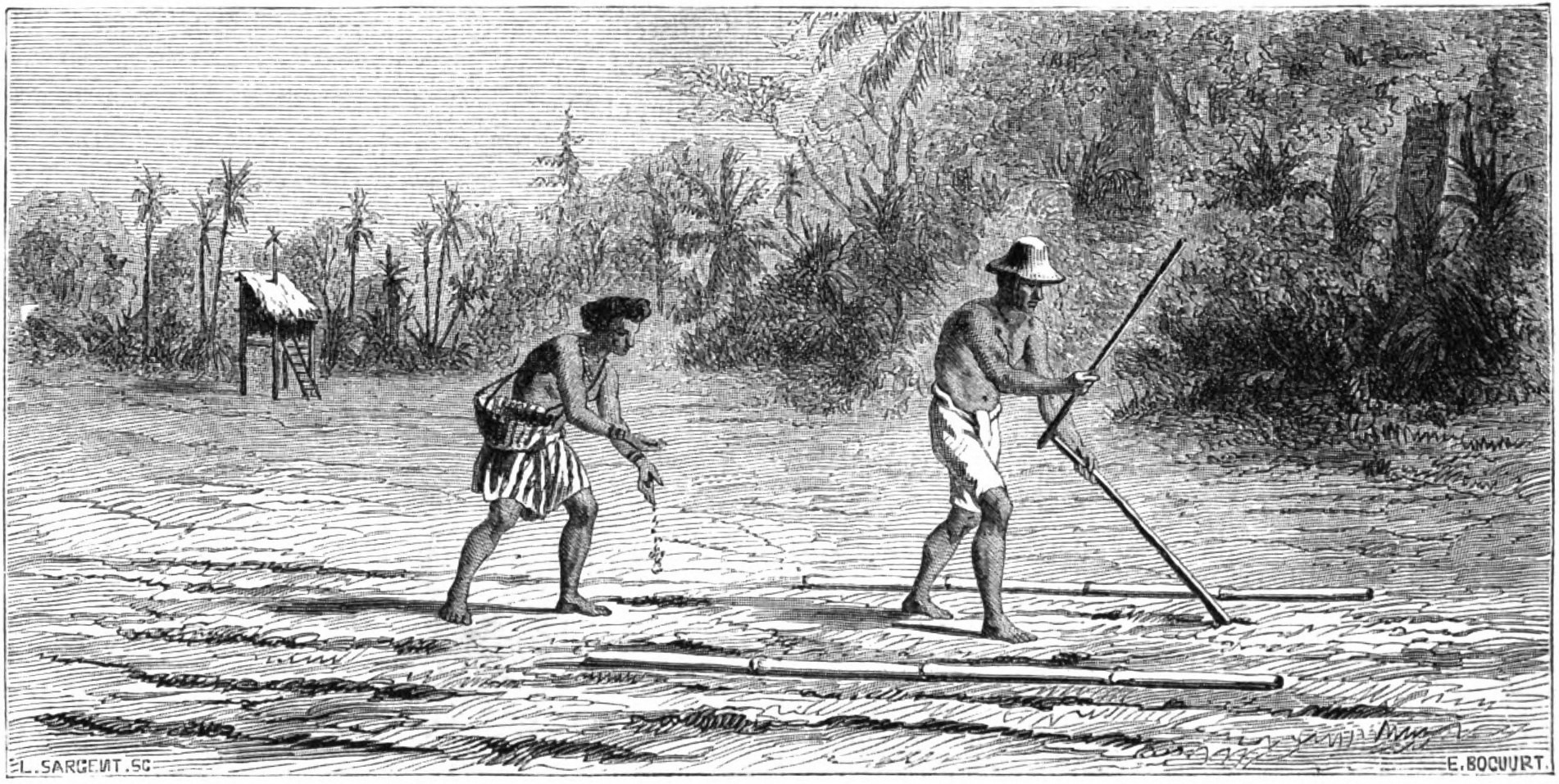
The division of the day was as fixed as the division of property. The Rhade men cleared and burned the fields, felled the big trees, hunted, conducted business, played the flute, beat the gongs and drums, cooked the rice for the ceremonies, and ran the sacrifices; the women oversaw the farming, weeded, sowed, harvested and winnowed, drew the water, gathered the wood, cooked, cleaned, wove, washed, and made “the traditional red, black, yellow, and blue cotton thread of the tribe,” and now and then a woman was a flute player, a sorcerer or a religious practitioner. The whole family was up before dawn; the men went first to the fields and the women and younger sons followed two hours later; the women designated to stay in the village brought the lunch, and the women left the fields at three to cook the supper. A Raglai woman was up first to pound the rice for the first meal and feed the animals, and went to the forest for roots and herbs. A Katu woman worked to the day of her delivery, carrying a log on her back in the ninth month. The first European to live among any of our peoples, Henri Mouhot among the Stieng in 1859, found the women “as robust and strong as the men,” with bracelets on both arms and both legs where the men wore one above the elbow and one at the wrist.
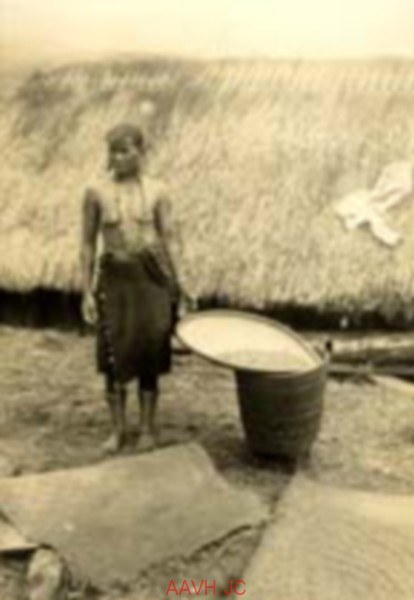


Marriage was the woman’s side’s to arrange, among the matrilineal peoples. Among the Rhade the girl’s family approached the boy’s through an intermediary, arrangements were often made years ahead, and it was the girl’s family that paid the boy’s a price, “a dowry to compensate them for the loss of their son”; if it was not paid on the day fixed, the groom went home to his mother, and the girl might live with his family for up to three years until it was. A boy and girl who had exchanged bracelets were bound: he had agreed to marry her if she became pregnant. At the wedding the couple squatted before a jar and drank through long reed straws, crossing the straws, with their feet on a hatchet to signify that the union would last. Among the Jarai the girl took the initiative, through a go-between chosen by her parents to whom her mother gave a bracelet, and it was her family that paid the dowry to his; unmarried young people were free with each other so long as they kept out of their own clan; and divorce, absence or death dissolved the marriage, but a widow could not remarry until the tomb of her husband had been abandoned, and not without the consent of one of his female kin. The Mnong girl chose, the Koho woman chose “from among the available men of her own or neighboring villages,” and a Ma girl or widow could send a bracelet and a necklace to the man she wanted. The Raglai were the exception in their own family: there “courtship is initiated by the boy rather than by the girl.” The rules ran the other way among the Bahnar, where either side could propose and the richer usually did, and among the Sedang, the Jeh, the Bru, the Katu and the Ma, where the man’s side asked and paid. A Rhade widow who wished to remarry asked the parents of the man she had chosen, and if he was willing he came to live with her people; and a widow of a chief, the handbook noted, “even if she is old and ugly, always remarries,” because her new husband became the chief.
The law that governed all this was not silent about women’s bodies. In the Rhade code, adultery between married persons was fined on both sides, but if a man committed adultery with a married woman “he is guilty of the crime, not she,” though she paid her husband a fine; rape of a girl below puberty carried the blood price, the penalty for the shedding of another person’s blood, and rape otherwise was fined by the standing of the woman’s husband or father; incest was a crime against the land and endangered its fertility. A woman found to have procured an abortion paid a blood price of a flat gong, and the midwife who did it was seldom caught, “because women are reluctant to admit that they have had an abortion.” The childhood page has the rest of what the record says about birth.

What certification did to that
The land articles in this library describe communal, long-rotation tenure meeting a certificate system and losing. There is a second loss inside the first one, and it was visible before the certificates came. In 1966 the American handbook was already reporting that “the po lan system is losing its traditional function,” that there was less respect for the po lan’s claim to land, and that the Saigon government was “planning to redivide the Rhade land and give each family a determined amount with a title of ownership. Adoption of this plan would mean the end of the po lan system.” The Republic did not live to do it. The Socialist Republic did.
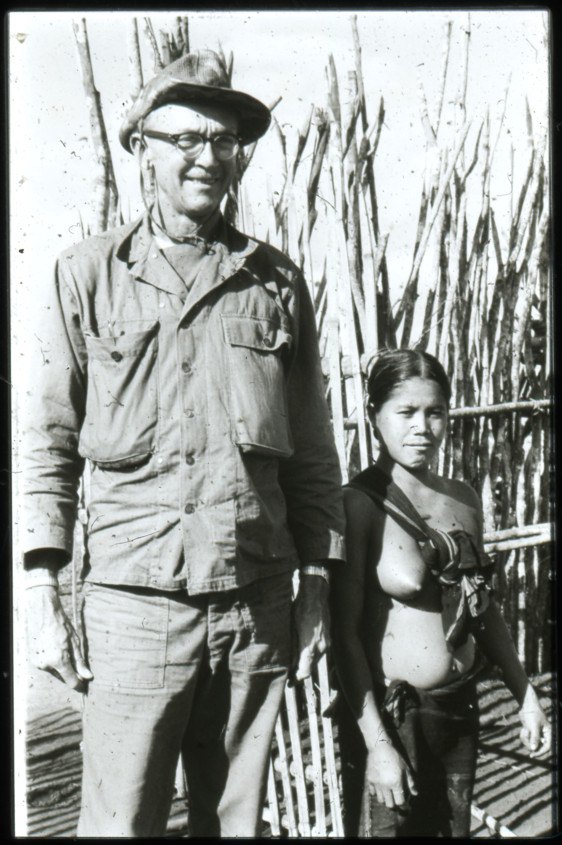
When land is registered, it is registered to a household, and the paperwork asks for a head of household. The land law, in Human Rights Watch’s words of 2002, “tends to recognize only one name per household on land use certificates, which are primarily issued to men, who are usually classified as head of household,” which “not only denies women land use rights but also stands in stark contrast to traditional customs of many of the highland ethnic groups, in which landowners are always women and land is inherited through the female line.” Where the land had belonged to the women of a longhouse, it now belongs to whoever is on the certificate. Nobody legislated for that transfer. It is what happens when a matrilineal system is recorded by a bureaucracy that does not have a box for it.
Vietnam has since changed the form. The Land Law of 2003 provides that a certificate for joint property carries both spouses’ names, and the law of 2013 kept the rule. The figures show how far the form has moved the fact. In the World Bank’s field study of 2008, 66 percent of agricultural certificates were still in a man’s name alone, 19 percent in a woman’s, and 15 percent in both. By 2014, nationally, 46 percent of cropland certificates were held by men against 15.7 percent by women, and the share held jointly had risen from 11.6 percent in 2004 to 38.3 percent. Among ethnic minorities the picture is worse and the matrilineal peoples are invisible in it: in 2014, 74.2 percent of ethnic minority households had a man as sole title holder, against 40.6 percent of Kinh households, and 21 percent of minority certificates carried both names against 36 percent. Nobody has published what share of Rhade or Jarai land is now registered to a man. The UN’s women’s rights committee asked Vietnam in 2015 to “ensure that land-use certificates bear the names of both spouses,” and named, in the same set of findings, “women from the Degar and Khmer Krom communities” as lacking access to training and finance. Neither field study nor UN committee went to a longhouse.
The Yali Falls resettlement shows the same machinery from another angle. On the Vietnamese side of the dam, in Kon Tum, the university team that surveyed the resettled villages in 2001 found that every Kinh household in Binh Son had been compensated for lost crops and fishponds, at up to 120 million dong, while none of the nine Bahnar households in Ka Bay had received anything and three of seven Rongao and Bahnar households in Kroong had; the commune’s own vice-chairman said a Kroong household got sixty or seventy thousand dong where a Kinh household in Sa Binh got up to twenty million. The team’s explanation was that the minority families had not planted on the land they were told not to plant on, and so had nothing on paper to be paid for. In the resettled villages “many women have become scavengers,” one earning five thousand dong a day for rice and salt for her children, and “only women and girls” gathered the firewood. Downstream in Ratanakiri, where the dam’s releases had drowned at least thirty-two people and, the villagers believed, killed hundreds more through the water, 64 percent of the women’s groups interviewed in 2000 said women had suffered more than men. A system does not need to intend an outcome to produce it reliably.
.jpg)
What is documented about harm
The record is fragmentary and we will not pad it.
Our own accounts of the years after 1975 state that women were raped and forced into prostitution to soldiers. They are the accounts of people who were there, given to our organization; no foreign report covers those years, and no one from outside was in the highlands to write one. Human Rights Watch, which cannot work inside Vietnam, has documented what it could: “at least one rape of a young woman by police officers during three days’ detention in August 2003 at a district police station in Dak Lak.” In September 2003 the district police of Buon Don detained and interrogated the wives of two men who had been resettled in the United States, telling one woman’s mother that her daughter was arrested because her husband was in America and had telephoned her; the other was accused of carrying food to men hiding in the forest. “There have been six police in my house since September 2003, sleeping there, searching the house,” one of the husbands said from America. “Now I don’t know where my wife is. We have six children.” In 2006 the wives of refugees were still “treated with suspicion by local authorities,” their remittances refused by the banks or taken by the police, one Jarai woman interrogated for two days over a box of clothes and school supplies her husband had sent. During the forced return of July 2005 the Cambodian police “beat at least one woman with a baby strapped to her back.” In many villages after 2001, only women were allowed to leave.
The women were also, more than once, the front line. At Plei Lao on March 10, 2001, while the men went on praying in the church, “a contingent of women and girls went out to stand or sit across the road from the security forces, silently watching them.” “We sent the women to guard the road,” a man said afterward, “because we thought the police wouldn’t hit or arrest the women.” They did. One man’s sister was beaten “until blood came out of her mouth” as she screamed for her brother’s release, and people ran with babies on their backs. The prisoner records on this site carry women’s names, the Dak Lak table opens with H’No Buonya, though women are a small minority of the people listed. The renunciation ceremonies were counted in people and in households: when 567 households in Krong Pa district are recorded as renouncing their faith in October 2010, most of the people in those households are women and children and none of them is named, and in the two villages of Ia Grai where the state press did count, in November 2010, seven of the eleven and nine of the fourteen were women. In February 2026 a member of the UN’s women’s rights committee put to Vietnam that “birth certificates were denied to children, to coerce the mothers to denounce their religious faith.”
Two things are said about our women’s bodies that must be set beside each other. The Montagnard Foundation said in 2003 that more than a thousand of our women had reported demands to be sterilized, and in 2004 told the UN Commission on Human Rights of “coercive sterilizations”; a petition from a Dak Lak hamlet in December 2000 said the government’s birth control was a plan to “exterminate the whole Dega population” and take the land. Human Rights Watch, interviewing dozens of highlanders in Cambodia in 2001, found none who had been sterilized against her will and said it had “no evidence to support that allegation,” while noting that the state had set sterilization targets and had sterilized about 750,000 women nationally between 1993 and 1999. What Human Rights Watch did document, from twenty Ede and Mnong women, was this: fines of 600,000 dong, about forty-six dollars, for a third child, rising for the fourth and fifth; births at home to avoid the fine; medical care refused to the children of women who refused “the operation”; “They call us hard headed troublemakers.” “I had my third baby at home because I was afraid the authorities would fine me,” an Ede woman said. “I had a friend help me. She’s not a midwife, and we did not have any medicine. I was afraid. There was only God to help me.” The two accounts are not the same, and we set them side by side: one is what, by the Montagnard Foundation’s count, more than a thousand women reported, the other is what twenty women told a foreign researcher across a border. Nobody has been allowed to ask the rest.
What does not exist is any systematic account of sexual violence in the highlands, in the camps, at the border, or in detention. That absence is not evidence that it was rare. It is evidence about who was asked.
.jpg)
What the health figures show
Where women do appear in the statistics, they appear as outcomes. The nearest thing to a highland series is a survey of sixty poor ethnic minority communes in six provinces, three of them ours, Kon Tum, Gia Lai and Dak Nong, run for the UN Population Fund in 2021.
| Measure | Sixty ethnic minority communes, 2021 | Vietnam as a whole |
|---|---|---|
| Maternal deaths per 100,000 live births | about 105 (18 deaths in the communes’ own records, 2019–2021) | 46 (UNFPA, 2021); 54 (UN estimate, 2015) |
| Births attended by a trained attendant | 34.7% | 96.1% (2020–21) |
| Four or more antenatal visits | 17.9% in the communes’ records; 11.3% of the 718 women interviewed | 88.2% (2020–21) |
| Deliveries at home or in the field | 52.8%, and over 80% in twenty of the communes | — |
| Households at or near the poverty line | 56.2% | — |
| Improved sanitation | 44.9% | — |
| Women married before eighteen | 27.5% in the Central Highlands (2018); 18.2% of women aged 20–49 in the region (2020–21) | 14.6% of women aged 20–24; 8.5% of Kinh and Hoa women aged 20–49 |
These are figures for poor ethnic minority communes across Vietnam rather than for the Central Highlands specifically; the survey left Dak Lak out, and no disaggregated highland series is published, which is itself on the gaps list. The UN Population Fund’s own summary is that maternal mortality in mountainous and ethnic minority regions “remains as high as 100–150 per 100,000 live births” against 46 nationally. A woman in one of those communes is roughly twice as likely to die giving birth as the national average, and more likely than not to give birth at home without a trained attendant. In 2014, 99 percent of Kinh women gave birth with a trained attendant and 68 percent of minority women did; the UN’s women’s rights committee found in 2015 that maternal mortality “remains high in rural and mountainous areas and among ethnic minority women.” Of the 2,991 marriages of children under sixteen recorded in the state’s 2015 survey of the minorities, 2,306 were girls; 162 of the 174 Jarai cases and 104 of the 120 Bahnar cases were girls.
Alongside that: 31 percent of ethnic minority children reach upper secondary school against 63 percent of Kinh children, the figure a member of the UN’s racial discrimination committee put to Vietnam in November 2023, which the delegation answered with a figure of 59 percent enrollment; in 2014, 83.2 percent of minority girls and young women could read, against 99.1 percent of Kinh and Hoa; among highlanders arriving in the United States in 2002, third grade “might be an average literacy level,” a fifth-grade education was typical for a man, and “women may not have attended school at all.” Where a gender gap in literacy is measured nationally it has narrowed, from 10 percent in 1989 to 4.4 percent in 2009, but it narrowed around a much lower baseline for us. Women of the minorities held about six percent of government positions in 2023, “mainly low-ranking positions, such as clerks.” And in the state’s own survey of 2014, 22.3 percent of minority women said they had endured unwanted sex from a husband or partner at least once, against 13.3 percent of women nationally, and 58.6 percent of minority women aged fifteen to forty-nine agreed that a husband might beat his wife for one reason or another. Those last figures are the state asking its own questions in its own way, and we do not know how a Rhade woman heard them.
Why this page is short, and what would lengthen it
Because our sources are colonial administrators, military records, court lists, human rights reports and community archives, and every one of those genres records men, either because it is about soldiers and prisoners or because it asked for the head of the household. The 1966 handbook, the fullest description of our women’s standing that exists in English, was compiled by American researchers from French books and returning soldiers, and not one of its sentences about the po lan was heard from a po lan. A library assembled from those sources will reproduce their shape unless somebody says so out loud.
What would change it is testimony, and the people who hold it are mostly alive: grandmothers in Greensboro and Charlotte, women who were moved for a reservoir, women who were in the villages during Easter Week 2004, women who were told to sign a renunciation. None of that is in a document anywhere. It is in houses.
Women who are named
A few of our women are in the record under their own names, and we set them here so that the page is not only about what was done. H Ju Nie, a Rhade weaver from Buon Ma Thuot who came to Greensboro in 1993, and H Ngach Rahlan, a Jarai weaver from Pleiku who came in 1996, brought their backstrap looms with them and went on weaving the skirts and women’s shirts of their peoples, and the kteh finishing that makes a Jarai cloth nearly indestructible, for the ceremonies of the community; in 2016 the state of North Carolina gave them its Heritage Award, and H Ju Nie died in October 2021. Liana Adrong runs the Montagnard Dega Association in Greensboro, whose youth branch teaches our dances, our music and our weaving to children born in America. H’Hen Niê, a Rhade farmer’s daughter from Cư M’gar, was told at fourteen to find a husband, worked as a housekeeper in Ho Chi Minh City to pay for college, was crowned Miss Universe Vietnam in 2017 and placed in the top five at Miss Universe in 2018, the first from Vietnam to do so, and gave her prize to girls’ education: “Growing up as an ethnic minority in Vietnam,” she said, “I have seen firsthand that education is the only way to break the cycle of poverty.” Siu Black, a Bahnar singer born near Kon Tum in 1967, was a judge on Vietnam Idol in 2007. The women in the war page has the rest of what we know about the militiawomen of 1966, which is nothing but the photograph.


If you can add to this
We want accounts from women and about women: what a longhouse held and who held it, what happened to a family’s land when it was registered, what a resettlement site was like to run a household in, what the renunciation meetings were like, what the family-planning workers said, and anything from the camps. Read reporting safely first, then how to document.
We will not publish anything that identifies a person still in Vietnam, and we will record an account without a name if that is what is wanted.
See also: Growing up Dega, Highland women in the war.
Sources
- US Army, Minority Groups in the Republic of Vietnam (1966), DCHO library, Rhade chapter pp. 665–695, Jarai pp. 271–275, Raglai pp. 581–583, Mnong pp. 492–493, Koho pp. 400–402, Katu pp. 358–359 — property, the po lan, the longhouse head, the division of labor, marriage, divorce, the law on adultery, rape and abortion, the plan to end the po lan system; Gerald C. Hickey, RAND RM-4041 (1964), DCHO library, pp. 6–9, 45, 62–63 — the po lan, “the girl asks the boy’s hand,” the Sedang tyin
- Francis J. Kelly, U.S. Army Special Forces 1961–1971 (1973), PDF, pp. 22–23; Eugene G. Piasecki, “Civilian Irregular Defense Group: The First Years,” Veritas 5:4 (2009), PDF — the army’s “matriarchal”; Henri Mouhot, Travels in the Central Parts of Indo-China I (1864), DCHO library — the Stieng women of 1859
- Human Rights Watch, Repression of Montagnards (April 2002), PDF, chapters VII (land certificates), VIII (family planning, the market), XI, XV (Plei Lao); HRW, “Vietnam: Violence against Montagnards During Easter Week Protests” (April 14, 2004) — the rape of August 2003, the wives of Buon Don; HRW, No Sanctuary (June 2006), DCHO library — wives of refugees, the woman beaten in July 2005; HRW, Montagnard Christians in Vietnam (2011) — the renunciation figures of 2010
- Cultural Survival, “Over 1000 Montagnard women report forced sterilization” (June 26, 2003); Kok Ksor for the Transnational Radical Party, statement to the UN Commission on Human Rights (March 30, 2004); Transnational Radical Party, written statement E/CN.4/2005/NGO/270 (2005)
- UNFPA Viet Nam, Ministry of Health and Hanoi University of Public Health, Assessment to establish baseline indicators … for women of ethnic minority groups living in 6 Northern mountains and Central Highland provinces (2022) — the sixty communes, pp. 10–11, 33–37; UNFPA Viet Nam, press release of September 24, 2021 — 46 and 100–150; UNICEF, Viet Nam maternal and newborn health profile — 54
- UNICEF and General Statistics Office, Viet Nam SDG Indicators on Children and Women Survey 2020–2021, key indicators and child marriage snapshot — 96.1, 88.2, 14.6, 18.2, 8.5 percent
- UN Women and CEMA, Briefing note on the Situation of Ethnic Minority women and girls in Viet Nam (2015) — 83.2 and 99.1 percent literacy, 74.2 and 40.6 percent of titles, 21 and 36 percent joint, 99 and 68.3 percent attended births, 22.3 and 58.6 percent; UN Women and CEMA, Figures on Ethnic Minority Women and Men in Viet Nam 2015 (2017), pp. 22–23 — the 2,991 child marriages; UN Women, CEMA and ILSSA, Figures on Ethnic Minority Women and Men in Viet Nam 2015–2019 (2021) — 27.5 percent
- World Bank, Analysis of the Impact of Land Tenure Certificates with Both the Names of Wife and Husband in Vietnam (2008), p. 15; World Bank, Benefits of Joint Land Titling in Vietnam (2020), p. 4
- CEDAW, Concluding observations on Viet Nam, CEDAW/C/VNM/CO/7-8 (July 29, 2015), paras. 32–37; OHCHR, summary of the CEDAW review of Viet Nam (February 3, 2026) — the birth certificates; OHCHR, summary of the CERD dialogue with Viet Nam (November 2023) — the 31 / 63 percent schooling figures, six percent of cadres
- UNFPA Viet Nam, Education in Viet Nam: Evidence from the 2009 Census — the gender gap narrowing from 10 percent (1989) to 4.4 percent (2009); Raleigh Bailey, Montagnards: Their History and Culture (2002), DCHO library, pp. 18, 23, 29
- Center for Natural Resources and Environmental Studies, Vietnam National University, Study into Impact of Yali Falls Dam on Resettled and Downstream Communities (2001), pp. 16–22; Fisheries Office, Ratanakiri, A Study of the Downstream Impacts of the Yali Falls Dam (2000)
- North Carolina Arts Council, 2016 Heritage Award recipients and “Remembering H Ju Nie” (2022); Room to Read, H’Hen Niê, August 13, 2018; Rappler, December 17, 2018; Yes! Weekly, June 29, 2022
- Rade people and Jarai people — matrilineal inheritance, the longhouse and naming
- Our own records
Compiled September 2026. The customs are given as the American handbook of 1966 recorded them, in its past tense, and with its sources, which were French books, not our women. The health figures are the UN’s and the state’s, and each is given with its year and its population. This is the gap named on what we do not know that we are least equipped to close from documents, and the one most likely to be closed by a conversation.