




















For most of our history the year was measured by rice. A village chose a piece of forest, cleared it, burned it, planted it when the rains came, harvested it, and after a few years let it grow back while it moved on to the next. Outsiders called this “slash and burn” or “nomadic farming” and set out to end it. This page describes the rice year as it was kept, people by people, and what has happened to it.

The word
The field itself has a name in every one of our languages. Among the Mnong Gar it is the miir, and the Mon-Khmer peoples of the plateau say that in farming it they “eat the forest”: a year is named for the stretch of forest eaten that year. Georges Condominas, who lived through one such year at the Mnong Gar village of Sar Luk in Darlac from November 1948 to December 1949, took the phrase for the title of his book, Nous avons mangé la forêt de la Pierre-Génie Gôo — We Have Eaten the Forest of the Stone Spirit Gôo — because that was what 1949 was called at Sar Luk. The Koho call the field the mir; the French and Vietnamese called it the ray; the scholars’ word, swidden, is an old English dialect word for a burned clearing that the Swedish ethnologist Karl Gustav Izikowitz brought back into use in 1951. Every one of those words describes the same thing: a temporary field on slashed and burned land, with long periods of fallow.
The cycle
The details differ from people to people and valley to valley, but the shape of the year is shared. What follows is the outline, with what the Army handbook of 1966 recorded of each people’s way of keeping it.
- Choosing — Early in the dry season the elders choose which forest to open, within land the village regards as its own. Among the Stieng, “a future field is selected by the men in March”; among the Mnong, a group of elders known as “the sacred men in the forest and the village” distributed the plots; among the Rhade it was the po lan, the guardian of the land, who regulated the fields in her territory. Omens and dreams are consulted.
- Clearing — The undergrowth is cut and the trees felled or lopped, and the cut wood is left to dry. Among the Bahnar “the trees — except for the largest — are felled, leaving stumps of about 1 to 2 feet. The dense vegetation is cut to the ground and allowed to dry in the sun before the burning time — usually a month before the next heavy rains begin.” The Mnong cleared the mir in February or March.
- Burning — Just before the rains the plot is burned, carefully, so that the fire does not spread. The ash is the fertilizer. Among the Sedang and the Rengao, when the field had cooled, the unburned debris was raked into piles and burned again.
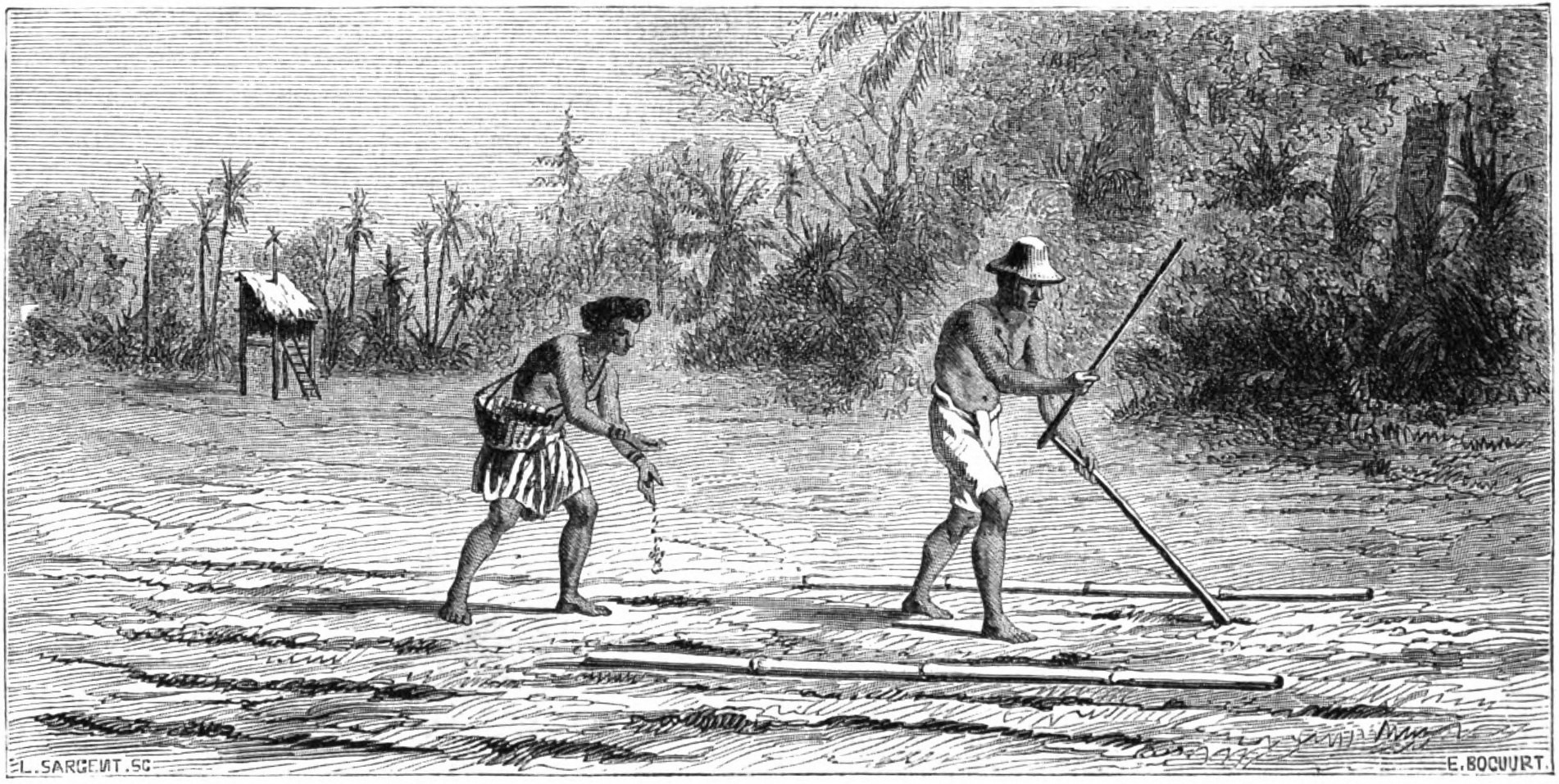
- Sowing — When the first rains soften the ground, men make holes with digging sticks and women follow, dropping the seed. Among the Rhade, “parallel lines are drawn in the ray from west to east; a man follows these lines, a stick in either hand, and pokes holes in the soil about a foot apart. They work from west to east in the ray to prevent the sun from attracting the soul of the rice. Generally, the women follow their husbands and drop the seeds into the holes, using hollow bamboo planting tubes.” Among the Rengao the women tamped the earth over the seed with a sacred piece of bamboo, the ding ho’noi. No plow is used; the roots of the forest stay in the ground and hold the soil. Corn, pumpkins, beans, cotton and other crops are sown among the rice.
- Weeding and guarding — Through the wet season the field is weeded and watched against birds, boars, deer, elephants and monkeys, often from a field hut, sometimes helped by a scarecrow.
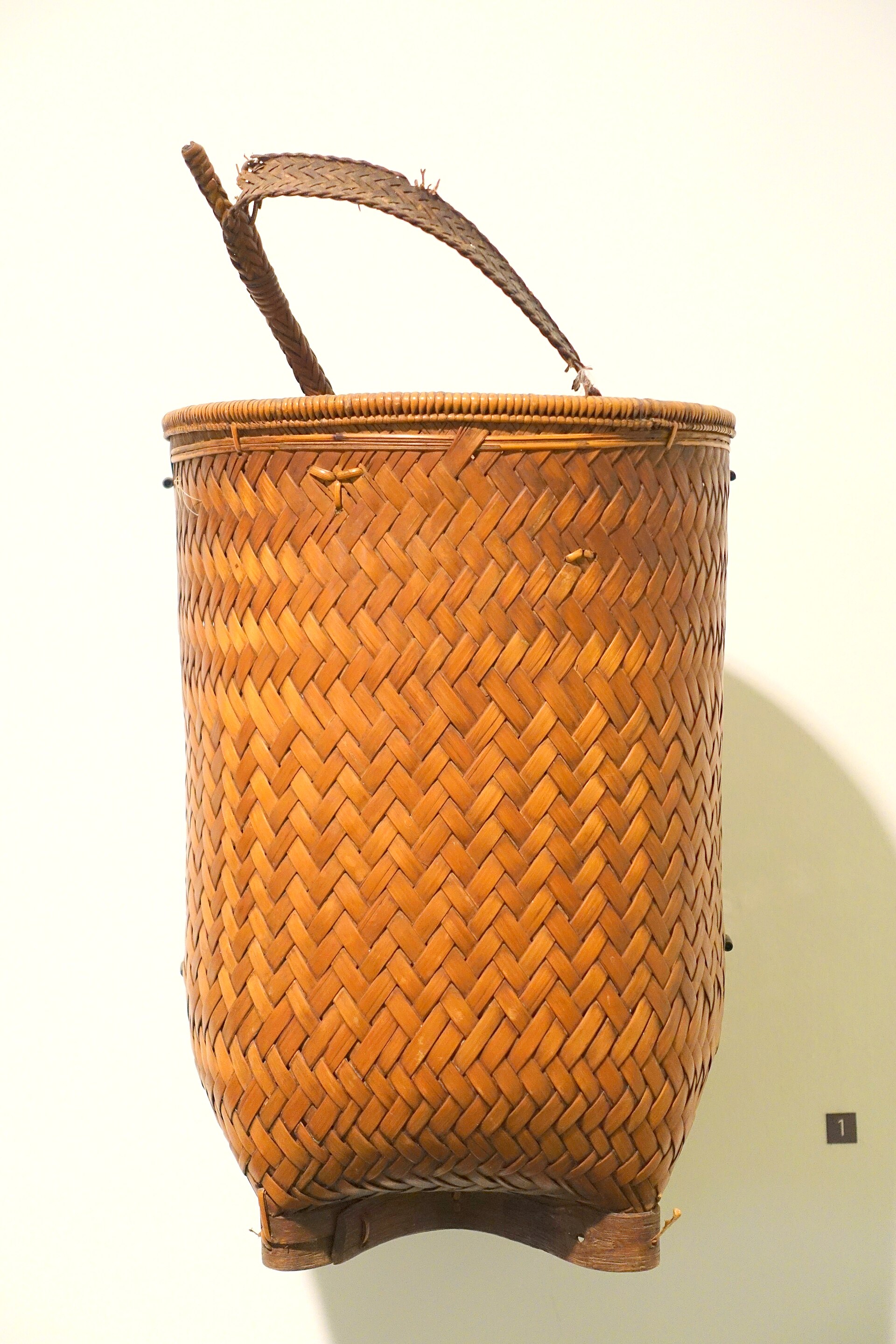
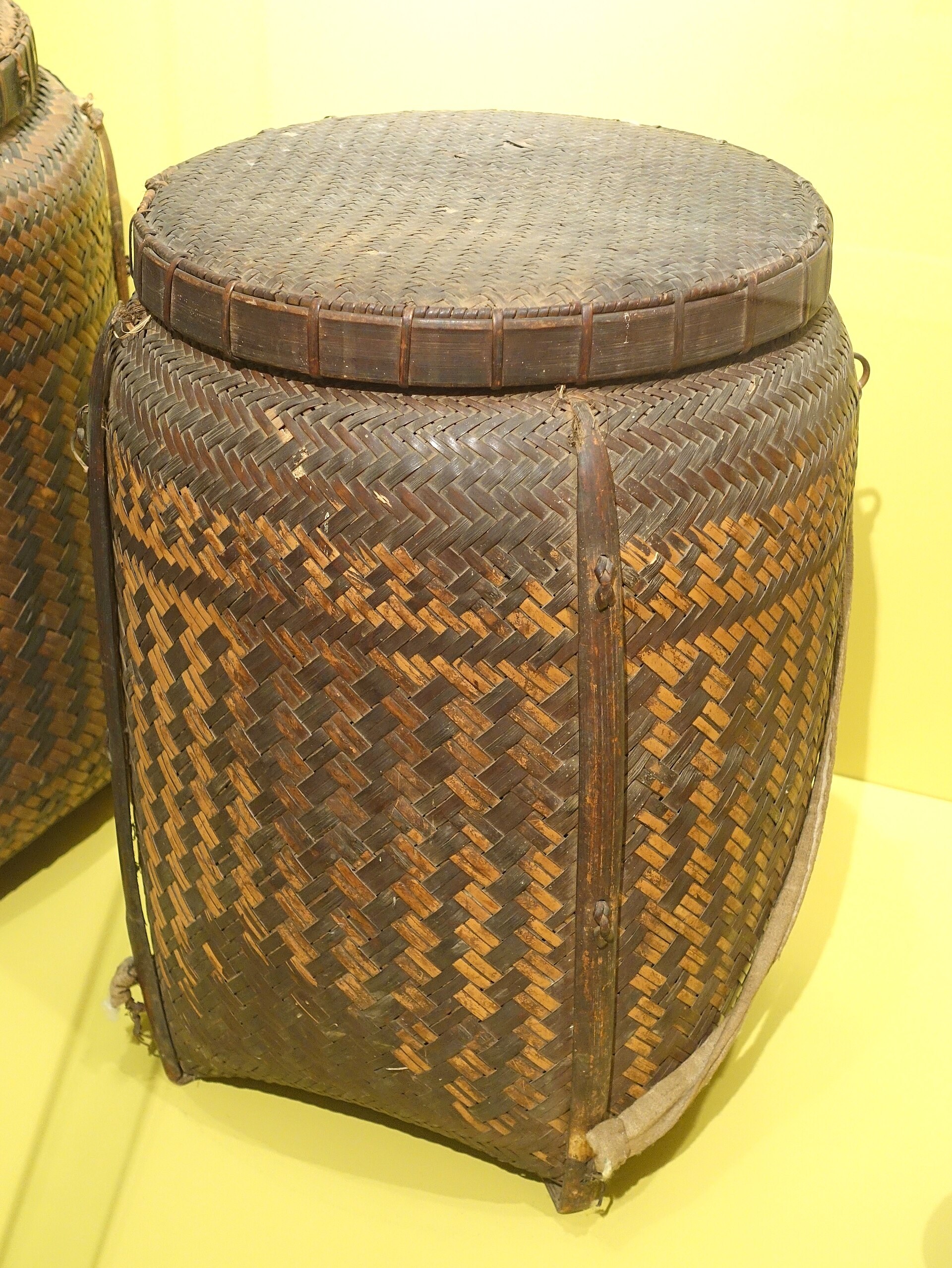
- Harvest — At the end of the rains the rice is cut and carried home in baskets, and the soul of the rice is brought back with it. The harvest festivals follow.
- Rest — After a few harvests the field is left. Forest returns, and in time the village comes back to it.

How long a field was farmed, and how long it rested
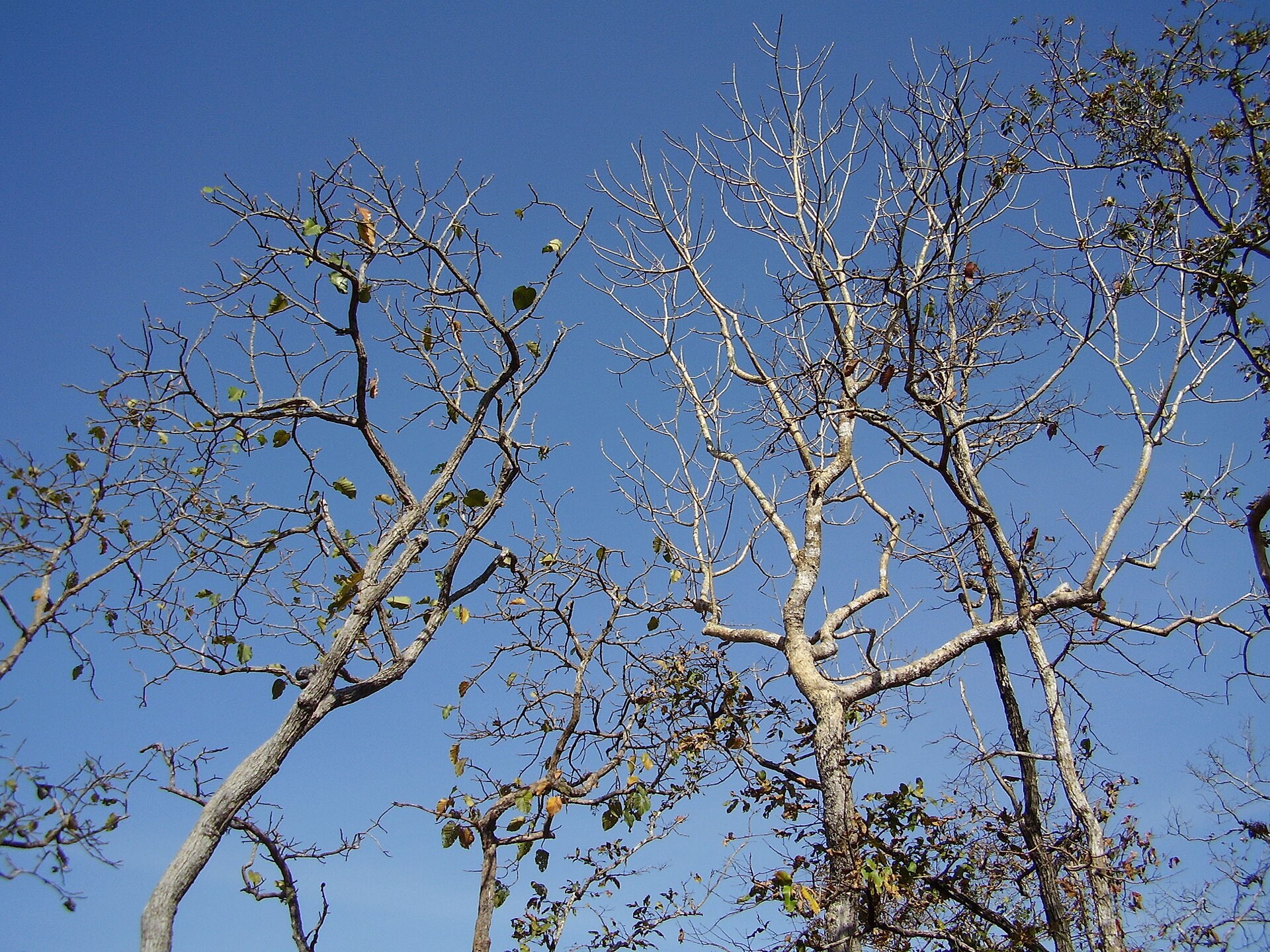
This is the number that everything else turns on, and the record is specific. The Bahnar farmed a plot “for approximately 3 or 4 successive years and then abandoned” it. The Koho used a field for about three years, “then allowed to remain fallow for a period as long as 20 years.” The Mnong, on poorer land, cleared a new mir every year and let each one reforest for twenty. The Sedang farmed three years and rested a field for as long as eight; the Hre, two or three years, and came back within five to ten. The Katu used a field three or four years and then moved the village itself, perhaps once in a few decades. Human Rights Watch, summarizing the whole system in 2002, put it at “ten to twenty years” of fallow, and drew the arithmetic: “for each hectare of farmland currently under cultivation, another five (for relatively rich soils) to fifteen hectares must be kept fallow and held in reserve.” That is the land a highland village needed, and it is the land that looked empty to everyone who came to take it.


The soul of the rice
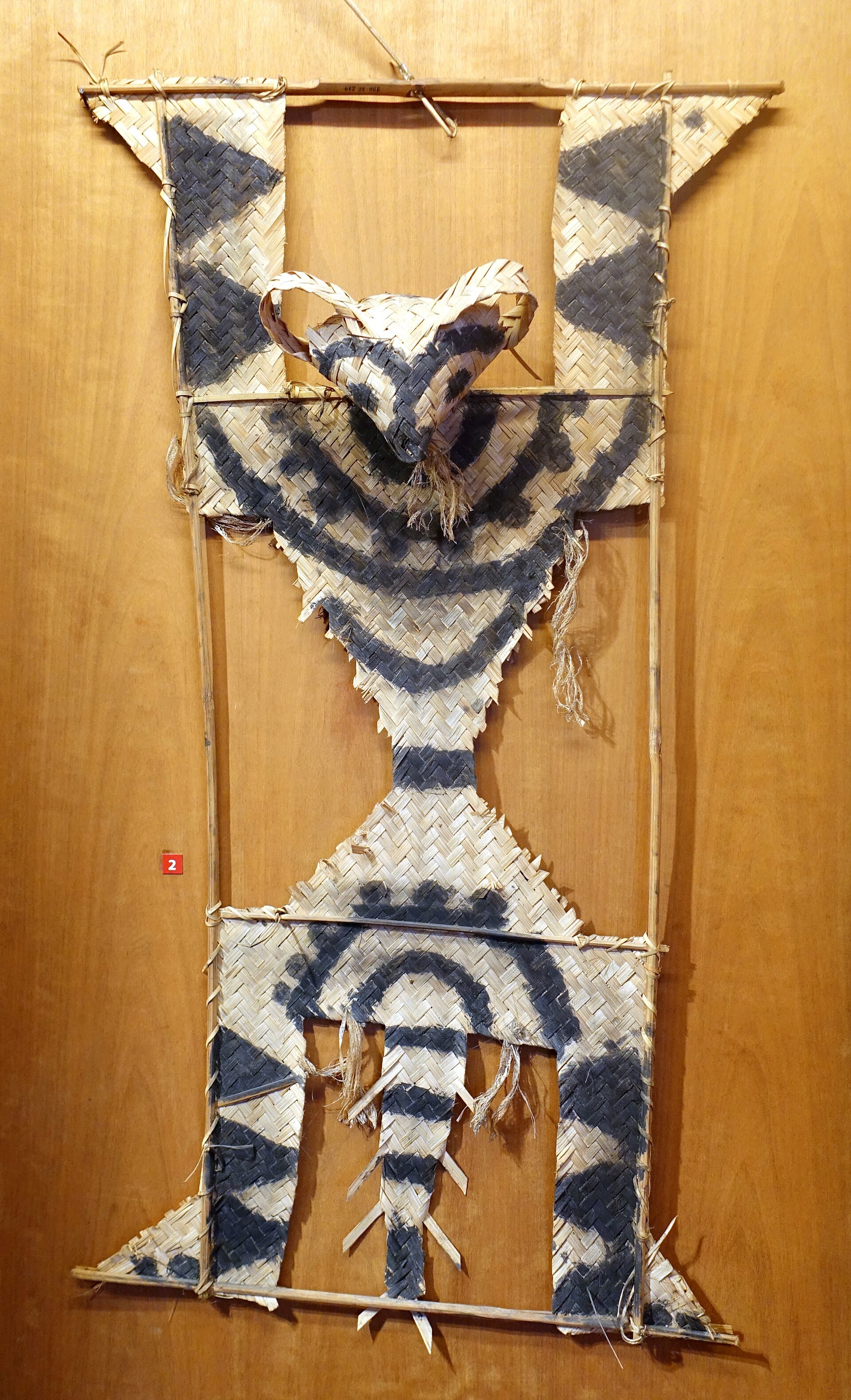
Dry rice was the sacred crop; the kitchen garden and the wet field, where a village had one, carried no rites. Among the Sedang “the fertility of their dry-ricefields is related to the power or strength of the rice soul (mahua phae) of the cultivator’s house,” and that soul lived in the cooking hearth of the household’s ritual head, the tyin, the wife of the house chief. She performed the rites and shared out the rice; the skulls of sacrificed buffaloes were kept in the house to keep the soul strong; and if the harvest failed under her, the house chose another woman. Among the Mnong Gar the spirit of the rice was also the hero who began the human race. The Rengao’s goddess of rice and the hearth was Yang Xo’ri, in whose planting season the girls were forbidden to sound the bamboo tubes, lest she think a buffalo was being offered (see Instruments beyond the gongs). The Rhade planted a ritual field in March before any other, the whole village in rows, the men with the digging sticks and the women with the seed in bamboo tubes. Every step of the year had its rite, because every step could fail.
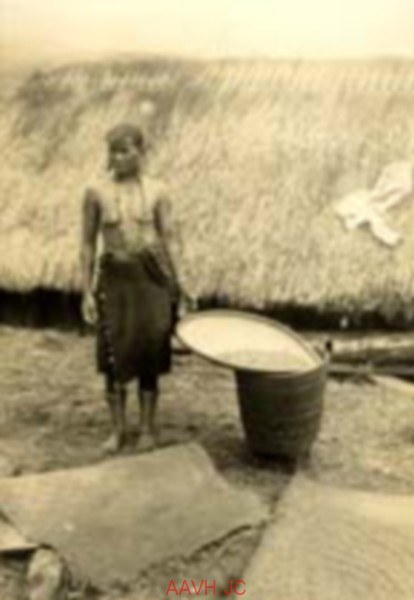

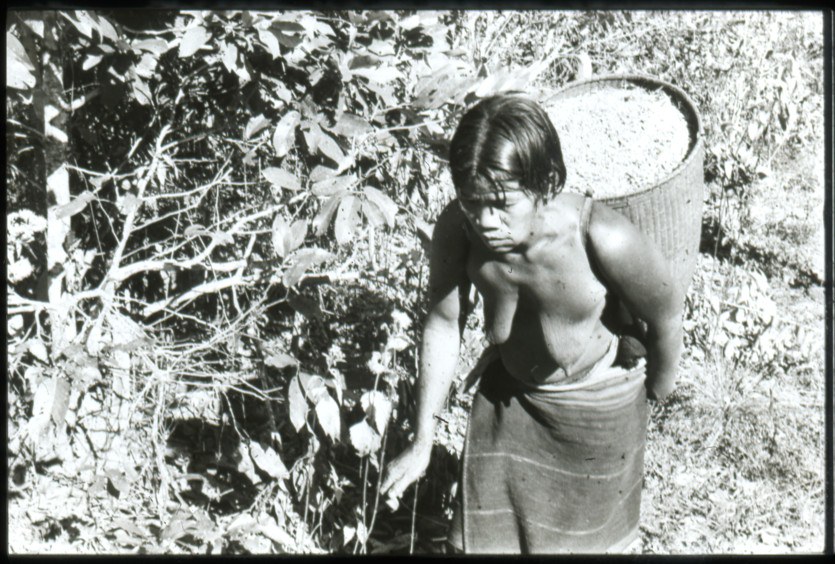

“We have eaten the forest”
The fullest account of a single rice year is Condominas’s. He came to Sar Luk at twenty-seven and stayed through one whole agricultural cycle, which was his method: to follow the sequence of a farming year from inside a village. Month by month the book records the clearing, the burning, the sowing and the rites, and the lives of the people who did them. The French original appeared in 1957 and the English in 1977.
The missionary and ethnologist Jacques Dournes, who spent eight years among the Sre from 1946 and thirteen among the Jarai from 1955 before returning to France in 1970, recorded the same world from inside: the village and its fields, the forest, and the rites, myths and music that went with them. His notebooks, drawings, photographs and recordings are at the Institut de recherche France-Asie in Paris; Andrew Hardy’s The Barefoot Anthropologist is a guide to his life and work.
_-_Vietnam_Museum_of_Ethnology_-_Hanoi,_Vietnam_-_DSC03232.JPG)


Why it was not “nomadic”
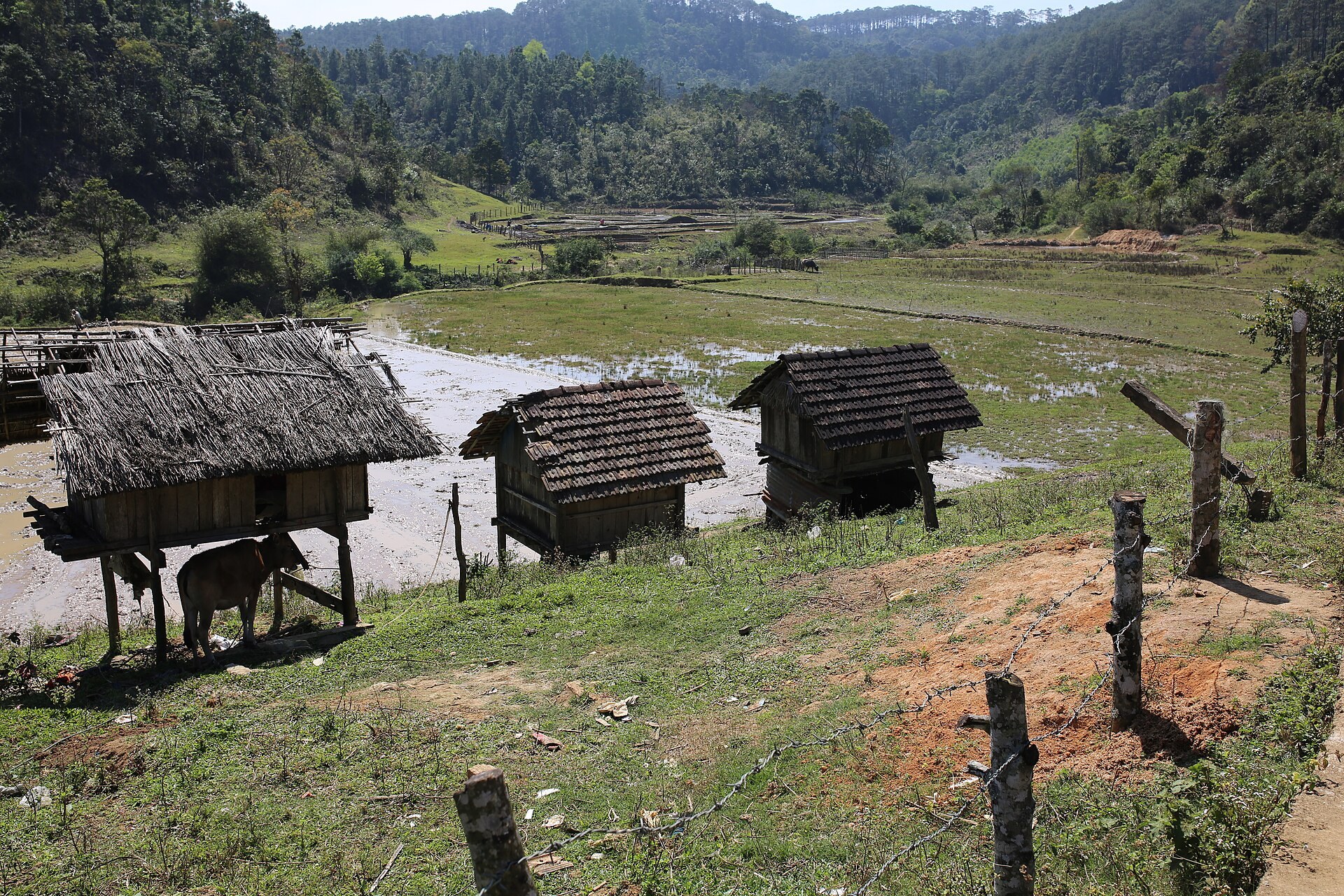
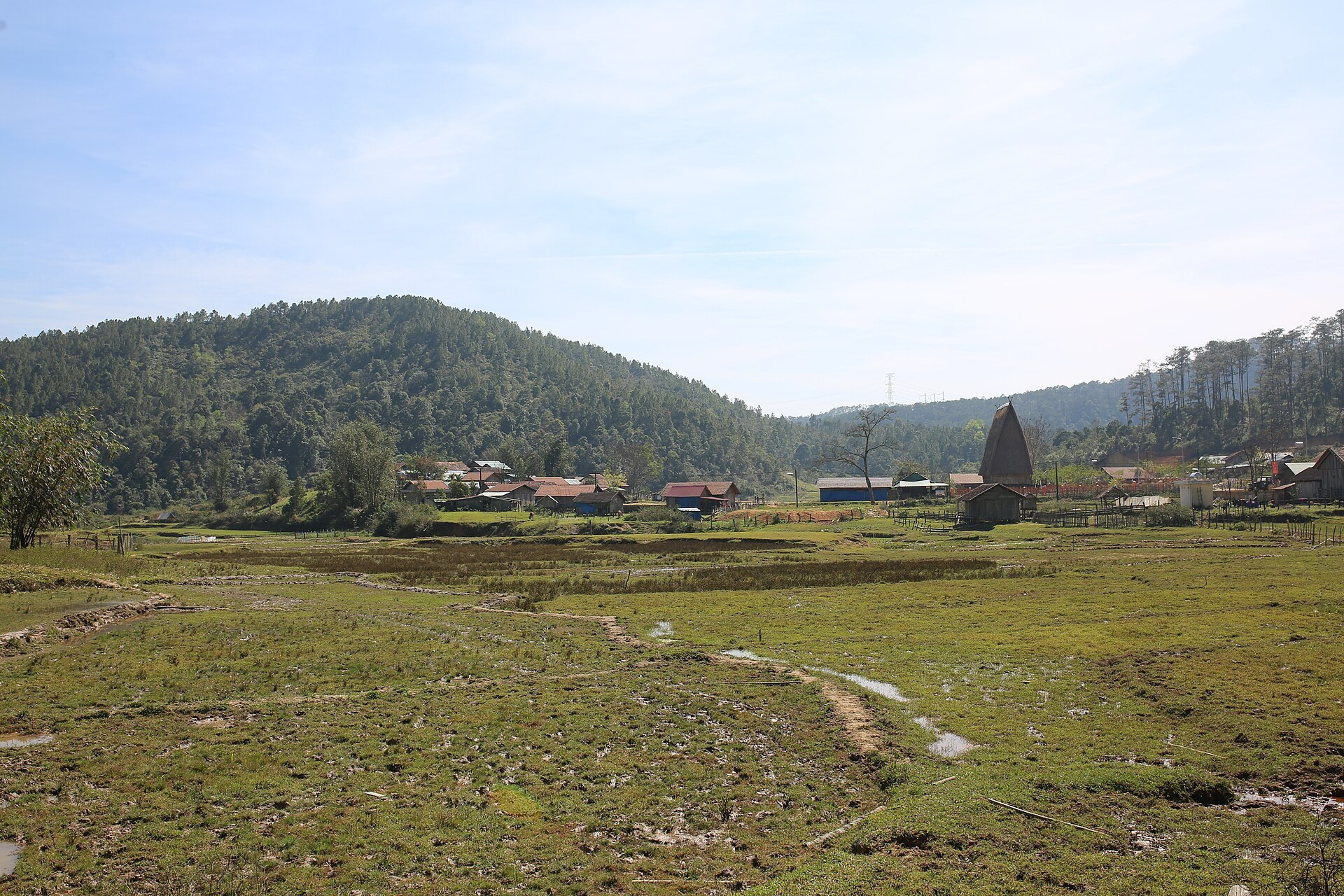
Rotating fields is not wandering. A village’s fields moved inside a territory the village knew and defended, and the village itself usually stayed where it was for many years. Among the Bahnar, “cultivators of a particular field — whether the field is currently in use or fallow — are recognized by the villagers to have a preemptive right to that specific area.” Among the Sedang, “the Sedang village is considered the collective owner of all uncleared land in its area, while households and nuclear families hold title to cleared and fallow land.” The forest regrowing on old fields was not abandoned land; it was land resting, and it had an owner. Condominas later built a general theory of l’espace social, social space, in which territory is defined by relationships and use as much as by boundaries. To a surveyor, though, a resting field looks empty. Human Rights Watch put the other half plainly: “shifting cultivation can be a sustainable farming system in areas with relatively low population densities,” and it was the influx of settlers that made the old practices impossible.
A hundred years of trying to stop it
French forestry law already treated swidden as a threat to the forest. After independence, the Vietnamese ministries took up the same view, and the historian Pamela McElwee has traced the line from one to the other: anti-swidden programs “since the French colonial period,” reinvented under each regime with new justifications, “while remaining rooted in misunderstandings and cultural chauvinism.” The policy that followed has a name: định canh định cư, “fixed cultivation, fixed settlement.” In the north it began in 1968, to address environmental damage “allegedly caused by swidden cultivation by relocating ‘nomadic’ highlanders to permanent settlements.” Villages were moved down to valleys, to grow wet rice or cash crops on assigned plots.
- The efforts to end swidden and to settle the highlanders “meant the relocation of hundreds of thousands to the valleys to grow rice and other cash-oriented crops.”
- In March 2007 a prime-ministerial decision on resettlement “declared the aim of completely eliminating all swidden (slash-and-burn) agriculture activities of minorities and indigenous peoples by 2010.”
- A 2006 study of a remote upland village in north-central Vietnam where swidden had been severely curtailed found that the move to wet rice “resulted in a lower rice production yield, and thus a lower level of food security.”
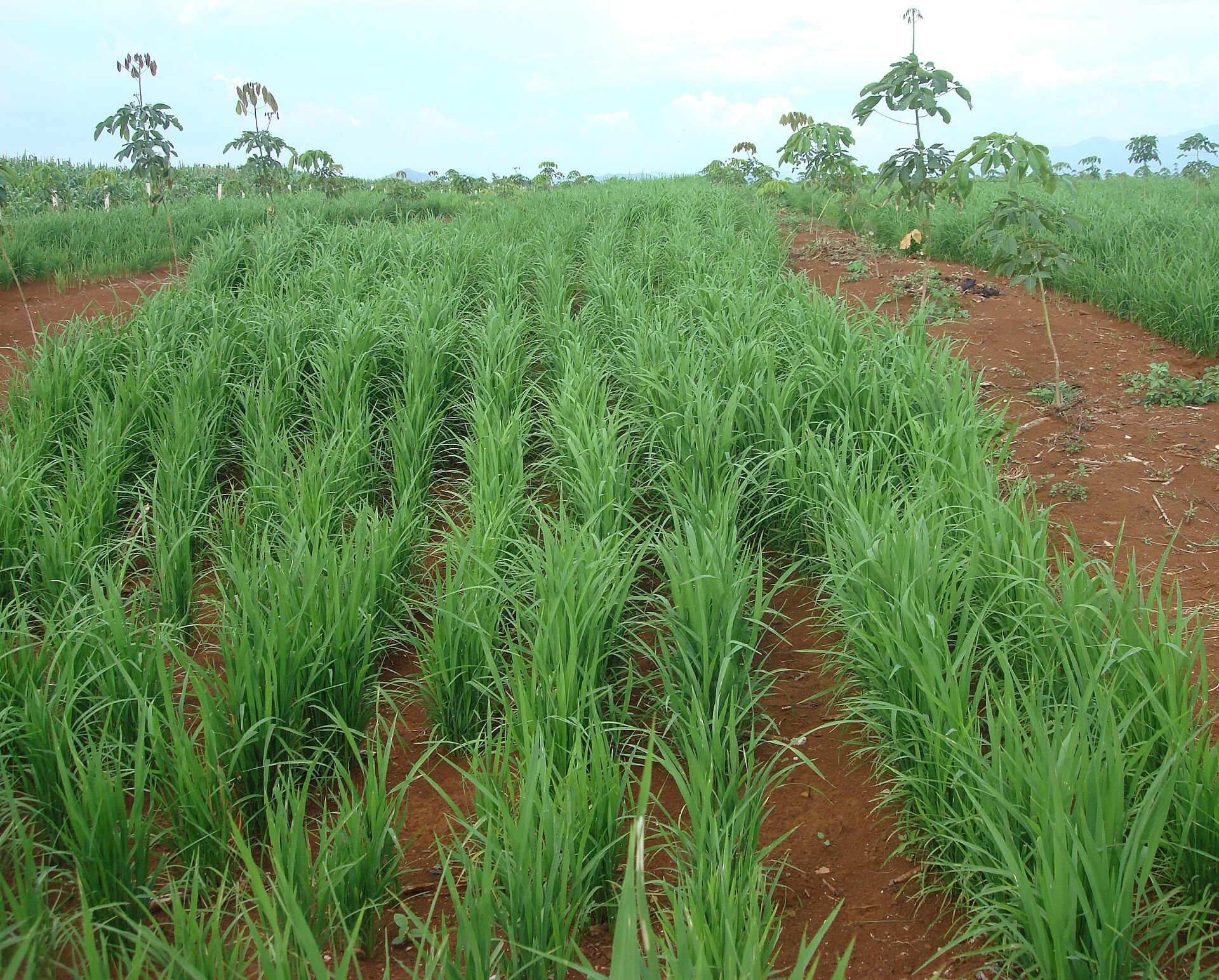
Meanwhile the resting land was reallocated — to state farms, to settlers, and to coffee and rubber (see Land taken for coffee and Rubber). The photograph at the top of this page is the whole story in one frame: upland rice sown on land that has just been planted with young rubber, the old crop growing between the rows of the new one until the rubber closes over it.

What remains
Some villages still farm upland rice, on smaller plots and shorter rotations. The festivals and the rites of the rice soul are kept in many places, and in the diaspora. See Dega culture and Gongs and epics.
See also: The Mnong, Food and the highland kitchen, Land law and customary land.
Sources
- Department of the Army, Minority Groups in the Republic of Vietnam, Pamphlet 550-105 (1966), DCHO library, also on the Internet Archive — the cycle, the years farmed and rested, the rice soul and the land rights, in the Bahnar, Hre, Hroi, Katu, Koho, Ma, Mnong, Rengao, Rhade, Sedang and Stieng chapters
- Gerald C. Hickey, The Major Ethnic Groups of the South Vietnamese Highlands, RAND RM-4041 (1964), DCHO library — swidden as the practice of every highland group, the ray, the Rhade po lan, the Mnong elders and the Sedang tyin
- Georges Condominas, We Have Eaten the Forest (1977; French original 1957) — Internet Archive; and “From the rice-field to the miir,” Social Science Information 11 (1972) — the word miir, “eating the forest,” and the origin of swidden
- Andrew Hardy, The Barefoot Anthropologist: The Highlands of Champa and Vietnam in the Words of Jacques Dournes (Silkworm Books, 2015)
- Institut de recherche France-Asie, Jacques Dournes archive — the years among the Sre and the Jarai
- Pamela McElwee, “Shifting policies for shifting cultivation: A history of anti-swidden interventions in Vietnam,” Journal of Southeast Asian Studies 53 (2022)
- Human Rights Watch, Repression of Montagnards (2002), pp. 14–15 and 31 — rotational swiddening, the fallow arithmetic, and the Fixed Cultivation and Permanent Settlement Program
- Minority Rights Group, “Highlanders” (Vietnam) — the relocations, the 2007 decision and the 2006 study
Compiled September 2026. The calendar above is a general outline. If you can describe the rice year as your own village kept it, with its names for the months and the rites, we would like to add it.