


























For anyone inside the Central Highlands, or with family there, who is thinking of sending information to people abroad, to us or to anyone else. It sets out what has happened to people who did, what the state can now see, and the choices that make contact less dangerous. It cannot make contact safe.

Important
Owning a mobile phone, and above all using it to reach people abroad, has led to confiscation and arrest in the Central Highlands. Families have been questioned and pressured because of relatives abroad, and people have been imprisoned for passing information out. Before you decide how to send us something, decide whether to send it at all. No report to us is worth your liberty, and we would rather have nothing from you than have you taken for it. Nothing on this page can make contact safe. It can only make some choices less dangerous than others.
Risks
- Your handset. Phones and SIM cards have been confiscated, and their owners arrested on suspicion of talking to people abroad. In 2004 the police in some areas kept lists of the people who owned one. Today the phone is also tied to your identity card and your face.
- Who is in your house. Police and soldiers have been posted, sometimes for months, in the homes of church leaders, people suspected of contact with our communities in the United States, returnees from Cambodia, and the families of prisoners and refugees.
- Movement and meetings. At different times travel inside the highlands has needed advance permission, meetings have been banned above two people in 2004 and above four in parts of the highlands in 2006, and checkpoints have stood on the main roads.
- The village meeting. People known to have protested, or suspected of sending news abroad, have been made to stand before the whole village, admit their guilt and sign pledges renouncing the Dega church and the movement.
- Interrogation. The police have used interrogation, and torture, to get the names of other people. Whatever is on your phone or in your house can become names in their hands.
- Association. Since March 2024 the government has listed overseas Montagnard groups as “terrorist organizations.” People accused of passing information to our people abroad have been prosecuted for “undermining national unity” and sentenced to years in prison.
- Crossing a border. Cambodia has sent Dega back to Vietnam many times. Thailand extradited a UNHCR-recognized refugee in November 2025, and Vietnamese police have been allowed into Thai detention centers. Leaving is not the end of the risk.
What to do
- Decide what the report is for
If nobody outside can act on it, sending it buys risk and nothing else. A name, a date, a place and what happened is worth sending. A rumor is not.
- Prefer someone who is already leaving
Information carried out by a person traveling for another reason leaves no record on a network. It is slower, and the person carrying it takes on a risk of their own, so ask them first. For many families it is still the safer choice.
- Assume the phone is you
A SIM card in Vietnam is registered to an identity card, and since 2026 moving it into another handset calls for a check of your face. A phone that is switched on reports where it is. Treat every call, message and account on a phone as something that can be traced to you, and keep nothing on it that names anyone else.
- Use encryption, and know its limits
An encrypted messaging app protects what a message says from people who intercept it on the way. It does not hide that you have an account, it does not protect a phone that has been seized and opened, and it does not protect you from the person at the other end. Set messages to disappear, and do not open links or attachments you did not expect.
- Write it down as facts, not opinions
Who, when, where, what was done, who else saw it. Our page on documenting an incident sets this out. Facts survive being checked; conclusions do not need to be yours.
- Tell one person outside that you sent it
Someone who will notice if you stop answering, and who knows how to reach us. Being missed quickly is a real protection.
- Do not name people who have not consented
Including them in a report can expose them. If a name is essential to the account, say so and we will handle it as restricted.
What we will do with what you send
We do not publish a name, a village or an identifying detail without the consent of the person it belongs to. If you ask us to hold something without publishing, we hold it. If we cannot settle something, we publish it as your account, with what you told us and when, and we say what is still open. Checking means going back to you and setting your account against what we already hold. It does not mean waiting for a foreign organization to repeat it. If we are ever compelled to hand over records, we will say so publicly, unless a court has forbidden us to. Reporting an incident explains that limit.
What has happened to people who reached out
None of the risks above is imagined. Each one is on the record.
After the protests of 2001, the authorities required highlanders to register with the police before leaving their villages to work, posted police in villages and in individual homes, and recruited villagers to report on anyone who attended Christian meetings or even prayed with their families at home. Letters were opened and read.
By Easter 2004, Human Rights Watch was reporting that possessing a hand phone to call abroad about abuses “brings the very real threat of arrest.” Police squads were tracking down people in hiding and concentrating on those who used phones to report abuses; one man’s name was on a police list of the Montagnards in his area who owned phones. A woman told researchers that four policemen were stationed in her house. Six police had lived in another family’s house since September 2003, sleeping there and searching it. In January 2005 phones and SIM cards were hard to get and were regularly confiscated, and their owners could be arrested on suspicion of talking to people abroad.
In 2006, soldiers were still billeted in the homes of church leaders, of people thought to be in touch with our communities in the United States, and of the families of prisoners and refugees. One villager was refused permission to buy a phone at all, because the police feared he would help the movement. A man was arrested, beaten and jailed, accused of using an internet phone to send news to his sister in the United States. Villagers suspected of relaying information abroad were made to sign pledges at monthly village meetings.
A police report quoted by Human Rights Watch in 2011 records the seizure of 106 phones and SIM cards along with “reactionary documents.” Villages were cordoned off before the security forces went in. In September 2010, 24 people in Gia Lai were made to commit “voluntarily” to abandon the Dega church at a public ceremony, and fifty people from four villages were summoned to be criticized before the crowd.
The same pattern runs into the present. In August 2024 police in Dak Lak arrested Y Po Mlo, aged 63, accused of using Facebook to contact Montagnards seeking asylum in Thailand and of reporting information to our people abroad. He had already been “brought to self-criticism,” the police said, for contact with a Montagnard in the United States. He was convicted in 2025 and sentenced to years in prison. In 2026 a pastor, Siu Yui, and a member of his church, Siu Dok, were arrested in Gia Lai, accused among other things of links with people abroad who run “illegal” organizations.


What the state can see now
Much of the security advice written for other countries assumes that a phone can be bought and used without a name attached. In Vietnam that is no longer true.
- The SIM is tied to you. Since 2023 every mobile subscription must match the national identity database, and nearly two million subscriptions that did not match were threatened with being cut off. Under a regulation of the Ministry of Science and Technology in force in 2026, carriers must detect when a SIM is moved into a different handset and require the owner to verify their face, or cut off outgoing calls and messages within two hours.
- Social media is tied to the SIM. Since December 25, 2024, Decree 147 has required the companies running social networks in Vietnam to verify every user’s account by a Vietnamese phone number or identity number, to hand that data to the authorities on request, and to remove content the government calls illegal within 24 hours.
- Data stays within reach. The Cybersecurity Law, in force since January 1, 2019, lets the authorities require technology companies to hand over user data. A decree of 2022 requires specified data to be stored in Vietnam for at least 24 months.
- Spyware has been used against activists. A hacking group linked to Vietnam, known as Ocean Lotus, has sent Vietnamese human rights defenders emails pretending to share a document, with spyware in the download. In 2023 Amnesty International found that another spyware product had been sold to the Ministry of Public Security and that, between February and June that year, links carrying it had been sent to at least fifty social media accounts belonging to 27 people and 23 institutions.
- A switched-on phone says where it is. The network always knows roughly where a phone with a registered SIM is, and a government can require the operator to hand over that record. A phone carried to a meeting records who was at the meeting.
We do not know of any published account of exactly how the police have traced a particular call, message or app used by a highland family. What is documented is the confiscation of phones, the use of informers, contact on Facebook cited as the basis of a charge, and spyware aimed at better-known dissidents. Plan as though every one of those can reach you.
Apps, and what they do and do not protect
An encrypted messenger such as Signal protects the content of a message while it travels. It still needs a phone number to sign up, and in Vietnam that number leads back to an identity card. Signal now lets a user hide the number from the people they write to, and set the account so that no one can find it by the number. Disappearing messages clear a conversation after a set time, but, as Signal itself says, they do not protect you from the person you are writing to, who can photograph the screen. None of this helps once the phone itself has been taken and opened.
The practical rules that follow are the ones the security guides give: keep as little as possible on the phone; set messages to disappear; do not open links or attachments you did not expect, however official they look; turn on two-step verification on every account; keep the phone’s software up to date; and check that a contact is who they say they are through a second channel, face to face if you can.

Leaving is not the end of the risk
For many families the next step after a report is flight, and flight has its own dangers.
- Cambodia. In 2001 and 2002 Cambodian police sent group after group of highlanders back across the border, among them 63 people from Ratanakiri in May 2001 and 167 from Mondulkiri that December. One family sent back in May 2001 had received UNHCR protection papers two weeks before. In July 2005 Cambodia forcibly returned 94 more whose asylum claims had been rejected. Between late 2014 and June 2015 it returned at least 54 without letting them seek refugee status.
- Thailand. On February 23, 2025, Thai police raided a funeral in Nonthaburi, north of Bangkok, organized by the wife of Y Quynh Buondap for her mother, and detained 68 people, 43 of them holding UNHCR refugee cards. On October 29, 2025, about seventy more were taken in an early-morning raid and moved to the immigration detention center at Suan Phlu. On November 28, 2025, Thailand extradited Y Quynh Buondap himself, a recognized refugee, to Vietnam.
- Vietnamese police abroad. Refugees in Thailand have told Human Rights Watch that Vietnamese police were allowed into Thai detention facilities to press them to go home, and that police had visited their relatives in Vietnam to say where in Thailand they had been found.
- Families at home. On December 25, 2024, officials from Dak Lak visited the family of Y Quynh Buondap’s wife and asked them to urge him to surrender, warning that otherwise the authorities would not help them with any difficulty in the future.
- Other Vietnamese exiles. Vietnamese exiles have been taken from abroad before: Trinh Xuan Thanh from a park in Berlin in July 2017, in an operation for which a German court convicted the men who helped, and the activist Duong Van Thai, abducted near Bangkok in April 2023 and sentenced in Vietnam to twelve years in October 2024. Neither is Dega. Their cases show what the state is prepared to do.

Help that exists
A few services exist for people in danger because of what they communicate. None of them can protect you inside Vietnam, and none is a substitute for deciding not to send.
- Access Now Digital Security Helpline. Free, available around the clock, for activists, journalists and human rights defenders, at help@accessnow.org. It aims to answer within two hours. Vietnamese is not among its listed languages, so a relative abroad may need to write for you.
- Security in a Box. A free guide to digital security from Front Line Defenders, published in several languages, Vietnamese among them. Its chapters on phones and on messaging apps are the most useful.
- Holistic Security. A manual from Tactical Tech that treats digital safety, physical safety and well-being together, for people under pressure for a long time.
- Us. If you are not sure whether something is worth the risk, a relative abroad can ask us before anything is sent.
A last word
We would rather have nothing than have anyone taken. If the only safe thing is to remember what happened and tell it later, from a safer place, that is a record too, and our people have kept such records for generations. When the time comes, Reporting an incident explains how to bring it to us, and How to record an elder how to keep it.
Sources
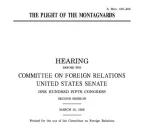
- Human Rights Watch, Repression of Montagnards (April 2002), in our library — travel registration, police in homes, informers, opened letters
- Human Rights Watch, “Vietnam: Violence against Montagnards During Easter Week Protests” (April 14, 2004) — phones, police in homes, meetings of more than two people, checkpoints
- Human Rights Watch, Vietnam: Torture, Arrests of Montagnard Christians (January 2005), in our library — confiscation of phones and SIM cards, torture to obtain names
- Human Rights Watch, No Sanctuary (June 2006), in our library — soldiers billeted in homes, pledges at village meetings, gatherings of more than four, the 2005 returns from Cambodia
- Human Rights Watch, Montagnard Christians in Vietnam (March 2011), in our library; Persecuting “Evil Way” Religion (June 2015), in our library — public criticism, renunciation ceremonies, returns from Cambodia 2014–2015
- Human Rights Watch, “Thailand: Vietnamese Refugees at Risk from Hanoi” (November 13, 2025) and “Thailand: Montagnard Activist Extradited to Vietnam” (December 1, 2025); “We Thought We Were Safe” (May 2024); World Report 2025 and 2026, Vietnam
- OHCHR, “Experts condemn misuse of counter-terrorism law against Montagnards in Viet Nam” (August 28, 2024) and “UN experts alarmed by Y Quynh Bdăp’s extradition by Thailand to Viet Nam” (December 3, 2025)
- Radio Free Asia, reports of August 19, 2024 (Y Po Mlo), January 10, 2025 (the visit to Y Quynh Buondap’s family) and February 26, 2025 (the Nonthaburi raid); JURIST, March 7, 2024
- Christian Solidarity Worldwide, press releases of October 30, 2025, and June 1, 2026
- Freedom House, Collaboration and Resistance: Tracking Transnational Repression in 2025 (April 2026)
- Amnesty International, “Viet Nam: New Cybersecurity law a devastating blow for freedom of expression” (June 2018); Click and Bait (February 2021); The Predator Files: Caught in the Net, ACT 10/7245/2023 (October 2023)
- AFP, reports of January 2, 2019 (the Cybersecurity Law in force) and December 25, 2024 (Decree 147); CMS, e-alert on Decree 53/2022; The Register, April 3, 2023 (SIM registration); ID Tech, April 17, 2026 (Circular 08/2026/TT-BKHCN)
- The Local, April 24, 2018, and Radio Free Asia, January 31, 2023 (Trinh Xuan Thanh)
- Electronic Frontier Foundation, Surveillance Self-Defense, “Mobile Phones: Location Tracking”; Signal, support pages on disappearing messages and phone-number privacy (2024); Front Line Defenders, Security in a Box; Tactical Tech, Holistic Security; Access Now, Digital Security Helpline
Compiled September 2026. Laws on phones and the internet in Vietnam change often; check them before relying on this page.