












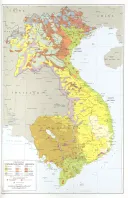

Between 1946 and 1954 France and the Viet Minh fought over our country, and both made our people the same offer: a country of our own, in return for soldiers. France gave the offer a name, a flag and two ordinances, and raised thirteen battalions of our men. The Viet Minh raised units of their own among us and promised autonomy. Our men fought on both sides of the same roads. In the summer of 1954 the war ended on those roads, at the Mang Yang pass and the Chu Dreh pass, and at Geneva, where our people were not in the room. Within a year the country we had been promised was gone.


Soldiers before the war
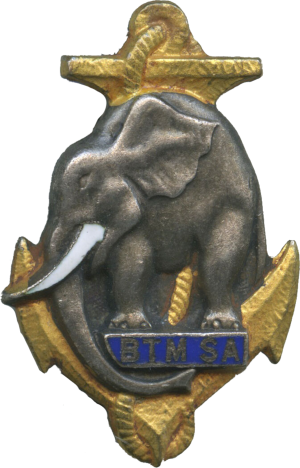

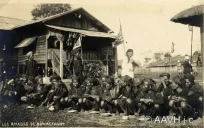
France began raising highland soldiers in the 1930s, first as auxiliaries and then as regulars, to fight what it called “dissidence and communist infiltration.” The Bataillon de tirailleurs montagnards du Sud-Annam, garrisoned at Buon Ma Thuot, was made up largely of Rhade and Jarai; sources date it to 1931 or 1938. It was dissolved when Japan took over Indochina in March 1945.
The Americans had already looked at us by then. In the spring of 1943 a US Navy officer who had done anthropological fieldwork in the highlands as a civilian, Lieutenant George Devereux, drew up a plan to drop twenty specially trained agents near Kon Tum, make friends with the highland peoples, and organize them into guerrilla bands against the Japanese. The US Army’s official history records that Devereux “confidently predicted” that “a minimum of 20,000” tribal guerrillas could eventually be recruited. The Office of Strategic Services approved it and a team trained at Fort Benning, but quarrels with the French and among the Americans themselves killed it. Eighteen years later the Americans came back to the highlands with the same idea; see The American years, 1961–1975.
1945–1946: two offers
After Japan surrendered in August 1945 the Viet Minh declared Vietnam independent and reached into the highlands. Some of our people went with them. Y Ngông Niê Kdăm, a Rhade, joined in 1945. Núp, a Bahnar, became the Viet Minh’s best-known highland hero. The Viet Minh cadres worked hard to live as our people lived, and promised that the highlands would govern themselves.
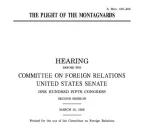
The French came back in 1946 with a better-organized version of the same promise. By a federal ordinance of May 27, 1946, signed at Saigon by the High Commissioner, Admiral Thierry d’Argenlieu, the five provinces of Darlac, Haut-Donnai, Lang-Bian, Pleiku and Kon Tum were taken out of the jurisdiction of Annam and made a separate “Commissariat of the Federal Government for the Montagnard Populations of South Indochina,” answerable directly to the High Commissioner. Its seat was Buon Ma Thuot. The ordinance, in the English translation held in our library, is five articles long; read it here.
Four days later, on May 31, 1946, at Buon Ma Thuot, representatives of our peoples swore oaths of allegiance. The date is recited in the preamble of the 1951 statute, which says they were sworn to the person of Bảo Đại. In May 1946 Bảo Đại held no throne; he had abdicated the previous August and was living abroad, in Hong Kong. What exactly was sworn at Buon Ma Thuot, and to whom, is one of the things our elders’ memory could settle and no document we have found does.
That summer our people had a voice at the table for the first and last time. When the French held a conference at Dalat in August 1946 on the future of the Indochinese federation, a highland delegation attended, led by Ma Krong, the president of the customary court of Darlac.
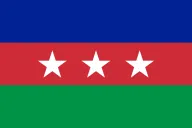
The anthropologist Oscar Salemink has shown how closely the two offers were tied to the war. To answer Vietnamese nationalism, France needed to give its highland battalions a homeland to fight for; the territory and the army made each other. The flag of the new country was the French tricolor with a crescent and three stars in the blue. The history of the territory, and of the statute that followed it, is on A country of our own, 1946 and The country itself.
The Hre rising, 1949
The war came first, and worst, to the Hre, in the hills of Quảng Ngãi at the northern edge of our country. A US Army handbook of 1966, written by American University researchers for the Army to use in the next war, records what happened.
When the Japanese disarmed the French in 1945, the Viet Minh occupied the lowland towns of Quảng Ngãi and pushed up into the Hre valleys, made their administrative center at Ba To, and set about controlling the Hre. Some chiefs were won over, the handbook says, by bribery. Young Hre men were conscripted, and those who resisted were taken for forced labor in the coastal salt marshes. Vietnamese settlers moved in beside the Hre villages and farmed Hre land.
In 1949 the surviving Hre chiefs called on the Hre in the Viet Minh units to mutiny and come home with their weapons. The lowland Hre rose together, under two chiefs the handbook names as Dinh-Loye and Dinh-Diu. We record what the handbook says next, because a history that tells only what was done to us is not a history:
“At a prearranged signal, the Hre massacred all Vietnamese men, women, and children in the area.”
It puts the number of settlers killed at about five thousand. The CIA’s own history of the highlands, written the same year, gives the same figure and adds that “there is no information that would substantiate this figure.” Then the Hre warriors, fearing revenge, went to the French outposts for protection, and while they were away a Viet Minh regiment came back into the Hre country, “looting, massacring, and burning in revenge.” Most of the Hre took to guerrilla war; others joined a French-sponsored Hre independence movement. The Viet Minh held the Hre valleys until 1954. We have found no count of the Hre who died in the reprisal. The handbook’s account rests on French sources, and nobody has ever asked the Hre.
The Crown Domain, and the promise of Article 9
.png)
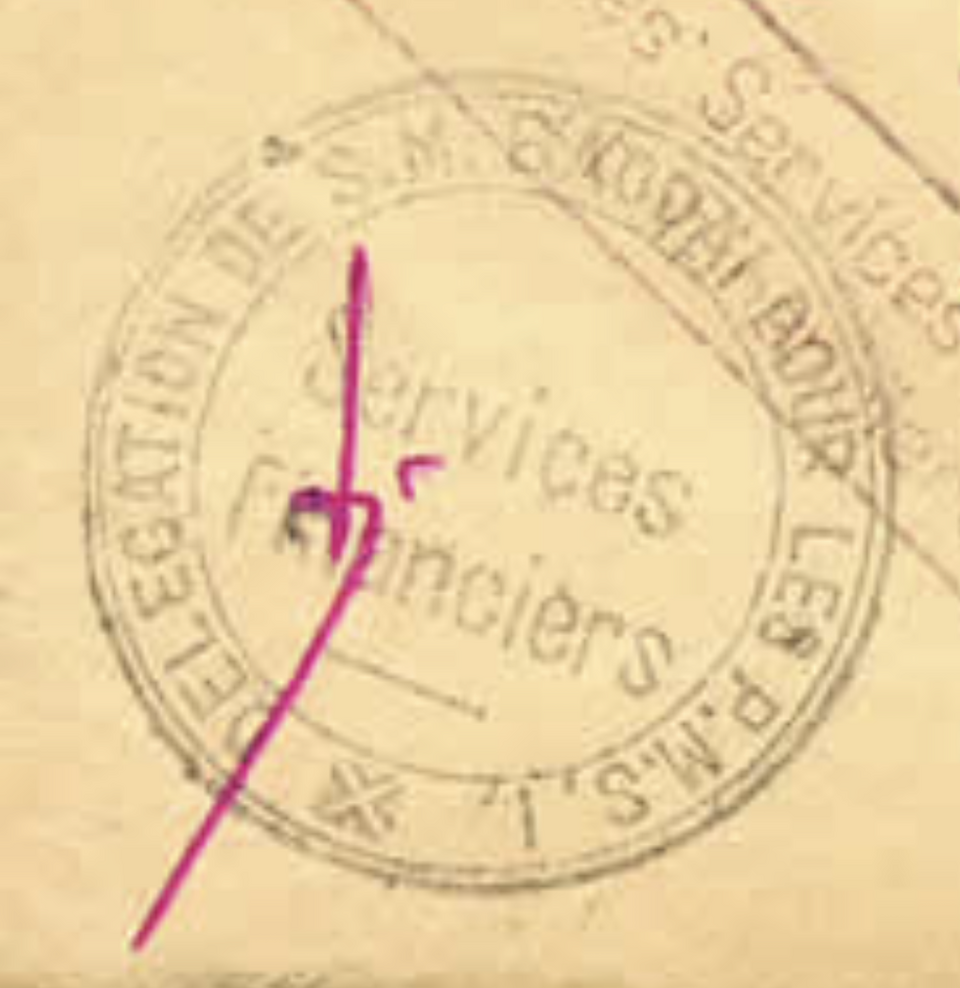
In 1949 France brought Bảo Đại back as head of a State of Vietnam inside the French Union, and it had to decide what to do with us. The answer was to give us to him personally. By a decree of April 15, 1950, the provinces “inhabited by the non-Vietnamese populations traditionally dependent upon the Crown” were attached to Bảo Đại’s person as a Crown Domain, and on July 25, 1950 a Delegation of His Majesty for the P.M.S., the Montagnard country of the South, was set over them. The 1951 statute records that our representatives were consulted in 1950: at Kon Tum on May 26, at Pleiku on June 5, in Darlac on June 10 and in Haut-Donnai on June 26. What they said is not recorded.
On May 21, 1951, at Dalat, Bảo Đại signed Ordinance No. 16/QT/DT, the special statute. It kept our chiefs and customary courts, guaranteed our land rights “in entirety,” and kept our languages as the basis of primary school. And for the men fighting the war it made a promise, in Article 9:
“Save for those cases foreseen in existing conventions, the Montagnards will not be called upon to serve in military units stationed outside the P.M.S. ‘the Montagnard country of the south’, and will be assigned with priority to the defense of their own territory.”
That is the promise the French and Bảo Đại made to our soldiers, in writing: you will fight for your own country, at home. The full text, in English translation, is in our library with the 1946 ordinance; read it here. Our own history records that in July 1953 Bảo Đại’s government suppressed the autonomy. Four years after the statute was signed, it was gone.
Who fought
Our own history says France recruited “thousands of Montagnard teenagers” and thirteen battalions of our men. The French and Vietnamese records give the shape of it.
- The Division Montagnarde. From late 1950 the Bảo Đại government, with French backing, built a highland division, the 4th Light Division, from Rhade, Jarai, Bahnar, Mnong, Sedang, Maa and Hre recruits. It reached about 9,000 men. In at least three of its four battalions the rank and file were entirely highlanders; most of the officers were French or Vietnamese.
- The mobile groups. Several of the French mobile groups in the highlands were largely highland, among them Groupements Mobiles 41 and 42. The French historian Bernard Fall, who wrote the standard account of the war’s last months, called GM 42 “the 42d (Mountaineer) Mobile Group” and says it was recruited mostly from local mountaineers. It was built on mountaineer battalions, among them the 1st, 5th and 8th.
- The commandos. French officers raised highland commando units of anything from ten men to a thousand. In 1954 Captain Vitasse’s Bahnar commando held the brush north of Route 19, which Fall calls the French command’s last ace in the region. René Riessen led another. Fall tells the story of Crey, Riessen’s Bahnar wife, who threw herself in front of him to save him from a burst of submachine-gun fire. She is one of the few women of our people whose name the war’s histories kept.
And our men fought on the other side. Viet Minh cadres recruited highland units in Kon Tum that the French learned to fear. Fall records that by 1954 the Viet Minh’s strength between Pleiku and Buon Ma Thuot had grown through “the indoctrination of the surrounding Rhade mountaineers of the Darlac Plateau.” In April 1954, according to the historian J. P. Harris, the Viet Minh sent Nay Der, a Jarai teacher from Cheo Reo, into Kon Tum to speak for them at a pig sacrifice while the village drank from the jars. When GM 100 was ambushed on Route 19 in June 1954, Fall writes, some of the attackers used poisoned darts from blowpipes, a weapon he says was deadly in the hands of a Bahnar or Hre tribesman.
Every side, the French researchers Mathieu Guérin and his colleagues conclude, ended by offering the highlands autonomy as bait. The Viet Minh’s promises undermined the loyalty of the highlanders serving France; France’s promises were abandoned by the state it handed us to. The story of the highlanders who went with the Viet Minh, and what became of their promise, is on Highlanders on the other side.
1954: the war ends on our roads
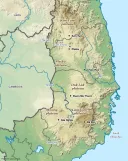
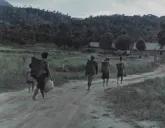
In the spring of 1954, while the French were losing at Điện Biên Phủ in the far north, the Viet Minh opened an offensive on the high plateaus, across the shortest road from north to south. On February 1 Dak To fell. On February 7 the French abandoned Kon Tum.
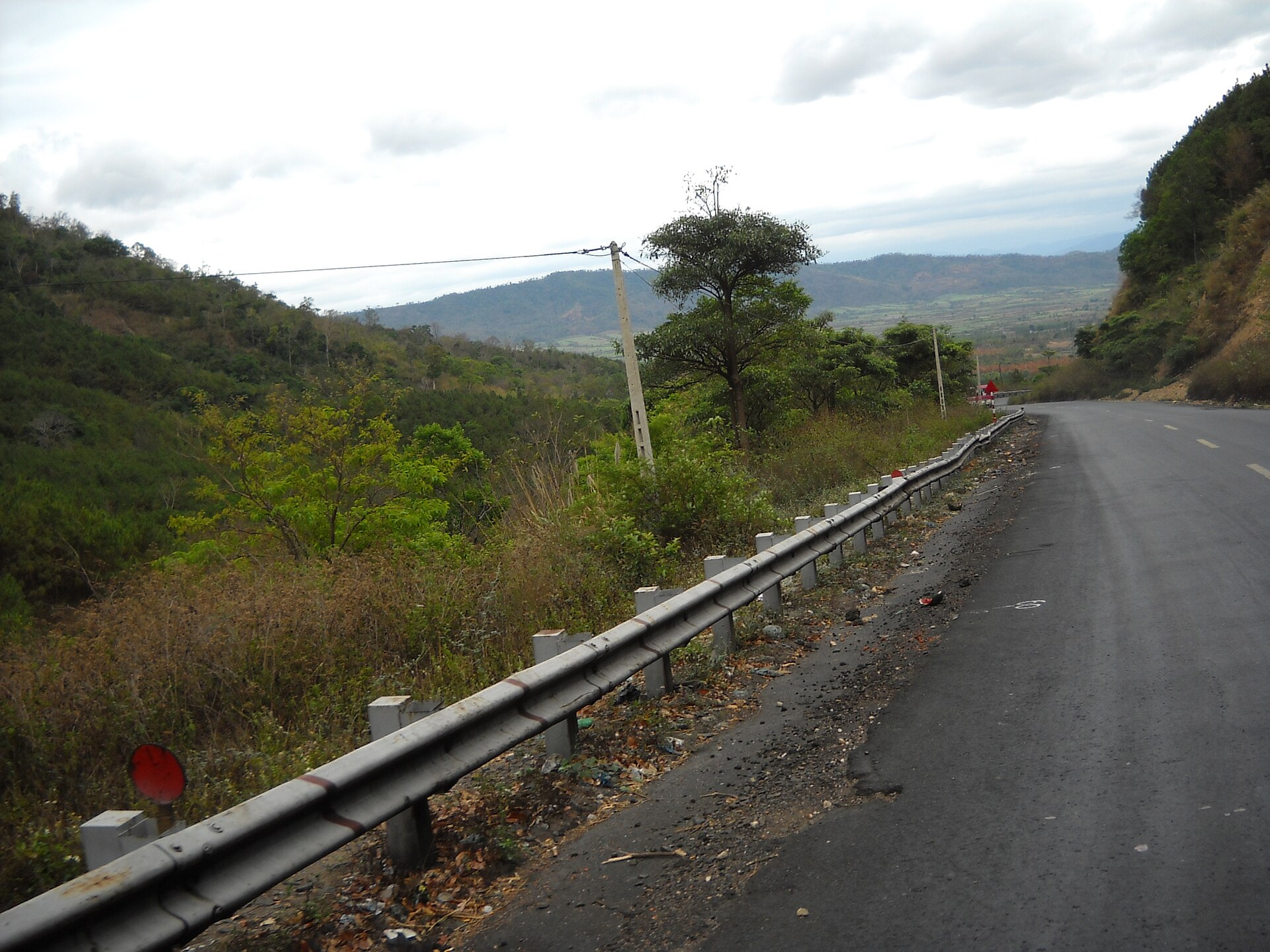

Route 19, June 24. The French decided to pull Groupement Mobile 100 out of An Khe and back up Route 19 to Pleiku. GM 100 was built around the French battalion that had fought in Korea. To cover the move, GM 42, the mountaineer group, had gone forward to the Mang Yang pass. At Kilometer 15 out of An Khe the Viet Minh ambushed the column. By the next day, in Fall’s words, “Mobile Group No. 100 had ceased to exist at Kilometer 15.” French veterans’ accounts put the dead and missing near a thousand. On June 28 and 29 the survivors, making for the pass with the mountaineers, were ambushed again at the Dak Ya-Ayun.
Chu Dreh pass, July 17. Three weeks later, the remnants were sent down Route 14 from Pleiku toward Buon Ma Thuot to clear it. At dusk on July 16 the task force reached Ea Hleo, a post held by a company of mountaineer regulars and thirty local guerrillas. At 4:30 the next morning the 1st Mountaineer Battalion of GM 42 moved off first. North of the Chu Dreh pass the order of march was reversed and the mountaineer battalions, the 1st, 5th and 8th, went ahead to screen the pass, fanned out on both sides of the road. At 12:15, as the convoy came through, the Viet Minh opened fire with mortars and recoilless guns from the slopes. GM 42, Fall writes, held on the far side of the pass.
Fall counted the survivors of the French Korea battalion to the man: 107, of whom 53 were in the hospital at Buon Ma Thuot. He gives no count at all for the mountaineer battalions who went through the pass ahead of them.
Ea Hleo, July 19–20. At the little post of Ea Hleo, on the night of July 19, twenty of the mountaineer partisans left with their weapons. Fall calls it desertion. The armistice was signed at Geneva the next day. The post commander took the seven Frenchmen, the remaining twenty mountaineers and the survivors of the Korea battalion into the forest, and they walked north of Buon Ma Thuot and reached Buon Don on July 24.
At the ceasefire only a few highland towns were still in French hands: Buon Ma Thuot and Da Lat, and by some accounts Pleiku and Cheo Reo. Father Currien, a priest who spoke the highland language, went south from Pleiku with the ambulances to collect the wounded the Viet Minh had left on the road. Fall heard from a missionary that the Bahnar had made songs about the Frenchmen who had not run from death. Nobody, as far as we know, wrote down the songs.
Geneva, and who was not there
The war ended at Geneva on July 20 and 21, 1954. Our own history puts it simply:
“The French did not allow representatives of the Montagnard people to participate in the Convention and consequently the Montagnard voice and interests for their homeland and territory was not represented.”
Fighters on both sides could now regroup to either half of the country. Highlanders who had fought for the Viet Minh went north: Guérin and his colleagues put their number at six to ten thousand, and a CIA estimate cited by Harris gave about ten thousand, half of them Rhade. They were trained at a school for minority cadres in the north and, from about 1956, sent back down the trails. At the same time tens of thousands of northern minority people, Nùng above all, came south.
For the men who had fought for France, our own history remembers the day the flags came down: the order was given to strike the French and Montagnard flags and raise the flag of South Vietnam. The thirteen battalions were folded into the new South Vietnamese army, our officers lost their commands, and the men were made to take Vietnamese names. In 1955 Ngô Đình Diệm abolished the Crown Domain, and with it the statute and Article 9. What was done next is on Pushed off, 1954–57, and what our people did about it is on BAJARAKA, 1958.
What we do not know
How many of our people died in this war. We have found no count of highland dead for 1945 to 1954, on either side. Estimates exist only for the war that followed.
What the mountaineer battalions lost on Route 19 and at the Chu Dreh pass. The French counted their own.
What was sworn at Buon Ma Thuot on May 31, 1946, by whom, and to whom; and what our representatives said at Kon Tum, Pleiku, Darlac and Haut-Donnai in 1950.
The Hre dead of the 1949 reprisal, and the names of the men of the Division Montagnarde.
The last men who served France in this war would be in their nineties now. If your father or grandfather served, on either side, in a French battalion, a commando or a Viet Minh unit, please record it: his name, his unit, where he fought, and what he told you. Read how to document first.
See also: A country of our own, 1946, The Dega flags, Highlanders on the other side, Pushed off, 1954–57, BAJARAKA, 1958.
Sources
- Federal Ordinance of May 27, 1946, creating a Commissariat of the Federal Government for the Montagnard Populations of South Indochina; and Ordinance No. 16/QT/DT of May 21, 1951, the special statute of the P.M.S., in English translation, DCHO library
- Bernard B. Fall, Street Without Joy (Stackpole, 1961 and later editions), chapter 9, “End of a Task Force,” and the chapter “Diary: The Women” — GM 42, Route 19, the Chu Dreh pass, Ea Hleo, Crey. Fall was a French-born American scholar and journalist.
- Ronald H. Spector, Advice and Support: The Early Years, 1941–1960 (US Army Center of Military History, 1983), the chapter “From Pearl Harbor to the Japanese Coup” — the 1943 Devereux plan. An army’s official history; it places Devereux’s fieldwork among the Meo, but his published work is on the Sedang.
- US Army, Minority Groups in the Republic of Vietnam (Department of the Army Pamphlet 550-105, 1966), the chapter on the Hre — the 1949 rising. Written for the US Army’s use in the war that followed.
- Oscar Salemink, The Ethnography of Vietnam’s Central Highlanders (RoutledgeCurzon, 2003), ch. 5; and “Primitive Partisans,” in H. Antlöv and S. Tønnesson (eds), Imperial Policy and Southeast Asian Nationalism (1995)
- J. P. Harris, Vietnam’s High Ground: Armed Struggle for the Central Highlands, 1954–1965 (University Press of Kansas, 2016), ch. 1
- Mathieu Guérin, Andrew Hardy, Nguyen Van Chinh and Stan Tan Boon Hwee, Des montagnards aux minorités ethniques (IRASEC and L’Harmattan, 2003)
- Kirk A. Luedeke, “Death on the Highway: The Destruction of Groupement Mobile 100,” Armor (January–February 2001)
- Gerald C. Hickey, Sons of the Mountains (Yale University Press, 1982). Hickey worked for many years under RAND contracts funded by the US government.
Compiled September 2026. Quotations from Fall, Spector, the 1966 handbook, the 1951 ordinance and our own history were checked against the texts.