






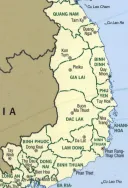






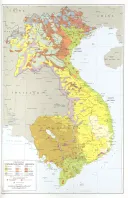
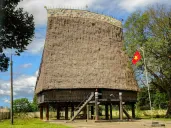
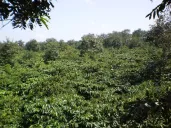



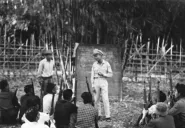
In 1953 there were about six thousand Vietnamese in our highlands outside Da Lat. By the end of 1956 more than 140,000 Vietnamese refugees from the north had been settled on our land. By 1963 Vietnamese were more than 40 percent of the people of the seven highland provinces. This is how it was done: the French left, the Republic of Vietnam abolished the Crown Domain that had recognized our land as ours, and from April 1957 a government office with American money, bulldozers and a plan moved settlers onto land it described as abandoned. Our people were told to settle down, to give up their crossbows, and to build their houses on the ground.
1954: the protection goes
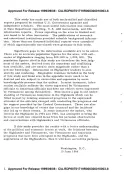
Until 1954 the French kept the Vietnamese out of our country. The CIA’s 1966 history of the highlands puts it bluntly: the area was maintained as a reserve where Vietnamese settlement was carefully controlled “almost to the point of non-existence”, and an estimate of 1953 found only about six thousand Vietnamese in the highlands outside Da Lat. The French did it for their own plantations and their own purposes, and they made us pay in corvée labor and soldiers. But the line held.
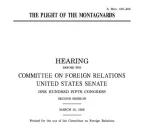
The Geneva accords of July 1954 ended the war and divided Vietnam. Bảo Đại gave up his special powers in the highlands that July. In March 1955 a new ordinance put the highlands under the national government, the Imperial Delegation was abolished, and the French province chiefs were replaced. In June 1955 our chiefs were summoned to Buon Ma Thuot to swear the oath of allegiance to President Ngô Đình Diệm, with the sacrifice of buffaloes. Diem came, the CIA wrote, “for the purpose of accepting an oath of allegiance from the Highland tribes and not to grant autonomy or recognize special status.” In October 1955 he deposed Bảo Đại, and the Crown Domain was gone. The documents are on A country of our own, 1946.
The CIA’s account of what the French left behind is worth quoting in full, because it is not a friendly account of us:
“Then, with the defeat of the French and their withdrawal from the Highlands, the protective cover was removed, and parental administration disappeared and the Highlanders were exposed. The Vietnamese moved in to administer an area they knew nothing about and a people they did not respect.”
1955–1956: the refugees
Some 800,000 to a million people fled the north for the south after Geneva, most of them Catholics. The Republic needed land for them, and it looked at ours. The CIA’s figures:
| When | Vietnamese in the highlands |
|---|---|
| 1953 | about 6,000, outside Da Lat |
| 1955 | 80,000, mostly around Da Lat, along Route 20, and in the towns of Buon Ma Thuot and Kon Tum |
| End of 1956 | more than 140,000 refugees settled on tribal land |
| 1959 | more than 25,000 resettled in Pleiku |
| 1960 | more than 20,000 in Kon Tum |
| 1962 | more than 54,000 in Darlac |
| 1963 | more than 40 percent of the population of Kon Tum, Pleiku, Phu Bon, Darlac, Quang Duc, Tuyen Duc and Lam Dong |
The CIA records that the refugees were moved in “before the government had time to formulate a land policy which took into consideration the traditional Highlander land system.” Buon Ma Thuot and Pleiku doubled in size. Near Dak Mil, the Mnong broke off contact with the 2,500 Vietnamese Catholic refugees settled beside them within two months, because they believed the refugees had brought soldiers who would torture them. In 1956, forty miles south of Buon Ma Thuot, Vietnamese troops were reported to have slaughtered our people’s buffaloes and shot at women for sport.
Officials who came to govern us often did not know what we were called. In mid-1956, the CIA records, the Bureau of Ethnic Minorities in Huế “knew practically nothing about Highlanders’ habits and customs”; in some areas officials insisted that the only tribes were the Moi, “savages,” and that we had no other names for ourselves. A posting to the highlands was treated as punishment: “To be sent to the Highlands was to receive a sentence of exile.”
Two warnings that were not taken
The Americans were told what would happen, twice, by people they had hired.
In August 1956 R. O. D. Noone, the Adviser on Aborigines of the Federation of Malaya, reported that our people “resent outside control and interference in tribal matters, particularly in regard to their territorial rights,” and that continued infringement of our territorial claims would bring unrest the Viet Minh would exploit. He recommended that the government “accept their traditional territorial claims as inviolable”, post only highland troops and police where highlanders were the majority, and allow “no further resettlement of Vietnamese” in the P.M.S. until the territories of the various peoples had been established, and then only on land we did not claim.
In June 1957 Gerald Hickey, then with Michigan State University’s advisory group, recommended joint Vietnamese and highland committees in each province, training for officials in our customs, highlanders in administrative posts, and that the government “adopt a firm policy regarding the land rights of the Mountaineers as soon as possible.”
The CIA’s verdict on both: they were “contrary to the established Vietnamese policy, a policy of rapid settlement of the Highlands and assimilation of the Highlanders into Vietnamese society.” The officials in Saigon, it wrote, “saw the Highlands as a wide open area for settlement and the Highlanders as an obstruction to this settlement.” It compared their attitude to that of Americans toward the American Indians during the westward expansion.
April 1957: the land development centers
On April 23, 1957 the Republic created a Commissariat General for Land Development, organized like a ministry, to move people from the crowded coast and the refugee camps onto land it considered unused. Its highland area was set up the same month, with headquarters at Buon Ma Thuot. The first American-funded program, for 1957, paid for seven centers for 2,000 families: Ea Tul near Buon Ma Thuot, the largest, for 500; Buon Kroa; Dak Nong; Plei Piom I and II and Plei Bang Yam near Pleiku; and Chou Dron. The 1958 program, from the national budget, planned 21 more for 6,300 families. By July 10, 1958 the highland area had 22 centers and 32,139 settlers. Its general briefing claimed 44 centers across the country, covering 23,086 hectares, with homes for about 140,000 settlers.
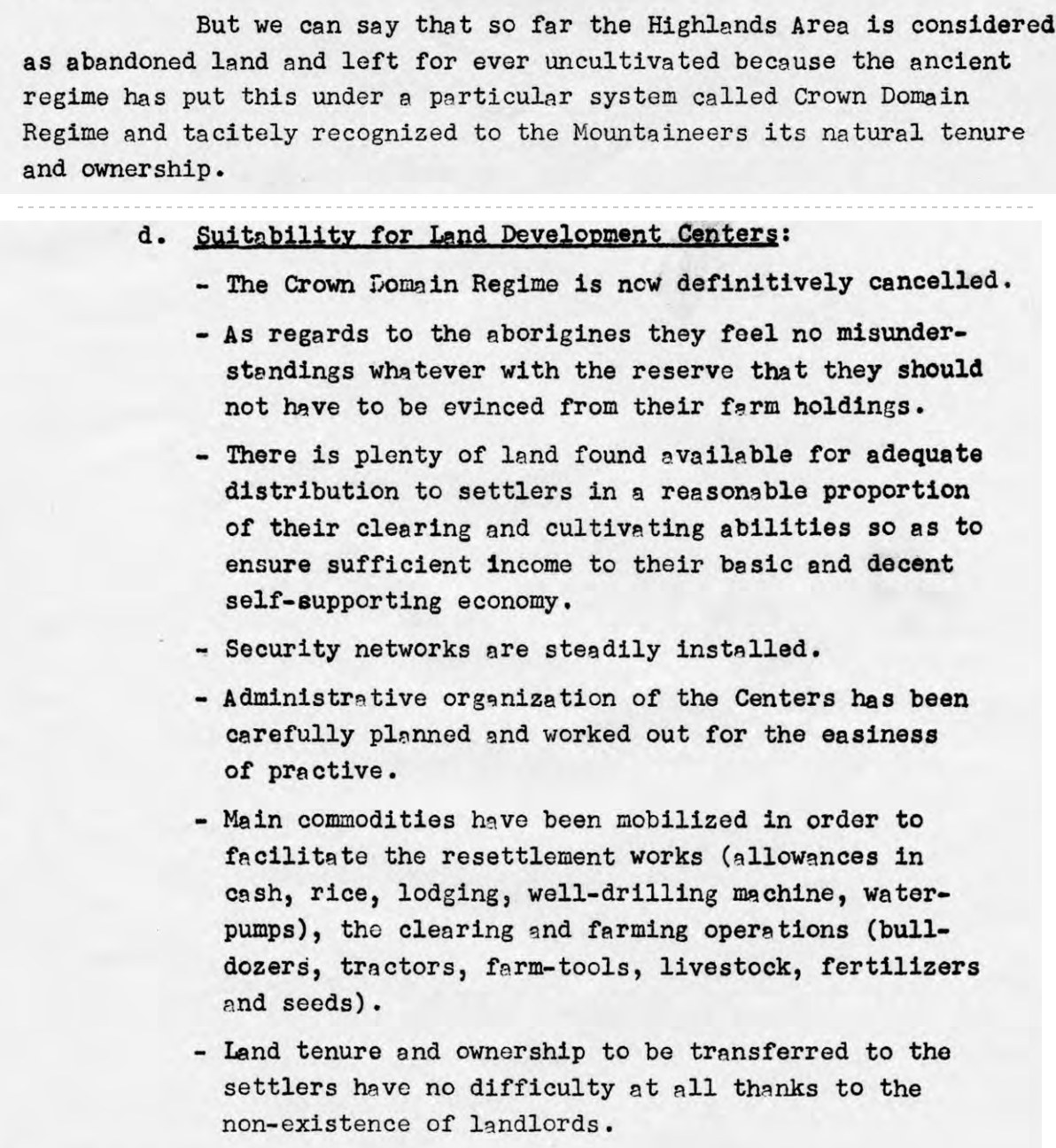
The office’s own briefing for 1958, which survives and is in our library, explains why the land had been available. The Crown Domain, it said, “tacitely recognized to the Mountaineers its natural tenure and ownership,” and so nobody had dared to clear it. Now:
“The Crown Domain Regime is now definitively cancelled.”
As for us: “As regards to the aborigines they feel no misunderstandings whatever with the reserve that they should not have to be evinced from their farm holdings.” And transferring title to the settlers would be easy, “thanks to the non-existence of landlords.” Our villages owned their land in common, under customary law. In the government’s eyes that meant nobody owned it.
Each settler family got a house, cleared land, tools, seed, livestock, six piastres a day and fifteen kilograms of rice a month while the first crop grew. At Ea Tul, eighteen kilometers from Buon Ma Thuot, 493 families from Quảng Nam had by mid-1958 received 440 head of cattle, four tractors, two bulldozers and 504 cleared hectares.
What was done to us: the reservations
We were offered something else. The government’s plan for its own highlanders was to settle them in centers of their own, which the Vietnamese themselves called “reservations”, and teach them Vietnamese farming. In February 1959, the CIA records, there were 33 of them, holding about 38,000 of our people on 13,000 hectares; the plan was 80, for 88,000 people on 30,000 hectares. At An My in Pleiku, and at Son Ha in Quảng Ngãi, each family received little more than a third of a hectare. The Vietnamese settlers were getting a hectare.
The CIA’s account of what followed:
- In most cases the resettlement was forced on our people in the 1958–59 program; “Their tribal life and customs were virtually destroyed.”
- Rhade families in the new villages were ordered to build their houses on the ground instead of on piles.
- In 1959 the government ordered our crossbows collected and destroyed, for fear we would turn them on it.
- Promised assistance stopped; most of the resettled drifted back to the mountains. In two cases whole villages revolted and killed their Vietnamese guards to escape.
- A missionary reported that when troops entered a village the people usually ran, and that the Vietnamese as often as not took this as a sign of Communist sympathy and burned the village.
In 1961 the government’s own Highlands Social Action Directorate listed the reasons for our anger for President Diem. Among them: highland soldiers “often were treated as coolies”; in the resettlement centers “They were watched day and night and sometimes savagely beaten”; and, to leave the people no choice but the centers, “some areas went so far as to destroy their villages.”
What assimilation meant
Saigon’s policy, the CIA wrote, was “the assimilation of the Highlanders into the Vietnamese culture.” In practice it meant:
- the customary courts wound up, and their cases sent to Vietnamese provincial courts;
- our languages taken out of the schools;
- village land issued to settlers, with no way to register communal tenure;
- our officials replaced by Vietnamese, and highland civil servants little used;
- our existence as distinct peoples with a distinct territory denied as a matter of policy.
Assimilation was the word the government used for itself, and it should be taken at its word: it means that a people should stop existing as a distinct people.
Why 1957 mattered more than 1955
The merger of 1955 was a change of flag, and our people had lived under several. What made 1957 different was that it could not be undone. A statute can be restored and an administration replaced, but once hundreds of thousands of families have been settled on a plateau, cleared its forest and registered its fields, no later government can reverse it without doing to them what was done to us. That is why our claim is against the state and its policies and not against the neighbors those policies produced, and why every later program, from the New Economic Zones to the coffee boom, was built on these years.
What followed
In 1958 the first generation of our people educated in the French schools wrote to President Diem, to the American, French and British ambassadors and to the United Nations, listing among their grievances that villages had been “dispossessed without compensation and pushed back to less fertile areas.” That autumn they were in prison. That is BAJARAKA, 1958. And in the villages the Viet Cong cadres, who had learned our languages and lived as we lived, promised the autonomy the Republic refused; see Highlanders on the other side and Moved by force.
What we do not know
How much land was taken, village by village, and from whom. The land development office’s center-by-center tables for 1957 and 1958 name the centers and count the settlers and hectares; they do not name the villages whose land it was.
How many settlers there were in all. The published figures stop in 1963. Our own archive gives a total of around 850,000 people settled on our land; we have not found a published government series that reaches it, and we give it as our figure.
If your family remembers a village that lost its land to a center at Ea Tul, Buon Kroa, Dak Nong, Plei Piom or anywhere else in those years, please record it; read how to document first.
Sources
- Central Intelligence Agency, Vietnamese Affairs Staff, The Highlanders of South Vietnam: A Review of Political Developments and Forces (June 1966; declassified 1999), chapters I–V and VII, DCHO library — the population figures, the Noone and Hickey reports, the reservations, the crossbows and the 1961 directorate’s list. The CIA later ran its own programs among our people.
- Republic of Vietnam, Commissariat General for Land Development, Briefing on Central Highlands Land Development Area (1958), DCHO library; and Briefing on Land Development (about 1958), DCHO library — Saigon’s own account of the program, center by center
- Human Rights Watch, Repression of Montagnards (April 2002), chapter III — the 1956 land development centers and the refugees from the north
- Gerald C. Hickey, Free in the Forest: Ethnohistory of the Vietnamese Central Highlands, 1954–1976 (Yale, 1982) — the Diem years in the highlands. Hickey worked for many years under RAND contracts funded by the US government.
- Stan B-H. Tan, “‘Swiddens, Resettlements, Sedentarizations, and Villages’: State Formation among the Central Highlanders of Vietnam under the First Republic, 1955–1961,” Journal of Vietnamese Studies 1 (2006)
- Oscar Salemink, The Ethnography of Vietnam’s Central Highlanders (2003)
Compiled September 2026. Quotations from the CIA report and the 1958 briefings were checked against the documents in our library.