










Not all of our people fought beside the Americans. Some went with the Viet Minh against the French, took the boat north in 1954, and came back down the trail as cadres of the National Liberation Front. A Rhade leader of BAJARAKA became a vice-president of the Front. Across the border, a Jarai boy from Ratanakiri became Pol Pot’s bodyguard, while Bunong men from a refugee camp in our country joined the army of the anti-communist republic in Phnom Penh. All of them were promised something about our land and our freedom. This page follows the ones whose names survive, and what the promise came to.

Why some went
The Viet Minh reached our villages in 1945, and for many of our people they were the first outsiders who spoke of our freedom rather than of our labor. They opened schools in villages that had never had one, and they said the highlands would govern themselves. The story of those years is on The first war, 1946–1954.
The promise was written down. The program the National Liberation Front issued in 1960 undertook to found “autonomous zones in the areas with a minority population,” each to remain part of the Vietnamese nation, and promised that every nationality could use and develop its own language and writing. Hanoi offered its own North as proof. The CIA, studying the question in 1966, described the method plainly:
“The Communist goal was to win over the minorities by various methods including promises of autonomy (nominal as it might be), respect for minority languages and cultures, and representation in the affairs of the central government.”
In 1955 and 1956 Hanoi announced two autonomous regions for the peoples of its northern mountains. Leaders from our highlands were taken to see them. Human Rights Watch, drawing on Gerald Hickey, records that “During the mid-1960s minority leaders from the Central Highlands were regularly sent to visit autonomous zones in North Vietnam,” with promises that the South’s highlands would have the same after liberation. The CIA heard from a captured Rhade that the trips had begun in 1958, with groups of about fifty highlanders at a time, for six months.
The Viet Minh could lose our people as fast as it won them. In the Hre valleys of Quảng Ngãi, which the Viet Minh held from 1945, the surviving Hre chiefs called in 1949 on their men in Viet Minh units to desert with their weapons. The US Army’s handbook of 1966 records what followed:
“Fearful of Viet Minh revenge, the Hre warriors surrendered to French outposts, requesting their armed aid. The Viet Minh quickly reacted and mounted reprisals. Taking advantage of the absence of the Hre warriors, a Viet Minh regiment reoccupied Hre territory, looting, massacring, and burning in revenge.”
Nobody counted the Hre who died. The handbook says the Viet Minh held the Hre valleys until 1954.
The boat to the North, 1954
When the Geneva Agreements divided the country in 1954, the Viet Minh’s men in the South were told to “regroup” to the North. Some of our people went with them. Two of them told their stories, many years later, to Hickey, who worked in the highlands from 1964 to 1973 under contract to RAND for the Defense Department. Both had left the Front by the time he met them.
Nay Dam was a Hroy, one of the Jarai peoples, born in 1939 in Buon Lai Hoi, in the mountains of western Phú Yên. The first Viet Minh cadre reached his village around 1952 and opened its first school. After Geneva, Hickey writes,
“Of the approximately two hundred villagers (some forty households), Dam, one other young man named Y Ho, and a Rhade visitor from Mdrak … were the only ones to go north.”
Three people out of two hundred. “Together they walked over the mountain trails to the port city of Qui Nhon where they boarded a French ship bound for North Vietnam. They landed at Ninh Giang where they remained for one month before going to the newly founded Southern Ethnic Minorities School at Gia Lam, close to Hanoi.” At the school he met two older Jarai who had gone with the Viet Minh in 1945, Nay Der and Nay Phin. Nay Dam came back south and served the Front until 1971, when he walked out.
Ksor Wen was Jarai, born around 1938 in the Mount Ju area south of Cheo Reo. “Between 1949 and 1954, he worked as a courier for the Viet Minh.” He was a boy of eleven when he started. “Following the Geneva Agreements, Ksor Wen was sent with other Jarai to Qui Nhon where they were put on a Polish ship enroute to Haiphong.” At the school he remembered about four thousand students, and he listed the peoples: Jarai, Rhade, Bahnar, Bru, Pacoh, Cua, Katu, Sedang, Halang, Jeh, Sre, Maa, several Mnong groups, Tring, Lat, Chru, Stieng and Chrau. Ksor Wen left the Front in March 1968.
We know best the men who left. The others, who stayed with the Front to the end, come to us almost only through the biographies the Vietnamese state has published, which we do not use.
How many went. Nobody knows. The tellers are these:
| Figure | Who says so |
|---|---|
| about 5,000 Rhade, and perhaps another 5,000 from other peoples, “including four out of five of the Rhade doctors” | the CIA, 1966 |
| 5,000 to 6,000 Rhade | the US Army’s handbook, 1966 |
| 3,000 to 6,000, which Hickey himself thought too high | Rhade informants speaking to Hickey in 1957 |
| six to ten thousand | Mathieu Guérin and his co-authors, 2003 |
| three of about two hundred in one village | Nay Dam, through Hickey |
The school at Gia Lâm, and Y Ngong Nie Kdam
The Australian journalist Wilfred Burchett, who reported the war from the communist side with its help, visited the school in the early 1960s. He counted 1,300 students from the southern minorities there, four hundred graduates already in technical and higher schools, forty at university, and two new doctors studying further in the Soviet Union. Its director was a Rhade:
“Y Ngong, from the Rhade minority and director of the school, also a freshly-graduated doctor and very handsome in his red and black national costume, said that in 80 years of French rule not a single pupil from the national minorities had ever finished the 10th grade.”
Burchett quotes him saying: “Our adult population are not as developed as the Khins (Vietnamese) but our children will have the same level of education,” and: “With the teachers we are turning out, we will be able to have schools everywhere in our minority regions just as they have in the North now.” That is Y Ngong Nie Kdam, who had joined the Viet Minh in 1945 and gone north in 1954. It is the promise in the mouth of one of our own people, around 1962: schools in our own regions, our own teachers. Burchett was writing to make the North’s case, and he may have been wrong that Y Ngong was a doctor. The words are still the only ones of Y Ngong Nie Kdam we have found outside the Vietnamese state’s own publications.
Down the trail
They did not stay north. The CIA’s study of 1966 records that Hanoi had sent agents into our villages by 1956, promising lower taxes, goods and “a system of local autonomy such as was introduced in the north,” and that “By 1959 the Highlanders who had regrouped north in 1954 were being infiltrated back to the south in large numbers.” The Army’s handbook says the same of the Jarai: many had gone north, some had come back, “These Jarai are often accompanied by North Vietnamese who speak the Jarai language.” The CIA added the structural fact that runs through the whole war: from 1961 the Front was organizing highland guerrilla units “led by Vietnamese who had infiltrated from North Vietnam.” Highland soldiers, Vietnamese command.
One of the returnees was captured in January 1963, a Rhade who had gone north in 1954 and come back down in 1962. The CIA summarized what he told his captors: that the Front was training young highlanders as cadres “who would follow the Communist line without question,” and sending them back to lead their villages, and that every village had to send at least one person north for medical training. He is not named.
Y Bih Aleo
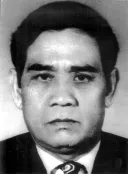
The best known of our people on the other side was a Rhade. The CIA’s study of 1966 begins his story in 1945:
“Y Bih Alio, a Rhade, was deputy chief of the native Indochinese Guard. In August 1945, he supposedly joined the Viet Minh and organized a militia in Banmethuot which drove the French from Darlac Province.”
The French arrested him at the end of 1945 and sentenced him in 1946; the CIA says to twenty years of hard labor, Burchett says to death. He was released in the early 1950s. In 1958 he was chairman of the Buon Ma Thuot committee of BAJARAKA, the movement Y Bham Enuol led, and when Saigon arrested its leaders he escaped into the forest. The CIA could not settle whether that was in 1958 or 1960. By 1961 he was chairman of the Front’s Highland Autonomy Movement.
Burchett saw him at the Front’s First Congress, held “Between February 16 and March 3, 1962, in a large village which must be nameless”:
“In splendid red and black national costume, he was one of the most colorful figures at the congress; he was subsequently elected to the Central Committee and as a vice-president of the NLF.”
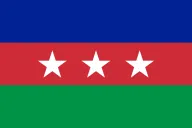
Of the Front’s five vice-presidents that year, two came from the minorities, one of them Rhade. The Front built its leadership to show the promise.
The letters, 1962–1963
Then came the one moment when the two roads might have met. In October 1962 a BAJARAKA man named Y Thih Eban, released from Saigon’s jail that year and working as a translator at the Buon Enao camp, told an American that Y Bih might be brought back, and that if he came, many highlanders with the Front would follow. Saigon agreed to offer an amnesty. The CIA’s study tells what happened, and it is worth reading in its own words:
“Y Bham, Chairman of the Bajaraka Central Committee, was still being held in Banmethuot jail, but he agreed to work with the Vietnamese Government to resolve differences. Like Y Thih, Y Bham believed that Y Bih was the only man who could bring about rapprochement between the Highlanders and the Vietnamese. Attempts were made through Y Bham to contact Y Bih; Y Bham wrote several letters to Y Bih urging him to surrender. On 1 February 1963, word was received from Y Bih that he was willing to meet with Vietnamese officials provided Y Bham was released from jail.”
Y Bham was let out for a few days in February to meet the corps commander, and then put back in jail. On March 15 the South Vietnamese 23rd Division tried to capture Y Bih.
“Y Bih broke off contact and sent word that faith had been broken by the Bajaraka organization and the Vietnamese Government. Some observers were of the opinion that Colonel Trong would have killed Y Bih had he been successful in capturing him.”
In April 1963 Saigon withdrew the amnesty. Two Rhade men from the same committee had chosen different sides: one wrote from a Saigon jail to the other in the forest, and the man in the forest said he would come in if his comrade were freed. Saigon answered with a division. The texts of the letters have not survived in anything we have found; see Y Bham Enuol in prison.
The two movements never joined. When FULRO rose in September 1964, a report reached the Americans that Y Bih was behind it with twelve thousand men; the CIA judged it false, and after the rising it found no sign that “the Viet Cong of Y Bih” had any part in FULRO’s government. See FULRO.
1975, and after
Michael Benge, the American aid officer who was a prisoner of the Front for five years, wrote in 2010 that Y Bih led a mixed highland propaganda battalion, and that before the attack on Buon Ma Thuot in March 1975 its men asked both FULRO factions to stand down, with promises of amnesty, autonomy and places in the new government. Benge says only one faction agreed, and that after the town fell “the execution of Montagnards in both FULRO elements began.” He says Y Bih was afterward “retired” to his home village. Our own history, written by Rong Nay, calls him the “puppet chairman” of the Front’s highland movement, and says of the leaders who had believed Hồ Chí Minh’s promise:
“hundreds of Montagnard leaders who experienced and remembered Ho Chi Minh’s promise were killed. These leaders include: Y Bih Aleo, Rcom Briu, and Y Ngong Nie Kdam. The secret executions continue today.”
The Vietnamese state’s own biographies tell these men’s later lives differently, and we do not use them. We have not been able to settle how Y Bih Aleo, R’com Briu and Y Ngong Nie Kdam died. Their families can.
Living under the Front
Most of our people on the other side were not leaders. They were villagers in country the Front held, and the record of what that was like is thin. Three pieces of it survive.
The kidnappings of December 1965. The CIA’s study records that at the end of 1965 our people were living “in fear of the Vietnamese Government which was continuing arrests, and in fear of the Viet Cong, who had begun kidnapping Highlanders,” taking whole families to remote areas for indoctrination, and that between December 18 and 20 the Viet Cong were reported to have kidnapped almost a thousand highlanders in Darlac.
The dead. The Front killed our people who stood in its way. Hickey’s RAND report of 1967 records two in passing. Siu Sipp, a Jarai leader of the highland movement: “Siu Sipp was killed by the Viet Cong after his release from prison.” And Y Ut Nie Buon Rit, a Rhade of Buon Rosier who had sat in the National Assembly under Diệm: “Y Ut was killed in a 1961 Viet Cong ambush.” At Dak Son in December 1967 a Viet Cong battalion burned a settlement of highlanders who had fled the Front’s country, and killed more than two hundred and fifty of them. At Tet in 1968, our history records, the Front executed 82 highland students at Huế. Many more have no record at all.
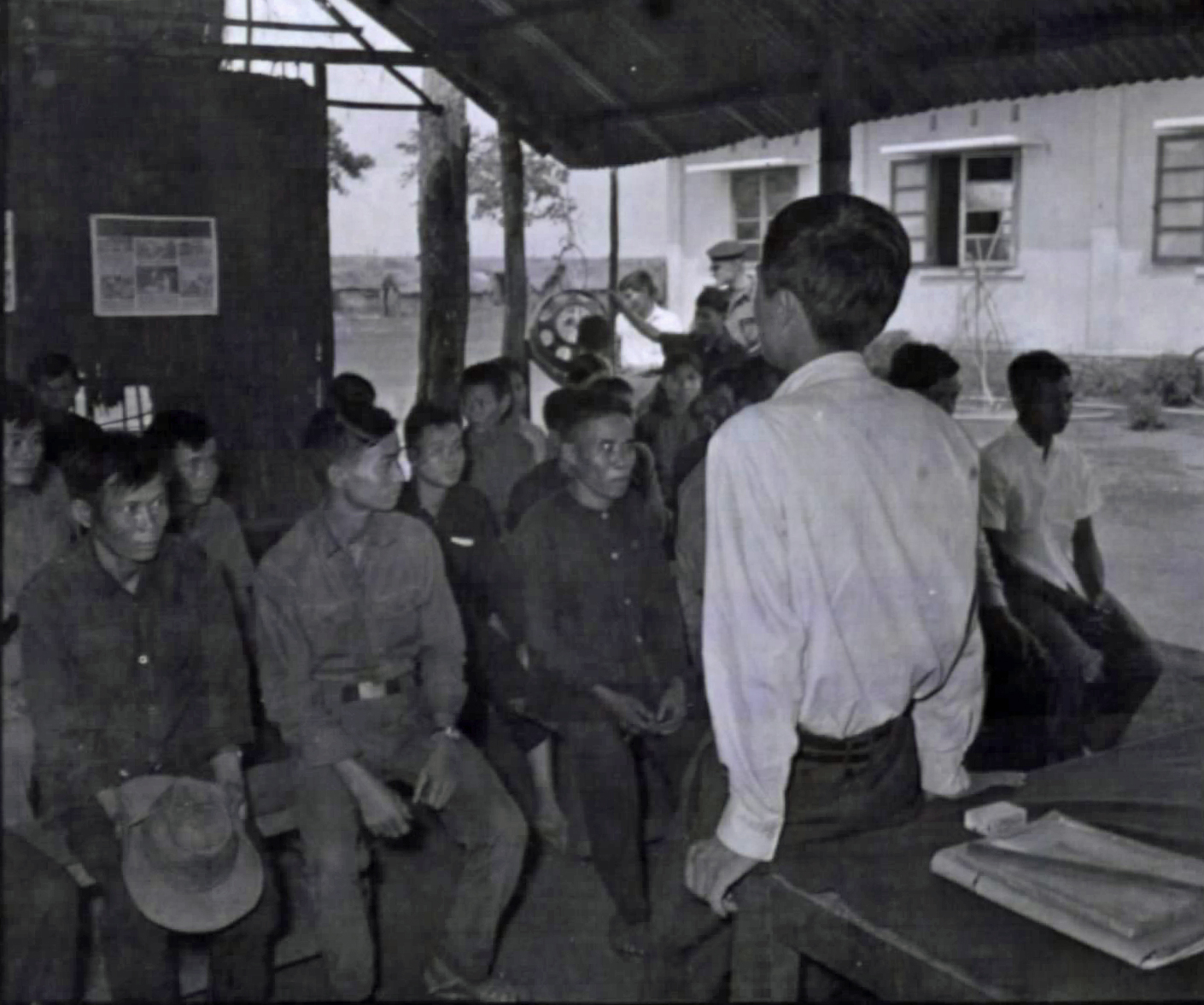
Buon Co, March 1968. A month after Tet, a man from the hamlet of Buon Co, in Buon Ho district of Darlac, was questioned in Buon Ma Thuot, and the South Vietnamese interrogation report, released by the CIA, set down what the people of his hamlet had been living with. They had been “promissed victory in 1964, 1965, 1966, 1967 and now total victory would be achieved by March 1968.” They were told they would have to “carry food and ammunition for the Army of Liberation when the time came.” “The only way a man could leave the village was alone his family had to stay behind.” And every day there were “more and more aircraft flying overhead, destroying their crops, and houses,” because they lived in the Front’s country. They would not report the Front to the government, because “their families in the hamlet would suffer reprisals.” Four years of victory next year, carrying loads, families held as surety, and bombs from the other side. That is the promise seen from the bottom.
The Front had its own witnesses to what Saigon did to us, and Burchett wrote them down: a Jarai elder in the frontier country who told him how the men of three hamlets herded into one by Saigon had ambushed the soldiers and gone back to the mountains, and a Ta Oi woman from Quảng Trị, Kan Djul Pien, who told him of a camp in 1955 where “Every day someone was beaten or tortured for nothing at all.” They were chosen to be shown to a friendly journalist. The cruelties they describe are recorded from the other side too; see Moved by force.
Across the border: the Khmer Rouge’s highlanders
Our peoples do not stop at the Cambodian border, and neither did the war. In the mid-1960s the Khmer Rouge leadership moved its headquarters into the forests of Ratanakiri and recruited the Brao, Kreung, Tampuan, Jarai and other highland peoples there. The journalist Sara Colm, who interviewed them in the 1990s for a study supported by the Documentation Center of Cambodia, found that Pol Pot “not only used them as his personal bodyguards and couriers throughout his career, but promoted them into the leadership of the Khmer Rouge in the Northeast.”
People joined for reasons. A Kreung villager told Colm how in 1968 Cambodian government soldiers came to the village of Prieng: “When they got there, there was a wedding going on and they fired into a crowd of people, slaughtering 20 or 30 like pigs.” The survivors went to the forest fighters. A Tampuan put the other reason more simply: “We were afraid they would kill us.”
Phi Phuon. One Jarai from Ratanakiri became the Khmer Rouge leader’s own man. Testifying before the international tribunal in Phnom Penh in July 2012, Rochoem Ton, known as Phi Phuon, said he was born in Ratanakiri, that he belonged to the Jarai, and that he joined the revolution in 1963 and served as a bodyguard and messenger for its senior leaders. His brother-in-law had told him that joining was “a good opportunity for members of a minority group like them.” He became Pol Pot’s aide-de-camp. His memoirs, recorded and translated by the French historian Henri Locard, were published in 2023. He survived the fall of the regime and died in 2015.
What it came to. After the American bombing ended in 1973, Colm writes, the Khmer Rouge turned on its highland allies: collective farms, communal eating, the banning of our rites, and death for those who would not follow. In early 1975, months before the Khmer Rouge took Phnom Penh, “five thousand Brou and Kreung villagers from Ratanakiri fled to Laos and Vietnam.” Colm’s conclusion is that Pol Pot’s policies killed thousands in the northeast and destroyed the highlanders’ traditional way of life. Some of the Brao and Tampuan who fled came back with the Vietnamese army in 1979 and became leaders of the new Cambodian government; Ian Baird tells their story in Rise of the Brao (2020). See Kin across the border.
The other side of the other side: the Bunong of the Khmer Republic
In the same years, in the same borderland, other highlanders went the opposite way. The anthropologist Catherine Scheer of the French School of the Far East has traced Bunong men from Mondulkiri who fled the bombing and the Khmer Rouge into South Vietnam in the early 1970s, and were living in the refugee camp at Bu Bong in Quang Duc. In 1971 the government in Saigon agreed to a request from Lon Nol’s republic in Phnom Penh for “the recruitment of 1600 men among the active elements of the Khmer refugees from Mondulkiri in Quang Duc.” One of them, Pö Nok, “had been recruited in the Bu Bong refugee camp by a highly placed Bunong military official who told him that he would be taken back to Cambodia to help defend his homelands.”
“After a training near Saigon, the recruits were brought to Phnom Penh and settled in a camp on Chroy Changvar, a peninsula that separates the Tonle Sap and Mekong rivers, directly across from the royal palace. Rather than being sent to fight in their native Mondulkiri, many of the Bunong soldiers were asked to guard bridges that linked the city to the surrounding province.”
FULRO’s leaders were in Phnom Penh with them. Then the city fell:
“On 17 April 1975, those Bunong who had survived to that point were killed by the Khmer Rouge, seemingly with few exceptions.”
Scheer found three who lived: Pö Mon, Mé Nok and Pö Nok. The FULRO leaders in the city died the same way; see Y Bham Enuol in Phnom Penh.
What the promise came to
In 1975 the side that had promised autonomy won. Hickey, who had watched the promise made for twenty years, wrote:
“Peace, however, did not return to the highlands. It soon became apparent that the oft-promised autonomy for the highlanders was only a propaganda ploy.”
Human Rights Watch put it in one line: “With the reunification of Vietnam in 1975, Viet Minh pledges of autonomy never materialized.” No autonomous highlands were founded. Vietnamese were settled on our land in their hundreds of thousands. Our leaders from the old government were put in camps, and those who escaped went into the forest; see 1975, and what came after and Reeducation and the forest.
Some of the men who went north did become officials. The Dutch anthropologist Oscar Salemink has written that many of the minority officials in the highland provinces after 1975 were “Vietnamized” cadres who had gone north with the Viet Minh in 1954. The promise was not kept to the people. It was partly kept to the cadres.
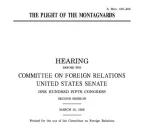
And the men on every side ended in the same place. Nay Dam and Ksor Wen walked out of the Front. Y Bih Aleo stayed and, by our own history’s account, was killed. The Bunong of Chroy Changvar died on April 17, 1975. Phi Phuon survived to become a provincial official in the far west of Cambodia. The Dega who fought for the Americans went to prison or to the forest. Rong Nay, who led the forest resistance, told the US Senate in 1998 that “Both the North and South Vietnamese Governments exterminated our people and occupied our land.”
A note on sources
Several of our people who served the communist side are honored in Vietnam today, and their biographies are published by provincial governments and state media. We do not use those sources (see Sources and method). That is why this page does not tell the life of Dinh Nup, the Bahnar hero of the war against the French, or the later lives of Y Bih Aleo and Y Ngong Nie Kdam, beyond what independent sources say. If you know of an independent account — a memoir, a letter, a family history, an academic study — we would like to hear of it.
What we do not know
How many of our people went north in 1954, and who they were.
How Y Bih Aleo, R’com Briu and Y Ngong Nie Kdam died.
The names of the Front’s highland soldiers and cadres, and of the villagers killed by the Front, from the Hre valleys in 1949 to the forests of 1975.
The women. We have found no Dega woman who went north, served as a cadre or carried loads for the Front in any independent source. They existed.
The rest of Nay Dam’s and Ksor Wen’s stories, which are in Hickey’s Free in the Forest and in his papers, and the interviews that RAND made with highland prisoners and defectors during the war.
Many of our families in America have a father, an uncle or a grandfather who went north in 1954 or served the Front. Some still have relatives in Vietnam, and we understand why they may not want to speak. If you do want to record what you know, see How to record an elder, and read Reporting safely first.
See also: The first war, 1946–1954, The BAJARAKA movement, The American years, The battles fought on our land, Kin across the border, The Cambodian camps.
Sources
- CIA, The Highlanders of South Vietnam: A Review of Political Developments and Forces (June 1, 1966; declassified 1999), at the Internet Archive — the Agency’s own study, written while it ran the highland programs: the northern zones, the regroupees, Y Bih Aleo, the amnesty of 1962–63, the kidnappings of 1965
- Gerald C. Hickey, Free in the Forest: Ethnohistory of the Vietnamese Central Highlands, 1954–1976 (Yale University Press, 1982) — Nay Dam and Ksor Wen, from interviews made under his RAND contract; and The Highland People of South Vietnam, RAND RM-5281/1-ARPA (1967), at the Internet Archive — Siu Sipp and Y Ut
- Department of the Army, Minority Groups in the Republic of Vietnam, DA Pam 550-105 (1966), at the Internet Archive — the Hre in 1949; the Jarai who went north
- National Interrogation Center, Report 307/68, “Montagnard Disenchantment with the Viet Cong in Darlac Province” (March 13, 1968), released by the CIA — Buon Co
- Wilfred Burchett, The Furtive War: The United States in Vietnam and Laos (1963), full text — written from the communist side with its help: the First Congress, Y Bih Aleo, the school and Y Ngong
- National Liberation Front, program of 1960, point VII
- Human Rights Watch, Repression of Montagnards (2002), chapter III
- Michael D. Benge, “The History of the Involvement of the Montagnards” (2010) — an advocate and a former prisoner of the Front
- Rong Nay, “Summary of Montagnard History” — our own history; and his testimony before the US Senate Foreign Relations Committee, March 10, 1998
- Sara Colm, “Pol Pot: the secret 60s,” Phnom Penh Post, April 24, 1998
- Asian International Justice Initiative, KRT Trial Monitor, Case 002, week 24 (July 23–26, 2012) — the testimony of Rochoem Ton (Phi Phuon); and Henri Locard (ed.), Jungle Heart of the Khmer Rouge: The Memoirs of Phi Phuon (NIAS Press, 2023)
- Catherine Scheer, “Surprising Testimonies,” The Newsletter (IIAS) 101 (2025), and “Subaltern soldiers: Overshadowed Bunong highlanders in the Khmer Republic’s army, 1970–75,” Journal of Southeast Asian Studies 53 (2022)
- Ian G. Baird, Rise of the Brao (University of Wisconsin Press, 2020); Oscar Salemink, The Ethnography of Vietnam’s Central Highlanders (2003); Mathieu Guérin and others, Des montagnards aux minorités ethniques (2003)
Compiled September 2026. The quotations on this page were checked word for word against the texts they come from. Where our sources disagree about these men’s lives and deaths we give each account with its teller. We do not use the Vietnamese state’s biographies.