

There is no single Dega flag. There have been at least eight, each made by a movement or an organization at a particular moment, and each carrying the history of the people who made it. Before any of them was sewn, a flag of our own was already a political demand: our leaders asked for one in 1955, in 1964, four times in 1965, in 1966 and in 1967, and Saigon refused it again and again while it was ready to concede much else. On paper, the right was won in 1968. This page sets out the flags we can document, where each comes from, what the colors are said to mean and who says so, what happened to the people who carried them, and what we still do not know.
Before the movements
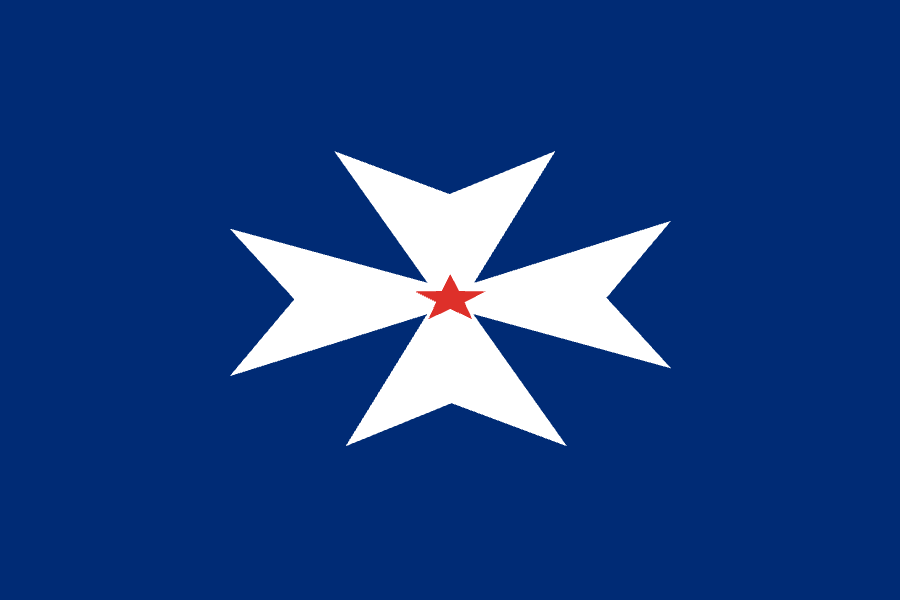
The first flags anyone recorded over the highlands were other people’s. In 1888 the French adventurer Marie-Charles David de Mayréna had himself crowned king of the Sedang and wrote a constitution with a national flag in it, plain blue with a white cross and a red star; the kingdom lasted a few months and is told on its own page. After him came the tricolor of the French administration.

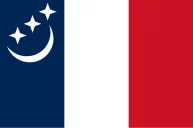
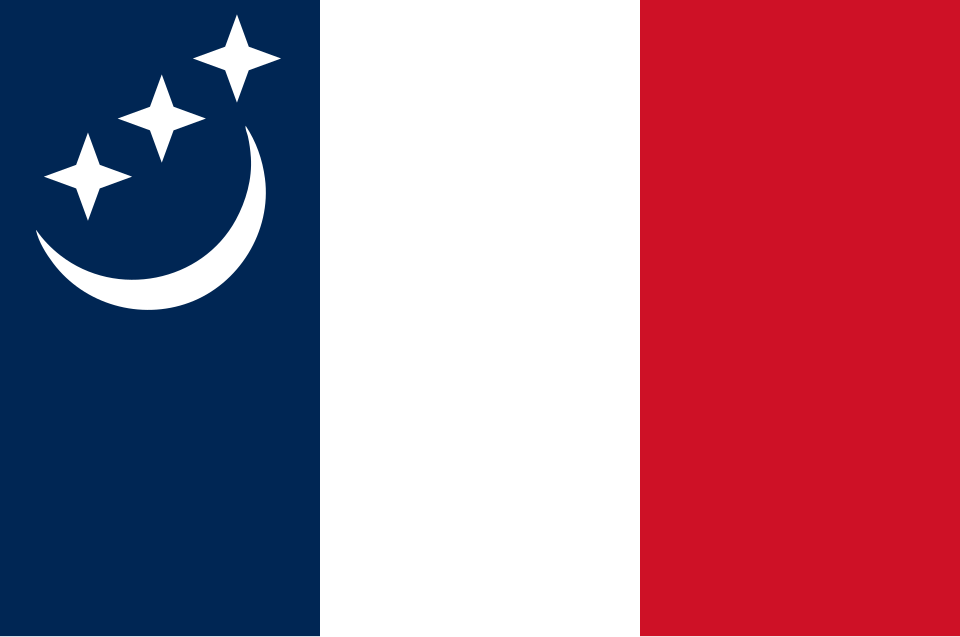
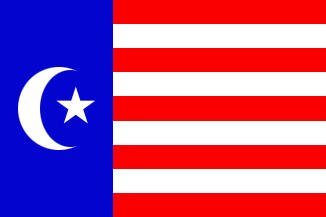
From 1946 to 1950 the five highland provinces were a separate French territory, the Pays Montagnard du Sud-Indochinois, and then, from 1950, the Crown Domain of the emperor Bảo Đại. A flag for that territory is drawn on Wikimedia Commons, dark blue at the hoist with a crescent and three stars, then white and red. We have found no document, photograph or seal of the period that shows it, and we print it with that warning. Our own records hold that a highland flag did fly beside the French one in those years: they say that when the French withdrew after the Geneva agreements, the order was given to strike both the French and the Montagnard flags and to raise the flag of South Vietnam, and that thousands of our people took it as a betrayal. No one has yet described that flag for us. If your family remembers it, we want to hear.

A flag as a demand, 1955–1968
A flag was never a matter of decoration for our leaders or for the governments they dealt with. In March 1955 the first of the highland organizations, the Front for the Liberation of the Montagnards, wrote to Ngô Đình Diệm, then prime minister, with a list of demands that included the right to fly our own flag. Diệm’s answer to BAJARAKA three years later was prison.
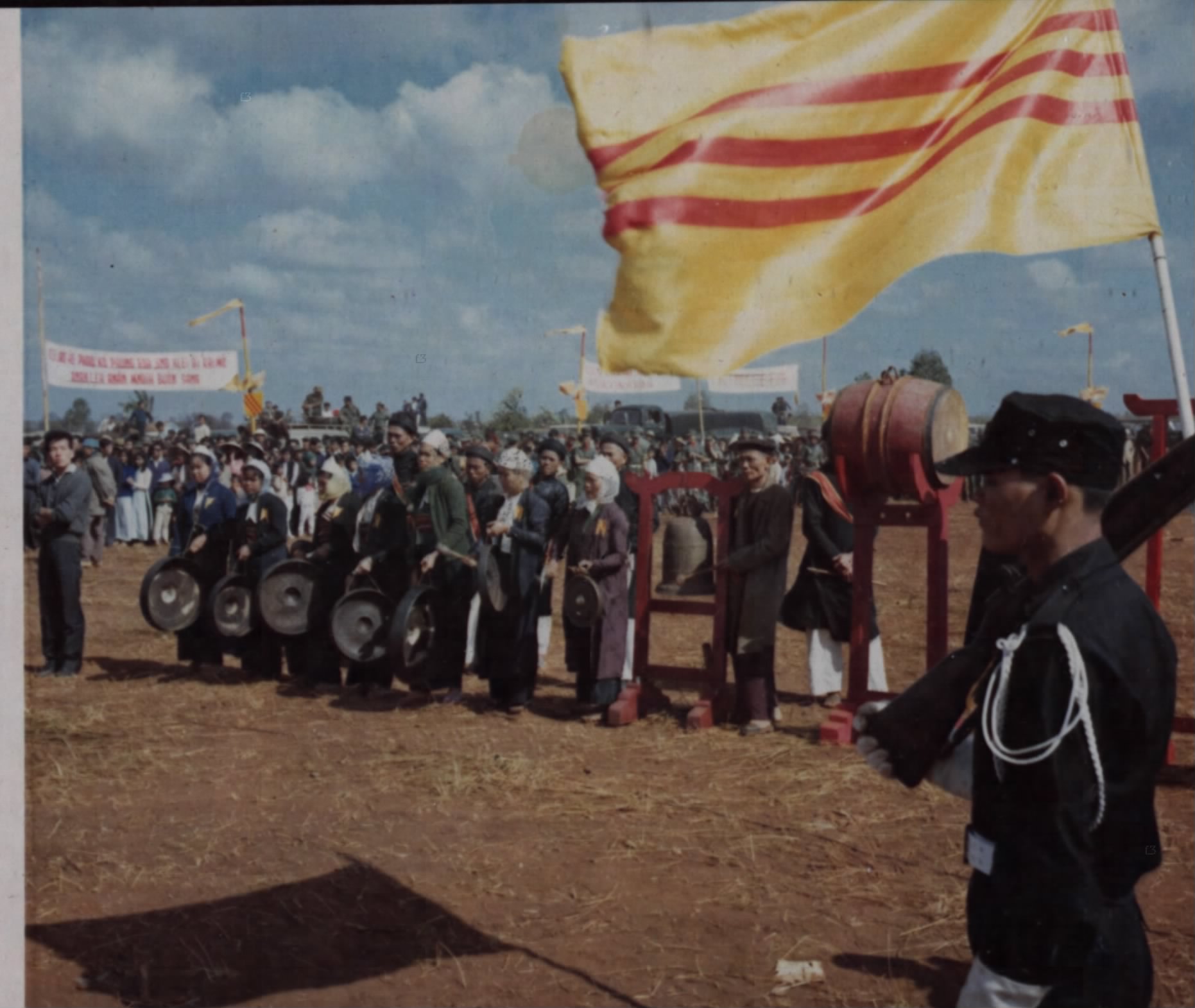
After the rising of September 1964, FULRO put its demands in writing on October 31: a special charter, a chairman for the highlands with offices in Ban Me Thuot, a highland army of fifty thousand men, our own schools and courts, the right to raise taxes, and a highland flag. At meetings in Saigon on December 22 and 23, 1964, the government received most of the proposals sympathetically and refused the flag, because it feared that other minorities and religious groups would make the same demand. That same month strike force units were found raising the autonomy flag during halts on patrol; the men admitted that it kept the Viet Cong from attacking them.

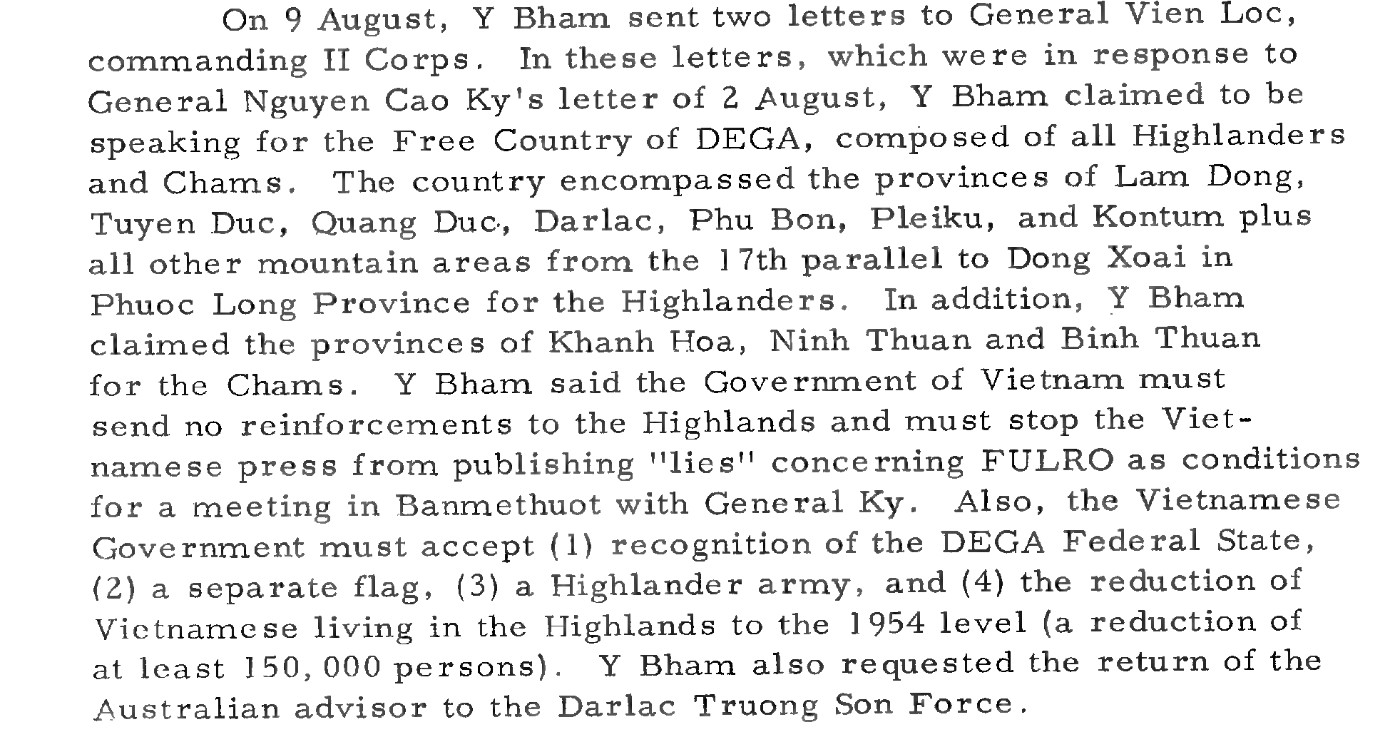
The demand came back in every round of negotiation in 1965. On May 21 FULRO’s representatives asked for the safe return of Y Bham Enuol and a hundred of his followers and a guarantee that they could keep their flag. On June 5, at Ban Don, with American embassy and military officers present, Y Dhun demanded autonomy, a highland army, the closing of the Vietnamese land development centers and the authority to fly the FULRO flag. On August 9 Y Bham wrote to the II Corps commander in the name of the Free Country of DEGA, and demanded recognition of a Dega federal state, a separate flag, a highland army and a return of the Vietnamese population in the highlands to its level of 1954. On September 23 he listed eight points; the general commanding II Corps, Vĩnh Lộc, was said to have accepted every one of them except the sixth, a highland flag to be flown beside the Vietnamese flag.
Even in the Vietnamese army there were officers who thought the flag could be given. General Nguyễn Chánh Thi, commanding I Corps, favored secret talks and concessions, among them our own flag. By the spring of 1966 the government seemed ready to approve a pennant for highland military units, a small flag in place of a national one. In mid-May 1966 FULRO asked for something different again: a flag symbolizing the existence of all the ethnic minorities of South Vietnam. Our own records hold the eight points that Y Bham Enuol put to Saigon on May 4, 1967, as leader of the independence movement; the sixth asks for the Montagnard flag to be raised to the same height as the Vietnamese flag. The agreement finally reached in December 1968 provided that highlanders could form their own political party and fly their own flag. We have not found any record of a highland flag flown officially under that agreement.
BAJARAKA
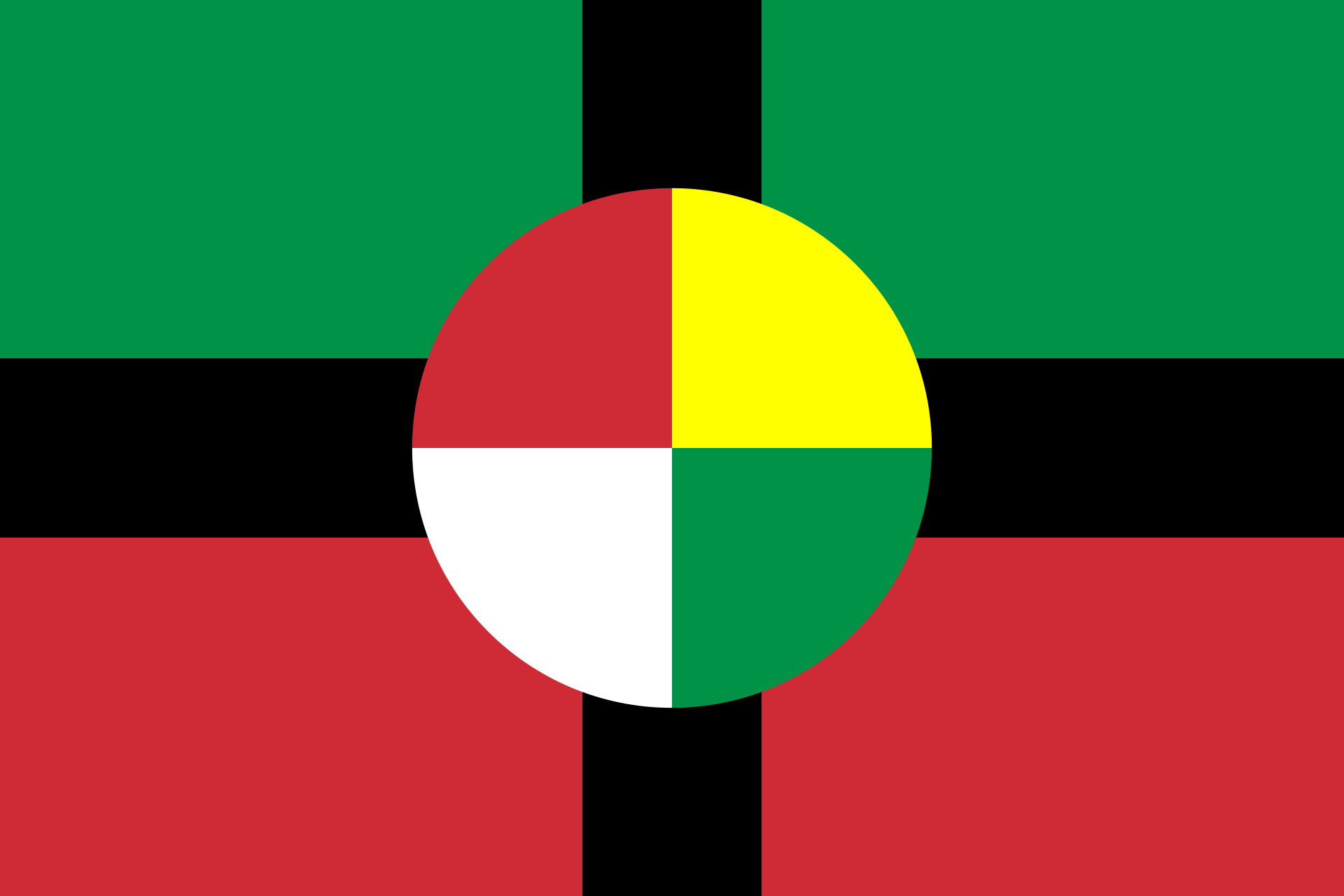
BAJARAKA took its name from four peoples, Bahnar, Jarai, Rade and Kaho (Koho), and its flag carries a disc divided into four colors, one quarter for each. The drawings in circulation date it from 1958 to 1964, the years of the movement and of the imprisonment of its leaders; that dating comes from Wikimedia Commons, not from a document of the time. The volunteers of Flags of the World found that older flag books had wrongly attributed the design to the Cham, and that the drawings disagree about the field: green in some, red in others. On design grounds they prefer red, because a green quarter on a green field would disappear. Nobody has published a photograph of a BAJARAKA flag. See The BAJARAKA movement.

The flags of September 1964
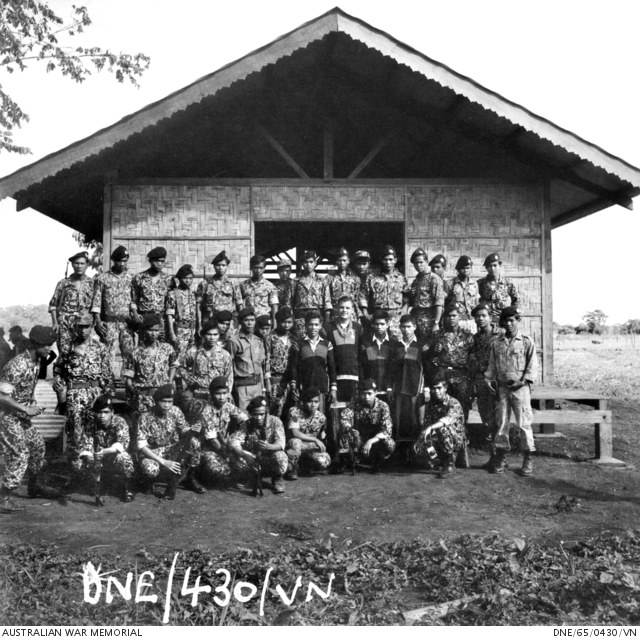
FULRO was an alliance of three fronts: our own Front for the Liberation of the Highlands, the Front for the Liberation of Champa, and the Front for the Liberation of Kampuchea Krom, the Khmer of the Mekong delta. On the night of September 19–20, 1964, the strike forces of five American Special Forces camps in Darlac and Quang Duc rose, disarmed or killed their Vietnamese officers and marched on Ban Me Thuot. The story is told on FULRO and Y Bham Enuol, president of FULRO.
Each camp raised its flag. An American sergeant arriving at Buon Brieng that afternoon noticed that the flag on the pole was not the South Vietnamese one; it turned out to be the FULRO flag. By September 28 the rebels were all back in their camps, and South Vietnamese flags flew where theirs had been. The flag existed before the rising: a Special Forces veteran has recalled his captain coming back from a patrol before the rising with the whole plan, the founding documents, the names of the leaders and a flag, and being disbelieved in Saigon.
What that flag looked like is less certain than it should be. The earliest dated description is a newspaper report from Saigon on September 21, 1964, which said that at Ban Me Thuot the rebels waved “a red flag with three gold stars.” The reporter was in Saigon, not Ban Me Thuot, and her report that the Viet Cong were presumed to be behind it was not borne out; but the three stars on red run through every later drawing. Barry Petersen, the Australian officer who led the Rhade of the Truong Son Force, later wrote that the flag designed when the three fronts merged had three horizontal stripes. We have not been able to read his book, and we give his account as he is quoted.
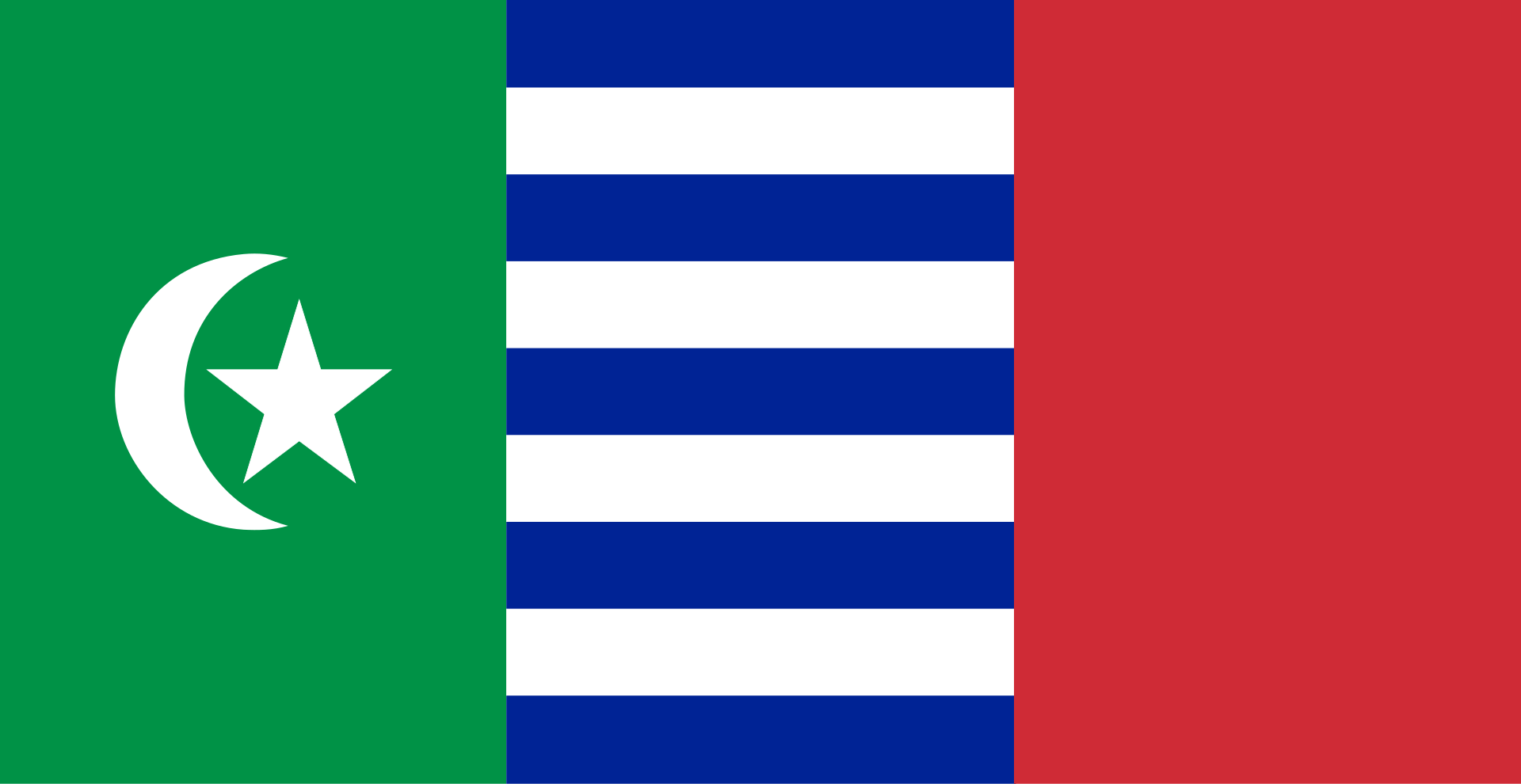


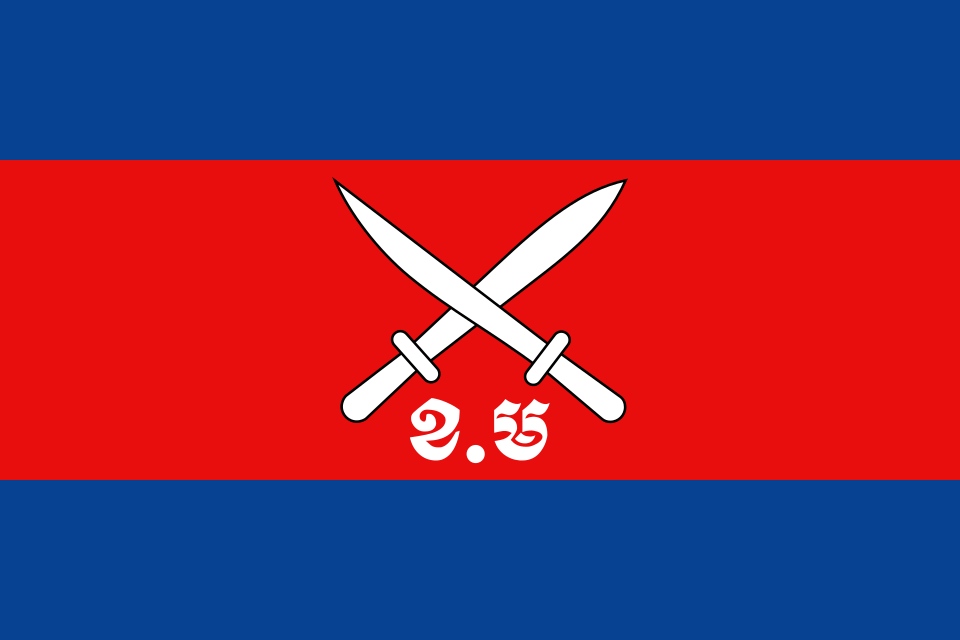
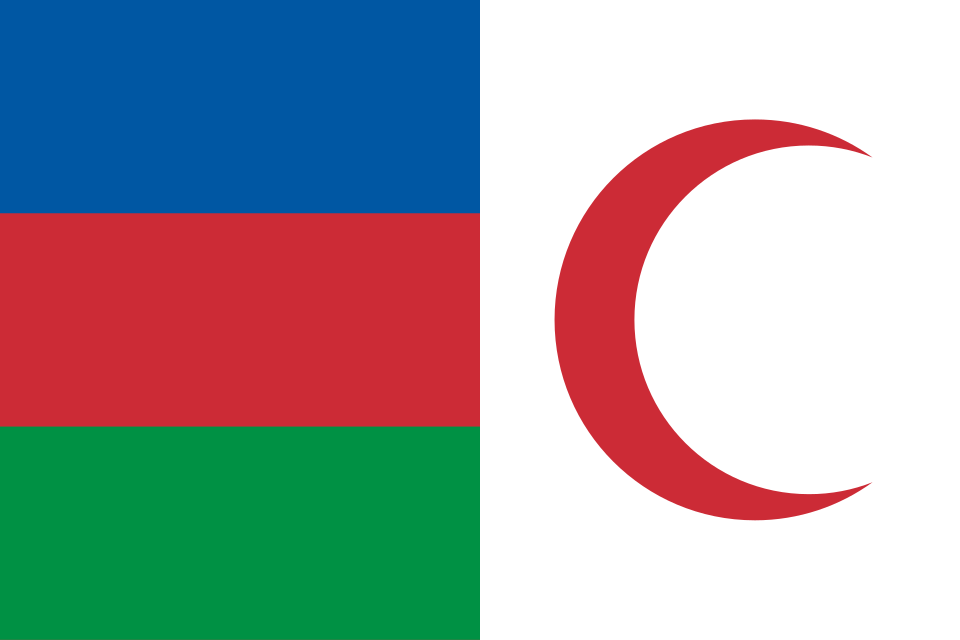
Each front also had a flag of its own. The highland front’s is drawn with a panel at the hoist bearing a crescent and star, blue and white stripes, and a red fly; the Flags of the World contributors argue over whether the hoist was green or red. The crescent and star look Cham, and one early account in the flag literature, which also calls the Jarai and Rhade Cham tribes and dates the flag to 1946, cannot be relied on for anything. The Cham front used a flag with a blue hoist bearing a crescent and star, and red and white stripes. The Khmer Krom front took the flag of Cambodia and put its own emblem, two crossed blades over the Khmer letters kha and mo, where Angkor Wat stands. A fourth drawing on Wikimedia Commons, labeled as the flag of a “Republic of the Central Highlands and Champa” of 1964–65, has no source that we can find.
_-_Jaume_Oll%C3%A9_and_Tomislav_Todorovic_(30_December_2016).gif)
.svg)

The FULRO flag
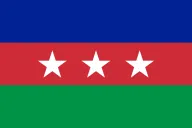
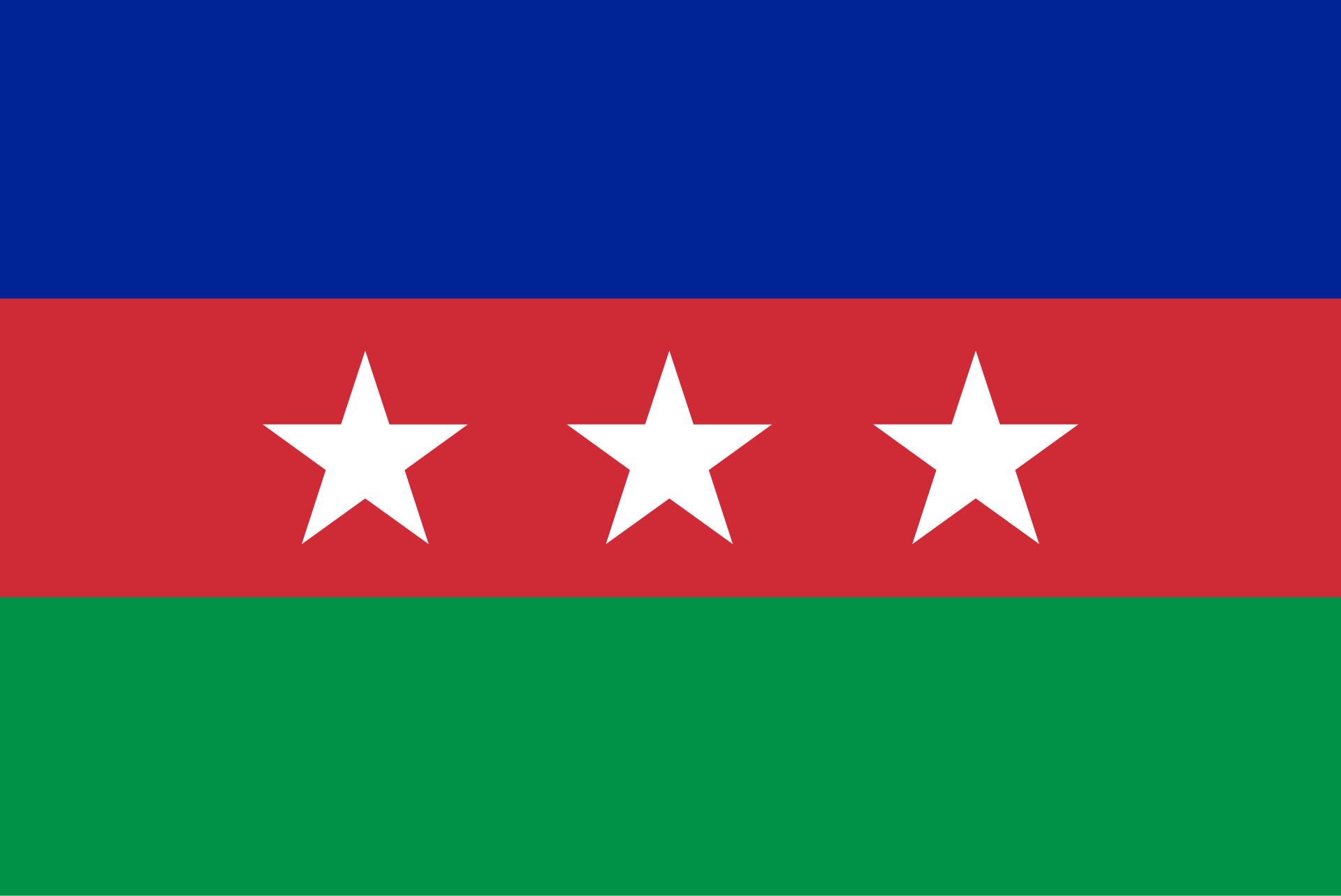
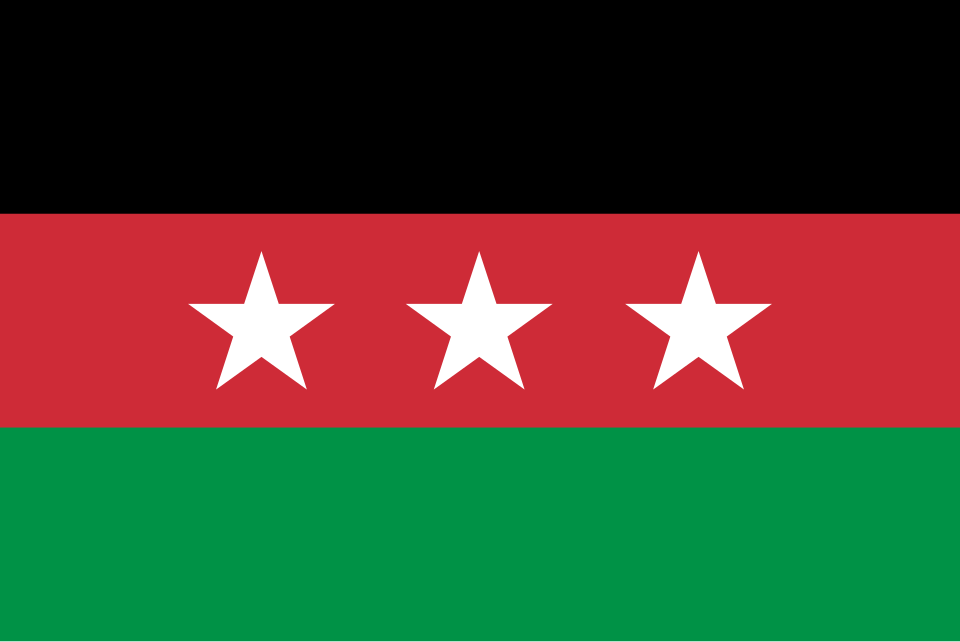
The flag the world knows as FULRO’s has three horizontal stripes, blue, red and green, with three white stars on the red. The reading of it given by Flags of the World, from diaspora sources, is that the blue was the sea, the red the common struggle of the three peoples and the green the mountains, and that the stars were the three peoples, highland, Cham and Khmer Krom. Another reading, attributed to the historian Oscar Salemink, is that the three stripes were the three fronts. Both may be true; neither comes from a founding document we have seen. At some point the blue was changed to black, and the explanation given is that the minorities had lost the coast and been confined to the mountains. We do not know when.

.svg)
These were real flags, made by our own people. Some were carried home by American soldiers and now turn up at militaria dealers in the United States, one pair measuring about fifteen by twenty inches, another thirty-two by twenty-one, described as indigenously made. After 1975 the flag went into the forest with the last FULRO units. The accounts we have read of the surrender at Mondulkiri in 1992 list weapons and ammunition, not a flag; what became of the flags the last men carried is a question for the families of the men who carried them. See Mondulkiri, 1992.
Flags and punishment
A flag has been evidence against us for sixty years. On the evening of December 16, 1965, the National Police and the Military Security Service arrested ten highland civilians and three highland officers of the Vietnamese army for trying to incite a rising, and took their weapons, their flags and their papers. Under the present government the same flag is still listed among the things seized. In April 2010 the deputy director of police in Dak Lak told a national conference that since 2001 his officers had seized hundreds of documents and “reactionary FULRO flags”; Human Rights Watch reprinted the claim. After the attacks on two police posts in Dak Lak in June 2023, the Ministry of Public Security listed ten FULRO flags among the items it had confiscated. These are the state’s own claims, made for its own purposes. And in July 2025 UN human rights experts wrote to Vietnam about a Khmer Krom activist who had been held and beaten in 2023 and questioned, among other things, about the T-shirts he wore with the Khmer Krom flag on them.

We have not yet found a published case of one of our people prosecuted for a flag alone, and the human rights reports on the protests of 2001 and 2004 do not mention flags at all. That is a gap in what has been written down, not evidence that it has not happened. If you or someone in your family was questioned, fined or imprisoned because of a flag, we would like to record it; Reporting safely explains how to send it without putting anyone at risk.
The diaspora flags
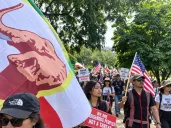
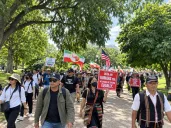
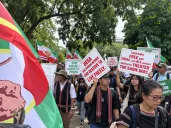
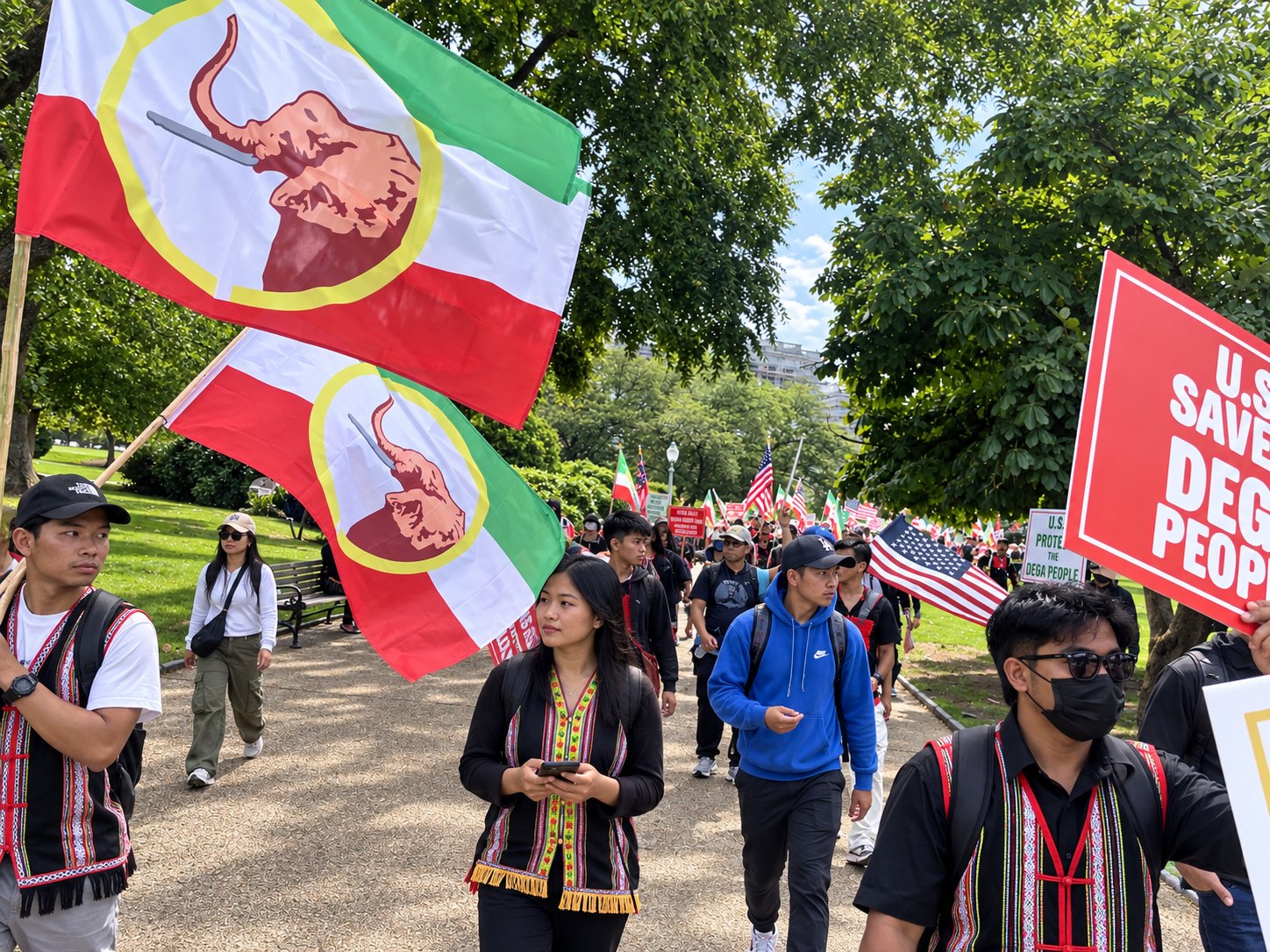
The flag most of our families know today was made in North Carolina. It is the flag of the Montagnard Dega Association of Greensboro, founded in 1987 by the first elders to settle there with the help of former Green Berets, and adopted as a flag for all Dega. Its colors are given as green for the mountains and the forest, white for peace and honesty, and red for our blood and struggle. The elephant stands for gentleness and strength. The ring is the bracelet, called kong or kong te, with the gap in it, that highland soldiers and villagers gave the Americans who served in the highlands as a sign of friendship; the story is on The bracelet. A green-white-green variant is also in use, and the flag is flown by Save the Montagnard People, whose version is drawn with the ring open and dated on Wikimedia Commons to 1986. The Montagnard Support Group labels the same flag “Dega Country,” the flag of the Pays Montagnard du Sud. No one has published the name of its designer.
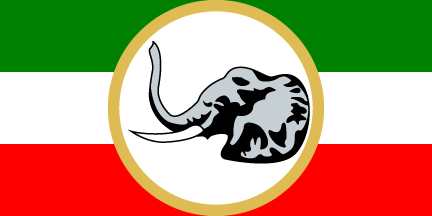
_created_in_1987_-_Marko_de_Haeck.png)
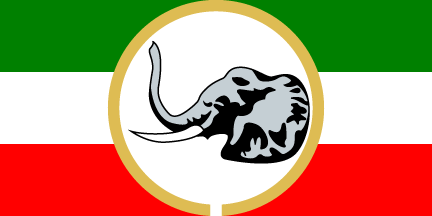

The design did not come from nowhere. During the war the South Vietnamese ministry for ethnic development set up a Movement for the Unity of Ethnic Groups of South Viet-Nam to rally the minorities against the Communists, with a song and a flag: stripes of green, yellow and red, and a white elephant’s head inside a white ring. The green stood for the mountains and jungles, the yellow for the Vietnamese national color, the red for the common struggle, and the ring for the union of the minorities with the Vietnamese. The Greensboro flag, as the flag historians have noticed, is the same design with the Vietnamese yellow taken out. When that Saigon flag was adopted, and whether it was the government’s answer to FULRO’s demand of 1966 for a flag of all the ethnic minorities, we do not know.
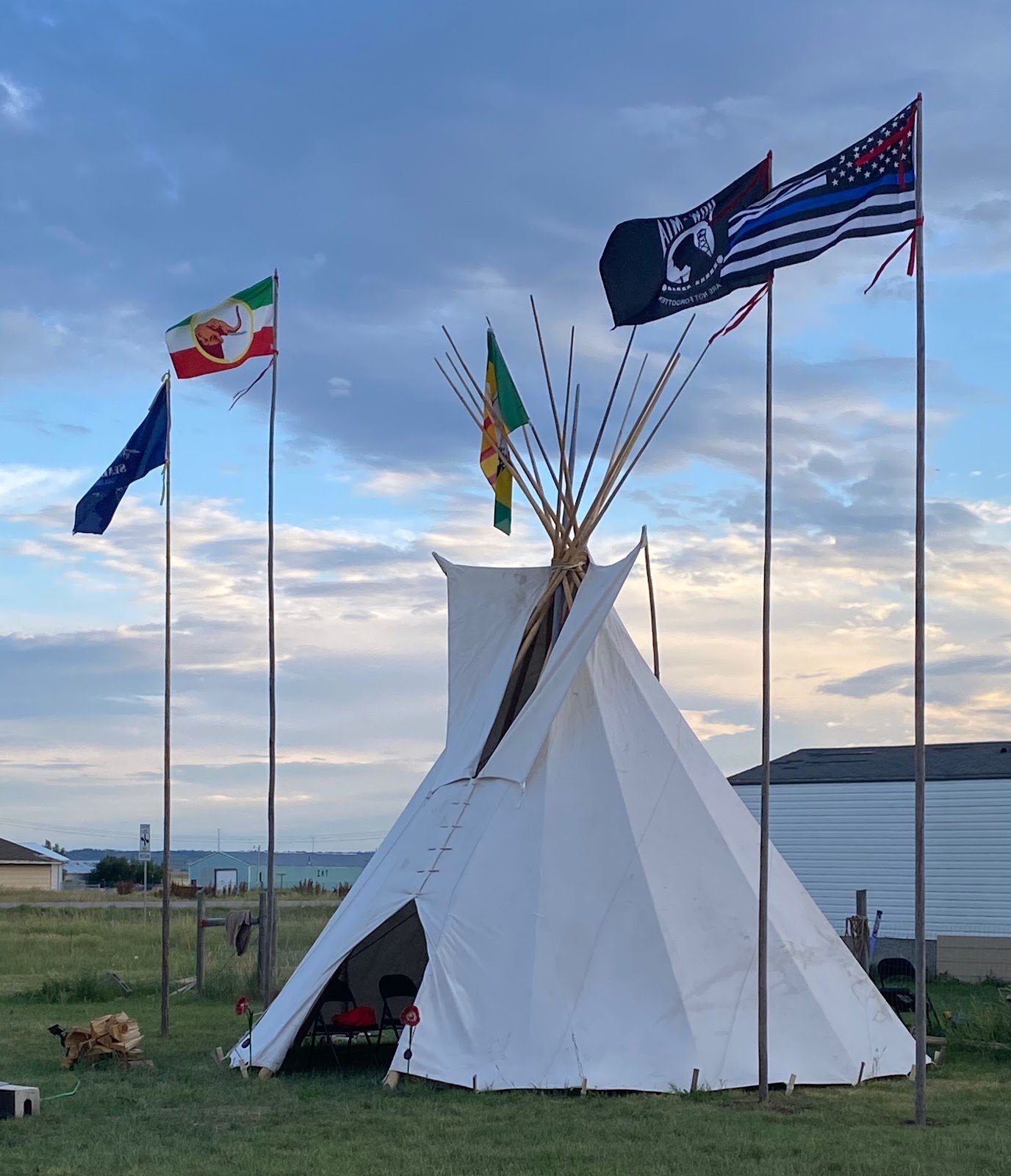
Other flags
- United Montagnard People. A blue hoist with a large white star, seven green and six white stripes, and a plain red fly. It repeats the arrangement of the highland front’s flag of 1964 with changes that echo the American flag, and it is increasingly used as a general Dega symbol.
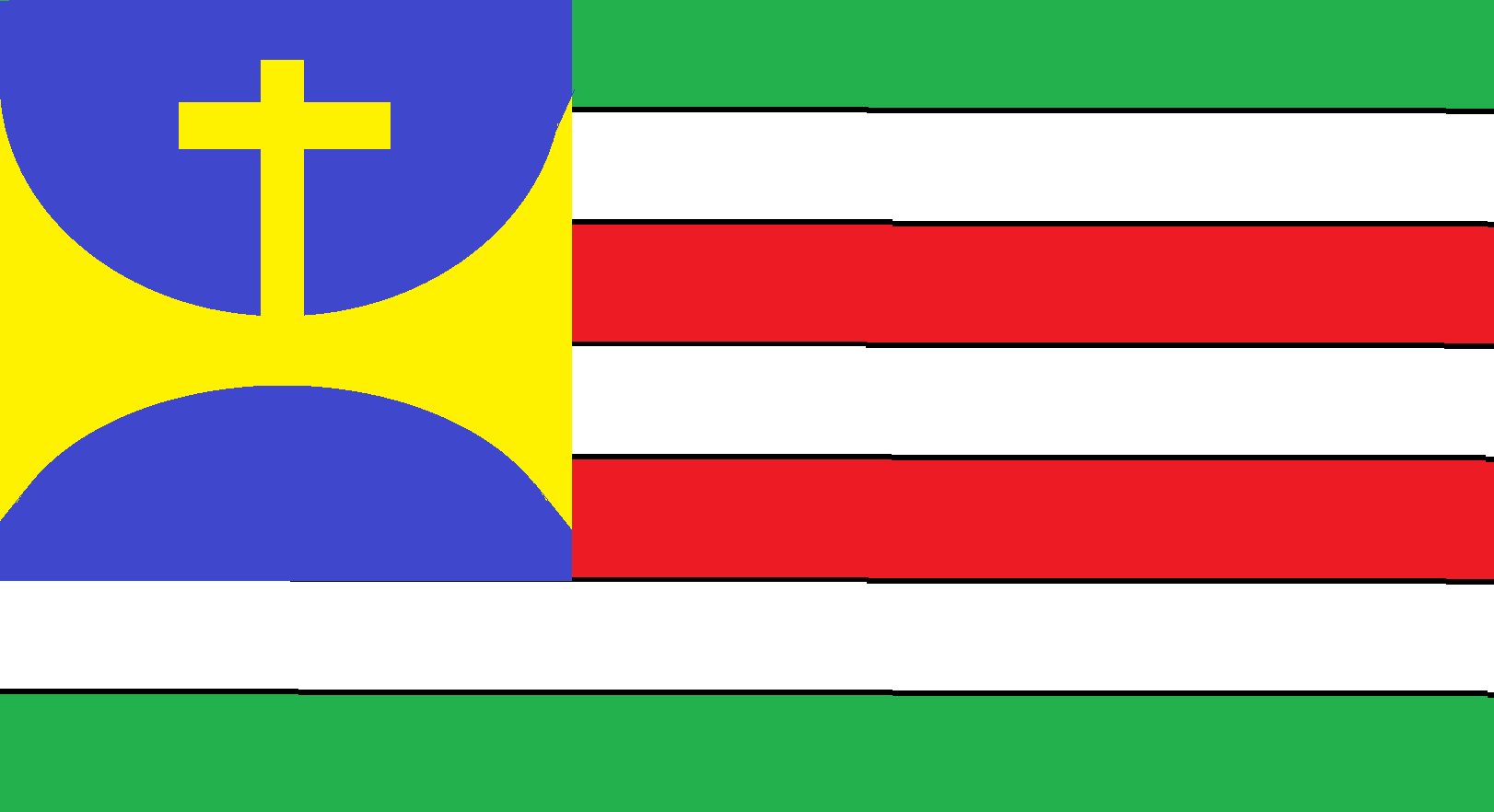
- United Montagnard Republic. Seven stripes, green, white, red, white, red, white, green, with a blue canton bearing a thin yellow cross, for the Protestant faith of so many of our families.
- The Degar flag. Associated with the Montagnard Foundation, whose delegation took the name “Degar-Montagnards” into the Unrepresented Nations and Peoples Organization, where it was a member from 2003 to 2016. Its designer and date are not known to us.
- The Mnong Bu Dang flag. Green, with a large five-pointed star drawn in white outline, said to stand for the five districts of the Mnong country. We have not found a free drawing of it.
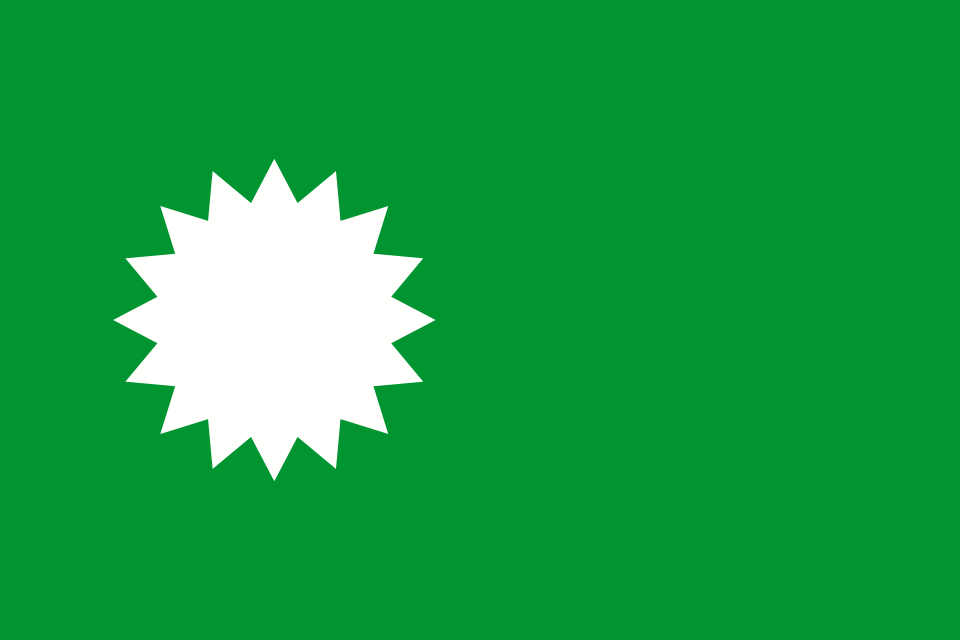
- The Khmer Mountain Tribes. A green war flag with a white many-pointed star, listed for a group associated with the Kampuchea Krom movement inside FULRO.
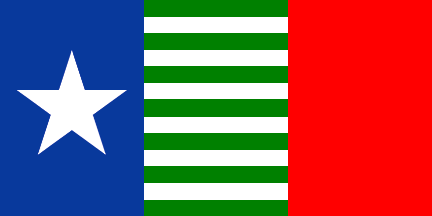
_adopted_sometime_in_the_period_2000-2010_-_Marko_de_Haeck.png)



What we do not know
Who designed any of these flags. What the flag raised over the camps on September 20, 1964, actually looked like, and whether the red flag with three gold stars and the blue, red and green flag with white stars are the same flag seen by different eyes. When the blue became black. Whether a highland flag flew in the 1940s and 1950s, and what it looked like. Whether any highland flag flew officially under the agreement of December 1968. Who designed the Greensboro flag of 1987. The people who can answer these questions are our elders, the men who served in FULRO and the families who kept a flag. If you have one, or a photograph of one in use, we would be glad to photograph it and record where it came from.
See also: The bracelet, FULRO, The BAJARAKA movement, Who are the Dega, Cu Kuin, June 2023.
Sources
- Flags of the World, Montagnards (Viet Nam) — the BAJARAKA, FULRO, Montagnard Dega Association, Movement for the Unity of Ethnic Groups, Mnong Bu Dang, Montagnard Foundation, United Montagnard People and United Montagnard Republic sections, with their contributors’ dates (1999–2018); the Movement for Unity section cites Thomas A. Cseh and John Sylvester Jr. in The Flag Bulletin; Chams (Viet Nam) — the FLHP and FLC flags; Kampuchea Krom (Viet Nam) — the FLKK flag; Kingdom of Sedang
- Central Intelligence Agency, The Highlanders of South Vietnam: A Review of Political Developments and Forces (June 1, 1966), in our library — the demands of October 31, 1964, the refusal of December 22–23, 1964, the autonomy flag on patrol, the demands of May 21, June 5, August 9 and September 23, 1965, the arrests of December 16, 1965, General Thi, the pennant and the demand of May 1966
- Human Rights Watch, Repression of Montagnards (2002), chapter III — the demand of March 1955 (after Gerald C. Hickey, Free in the Forest), the requests after the Pleiku conference, the agreement of December 1968; Montagnard Christians in Vietnam (2011), in our library — the Dak Lak police claim of April 2010
- Beverly Deepe, “U.S.-Trained Viet Tribe in Open Revolt,” New York Herald Tribune, September 21, 1964, Beverly Deepe Keever papers, University of Nebraska–Lincoln — the red flag with three gold stars
- Robert W. Jones Jr., “A Team Effort: The Montagnard Uprising of September 1964,” Veritas 3, no. 2 (2007), US Army Special Operations Command — the flag at Buon Brieng; John D. Howard, “The Revolt of the Montagnards,” Vietnam magazine (2019) — the flags raised and replaced by September 28; Jim Morris, review of William H. Chickering, A War of Their Own (2025) — the flag seen before the rising
- Barry Petersen, Tiger Men (1994), p. 85, and Oscar Salemink, The Ethnography of Vietnam’s Central Highlanders (2003), p. 151, as quoted in FULRO insurgency — the three stripes; we have not been able to read either passage
- Montagnard Support Group, Dega flags — the colors, the kong, “Dega Country”; Future Fund of Greensboro, About Montagnard Dega Association — founded in 1987 by the first elders in North Carolina; UNPO, Degar-Montagnards — membership 2003–2016
- International Military Antiques, two original FULRO flags; Expedition Antiques, FULRO flag with photograph — the sizes and the hand-made flags; Peter Maguire, “Nate Thayer (1960–2023), part one” — what was handed over in 1992
- Radio Free Asia, “Vietnam to prosecute 84 for alleged involvement in Dak Lak attacks,” June 23, 2023, reprinted by GlobalSecurity.org — the ten flags; UN Special Procedures, communication AL VNM 5/2025 (July 21, 2025) — the Khmer Krom flag
- Our own records — the flags struck in 1954–55 and the eight points of May 4, 1967
- The Wikimedia Commons file pages linked under each drawing
Compiled September 2026. Every flag on this page except those in our own photographs is a modern drawing, and a drawing is a reconstruction, not a witness. Where the sources disagree about a color, a date or a meaning, both are given. The demands of 1964 to 1966 are dated as the CIA recorded them.