













Where to see and hear the Dega: the American wartime films now in the public domain, later documentaries, videos made in our own languages, the published records of our music, and the field recordings held in Paris, many of them free to listen to online. We list what we have been able to find and check, and say where we could not.
How to watch the wartime films
Nearly all the film of our people from the 1960s was shot by the American military, for its own purposes. The camera follows the Americans; we are background, and almost never named. Some of it is propaganda. Some of it records what was done to us more plainly than any report: a patrol burning houses, villagers moved by helicopter, a relocation camp called a rescue. Watch it for both. The films below made by the Army and the Department of Defense are federal works, free of copyright, and most are on the Internet Archive.
Films
- The Big Picture: Operation Montagnard (US Army television, 1960s; year not recorded) — Internet Archive (National Archives 111-TV-607), public domain
A 29-minute episode of the Army’s television series on Special Forces training highland men to fight the Viet Cong. Wartime propaganda; the National Archives’ own description still calls us “a primitive tribe.” - Relocation of Montagnard Villagers (US Army, July 16, 1964) — Internet Archive (National Archives 29513)
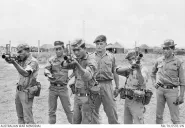
Thirteen minutes of a highland village being moved. - Special Forces Combat Patrol (US Army, August 7–11, 1964) — Internet Archive (111-LC-48202), public domain
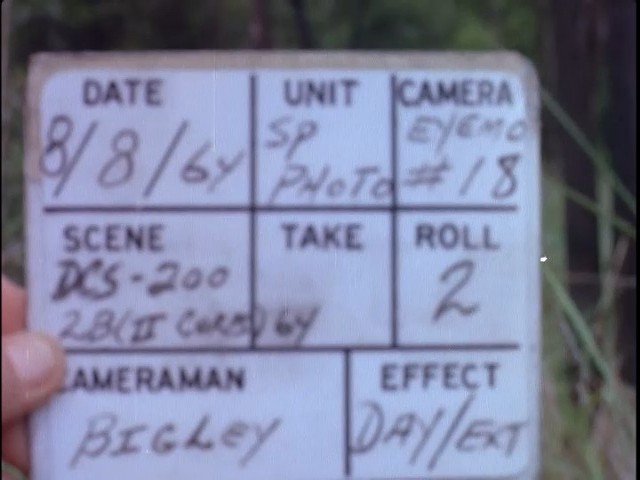
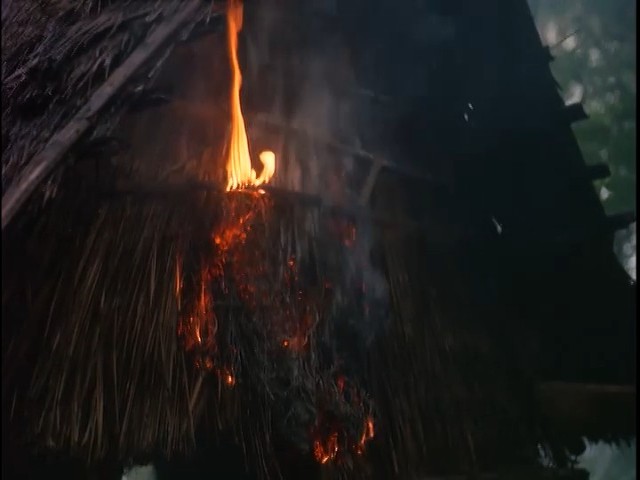
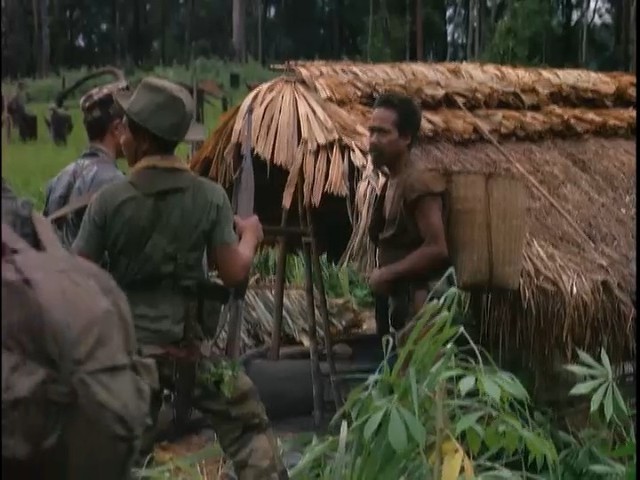
Eight silent minutes in color of a strike force patrol from the camp at Plei Mrong with two American sergeants: a river crossing, a radio message, houses set on fire, a farmer questioned, a night in another village. The shot list calls the soldiers Vietnamese; we do not know who they were. - Montagnard Congress, Pleiku, South Vietnam (US Army, June 25, 1967) — Internet Archive (National Archives 31413; a private upload), public domain
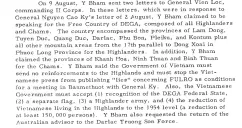
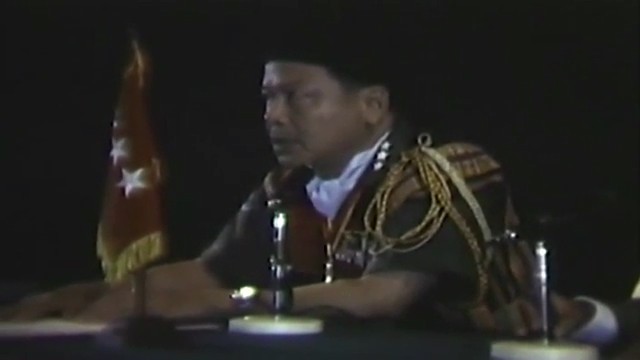
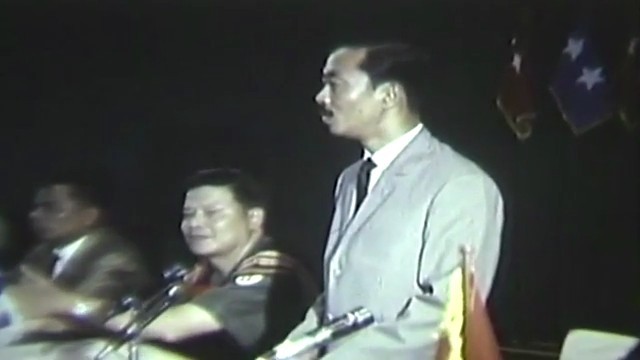
Six and a half silent minutes in color: the honor guard, General Vinh Loc of II Corps, Premier Nguyen Cao Ky, General William Peers, and the delegates in the hall. It is an extract from a longer Army reel whose other half shows artillery. - Department of Defense Staff Film Reports 66-2A, 66-21A, 66-25A and 66-28A (1966) — 66-2A, 66-21A, 66-25A, 66-28A; public domain
Newsreels for the military. 66-2A has a civic action program at the village of Ro Chai; 66-21A shows highland people taken to a resettlement camp at Dak To, which the film’s description calls a rescue from the Viet Cong; 66-28A has soldiers delivering food and clothing, and girls dancing in thanks. - Activities of the 1st Infantry Division and 1st Air Cavalry (US Army, 1968 and 1970) — 1968, 1970; public domain
In the first, soldiers enter a highland village and a medic treats children. In the second, soldiers find old highland women in the forest, put them aboard a helicopter, and burn the empty houses. - Stock Footage – Vietnam (US Navy, March 2, 1970) — Internet Archive (428-NPC-44171)
A Special Forces medic at a leper colony, and highland children at Pleiku running to a merry-go-round. - Special Ops: Mike Force Vietnam (2001) — Internet Archive; rights unclear
A 44-minute television documentary on the Mobile Strike Forces (see Mike Force and SOG). The uploader marked it public domain, which for a commercial film of 2001 we doubt. - Living in Exile (North Carolina Department of Cultural Resources, 1995) — Not online that we know of
A documentary on the Montagnards in North Carolina. Its production papers, and a DVD titled “FULRO in Cambodia,” are in the State Archives of North Carolina. - Retour à Sar Luk (Jean Lallier, 1995) — Not online that we know of
Georges Condominas’s return to the Mnong Gar village he lived in from 1948; shown at the end of the Quai Branly exhibition of 2006. - This Is My Home Now (Greensboro History Museum, 2015) — Trailer
A half-hour documentary by Mariah Dunn Kramer following four Montagnard young people in Greensboro; broadcast on UNC-TV on April 28, 2015. - Rhade public-health videos (City of Greensboro, 2020) — Internet Archive
Messages recorded in Rhade for our community in North Carolina: “Stay at home,” “What to do if you get sick,” and housing rights during the pandemic. - World Refugee Day 2025 (City of Greensboro, 2025) — Internet Archive
The city’s celebration at Hester Park on June 21, 2025, with a citizenship ceremony and music and dance; the Montagnard Dega Association is named in the description. - “Vietnam’s Montagnards Now a Minority in Their Own Homeland” (Radio Free Asia, 2015) — Internet Archive; RFA copyright
A news report of under two minutes.
Two corrections to what circulates. Paul Ham’s documentary All the Way (2010), sometimes listed as a film about highlanders who fought beside Australians, is about Australia’s whole war; we have found nothing in it about our people. And in Apocalypse Now (1979), Kurtz commands American, Montagnard and Khmer troops, but it is fiction, filmed in the Philippines, and the people in the ritual scenes were Ifugao, not Dega.

What the patrol film shows
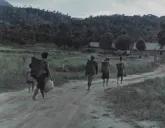
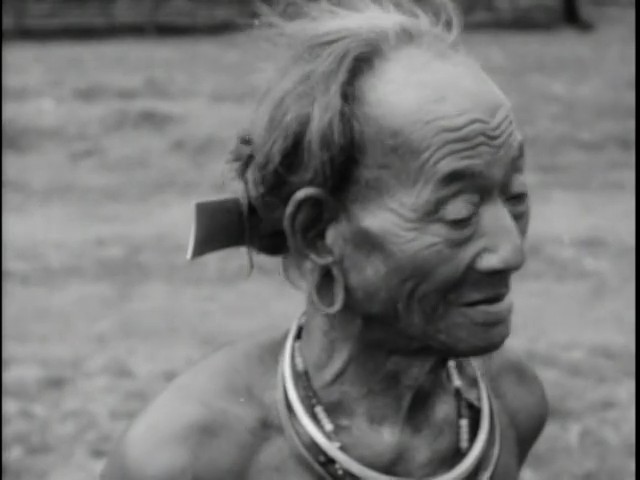
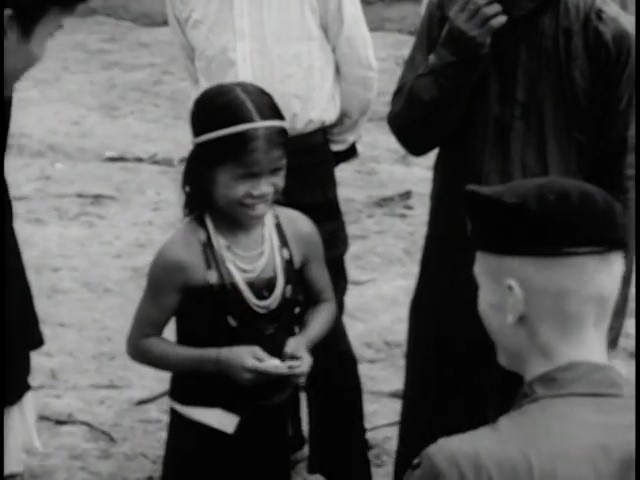
The patrol of August 1964 deserves more than a line in a table. It is eight minutes long, silent, in color, shot by an Army cameraman who slated every roll. Two American sergeants lead a company of the Plei Mrong strike force across a fast river and through the forest. In a field of maize they set fire to the houses. An interpreter questions a farmer; a man stands by a smoldering house while the soldiers move past; another walks away with a basket on his back. That night the patrol sleeps in a second village, very neat, where two women and a small child watch from a doorway. In the morning it moves on across a rice field where people are working.
The film does not say why the houses were burned, and we do not know whose they were. It is still a record: dated, placed, with the unit named. See How to document an incident for why that matters.
Published recordings
- Music of Viet Nam, selected by Phạm Duy with Stephen Addiss and Bill Crofut. Folkways FE 4352, 1965. The first half is highland and Cham music, which the Smithsonian’s notes call the music of the Degar: a Bahnar xylophone, a Bahnar gourd zither, Bahnar gongs and a Sedang mouth organ. Smithsonian Folkways.
- Chants et danses des montagnards du Viet-Nam, recorded by Maurice Bitter. Riviera 421.075, 1967; reissued in 1978 as Centre Vietnam (Musidisc 30 CO 1446). Fifteen tracks, among them a Rhade xylophone, a Sedang orchestra, Bahnar gongs and a Jarai ensemble. A digitized library copy is on the Internet Archive; it is still in copyright. Catalog entry.
- Musique Mnong Gar du Vietnam, recorded by Georges Condominas. Ocora OCR 80, early 1970s (the Paris archive dates it 1974, other catalogs 1972). Gongs, drums, mouth organs, zithers and the lithophone; Mnong Gar, Mnong Bu Nor and Maa. Most of it was recorded in 1958 in Sar Luk, Ndut Trêe Pül and Nyôong Hat; two tracks come from Cambodia in 1966, and the lithophone solo was recorded in Paris. Catalog entry.
- Viet Nam: Musiques des Montagnards. Le Chant du Monde, CNRS–Musée de l’Homme collection, CNR 2741085/86, 1997, general editor Hugo Zemp. Two CDs, 53 tracks recorded between 1958 and 1997, compiled by Tran Quang Hai and Pribislav Pitoëff from the recordings of Jacques Dournes, Georges Condominas, Anne de Hauteclocque, Geneviève de Chambure, Father Boutary and others, with a booklet of about 124 pages. It begins with our peoples, Jarai, Bahnar, Rhade, Sre, Lat and Maa, and goes on to the upland peoples of the north. Catalog entry.
- Vietnam: Music of the Truong Son Mountains. White Cliffs Media WCM-9990, 1997. Jarai music recorded in 1996 by Phong T. Nguyen and Terry E. Miller. Catalog entry.
- Viêt-Nam: anthologie de la musique Êdê. Buda Musique 92726-2, 1999. Thirty tracks of Rhade music recorded in 1997–98 by Patrick Kersalé. Catalog entry.
- Music of the Bahnar People from the Central Highlands of Vietnam. Sublime Frequencies SF 107, 2016. Recorded in Kon Tum between 2006 and 2015 by Eisuke Yanagisawa. Bandcamp.
- Gongs of the Bahnar: A Buffalo Sacrifice Ceremony, recorded by Vincenzo Della Ratta in the village of Plei Hven in 2019. Akuphone, 2024. Bandcamp.
- Music From the Mountain People of Vietnam, recorded by Vincenzo Della Ratta between 2003 and 2023. Sublime Frequencies SF129, September 5, 2025. Twenty-six tracks of Jarai, Bahnar, Rhade and Rengao music. Bandcamp.
Field recordings in the Paris sound archive
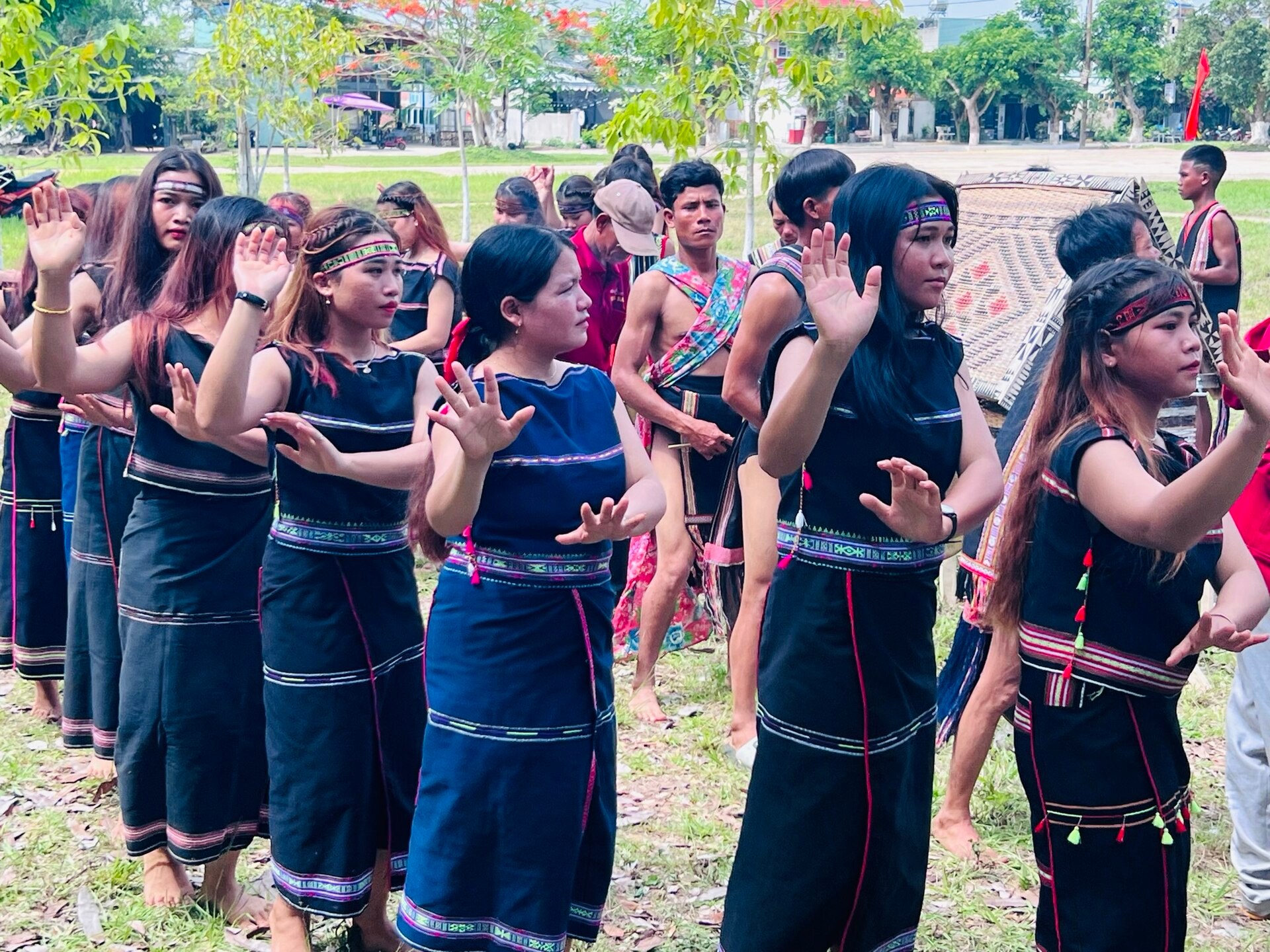
The CREM-CNRS sound archive, the sound archive of the Musée de l’Homme, holds more than 48,000 field recordings from all over the world, and its tapes are preserved at the Bibliothèque nationale de France. From Vietnam it has about two hundred collections; the ones below are ours. Many can be played online. Most may not be copied, so we link to them rather than keep them.
| Collection | Recorded by | Year |
|---|---|---|
| Jeu du lithophone mnong gar: a demonstration of the stone xylophone, three short pieces, probably recorded in Paris | Georges Condominas | 1953 |
| Musiques du Centre et Sud: Bahnar, Churu, Hre, Jarai, Koho, Mnong, Rhade and Sedang | Geneviève de Chambure | 1957 |
| Viet Nam centre: Mnong et voisins Lac, Ma et Srê: 122 recordings, more than six hours | Georges Condominas | 1958 |
| Viet Nam central: populations Cil et Laac: 961 recordings, more than 220 hours of music and oral tradition, the largest collection of all | Father Marius Boutary, of the Missions Étrangères | 1958–62 |
| Musiques des montagnards du Centre: 122 recordings of Jarai, Rhade, Sre, Maa and others | Geneviève de Chambure | 1960 |
| Musiques des Edê sur les Hauts plateaux du Centre: Rhade gongs, mouth organs, epics and laments, more than fourteen hours | Anne de Hauteclocque | 1961 |
| Musiques des Stiêng et Maa, with a Stieng sung history of the origins | Jean-Paul Lefèvre | 1962 |
| Les diverses expressions orales des Jaraï: narratives, invocations, judgments, a healer’s account, the ddong zither. One of the twelve collections of Jarai recordings he left | Jacques Dournes | 1966 |
| Voix, instruments jaraï et conversations: more than fourteen hours, including a political song, “Boni Ko Khoa,” sung by women in a village of Phu Bon in July 1967 | Jacques Dournes | 1967 |
| Récit mnong gar: the tale of Chong Trang Kon Tang Yong De, an hour and a half | Georges Condominas | 1967 |
| Vietnam, population Mnong Gar: a one-string fiddle, gongs and drum, a modern song and the lithophone | Georges Condominas | 1982 |
More can be found by searching the archive for Mnong, Bahnar or Montagnards. On the instruments and the epics themselves, see Gongs and epics; on other archives, Archives and collections.

Church recordings and radio
The Global Recordings Network gives away Bible stories and teaching recorded in Rhade and Jarai, as audio and video, including the Jesus Film in both languages. The Far East Broadcasting Company has broadcast in twenty minority languages of Vietnam since May 2001; it does not say which.
The gongs at UNESCO
UNESCO lists the “Space of Gong Culture” of the Central Highlands, seventeen communities in several provinces, on its Representative List of intangible heritage (proclaimed 2005, inscribed 2008). Its own page names the threats: the war years that broke the passing-on of the knowledge, the disappearance of old craftsmen, young people turning away, and old gongs, stripped of their sacred meaning, sold for scrap. UNESCO.
Help us add to this
We know there are films and recordings we have not found: community videos from North Carolina, church recordings, radio programs in Rhade and Jarai, family cassettes. We have not been able to search the National Archives’ own catalog, the news archives, or the interviews with Montagnard veterans at the Library of Congress. If you have a recording, or know where one is kept, tell us. Recording your own elders is the most valuable thing of all; see How to record an elder.
See also: Instruments beyond the gongs.
What we do not know. The year of The Big Picture: Operation Montagnard; its number suggests 1964 or 1965. Who the soldiers of the Plei Mrong patrol were, and why they burned the houses. The names of any of the delegates at Pleiku in 1967. What the Jarai women were singing in “Boni Ko Khoa.” Where Living in Exile and Retour à Sar Luk can be seen today.
Sources
- Internet Archive item pages and National Archives descriptions for 111-TV-607, 111-LC-48093, 111-LC-48202, NARA 31413, DoD Staff Film Reports 66-2A, 66-21A, 66-25A and 66-28A, 111-LC-52590, 111-LC-56472 and 428-NPC-44171
- State Archives of North Carolina, Military Collection XIV, Hales Collection, box 3; Musée du quai Branly, press dossier for « Nous avons mangé la forêt » (2006) — the Lallier film; Greensboro History Museum, April 25, 2015
- Paul Ham and All the Way: ABC Radio National, April 11, 2012
- Smithsonian Folkways, FE 4352 and liner notes; Discogs entries for Riviera 421.075, Musidisc 30 CO 1446, Ocora OCR 80 and CNR 2741085/86; CREM-CNRS catalog entries for every collection named; Bandcamp pages of Akuphone and Sublime Frequencies
- CREM-CNRS, home page and Vietnam listing; the Condominas and Dournes fonds
- Global Recordings Network, Rade and Jarai pages; Far East Broadcasting Company, Vietnam page; UNESCO, Space of Gong Culture, element 00120
Compiled September 2026. We list only items we have seen cataloged; an unauthorized copy of the 1997 CD circulates online and we do not link it.