






















The gongs are the voice of the highlands, but they are not the only one. Our peoples made music from bamboo, gourds, stone and a single string: xylophones, mouth organs, tube zithers, one-string fiddles, jaw harps, flutes and panpipes, and, once, from stones cut before any of our languages were spoken. Most of it was recorded by outsiders in the 1950s and 1960s, and the names survive in those recordings and in the museum cases where the instruments now sit.

The instruments and their names
The names below are as they appear in the catalog of the CNRS–Musée de l’Homme sound archive in Paris, and on the published recordings listed on Films and recordings. Spellings are the recordists’.
| Instrument | Names in our languages | Recorded |
|---|---|---|
| Bamboo xylophone | trüng (Jarai); kok (Laac) | Jarai, Gia Lai, 1963 (Dournes); Laac, 1960 |
| Mouth organ, gourd and bamboo pipes | ding nam (Rhade); rökel (Sre); kombuot (Laac); kèn rlet (Mnong) | Rhade, 1961 (Hauteclocque); Sre, 1960; Laac, 1959 |
| Free-reed pipe | ding tak ta (Rhade) | Rhade, 1961 (Hauteclocque) |
| One-string fiddle | köni (Jarai) | Jarai, Gia Lai, 1963 (Dournes) |
| Bamboo tube zither | gông (Jarai); bro (Rhade); goong (Sedang) | Jarai, Buon Kenh, 1960; Rhade, 1961 |
| Two-string zither on a gourd | ddong (Jarai) | Jarai, Gia Lai, 1963, and in Dournes’s 1966 collection |
| Zither | dding dhüt (Maa) | Maa, Lam Dong, 1960 |
| Jaw harp | goc (Rhade); gôc (Laac) | Rhade, 1961; Laac, 1960 |
| Panpipe, bundle | dding dek (Jarai) | Jarai, Gia Lai, 1963 (Dournes) |
| Flutes | ding tut, buôt (Rhade) | Rhade, 1961 |
| Bamboo gongs | ching kram (Rhade) | — |
| Stone lithophone | gôec (Mnong Gar) | Mnong Gar, 1953 (Condominas) |

The xylophone and the clapping tubes
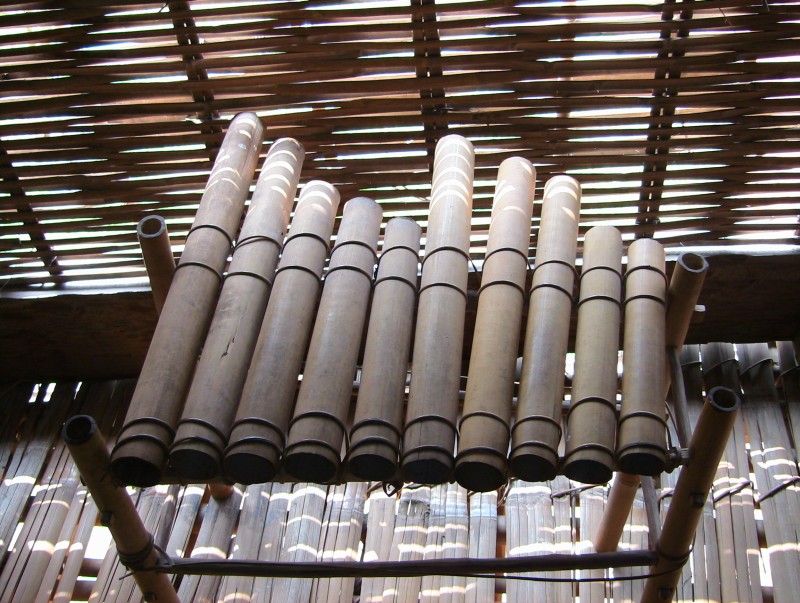
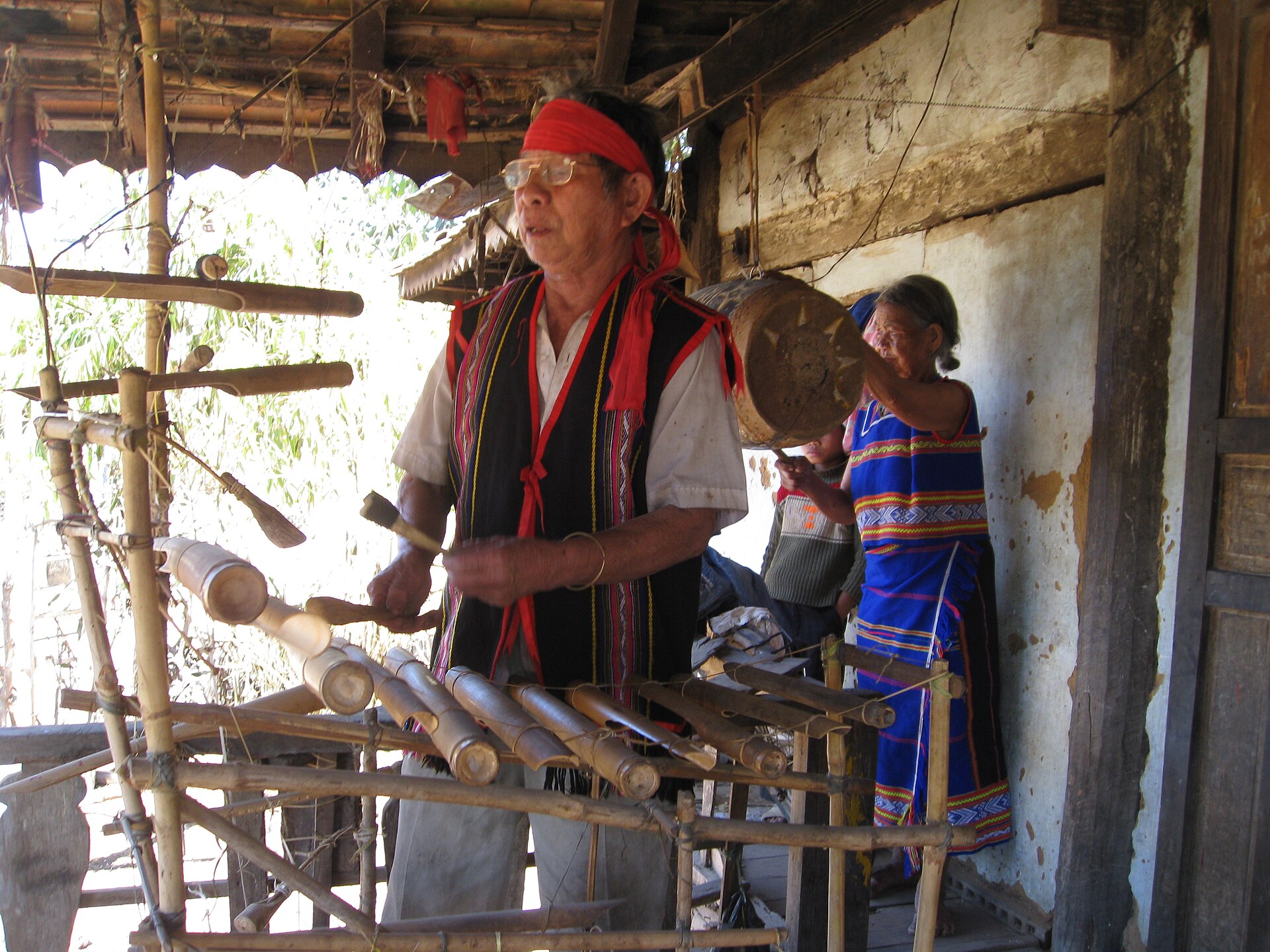
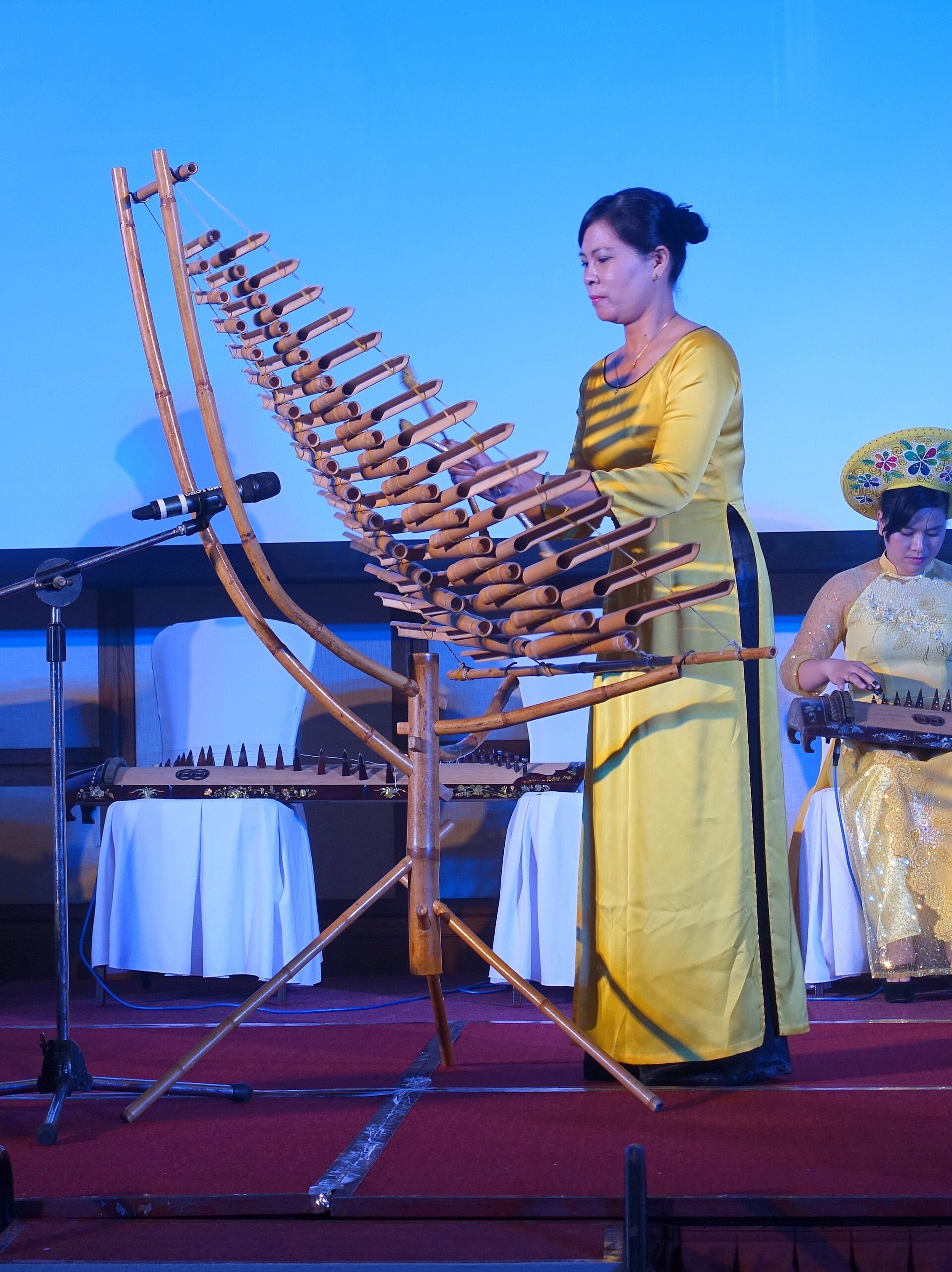
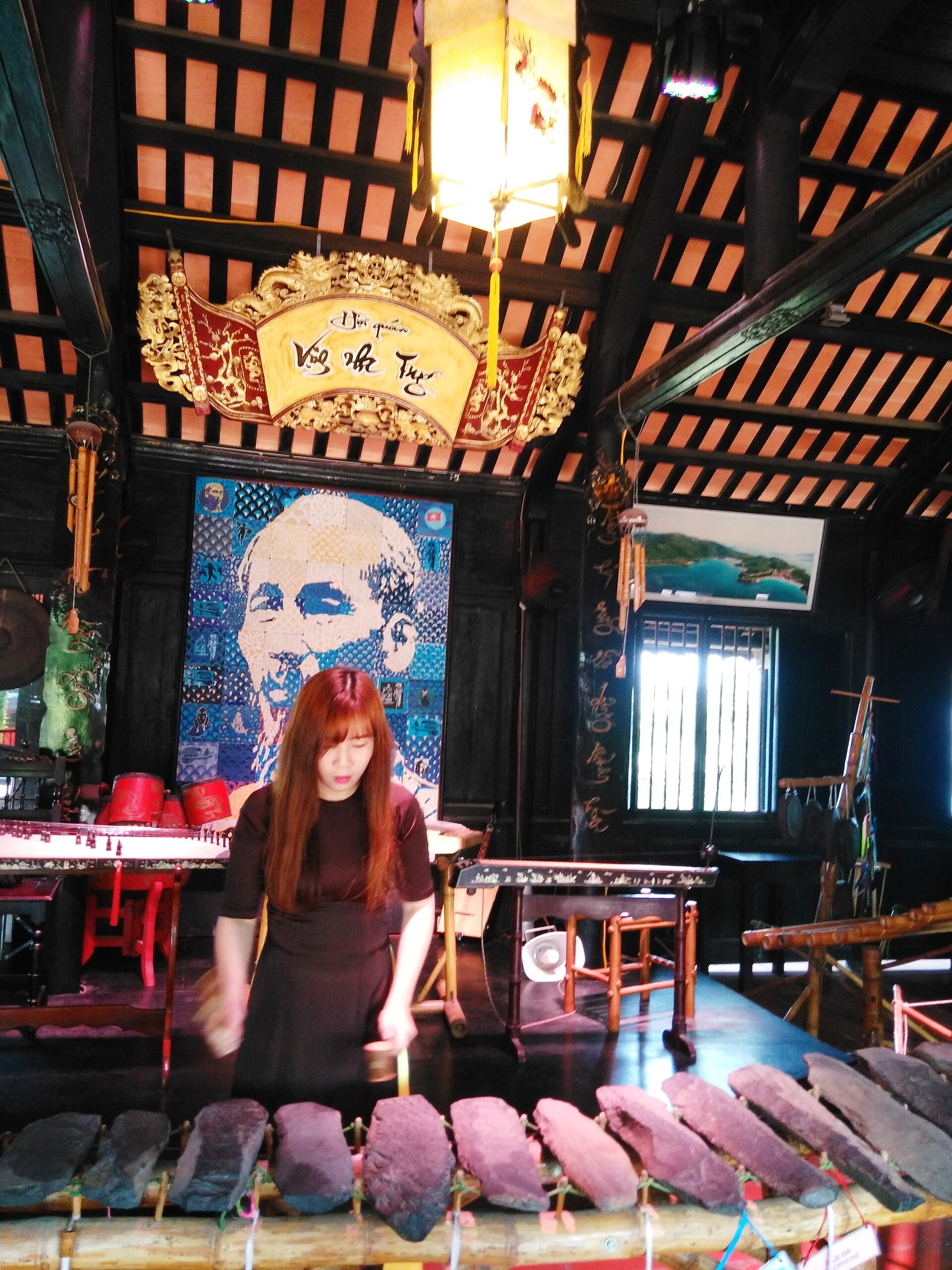
The t’rưng — the Jarai trüng, the Bahnar klongkloi — is a set of bamboo tubes of graded lengths, hung or laid on a frame and struck with sticks. Our elders say it began as a few tubes hung at the field to sound in the wind and keep the birds off the rice; on a stage it has grown into the tall curved rack of tubes in the photograph below, and has come to stand for all highland music in Vietnamese concert halls. The klông pút of the Bahnar and neighboring peoples is played without touching the bamboo at all: the player claps cupped hands in front of the open tube ends and the air sounds the note. The Rengao had a rule about an instrument of the same family, the ding but, “a musical instrument made of a series of hollow tubes”: young girls must not beat on it during the planting season, because Yang Xo’ri, the goddess of rice and the hearth, “would hear the sounds and think she was about to receive a buffalo sacrifice.” The Rengao women’s planting tool, the bamboo ding ho’noi used to cover the seed, was sacred for the same reason: it “should not be knocked against wood or struck so that it sounds like a gong.” Sound, in the highlands, was never only sound.

The gourd and the pipes
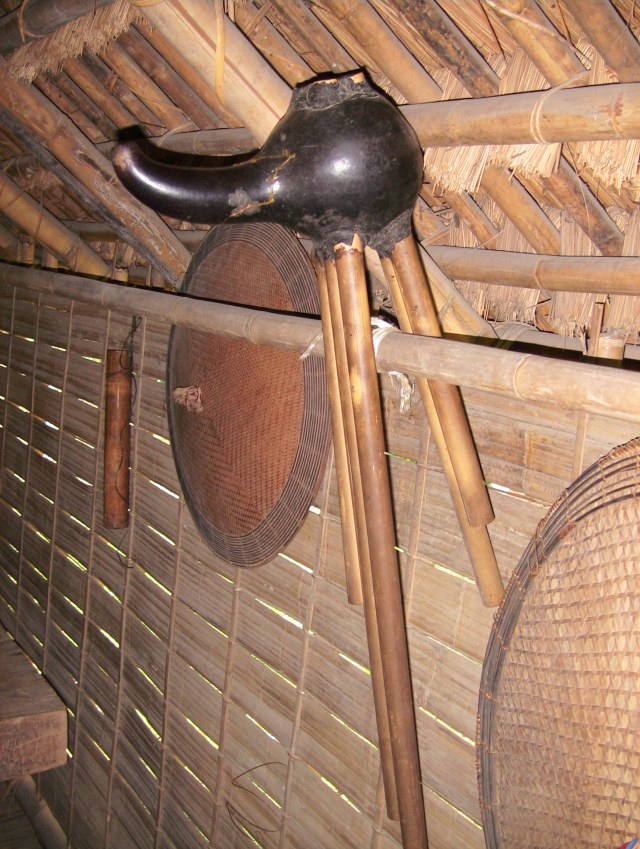
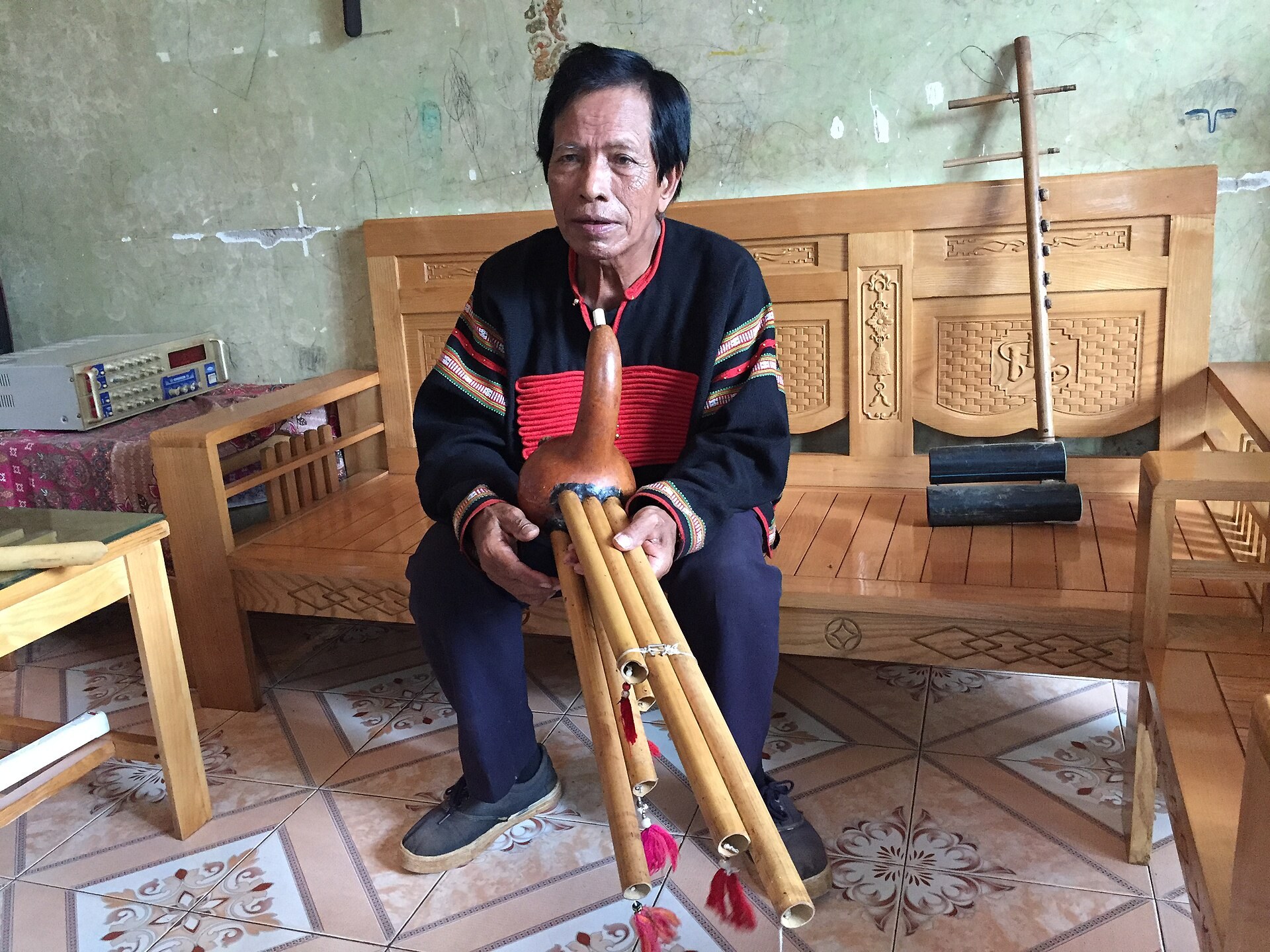
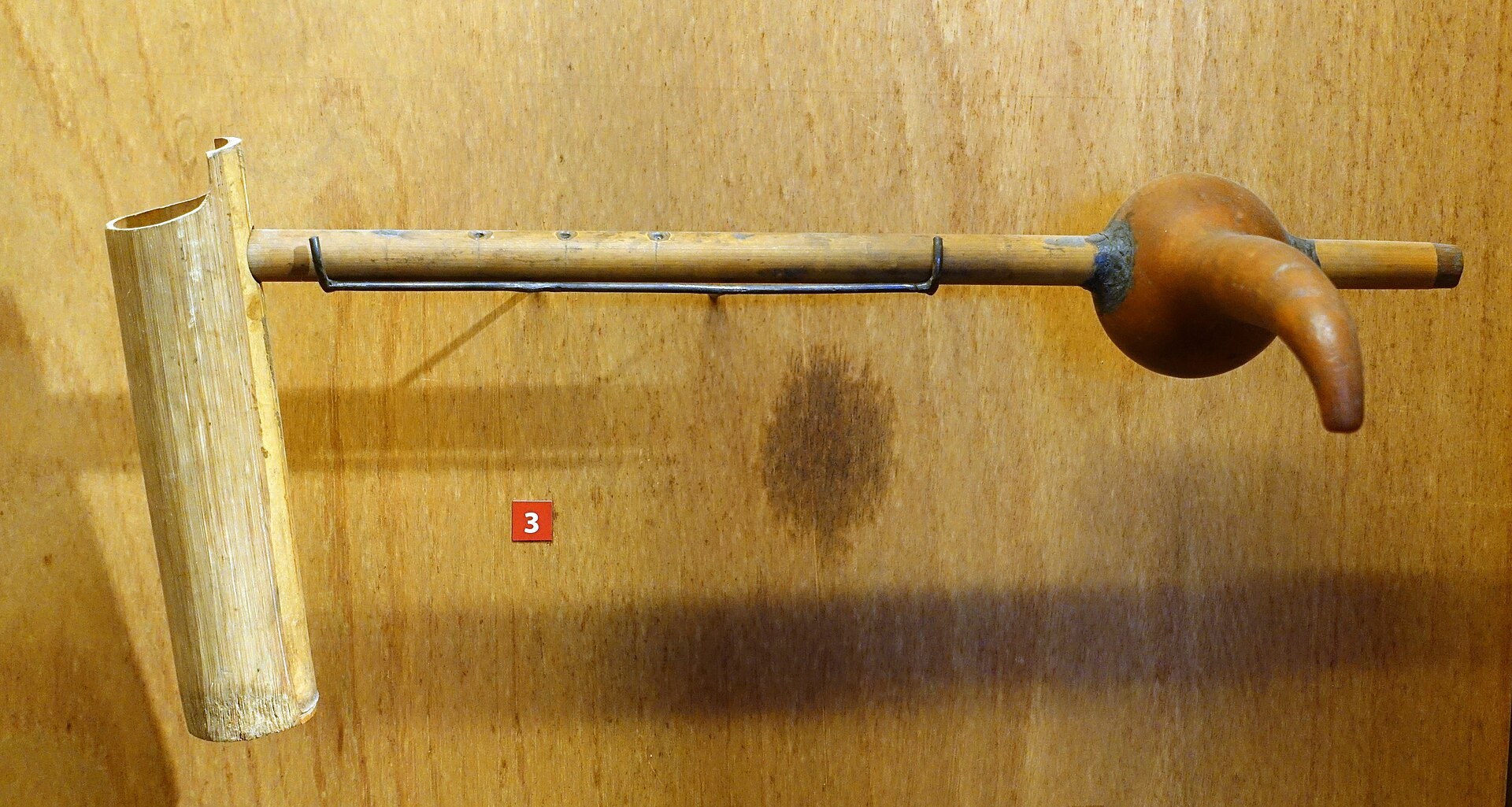
The mouth organ is the instrument the highlands share with the whole of upland Southeast Asia: a dried gourd for a wind chest, bamboo pipes with free reeds set into it, played by blowing and drawing at the gourd’s neck. The Rhade call it ding nam; the Sre, rökel; the Mnong, kèn rlet. Anne de Hauteclocque recorded Rhade mouth-organ polyphony on it in 1961, on the same tapes as the gong sets, the flutes, the bro and the jaw harp. Our own organization’s recordings in North Carolina put the ding nam beside the cing, the ding buot and the trung, played by elders who had brought the instruments in their memories.


,_Mnong_(Preh)_-_Vietnam_Museum_of_Ethnology_-_Hanoi,_Vietnam_-_DSC03254.JPG)
The tube zithers
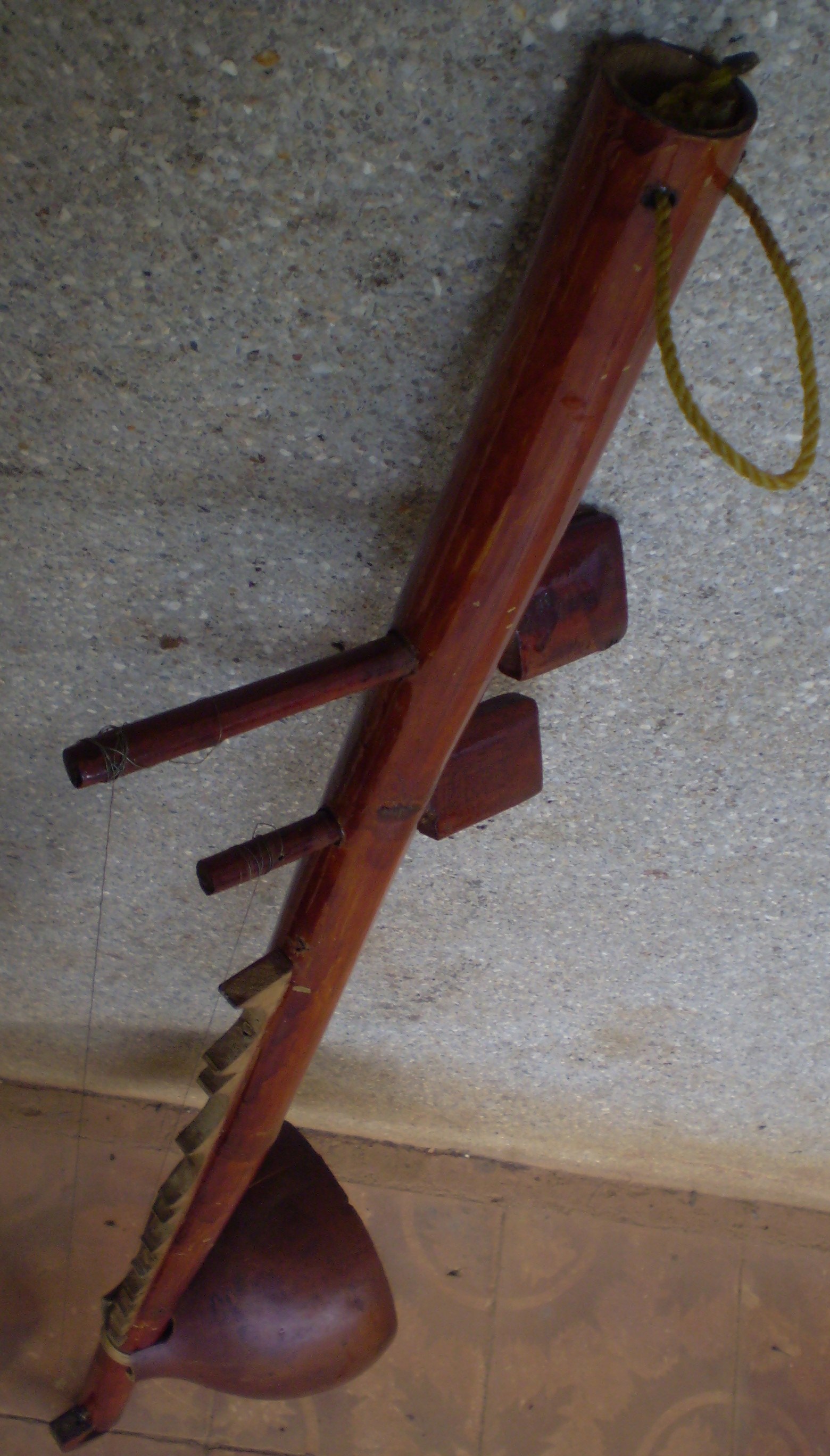
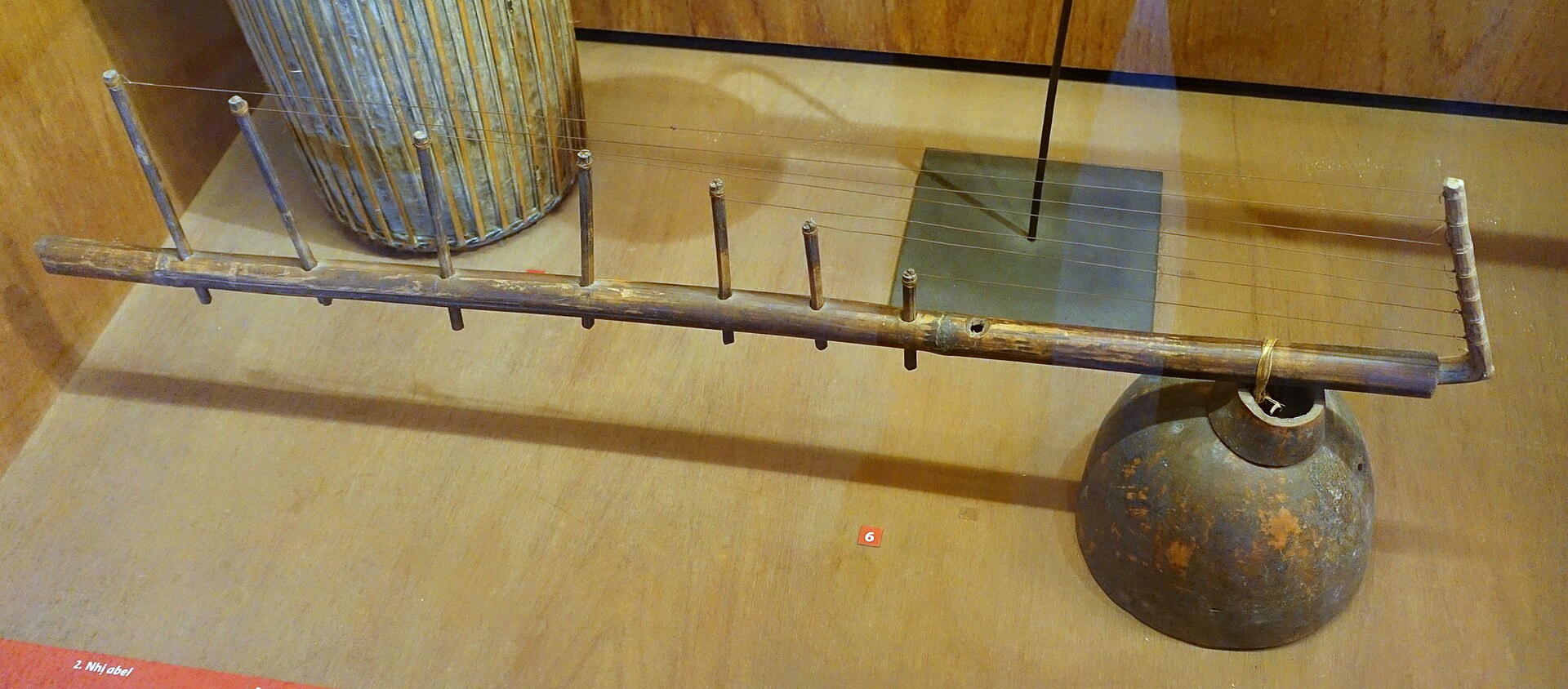
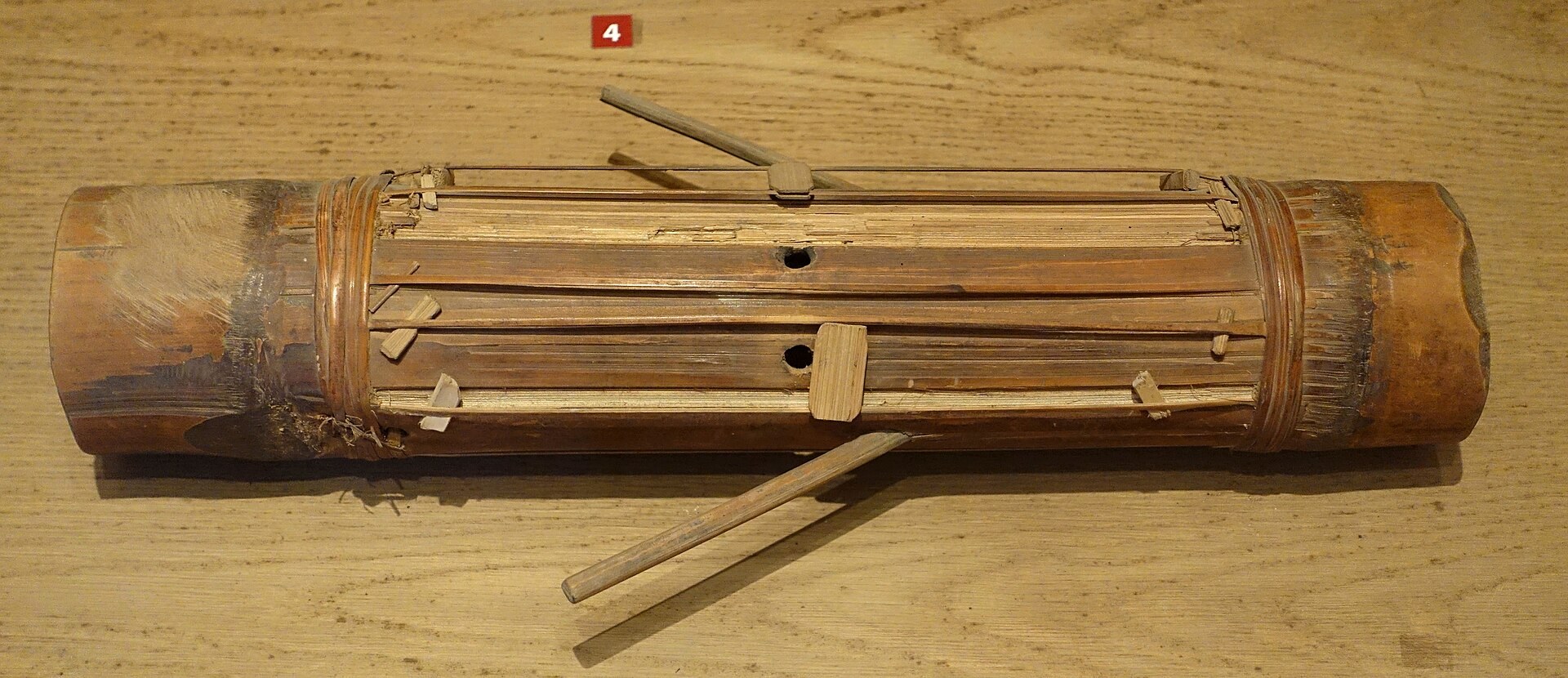
A length of bamboo, a few strings, a gourd cut in half for a resonator: the tube zither is made of nothing that has to be bought. The Rhade bro, the Jarai gông, the Sedang goong and the Bahnar zither are the same idea in four languages, and the Raglai version needs no separate strings at all — they are strips lifted from the skin of the tube itself and bridged with slivers of bamboo. The names gông and goong say what the instrument is for: it plays the gong tunes, for one person, on an evening when the village is not gathered.


_-_Vietnam_Museum_of_Ethnology_-_Hanoi,_Vietnam_-_DSC03316.JPG)


The gongs in bamboo
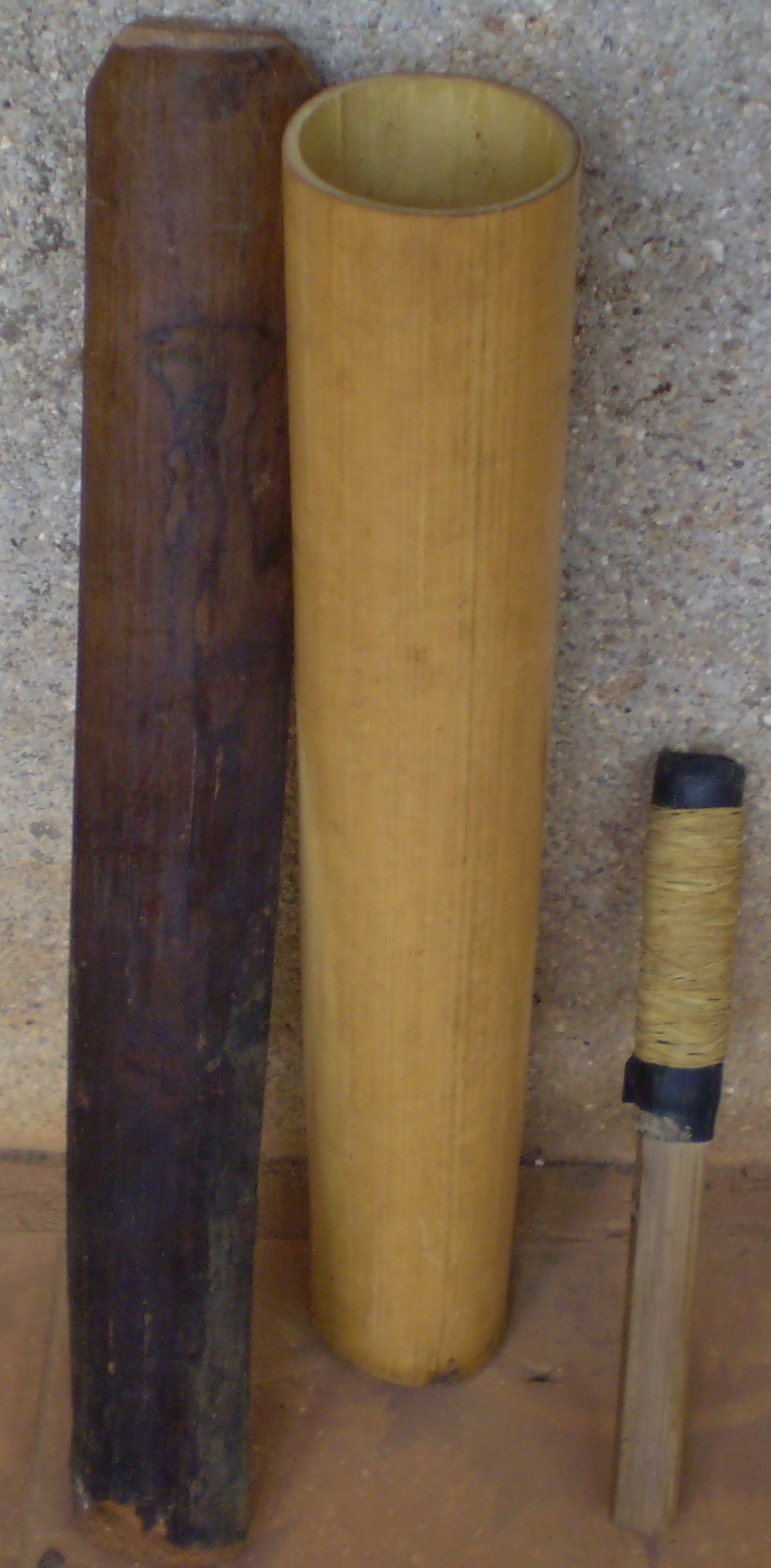
The Rhade also made the gong set itself in bamboo. The ching kram is a set of tubes, each cut to the note of one gong and struck with a stick, so that the music of the ensemble can be played, learned and rehearsed without bronze. It is the instrument of a people rich in music and, for most of its history, poor.

The stone that sings
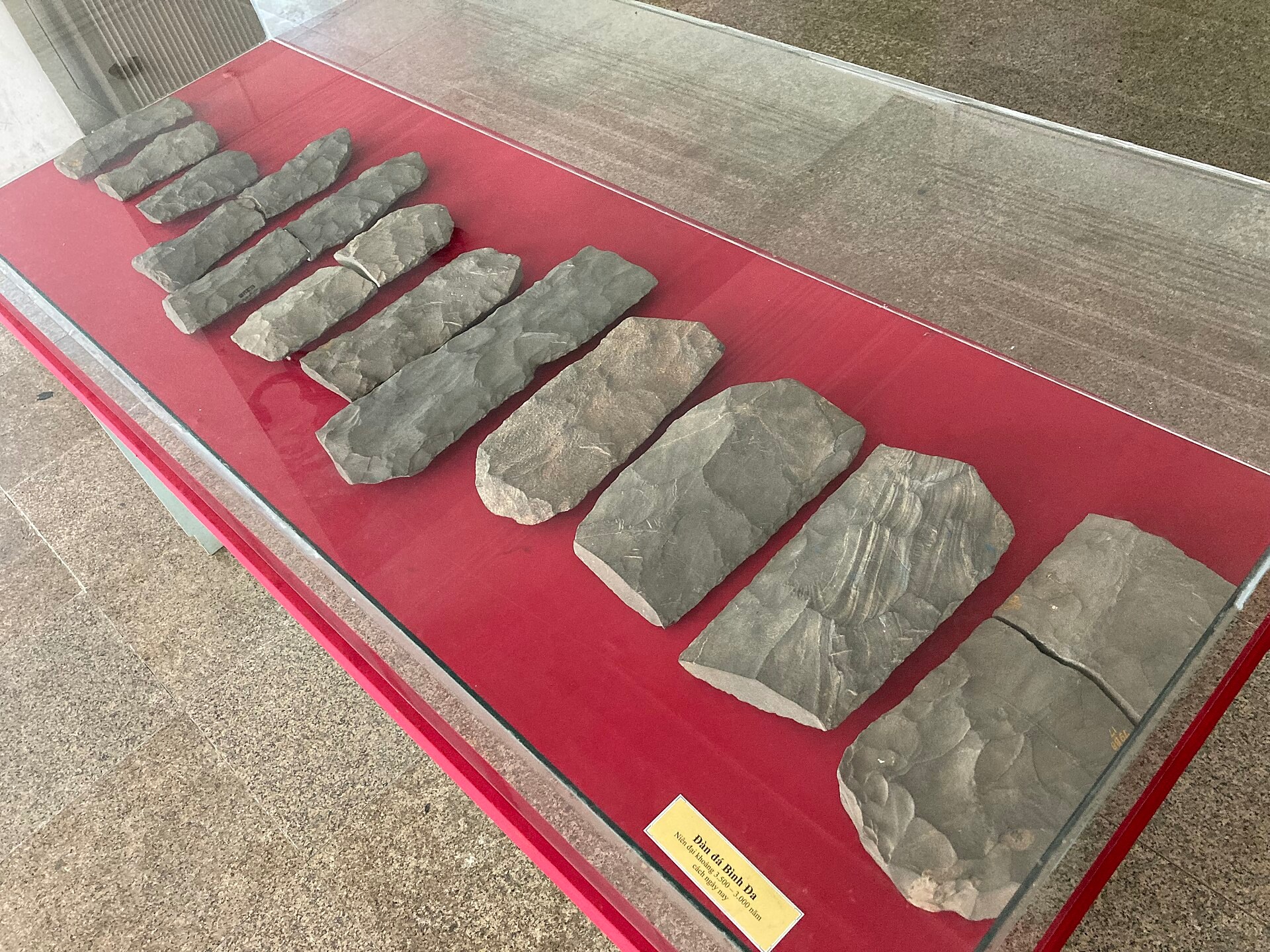
On February 2, 1949, at the Mnong Gar village of Ndut Lieng Krak in Darlac, laborers cutting a track uncovered eleven large bars of cut stone. Georges Condominas, who was living among the Mnong Gar, sent them to the Musée de l’Homme in Paris, where André Schaeffner recognized ten of them as the bars of a lithophone, a xylophone of stone, from a time before metal: the shortest about 65 centimeters, the longest nearly 102, the heaviest almost twelve kilograms. It is among the oldest instruments known in the world. In 1953 Condominas recorded a Mnong Gar player on a stone set, the gôec, and in 1974 a Paris musician recorded a solo on the eleven Ndut Lieng Krak stones themselves for the OCORA record of Mnong Gar music. Other sets have since come out of the ground in Khanh Hoa and Dong Nai; the Binh Da set, below, is dated to about three thousand years ago. The fuller story is on Gongs and epics, and Condominas’s report is in our library.
.jpg)

Where to hear them
Several of the recordings in the table are on Viet Nam: Musiques des Montagnards (Le Chant du Monde, 1997), and the catalog entries of the Paris archive are free to read; some items can be played online. Hauteclocque’s eighty-three Rhade recordings of 1961 and Dournes’s twenty-five Jarai recordings of 1966 are cataloged item by item, with the instrument named in each title. Links to all of them are on Films and recordings.
Help us
The catalog gives names and places, not how the instruments were made or when each was played. If you or your parents make or play any of these, we would like to record how, and in whose words. See How to record an elder.
See also: Before history, Gongs and epics.
Sources
- CREM-CNRS sound archive: Viet Nam: musiques des Montagnards (1997); Musiques des Edê, Hauteclocque, 1961 — the instrument names ding nam, ding tak ta, ding tut, cing, bro, buôt, goc; Les diverses expressions orales des Jaraï, Dournes, 1966; Jeu du lithophone mnong gar, Condominas, 1953; the 1974 solo on the Ndut Lieng Krak stones
- Department of the Army, Minority Groups in the Republic of Vietnam, Pamphlet 550-105 (1966), DCHO library, also on the Internet Archive — the Rengao chapter on the ding but, Yang Xo’ri and the ding ho’noi
- Georges Condominas, “Le lithophone préhistorique de Ndut Lieng Krak,” BEFEO 45 (1952), DCHO library — the find, the date and the measurements
- Terry E. Miller and Sean Williams, eds., The Garland Handbook of Southeast Asian Music (2008), p. 300 — the t’rưng and the Bahnar klongkloi, as cited on Wikipedia
- Our own records — the recordings made in North Carolina
Compiled September 2026. The description of how the t’rưng, the klông pút and the zithers are played is our own; the names and recording details are the archive’s.