







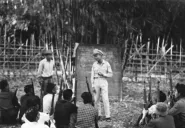
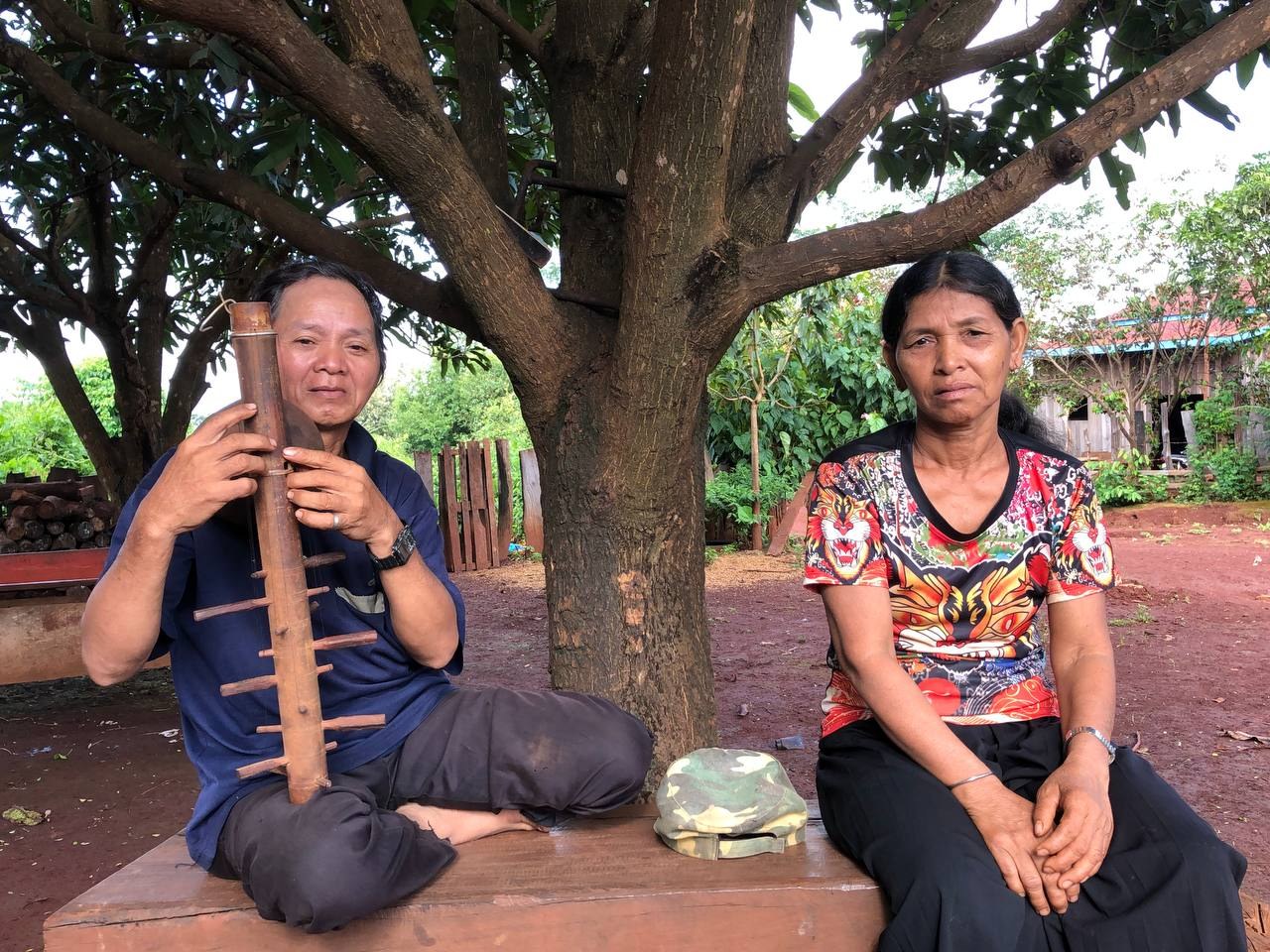
Most of our history was never written down. It lives in the memories of people now in their seventies, eighties and nineties, in North Carolina, in Cambodia and in the highlands, and when they die it goes with them unless someone records it. This is a practical guide for families who want to do that. It covers asking permission properly, recording well with a phone, keeping the files safe for fifty years, and the places a recording can go if the family wants it heard beyond the house.

Why now
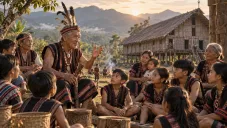
The generation that remembers the highlands before 1975 is the last one that can tell it firsthand. The men who went into the forest with FULRO, the women who kept villages fed through the resettlements, the people who walked to Cambodia in 2001 and 2004: each of them holds pieces of the record that no archive has. Other communities have faced the same deadline. The Japanese American archive Densho began recording people who had been interned in the Second World War camps in the 1990s, and its founders speak of a saeculum, the span from an event to the death of the last person who lived it. For much of our history that span is closing.
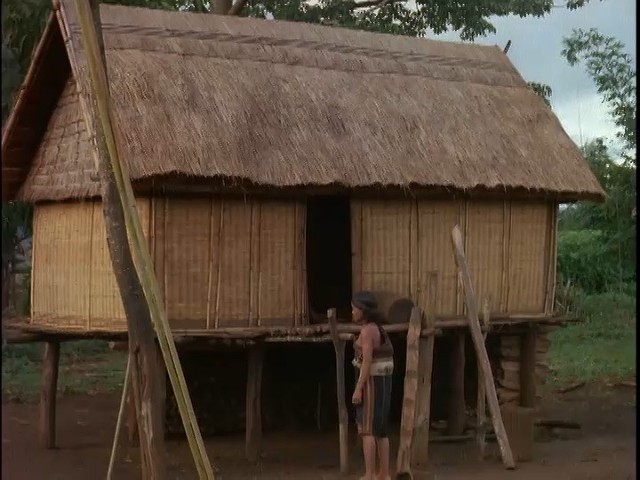
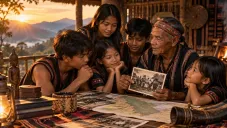
Nobody needs to be a historian to do this. A grandchild with a phone, a quiet afternoon and some patience can make a recording that will matter more in fifty years than most of what is written about us now. Young people interviewing their own relatives is exactly how Brigham Young University’s Cambodian Oral History Project gathered more than 5,000 interviews after 2016.
Before you start
- Ask, and explain. Tell the elder what you want to record, why, and who might hear it, in the language the elder understands best. Ask whether the elder agrees. Ask again at the end, when the elder knows what was said.
- Decide who it is for. Family only? The wider community? DCHO? A library? The elder decides. An elder can change that decision later, but once a recording has been shared publicly or given to an archive it may not be possible to pull it back completely. Say so before you start.
- If a form is not possible, record the consent. Many elders cannot read an English form, or any form. A spoken record will do: explain the purpose and the risks on the recording itself, and record the elder’s answer. Oral historians accept this where a written form is not possible.
- Think about safety. If the elder, or anyone the elder names, has family in Vietnam, a recording that names people or places can put them at risk. The danger is shared: people who lived and worked with the speaker can be exposed too. Read Reporting safely first. When in doubt, record for the family only, or agree to use a different name for the speaker.
- Use the elder’s language. Record in the language the elder speaks best: Rhade, Jarai, Bahnar, Koho, Mnong, Vietnamese, French. Translation can come later; the original is the record.
- Prepare, but do not script. Know the outline of the elder’s life before you arrive. Write a few questions, then let the elder talk. What the elder thinks matters is often not what you planned to ask.
Who owns the recording
In the United States the words belong to the person who speaks them. Copyright arises the moment the words are recorded, lasts for the speaker’s life plus seventy years, and passes to the heirs by will or by the ordinary rules of inheritance. That has a practical consequence. If an elder dies without having said, on paper or on the recording, what may be done with the interview, the decision falls to the heirs, who may not agree with each other or with what the elder wanted.
So settle it while the elder is alive. A short signed release, or a recorded statement, should say who may hear the recording, whether it may be quoted or published, whether it may go to a library, and whether any part is closed, for example until a certain year or until named people have died. Give the elder a copy of whatever is agreed. The organizations below each have their own agreement, and they differ a great deal; see Where it can go.
Equipment
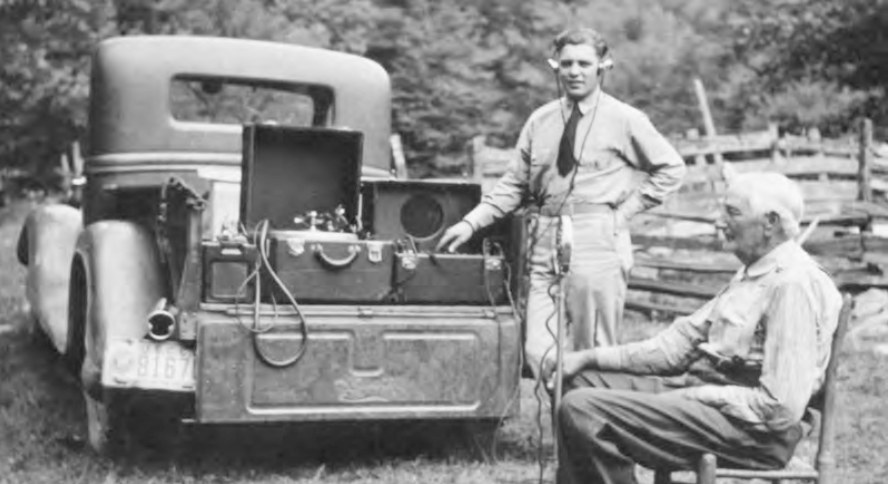
A phone is enough, and archives now hold many recordings made on phones. A few settings make a real difference:
- Best format. If the recording app lets you choose, pick WAV (sometimes shown as “lossless” or “uncompressed”) at 48 kHz or higher. MP3 and similar formats throw away part of the sound to save space. Archives prefer the uncompressed file, and the Library of Congress’s own field guide, Folklife and Fieldwork, in our library, recommends WAV at 96 kHz and 24 bits.
- Do not convert. If the phone can only make compressed files, keep exactly what it produced. Converting later cannot restore what was lost, and it makes a second, slightly different file.
- Distance and quiet. Put the phone on a soft surface about 6 to 10 inches from the speaker, in a room without a television, fan or rooster outside the window. Turn on airplane mode so a call does not cut the recording.
- Test. Record a minute, then play it back through headphones before you begin properly.
- Video or voice. Video is valuable, but many elders speak more freely to a small voice recorder than to a camera. Ask which the elder prefers. Filming only the hands, a photograph or the room is a good compromise when a face should not be shown.
- Length. Agree beforehand roughly how long a session will last, stop when the elder tires, and come back another day. There is no right length; some projects plan for two hours, others for half an hour.
At the start of each recording
Before the first question, say aloud who is speaking, who is listening, the full date, the place and the subject. For example: “This is Ksor H’Linh recording her grandmother, H’Blong Nie, on the fifteenth of March 2027, at her home in Greensboro. We are talking about her childhood near Buon Ma Thuot.” Say “at her home” rather than the street address. This spoken label tests the equipment and stays with the file even if its name is lost. If the elder has agreed to the recording on tape, this is also the moment to record that agreement.
What to ask
Questions that begin with how, what and why bring longer answers than questions that can be answered yes or no. Old photographs, a Bible with names written inside, a blanket, a crossbow, a letter: objects bring memories back, so ask the family what they have and put it on the table.
- Beginnings
- Where and when were you born? Your village, your mother’s clan, your parents’ names. What was the village like? Who were the elders when you were a child?
- The rice year
- How did your family farm? Which fields, which crops, which months? What rites were held, and who led them? See The rice year.
- Customs
- Marriage, the longhouse, the gongs and jars, the healers, the dead. Songs, stories and epics the elder remembers. Ask the elder to sing or tell one, and let the telling run as long as it runs.
- The wars
- What happened to your village? Were you moved? Did you or your relatives serve, and with whom? Who died, and how?
- After 1975
- The camps, the land, the church, the forest. Who was arrested? What happened to them?
- Leaving
- How did you leave? Who helped? What did you carry? What was it like to arrive?
- For the future
- What do you want your grandchildren to know? What should never be forgotten?
While you record
Let silences run. An elder who stops is often thinking, not finished, and the next thing said after a long pause is frequently the most important. Ask for names, places and years, but do not correct the elder or argue; if something does not match what you know, ask about it gently later, or simply note it. Memory is shaped by everything that has happened since, and that is part of what an oral history records.
The elder may stop at any time, refuse any subject, take a break, or ask for something to be said off the record, and you should say so at the beginning. If a painful memory comes, do not push, and do not end the visit abruptly either: stay, talk about something else, and make sure the elder is not left alone with it. Recording people who have lived through what our elders lived through is hard on the person listening too. Talk to someone afterward.
Afterward
- Name the file in a way that sorts: family name, elder’s name, date written year-month-day, session number. For example
Nie_HBlong_2027-03-15_01.wav. Photographs from the same visit get the same start. - Keep three copies, on at least two kinds of storage, with one outside the house: for example the computer, a drive kept in the house, and a drive kept by a relative in another town. Every five years or so, copy everything onto new drives. Phones get lost and drives fail silently.
- Write a short note to keep beside the file: who spoke, who recorded, the date and place, the language, what was covered, and what the elder agreed to. The fifteen standard fields librarians use (Dublin Core: title, creator, subject, description, date, language, rights and so on) are a good checklist if you want one.
- List the names. Write down every person, village, river and mountain mentioned, with the spelling the elder prefers, while the elder can still help. A name heard once on a recording is often impossible to spell correctly later.
- Give a copy to the elder and to the family, and give the elder the chance to add to or correct what was said.
- If the family agrees to share it with us, tell us what you have and what the elder agreed to. We will not publish a name, a face or a voice without consent, and anything that goes into this library follows our sources and method.
Songs, epics and prayers
A recording of an elder singing or reciting may be the most valuable thing a family makes. The Rhade kept their history in long chanted epics, the khan; the best known, the story of Dam San, was written down in French by the colonial administrator Léopold Sabatier and published in 1927 with drawings by Maurice de Becque, but what he printed was one telling, in translation. The missionary Jacques Dournes recorded Jarai and Sre tellers from the late 1940s to the end of the 1960s; his tapes survive in two archives in Paris, and almost nobody in our community has heard them. A grandmother’s version of a story, in her own words and her own tune, is a different and equally real text.
Some songs and prayers are not meant for everyone. If the elder says a song belongs to a family, to women, to men or to a ceremony, record that alongside it and respect it. Indigenous archives use simple labels for this, such as “family only” or “community use only”, and so can you.
If the story is evidence
If an elder describes a killing, an arrest, torture, or land taken by force, the recording may be evidence. Keep the original file exactly as it came from the phone, and never edit it; if you need a shorter version, make it from a copy. Note when and where the recording was made and who was present, and read How to document an incident. The Berkeley Protocol on digital evidence, in our library, explains why the untouched original matters.
Where it can go
A recording kept by the family is already worth making. If the elder wants it heard more widely, these are the main choices, and their terms differ:
- DCHO
- We keep recordings the family chooses to share with us, on the terms the elder agreed to, and we can help with translation and with the list of names. We do not ask for copyright.
- Texas Tech University
- The Vietnam Center and Sam Johnson Vietnam Archive runs an oral history project open to “anyone from any country”, including former allies of the United States, and can interview by phone or online. Before an interview it asks for a signed agreement. A copy of that agreement we have seen transfers the copyright to the archive, so read the current version before signing.
- Veterans History Project
- Run by the Library of Congress, it collects veterans’ stories, but only from people who served in the United States armed forces, and only in English. Its field kit, in our library, is plain: do not interview veterans of other countries’ forces, and do not submit interviews in other languages. A highlander who served with the CIDG, the Mike Forces or FULRO is therefore not eligible; one who later served in the US military is. American veterans who served alongside our people are eligible, and their interviews often say a great deal about the highlands. The veteran keeps the copyright.
- StoryCorps
- Recordings made with its app or online service go to the American Folklife Center at the Library of Congress. Check the privacy setting before recording anything sensitive.
Our own community has begun this work too. At the 2021 symposium of the Montagnard and Asian community research network in North Carolina, Melina Ksor and H’Thu Nie presented oral histories of older Montagnard refugees, and the network’s later meetings have asked who should control the research made about us. That question applies to every recording: it belongs first to the elder, then to the family, then to the people.
Sources
- Oral History Association, Principles and Best Practices (adopted October 2018; complete edition 2025): core principles, best practices, “For Participants in Oral History Interviews”, statement on ethics, archiving, and Guidelines for Social Justice Oral History Work (2022)
- Stephen Winick and Peter Bartis, Folklife and Fieldwork: An Introduction to Cultural Documentation, 4th ed. (American Folklife Center, Library of Congress, 2016), in our library
- Marjorie Hunt, Smithsonian Folklife and Oral History Interviewing Guide (2003); National Park Service, “Case Study: Interviewing about Difficult Topics” (2023); Voice of Witness, “Trauma-Informed Storytelling Practices”
- UN Office of the High Commissioner for Human Rights, Manual on Human Rights Monitoring, chapter 11, “Interviewing” (2011)
- IASA TC-04, key digital principles; Library of Congress, Personal Archiving: Audio; Dublin Core Metadata Element Set 1.1
- US Copyright Office, Circular 1, Copyright Basics (2021)
- Library of Congress, Veterans History Project, collections policy (2017, updated 2022) and Field Kit (2021), in our library; Texas Tech University, Vietnam Center and Sam Johnson Vietnam Archive, Oral History Project, participation page and interview agreement; StoryCorps
- Densho, oral history collection; Wendy Hanamura, “What happens when everyone who experienced an event is gone?”, Internet Archive blog (September 26, 2019); Brigham Young University, Cambodian Oral History Project; UC Irvine, Viet Stories protocol packet (proper names form, file naming)
- Stephanie Russo Carroll et al., “The CARE Principles for Indigenous Data Governance”, Data Science Journal 19 (2020); Local Contexts, Traditional Knowledge Labels
- Léopold Sabatier, La Chanson de Damsan (1927), Humazur, Université Côte d’Azur; Institut de recherche France-Asie, inventory of the Jacques Dournes papers (2022)
- Minority Groups in the Republic of Vietnam (US Army, 1966), in our library — the Rhade epics
- Montagnard/Asian Community Disparities Research Network, 2021, 2024 and 2026 symposia
Compiled September 2026. The example names in the section on the spoken label are invented.