











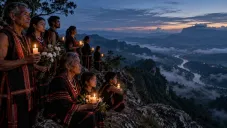

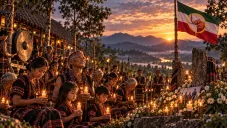
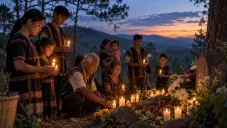


Much of what the Dega know was never written down. It was played on gongs and sung through the night. In 2005 UNESCO recognized the gong culture of the Central Highlands as a masterpiece of the world’s intangible heritage, and in 2008 put it on the Representative List. This page is about what that heritage is, about the stone instrument at Ndut Lieng Krak that is older than any of it, and about the long epics that carry our history, our law and our idea of a hero.

The gongs
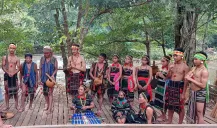
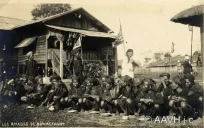
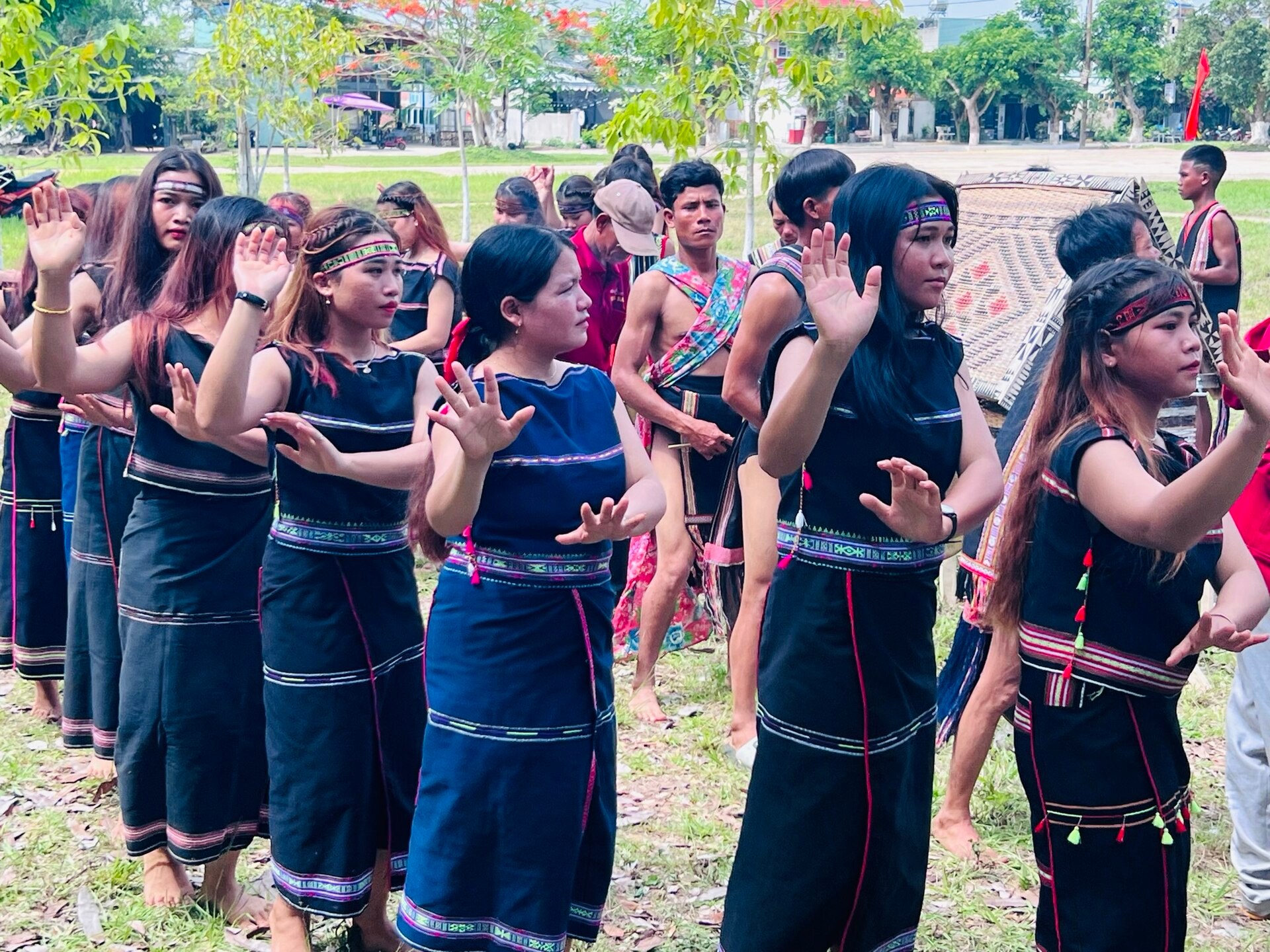
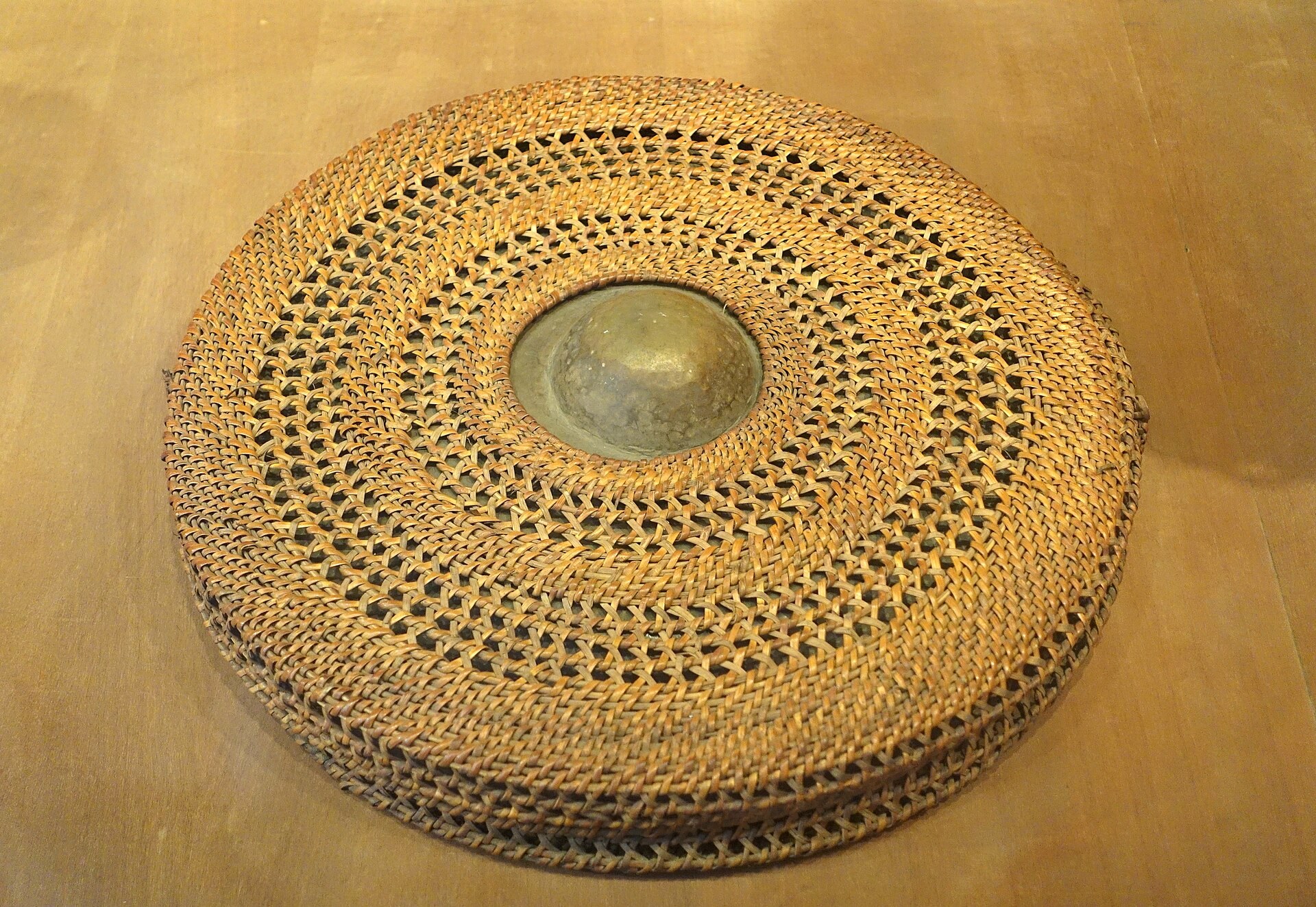
A gong ensemble in the highlands is a set of three to twelve bronze gongs, each between about 25 and 80 centimeters across, each tuned to a note and each carried by one player. Whether the ensemble is men or women depends on the people and on the occasion: the Bahnar team in the photograph above is women; among the Rhade, playing the gongs is a man’s task at the ceremonies, with the flute and the drum. Every family owned at least one gong, and a family’s gongs and jars were its wealth and its standing. Among the Rhade, gongs, jars, cattle and rice were lineage property and belonged to the women of the house; among the Hre, a rich household of fifty was described as owning thirty or forty sets. A gong was a unit of value as well as an instrument: under Rhade custom a woman found guilty of an illegal abortion paid a blood price of one flat gong.
The gongs were played at the blessing of the rice, at the new rice, at the buffalo sacrifice, at a marriage and at a death. The Hre announced a death by sounding them; among the Bahnar the gong players led the funeral procession; among the Jeh, when a buffalo was sacrificed, the village sounded the gongs through the night. The ensemble was, in effect, the way a village spoke to the spirits and to itself. UNESCO’s description puts the belief exactly: “Behind every gong hides a god or goddess who is all the more powerful when the gong is older.”
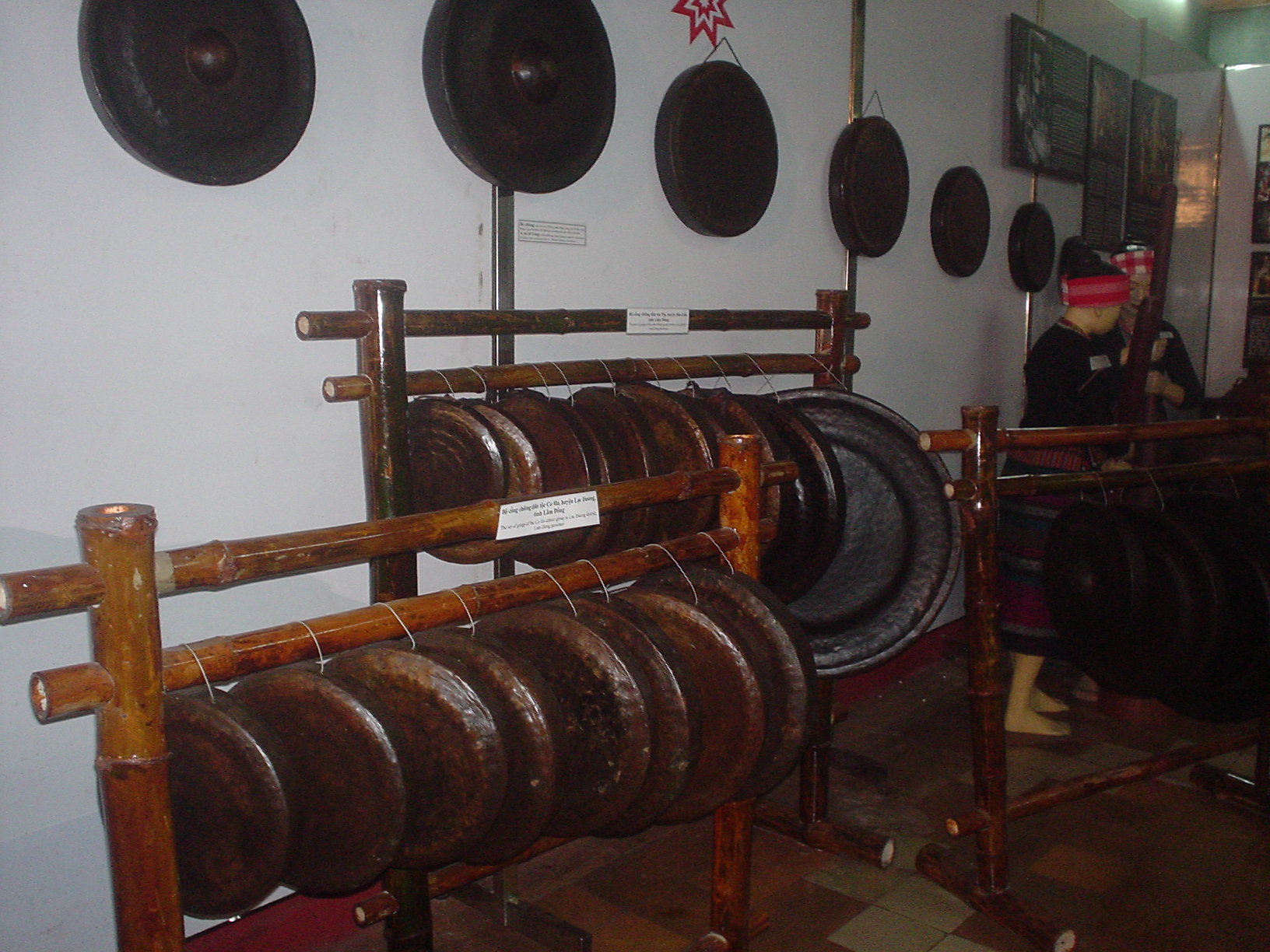

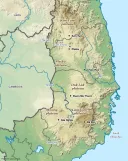
In 2005 UNESCO proclaimed the Space of Gong Culture in the Central Highlands a Masterpiece of the Oral and Intangible Heritage of Humanity, and in 2008 inscribed it on the Representative List. The inscription covers “several provinces and seventeen Austro-Asian and Austronesian ethno-linguistic communities” of the plateau — ours. UNESCO’s own listing names the threats plainly. Transmission “was severely disrupted during the decades of war during the last century.” The economy that gave the gongs their meaning is being replaced. The problem “is aggravated by the disappearance of old craftsmen and young people’s growing interest in Western culture,” and, “stripped of their sacred significance, the gongs are sometimes sold for recycling or exchanged for other products.”
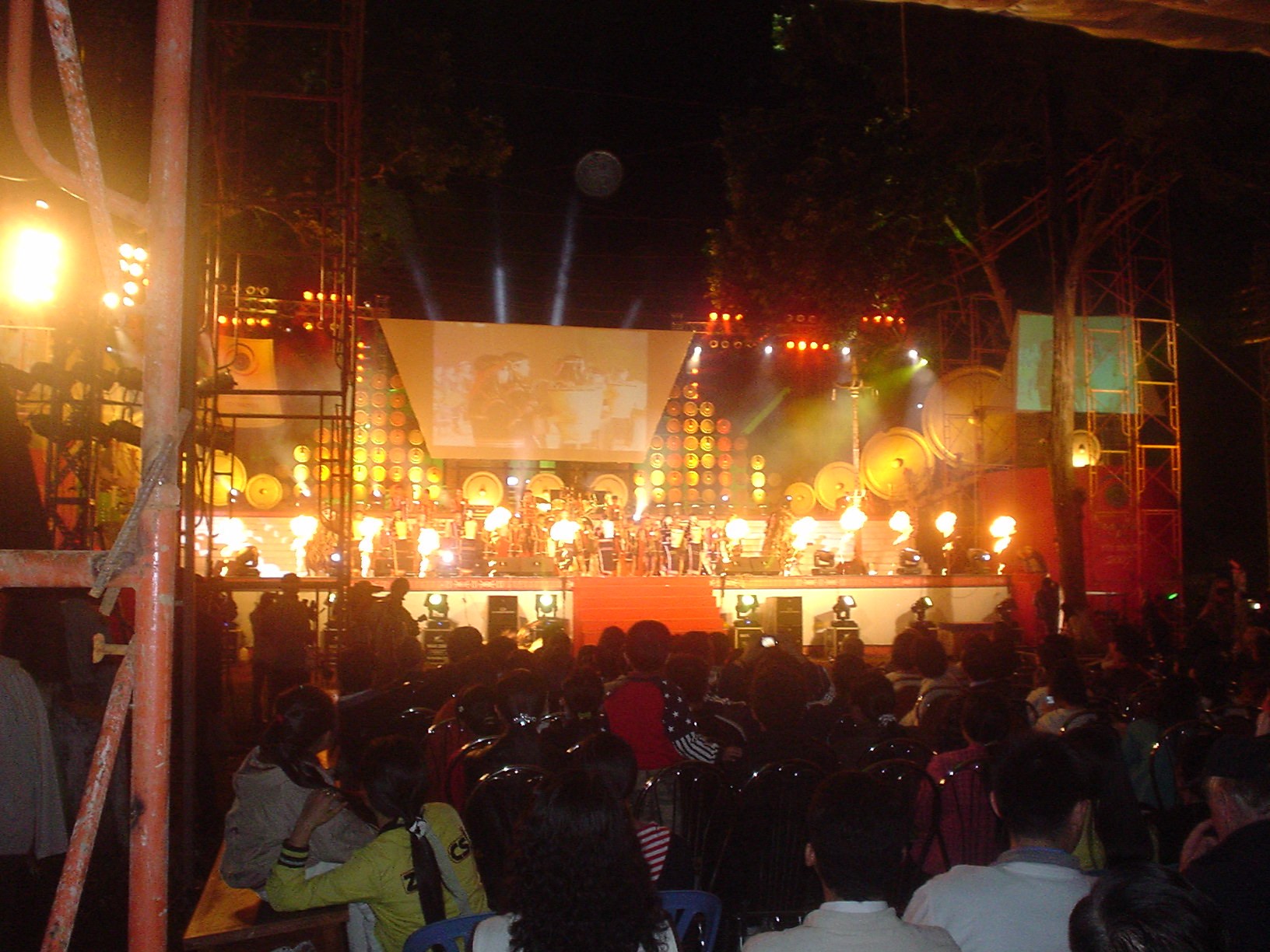

There is an irony we should state. The recognition was sought and is managed by the Vietnamese state, which presents the gongs as national heritage while restricting the religious and communal life they were made for. A gong played for tourists at a provincial festival is not the same thing as a gong played for a buffalo sacrifice in a village that still owns its land. The gongs have not stopped meaning what they meant; the villages have been moved away from the meaning.
_-_Vietnam_Museum_of_Ethnology_-_Hanoi,_Vietnam_-_DSC03285.JPG)
Older than bronze
On February 2, 1949, laborers cutting a new stretch of track at the Mnong Gar village of Ndut Lieng Krak, in Darlac, turned up a set of large cut stone bars. The French ethnologist Georges Condominas, who was working among the Mnong Gar, took eleven of them to Paris, where the musicologist André Schaeffner recognized ten as the bars of a lithophone, a stone xylophone. They are between about 65 and 102 centimeters long; the heaviest weighs nearly twelve kilograms. It is one of the oldest musical instruments known anywhere, and it came out of our ground. The Mnong Gar had a name for such stones and a use for their sound; in 1953 Condominas recorded a Mnong Gar player on a stone set, the gôec, and the two and a half minutes of tape are free to hear in the French national sound archive. Other sets have since been found from Dak Lak south to Dong Nai. The Ndut Lieng Krak stones went to the Musée de l’Homme and are now in the collections of the Musée du quai Branly in Paris. Condominas’s report of 1952 is in our library; the story of the find is on Instruments beyond the gongs and Before history.
The epics
The Rhade call a sung epic klei khan; the Bahnar call theirs h’mon. They were performed through the night by a specialist singer — for the Rhade, a po khan — beside the fire, to an audience who knew the story and listened for the telling. Léopold Sabatier, who wrote the first of them down, described the singing as a chant on two notes, three words to a tone, and called it sad and monotonous; he had not grown up hearing it. Among the Jarai, the Army handbook noted, legends were recounted “not only at religious ceremonies, but daily, in the evening.” The Raglai kept a separate sacred poetic language in which traditions, laws and legends were chanted. The epic was the school, the law report and the history book of a people without writing.
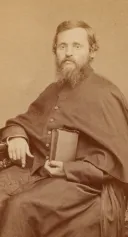
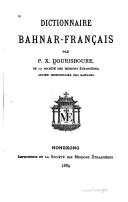
The best known is the Rhade epic of Dam San. Dam San marries two sisters, Hơ Nhi and Hơ Bhi, according to the custom by which a man goes to live in his wife’s house (see Dega women); defeats the chiefs who carry them off; and dies in the end in pursuit of the Sun Goddess, having overreached. It is a story about wealth, marriage, obligation and the limits of a man’s power, and it is still the best known of all our stories. Sabatier, the French administrator of Darlac, collected it and published it in Paris in 1927 as La Chanson de Damsan: légende radé du XVIe siècle, in an edition of 225 copies with sixteen illustrations, and a Rhade text with translation followed in the Bulletin of the French School of the Far East in 1933 (see Sabatier and the Rhade code). Condominas, writing in 1955, called it the first great text known from the oral literatures of the highlands and, still, their undisputed masterpiece; the same volume printed a second Rhade epic, Kdam Yi, in Rhade and French, from a text taken down between 1935 and 1938. Hauteclocque’s tapes of 1961 hold others: the epic of H’bia Yao in nine parts, the story of Y King Ju, the scansion of Kdam Wit, and a sung history of the arrival of the French in Darlac.
The Bahnar epic cycle is larger than anyone realized until recently. Researchers working in Kon Tum since 1985 have recorded nineteen separate h’mon, most belonging to one cycle around a hero named Giông, and believe the cycle runs to thirty or more; two of them, Dam Noi and Xing Chi On, are still sung in their full performed form. The singers who know them are few, and old.
If an elder in your family can still sing
Record them — on a phone is enough — and write down who they are, where they learned it and from whom. An epic that has not been recorded dies with the last person who knows it, and several already have. We will keep any recording you send us safely and credit the singer, and we will not publish anything without the family’s agreement. How to record an elder explains how.
In North Carolina
The gongs crossed the ocean. In 1996 the North Carolina Arts Council gave its Heritage Award to Dock Rmah, a Jarai musician born at Plei Thoh in Pleiku province in 1942 and resettled in Greensboro in 1986. The Montagnard associations in the Piedmont teach gong ensembles of the Rhade, the Bunong and the Jarai to the children of the community, and our own organization recorded elders who could never have recorded in Vietnam, on the cing, the ding buot, the ding nam and the trung, with the klei kut and klei duê narrative chants. See North Carolina.
Further reading and listening
- UNESCO, Space of gong culture — the 2005 proclamation and 2008 inscription, with the description of the instruments, the belief, and the threats quoted above
- Department of the Army, Minority Groups in the Republic of Vietnam, Pamphlet 550-105 (1966), DCHO library — gongs as property and at funerals and sacrifices, in the Rhade, Hre, Bahnar, Jeh, Jarai, Raglai and Stieng chapters
- Léopold Sabatier, La Chanson de Damsan: légende radé du XVIe siècle (Paris: Leblanc et Trautmann, 1927) — free public-domain copy; text and translation also in the Bulletin de l’École française d’Extrême-Orient 33 (1933), on Persée
- Georges Condominas, “Introduction au klei khan kdam yi,” BEFEO 47 (1955), pp. 555–568, DCHO library, also on Persée — the judgment on Dam San, Sabatier’s description of the chant, and the Kdam Yi text
- Harvard-Yenching Institute, review of Phan Thi Hong, The Banhar Epic Cycle in Kontum (2006) — the nineteen recorded h’mon and the Giông cycle
- Georges Condominas, “Le lithophone préhistorique de Ndut Lieng Krak,” BEFEO 45 (1952), pp. 359–392, DCHO library, also on Persée — the find of February 2, 1949, and the measurements
- CREM-CNRS sound archive, Georges Condominas, Jeu du lithophone mnong gar, 1953 — free to listen; Anne de Hauteclocque, Musiques des Edê, 1961 — the epics and gong recordings; and Musique Mnong Gar du Vietnam (OCORA, 1974)
- Georges Condominas, We Have Eaten the Forest: The Story of a Montagnard Village in the Central Highlands of Vietnam (Hill and Wang, 1977) — borrow from the Internet Archive
- North Carolina Arts Council, 1996 Heritage Award recipients — Dock Rmah; our own records — the recordings made in North Carolina
See also: Films and recordings, Instruments beyond the gongs, Jars and the buffalo feast.
Compiled September 2026. We would welcome recordings of gong music and epic singing from Dega families, in the highlands or abroad.