



The questions we are actually asked, including the hostile ones, which we would rather answer than leave to be answered for us.
Are the Dega the same as the Montagnards?
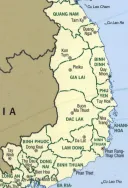
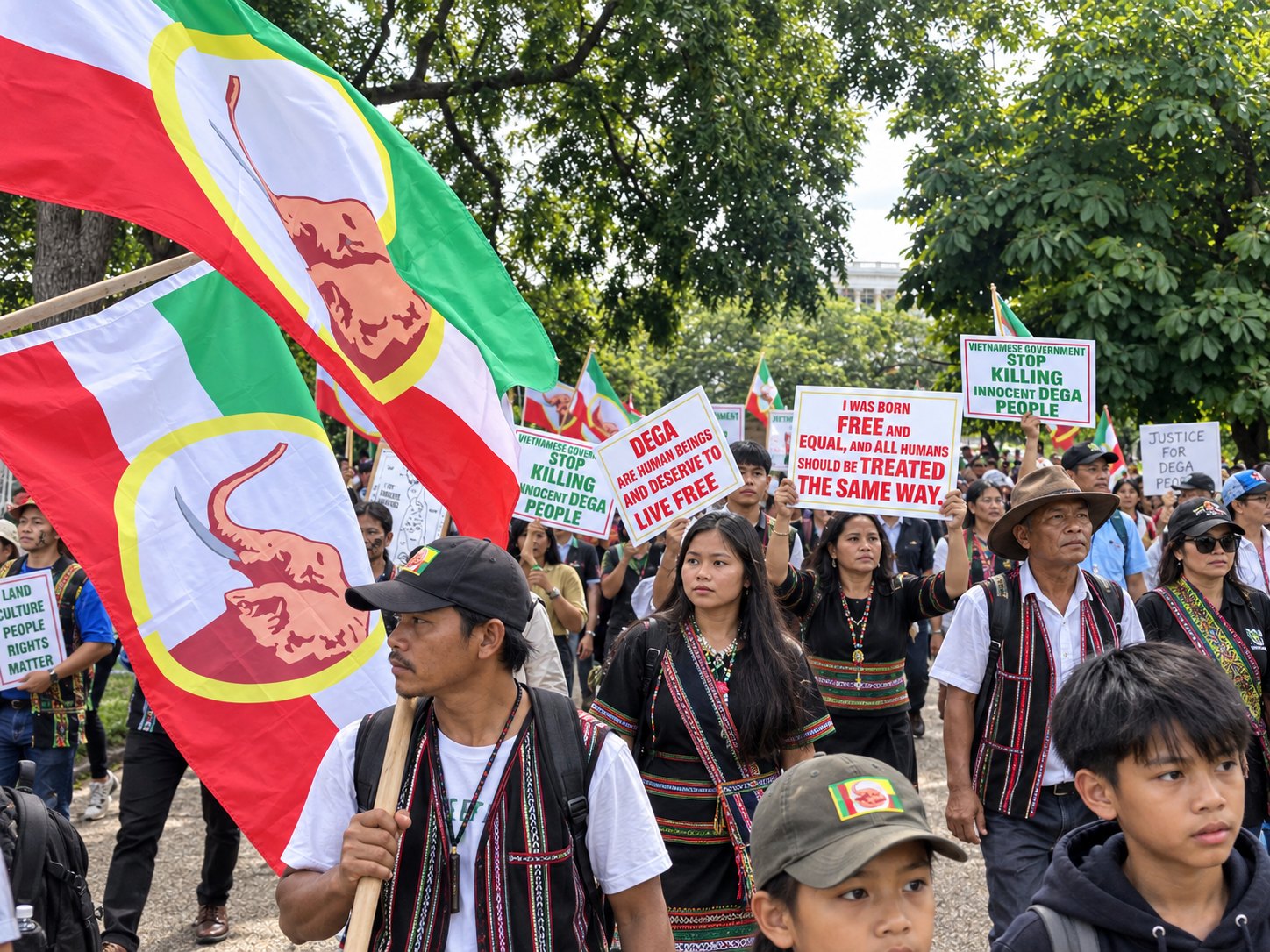
Yes. Montagnard, “mountain dweller,” is the name the French gave us in place of the Vietnamese word mọi, savage. Dega is ours, from the Rhade phrase anak ede gar, the children of the mountains. Degar is the same word spelled differently, and “Yard” is what the American Special Forces called the highlanders who fought beside them. They all mean the indigenous peoples of the Central Highlands of Indochina: about thirty peoples, speaking languages of two families.
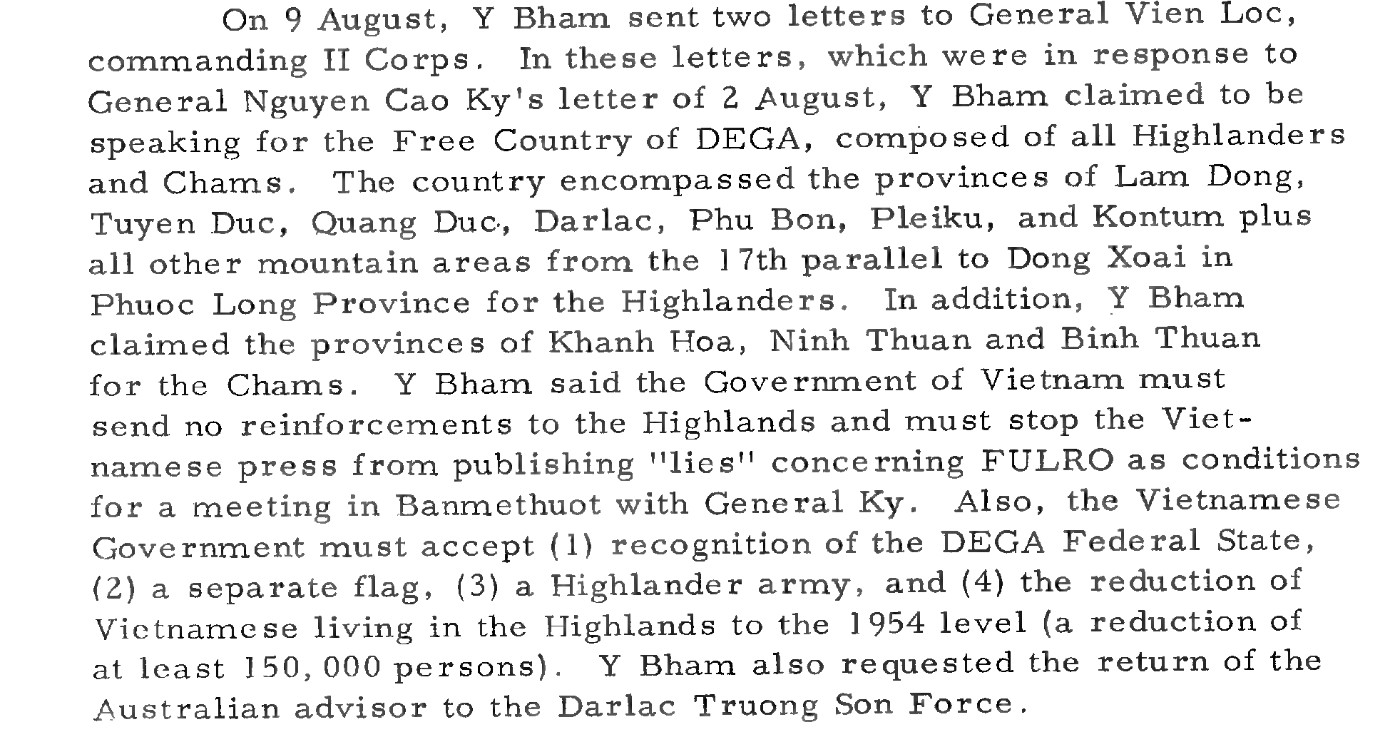
The word is in the names FULRO gave itself in the 1960s, and in 1965 its president wrote letters in the name of the Free Country of DEGA. Since then more and more of us have used it for ourselves. See Who are the Dega.
Are the Dega Vietnamese?
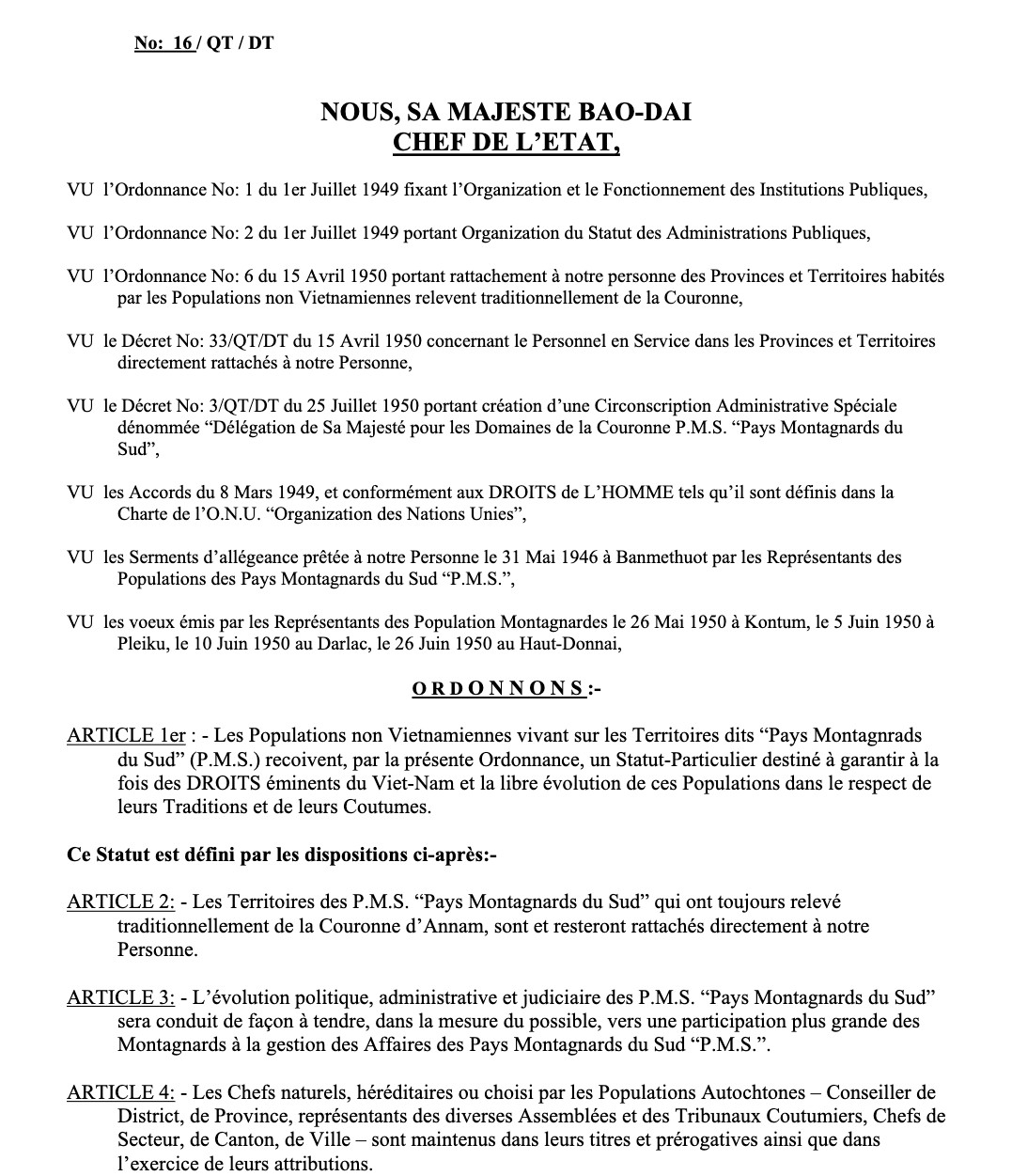
We are citizens of Vietnam, and most of us were born there. We are not Vietnamese in language or descent: our languages belong to other families, our societies were organized differently, and the highlands were ours before the Vietnamese state reached them. The ordinance of 1951 that set up the Pays Montagnards du Sud spoke of its people as “non-Vietnamese populations.”
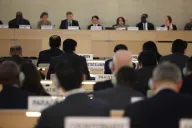
Vietnam counts us among its fifty-four ethnic groups, as ethnic minorities. In 2023 it told the UN that it has no indigenous peoples and that there is no such thing as an indigenous Montagnard, and at the Committee on the Elimination of Racial Discrimination its delegation said it speaks of minority people instead. See Indigenous rights at the United Nations.
What languages do the Dega speak?
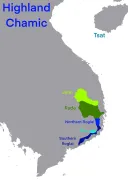
Languages of two families. Jarai, Rhade, Raglai and Churu are Austronesian, related to Cham and, further off, to Malay; Bahnar, Sedang, Mnong, Stieng, Koho and many others are Mon-Khmer, related to Khmer. Neighboring peoples usually understand one another, whichever family their languages belong to. Most of us also speak Vietnamese. See Language resources.
Isn’t this a separatist movement?
We ask for the restoration of self-government over a territory that two governments set apart in writing. In May 1946 the French high commissioner took five highland provinces out of South Annam and made them a special administrative district under a French commissioner. That was not self-rule, but it was a separate territory. In 1950 the highlands became a crown domain attached to the emperor Bao Dai, and in 1951 he gave them a statute of their own. Its first article speaks of the “non-Vietnamese populations” of the Pays Montagnards du Sud and promises their free development in their own traditions, but also guarantees the “eminent rights” of Vietnam; its second says the territories had always belonged to the crown of Annam. Both sides quote half of it. We quote all of it, and article 7 too: the land rights of the indigenous people are guaranteed in full. See A country of our own.
Whether that is separatism depends on whether you think the highlands were Vietnam’s to begin with. What is not in dispute is the method. No organized Dega armed movement has existed since the last FULRO unit gave up its arms to the United Nations in 1992. The two overseas Montagnard groups Vietnam listed as terrorist in March 2024 publish statements and reports; the UN experts found the listing was made without substantiation of any engagement in terrorism.
What was FULRO, and what did it want?
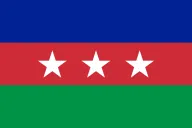
The United Front for the Struggle of the Oppressed Races, formed in 1964 when the highland, Cham and Khmer Krom fronts merged. In September 1964 it led a rising of some 3,000 highland soldiers in five American Special Forces camps in the highlands; in December 1965 there was a second, in which thirty-five Vietnamese were killed. It asked Saigon for autonomy for the highlands, and in 1965 for a flag of its own; the CIA wrote in 1983 that it sought a separate state. After 1975 its men fought on in the forest against the new government, first in Vietnam and then from Cambodia, until the last of them, about four hundred with their families, handed in their weapons in Mondulkiri in 1992 and were flown to North Carolina. See FULRO and Mondulkiri, 1992.
Who was Y Bham Enuol?
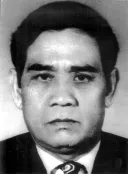
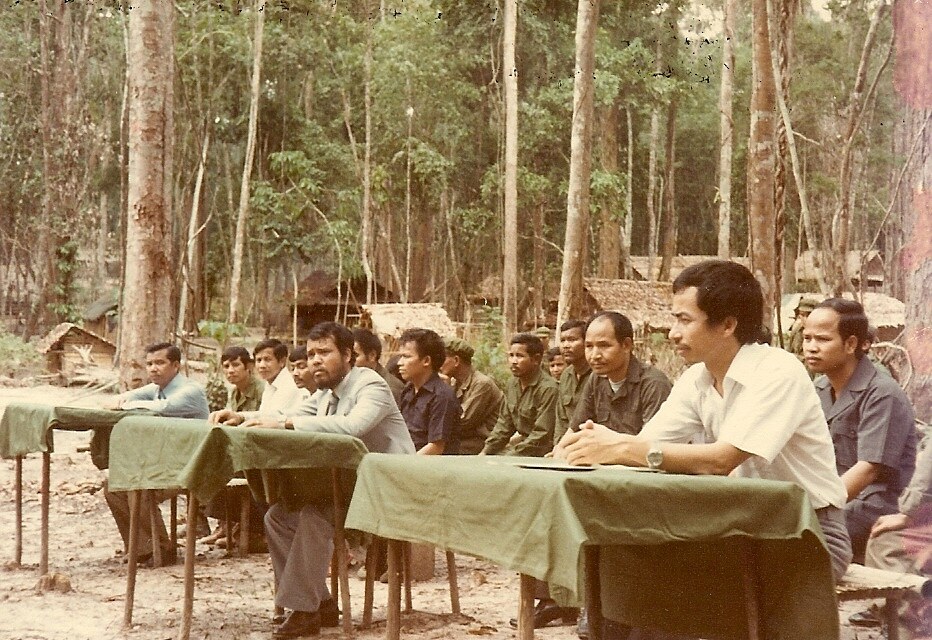
A Rhade, born in 1913 beside the Protestant mission at Ban Me Thuot, schooled at the Franco-Rhade school and the mission Bible school, and in the 1950s a civil servant in the agriculture service. In 1958 he led BAJARAKA, the first movement of the highland peoples, and after its petitions and demonstrations that October he was arrested with its whole committee. Released in 1964, he became president of FULRO. When the Khmer Rouge took Phnom Penh on April 17, 1975, he and other FULRO leaders were sheltering in the French Embassy; the Khmer Rouge took them out and killed them. His soldiers in the forests of Mondulkiri did not learn he was dead for seventeen years. See Y Bham Enuol.
FULRO fought alongside the Khmer Rouge. How do you defend that?
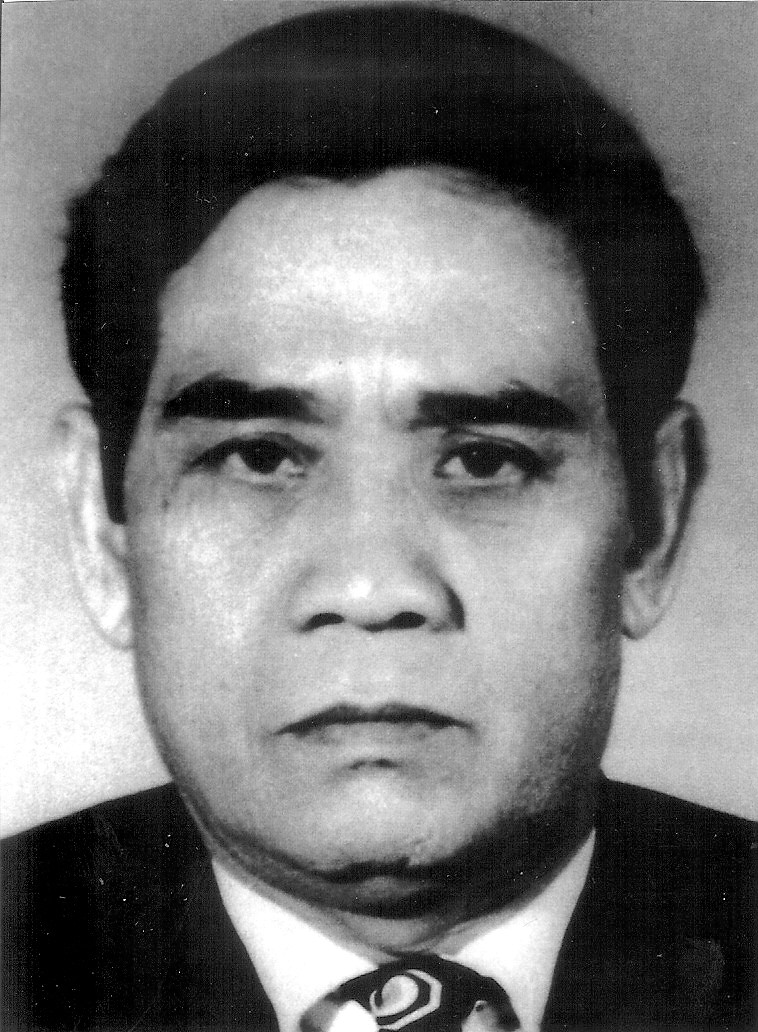
We don’t. By 1977 the Khmer Rouge were FULRO’s main support, in an uneasy alliance; they gave its men sanctuary from 1979, cut off their support in 1986, and drove them out of their zones in January 1992. It is recorded in Mondulkiri, 1992 and in FULRO, including the fact that the Khmer Rouge had murdered our own leader. Men in a forest with no state, no ally and no information took what was offered to go on existing. A library meant to be used as evidence has to be able to say that plainly, or nothing else it says can be trusted.
Did the Montagnards fight for the United States?
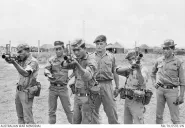
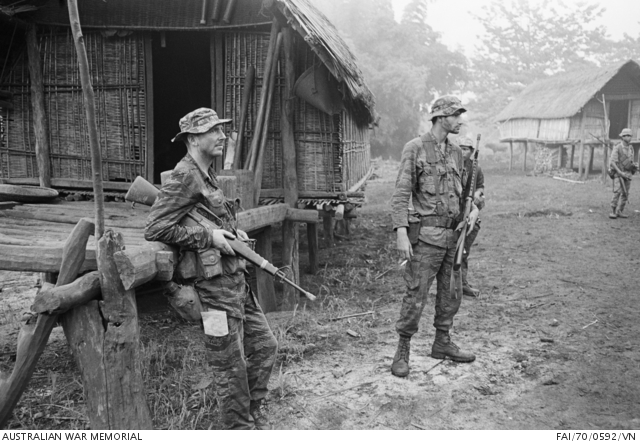
Many did. From late 1961 the Americans armed highland villages, beginning at Buon Enao near Ban Me Thuot, and built the Civilian Irregular Defense Group, the Mobile Strike Forces and the reconnaissance teams of the secret war on highland men. A resolution in the House of Representatives in 2019 put the number who fought alongside American forces at an estimated 61,000. Gerald Hickey estimated that between 200,000 and 220,000 of our people died in the war. Not all fought on the American side: some fought with the Viet Minh and the NLF, and in March 1975 a FULRO faction agreed not to warn Saigon that North Vietnamese tanks were approaching Ban Me Thuot. See Mike Force and SOG and Highlanders on the other side.

Why are so many Dega in North Carolina?
Because of the Special Forces veterans who live there and who pressed for us to come. In 1986, 201 of our people who had reached the Thai–Cambodian border were resettled in North Carolina; in late 1992 the last FULRO fighters and their families followed, about four hundred people, and in 2002 close to nine hundred villagers from the camps in Cambodia. By 2000 there were about 3,000 of us in the state, most in Greensboro and the rest in Charlotte and Raleigh. A resolution in Congress in 2019 put the number at several thousand and called it the largest Montagnard population outside Vietnam. See North Carolina.
What about the attack in June 2023? Nine people were killed.
They were, and we do not defend it. At dawn on June 11, 2023, an armed group of about forty people in camouflage vests attacked the police stations of two communes, Ea Tieu and Ea Ktur, in Cu Kuin district of Dak Lak. Four police officers, two commune officials and three residents were killed. Our position is set out in full in Cu Kuin, June 2023. An attack that kills police officers and civilians is not made right by any history.
The response to it is a separate wrong that the first does not license: a mass trial of 100 people in five days in January 2024 before a mobile court in Buon Ma Thuot, ten sentenced to life; an advocacy group abroad listed as terrorist; and a refugee recognized by the UN, Y Quynh Bdap, extradited from Thailand on November 28, 2025.
Is this really about religion, or is religion a cover?
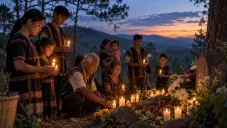
Both questions assume the two can be separated. Many Dega are Christians: at least a quarter of the highland peoples in 2002, and by the British government’s reading in 2024 most of those of us who practice a religion are Protestant. Many turned to the churches in the early 1990s, when the armed struggle ended. From 2000 the house churches outside the state-approved Evangelical Church became known as Tin Lanh Dega, Dega Protestantism, and the authorities treat them as a cover for an independence movement rather than as a religion. Our churches are the last institution we run ourselves, and the ban falls on a form of Christianity defined by who practices it. You can call that religious persecution or political control and you will be describing the same village meeting. See The church they closed.
Vietnam says its minority policy is generous: schools, clinics, poverty programs. Is none of that real?
Some of it is real, and pretending otherwise would make us easy to dismiss. Roads and clinics have been built. What we say is that development is not consent, a school that sets our language aside is not education on our terms, and none of it addresses land, faith or standing. A people can be materially better off and still be being ended.
The measurable part: in the UN’s review of Vietnam in November 2023, the committee’s rapporteur said that 31 percent of ethnic minority children reach upper secondary school against 63 percent of Kinh children. Vietnam answered that minority enrollment had risen to 59 percent in 2023. The committee noted that fifteen minority languages are now taught in schools; we know of no state school in the highlands where a Dega language is the language children are taught in. See The schools.
Why do your population figures disagree with each other?
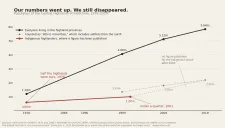
Because the sources disagree, and we would rather show that than pick one. Our own records give three to three and a half million under French rule. At the start of the twentieth century the four highland provinces are thought to have held about 240,000 people. In 1967 Gerald Hickey set the official count of 642,855 beside unofficial estimates of 927,000 and FULRO’s 842,635, and noted that no complete census of the highlands had ever been taken; he put us at up to a million. The CIA wrote of 3.5 million in 1983, without a source. Human Rights Watch’s figures for 2002 imply about a million of a total of four million, and others now say one to two million. We publish all of them with attribution in How many Dega there are. An independent census of the highlands has never been permitted; when one is, we will accept its findings.
Do you want the Vietnamese farmers in the highlands removed?
No, and we never have. Many were sent by the state: Diem’s land development centers took in 274,945 people between 1957 and 1963, and in Dak Lak alone 311,764 people were settled by plan between 1976 and 1996. About as many again, some 350,000 in Dak Lak in those years, came on their own, many of them to grow coffee; more than three million people have moved into the highlands since 1975. Many families are three generations in. Our claim is against the state and its policies, not the family on the next plot. What the Dega ask for sets out four things that could be done at once, none of which requires anyone to lose a home or a border to move.
Can I visit the Central Highlands and see for myself?
You can visit. Whether you will see is another matter. After the protests of 2001 diplomats and reporters needed permission to go; by early 2004 movement within the highlands, meetings of more than two people and contact with the outside world had been restricted for months, and after the Easter protests of April 2004 the region was closed to foreigners. In 2005 there were signs on the roads to some villages saying they were closed, and strangers on the side roads were turned back. In 2024 the UN experts still wrote of administrative obstacles to foreigners reaching the highlands. Human Rights Watch has asked Vietnam since 2004 to let independent observers in. That has not been granted, and it remains the single thing we most want.
Is it safe to go back? Are refugees sent back?
Not safe, and yes. In 2001 Cambodia forced about 250 of our people back across the border, and returnees have been arrested and beaten. Thailand, where many fled next, is not a party to the Refugee Convention. On February 23, 2025, Thai police raided a funeral in Nonthaburi and detained between 65 and 68 Montagnards; the UN experts counted 65, of whom five were recognized refugees, and Vietnamese officials visited them in detention in March. On October 29, 2025, about seventy more were taken at dawn, many of them recognized by the UN. A month later Thailand extradited Y Quynh Bdap. See Asylum today.

Can refugees still be resettled in the United States?
Not at present. The United States suspended its refugee program from January 27, 2025. The ceiling for the year to September 2026 was set at 7,500, mainly for Afrikaners from South Africa, and raised to 17,500 in May 2026 with the extra places allocated the same way. The route that brought our families to North Carolina in 1986, 1992 and 2002 is, in effect, closed. Y Quynh Bdap was being resettled to a third country when Thailand sent him back to Vietnam.
Isn’t all this from the war? Why is it still going?
Because the land programs did not stop in 1975. Diem’s land development centers of 1956 and the New Economic Zones of 1976 differ in vocabulary and scale rather than in kind. And the arrests have not stopped. In 2025 courts in Gia Lai and Dak Lak sentenced Ro Cham Grong, Y Po Mlo and Y Thinh Niê to between seven and nine years for “undermining national unity.” In March 2026 police carried out raids across Dak Lak against six house-church preachers and reportedly beat people who tried to record the arrests. In May 2026 authorities in Gia Lai detained Siu Yui and Siu Dok of the Ba Na Dega Kon Kong church and said they had dismantled it.
What can I actually do?
Use our name. Ask your own government and any UN body you have access to for one specific thing: independent observers admitted to the Central Highlands. Read the sources at the foot of our articles rather than taking our word for it. If you hold a document, a photograph or a testimony, send it to us; How to document an incident says how. And if you work in asylum law, the extradition of Y Quynh Bdap from Thailand in November 2025 is a case that must not become a precedent.
If you are looking for somebody: the prisoner records, and the spellings you need to search them. If you are a lawyer, a researcher or a journalist: what we do not know is the fastest way to find something worth working on.
Why should anyone believe this library rather than the Vietnamese government?
Don’t take either on trust. Every article here names its sources and links them, and we keep a page called what we do not know listing the figures nobody has settled, the periods we have almost nothing on, and the places where our sources contradict each other. A record that hides its weak points cannot be trusted with its strong ones. Check the citations. Many of them are Human Rights Watch, OHCHR and the UN treaty bodies, and many are our own people, and we say which is which every time. We do not treat the second kind as needing the first kind’s permission: Vietnam does not publish what it does in the highlands, so for a great deal of this history the only witnesses there will ever be are ours.
A question we cannot answer
How many Dega are in prison today. We have 337 people recorded by name from the 2000s. Human Rights Watch named 188 in January 2005, counted at least 355 sentenced since 2001 by June 2006, and more than 350 in 2011. The British government found 39 recorded as detained across the public databases in December 2024. Nobody publishes a current total. If you are able to help us establish one, that is the most useful thing anybody could do for this library.
Sources
- Human Rights Watch, Repression of Montagnards (April 2002), chapters II, III and V — the word Dega, the ordinances, FULRO, 1975, population and migration; press release of April 14, 2004; backgrounder of January 2005; No Sanctuary (2006) and Montagnard Christians in Vietnam (2011), in our library and our library; “Thailand: Vietnamese Refugees at Risk from Hanoi” (November 13, 2025); “Thailand: Montagnard Activist Extradited to Vietnam” (December 1, 2025); World Report 2026, Vietnam
- Ordinance of May 27, 1946, and Ordinance No. 16/QT/DT of May 21, 1951, in our library (English) and our library (French); Christopher Goscha, “Pays Montagnards du Sud,” Dictionnaire historique de la guerre d’Indochine
- Gerald C. Hickey, RAND RM-5281/1 (1967), in our library, leaves 5, 16, 36–37 and 93; RM-4041 (1964), in our library; US Army, Minority Groups in the Republic of Vietnam (1966), in our library; CIA, The Highlanders of South Vietnam (1966), in our library; CIA, Vietnam: Repressing Ethnic Minorities and Religious Groups (1983), in our library
- UN special procedures, AL VNM 4/2024 (June 14, 2024) and AL VNM 3/2025 (July 24, 2025); OHCHR, press release of December 3, 2025, on Y Quynh Bdăp; OHCHR, summary of the CERD dialogue with Viet Nam, November 30, 2023
- Radio Free Asia, April 12, 2004; June 11, 2023; January 16 and 22, 2024; August 9, 2023 — Vietnam’s reply to the UN; September 2, 2024; BenarNews, February 26, 2025; Christian Solidarity Worldwide, October 30, 2025, and April 29, 2026
- UK Home Office, Country Policy and Information Note: Vietnam, Ethnic and religious minority groups, version 4.0 (December 2024), sections 3.3.3, 7.3.1 and 10.2.9
- US Commission on International Religious Freedom, Country Brief: Vietnam (September 2026) — the events of 2026
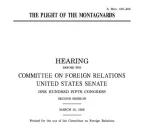
- Julia V. Taft, statement to the Senate Foreign Relations Committee, March 10, 1998, in our library; Raleigh Bailey, Montagnards: Their History and Culture (2002), in our library; US Committee for Refugees, World Refugee Survey 2003: Cambodia; H.Res. 435, 116th Congress (2019); Joe P. Dunn, “Kok Ksor and the Struggle for Cultural Survival,” Athens Journal of History (2023)
- Nate Thayer, Phnom Penh Post, September 12 and 25, 1992 — FULRO and the Khmer Rouge
- Executive Order “Realigning the United States Refugee Admissions Program” (January 20, 2025); Presidential Determination on Refugee Admissions for Fiscal Year 2026 (September 30, 2025); Emergency Presidential Determination (May 21, 2026)
Compiled September 2026.