



























What to write down and what to try, in the first hours and the weeks after, in Vietnam and in Thailand. We are not lawyers and this is not legal advice. It is what families who have been through it have told us mattered, set beside what the law says and what happens in practice.


Important
Everything on this page carries risk for you. Families of detained people are watched and visited, and contact with people abroad has itself been charged as a crime: Y Po Mlo was arrested in 2024 accused of using Facebook to reach Montagnard asylum seekers in Thailand. Do only what you judge safe, and treat every item below as optional.
In the first hours
- Write down the exact time the person was taken, and where from.
- Write down who took them: uniforms or plain clothes, how many, what vehicle, any unit name or number used.
- Write down whether any paper was shown, and if so its number, its date and the office that issued it.
- Write down what was said, in the language it was said in, including any reason given.
- Write down what was taken from the house: phones, documents, Bibles, papers.
- Note who else saw it, even if they will not speak now.
- Do not sign anything you have not read and understood. Families in Vietnam have been asked to sign letters urging a relative abroad to surrender, and parents detained in Thailand have signed papers in a language they could not read.
What the law in Vietnam says, and what happens
On paper, the family must be told. Article 116 of the Criminal Procedure Code of 2015 says that whoever orders an arrest must inform the family, and the investigators must do so within 24 hours of receiving the person. But the same article allows the notice to wait if it would obstruct the investigation, and that is the gap through which families go without news for weeks or months. In one case recorded by the State Department, a family learned of an arrest four months after it happened.
- Custody
- Up to three days, which can be extended twice by three days: nine days at most (article 118).
- Detention for investigation
- Two to four months depending on the charge, with extensions (article 173). In national security cases, which is how most of our people are charged, the head of the Supreme People’s Procuracy may keep a person in detention “until the investigation closes”. That allows indefinite detention without review by a judge, as the UN Human Rights Committee pointed out in 2025.
- A lawyer
- In national security cases the procuracy may keep a defense lawyer out until the investigation has ended (article 74). At the mass trial in Dak Lak in January 2024, 19 lawyers were appointed for 94 defendants.
- Family visits before trial
- One visit a month, of up to an hour. The visit may be refused if the agency handling the case asks in writing, because it would seriously affect the case. If you are refused, ask to see that written request, and write down that you asked.
- Dependants
- If the detained person was caring for an old, sick or disabled relative with nobody else to look after them, the authority that ordered the detention must arrange care for that relative (article 120).
- After sentence
- One visit a month, of up to an hour; two letters a month, which the prison reads; and one domestic phone call a month of up to ten minutes.
In practice, in political cases, the authorities deny lawyers for months, prevent family visits and keep relatives out of trials. Bail exists in law but is seldom granted. No independent monitor visits Vietnamese prisons; as far as its public reports show, the International Committee of the Red Cross does not visit places of detention in Vietnam either. An English translation of the Criminal Procedure Code is in our library.
In the days after
- Ask, in writing if you can, which facility the person is held at and under what charge.
- Keep every piece of paper you are given, such as summonses, receipts and notices, and photograph them.
- Record every visit you request and whether it was granted or refused, with dates, and the reason given.
- Record any demand for money, and by whom.
- If you see the person, note their physical condition in plain factual terms.
- Tell one person outside the highlands that this has happened.
If the person is held in Thailand
Thailand has not signed the Refugee Convention, and it treats refugees and asylum seekers as illegal immigrants, whatever card they hold from the UN refugee agency. A UNHCR card does not give legal status in Thailand. Arrests follow a pattern:
- People are charged with illegal entry and stay under the Immigration Act and held at a police station or in jail. Some are released after paying a fine, usually between 1,000 and 5,000 baht.
- Those who cannot pay are moved to an immigration detention center: in Bangkok, Suan Phlu, or the center for mothers and children at Bang Khen.
- To leave, a person must post bail, usually 50,000 baht, and have a Thai citizen as guarantor, and must then report to the center every month with the guarantor. UNHCR does not pay bail and cannot act as guarantor.
- UNHCR staff are at Suan Phlu and Bang Khen several days a week. An arrest can be reported to UNHCR through its online “Detention/Arrest Incident Submission” form, or by phone: 02-340-6500 on weekdays, or the deportation hotline 081-899-7617 in the evenings and at weekends (numbers as published in September 2026). UNHCR’s services are free.
- Vietnamese police have been allowed to visit Montagnards in Thai detention and press them to sign papers agreeing to go back. Nobody has to sign.
The raids have been large. On February 23, 2025, Thai police detained 65 Montagnards at a funeral in Nonthaburi, and 43 were convicted of illegal entry. On October 29, 2025, about 70 were taken in another early-morning raid, and most went to Suan Phlu. On November 28, 2025, Thailand extradited Y Quynh Buondap (or Y Quynh Bdap), a recognized refugee; his family and lawyers could not find out where he was for many hours, and his place of detention in Vietnam has still not been disclosed. See Asylum today and Y Quynh Buondap.

Afterward
- Keep the record going: the dates of hearings, the sentence, the facility, every transfer.
- Note the sentence exactly as stated, and the article of the penal code if it is given.
- If the person is released, write down their account while it is fresh, and their physical condition.
- Send the record to us, or to a human rights organization, when it is safe to.
If the person dies in custody
The law requires the detention facility to notify the family of a death, and to notify the investigators and the procuracy. That is often all the family is told. Record everything you are told and everything you observe, who told you, and when. Ask to be present at any autopsy, and write down whether you were allowed. If you can do so safely, photograph the body and any injuries, and keep the photographs with the date and place.
Deaths in custody are not rare. At least 25 Montagnards died in prisons, jails or police lock-ups between 2001 and 2011, by the count of Human Rights Watch. Y Ben Hdok was arrested in April 2008 and held incommunicado in Buon Ma Thuot; on May 1 the police told his wife he had hanged himself during a break in his interrogation, and his family said his head, ribs and leg were broken. On March 8, 2024, Y Pum Buonya was found hanged in a cemetery near his home in Ea Tu, outside Buon Ma Thuot, after the police had called him to meet them there; UN human rights experts wrote that he had been tortured. See The memorial register.
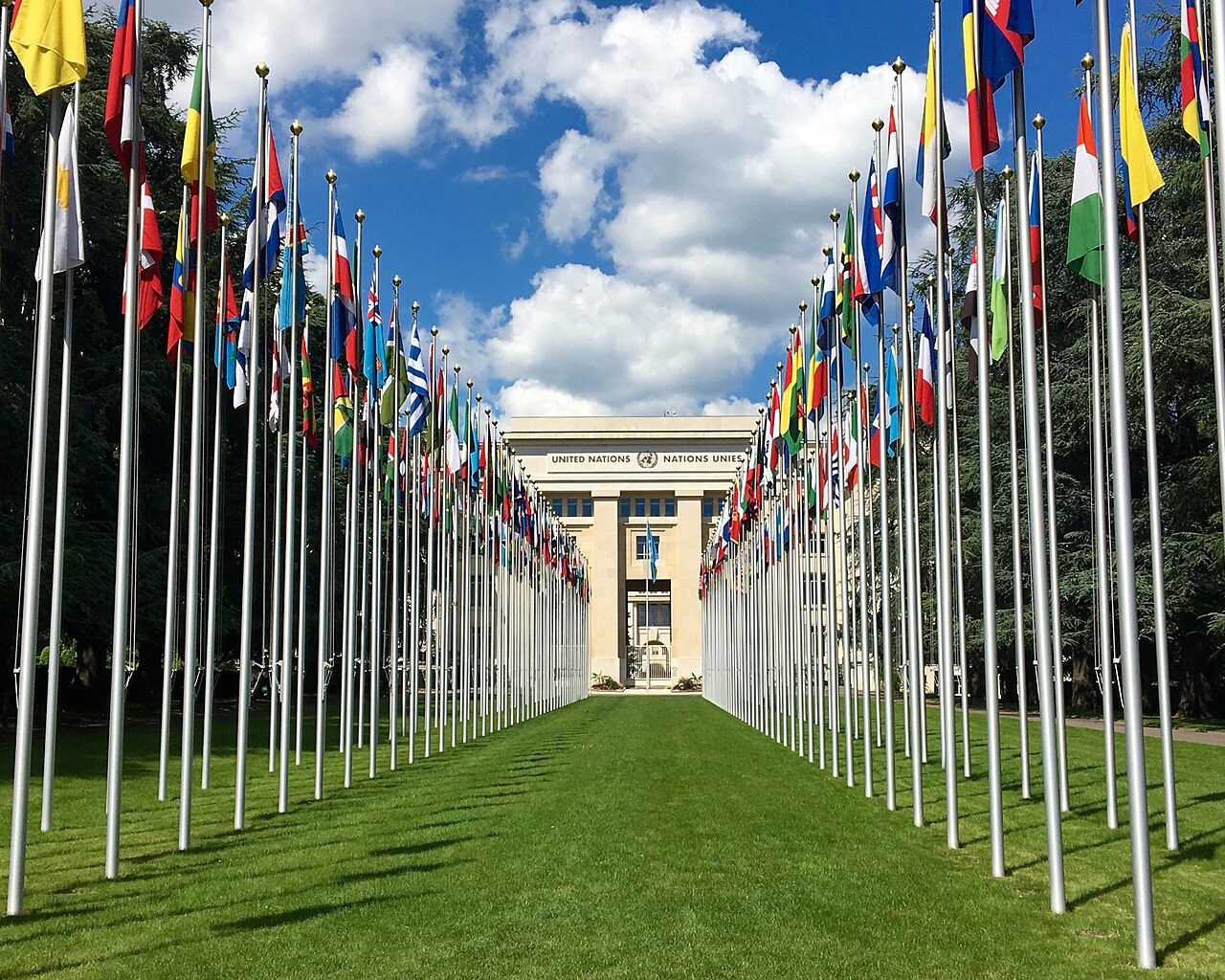
Taking it to the UN
Families can write to two UN bodies directly, without a lawyer and without going through any government.
- Working Group on Arbitrary Detention
- Takes cases from the detained person, the family, a representative or an organization. It has a model questionnaire that asks who made the arrest, where the person has been held and every transfer, and what reason the authorities gave: exactly what the lists on this page record. Where the person’s health or life is in danger, it can act urgently. Email: wgad@ohchr.org. As far as we know, no family has yet brought a Montagnard case to it on its own; Montagnard cases have reached it only through joint letters.
- Working Group on Enforced or Involuntary Disappearances
- For a person whose whereabouts the authorities will not reveal. Relatives can submit a case, or an organization can with their consent. A case sent within three months of the disappearance goes to the government within a day or two, under the urgent procedure. The group keeps the names of those who report confidential. Email: wgeid@ohchr.org.
Both need the same few facts: the full name, the date, the place, who took the person, and what the family has done to find them. How to put those facts together is in How to document an incident. We can help.

The things families most often lose
The exact date. The unit that made the arrest. The wording of the charge. The name of the facility. Each of those is what turns a family’s grief into a case a UN body can take up, and in our experience each is usually gone within a year if nobody wrote it down on the day.
Why it matters
Our prisoner records hold 337 people by name because families did exactly this. They also show what happens when the record stops. A sentence is known for only 138 of the 337. Sixty-two of the Gia Lai entries end in “whereabouts unknown” or “family believes murdered”. And of the 200 people whose prison is known, 121 were sent to Ha Nam, a thousand kilometers from home, where most families could never visit.
Sources
- Criminal Procedure Code 2015 (Law No. 101/2015/QH13), articles 74, 116, 118, 120 and 173, English translation in our library; Law on Enforcement of Custody and Temporary Detention 2015, articles 22 and 26; Law on Execution of Criminal Judgments 2019, articles 52 and 54
- UN Human Rights Committee, concluding observations on Viet Nam, CCPR/C/VNM/CO/4 (2025), paragraphs 24, 26, 32–33 and 54
- US Department of State, 2023 Country Reports on Human Rights Practices: Vietnam
- Human Rights Watch, Montagnard Christians in Vietnam (2011), in our library; submission to the Universal Periodic Review of Vietnam (July 2018); World Report 2026, Vietnam and Thailand; “Thailand: Vietnamese Refugees at Risk from Hanoi” (November 13, 2025); “Thailand: Montagnard Activist Extradited to Vietnam” (December 1, 2025)
- UN special procedures, AL VNM 4/2024 (June 14, 2024) and AL VNM 3/2025 (July 24, 2025); OHCHR press releases of August 28, 2024 and December 3, 2025
- Working Group on Arbitrary Detention, complaints and urgent appeals; Working Group on Enforced or Involuntary Disappearances, reporting a disappearance
- UNHCR Thailand, “Detention and deportation” and contact pages
- Amnesty International, open letter on refugees detained in Thailand, ASA 39/9023/2018 (September 3, 2018)
- Radio Free Asia, reports of August 19, 2024 (Y Po Mlo), January 10, 2025 (the letter to Y Quynh Buondap’s family) and February 26, 2025 (the Nonthaburi raid); Christian Solidarity Worldwide, press release of October 30, 2025
- International Committee of the Red Cross, Viet Nam country brief and Bangkok regional delegation, key activities 2025
Compiled September 2026. Laws, fines and phone numbers change; check them before relying on them.