
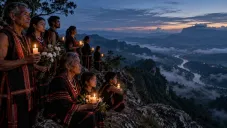
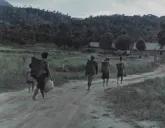
In May 1972, with Kontum under siege, the American doctor who ran the highland hospital there put half of it on helicopters and flew out. Before she went she handed the hospital over to Sister Gabriel, her most experienced Montagnard nurse. Earlier in the fighting, more than thirty of our staff and patients had lain on top of her in a human blanket to hide her while soldiers went through the wards. It is easy to name ten Americans who worked here and not one of us. Our own names are in the record. They are just kept in places nobody looks — in the credit lines of dictionaries and school primers, and in a wire report filed from a hospital that was being shelled.
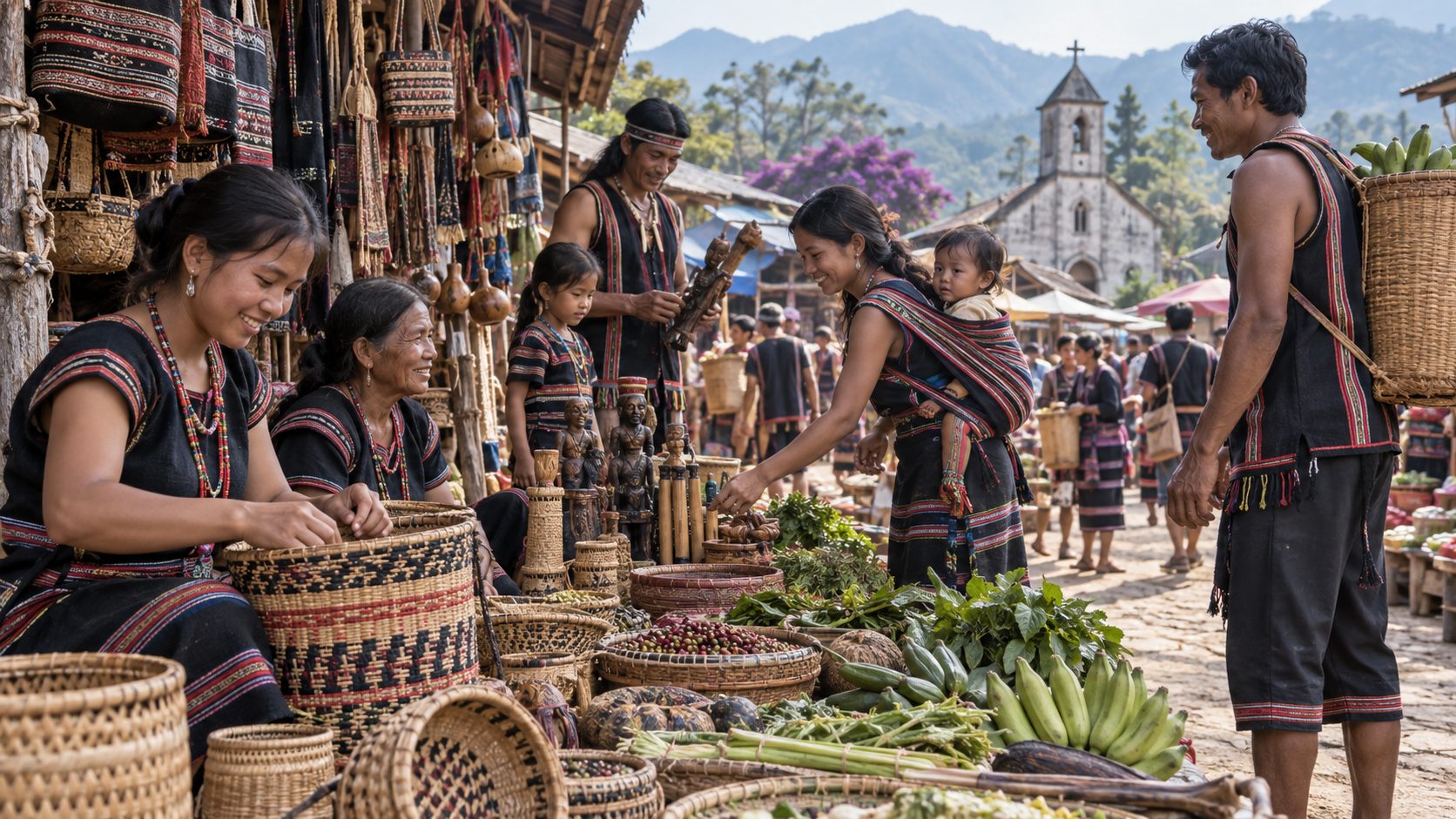
Minh Quy, and who was handed the keys
Patricia Smith, a Catholic doctor from Seattle, opened a small hospital for highlanders near Kontum in 1959 and moved it into the town in 1968. By the early 1970s it had about a hundred inpatients, treated a hundred and fifty to two hundred outpatients a day, and employed about a hundred local staff, most of them highlanders she had trained, alongside seven Catholic sisters. Our people called her ya pogang tih — big grandmother of medicine.
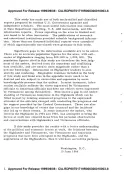
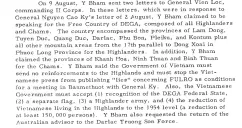
In May 1972 she took half the hospital to Pleiku. The Associated Press report of it carries the two sentences this page most needed:
“A human blanket of more than 30 Montagnard staff and patients lay on top of the doctor and hid her, while enemy troops ran through the wards tossing grenades…”
“Dr. Pat turned the hospital over to Sister Gabriel, her most experienced Montagnard nurse, and boarded the helicopter on the lawn.”
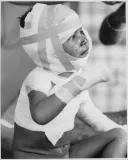
She took two children with her: Det, whose mother had been killed by the Viet Cong, and Wir, found abandoned in a burned-out village. She adopted them both. The hospital came back to Kontum late in 1973 and closed in April 1975, and she went home to Seattle.
Sister Gabriel is the only name we have for the person who ran a highland hospital in a besieged town. We do not know what became of her.
The names in the small print
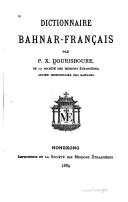
The missions and the linguists who came with them published dictionaries, primers and school readers in our languages, and bibliographic convention made them print the names of the people who actually knew the language. That is where our names survive.
| Name | Language | What they made |
|---|---|---|
| Y Chang Nie Sieng | Rhade | Credited on at least nine works from 1967 to 1981: a reading primer, a set of language lessons, a Rhade vocabulary, and school readers — several of them as sole author |
| Y Tlung Ayun and Y San Nie | Rhade | A 1971 volume on law and custom, with Y Chang Nie Sieng |
| Y Tang Hmok | Mnong | Co-author of the Mnong Rơlăm Dictionary and Thesaurus with Henry and Evangeline Blood, 1976; and sole author of a book of Mnong Lam language lessons the same year |
| Muom Nom | Mnong | Named as the source of the origin story of Dak Nue, 1969 |
| Cil Nut | Koho | Co-compiler of a Koho Lach word list, 1970 |
| Hmou | Sedang | Co-author of eight school textbooks — mathematics, health, reading and ethics — in 1966 and 1971–72 |
| Dieu Bi | Stieng | Co-author of a Stieng phrase book |
Two of those entries carry a whole story inside them.
The 1967 Rhade reading primer that Y Chang Nie Sieng put his name on was co-authored with Carolyn Griswold. She was dead within the year, killed when her house at Ban Me Thuot came down in the first hours of Tet 1968. A Rhade man and an American woman put their two names on a children’s reading book, and one of them did not see the next January.
And the Mnong dictionary Y Tang Hmok made with Henry Blood was published in 1976 — eight years after Blood was taken from the same mission station and died in captivity. Y Tang Hmok finished it.
Notice also the dates at the other end. Y Tang Hmok published in 1976 and Y Chang Nie Sieng in 1979 and 1981. Highland language work did not stop dead in 1975, and what those men were doing in Buon Ma Thuot under the new state is a story nobody has written.
There is one asymmetry we should name. Our people are credited on the dictionaries, the primers and the school books. We have not found a single highland name credited on a Scripture translation. The linguists put their colleagues on the title page; on this evidence the Bible publishers did not.
Our languages were being written before SIL arrived
It is commonly said that Wycliffe and the Summer Institute of Linguistics came after the Second World War and put highland languages into writing. That is not right, and it matters, because how long our languages have been written is an argument we make elsewhere in this library.
- 1887 — a Stieng dictionary by H. Azémar.
- About 1916 — Léopold Sabatier works out a way of writing Rhade at Buon Ma Thuot. See Sabatier, the oath of 1926 and the Rhade law code.
- About 1930 — Jean Cassaigne publishes a script for Koho and a short dictionary, and a manual of everyday conversation printed at the Saigon mission press.
- August 1935 — Cassaigne takes part in devising a fifty-three-character alphabet for Bahnar, Rhade and Koho: one alphabet, three of our languages, a decade and a half before the Summer Institute existed.
- 1949–50 — Jacques Dournes publishes a Sre dictionary and sits on the commission that fixes how Sre is to be written.
- 1861 — and before all of it, the Catholic missionaries at Kon Tum devise a written Bahnar in Latin letters.
See Writing our languages and Language resources.
The bishop who caught it
The page had nothing at all on Di Linh, and it is the best story the missions have.
Jean Cassaigne was born at Grenade-sur-l’Adour in 1895 and landed at Saigon in 1926, and was sent by his bishop to Di Linh to found a post among the Koho mountain people. He learned the language and wrote it down. In 1929 he began gathering people with leprosy into a village — twenty-one Koho at the start by one account, about sixty by another — who built their own houses on piles in the manner of a highland village, with a village chief appointed to run it.
In 1941 Rome made him Vicar Apostolic of Saigon. In December 1954 he found the first symptoms of leprosy on himself. He resigned the see in 1955, after fourteen years as bishop, and went back to Di Linh to live in the leprosarium he had founded, asking only to be put somewhere he could be treated without inconveniencing anybody or being at anyone’s expense. He stayed eighteen years. He died there on October 31, 1973, and is buried in the small cemetery of the leprosarium.
Koho people who were there are on the record and can be named: James K’Beo, who worked with him for a decade; Lucia K’Jiu, the oldest resident; John K’Bis, admitted in 1961 at fifteen and an altar boy there; Joseph K’Chiu, fourteen years in his service. The place is still running — about eighty families on a hillside — and its four doctors and six nurses are drawn from the leper community itself. Koho people treating Koho people, which is what the whole enterprise was supposed to produce and rarely did.
The leprosarium at Ban Me Thuot, and the night of May 30, 1962
The Christian and Missionary Alliance reached Vietnam in 1911 and the highlands in 1929, working first around Da Lat and among the Koho and then at Ban Me Thuot among the Rhade. Its leprosarium outside Ban Me Thuot was funded jointly by the Alliance, the Mennonite Central Committee and American Leprosy Missions, and by the 1960s could care for about two hundred inpatients and some two thousand outpatients.
On the evening of May 30, 1962, about twelve Viet Cong came into the compound, took linens, medicines, clothing and surgical instruments, and left about two hours later with three people: Dr. Ardel Vietti, a surgeon; Daniel Gerber, a Mennonite volunteer who ran the farm the ambulatory patients and employees worked on; and the Reverend Archie Mitchell. Mitchell’s wife and four children were left. No shots were fired and nobody was killed.
Vietnamese and highland staff were on the compound that night and were not touched. They are recorded as a category and not as names, which is this page’s subject in one sentence.
The last time any of the three was seen alive, so far as the record goes, a highland man saw them in a mobile prison camp and said so. We do not have his name, the date, or who he told, and that is what we would most like to recover. The official American finding is that the three were forced to march south and were eventually executed in Viet Cong custody, that the places and circumstances are unknown, and that all three remain unaccounted for. Ardel Vietti is the only American woman still unaccounted for from that war.
And there is a thread that runs from that night to the next disaster on the same station. Daniel Gerber was engaged to Ruth Wilting, one of the nurses there. She waited five and a half years for a man who did not come back, and was killed at Ban Me Thuot at Tet 1968.
Tet, 1968
In the first hours of the offensive, on the night of January 30–31, 1968, the fighting reached the mission compound at Ban Me Thuot. Six Americans were killed: Ruth Wilting, in Vietnam since 1952; the Reverend Robert Ziemer; the Reverend Edward Thompson and his wife Ruth; and Leon Griswold, who was visiting, with his daughter Carolyn, a missionary, who died later of her wounds. Marie Ziemer was wounded. The Ziemer and Thompson children had left for school in Malaysia three days before. The nurse Betty Olsen and the translator Henry Blood were taken, together with an American aid worker, Michael Benge, captured nearby; Olsen and Blood died in captivity and Benge was released in 1973.
What the page never said is what Robert Ziemer had done. He had translated the entire New Testament into Rade, for a people the American church press of the time put at some two hundred thousand. He finished it, and then he was shot on the station.
Four young Rhade were found dead in a missionary house at the same compound; two of them were sisters. We do not have their names. The Rhade son of one of the dead missionaries dug his adoptive mother and her father out of the rubble that morning; his account is on Tet 1968 in the highlands. See also Highland women in the war.
The Catholic side, which is older, and which made priests of us first
The Catholic mission reached Kon Tum in 1851, nearly eighty years before the Protestants reached the plateau, and it built something the Protestant mission never had: an indigenous order of church workers.
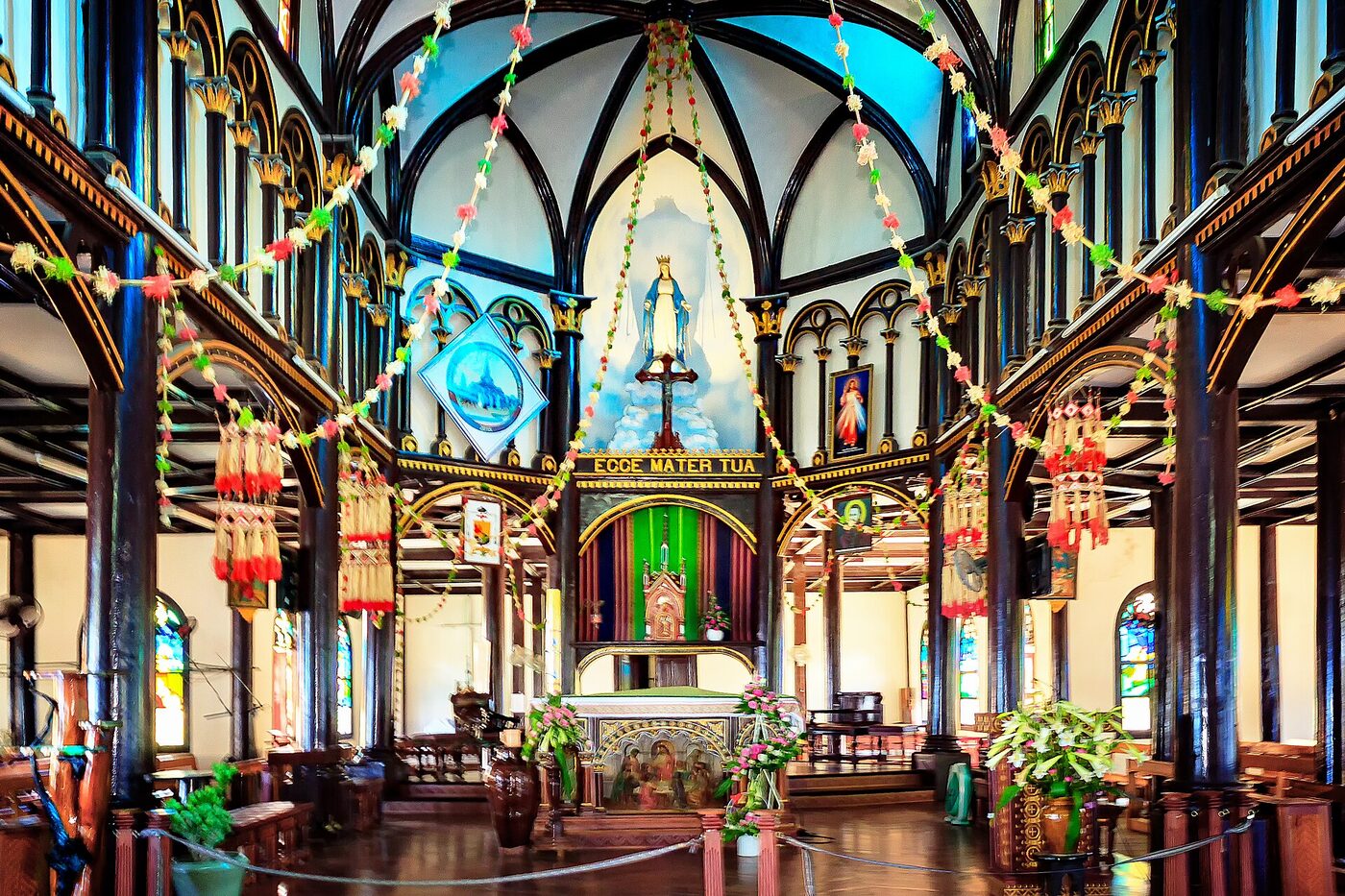

The Yao Phu — trained at the Cuénot school at Kon Tum, founded in 1908 — were highland catechists and pastoral workers, drawn from and sent back to their own peoples: Bahnar, Jarai, Sedang, Jeh, Triêng, Rơngao, Halang. The training ran more than a decade of schooling and then three further practical stages of three years each. At the creation of the Kon Tum vicariate on January 18, 1932 there were 24,525 Catholics, 29 priests — and 160 highland catechists. Five and a half of us for every priest. The mission ran on our labor and its own returns say so.
On June 29, 1932, Bishop Martial Jannin ordained the first three Bahnar priests: Anton Den, Giuse Chau and Phero Hoa. Anton Den was born on June 13, 1903, went to the Cuénot school from 1912, to the minor seminary from 1914 to 1923, and then to the major seminary at Penang in Malaysia from 1923 to 1930 — eighteen years of formation, seven of them overseas. He was a priest for fifty-five years and died on October 17, 1987, aged eighty-four.
Set the date beside the other one. Our people were being ordained Catholic priests in 1932, when the Protestant mission at Ban Me Thuot was three years old.
And it was the Yao Phu who held the highland church together through the thirty-five years it had no resident clergy. See The Kon Tum mission and The highland Catholic church.
Paul Seitz, born in Le Havre in 1906, was Bishop of Kon Tum from 1960 to 1975, raised money for highlanders in England and the United States, and in May 1972 was the last French bishop left in the country. He wrote Men of Dignity: The Montagnards of South Vietnam, which we have not read.
What it cost, said honestly
These were not neutral institutions and we should not pretend otherwise. A study of the leprosarium at Quy Hoa, on the coast, describes a model of care “premised on hierarchy, strictly enforced segregation from the wider community and pronounced paternalism towards all those who came under the nuns’ rule of care” — and records at the same time the affection in which the people there remember it. Both things were true in the same building. That is the honest shape of mission medicine and it fits Di Linh and Ban Me Thuot as well as Quy Hoa.
There is a second cost, and it is the serious version of the charge that the missions and the researchers who came with them did us harm. It is not that they were spies. It is that publishing our names was dangerous. The anthropologist Gerald Hickey’s books listed highland leaders by name, and when those books reached the country the men in them were arrested; a French ethnography of the Mnong was translated and handed out to Green Berets. Mission and mission-adjacent linguistics published names too. The people who most carefully credited their highland colleagues were, in the same act, putting them in a list.
After 1975
Foreign missionaries were expelled. Church facilities were confiscated or closed. Highland villages were left without resident priests. Catholic and Protestant churches across the highlands were shut and many highlanders, pastors among them, were imprisoned. The authorized Protestant body that emerged, the Southern Evangelical Church of Vietnam, was distrusted by many of us, who went on worshipping in village and house churches we controlled ourselves. See The church they closed and The evangelical church and registration.
We have not found the name of a single highland pastor imprisoned in the years between 1975 and 1990. The human-rights literature names people from 2001 onward. The generation that was taken first is, so far as the accessible record goes, anonymous. That is a gap we would like help with.
Why this belongs in our library
The missions were outsiders with their own purposes, and what they did to our religious life is argued about among us still — see Yang, the spirits. But the people on this page lived in our villages, treated our sick when nobody else would, and several of them died there. So did we. The difference is that their names went onto a memorial and ours went into the credit line of a school reader. This page exists to move some of ours across.
What we have not found
The years, publishers and translators of the New Testament in Jarai, Bahnar, Sedang, Koho, Mnong or Stieng — the Rade one we can attribute to Robert Ziemer, and the rest we cannot date. Any highland name credited on a Scripture translation. What became of Sister Gabriel. The founding date and founder of the Ban Me Thuot leprosarium. The names of the four young Rhade found dead in the missionary house in 1968. Any highland pastor named from the imprisonments of 1975 to 1990. And the full list of the school-book series our language workers published in — at least twenty-three volumes, part-written by our people, and nobody has cataloged it.
If you or your family worked at the leprosarium, at Di Linh, or at Minh Quy, we would like to record it, and we would like the photographs. See How to record an elder.
See also: Schools and language, The outsiders we welcomed, The Koho, Maa, Churu and Raglai.
Sources
- Associated Press, “Doc Grandma Plots Return to Highlands,” Pacific Stars and Stripes, May 3, 1972 — reproduced here. Sister Gabriel and the handover of the hospital; the human blanket of more than thirty Montagnard staff and patients; ya pogang tih; and Det and Wir
- Christianity Today, “Viet Nam: The Vulnerable Ones,” March 1968, and “Six Missionaries Martyred in Viet Nam” in the same issue — that Robert Ziemer “had translated the entire New Testament into the Raday dialect, spoken by some 200,000 tribespeople in the central highlands”; the Alliance in Vietnam since 1911; membership from 14,000 in 1948 to 44,000 in 1967; about 400 churches; the twenty-eight mountain tribes; and the Tet deaths and the 1962 kidnapping
- POW Network, biography of Eleanor Ardel Vietti — the date of May 30, 1962; the leprosarium “jointly financed by The Christian and Missionary Alliance, the Mennonite Central Committee and American Leprosy Missions, Inc.”; the twelve Viet Cong and what they took; and the official finding that the three were marched south and executed in custody and remain unaccounted for. Also the bios of Henry Blood, Betty Olsen and Michael Benge
- Missions Étrangères de Paris, obituary notice for Jean Cassaigne (1895–1973) — born at Grenade-sur-l’Adour; landed at Saigon in 1926 and was sent to Di Linh by Bishop Dumortier to found a post among the Koho; raised to the episcopate in 1941; died October 31, 1973 and buried in the small cemetery of the leprosarium
- UCA News, James K’Beo, July 29, 2020, on the Di Linh leprosarium — the founding in 1929, the Koho residents named above, and the four doctors and six nurses today drawn from the leper community. The author is himself K’Ho
- Catalogue records for highland-authored language materials, via the Open Language Archives aggregation of SIL and related catalogues — the works of Y Chang Nie Sieng (1967–1981, including the 1967 primer with Carolyn Griswold), Y Tlung Ayun, Y San Nie, Y Tang Hmok (with Henry and Evangeline Blood, 1976), Muom Nom, Cil Nut, Hmou and Dieu Bi, several of them in the series Tủ sách ngôn-ngữ dân-tộc thiểu-số Việt-Nam. We read these as catalogue entries and not as the books themselves; the co-authorship of the 1967 primer in particular should be confirmed from a copy
- Catholic Bishops’ Conference of Vietnam, profile of Father Anton Den — one of the first three Bahnar ordained priest, with Giuse Chau and Phero Hoa, at the hands of Bishop Jannin on June 29, 1932; born June 13, 1903, died October 17, 1987; the Cuénot school from 1912, the minor seminary 1914–1923, and Penang 1923–1930. A church source, not a state one, and read in Vietnamese
- The diocese of Kon Tum’s own account of the Yao Phu and the Cuénot school — the founding in 1908, the peoples the catechists were drawn from, the length of the training, the figures at the creation of the vicariate on January 18, 1932 (24,525 Catholics, 29 priests, 160 ethnic catechists), and the thirty-five years without resident clergy
- Le Hoang Ngoc Yen, “The nuns of lepers: Compassion, discipline and surrogate parenthood in a former leper colony of Vietnam” (Australian National University, 2018) — on Quy Hoa from 1929 to 1975: care “premised on hierarchy, strictly enforced segregation from the wider community and pronounced paternalism.” Only the abstract is public
- Human Rights Watch, Montagnard Christians in Vietnam (2011) — the closures and imprisonments after 1975, and the position of the authorized Protestant church
- James and Marti Hefley, No Time for Tombstones: Life and Death in the Vietnamese Jungle (Tyndale, 1974); Homer E. Dowdy, The Bamboo Cross (Harper & Row, 1964); Paul Seitz, Men of Dignity: The Montagnards of South Vietnam (1975) — three accounts from the mission side that we have not been able to read, and that are the likeliest places for the highland names this page is still missing
Compiled September 2026. Highland personal names are written plainly here; the catalogs and church registers spell several of them in Vietnamese form.