










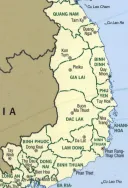


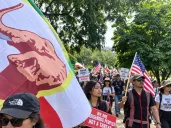

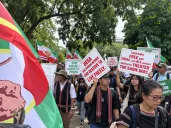


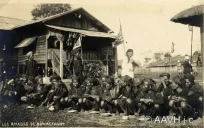

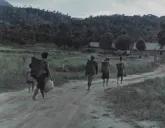

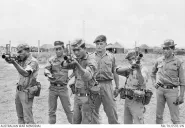

On the Saturday and Sunday of Easter 2004, people came out of their villages in thirty-nine communes across seventeen districts of Gia Lai, Dak Lak and Dak Nong. They came on farm tractors with trailers behind them, packed with food for five days, because they meant to stay. They were asking for four things: their land, the right to worship, the freedom to travel, and the release of the men taken after February 2001. At more than a dozen places on the roads into Buon Ma Thuot they were met at bridges and intersections by police, by soldiers, and by men in civilian clothes carrying metal bars, shovels, machetes, chains, and clubs with nails driven through them. Within forty-eight hours the region was closed to every foreigner. Within days the blood had been washed off the road at Phan Chu Trinh. Twenty-two years later nobody outside the Ministry of Public Security knows how many people died.
It did not start on the Saturday
The three years between February 2001 and Easter 2004 were not a lull. They were the collection period, and it was running at full pressure in the weeks before Easter. In 2003 alone, at least a hundred of our people were arrested and thirty-three were tried and sentenced — for religious or political belief, or for trying to reach Cambodia — which brought the number of highlanders in prison since 2001 to a hundred and twenty-four. The charges were undermining the state and party unity policy, or illegal abroad migration to act against people’s authorities. At least two hundred and seventy people were deported from Cambodia back into Vietnam during the year. And in August, at a district police station in Dak Lak, a young woman was raped by police officers during three days in detention.
Three nights from that year, which are the texture of it:
August 22, 2003, Buon Cue, Krong Ana district, Dak Lak. At midnight thirty to forty police came in to arrest the church leaders. The wives shouted and the neighbors came out, and the police withdrew. The next day more than a hundred of unit 113 came back with water cannon, tear gas and electric batons. Y Kun Bdap was beaten badly with electric batons and taken. The police stayed in the village. The standoff ran three days.
October 9, 2003, Buon Ea Khit, Krong Ana. Three truckloads of unit 113 surrounded the house where Y Pho Eban was hiding. He ran, and was reportedly shot, and was arrested and taken to the provincial hospital. They threw tear gas into the house and detained and beat his wife and his sister. The same day six villagers from Buon Cuoi, walking to a funeral at Buon Ea Khit, were arrested while buying food at a store, on the charge of supplying people in hiding.
October 16, 2003, Buon Cuor Knea, Buon Don district. Police and soldiers quartered in the village shot Y Hoang Buonkrong with an AK-47 at his mother’s house. They took him to hospital and said he was alive. By December his family could not visit him and could not find out where he was. Afterward soldiers were billeted in many of the village’s houses. Remember the name of that village; it comes back in six months.
The sweeps, February to April 2004
From the start of 2004, hundreds of unit 113 paramilitary police of the Ministry of Public Security ran what were called sweeping operations across the highlands, carrying assault rifles and electric shock batons. The target was people already in hiding — above all, people using cellphones to tell anyone outside what was happening. The method was fixed: surround a village, a farm or a stretch of forest at night; go in at dawn and search the houses of anyone suspected of sheltering someone, often destroying the house and beating the people in it during the questioning; then spread out through the fields and the forest with dogs.
The record of the eight weeks before Easter reads like this.
February 10, Tot Bioc, Chu Se, Gia Lai. Several hundred police surrounded the village overnight and went in at dawn. Five men arrested, one of them while trying to call for help on a cellphone. Every house searched, five destroyed outright. Somebody got a call out to say that police were climbing the electricity towers with binoculars and then dispersing through the fields with dogs.
February 11, Krong Buk, Dak Lak. A house ransacked and four relatives of a man resettled in the United States arrested, including his wife, for having a cellphone on which she had called him. He said afterward:
“There have been six police in my house since September 2003, sleeping there, searching the house.”
“We have six children — now there is no one to take care of them.”
February 15, Buon Mtrong, Ea Kar, Dak Lak. Fifty police in two trucks; a house destroyed. A man hiding nearby reached relatives in the United States by cellphone and the call was taped:
“Now Vietnamese police and soldiers are everywhere in the Central Highlands. They have arrested and shot many people.”
March 3, Dak Doa, Gia Lai. Sixteen truckloads of police and soldiers surrounded four villages. Five men arrested, three of them beaten badly with electric batons. One was made to lead the police through the coffee fields and the forest to point out others in hiding, and the villagers heard him crying out as he was beaten and taken away. Nobody knows where he went.
March 14, Kueng Grai and Ring villages, Dak Doa. Nine men summoned and questioned all day about who was in hiding. Most were beaten. One who would not say anything was slapped, kicked in the ribs, and made to stand with his legs spread until five in the afternoon.
March 18, A’Dok commune, Dak Doa. Village chiefs called to a meeting said to be about local elections. Two were held for hours afterward, then arrested on the road home and asked for names. One was beaten badly and held until March 23.
March 24, Pleiku. Twelve security officials in three jeeps took Ksor Ngle, who had been in hiding since October 2002. Struck with electric batons, handcuffed, driven off. Whereabouts unknown.
March 24, Ha Bao commune, Dak Doa. Seven jeeps of security officers surrounded men hiding in the forest. Thup and Luan were arrested. Whereabouts unknown.
April 1, Plei Sao, Dak Doa. Soldiers surrounded the village and took Ksor Amuk, in hiding since July 2002. Whereabouts unknown.
April 8, Nil Stream, Ha Bau commune, Dak Doa. About two hundred paramilitary police searched the forest. Jarai men, some of whom had been hiding for more than a year, ran into the rice paddies. The police surrounded them and wounded many of them badly with electric batons while they stood in the water. Eight men were arrested, among them Ksor Hlun, who was beaten in front of the whole of Ring village. Whereabouts unknown.
That was two days before Easter, in the commune where Ksor Hnun would be shot on the Sunday morning. And of the men in that log whose whereabouts nobody could establish, we can now account for two. See below.
Alongside the sweeps: travel inside the highlands was restricted, gatherings of more than two people were banned, an international telephone call was grounds for arrest, and anyone who fed a person in hiding was interrogated, beaten and had their house searched. In the days before the weekend, hundreds more police and soldiers were moved into the region, often billeted inside people’s houses, and military checkpoints went up on the main roads.
And the renunciations had already begun. In March 2004 there were compulsory Sunday denunciation sessions in Dak Lak at which people renounced Christianity and pledged loyalty to Uncle Ho; in mid-March there were forced renunciation ceremonies in Kon Tum and pastors were beaten. The executive director of Human Rights Watch’s Asia Division, Brad Adams, said it plainly on April 14: “The retribution against Montagnards for the unrest in Vietnam’s Central Highlands in 2001 was intensifying in the weeks before last weekend’s demonstrations.”
One administrative fact matters for reading everything that follows. Dak Nong province was three months old. It had been split off from Dak Lak on January 1, 2004. That is why the earliest count of participants, made from Spartanburg on April 13, still lists Cu Jut, Dak Mil and Krong Kno under Dak Lak, and every later account names three provinces. It is not an error. It is the map catching up with itself.
Saturday, April 10 — the roads into Buon Ma Thuot
They came the way a highland village travels: on farm tractors, with makeshift trailers hitched behind, loaded with food and bedding for five days of Easter services. That detail decides the shape of the day. People who intend a riot do not bring their children and a week’s rice.
They did not get in. At more than a dozen places on the roads into the city they met what had been set up for them:
“Human Rights Watch has received firsthand reports that security forces and men in civilian clothing, armed with metal bars, shovels, clubs with nails attached to them, machetes, and chains, confronted Montagnard protesters at more than a dozen locations leading into Buon Ma Thuot, the capital of Dak Lak province, on the morning of April 10.”
It was not improvised. Ambushes had been set at the bridges and the main roads in; key intersections were blocked with trucks and barbed wire.
On Phan Chu Trinh road, the approach from the northwest, around three thousand people from several villages were stopped. A Rhade woman of twenty-six watched it from a window:
“They suddenly rushed at the unarmed crowd, beating the demonstrators until many were lying in the streets.”
“A thousand people tried to get away from the slaughter by the police and civilians.”
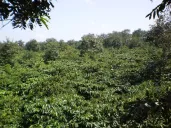
“Those who tried to hide in the coffee plantation were caught, beaten and killed on the spot.”
“A blind woman sitting on the farm tractor was killed on the road by a dozen Vietnamese people.”
Hold that last sentence. Seventeen days later, a research department in London published a list of eight people reported killed, assembled through a different channel from a different set of contacts. The first name on it is H’Lo Kbuor of Cu Mgar district, and the one thing recorded about her is that she was blind. A woman at a window in Buon Ma Thuot and a researcher in London, working from different sources, arrived at the same person. That is what corroboration looks like when it happens, and it happened because a Dega woman said what she saw.
A man from Dak Doa district on what they had brought with them:
“We didn’t expect to fight, and came with nothing in our hands. We only went to demonstrate to make our demands. When the police started beating people, we fought back.”
A Jarai man from Chu Se district, interviewed two months later:
“The police hit us first. We reacted. They beat everyone: young and old, women… The bo doi fired their guns into the air.”
A Jarai man from Cu A commune, on the edge of Pleiku:
“We went on anyway, so the police hit us with batons. Four people had broken heads, many people were hurt. We hit back and overturned the police car.”
And one account that is not ours, which is exactly why it is worth printing. A Vietnamese resident of an apartment on the same road, interviewed in December 2004:
“It was like a war. The police were mad and really beat the protesters. Some local Vietnamese joined in — they were mad too. The Montagnards only had stones and sticks to defend themselves.”
A Vietnamese neighbor watching from a balcony, with nothing to gain, says the same thing our witnesses say. When people tell you Easter Week was manufactured in South Carolina, that is the man to put in front of them.
Police used tear gas, water cannon and electric truncheons and arrested dozens. That night four tanks stood on Highway 14 about eight miles outside the city. And the security forces confiscated and burned several hundred of the farm tractors and trailers, with the food and supplies still on them.
Think about what burning a tractor is. A tractor is the single most valuable object a highland household owns; it is often bought by a whole extended family together, and it is how a village gets its crop to market. Several hundred of them were burned in one day. That was not crowd control. It was a fine levied on the villages, collected at the roadside, in the only currency the villages had.
That night the provincial hospital in Dak Lak recorded forty injured people, and the provincial hospital in Pleiku fifty-two. Those are the people who reached a hospital, in a region where reaching a hospital meant presenting yourself to the authorities as a demonstrator.
At Buon Emap in Cu Mgar district, on the night of April 10, every man in the village was gone. The neighbors could not say whether they had been arrested or had run.
And then this, which is the sentence the whole of the rest of this page turns on:
“Witnesses said authorities quickly collected wounded people and dead bodies from the Phan Chu Trinh area, and that within days, the blood on the roadway had been washed away.”
Easter Sunday, April 11 — Gia Lai
The roads into Pleiku were blocked, so Gia Lai happened in the district centers instead — at Ayun Pa, Chu Se and Dak Doa on the Sunday, and afterward in at least seventeen separate places across the province, with the worst of it at Ha Bau, A’Dok and Glar communes. At Nhon Hoa commune in Chu Se, twenty-six people were beaten and arrested; a week later nobody knew where they were. Tanks appeared near communes in Chu Se, Duc Co and Ayun Pa.
On the Sunday morning at Ha Bau commune, Dak Doa, paramilitary police blocked the villagers from entering the commune center. When they would not disperse, the police fired, killed one man from Ring village, and arrested two others.
He has a name, and how we know it is the most important methodological fact on this page.
- The Montagnard Foundation, from Spartanburg, South Carolina, on April 13, 2004 — two days after: “The Vietnamese paramilitary police open fire at them with firearms and killed at least one of our people. His name is Ksor Hnun (age 18) from the village of Plei Ring, commune of H Bau, district of Dak Doa, province of Gia Lai.”
- Human Rights Watch, from its own reporting channel, on April 14, 2004: one villager from Ring village, killed. No name.
- Amnesty International, from a third channel, on April 27, 2004: “Ksor Hnun (m), Plei Ring village, Dak Doa district, Gia Lai province” — shot and killed on April 11.
Three organizations, three separate channels, one eighteen-year-old boy. And the first of the three to have his name, two days after he died and thirteen days before Amnesty, was the Dega organization, working by telephone from a strip mall in South Carolina, from villages that were being sealed while it counted. Remember that when you get to the argument about numbers below. On the fact that could be checked, our channel was right and it was first.
The scale
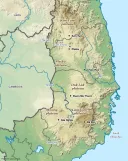
The geography is settled and nobody disputes it: on Easter weekend, in thirty-nine communes of seventeen districts of Gia Lai, Dak Nong and Dak Lak, thousands of people gathered to march.
How many is another matter, and the figures should be read with their publishers in view.
| Participants | Published by | What it is |
|---|---|---|
| 5,500 | Government of Vietnam | The official figure, from the authority that controlled every road into the region |
| 10,000–30,000 | Human Rights Watch, April 22, 2004 | A range, from firsthand accounts gathered from people who had got out |
| about 30,000 | Human Rights Watch, as cited in the 2006 report for UNHCR | The figure that became standard |
| about 45,000 | US Commission on International Religious Freedom, 2006 and 2007 annual reports | An estimate by a US federal advisory commission |
| 131,659 counted; about 200,000 estimated | Montagnard Foundation, April 13, 2004 | The only commune-by-commune tally anyone produced, assembled by telephone in the four days before the region closed |
The Foundation’s tally deserves to be seen rather than summarized, because it is the only document of its kind. It counted Gia Lai commune by commune — four thousand at A’Dok, five thousand at Go-Lar, six thousand at Ia Tiem, four thousand at Ia Bang, two thousand at Ia Pet, a thousand at Ha Bau, three thousand at Bo Ngong in Chu Se, two hundred at Ia Der, and then by district, six thousand eight hundred and forty-nine at Ayun Pa, seven thousand at Krong Pa, six thousand at Song Huynh — for a provincial total of forty-four thousand and forty-nine. And Dak Lak by district: two thousand nine hundred and sixty-four at Buon Ma Thuot, four thousand five hundred and fifty-one at Buon Don, twenty-nine thousand two hundred and twenty-nine at Krong Ana, thirty-one thousand eight hundred and ninety-two at Cu Mgar, three thousand eight hundred and seven at Cu Jut, three thousand one hundred and eighteen at Krong Pac, one thousand five hundred and seventeen at Krong Kno, seven thousand and thirty-two at Lak Thien, three thousand five hundred at Dak Mil — eighty-seven thousand six hundred and ten. It names Phuoc Long and Lam Dong as well, and gives no figures for them, because communication with them was lost.
Those are commune-level reports, not a list of a hundred and thirty-one thousand names, and we say so plainly. They were telephoned in from villages that were being shut while the counting was going on, and nobody could go and check a single one of them. That is a limit on the number. It is not a slur on the people who phoned it in, who were standing in the communes they were counting.
What they were asking for
Four independent statements of the demands exist, and not one of them says independence.
- People who took part and afterward fled, interviewed by Human Rights Watch and summarized in the 2006 report for UNHCR: “freedom of religion, the return of ancestral lands, and the release of Montagnard prisoners, not independence or separatism.”
- Human Rights Watch, from the same interviews: return of their land, religious freedom, freedom of movement, and release of Montagnard political prisoners.
- Amnesty International: long-standing land and religious freedom issues, and frustration at restrictions on freedom of movement, communication and religious practice.
- The Montagnard Foundation’s own report: an end to religious persecution and an end to the confiscation of our ancestral lands — with a call for international monitors and for intervention to stop the arrests, the electric shock torture, the beatings, the imprisonment and the killings.
That matters because the entire basis on which the Vietnamese state handled Easter weekend as a security emergency rather than a protest was the charge of separatism. The people who were there, asked afterward, in three separate settings, by three different questioners, said land, church, movement, prisoners.
Who organized it
Hanoi’s position was overseas instigation. Its Foreign Ministry spokesman said that extremists in Dak Lak and Gia Lai, with overseas instigation, had engaged in actions causing social disorder, and dismissed the reports of violence as fabricated and exaggerated. The specific allegation put about was that Kok Ksor had promised people five hundred thousand dong — about thirty dollars — and air tickets to the United States to get them to protest, and that his object was an independent state and the reconstitution of FULRO.
Kok Ksor, interviewed in Spartanburg in early June 2004, denied organizing it. He said he had advised people to demonstrate nonviolently, to call it a prayer vigil rather than a protest, and to wait until the fall.
What can actually be established is narrower than either account. Nobody outside the Ministry of Public Security has ever produced a document or a witness showing a chain of command running from South Carolina to A’Dok commune. What the record shows is a movement organized the way February 2001 was organized — commune by commune, through the house-church networks, by people who lived there — and an advocacy organization abroad that was in telephone contact with some of those networks, published what they told it, and afterward claimed more than it could support. Those are two different things and this page keeps them apart. See Kok Ksor.
Who was on the other side of the barricade
Three kinds of people attacked the crowds, and the distinction is worth keeping.
Uniformed security forces. Police with tear gas, electric truncheons and water cannon. Paramilitary police — unit 113 and the Mobile Intervention Police. And the army: the bo doi fired their guns into the air, said the man from Chu Se. Tanks on Highway 14 and near three Gia Lai districts.
Men in civilian clothes with crude weapons. Metal bars, shovels, clubs with nails driven through them, machetes, chains. Human Rights Watch was explicit that this was coordinated rather than spontaneous: security forces appeared to have coordinated with armed men in civilian clothing to attack the protesters. The Rhade woman’s account — police and civilians together, a dozen Vietnamese killing the blind woman on the tractor — is the same finding seen from a window.
Employees of a company, in that company’s uniform. This is the most specific allegation of its kind anywhere in the record and it should be named: uniformed workers from Hoang Anh Gia Lai Company, a furniture manufacturer and one of the largest private businesses in the Central Highlands, were hired by the authorities to attack demonstrators in several communes. The same account puts it more generally elsewhere: police, Vietnamese civilians, and employees of private companies working on behalf of the police attacked the protesters with crude weapons.
There is a fourth claim, and it rests on one source, and we say so. The Montagnard Foundation’s report of April 13 states that the authorities released Vietnamese criminals from prison and gave them machetes. The same report makes four other claims: that security forces shot at unarmed demonstrators; that chemical sprays were used; that security officers dressed as civilians to encourage Vietnamese civilians to attack; and that civilians were allowed to destroy houses. All four of those are corroborated from other channels — the shooting by Human Rights Watch, by Amnesty, and by the death of Ksor Hnun; the sprays as tear gas by three separate bodies; the officers in civilian clothes explicitly; the house destruction repeatedly, before and after. Machetes in the hands of men in civilian clothes are corroborated too. What stands alone is where those particular men came from. That is the accurate thing to say about it, and it is more useful than either marking the whole report down or repeating the claim as settled.
How many died
Two — the Government of Vietnam. The state reported that two protesters were killed: one by a stone thrown by other protesters, and one run over by a tractor driven by Montagnards.
Look at what that figure actually is before anyone calls it the conservative estimate. It is not merely low. It is a count in which the state’s own forces killed nobody at all. Both deaths are laid at the demonstrators’ door. It was published by the government that controlled every road into the region, that turned back a US embassy delegation on the Saturday itself, that cancelled the flights into Buon Ma Thuot, and that admitted outsiders only on escorted tours. It is a number produced by the one party with the power to stop anybody else producing one.
At least ten — Human Rights Watch. In April 2004: at least ten Montagnards killed, one from a gunshot wound to the head and the others from beatings, and hundreds wounded. In January 2005, more carefully: “at least ten Montagnards were killed, and possibly more, though it is impossible to obtain independent verification.” Restated in June 2006.
That is a floor arrived at by investigation, not an estimate and not a ceiling. It is the number the researchers believed they had established from firsthand accounts given by people who had got out, published together with the plain statement that more verification was impossible because the region was shut. Both of the pressures on an organization like that push the published figure down rather than up: its leverage depends on never being caught out. Ten is what survived its own filter, and it said in the same breath that the true figure was probably higher.
One wrinkle, printed rather than smoothed: the same organization’s 2011 summary says as many as eight, where its 2004, 2005 and 2006 statements all say at least ten. No explanation is given. The likeliest reading is that the 2011 sentence is a compressed summary keyed to Amnesty’s eight named dead rather than a revision of the finding — but that is a reading and not a fact, and we would rather you had both numbers than a tidy one. The US Commission on International Religious Freedom kept at least ten in both its 2006 and 2007 reports.
Twenty to twenty-five — the people who were there. One witness told Human Rights Watch that at least twenty to twenty-five people were killed; another that at least twenty were.
That is the count of the dead made by people who were standing on the road. It is higher than the investigated floor for a reason that is not mysterious: a person on Phan Chu Trinh road on the morning of April 10 saw more of what happened on Phan Chu Trinh road than anybody reconstructing it in Phnom Penh six months later. It is lower than the four hundred for an equally plain reason: one person cannot see three provinces. It is Dega testimony about a thing Dega people lived through, and it stands in this table at full weight. Nobody has been in a position to check it, because nobody has been allowed in to check it.
About four hundred — the Montagnard Foundation. Its report of April 13 says: it is estimated four hundred were killed, at Buon Ma Thuot on April 10.
In early June 2004, under two months later, Kok Ksor sat down with a reporter from TIME in a seafood restaurant in Spartanburg. The magazine’s sentence is this:
“This wild estimate was a gambit, he says, to force Hanoi to open the region to external observers.”
Three things follow, and all three should be said.
It was not a count. It was an instrument, published to force open a region that had been closed, by a man who told a reporter within eight weeks that that was what it had been. Publishing a casualty figure you cannot support, in order to compel an investigation, is what an advocacy organization does when every legitimate road to a count has been blocked. It is also a thing that costs the organization, and the people it speaks for, the credibility they will need the next time somebody is killed. Both of those are true.
Second: we refuse the use that has been made of it. For twenty-two years the existence of one inflated figure from one exile organization has been used to imply that everything reported about Easter Week was invented abroad. The twenty-six-year-old Rhade woman on Phan Chu Trinh road was not in South Carolina. Neither was the Vietnamese neighbor who said it was like a war. Neither was the twenty-five-year-old Mnong man who lost a tooth and a toenail across five months in a district prison. Neither was Ksor Hnun, whom three organizations named independently within a fortnight. One wrong number does not retire a hundred right ones.
Third: the floor stays in view. The at-least-ten is not the other end of a disagreement with the four hundred. It is a minimum established by investigation and published with the express statement that the real figure was higher and could not be verified because the state would not permit verification. Two is too low and four hundred is too high, and those two errors are not symmetrical. One is an exile organization over-claiming under a blackout. The other is the party that imposed the blackout reporting on itself.
| Deaths | Published by | Date | What it is |
|---|---|---|---|
| 2 | Government of Vietnam | April 2004 | An official count by the authority that sealed the region. Both deaths attributed to the demonstrators; none to the security forces |
| at least 10 | Human Rights Watch | April 22, 2004; restated January 2005 and June 2006 | A floor established from firsthand accounts, published with the statement that verification was impossible and the true figure probably higher |
| 8, by name | Amnesty International, ASA 41/005/2004 | April 27, 2004 | Eight individuals named with village and district; Amnesty “fears that the final death toll is considerably higher” |
| 20 to 25 | Witnesses who were present | reported January 2005 | The count of the dead made by people who were on the road |
| about 400 | Montagnard Foundation | April 13, 2004 | An estimate its own president described eight weeks later as “a gambit… to force Hanoi to open the region to external observers” |
For injuries: at least two hundred, on the investigated count, and hundreds wounded in the April statement — against the ninety-two people recorded at two provincial hospitals on the night of April 10.
The eight names
On April 27, 2004, sixteen days after Easter, Amnesty International published the names of eight people reported killed during the demonstrations or dead of their injuries shortly afterward. It did not say where it got them; it did not say who killed each person; it said the names were still to be corroborated and that it feared the final toll was considerably higher. These eight are in our Memorial register.
| Name | Village | District | Province | What is recorded |
|---|---|---|---|---|
| H’Lo Kbuor | — | Cu Mgar | Dak Lak | A woman. Blind. Killed on April 10 on the outskirts of Buon Ma Thuot |
| Ksor Hnun | Plei Ring | Dak Doa | Gia Lai | Eighteen years old. Shot at Ha Bau commune on Easter Sunday |
| Siu Plen | Bon Ama Djong | Ayun Pa | Gia Lai | Thirty-three. Killed April 10 |
| Ksor Jo | Bon Hoang | Ayun Pa | Gia Lai | Thirty-three. Killed after the demonstrations; no date recorded |
| Y’Bhit Enuol | Buon Dah Prong | Buon Ma Thuot | Dak Lak | Killed April 10 |
| Y’Dlah Eban | Buon Dah Prong | Buon Ma Thuot | Dak Lak | Killed April 10 |
| Y’Wien | Buon Dah Prong | Buon Ma Thuot | Dak Lak | Killed April 10 |
| Y’Luyen Eban | Buon Cuor Knia | Buon Don | Dak Lak | Killed April 10 |
Two things in that table are not obvious at a glance.
Buon Dah Prong lost three men in one morning. Y’Bhit Enuol, Y’Dlah Eban and Y’Wien were all from the same village on the edge of Buon Ma Thuot. And our own prisoner record for Dak Lak holds a fourth man from that village, Y-Mao Nie, arrested on April 10, 2004 and sentenced to eight years in Ha Nam. One village, one Saturday: three dead and at least one man in a prison in the Red River delta.
Buon Cuor Knia comes back. Y’Luyen Eban was from Buon Cuor Knia in Buon Don district. That is the village where police and soldiers shot Y Hoang Buonkrong with an AK-47 at his mother’s house six months earlier, and where, the month before that, they had detained and questioned the wives of two men who had been resettled in the United States. The same village, three times in seven months.
The door closes
The closure was immediate and it was total, and it is the single most important fact about why none of the numbers above can be settled.
On the Saturday itself, a US embassy delegation was refused entry to the region. By Monday, April 12, the entire Central Highlands was sealed to foreigners: flights to Buon Ma Thuot cancelled, roads blockaded. On the same days, Cambodian police in Ratanakiri and Mondulkiri went on high alert on the other side. The Ratanakiri provincial police chief, Yoeun Baloung: “We are on high alert all of the time because we fear that they will cross illegally into Cambodia.” The Mondulkiri chief, Reach Samnang, said his border officers would now work twenty-four hours a day. The door shut from both sides in the same week.
Inside the villages, people who came home found police quartered there and were forbidden to leave. They could not get to the markets or to their fields.
In late April and early May, under international pressure, the government arranged visits for foreign media, diplomats and UN agencies. Afterward, the people they had met said they had been prevented from speaking truthfully. Sam Zarifi, deputy director of the Asia Division at Human Rights Watch, on May 28:
“No visiting delegation has been allowed to stray from a strictly controlled government itinerary. How then can they determine what happened?”
And, six weeks after Easter:
“The Central Highlands are in a lockdown. Montagnards are unable to freely leave their villages, and they are threatened with violent reprisals if they try to relay news of the atrocities to the outside world.”
“It’s truly a desperate situation. Many of the people who have fled the villages suffered broken bones and cracked skulls during the demonstrations, but they are out of food and in need of medical care. And they can’t cross the border to Cambodia, because they know they would be immediately arrested and sent back to Vietnam.”
People were hiding in the forest, in pits, and in graves. Villagers who carried food to them were arrested or confined.
Amnesty, on April 27: “Diplomats and the international press corps based in Viet Nam have only been allowed into this area in strictly managed tours.” Its finding on the weekend itself was disproportionate use of force by the authorities, or people acting on their behalf, resulting in unknown numbers of dead and injured. It asked Vietnam for four things: independent and impartial investigation, comprehensive lists of all those arrested, unfettered access for diplomats and the press, and action on the underlying problems. It received none of them.
In Washington, the House of Representatives took note on May 11, 2004, and on September 15 the United States designated Vietnam a Country of Particular Concern for religious freedom, citing religious prisoners, closures of houses of worship, forced renunciations of faith, and beatings and killings of religious believers. In November 2006 the designation was lifted, on the statement that Vietnam could no longer be identified as a severe violator and that major progress had been achieved on all points of concern. Two months later Vietnam joined the World Trade Organization. The State Department is the foreign ministry of a government that was negotiating trade access throughout that period. That does not make the 2004 designation wrong. It makes the 2006 removal a thing that needs an explanation, and the explanation is not confined to religious freedom. See What Washington has said.
The names we have
Nobody outside the Ministry of Public Security ever produced a list of the people arrested. Amnesty asked for one on April 27, 2004 and never got it. Human Rights Watch could say dozens on the Saturday, twenty-six at Nhon Hoa, two at Ha Bau, and then dozens if not hundreds missing — some hiding rather than go home to a village with police in it, some arrested and not locatable, some possibly wounded or dead.
Our own prisoner records hold a hundred and forty-two people whose arrest date falls in 2004 — a hundred and ten in Gia Lai, twenty-one in Dak Lak, eight in Dak Nong, three in Kon Tum. Thirty-two of them were arrested in April, and eighteen on the weekend itself. They were assembled over years from families, from witnesses, and from the Montagnard Foundation’s own records, by people who had every reason to get them right and no way to check them against a court file. Here are the eighteen.
| Name | Age | Village | District | Sentence | Held at |
|---|---|---|---|---|---|
| Byach | 57 | Plei Chrong 2 | Mang Yang, Gia Lai | 5 years | Thanh Hoa |
| Top | 37 | Plei Chrong 2 | Mang Yang, Gia Lai | 5 years | Thanh Hoa |
| Yaih | 51 | Plei Chrong 2 | Mang Yang, Gia Lai | 5 years | Thanh Hoa |
| Ksor Droal | 29 | Ploi Rongol | Ia Pa, Gia Lai | 4 years | Ha Nam |
| Rahlan Niem | 22 | Plei Mnu | Gia Lai | — | Dak Lak |
| Siu Jun | 49 | Plei Konong | Ayun Pa, Gia Lai | — | whereabouts unknown |
| Y-But Nie | 32 | Buon Ea Sang | Cu Mgar, Dak Lak | 10 years | Ha Nam |
| Y-Mao Nie | — | Buon Dha Prong | Buon Ma Thuot, Dak Lak | 8 years | Ha Nam |
| Y-Rit Nie | 32 | Buon Poc | Cu Mgar, Dak Lak | 15 years | Ha Nam |
| Y-Rong Hdok | — | Buon Ktla | Krong Buk, Dak Lak | 8 years | Ha Nam |
| Y-Net Buonya | 41 | Buon Nui | Cu Jut, Dak Nong | 10 years | Ha Nam |
| Y-Niem Eban | 41 | Buon Nui | Cu Jut, Dak Nong | 10 years | Ha Nam |
| Y-Puk Eban | 21 | Buon Nui | Cu Jut, Dak Nong | 10 years | Ha Nam |
| Y-Duk Eban | 26 | Buon Nui | Cu Jut, Dak Nong | 10 years | Ha Nam |
| Y-Het Bupah | 32 | Buon Jun Yuh | Dak Mil, Dak Nong | 11 years | Ha Nam |
| Y-Srun Butrang | 46 | Buon Jun Yuh | Dak Mil, Dak Nong | 11 years | Ha Nam |
| Y-Thot Butrang | 41 | Buon Jun Yuh | Dak Mil, Dak Nong | 11 years | Ha Nam |
Three villages carry most of that list, and the pattern in it is worth naming. Buon Nui in Cu Jut lost four men on one day — Y-Net Buonya, Y-Niem Eban, Y-Puk Eban and Y-Duk Eban, aged forty-one, forty-one, twenty-one and twenty-six. Every one of them got ten years. Every one of them went to Ha Nam, a prison in the Red River delta about nine hundred miles from their village. Buon Jun Yuh in Dak Mil lost three: Y-Het Bupah, Y-Srun Butrang and Y-Thot Butrang, thirty-two, forty-six and forty-one, eleven years each, all to Ha Nam. Plei Chrong 2 in Mang Yang lost three: Byach, Top and Yaih, fifty-seven, thirty-seven and fifty-one, five years each, all to Thanh Hoa.
Identical sentences for every man from a village, varying only by village. That is not what individualized trials produce. It is what a tariff produces.
The sweep went on for months. Arrested in the rest of April and in May: Y-Thio Eban of Buon Ju, April 12, eight years, Ha Nam. Kpa Hit of Plei Tot Bioc, Chu Se, April 13, Thanh Hoa. Y-Phon Buonto and Y-Son Nie, both of Buon Kniet, Krong Ana, both April 16, both eight years, both Ha Nam. Y-Jim Eban, 41, of Buon Sut Hluot, Cu Mgar, April 19, eight years. Y-Djieu Buonya of Buon Trap, April 20, eight years. Y-Don Buonya, 35, of Buon Jung, Krong Ana, April 20, fifteen years. Y-Ngun Knul, 37, of Buon Ecam, Krong Ana, April 20, fifteen years. Y-Tan Nie, 53, of Buon Ea Tieu, April 20, nine years. Y-Teo Eban of Buon Ju, April 20, eight years. Rahlan Tin, 23, of Plei Kluh, Chu Se, April 23, held at Phu Yen. Ksor Alik, 51, of Plei Breng 1, Ia Grai, April 24, eight years. Rahlan Kun, 45, of Plei Ho Bua, April 24. Rmah Jit, 47, of Plei Luh Ngo, April 28, Phu Yen. Ksor Sen, 41, of Bon So Ama Rong, Ayun Pa, May 10, five years. Siu Djing, 37, of Bon So Ama Mlong, May 10, four years. Siu Panh, 41, of Bon Croh Ponan, May 10, six years. Puih Hui, 43, of Plei Khun, May 11, six years. Ksor Ti No, 37, of Breng 3, Ia Grai, May 14, seven years. Kpa Blong, 20, of Plei Le An, Chu Se, May 18. Ksor Thiu, 31, of Plei Blang I, Ia Grai, seven years. Sonh, 23, of Plei Kreh, Dak Doa.
And two men from Bon Sarpa, Dak Mil, both taken on May 16, 2004: Y-Mpi, 47, five years, and Y-N’Krot, 45, three years. Against both names our record carries the same note, made by their families: that they believe the men were killed, and that nobody will tell them where they are.
Three files that no single archive could close
Go back to the sweep log above, to the men whose whereabouts nobody could establish.
Ksor Hlun was arrested at Nil Stream and beaten in front of the whole of Ring village, and the entry against his name in the outside record ends: whereabouts unknown. Our record: Ksor Hlun, 37, of Plei Ring, Dak Doa — eleven years, Ha Nam. Our arrest date is April 7 and the raid is dated April 8; one day apart, same man, same village, same week.
Thup was taken in the forest at Ha Bao commune on March 24, with a man called Luan, and the entry ends: whereabouts unknown. Our record: Thup, 53, of Plei Dop, Dak Doa, arrested March 24, 2004 — the exact date — ten years, Ha Nam. For Luan we have nothing, and we would like to.
Rahlan Tuan was arrested on November 19, 2003 for trying to reach asylum in Cambodia, tried on September 20, 2004 for undermining national unity, and given seven years. The prison was not recorded. Our record: Rahlan Tuan, 25, of Plei Tot Dun, Chu Se — Thanh Hoa.
Three men; three files that neither record could close on its own; three closed by setting a Dega record beside a foreign one and reading them together. That is the whole argument of this library in miniature. Our records are not a supplement to the archive. On these three men, they are the archive.
Our records carry two arrests from the end of that summer: Rahlan Del, 48, of Plei Tot Bioc, Chu Se, on August 23, 2004, and Siu Bler, 43, of Plei Al Hmoi, Dak Doa, on August 26. They were picked up four months after Easter, three days apart, in two different districts. The state was still working through the organizers at the end of the summer.
Later in the year the arrests were made openly. Between December 12 and December 24, 2004, a hundred and twenty-nine people were arrested in Gia Lai alone — eighty-five in Chu Se, fourteen in Dak Doa, thirteen in Chu Pah, eleven in Ayun Pa, six in Chu Prong — aged between nineteen and seventy-five, in connection with Christmas gatherings and with the April protests; a hundred and forty-four across the highlands in the same fortnight. The Deputy Prime Minister, Nguyen Tan Dung, had visited Dak Doa district on December 19 and directed local authorities to go to all lengths to ensure peaceful Christmas celebrations. The arrests began the next day.
The total is worse than the absence of a list. By June 2006, Human Rights Watch had documented prison sentences for at least three hundred and fifty-five Central Highlanders imprisoned since 2001 — and recorded that of those three hundred and fifty-five, only a hundred and fifty-nine trials had ever been reported by anyone at all, in the Vietnamese press or by a foreign wire service. Fewer than half the known sentences correspond to a trial the outside world ever heard about. That is the answer to anybody who asks why there is no clean list of Easter Week defendants. There was no clean list of trials. See Prisoners: Gia Lai, Prisoners: Dak Lak, Prisoners: Dak Nong and The prisoner records.
What Easter Week built
The crackdown did not stop. It was given an office and a budget.
In July 2004, after a national conference on highland security chaired by Nguyen Tan Dung, the Department of Central Highlands Security was founded. Elite units were sent in: PA43, Political Security Section VI, the Mobile Intervention Police, and a Special Task Force. Their two tasks were to find Dega Protestant leaders in hiding and to seal the border against people trying to reach Cambodia. Easter 2004 produced a permanent institution, and that institution is still there.
In February 2005, Prime Minister Phan Van Khai issued Instruction No. 1 on Protestantism. On its face it allowed house churches in the Central Highlands and the northwest to operate legally — if they renounced any connection to groups accused of organizing protests. In substance it banned Dega Protestantism by name and required religious groups to certify that their members would not take part in protests, riots, or reactionary organizations. Officials were encouraged to publicly expose those disguised Protestants whose activities go against the nation and sow division. State radio put the position without any disguise at all: Dega Christianity should be considered evil and unlawful, and be eliminated.
In March 2005, Decree 22 banned any religious activity deemed to threaten national security, public order or national unity — while, on paper, also prohibiting forced renunciations.
The renunciations continued. In July 2010, state media reported that ninety-seven households, two hundred and ninety-seven people, had voluntarily abandoned Dega Protestantism in the villages of Tok and Roh in Chu Se; in October 2010, that five hundred and sixty-seven households in Krong Pa had committed to renouncing it. Further sessions ran in Duc Co, Ia Grai and Chu Prong. See The church they closed.
Here is what that looked like from inside, from people who fled in the two years afterward. A Jarai man from Chu Se, on the terms he was offered:
“The police told me not to follow my religion anymore. If I agreed not to follow Christianity then I would be released. If I continued following [my] religion then I would be sent to prison in Hanoi.”
Summoned again to the commune police in December 2005, he answered:
“I won’t stop following my religion. I stop drinking, I stop smoking, but I will follow my religion forever.”
A Rhade woman, on the monthly meetings in a Dak Lak district in the spring of 2006, gave the pledge text word for word:
“Just about everyone has to sign the pledges, which say: ‘I won’t demonstrate anymore, I won’t participate in the Dega separatist movement or Dega religion.’”
A Jarai woman from Ia Grai, on how the registered church was used against the unregistered one:
“The authorities twist it around and say that if we don’t follow [the ECVN pastor], we are Tin Lanh Dega.”
And a Rhade woman on what detention was:
“They were angry, and slapped me on the face and choked me. They asked me if I wanted to die. …The police made me kneel for three hours on my knees, with my hands up in the air.”
What was done to the people who were taken
A Mnong man of twenty-five from Dak Nong, arrested on April 10, 2004, gave this account in October of that year, after he had escaped to Cambodia. At the district prison they pulled out one of his toenails, beat him repeatedly on the thighs with a rubber baton, boxed his face until one of his front teeth came out, showed him an AK-47 and threatened to electrocute him. He was moved to the provincial prison, held alone, and beaten during interrogation. After five months he was released, after a lecture and a signed pledge to give up political activity. Then he left the country. In his own words:
“I was bleeding on my head and lip and kicked in my right side until I passed out.”
“They beat my head and used two hands to box my ears more than thirty times.”
A Mnong man arrested in late April for helping his father escape to Cambodia — handcuffed, jailed without a warrant, questioned at midnight by nine officers until two in the morning:
“They hit me in the face, slapped me, and pushed me onto the floor. They stepped on my throat and kicked me with their boots three times.”
He was told he faced eight years. He got out after a month, when the guards were drunk, and crossed into Cambodia in August.
A Jarai man of twenty-one from Dak Doa, taken in the sweeps of March 2004:
“They tied me up by my hands and made me stand on my tiptoes. Then they put a chair on my toes and sat on it.”
A Jarai man of thirty-six from the same district, arrested in March 2003:
“They sat me in a chair and forced me to hold my hands up in the air for almost seven hours.”
And a church leader from Ayun Pa on what was said to his wife after he fled:
“They threatened my wife. They said, ‘Your husband is a traitor because he crossed the border to Cambodia. You still work on the church committee and practice your religion. That’s why we are detaining you.’”
The flight, and one family in Ayun Pa
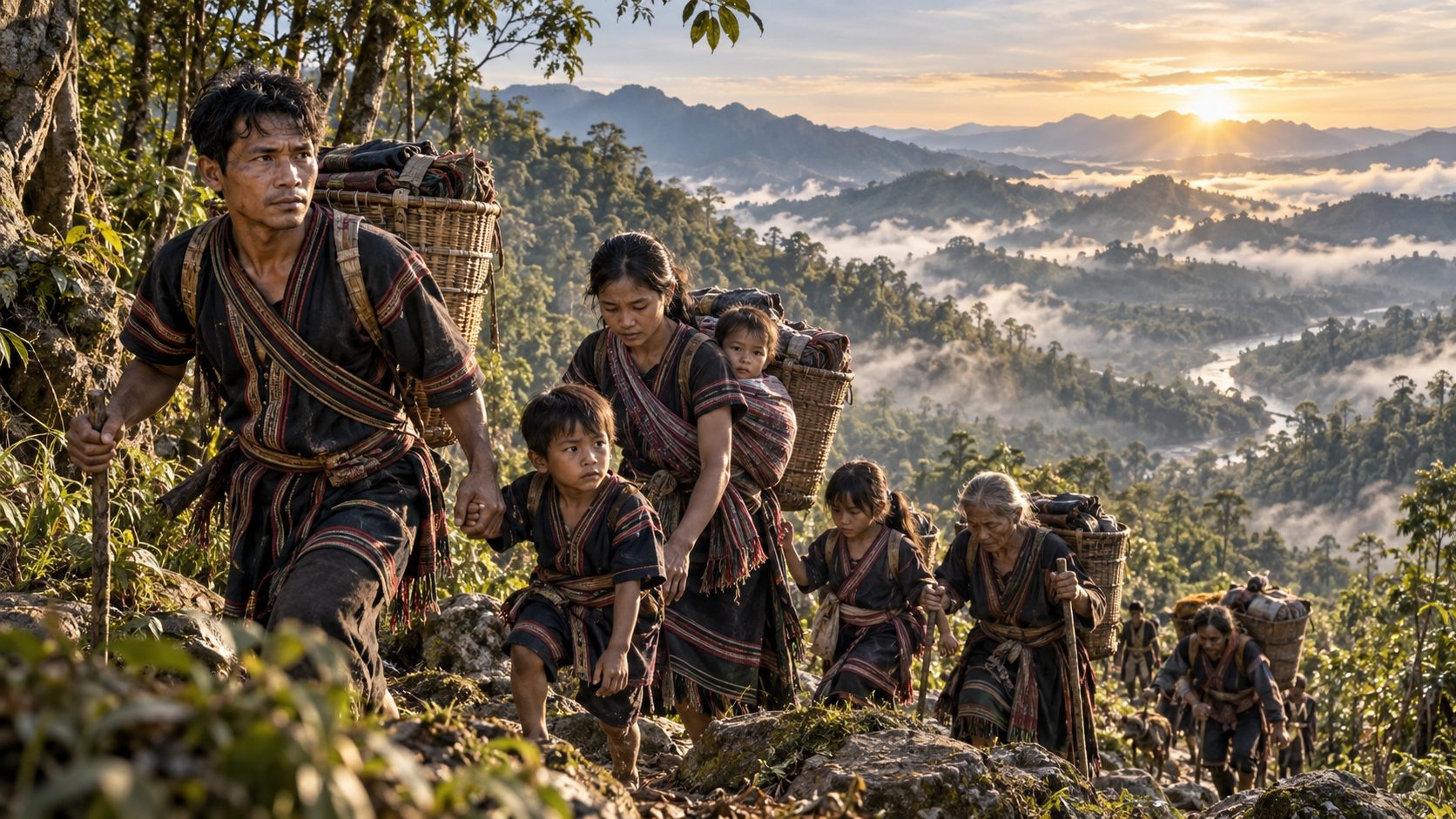
Hundreds of people left their villages after the weekend and tried to reach Cambodia. The border had already been closed against them from the Cambodian side; Cambodia classified them as illegal economic migrants and deported the ones it caught. Those who got across hid in makeshift shelters in the forest of Ratanakiri with their children, short of food, sick with malaria and dysentery. The Cambodian government refused UNHCR access to them for months and only authorized it in July 2004. By January 2005 UNHCR had taken more than seven hundred new Montagnard asylum seekers into protection, recognized two hundred and ninety-six as refugees and rejected a hundred and twenty-six. On December 27, 2004 Cambodia ordered the Ratanakiri camp closed; the national police chief, Hok Lundy: “We cannot allow them [to] stay in Cambodia because it is illegal.” The rest of that story is at The Cambodian camps.
A reporter who got into the Ratanakiri forest in the summer of 2004 met more than a hundred and sixty people hiding there. One of them was an eight-year-old girl who had built a miniature house out of twigs under the plastic sheeting where her family was living. She said:
“I am happier here, because there are no soldiers.”
The same reporter drove through Cu Mgar district. A middle-aged woman by the road, who could not be seen speaking to a foreigner, made an X with her two index fingers in front of her mouth, and then clenched her fists and held her wrists together as though handcuffed. That was the whole of what she could safely say, and she said it.
And in Ayun Pa district, in a stilt house, he found an old woman who did not want to talk about the son who had gone to America in 1974 and whom Hanoi blamed for the whole of Easter Week. Of that son, Kok Ksor, H’ble Ksor said only: “I barely know his face.” She wanted to talk about two other sons, who had been missing since Easter.
“I am very worried,” she says softly. “Do you know where they are?”
The man Vietnam named as the author of April 2004 had a mother in Ayun Pa district who did not know where her other two sons were, and was asking a passing journalist.
And in Greensboro, North Carolina, the same reporter found a man of thirty-seven with relatives in hiding and in prison:
“Sometimes during breaks at work,” he says, “the manager asks me what I’m doing. I tell him that I’m thinking about home.”
Why it is not settled, and what would settle it
Four things keep the record of Easter Week open, and only the last of them is about anybody’s honesty.
- The region was sealed within forty-eight hours — to foreigners, to diplomats, to journalists and to telephones.
- The wounded and the dead were collected off the road and the blood was washed away within days.
- When outsiders were finally let in, in late April and early May, no delegation was allowed to stray from the itinerary, and the people they met said afterward that they had been prevented from speaking truthfully.
- One of the published figures, the four hundred, was an estimate that its own author described to a reporter within eight weeks as a gambit.
Three of those four are acts of the Vietnamese state. One is an act of a Dega organization operating under a blackout imposed by that state. We are not going to pretend the fourth did not happen, and we are not going to let it stand in for the other three.
Here is what would settle it, and who has it.
A list of everyone detained in April, May and December 2004, with charge, court, trial date and sentence. Amnesty asked for exactly this on April 27, 2004. The Ministry of Public Security has it.
The admission records of the two provincial hospitals for the week of April 10, 2004. Ninety-two people were admitted on one night. Somebody wrote their names down.
The court files for the roughly seventy highlanders sentenced in 2004 and the hundred and forty-two sentenced in 2005, of which fewer than half were reported anywhere. Vietnamese courts keep judgments.
Access for a United Nations special procedure. It was asked for on May 28, 2004. It has not happened in twenty-two years.
And here is who can supply what is missing without waiting for any of that.
The families of the eight. In Cu Mgar, in Plei Ring, in Bon Ama Djong, in Bon Hoang, in Buon Dah Prong and in Buon Cuor Knia, there are families who know how each of those eight people died and whether the body came home. Nobody has ever asked them.
The men who have come out of prison. Y Ngun Knul was released in 2020. Y Kur Buon Dap, Siu Bler and Rahlan Del in 2021. Romah Hueh, Rahlan Thik, Kpa Bih and Y Ben Nie in 2018. Several are alive in the highlands now, under post-release probation. They sat through the trials that nobody reported.
The people who got out in 2004. They are in Greensboro, Charlotte, Raleigh and Winston-Salem. The man in Greensboro who told a reporter he thinks about home on his breaks would be about sixty now. The Rhade woman who watched Phan Chu Trinh road from her window, if she got out, would be about forty-eight.
The missing of Easter Week have never been listed. That is not because the information does not exist. It is because the people who hold most of it have never been asked, and because the one institution that could answer in an afternoon has spent twenty-two years declining to. If your family lost somebody that weekend, or if you were on one of those roads, we are building the record and we want the name.
Terms
- Unit 113
- A paramilitary unit of Vietnam’s Ministry of Public Security, documented conducting sweeping operations in the highlands with assault rifles and electric shock batons.
- Public self-criticism session
- A compulsory village meeting at which people are required to renounce Christianity and undertake to cease religious or political activity, sometimes by signing a written pledge. In parts of Dak Lak these were convened on Sunday mornings, several times a month.
- Instruction No. 1
- The Prime Minister’s instruction on Protestantism of February 2005. It permits house churches to register, on condition that they renounce any connection to groups accused of organizing protests, and it bans Dega Protestantism by name.
- Country of Particular Concern
- A designation under the United States International Religious Freedom Act of 1998, applied to governments found to engage in or tolerate particularly severe violations of religious freedom. Vietnam was designated in September 2004 and the designation was lifted in November 2006.
See also: February 2001: the highlands stand up, The Cambodian camps, 2001–2005, The years between, 2005–2022, Kok Ksor, The memorial register.
Sources
- Human Rights Watch, Vietnam: Violence Against Montagnards During Easter Week Protests, April 14, 2004 — the sweep log of February to April, the day-by-day account of the weekend, and the Buon Ale A witness
- Human Rights Watch, Vietnam: Open Central Highlands to International Observers, April 22, 2004 — the ambushes at the bridges, the burned tractors, the hospital figures, the at-least-ten, and the account of the road being washed
- Human Rights Watch, Vietnam: New Evidence of Torture, Mass Arrests of Montagnards, January 10, 2005 — the torture accounts, the Hoang Anh Gia Lai allegation, the witnesses’ own count of the dead, and the December 2004 arrests in Gia Lai
- Human Rights Watch, Vietnam: Montagnards Under Lockdown, May 28, 2004
- Human Rights Watch, No Sanctuary, June 2006 — the 355 sentences against 159 reported trials, the accounts of people who fled in 2005, and the memorandum of January 2005
- Human Rights Watch, Montagnard Christians in Vietnam, March 2011 — the Department of Central Highlands Security, PA43, Instruction No. 1, Decree 22 and the renunciation figures of 2010
- Amnesty International, Socialist Republic of Viet Nam: Renewed concern for the Montagnard minority, ASA 41/005/2004, April 27, 2004 — the eight names, and the four requests Vietnam did not meet
- Montagnard Foundation, report on the Easter demonstration of April 10, 2004 — the commune-by-commune tally, the naming of Ksor Hnun two days after he died, and the estimate of four hundred dead
- Phil Zabriskie, “Vietnam’s Tribal Injustice,” TIME Asia, July 18, 2004 — the gambit sentence, H’ble Ksor, the woman on the road in Cu Mgar, the child in the Ratanakiri forest, and the man in Greensboro
- Vietnam: Situation of Indigenous Minority Groups in the Central Highlands, a Writenet report commissioned by UNHCR, June 2006 — the thirty-nine communes in seventeen districts, and the demands as participants stated them
- US Commission on International Religious Freedom, annual reports for 2006 and 2007
- Our own prisoner records, held in this library and compiled from families, from witnesses and from Montagnard Foundation records, for the 142 arrests of 2004
Compiled September 2026. No Vietnamese government or state media source is used as a source on this page. Where the Vietnamese state’s own account appears — the figure of two dead, the figure of 5,500 participants, the charge of overseas instigation, the renunciation figures of 2010 — it is quoted from an outside report that reproduced it, and it is here as evidence of what the state said. Several things on this page are unsettled and are printed unsettled: whether the death toll established by investigation is ten or eight; and where the men in civilian clothes with machetes came from. Our prisoner records give ages as recorded at the time of arrest, and village spellings as families gave them; several villages appear here under two spellings. The eight named dead are in the memorial register. If you can add a name, a date, or a correction, we want it.