









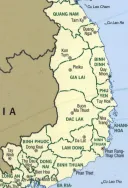












For more than a century the village of Ban Don, on the Srepok west of Buon Ma Thuot, was known across mainland Southeast Asia for one thing: the men there caught wild elephants and tamed them. The hunters were Mnong, Lao, Jarai and Rhade, and the most famous of them was given a title by the King of Siam. The hunting ended in the 1990s. In 1980 Dak Lak had about five hundred tame elephants; by 2022 it had fewer than forty, and the wild herds of the whole country were down to about a hundred animals. This page is the record of the village, the hunters, the animals and what became of them.
.jpg)
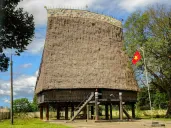
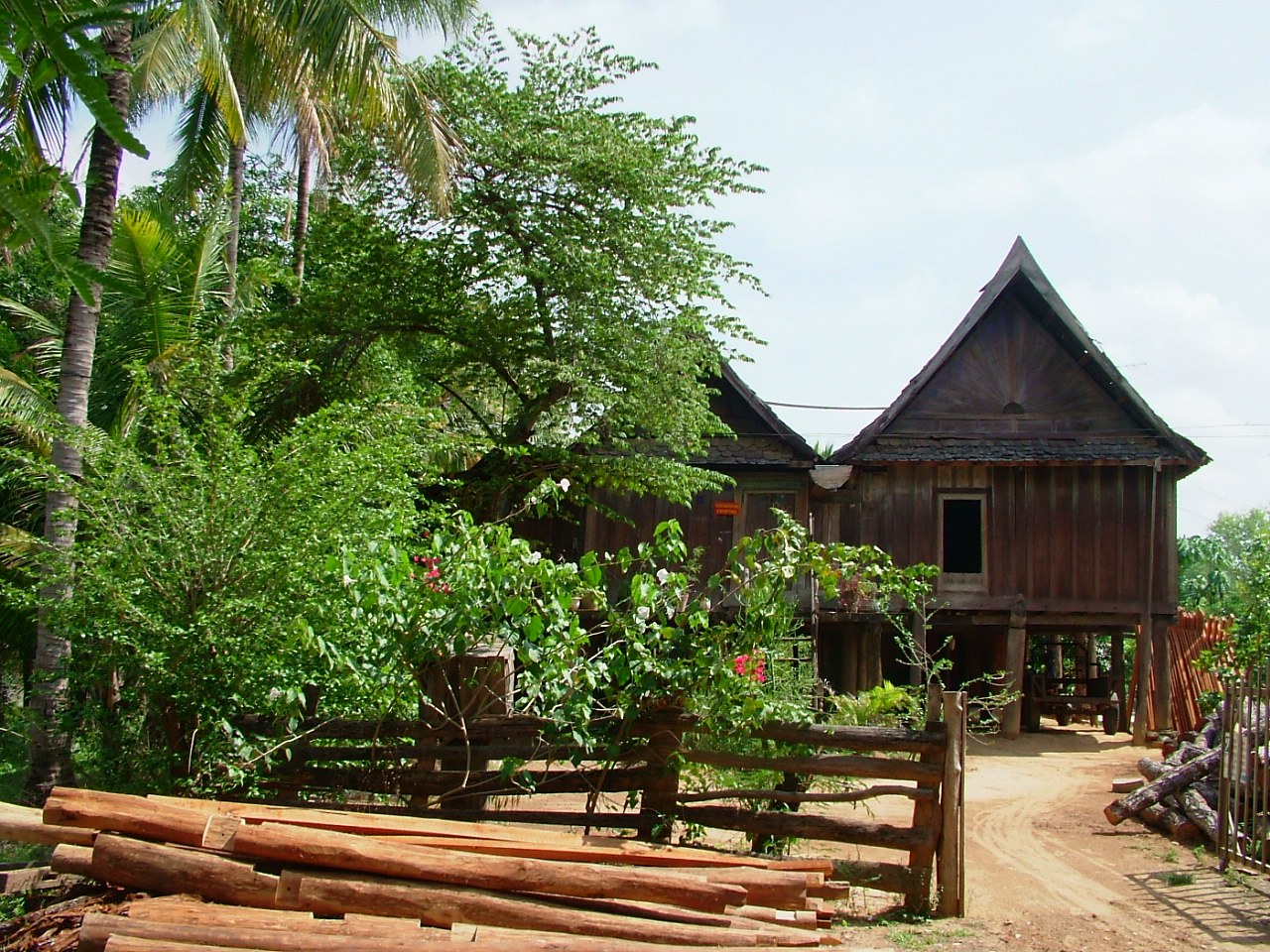
The village on the isle
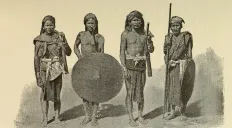
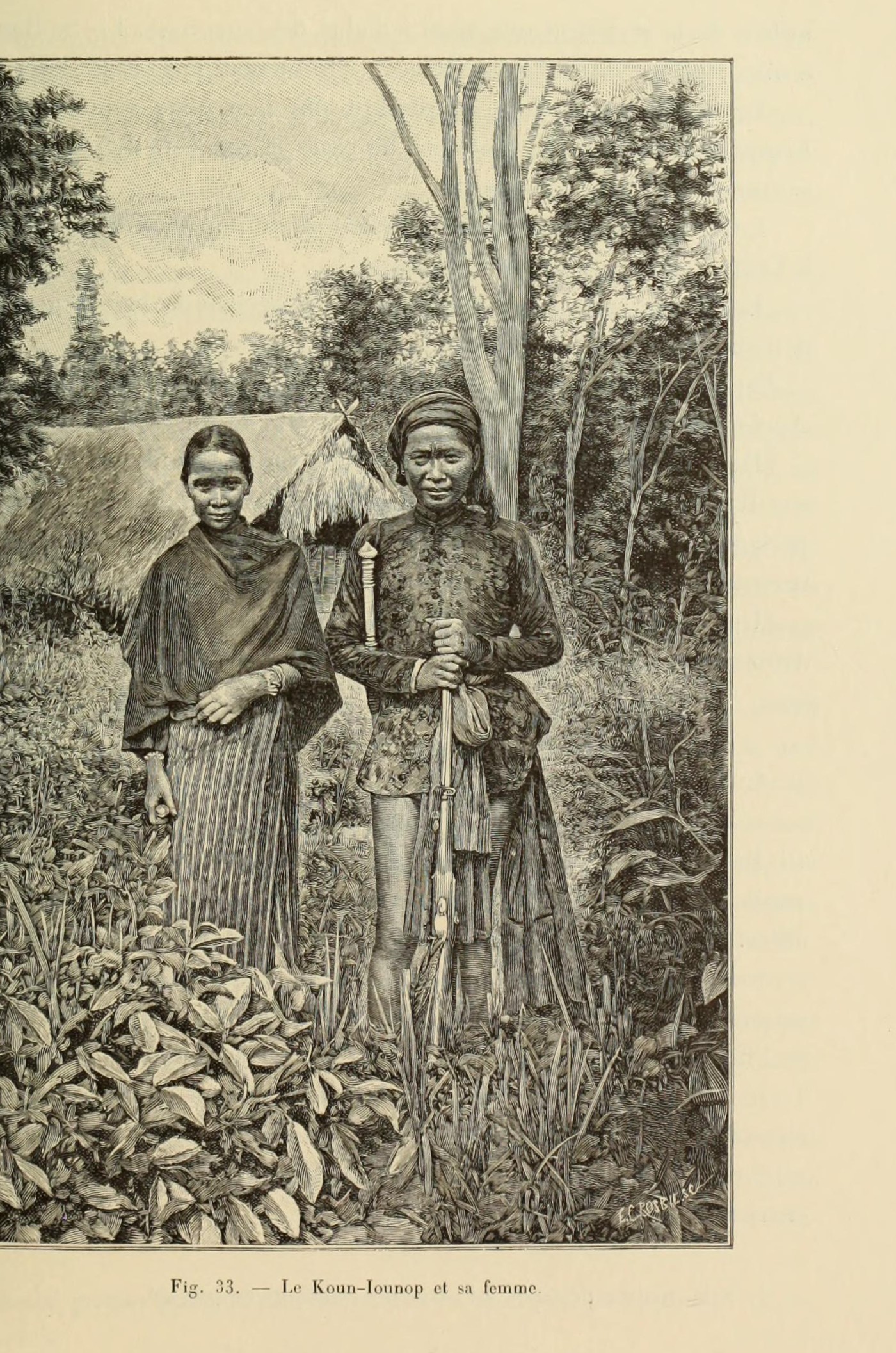
Ban Don is a Lao name. It means the village of the isle, after a rock bar in the Srepok where Lao traders settled in the nineteenth century, and the Rhade say it as Buon Don. It stood at the meeting of three worlds: the Lao and Siamese country down the river, the Cambodian country to the west across two hundred kilometers of empty forest, and the Rhade and Mnong country upstream. In February 1891 a French officer, Captain Cupet of the Mission Pavie, came to it from Kratie across that forest and described it as the door of the wild country, a place that had long traded with Kratie, Sambor and the Mekong towns, from which a cart road ran to the great river and a good footpath to Nha Trang on the coast. The village was Mnong and Lao, and its chief was a man the French wrote as Koun-Iounop.
That is the earliest written notice of the man we know as Khunjunob, and it tells us why the village mattered. It was the last place a lowlander could reach. Cupet wanted to go on east to the Rhade and could not: the chief would give him no guide and no boat, and said the Rhade had closed the paths and would make war on anyone who came, and that if he helped, his own village would be looted and its people taken as slaves. Cupet went back the way he came. The Srepok at Ban Don was, in 1891, the border of a country that governed itself (see First outsiders).


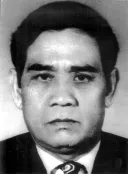
Khunjunob
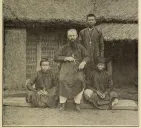
Y Thu Knul was born, by the account kept in the community and repeated in every later source, in 1828, and died in 1938. He is credited with catching and taming between four and five hundred elephants in his life. Cupet, who met him in 1891, wrote that he was the son of a Lao man and a Mnong woman, and that his face showed shrewdness and cunning. The French of 1933 called him chief of the Rhade. His own people call him Mnong, or Lao, or both, and Ban Don was a village where that question did not need an answer.
The title came from a white elephant. Some years before 1891, Cupet was told, a white elephant was caught in a hunt and brought to the village; the Cambodian court tried to buy it, was outbid by the envoys of the King of Bassac, and the animal went on to Bangkok. For that the chief received the Siamese title of khun, the first grade of the Siamese mandarinate, and became Khunjunob, which is remembered among us as meaning the king of elephant hunters. The King of Bassac, Cupet added, had not yet paid him the full price. It is often said that the elephant was given in 1861; that date rests on Vietnamese press accounts and we have not found it anywhere older, so we give the story as Cupet had it from the man himself: a few years before 1891.
He was also a man of his violent time. The country he traded in was a slave-trading country, and the same French sources that admired his elephants described him, under his other names Ma Krong and Mesao, as a slave trader who once sought French protection against rivals who were in fact the relatives of the people he had sold (see The slave raids). Cupet recorded the exchange rates of the Srepok in 1891: a slave for four or five buffaloes, a whole family with children for a small elephant, a large elephant for as many as ten slaves. Ban Don was rich because elephants were the currency of that trade.
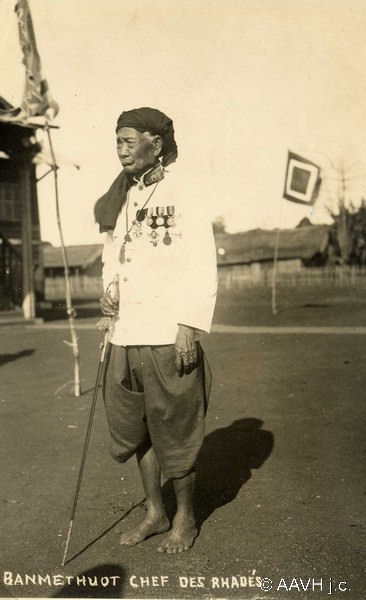

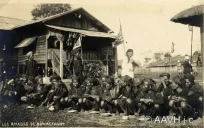
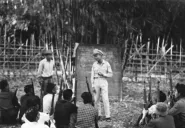
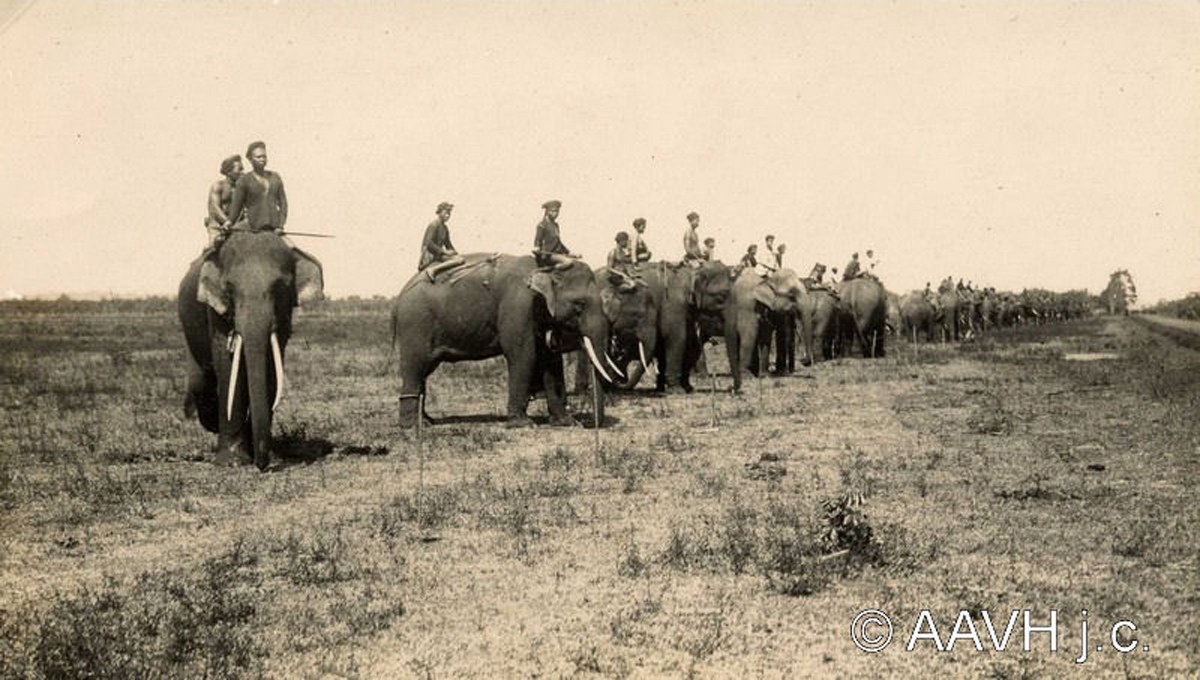
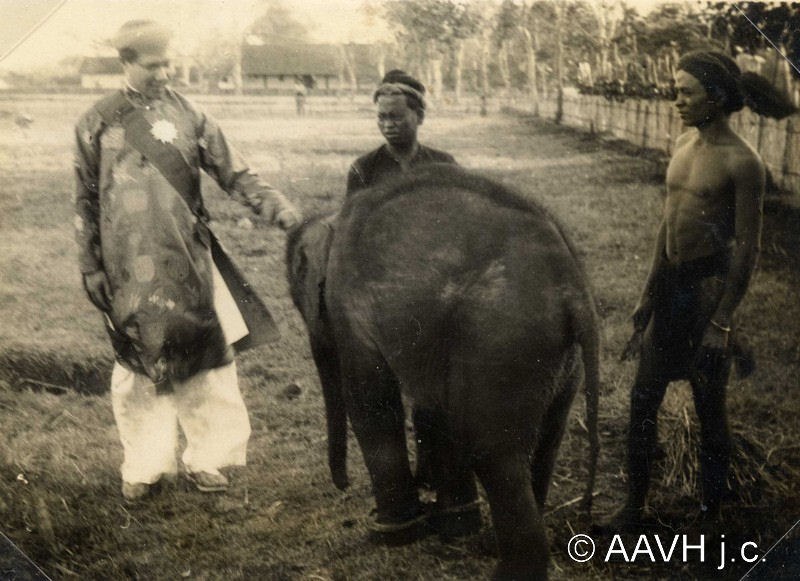
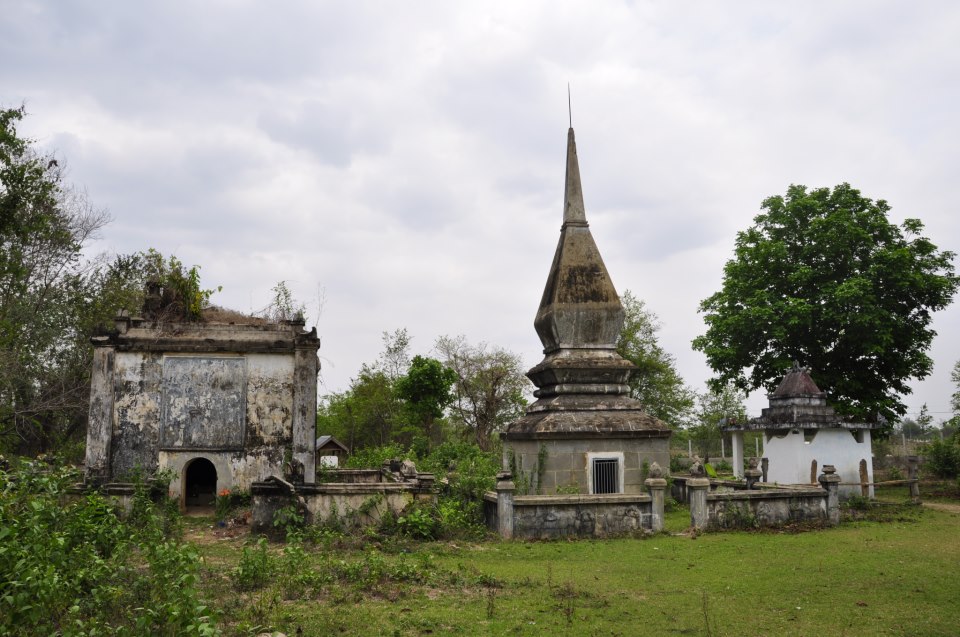
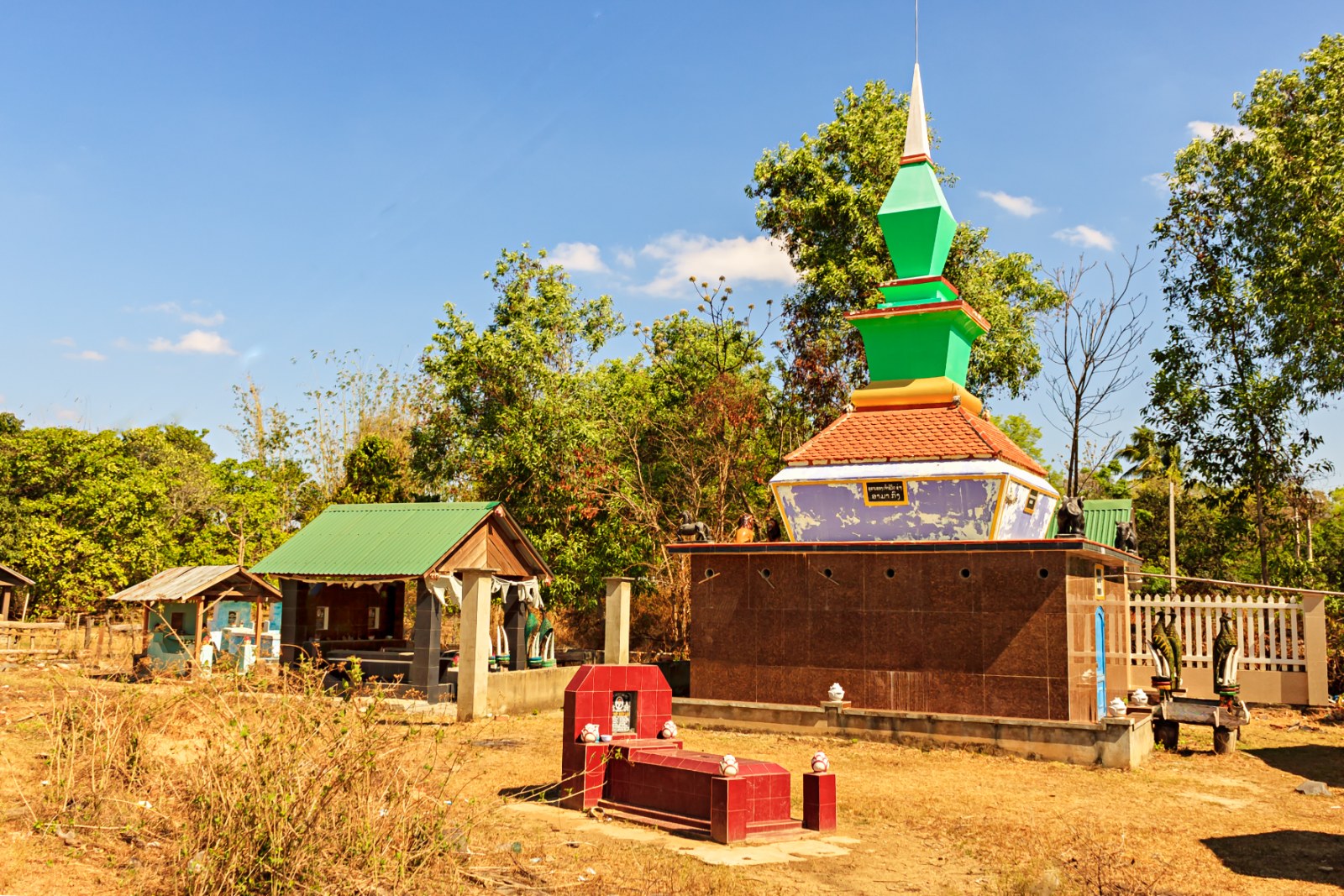
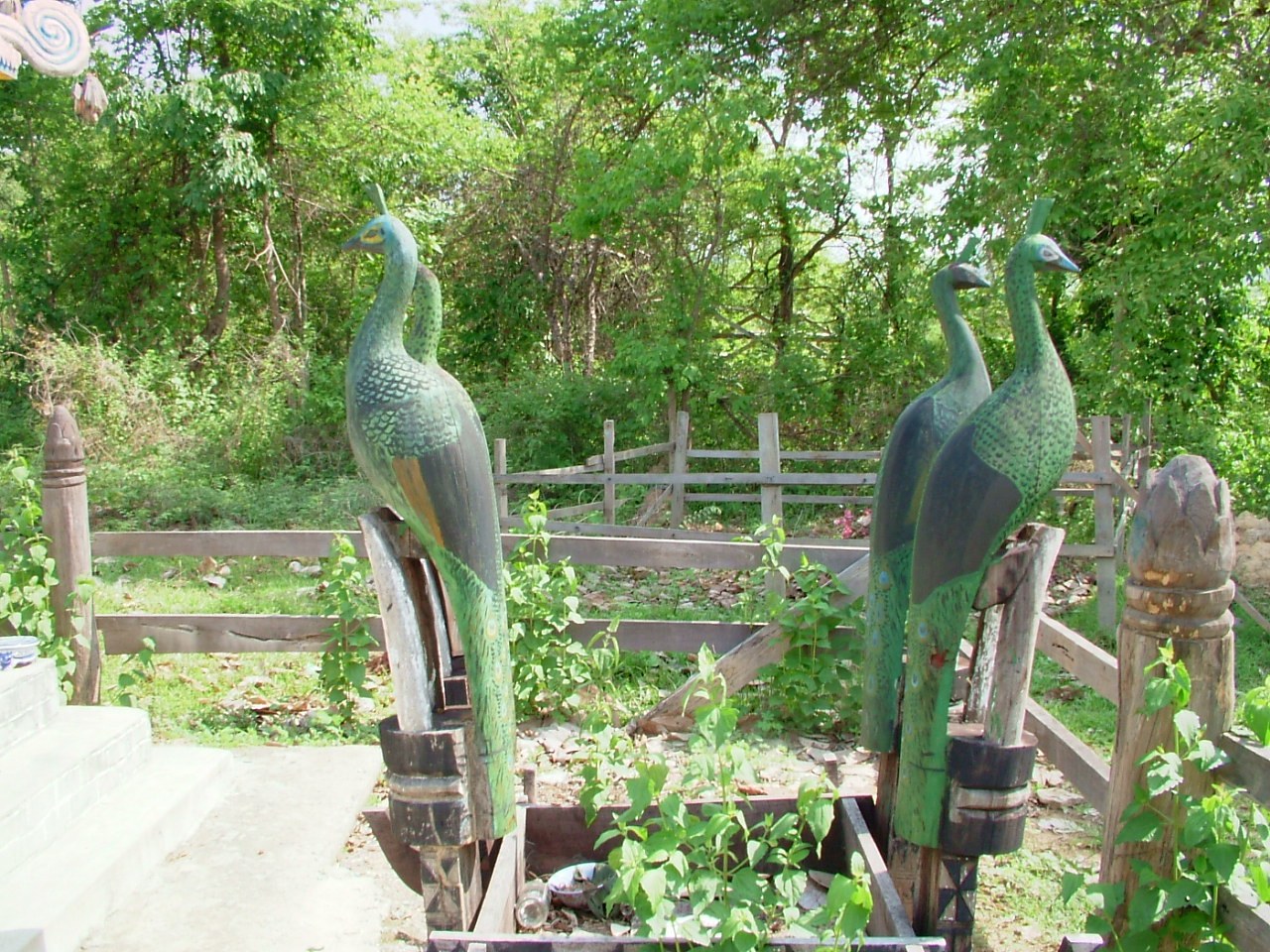
In February 1933 the new emperor Bảo Đại toured the highlands, and at the Ban Me Thuot airfield Khunjunob drew up 162 elephants with their mahouts to receive him, and gave him an elephant calf. The French notice of the day called him the grand master of the corporation of elephant hunters and more than a hundred years old. His nephew stood beside the French Résident when the emperor landed. He died five years later. His tomb stands in the hunters’ cemetery at Ban Don, built in the Lao and Mnong manner together, and the tombs of the other great hunters stand around it.

How the hunt was done
Elephant hunting at Ban Don was the work of specialists. The method is the one called mela-shikar across Asia: hunters rode out on trained elephants, the khoonkie, found a wild herd, and noosed a calf or a young animal by a hind foot with a loop of buffalo hide on a long pole. The captured animal was brought back to the village and tamed. The rest was rule and rite. Only the right hind foot could be noosed. A special language was spoken during the hunt and no other. The hunters’ ropes and tools were sacred and were kept in the house. Before setting out the leader blew a buffalo horn to ask the forest spirits for their support. A hunt could take days and a whole troop of people with five to ten tame elephants.
The rules were the same across the border. Among the Bunong of Mondulkiri, where the same hunting was done, twenty men would ride out together, brothers and uncles from one village, with braided buffalo-hide lassos; while the hunt was out no one at home might pound rice, because the fall of the pestle was the fall of an elephant’s foot. A Bunong elder said of it: “An elephant has the life of a person. It knows more than we do.” Our own peoples say the same thing in their own words. Among the Rhade the elephant was capital and transport, but also, in the words of the American army handbook of 1966, a kind of talisman with mystical ties to the clan, so that he is considered a part of the family and given a name. Among the Stieng the flesh of a domestic elephant was taboo, and the Jarai of the Ro’mah clan would not eat elephant at all, because their ancestors, the story goes, had become elephants after eating poisoned fish.
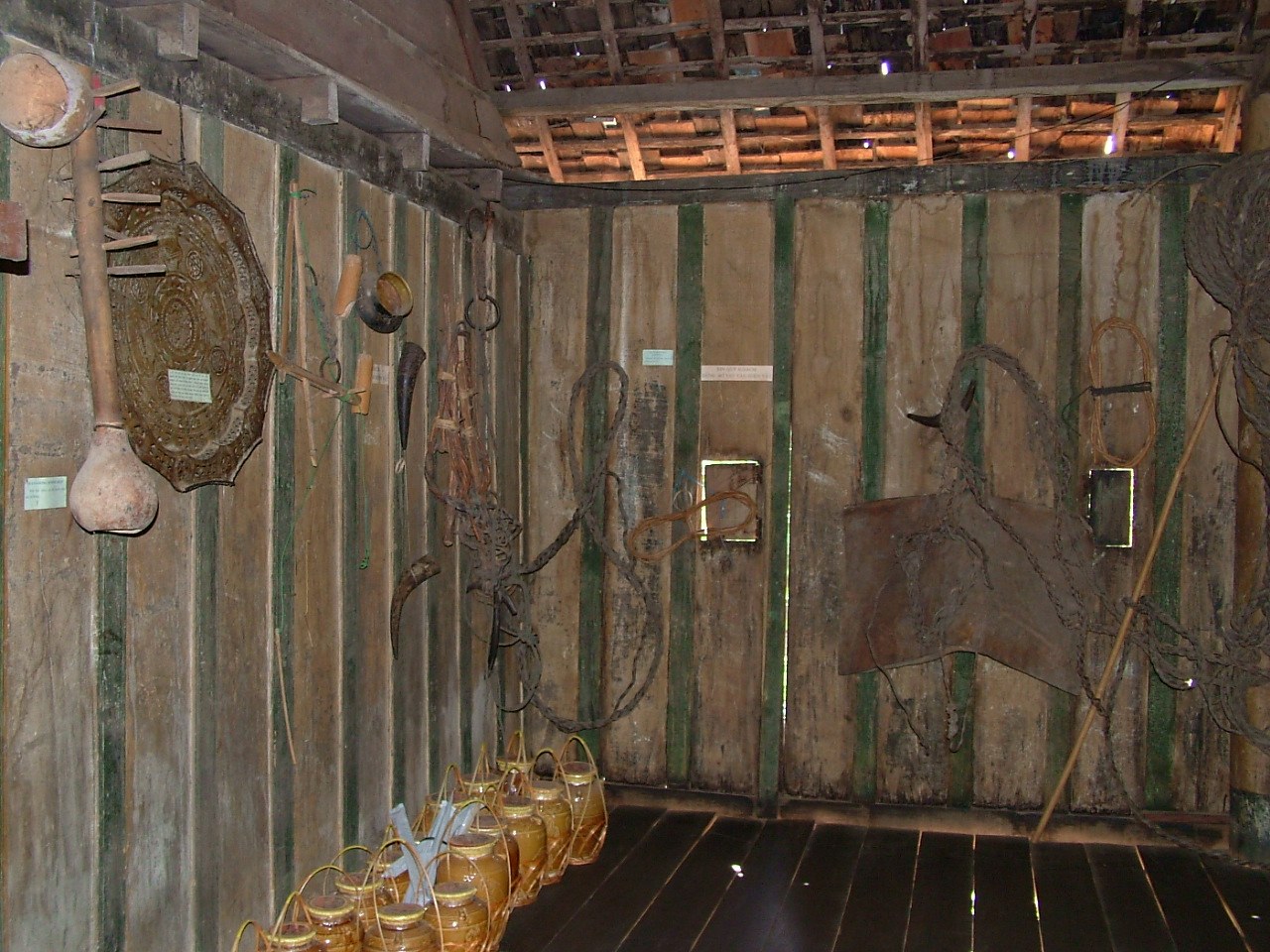

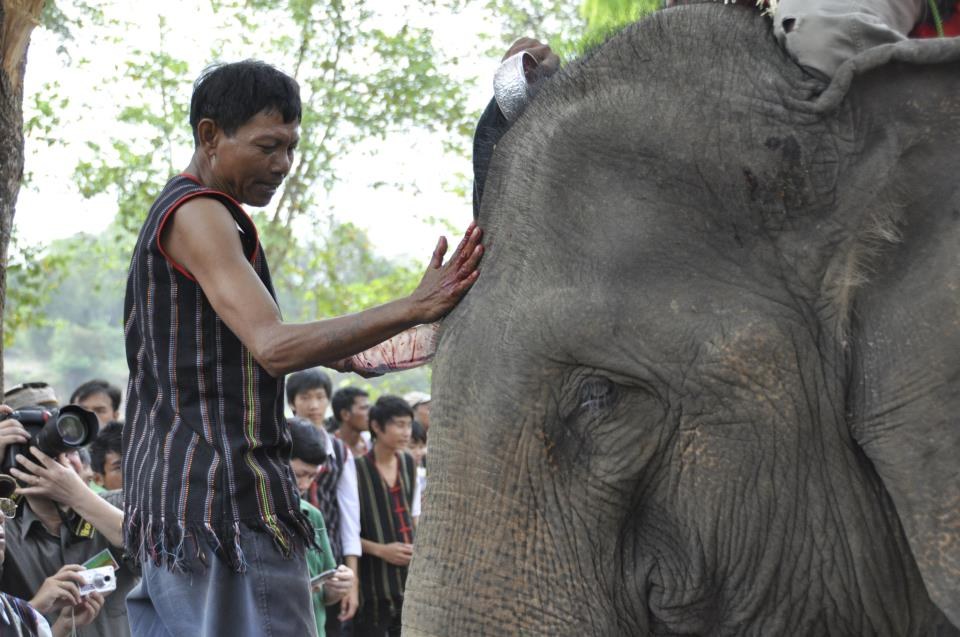

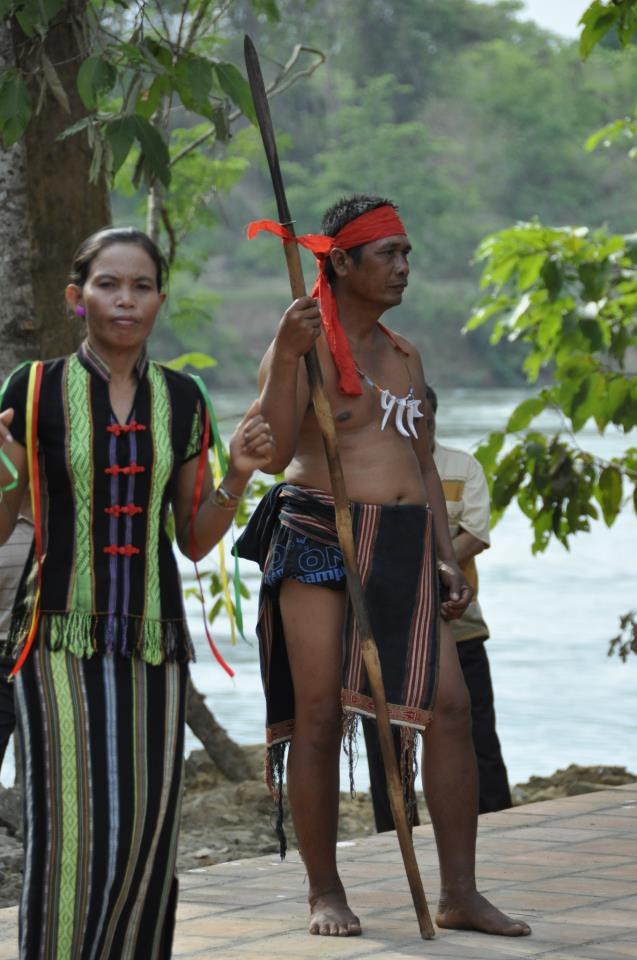

The catching went on, at Ban Don and Ea Sup, into the 1990s. Until the 1960s there was a quota; until about 1990 the hunters of the district still caught ten to twelve wild elephants a year. Then the state banned capture, and by 1993 only a few were still being taken. The last of the great hunters was Ama Kong, Y Prong Eban, born in 1910, Y Thu Knul’s son-in-law, who caught 298 elephants in his life and eight white ones, and took his last in 1996, five years after his hunting ground had become a national park. He died in November 2012 at 102, with 21 children from four wives and more than a hundred grandchildren, and was buried beside his father-in-law. The FAO study of 2002 said plainly what his death meant: the hunters who knew the art were scarce and old, and the young were not learning it, because there was nothing left to catch.




How the numbers fell
The FAO study, written by three Vietnamese foresters for a conference in Bangkok in 2002, is the only count of the tame elephants of Dak Lak that sets out its own sources. Its table is this.
| Year | Tame elephants in Dak Lak | Whole country |
|---|---|---|
| 1980 | 502 | about 600 |
| 1990 | 299 | — |
| 1997 | 171 | — |
| 2000 | 138 | 165 |
Of the 138 counted in December 2000, 95 were females and 43 males; forty were over fifty years old, and only eleven were under twenty. The herd was not breeding. Elephants rarely breed in captivity in Vietnam, the study said, and the mahouts did not want them to, because a pregnant cow cannot work. Bulls were prized for a piece of ivory that could be cut and sold every three years. Tame elephants were sold across the border to Laos and Cambodia along forest trails, and nobody registered them at any level of government. A later count by a forester of Tay Nguyen University gives lower figures still, 115 in 1997 and 84 in 2000; the two counts were made differently, and we print the FAO one because it says how it was made. By 2011 there were 54 tame elephants left in Dak Lak, and only thirty of them belonged to local people; the rest had been sold to tourist companies. In 2022 the province had 37.
The wild population fell faster. From 1975 to 1980 Vietnam was thought to have 1,500 to 2,000 wild elephants. The estimates since then run 400 to 600 in the early 1990s, 258 to 305 in the middle of the decade, 85 to 114 by 2000, 76 to 94 in 2004. The world conservation body put Vietnam at 104 to 132 in 2020, the smallest population of the thirteen countries that still have wild elephants. In 2022 the country’s own forestry administration counted 91 to 129, in about twenty-two herds, of which the largest, 28 to 60 animals, lives in and around Yok Don. Ivory hunting was worst between 1987 and 1989. The forest went for coffee, rubber, dams and settlement (see Forests, logging and the sacred groves). Hundreds of wild elephants were caught for taming, the FAO study noted, and no one involved was ever prosecuted; the laws against it existed from 1960, and enforcement was weak.
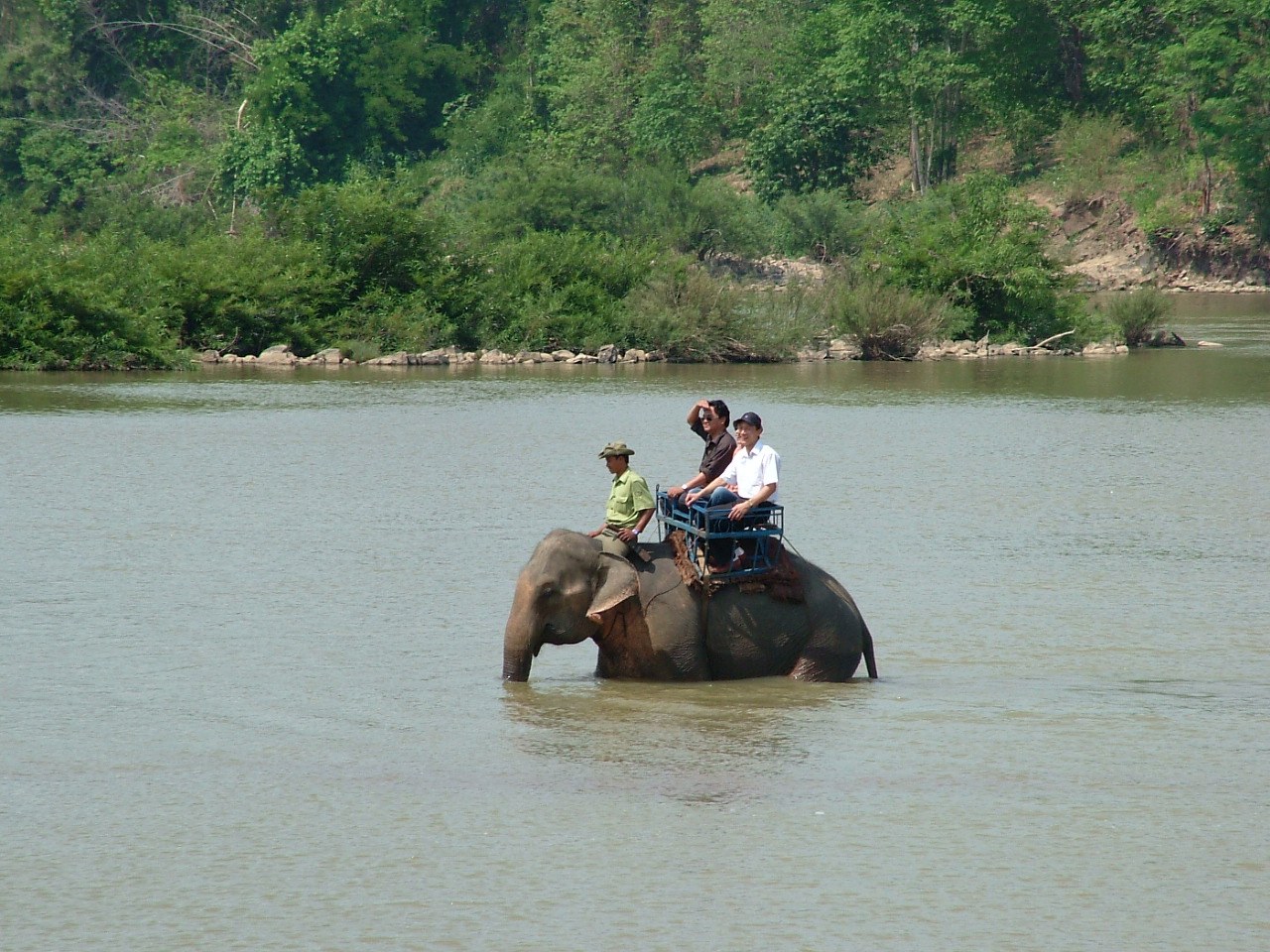

Yok Don
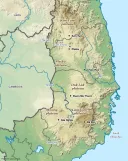
The national park was created in 1991 and later enlarged to 1,155 square kilometers of dry dipterocarp forest along the Srepok, forty kilometers west of Buon Ma Thuot, with Ban Don inside its edge. It borders the protected forests of Mondulkiri, and with them it is part of what may be the largest protected landscape in Southeast Asia. That is also where the wild herds of Dak Lak survive, and where the elephants of the Bunong across the border come from. In Mondulkiri, where the elephants belong to clans of ten to thirty-five families, the last capture anyone remembers was in 1996, the same year as Ama Kong’s. The Bunong of Mondulkiri lost most of their elephants under the Khmer Rouge; the Mnong of Dak Lak lost theirs to the trade.


Ending the rides
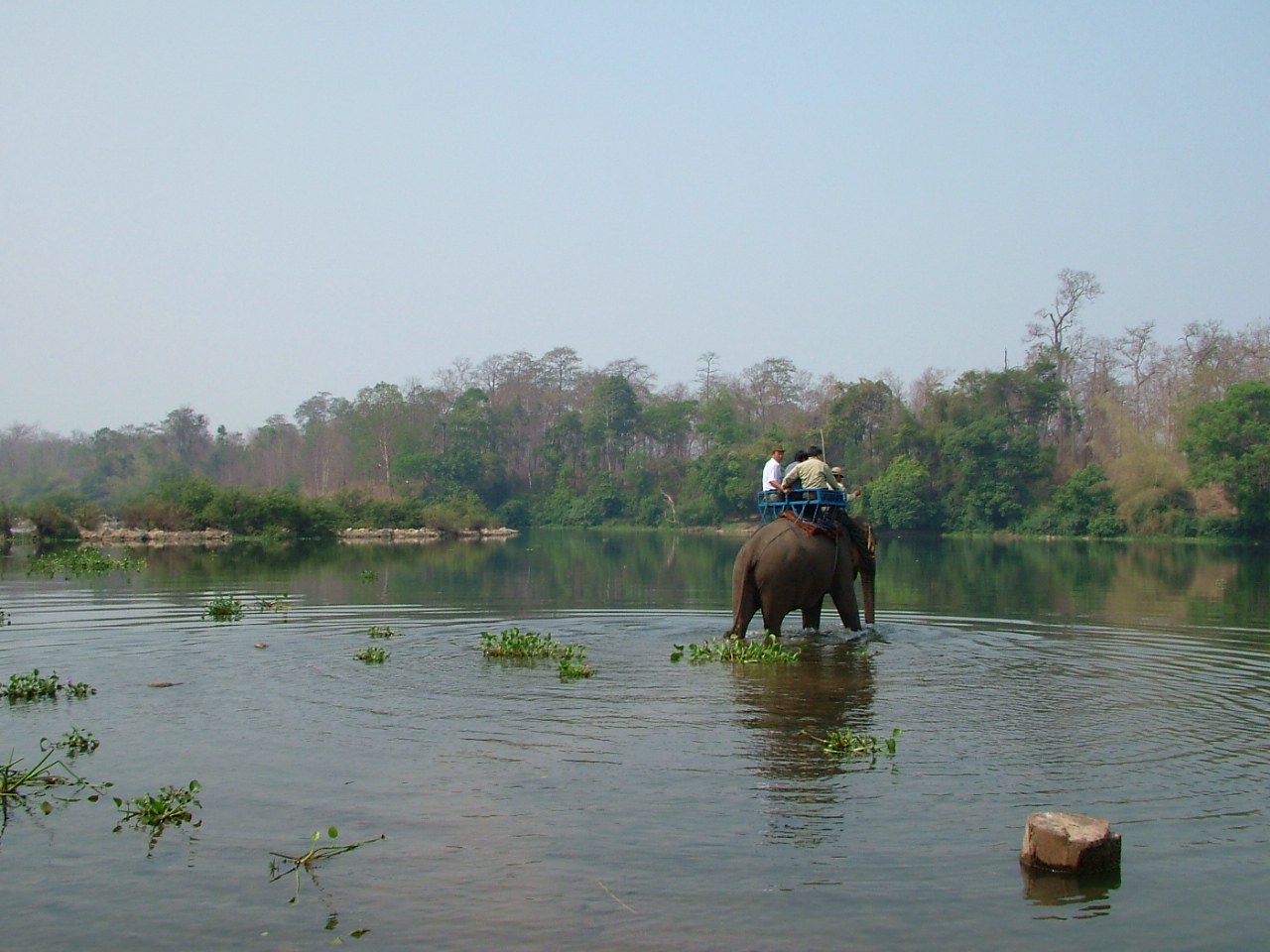
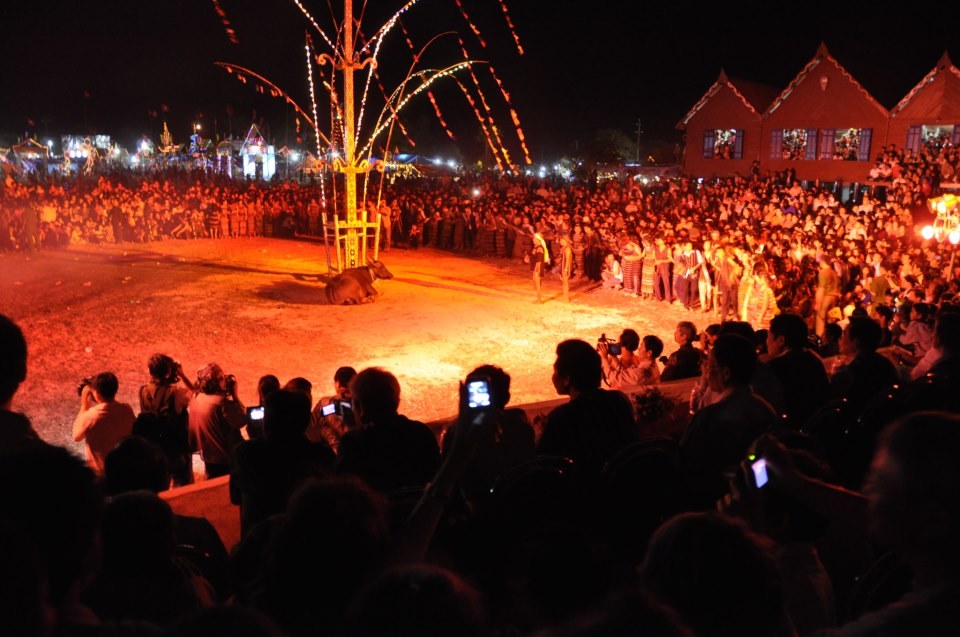
When there was nothing to hunt, the elephants were put to work for visitors: rides, races on the riverbank every third lunar month, football, dancing to a trumpet, and staged hunts. In July 2018 the animal-welfare charity Animals Asia and the park signed an agreement, with a grant of US$65,000, to stop the rides at Yok Don and let the park’s elephants walk the forest by day, watched from a distance, while their mahouts were kept in work. In December 2021 the same charity signed a memorandum with the province to end riding, performances and staged hunting across Dak Lak by 2026, with about 55 billion dong, about US$2.2 million, to compensate the owners. By 2025 the charity had bought eleven elephants; of the 35 tame elephants left in the province, 24 lived in Buon Don district, and the largest private operator there had stopped rides in 2023. The last riding station at the Buon Don suspension bridge closed first.
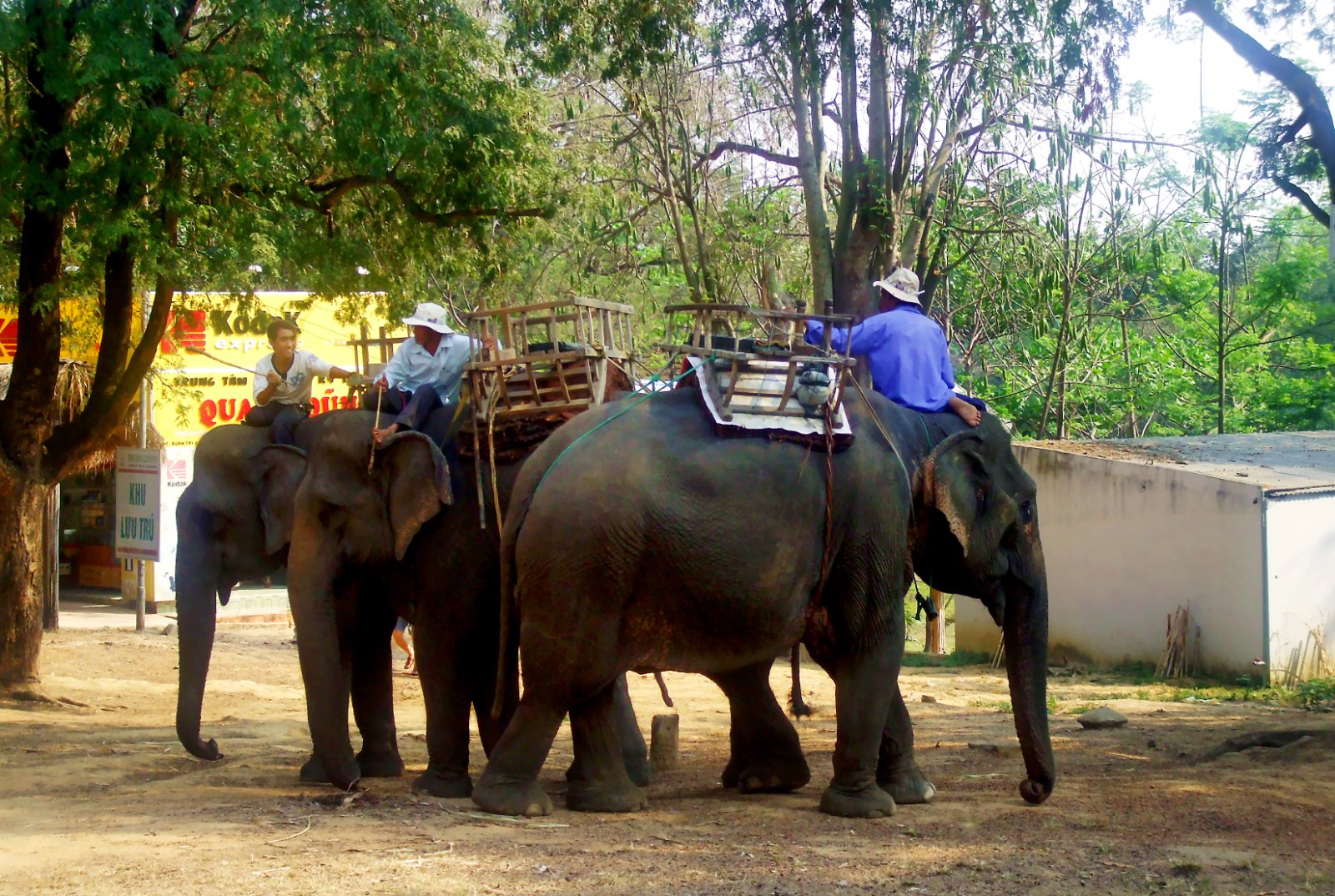

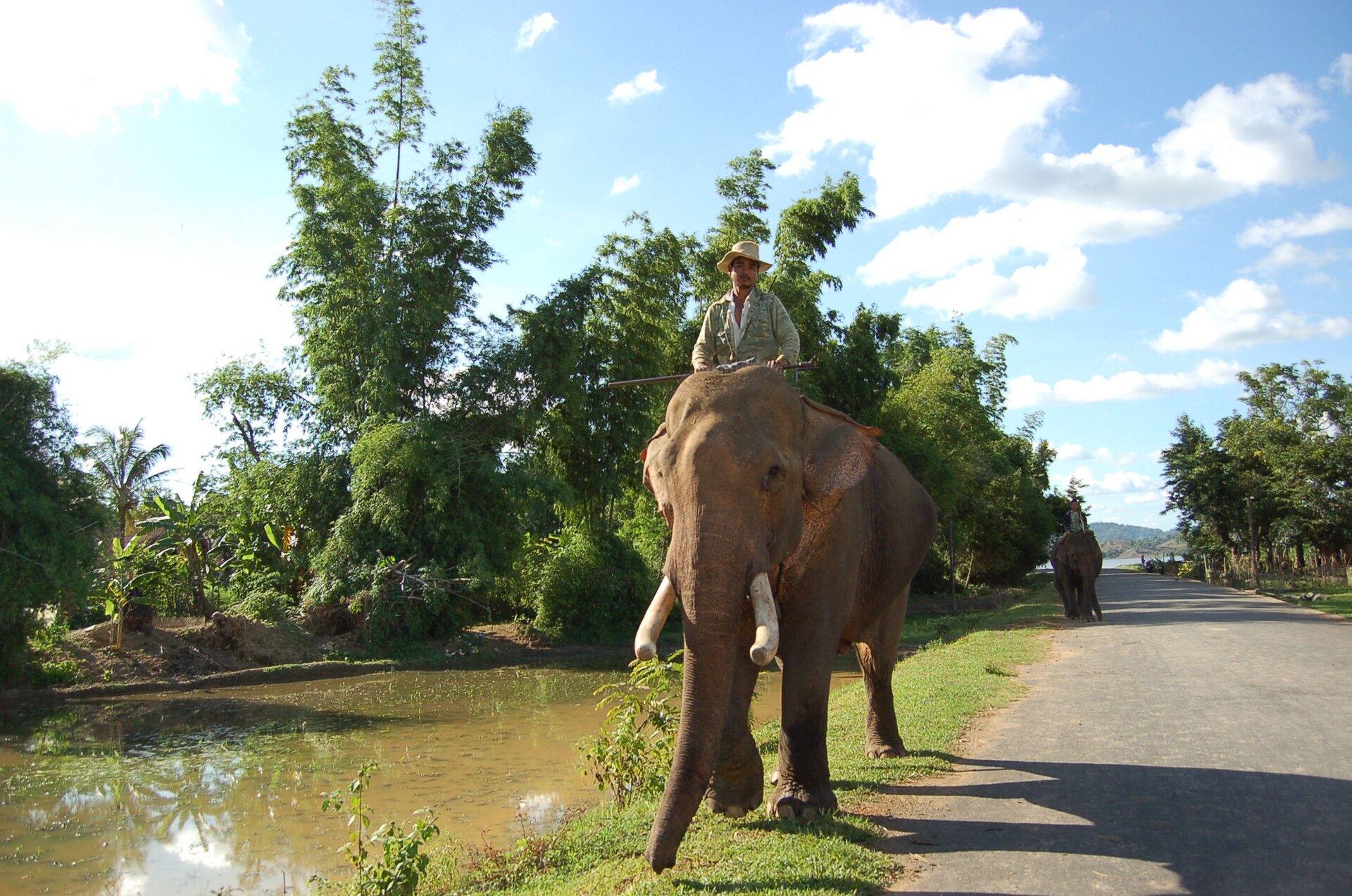
For the mahout families the change is not simple. An elephant was wealth, a working partner and a member of the household, with a name. The men who catch and keep elephants, the FAO study said, are accorded considerable status and respect by their peers. What happens to the knowledge of Ban Don when there are no more elephants to care for is a question for the families themselves, and the answer is being given now, in the village, in this decade. If you are of one of those families, or your father or grandfather hunted, record it; the count of the elephants is in the tables above, and the count of what the hunters knew is nowhere.

What we do not know
- Y Thu Knul’s dates. The community gives 1828 to 1938; the French caption of 1933 makes him 117, which would put his birth about 1816; one travel guide prints 1850 to 1924, which cannot be right if the man photographed in 1933 is he.
- The year of the white elephant. Cupet, who heard it from him, says a few years before 1891.
- Where the hunting language and the hunting rites are written down, if they are. We have found them only in fragments in foreign reports.
- How many elephants were sold out of Dak Lak to Laos and Cambodia, and how many were killed for ivory. Nobody registered them.
See also: The Mnong, Hunting, the crossbow and the forest, Kin across the border.
Sources
- P. Cupet, “Voyages au Laos et chez les sauvages du sud-est de l’Indo-Chine,” Mission Pavie, Indo-Chine 1879–1895: Géographie et voyages III (Paris, 1900), DCHO library, also on the Internet Archive — Ban Don in February 1891, Khunjunob, the white elephant and the title, the Rhade closing the paths, the price of slaves and elephants
- Trinh Viet Cuong, Tran The Lien and Pham Mong Giao, “The present status and management of domesticated Asian elephants in Viet Nam,” in FAO, Giants on Our Hands (Bangkok, 2002) — the table of tame elephants 1980 to 2000, the ages and sexes of 2000, breeding, sales across the border, the hunters, the laws
- Richard C. Lair, Gone Astray: The Care and Management of the Asian Elephant in Domesticity (FAO, 1997), the Vietnam and Cambodia chapters — the ban of 1990, the noose, the right hind foot, the special language, the taboos
- Cao Thi Ly, “Current Status of Asian Elephants in Vietnam,” Gajah 35 (2011) — the wild counts 1975 to 2004, the tame count of 2011 and who owned them
- C. Williams and others, IUCN Red List assessment, Elephas maximus (2020) — 104 to 132 wild elephants in Vietnam
- Govi Snell and Anton L. Delgado, “Vietnam’s last wild elephants on the brink of survival,” Mekong Eye, July 17, 2023 — 91 to 129 wild elephants in 22 herds, Yok Don, the retired elephants
- Oscar Salemink, “A View from the Mountains,” in Linking Destinies (KITLV, 2008) — Khun Jonob, Ma Krong, Mesao, the slave trade and the Siamese title
- Paul Spencer Sochaczewski, “Last Great Elephant Hunter Achieves Indochine Glory” (International Herald Tribune, 2005) and the Elephant Encyclopedia — Ama Kong, 298 elephants, the last capture in 1996, the buffalo horn
- Animals Asia, the Yok Don agreement of July 13, 2018; Species Unite and Zenger News on the memorandum of December 2021; FUF, May 2025, on the elephants bought since — the end of the rides
- Katherine Du, “Dying Tradition: The Men Who Catch Baby Elephants,” NPR, March 28, 2016 — the Bunong hunters of Mondulkiri
- Association des Amis du Vieux Hué, the Sogny-Marien notices for the photographs of February 1933
- Our own records — the dates 1828 to 1938, the four to five hundred elephants, and the meaning of the title
Compiled September 2026. The count of the elephants is a foreign count; the account of the hunt is ours and the Bunong’s. We are looking for the words of the hunting language and for any hunter’s own account of a capture.