






















Thousands of highland families in Vietnam have no identity papers. Without them a child cannot enroll in school, a couple cannot register a marriage, a family cannot transfer its land, or see a doctor on public insurance, and no one can lawfully leave the country. These are people born in the highlands to parents born there, with no other nationality. They are citizens in law who cannot prove it to their own government, because local officials will not record them. Many of them belong to churches the state has not approved. A UN committee member in 2026 called it de facto statelessness.

How it happens
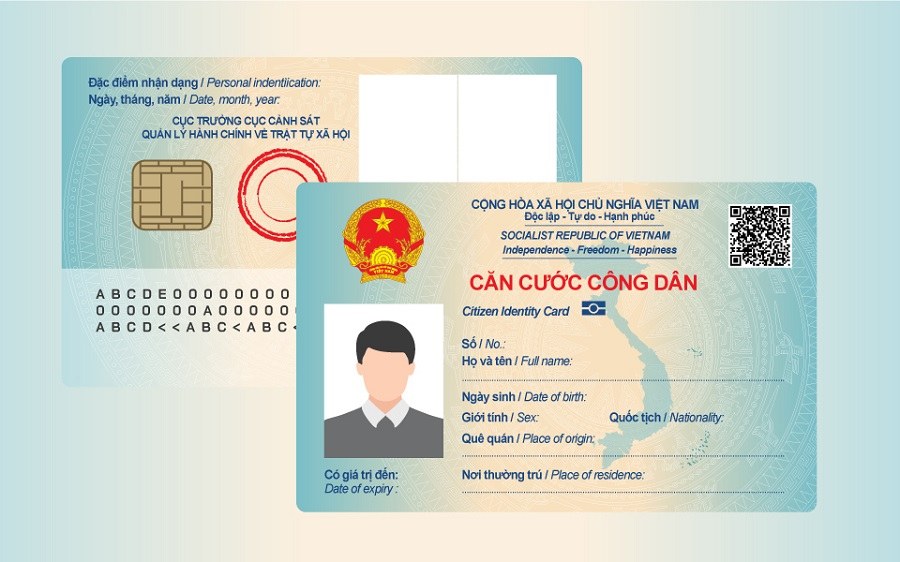
Until the end of 2022 almost everything in Vietnam passed through the household registration book, the hộ khẩu. A birth certificate needed one, a school place needed a birth certificate, and a household registration was needed to transfer the right to use land, to register a marriage and to join public health insurance. On January 1, 2023, under the Law on Residence of 2020, paper registration books stopped being valid. The gate is now a person’s entry in the national population database run by the Ministry of Public Security, the citizen identity card, and the VNeID application through which services are now reached. A family that was never entered in the old registers is missing from the new database too, and getting an identity card can still require a household registration when a person is not already in the database.
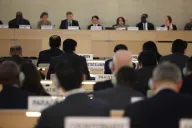
Christians of unregistered churches are refused papers for their children, or told they will get them once they give up their faith. A member of the UN Committee on the Elimination of Discrimination against Women put exactly that to Vietnam in February 2026, and in December 2023 the Committee on the Elimination of Racial Discrimination said it was deeply concerned by the denial of school admission and medical treatment to people who will not renounce their faith. Families ask at the commune, the district and the province. We know of no appeal that has worked. Since July 2025, when Vietnam abolished its districts and merged its provinces, it is not even clear which office such a family should ask.
The same wall stands at the border. Highland Christians told the US State Department that the police refused them identity documents and passports, citing the “unstable nomadic lifestyle” of their peoples, and that men imprisoned for the protests of 2001 were still refused passports after serving their sentences and probation. A person without papers cannot leave lawfully, and one who leaves anyway can be prosecuted for fleeing abroad. See Asylum today.
A new law does not clearly help. The Law on Identification of 2023, in force since July 1, 2024, creates an identity certificate for residents of undetermined nationality who have Vietnamese ancestry; it gives access to schools and clinics but not citizenship. Our people are not of undetermined nationality. They are Vietnamese citizens whose records officials refuse to make, and the new certificate was not written for them. We have found no report of any Montagnard or Hmong family receiving one.
How many
No official statistic counts people who are citizens in law and paperless in fact. The figures that exist measure different things.
- A member of CERD, Chinsung Chung, cited a figure of some 20,000 stateless households in the Central Highlands at Vietnam’s review on November 29–30, 2023. Vietnam’s delegation answered in persons, not households: “less than 20,000 stateless persons in the Central Highlands,” most of the country’s stateless being, it said, ethnic Vietnamese from Cambodia.
- UNHCR’s official count of stateless people in Vietnam was 26,811 in 2023, 20,590 in 2024 and 25,177 in 2025. The US State Department describes most of them as Hmong in the border areas, undocumented people of Vietnamese origin from Cambodia, and women who lost their nationality through marriage abroad. Nothing in the count identifies our families.
- Among the Hmong Christians who have moved into the highlands the problem is larger. USCIRF found tens of thousands denied documents and “practically stateless.” In Subdivision 179 in Dam Rong, Lam Dong, families have lived for years without documents, and in 2025 the Lam Dong authorities reportedly made residents pose for photographs holding machetes and knives.
These numbers cannot be added up. What they agree on is the scale: thousands of families, not dozens.
What it costs
| Without papers you cannot | What that means |
|---|---|
| Enroll a child in school | Children start late or not at all, are expelled, or are kept from the graduation examination. |
| Register a marriage or a birth | Children are recorded without a father, or not at all, and the problem passes to the next generation. |
| Transfer land | Families farm land they cannot prove is theirs, and cannot pass it on. See Pushed off our land. |
| Use public health insurance | Treatment is paid in cash or not received. |
| Travel | A person without papers cannot lawfully leave the country, and one who leaves anyway is treated as having fled. |
What Vietnam says
At the CERD review in November 2023 Vietnam’s delegation said the state supported the registration of births and of stateless people, issued identity cards to stateless persons so they could use social services, had drawn up guidance on household registration for “vulnerable groups,” helped the children of stateless households to register and go to school, and had agreements with Laos on unregistered migrants. It said Vietnam prosecuted no one for religion, only for breaking the law.
At the review of Vietnam by the UN Committee on the Elimination of Discrimination against Women on February 3, 2026, a committee member said the committee had been told that Christian women of the Hmong, Montagnard and Khmer Krom peoples were in some cases refused birth certificates for their children, to force them to renounce their faith, so that mothers and children lived for years without papers. The delegation replied that there was no religious discrimination in granting nationality, that no ethnic minority woman had been denied citizenship, that every child born in Vietnam is entitled to a birth certificate, and that 4,500 stateless people had been granted nationality between 2009 and 2012. The naturalizations UNHCR publicized in those years were of former refugees from Cambodia; we know of none that reached our families. We have seen no evidence that the families named on this page, or the Ia Grai households, have been given papers.
What the United Nations has said
The Committee on the Rights of the Child told Vietnam in 2022 to make sure that every child, including children of ethnic, religious and Indigenous minorities, can be registered at birth and get identity documents whatever their ethnicity or religion; to set up a procedure for recognizing stateless children; and to consider joining the two statelessness conventions. In December 2023 CERD said it was deeply concerned by institutionalized religious intolerance, including the denial of school admission or medical treatment to people of ethnic and religious minorities who will not renounce their faith or join the state’s religious associations. It also named two Montagnards, Y Khiu Niê and Y Sĩ Êban, punished for trying to travel to a religious freedom conference in 2022; the police took their passports when they tried to leave on November 6. UNHCR asked Vietnam at its Universal Periodic Review in 2024 to join the conventions and to create a statelessness procedure. The Human Rights Committee referred to the household registration card in 2019. In 2025 it recorded that minority people were being prevented from leaving to seek asylum, but did not take up the question of documents. See The UN record.
What Vietnam has undertaken
Vietnam joined the International Covenant on Civil and Political Rights on September 24, 1982: every child has the right to be registered immediately after birth, to a name and to acquire a nationality, and everyone has the right to be recognized as a person before the law. It joined the International Convention on the Elimination of All Forms of Racial Discrimination on June 9, 1982, which guarantees the right to nationality without distinction of race or ethnic origin. It ratified the Convention on the Rights of the Child on February 28, 1990. Article 7 of that Convention gives every child the right to be registered and to acquire a nationality, above all where the child would otherwise be stateless; article 8 fits the confiscation cases exactly. Where a child has been illegally deprived of any part of their identity, the state must give assistance and protection:
“with a view to re-establishing speedily his or her identity.”
Vietnam has not joined the 1954 Convention relating to the Status of Stateless Persons or the 1961 Convention on the Reduction of Statelessness. See What Vietnam signed.
What we do not know. Whether any of the people named here, or any of the Ia Grai households, has since been given papers. What CERD recommended on statelessness in its concluding observations of December 2023, beyond the passages quoted by others. What the women’s committee concluded in 2026. Whether Vietnam accepted the recommendations to join the statelessness conventions. Which office now handles civil registration for these families since the districts were abolished. How many of our people are without papers in all; nobody has counted them.
If your family has been refused papers, you can record it safely: see Documenting an incident.
Sources
- Office of the UN High Commissioner for Human Rights, meeting summary of CERD’s dialogue with Viet Nam, November 30, 2023; CERD, concluding observations CERD/C/VNM/CO/15-17 (December 2023), paragraph 28(d), as quoted by the UK Home Office
- Office of the UN High Commissioner for Human Rights, meeting summary of the CEDAW review of Viet Nam, February 3, 2026
- Committee on the Rights of the Child, concluding observations CRC/C/VNM/CO/5-6 (2022), paragraph 21; UN compilation for the Universal Periodic Review, A/HRC/WG.6/46/VNM/2 (2024), paragraphs 5 and 48–49; Human Rights Committee, CCPR/C/VNM/CO/3 (2019), in our library, and CCPR/C/VNM/CO/4 (2025), paragraph 36
- US Commission on International Religious Freedom, State-Controlled Religion and Religious Freedom in Vietnam (September 2024), in our library; Country Update: Vietnam (December 2025), in our library — Subdivision 179, the merger of provinces
- US Department of State, 2023 Report on International Religious Freedom: Vietnam and 2023 Country Report on Human Rights Practices: Vietnam — passports refused, the UNHCR figure; UNHCR, Refugee Population Statistics, Viet Nam, 2015–2025
- UK Home Office, Country Policy and Information Note: Vietnam, Ethnic and religious minority groups (December 2024), sections 9.2–9.3; Radio Free Asia, July 17, 2024 — Y Khiu Niê and Y Sĩ Êban
- Law on Identification No. 26/2023/QH15, English translation, articles 3, 30 and 45; Statelessness Encyclopedia Asia Pacific, Viet Nam: digital ID (2025)
- International Covenant on Civil and Political Rights, articles 16 and 24; Convention on the Rights of the Child, articles 7 and 8; International Convention on the Elimination of All Forms of Racial Discrimination, article 5; University of Minnesota Human Rights Library, ratifications of Viet Nam
Compiled September 2026. Commune and district names are those in use when the cases were documented; Vietnam abolished its districts and merged its provinces on July 1, 2025.