




















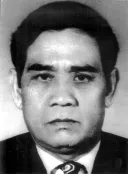


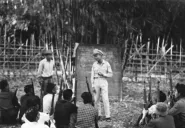
In a village on the Krong Poko, in the last years before the water came, a Bahnar woman named Y Gyin said that the Mother of God had appeared to her and had told her people to gather, to pray, and not to let themselves be moved. Within four years the reservoir was over the ground she named. Within eleven the state had run public denunciation meetings against the people who prayed with her, arrested sixty-two of them in a single year, tried nineteen of them in four batches and sentenced them to a hundred and forty-seven years between them. Three men hid in the forest of Mang Yang for eight years rather than sign the paper, and have not been seen since they were taken in 2020. Five more, whose sentences expired between 2022 and 2023, cannot be found.

A woman named Y Gyin
She was Bahnar, of Kơ Tu village in Ho Moong commune, Sa Thay district, Kon Tum. She is a woman, and this is worth stating at the outset because the record in English has often made her a man, and because it changes what this page is about: Ha Mon was a highland Catholic movement around a woman’s vision, and the state that prosecuted it treated her differently from the men who followed her. She was given three years. They were given seven to eleven.
Five separate lines of evidence say so. Radio Free Asia’s Vietnamese service, reporting the trial in May 2013, calls her bà Y Gyin — a word that in Vietnamese admits no ambiguity at all. The independent Vietnamese-language legal magazine Luật Khoa tạp chí describes the founder as một người phụ nữ dân tộc Bahnar, a Bahnar woman, named at Kơ Tu in 1999. A 2025 survey article on claimed Marian apparitions in a Vietnamese religious studies journal calls her bà Y Gyin. The United States Department of State, summarizing the indictment against her, writes that “She called for local people to gather and pray.” And the naming system itself points the same way: every other Ha Mon defendant carrying a prefix carries A — A Tach, A Hyum, A Kuin, A Tik, A Jen — and in Bahnar and Sedang naming A marks a man and Y marks a woman. She is the only Y in the case.
When she saw what she saw is contested, and we leave it contested. Human Rights Watch dates the movement’s founding in Kon Tum to 1999, and the two Vietnamese-language sources agree. The indictment put the apparition in 2002. Both may be true — a first vision and then a later one that drew the crowds — but no source we have read says so, and we will not invent the reconciliation.
What she is said to have said is in the prosecution’s own charging document, as the State Department reported it in 2013:
“According to the indictment, one of the defendants said the Virgin Mary had appeared in 2002 in Ha Mon, a village in the Central Highlands where the government planned to build a hydroelectric plant. She called for local people to gather and pray at Ha Mon in order to halt Kon Tum province’s plans to relocate local people and to reclaim the land from the hydroelectric project.”
Read that again and notice what it is. It is the state’s own account of the crime, and in the state’s own account the content of the message is: gather, pray, and do not let them move you off the land for the dam. That is why this was prosecuted as politics and not policed as religion.
Two places, and why the name misleads
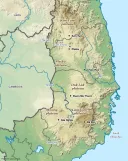
Ha Mon is a commune in Dak Ha district, Kon Tum, and Human Rights Watch says the movement was named after the commune where its founder was born. The place where she is said to have seen the Virgin, and the place the followers called the holy site, is somewhere else: Ho Moong commune, in Sa Thay district, on the other side of the reservoir. Both an independent Vietnamese magazine and the prisoner files kept by the United States Commission on International Religious Freedom put it there; the commission’s dossier on the prisoner A Kuin gives his home as Plei Ho Moong (Ha Mon), Ho Moong, Sa Thay, Kon Tum, and describes his arrest after attending a prayer gathering at “the Ha Mon holy site in his village of Ho Moong (Ha Mon) in Kon Tum, where villagers have protested construction of a hydroelectric plant.”
One more thing about the name, small and telling. The diocese of Kon Tum has no parish called Ha Mon. Its list for the Dak Ha deanery runs Đăk Kroong, Kon Trang Long Loi, Đăk Tiêng Kơtu, Kon Gu, Đăk Mút, Kon Bơbăn, Kon Trang Mơnei, Kon Gung, Đăk Kơđem and Ling La, and no Ha Mon. There is a parish of Hơ Moong in the Sa Thay deanery, dedicated to the Archangel Michael, with 3,558 parishioners. So the movement is named for an administrative unit, not for a church. “Ha Mon” is a government word.
The dam
This is a dam case, and the article that treats the dam as background has missed the story.
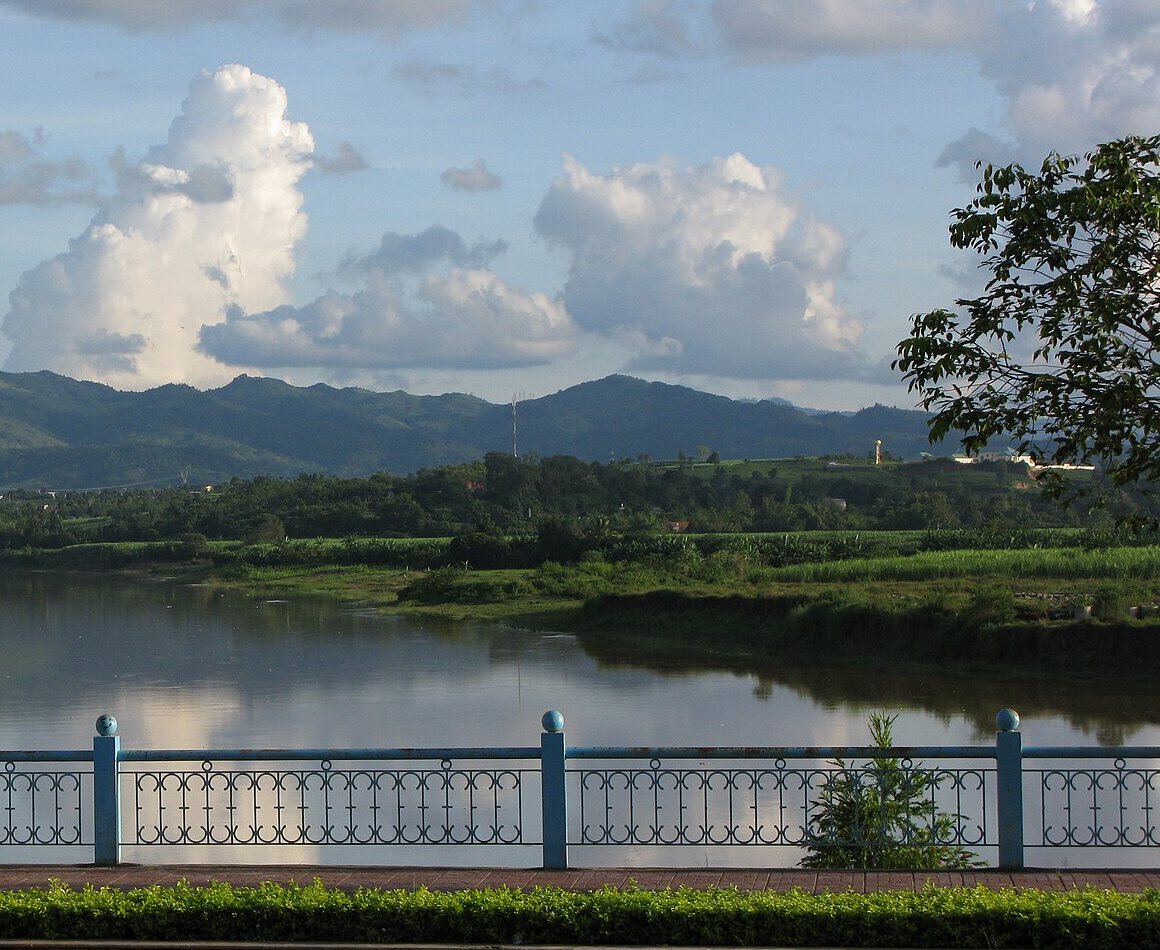
Plei Krong stands where the Krong Poko meets the Dak Bla, in Kon Tum province, on the Se San system upstream of Yali Falls. Construction began in 2003; the plant was commissioned in 2009; it carries two turbines and a hundred megawatts, and produces something over four hundred million kilowatt hours a year. It belongs to the national electricity utility and is operated from Yali.
How many families the reservoir moved is not independently known. The only public figure comes from the Vietnamese state news agency, which in 2004 put it at 581 families from the left bank of the Krong Poko, with the removals beginning in January 2005. We report that as the agency’s figure and not as ours, because we have found no count made by anybody else. Ho Moong commune, in Sa Thay, is the resettlement commune on the reservoir, and the parish of 3,558 Catholics is its church.
The people at Ho Moong knew exactly what was coming, because they had just watched it happen to their neighbors. Yali Falls, the next dam down the same river, moved 6,782 people in 1,375 households by the end of 1998, three in five of them indigenous, into houses of thirty-nine square meters with no kitchen and no latrine, on land that was promised and not delivered; of forty-two households surveyed afterward, four had enough rice to last the year. That is on The dams, and it is the context in which a Bahnar woman said the Mother of God had told her people to stay where they were and pray.
What “evil way” means
Vietnamese administrative practice sorts religion into three boxes, and the sorting is where the criminal case begins.
- Tôn giáo — a religion: recognized, registered, with a legal personality.
- Đạo lạ — a “strange religion.” The Government Committee for Religious Affairs defines it as a religion or belief that cannot yet be affirmed as good or bad, but whose practices differ from those of the orthodox religions. Ha Mon was, by the Committee’s own count, one of eighty-five.
- Tà đạo — an “evil way.” The Committee’s definition: among the strange religions, those which operate contrary to social moral standards and cultural tradition, which divide national and religious solidarity, which even carry a political coloring, which break the law and have a bad effect on security and order.
Now set that definition beside Article 87 of the 1999 Penal Code, the offense every Ha Mon prisoner was convicted under: phá hoại chính sách đoàn kết, undermining the unity policy — renumbered Article 116 in the 2015 code. The administrative definition of an evil way contains, word for word, the elements of the crime. Dividing national solidarity in the religious affairs vocabulary is undermining the unity policy in the penal code. To classify a congregation as tà đạo is, in substance, to have charged it already. Everything after that is paperwork.
Human Rights Watch put the policy plainly in 2015:
“Official Vietnamese media makes it clear that such government actions are part of a high-level policy to eliminate ‘evil way’ (ta dao) religions, such as the De Ga Protestantism and Ha Mon Catholicism practiced by some ethnic Montagnards, which the government has deemed fall outside the belief systems considered ‘pure.’”
The Law on Belief and Religion, passed in November 2016 and in force from January 1, 2018, is on The Law on Belief and Religion. It matters here in a particular and indirect way, and the point is worth getting right: every Ha Mon prosecution pre-dates it. The law was never used against these people, because it did not need to be. What it did was to close, in advance, any route by which a devotion like Ha Mon could ever have become lawful. Worship is lawful through a registered organization; the only registered Catholic body in the province is the diocese; the diocese did not claim Ha Mon; and there is no category in Vietnamese law for a lay Marian devotion that a bishop has not adopted. After January 2018, anyone praying at Ho Moong was doing something for which no lawful form existed. See also The church they closed, which is the same move made against Protestants.
How many, and where
Three counts exist, and all three come from the police or the state press. We have no count of our own.
| Figure | Date | Who published it |
|---|---|---|
| 2,500 followers in eight districts of three provinces | July 2010 | The Vietnamese police newspaper, quoted by Human Rights Watch, which notes the estimate comes from state media contacts |
| Over 3,500 Bahnar and Sedang in Gia Lai, Kon Tum and Dak Lak | 2012 | Luật Khoa tạp chí |
| 1,758 people in ten districts, with 39 “cores in hiding” | October 2014 | Human Rights Watch, from official reporting — and covering Dega Protestantism as well as Ha Mon |
The shape is informative even if the figures are not ours: something over three thousand people at the peak, and about half that number four years into a campaign of renunciation meetings.
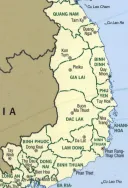
One village supplied more of the defendants than any other. Kret Krot, in H’ra commune, Mang Yang district, Gia Lai, is the home of Runh, Jonh, Byuk, Run, Chi, Dinh Ly, Dinh Ngo, Ngu, Thin, Gyun, Lup, Kunh and Ju — thirteen men on the lists below. The mobile trial of May 2013 was staged in H’ra commune itself, so that the neighbors could watch. It was from Kret Krot that men went into the forest in 2012, and from Kret Krot that the last of them were taken in 2020. There is no reporting from that village by anybody outside the Vietnamese state press.
The campaign
June 2010. Human Rights Watch: “Starting in June 2010, officials in the Central Highlands organized a propaganda campaign against a Catholic sect known as ‘Ha Mon’…” Officials charged that exiled FULRO members were taking advantage of the sect’s growing popularity to undermine national unity and national security. Forced renunciation ceremonies and public criticism meetings were held in Kon Tum, Gia Lai and Dak Lak for people to confess their wrongdoings and sign pledges to abandon the false religion.
November 24, 2010. One of those meetings can be named and dated. It was held at Hring village, Cu Mgar district, Dak Lak, and Human Rights Watch records that followers of the Ha Mon sect “volunteered” there to confess their wrongdoings and sign commitments to abandon the religion. The quotation marks around volunteered are the report’s.
2012. Individual arrests recorded by Amnesty International fall in April (A Hyum, A Tach), May (Byuk, Jonh), August (Run) and September (Chi). In July of the same year a man called Ju went into the forest rather than renounce, and stayed there.
Three police formations appear in the record, and listing them is what turns a story about harassment into a story about a machine: A41, the religious police unit that monitors groups classed as extremist; PA43, a special task force of the Mobile Intervention Police operating in the Central Highlands, which the United States Commission on International Religious Freedom described in 2013 as assisting local police in detaining and interrogating suspected Dega Protestants or Ha Mon Catholics; and E20, the Highland Mobile Police Force that made the arrests of 2012.
The trials
May 28, 2013 — eight people, sixty-three years
The Gia Lai Provincial People’s Court sat as a mobile court in H’ra commune, Mang Yang district, and tried eight people under Article 87.
| Defendant | Born | Sentence |
|---|---|---|
| A Tach (Bă Hlôl) | 1959 | 11 years, and 3 to 5 years’ probation |
| Runh | 1979 | 10 years, and probation |
| Jonh (Chình) | 1952 | 9 years, and probation |
| Byuk | 1945 or 1949 | 8 years, and probation |
| A Hyum (Bă Kôl) | 1940 | 8 years, and probation |
| Dinh Hron | 1981 | 7 years, and probation |
| Dinh Lu | 1976 | 7 years, and probation |
| Y Gyin | — | 3 years |
| Total | 63 years | |
The individual sentences come from prisoner lists kept by Amnesty International; the total of sixty-three years and Y Gyin’s three come from Radio Free Asia’s Vietnamese service. The two reconcile exactly — 11 + 10 + 9 + 8 + 8 + 7 + 7 = 60, and 60 + 3 = 63 — and that arithmetic is itself a check on both.
A Hyum was seventy-three years old at trial. Byuk was sixty-eight, or sixty-four. Jonh was sixty-one. If A Hyum lived through it he came out in April 2020, aged eighty.
The charge, as the prisoner files describe it, had three elements: that the defendants coerced thousands of followers to protest the relocation of villagers for the Plei Krong hydropower plant; that they were affiliated with highland exiles in the United States; and that they sought to establish an independent state. Only the first has anything behind it, and what is behind it is that people gathered and prayed at a place that was about to go under water.
Scott Johnson, of the Montagnard Foundation, said at the time:
“In reality all these ethnic people … want are indigenous land rights and basic human rights. They are not terrorists, they are not separatists, and they do not seek an independent state.”
November 2013 — four people
| Defendant | Born | Arrested | Sentence |
|---|---|---|---|
| Run (Rưn) | 1971 | August 2012 | 9 years, and probation |
| Chi | 1984 | September 2012 | 8 years, and probation |
| Dinh Ly | 1979 | 2013 | 7 years 6 months, and probation |
| Dinh Ngo | 1987 | 2013 | 7 years 6 months, and probation |
Run and Runh are two men. Run was born in 1971 and tried in November 2013; Runh was born in 1979 and tried in May 2013. Both are from Kret Krot and both appear on the list of the missing in 2024. Anyone who merges them halves the count.
2013 — the two taken at the holy site
| Defendant | Born | Sentence |
|---|---|---|
| A Kuin (also A Quyn, Ba Chan) | 1974 | 9 years 6 months, and probation |
| Ngu (Ba San) | 1972 | 7 years 6 months, and probation |
Both were arrested after a prayer gathering at Ho Moong, while the dam was being built.
October 2015 and April 2016 — five people, thirty-five years
Arrested in October 2015 for propagating the Ha Mon religion; tried in April 2016 before the People’s Court of Gia Lai Province.
| Defendant | Born | Home | Sentence |
|---|---|---|---|
| A Jen | 1984 | Dak To Re, Kon Ray, Kon Tum | 9 years |
| A Tik | 1952 | Kon Hram, Dak To Re, Kon Ray, Kon Tum | 8 years |
| Dinh Ku | 1972 | An Thành, Dak Po, Gia Lai | 7 years |
| Thin | 1979 | Kret Krot, H’ra, Mang Yang, Gia Lai | 6 years |
| Gyun | 1980 | Kret Krot, H’ra, Mang Yang, Gia Lai | 5 years |
| Total | 35 years | ||
The indictment in that case says that after the campaign to eliminate the religion began, the group fled to the forest. In 2017 A Tik made a forced confession on state television.
Dinh Ku and Dinh Lu are not the same man. Dinh Lu was born in 1976, arrested in 2012 and sentenced to seven years in May 2013. Dinh Ku was born in 1972, arrested in October 2015 and sentenced to seven years in April 2016. The similar names and the identical sentences have run them together more than once.
Where they were sent
Amnesty International’s list gives prisons for some. Runh went to Prison No. 5 in Thanh Hóa province, roughly seven hundred kilometers north of his village. A Hyum and Byuk went to the Mang Yang camp in Gia Lai. A Tach, Jonh, Chi and Run are recorded in Gia Lai. For the rest the record says only “prison.” See Prisoners: Gia Lai and Prisoners: Kon Tum.
The tally
Counting only those whose sentences are documented: eight in May 2013 for sixty-three years; four in November 2013 for thirty-two; two at the holy site for seventeen; five in April 2016 for thirty-five. Nineteen people and a hundred and forty-seven years. Sixty-two people were arrested in 2012 alone, so the documented trials are a fraction of what happened.
Eight years in the forest
On March 19, 2020, at Kret Krot in H’ra commune, Mang Yang district, police took three men out of the forest: Ju, aged 56, Lup, aged 50, and Kunh, aged 32. They were described as having been hiding there to direct others against the government, and as the last three followers of the Ha Mon heresy still at large.
Ju had gone into the forest in July 2012, after police pressure to renounce his faith. That is eight years in the forest of Mang Yang rather than sign a piece of paper about a Marian devotion.
All three are recorded as held incommunicado at an undisclosed location. No trial has been reported, no charge, no sentence. As of September 2026 they have been held for six and a half years, and because no sentence was ever announced they do not appear on anybody’s list of missing prisoners — there is nothing for them to be missing from.
The five who cannot be found
On July 5, 2024 an American religious-freedom organization reported that eleven imprisoned Christians in Vietnam had disappeared. Within five days the story was carried by Radio Free Asia, UCA News, Christian Solidarity Worldwide, AsiaNews and the Catholic wires. Christian Solidarity Worldwide opened its statement this way:
“Five Catholics and six Protestants who were jailed in Vietnam have gone missing from police custody. Some of the group had been incarcerated since 2011, and family and friends of the detained raised alarm after contact was lost.”
The five Catholics are ours.
| Name | Sentenced | Sentence | Should have ended |
|---|---|---|---|
| Runh | May 2013 | 10 years | 2022 |
| Run | November 2013 | 9 years | 2022 |
| Dinh Ku | April 2016 | 7 years | October 2022 |
| A Kuin | 2013 | 9 years 6 months | 2023 |
| A Tik | April 2016 | 8 years | October 2023 |
The six Protestants belong on The church they closed: Siu Hlom, Ro Mah Pla, Rmah Bloanh, Rmah Khil, Y Hriam Kpa and Sung A Khua. Between the eleven of them the sentences run to ninety years and eight months, handed down between 2011 and 2016.
As of September 2026, two years after the alarm was raised, nothing has changed. We have looked for a later word from every organization that carried the story and from the prisoner databases, and there is none. The United States Commission on International Religious Freedom still lists Runh, Run, Dinh Ku, A Kuin and A Tik with the status unknown, each with the note that the sentence should have concluded and the whereabouts remain undetermined. Nobody has said they are dead. Nobody has said they are free. Nobody has produced them.
What the Church said
Less than this page would like, and less than it ought to be possible to find out.
We have searched for a public statement by the diocese of Kon Tum about Ha Mon: on both of the diocese’s websites, in the archive of the Vietnamese Bishops’ Conference, and in every Catholic agency that covers Vietnam — UCA News, AsiaNews, Églises d’Asie and Fides. There is none. The only Ha Mon item any of those agencies carries is the story of the missing prisoners in July 2024.
What exists is at second hand. A 2025 survey article in a Vietnamese religious studies journal, reviewing the literature on claimed Marian apparitions, records that a 2017 study analyzed the official position of the Bishop’s Office of Kon Tum in rejecting Mrs Y Gyin’s declaration that the Mother of God had appeared. We have not been able to read that 2017 study, and we note that it was published by the Ministry of Public Security’s own press, which is not a neutral witness to what a Catholic bishop said. But the direction of the finding is what Catholic practice would predict. Judgment on a claimed apparition belongs to the local ordinary, and bishops almost always say no.
Saying that an apparition is not one, and calling for the imprisonment of the people who believed in it, are entirely different acts. There is no evidence that the diocese of Kon Tum asked for anybody to be arrested, and a great deal of evidence that the diocese was itself being shut out of exactly the country where Ha Mon spread.
Michael Hoàng Đức Oanh was bishop of Kon Tum from 2003 to 2015 — precisely the years in which the movement grew and was destroyed. In November 2010, at the height of the campaign, he wrote to his diocese describing how he had tried to say Mass in Kon Chro, K’Bang, Yang Trung, An Trung and Sơn Lang and had been obstructed or prevented at each. On Christmas Day 2010 he was stopped from celebrating Mass with highlanders at Sơn Lang; officials told him that if he wanted to say Mass he could do so, but not there and not for everyone, and that he should go to families one at a time and keep each Mass under an hour. In April 2012 he was detained and interrogated in Kon Tum while trying to celebrate an Easter Mass. And in the paragraph of its 2014 annual report that describes the eight Ha Mon convictions, the United States Commission on International Religious Freedom adds one sentence: “The Bishop of Kontum repeatedly has been denied access to the areas where the men reside.”
None of his letters from those years mentions Ha Mon. What he talked about, then and afterward, was land. Interviewed as bishop emeritus in 2018, he said that if he could advise the government he would point out the inadequacy of some social policies and of the laws on land ownership. See The highland Catholic church.
For contrast, here is what a Vietnamese diocesan rejection looks like when it happens in public. In 2022 a lay exorcism group at Bao Loc, in the diocese of Da Lat, claimed Catholic identity; the bishop asked and then ordered it to dissolve; when it did not, the Commission for Doctrine and Faith of the Catholic Bishops’ Conference of Vietnam issued a public statement that arbitrary acts of exorcism with superstition and magic are totally contrary to the doctrine and practice of the Catholic Church, and called on its members to return to the Church. Bishop’s order, national commission statement, wire report. Nothing of that shape exists in public for Ha Mon.
What the United Nations did and did not do
The Special Rapporteur on freedom of religion or belief, Heiner Bielefeldt, visited Vietnam at the government’s invitation from July 21 to 31, 2014. His planned visits to An Giang, Gia Lai and Kon Tum could not be completed. People he wanted to meet had been surveilled, warned, intimidated, harassed or prevented from traveling by the police; undeclared security agents monitored his movements and those of the people he spoke with; and he reported himself deeply concerned and outraged by reprisals against his interlocutors, including police interrogations and physical injuries.
The two provinces he could not reach are the two provinces where the Ha Mon prosecutions happened. In July 2014, a United Nations expert on freedom of religion, formally invited, was cut off from the ground on which Ha Mon Catholics were at that moment being tried, and he wrote it down. That is the closest the United Nations record comes to touching this case.
Because it does not touch it otherwise. We have searched the special procedures communications database for Vietnam and read every communication we could identify as relevant, and not one of them names Ha Mon or any Ha Mon prisoner. Nor is there a Working Group on Arbitrary Detention opinion on any of them. Nineteen people sentenced to a hundred and forty-seven years between them, three more held incommunicado for six years, five whose sentences expired and who cannot be found — and the mechanisms that exist for exactly this have never been used on their behalf. We say that carefully: we searched and did not find, and the database is not exhaustively indexed.
In December 2022 the Kon Tum provincial police announced that after thirteen years of determined work they had completely eliminated the Ha Mon religion in the province. The same year, Ha Mon appeared on a list of the independent religious groups the authorities were set on abolishing, alongside Đạo Giê Sùa, Bà Cô Dợ, Dương Văn Mình, Falun Gong, the Church of God and the Evangelical Church of Christ of Vietnam. In September 2024 the United States Commission on International Religious Freedom reported that the Vietnam Fatherland Front “has led government efforts to dismantle certain independent religious organizations, such as the original Cao Dai Church and, more recently, the small ethnoreligious entities known as the Ha Mon group in the Central Highlands.”
What we do not know
We do not have a single line written or spoken by a Ha Mon follower. Not a prayer, not a hymn, not an account of a vigil, not an interview. Everything on this page about what these people believed comes from the police, the prosecutors or the state press, and the one partial exception — the indictment as the State Department relayed it — is still the prosecution’s version. We know what the police say they believed. We know that they prayed at a place that was about to go under water. We know what it cost them. We do not have their own words, and we will not invent them.
We do not know what became of Y Gyin. Her three-year sentence, from arrest in 2012, should have ended around 2015. She is not in Amnesty’s 2016 list, not in the master prisoner list, not in the victims database. The founder of the movement leaves the record the moment she leaves prison, and we have found nobody who says where she went. If anyone knows, we would like to hear.
Four names sometimes given as Ha Mon prisoners — Luh, Yeh, A Chun and A Bel — we cannot place. No source we have read connects any of them to this case. We do not list them here, and we say so rather than quietly dropping them.
We do not know whether any of the nineteen appealed. No appellate decision and no mention of an appeal appears anywhere we have looked.
And we have not found the diocese of Kon Tum’s own words. If anyone holds that document, we would like to see it.
Sources
- Human Rights Watch, Montagnard Christians in Vietnam: A Case Study in Religious Repression, March 30, 2011 — the founding in Kon Tum in 1999, the naming of the movement after its founder’s birth commune, the estimate of 2,500 followers in eight districts, the June 2010 campaign, and the denunciation meeting at Hring village on November 24, 2010
- Human Rights Watch, Persecuting “Evil Way” Religion: Abuses against Montagnards in Vietnam, June 2015 — the policy of eliminating tà đạo religions and the figure of 1,758 people in ten districts as of October 2014
- Human Rights Watch, World Report 2017, Vietnam chapter — the nine Montagnards convicted by the Gia Lai court in the first eight months of 2016, five of them Ha Mon
- United States Commission on International Religious Freedom, Montagnard Religious Prisoners of Conscience: Select Cases, June 2021 — the dossiers on A Tach, Runh, A Kuin, A Jen and A Tik, including the location of the holy site at Ho Moong and A Tik’s forced television confession; and the FoRB Victims Database, whose entries for Runh, Run, A Kuin, A Tik, Dinh Kuh, Ju and Kunh were read in September 2026 and all still read “unknown”
- United States Commission on International Religious Freedom, Annual Report 2013 (the A41 and PA43 police units; Bishop Oanh detained at Easter 2012), Annual Report 2014 (the eight convictions, and the bishop denied access to the prisoners’ villages), and State-Controlled Religion and Religious Freedom in Vietnam, September 2024 (the Fatherland Front)
- United States Department of State, Vietnam 2013 International Religious Freedom Report — the indictment’s account of the apparition, quoted above and verified against the published report; and the 2013 country report on human rights practices for the dam and FULRO elements of the charge
- Amnesty International, Prisoners of Conscience in Viet Nam, ASA 41/4389/2016, July 2016 — arrest dates, trial months, sentences, prison camps and release dates for A Hyum, A Tach, Byuk, Chi, Jonh and Run
- Radio Free Asia, “Vietnam Jails Eight Montagnards for ‘Undermining National Unity’”, May 29, 2013, and the Vietnamese service’s report of the same trial, which gives the mobile court at H’ra, the total of sixty-three years, and Y Gyin as bà; and the Vietnamese service’s religious freedom review of December 16, 2022, for the Kon Tum police announcement and the list of targeted groups
- Luật Khoa tạp chí (Legal Initiatives for Vietnam, published from outside Vietnam) — Văn Tâm, August 28, 2021, for the Bahnar woman at Kơ Tu in 1999 and the official definitions of đạo lạ and tà đạo; Thái Thanh, July 2, 2020, for the arrests of Ju, Lup and Kunh at Kret Krot on March 19, 2020 and the figure of 3,500 followers in 2012
- Dương Văn Biên, “Hiện tượng Đức Mẹ hiện hình: Tiếp cận liên ngành và nhìn nhận từ quy định của Giáo hội Công giáo,” Tạp chí Dân tộc học và Tôn giáo học, no. 2 (2025), 29–44 — 1999 and bà Y Gyin; the report that the Bishop’s Office of Kon Tum rejected the apparition claim, citing a 2017 study we have not been able to read
- Heiner Bielefeldt, Report of the Special Rapporteur on freedom of religion or belief, Addendum: Mission to Viet Nam (21 to 31 July 2014), A/HRC/28/66/Add.2 — the curtailed visits to Gia Lai and Kon Tum, the surveillance, and the reprisals
- Christian Solidarity Worldwide, “Vietnam: 11 jailed Christians missing,” July 9, 2024, verified against the published statement; International Christian Concern, July 5, 2024; UCA News and AsiaNews, July 8 and 10, 2024; Church in Chains, July 17, 2024
- Global Energy Monitor, Plei Krong hydroelectric plant — capacity, commissioning and ownership. The figure of 581 families displaced is the Vietnamese state news agency’s, reported in 2004, and we have found no independent count
- Diocese of Kon Tum, parish indexes for the Dak Ha and Sa Thay deaneries — there is no Ha Mon parish; there is a Hơ Moong parish of 3,558 Catholics; Églises d’Asie, November 17, 2010, and AsiaNews, December 27, 2010 and June 21, 2018, for the bishop of Kon Tum; Agenzia Fides, June 2, 2022, for the Bao Loc comparison
Compiled September 2026. Vietnamese government and Vietnamese state media sources are not used on this site, and the state’s positions quoted here are taken from United Nations documents, from United States government reports, from Human Rights Watch and Amnesty International, and from independent Vietnamese-language publications outside the country. The figures for how many people followed Ha Mon all originate with the police or the state press; we have no count of our own and say so where they appear. The personal names are given in the plain form this site uses, with the Vietnamese orthography beside them where a reader searching Amnesty’s or Luật Khoa’s lists will need it. Run and Runh, and Dinh Ku and Dinh Lu, are four different men.