

















The Sedang hold the high northern end of the plateau — the ridges above Kon Tum, the country of Dak To and Tu Mo Rong, and the shoulders of Ngoc Linh, the highest mountain in the southern Annamites. They are the people who smelted iron and sold lances and sabers to buy salt; whose language has one of the largest vowel systems ever described in any language on earth; whose name a French adventurer stole in 1888 for a kingdom that had nothing Sedang in it; who were, by the United States Army’s own account, the first highland people it trained and armed; and who have an epic literature that has been studied in print and of which we have not been able to read a single line. This page has more holes in it than any other in this library, and we have decided to show you where they are.

The country
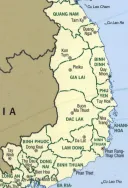
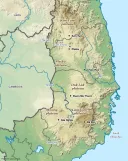
The American handbook of 1966 puts it plainly: “The Sedang live in the area northwest of Kontum… concentrated in the Province of Kontum, with scattered villages across the border in Laos.” Their neighbors, from the same pages: the Jeh to the north; the Kayong and the Monom to the northeast and east, standing between the Sedang and the Cua and the Hre.
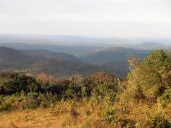
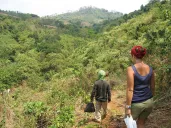
The terrain, in the handbook’s own flat sentence: “The region inhabited by the Sedang is quite rugged with granite outcroppings, some of which reach 2,598 meters in height.”
That number is not generic. 2,598 meters is Ngoc Linh, the highest mountain in the southern Annamite range, standing on the boundary of Kon Tum and Quảng Nam. A writer describing Sedang country in 1966 reached for the height of Ngoc Linh because Ngoc Linh is Sedang country. Hold on to that mountain; it comes back at the end of this page, worth a great deal of money.
And the road: “National Route 14 extends northwest from Kontum, through the Sedang area to Dak To and north to beyond Dak Sut, where it turns east to the coast.” Every name on that line — Dak To, Dak Sut, Dak Glei, Tan Canh — is a place where something was fought over.
Kon Tum’s waters run three ways: into the Se San and on to the Mekong; into the rivers that fall east to the coast; and into the Sekong toward Laos. A people sitting on the watershed of three river systems is a people sitting on everybody’s route. That is the whole of Sedang history in one sentence of geography.
Places to hold: Kon Trang, where the mission came in 1852. Tu Mo Rong, whose speech is the base of the only published Sedang dictionary and whose mountain grows the ginseng. Dak To, Dak Pek, Dak Seang, Ben Het — the camps. Kon Gung, which in 1888 was renamed Pelei Agna, the Great City, by a man who had crowned himself.
The name, and who counts as Sedang
“Sedang” is a French word. The reference entry states it without hedging: “‘Sedang’ is the French name for the group. They call themselves ‘Ha(rh) ndea(ng)’ and are called ‘Xơ Đăng’ by the Vietnamese.”
Those brackets are George Devereux’s, from 1937. They are his attempt to write sounds the Latin alphabet would not hold, and they are the most honest piece of punctuation in the literature about us: a man admitting on the page that he could not spell what he heard.
The same self-name comes through the record in a dozen shapes — Cadong, Dadang, Hadang, Hdang, Hotea, Hoteang, Rotea, Roteang, So Dang, Xa Dang, Xodang. Notice what runs through all of them: hdang. The Vietnamese Xơ Đăng and the subgroup name Xơ Teng are the same word heard through a different ear. What hdang meant before it was a people’s name, we could not find out.
One form to avoid: Sedang-Moï, still printed occasionally. Moï is a Vietnamese word for savage.
Four lists that do not agree
The Vietnamese state divides the nationality into six: Xơ Teng, Tơ Đrá, Mơ Nâm, Ca Dong, Hà Lăng, Châu. We take those names from non-Vietnamese summaries of the classification, not from the state itself, and we give them first only so that you can see what the other lists do to them.
Hickey, in 1964, names five — Danja, To-drah, Kmrang, Duong, Cor — and, crucially, two glosses:
To-drah — those who live in the sparse forest.
Kmrang — those who live in the dense forest.
Read those again. They are not tribal names handed down from outside. They are a people saying where in the forest it lives. If you want to know what a Sedang subgroup is, that is the answer: not a bloodline, a place in the trees. Hickey also notes, against the other lists, that most investigators treat the Rengao, the Hre and the Halang as separate peoples.
The Encyclopedia of World Cultures says something different again, and then gives up honestly: “The actual composition of the group is unclear.” French reference works give a seventh set of names. English ones give five primary divisions and a different five.
Five languages, one nationality
Here is the checkable version of the same argument, and it is the hardest fact on this page.
| Language | Code | Speakers | Where | Counted as |
|---|---|---|---|---|
| Sedang | sed | 98,000 (2007) | Kon Tum, Quảng Nam, Quảng Ngãi, Dak Lak; eastern Laos | Xơ Đăng |
| Todrah | tdr | ~6,000 | Dak Glei, Kon Plong, Kon Hring to Kon Braih | Xơ Đăng |
| Monom | moo | ~6,000 | Kon Plong | Xơ Đăng |
| Halang | hal | ~13,000 + ~4,000 in Laos | Dak Na commune, Dak To; Attapu, Laos | Xơ Đăng |
| Kayong | kxy | not given | Sa Thay, Kon Plong | Xơ Đăng |
Five separately coded languages; one nationality. Two things follow.
First: “Sedang” in a census and “Sedang” in a linguist’s mouth are not the same set of people, and the difference is more than a hundred thousand.
Second, and this is the sentence: a Monom man from Kon Plong and a Xơ Teng man from Tu Mo Rong cannot necessarily understand one another, and the state counts them as one nation. See The smaller peoples, where the Halang and the Monom appear again in their own right, and Our peoples and our languages.
The language, and the vowels
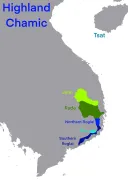
Sedang is North Bahnaric — the same branch as Jeh, Halang and Todrah, more distantly related to Bahnar. It has more speakers than any other North Bahnaric language.
The dialects. The 1967 SIL vocabulary, made at Kon Tum, sets out the split: the Dak To and the Tu Mo Rong speech differ chiefly in what happens at the end of a word, where Dak To has a final -ng, -m or -n and Tu Mo Rong has a glottal stop. The vocabulary is built on Tu Mo Rong speech with Dak To forms brought in for some classes of word.
Which means: the base dialect of the only published Sedang dictionary is the speech of the district that now holds the ginseng mountain.
The famous thing
The one fact about the Sedang that travels the world is the vowels, and it usually travels in this form: Sedang has fifty-five vowels, the most of any language on earth, and a record book says so.
Here is the careful version, which is better.
The description everything rests on is Kenneth Smith’s 1975 dissertation. He counts twenty-four pure vowels: seven vowel qualities, each occurring in three phonation types — plain, nasalized and creaky — with three of them permitting nasal and creaky at once. No length distinction. Add the diphthongs and the total runs to around fifty. In his 1967 field description he puts it in plain words: Sedang has four series of vowels — clear, laryngealized, nasalized and naso-laryngealized — written apart by diacritics.
And a caution we owe the reader. The phoneme databases hold two Sedang inventories, one of fifty-three segments and one of fifty-five — total segments, consonants and vowels together. The famous number is fifty-five. It is possible that the world record rests on somebody reading a total-phoneme count as a vowel count. That is a suspicion about a record book, not a finding, and we leave it at that.
What we will say is this: Sedang’s vowel system is genuinely among the largest ever described in any language anywhere, the description is Smith’s, and anyone who wants the exact number should go to his pages rather than to a record book. A language that distinguishes a clear vowel from a creaky one from a nasal one from a creaky-nasal one is doing something with the human voice that almost nothing else does. That is more interesting than the record.
The alphabet, and what is not in it
Sedang is written in Latin letters, on a modified Vietnamese alphabet. Smith’s 1967 notes on reading it: most consonants as in northern Vietnamese, but b, d and nh are prenasalized — pronounced mb, nd, nhj; v is an English w; ch, th and kh are aspirated; glottal stop occurs at the beginning, the middle and the end of words; and the four vowel series are marked by diacritics.
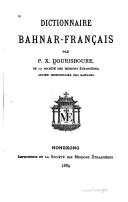
In print: Smith’s vocabulary (1967), his dissertation (1975), his grammar (1979), and his Sedang Dictionary with English, Vietnamese and French Glossaries (2000). A Vietnamese–Xơ Đăng dictionary followed in 2008. In the Kon Tum mission’s papers, now in Paris, there is a Sedang dictionary that nobody appears to have published.
And what is not in print. There is exactly one scripture resource in Sedang: an audio set. There is no Sedang New Testament.
Set that beside the Rhade, the Jarai and the Bahnar, each of whom has a printed New Testament and in some cases a whole Bible, and the shape of it is clear. The men who made the alphabet left before they finished the book. Sedang is still a working liturgical language in Kon Tum — the bishop preaches in it — but the congregations read scripture in Vietnamese or in a neighbor’s language. See Writing our languages.
Iron, salt, and the road to the sea

_-_Vietnam_Museum_of_Ethnology_-_Hanoi,_Vietnam_-_DSC03282.JPG)
Iron workers are a named rank in a Sedang village. Hickey lists the village’s components as the household chiefs and chieftainesses, the shamans, the iron workers, and the slaves. The reference entry gives the same structure from an independent direction — a chief, a village headman, household chiefs, shamans, smiths, slaves, animals, and spirits and ghosts.
Read the end of that list again. Animals, and spirits and ghosts. The village’s population does not stop at the people.
And the Sedang sold iron. From the 1966 handbook, page 765:
“The Sedang trade with Vietnamese peddlers who travel through their area. The Vietnamese also employ some Sedang tribesmen as middlemen, who trade on behalf of the members of their villages. Individual tribesmen may also go to town and trade directly with the shopkeepers there. The Sedang trade baskets, cloth, lances, and sabers for salt, clothing, and various metal goods.”
There is the whole economy in one sentence: they sold weapons and bought salt.
The contrast with the south makes the point sharper. The same book describes the Mnong as forging sabers, machetes, lances and hoes from bars of imported iron. The Mnong bought metal; the Sedang sold finished blades. Somebody in the north was making the iron itself, and the one explicit statement we could find — that the Tơ Đrá knew how to make iron from ore — comes through Vietnamese ethnography, which we flag as such. If it is right, the smelters were the people of the sparse forest.
Now the honest part. We searched the full text of the thousand-page American handbook, with its fifty-page Sedang chapter, for iron, forge, forging, blacksmith and smith. There is no Sedang hit beyond the trade sentence above and the one-word listing of the rank. No published account in English describes a Sedang furnace, a Sedang bellows, a Sedang ore source, or the standing of a Sedang smith. An army wrote fifty pages about a people whose chief export was weapons and did not ask how the weapons were made.
And the salt at the other end of the trade. The whole highland economy ran on it — one people is recorded keeping a sacred sack of salt hanging over the hearth in every house. Which is why the French, arriving, wrote that the trading of goods, salt in particular, was to be regulated. Control the salt and you control the mountains. See Roads, taxes and forced labor.
The longhouse, and the fire
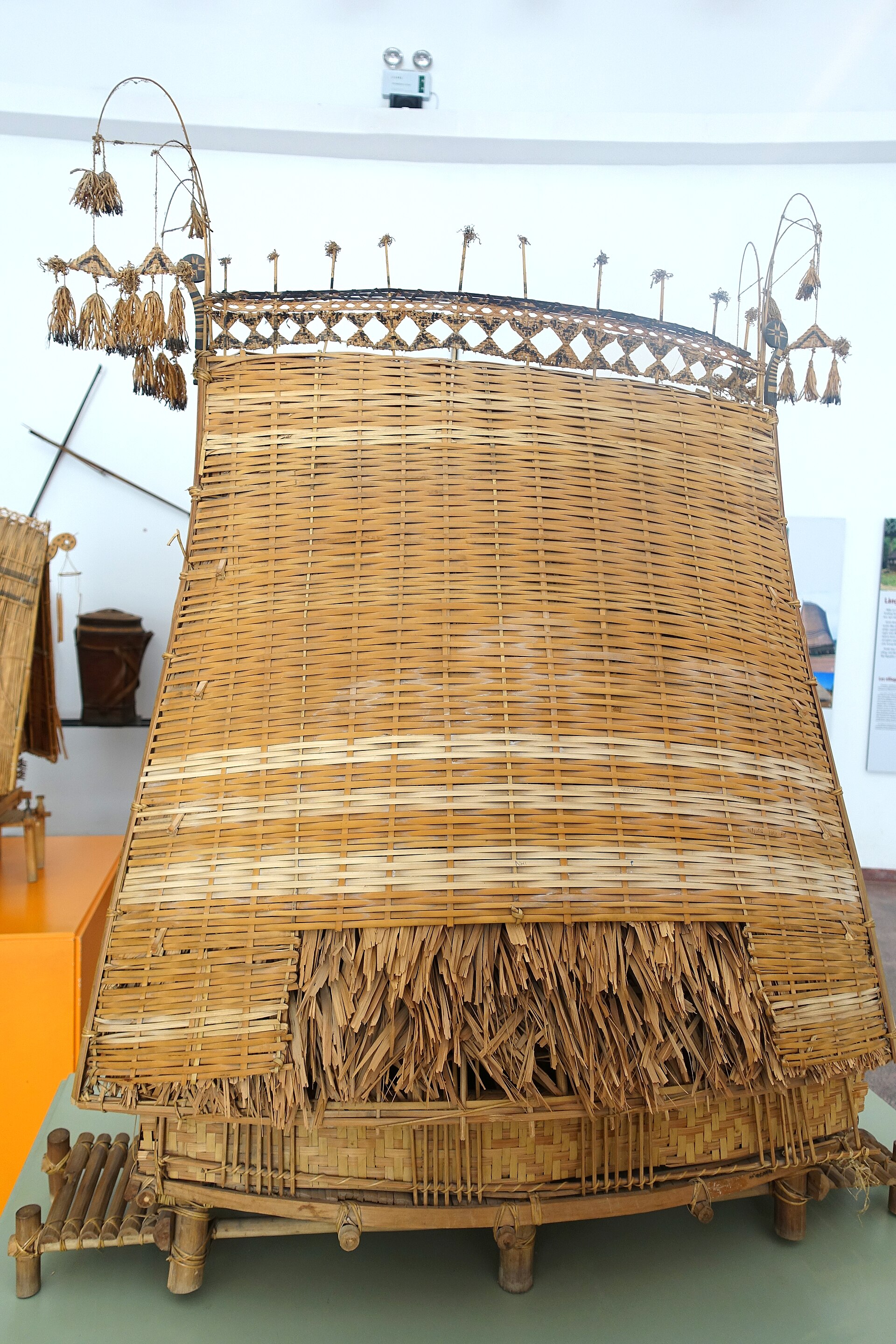

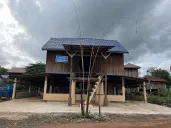
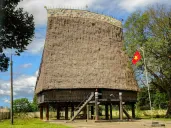
A Sedang village runs from three to twenty longhouses — Hickey says ten to thirty — around a communal house at the center. The rong is distinguishable by its high, incurved, pointed roof; it faces northeast to southwest; the unmarried boys sleep in it from puberty until marriage; and it is marketplace, sacrificial site, the place where strangers are received, and the meeting place of the elders. In war it is the headquarters.
Around the village, bamboo lancets set in earthworks. And the handbook records who made them, on page 759: Sedang women did not fight, but were expected to do all the men’s work while the men were fighting, and “also assist in preparing the village defenses, such as planting sharpened bamboo spikes in paths leading to the village.”
The two halves of the house
This is the best passage in the record about how the Sedang live, and it is short:
“Customarily, the interior of the Sedang longhouse is divided into two parts, the upper and the lower. In the upper half live the house chief (kan hngii) and his wife (tyin) or wives, or his oldest daughter. This is the only part of the house where rice may be cooked, for the Sedang believe this area is the home of the rice soul or mahua phae. In this upper half of the house, each nuclear family may have its own hearth on which to cook rice.”
“The interior of the longhouse is divided into compartments by partitions of plaited bamboo. A common room at one end of the house contains the hearth or ‘soul fireplace’ (mahua pla), believed to be the residence of the tribesmen’s soul.”
Two fires, then. One where the rice soul lives and rice may be cooked; one where the people’s own souls live. A Sedang house is not a shelter with a kitchen in it. It is a building organized around two souls.
And now the punishment, which only makes sense once you know that. To be cast out of a Sedang village was to be ostracized from your soul hearth and driven into the forest. Expulsion is not from a building. It is from a fire.
The tyin
The single most important thing this page can say about Sedang women is Hickey’s sentence about the tyin, the household chief’s wife: she is “believed to have a ‘rice-soul’ which mystically guarantees good crops,” she performs the agricultural rituals, and she distributes the rice in the household.
The 1966 handbook says the same from the other side, at page 762: because the rice soul lives in the hearth of the household chief’s wife, the tyin is a religious leader. And at page 764: land for growing rice is owned collectively by the household and administered by the household chief “with the assistance of his wife, who performs the religious agricultural rituals.”
The ritual head of a Sedang household is a woman, and the rice does not grow without her. See Dega women.
One more detail from that page, which we had not seen anywhere else: the skulls of sacrificed buffaloes are kept in the house to maintain the strength of its rice soul. The skulls on the wall are not trophies. They are maintenance. See Jars and the buffalo feast.
Descent: we do not know, and that is the finding
For the Rhade we can print three competing counts of the clans and argue about which is right. For the Jarai we can name the clans and tell you what animal each will not eat. For the Sedang, the published record does not state the descent rule at all.
We went looking. The RAND memorandum does not give descent, kinship terminology, marriage rules, residence or inheritance for the Sedang. The reference entry does not. The American handbook gives a father-headed nuclear family inside an extended household of up to thirty families in one longhouse, and one sideways hint the other way — only the household chief’s wife, or wives, or his eldest daughter may live in the upper half of the house.
And one passage that tells you the rule was negotiable and had a price:
“Should a young couple desire to move from the house of the groom’s parents to the house of the bride’s parents or vice versa, they must make a sacrifice so that the power of the rice soul of the first house will not be diminished by their departure.”
So a young couple could move either way, and the house they left lost soul-strength and had to be paid for it in an animal. That is a beautiful fact and it is not a descent rule.
We do not know, in print, whether the Sedang reckon descent through the father, through the mother, or through both — and for a people of two hundred thousand that is an astonishing hole. We are not going to guess it from the Rhade, who are matrilineal, or from the Bahnar, who are bilateral. A Sedang elder knows the answer. See How to record an elder.
The largest untouched source is the 1952 Coutumier of the Kon Tum courts, which records the customary law applied to Bahnar, Sedang and Jarai between 1908 and 1939 and is still in print. Nobody writing in English appears to have opened its Sedang sections. See Customary law.
The year, and the ghost forests

_-_Vietnam_Museum_of_Ethnology_-_Hanoi,_Vietnam_-_DSC03285.JPG)
Swidden rice, some wet rice, millet as the important second crop. Buffalo, goats, highland black pigs, dogs, chickens. Jute and ramie woven before cotton came in. Two festivals are recorded, tied to the swidden cycle — a planting festival in early July and the eating of the new seed in early August. Men hunt and fish and weave baskets; the handbook calls the Sedang skilled and proud hunters. See Hunting and the crossbow and The rice year.
And here is the part that is not from 1966. A study of eighty-seven Xơ Đăng households in Bac Tra My in August 2019 — an ordinary climate-adaptation survey, published open access — records what those households actually do, and it is full of things no handbook has:
- the drought-tolerant local dry rice is called Pế Tru
- ghost forests — protected plots of about two hectares kept near the villages, and left alone
- home gardens of cinnamon, jackfruit, areca, cassava and corn
- and the weather read off living things: if banana buds are smaller and longer than usual, a windstorm is coming; birds flying from the sea toward the mountains mean a storm; earthworms disappearing mean drought
- and the adaptations: planting two weeks later in the rainy season, harvesting early, intercropping dry rice with acacia, small household water tanks
A banana bud is a barometer, and a Sedang farmer in 2019 was still reading it. That is not folklore recovered from a colonial notebook. That is current practice, recorded five years ago, in a journal.
The spirits, and then the churches
The creators are Grandfather and Grandmother Knda. The thunder gods are the tara, powerful and at the same time harsh and demanding. The a-pia stand to animals as the thunder gods stand to people. And the gods themselves are mortal: after a series of reincarnations they become the same sort of ghosts that people become.
Six days after a death, the mahua, the vital soul, leaves the body.
The good spirits are yayig and the bad are kia. Illness is caused by spirits and can only be cured by spirits; a shaman or a sorcerer divines how many blood sacrifices will settle it. Sacred objects hold powerful spirits — touch a sacred rock without ceremony and the village may have to move. To meet a snake on the path coming home means misfortune; to meet one setting out means nothing.
The burial is plain, and unlike the Jarai and the Bahnar the Sedang did not keep the elaborate tomb house. After twenty or thirty hours the body goes to the grave with animals sacrificed. Set that beside the six-day departure of the mahua and it is coherent: the body is put away quickly; the soul takes its own time. See The tomb house, which describes the opposite practice among our neighbors.
A reputation, and what it is made of
Two sentences sit on the same page of the 1966 handbook, page 762, and they have to be read together:
“At one time the Sedang offered a human sacrifice whenever a common house was built. A living man was put in the hole dug for a heavy column.”
“During the past 150 years there have been no reports of human sacrifices among the Sedang.”
The first sentence has no date and no source. The second is the same book’s own admission that nobody in a century and a half has recorded one.
And in 1888 a French adventurer’s constitution for his invented kingdom made a show of prohibiting human sacrifice among the Sedang — which is a very efficient way of advertising a barbarity you claim to be ending.
The Sedang have carried a reputation for atrocity for a hundred and fifty years that the fullest survey ever made of them could not substantiate. That is the honest shape of it, and it belongs on this page because the reputation is still doing work.
The church
Kon Tum is the oldest highland mission and it reached Sedang country early: Father Dourisboure went to Kon Trang among the Sedang in 1852, and baptized his first two adult converts on October 16, 1853 — eighteen months of work for two men. The apostolic vicariate of Kon Tum was erected on January 18, 1932, with 24,525 Catholics, twenty-nine priests and a hundred and sixty catechists from the peoples themselves; it became a diocese in 1960; the foreign missioners were expelled after 1975. The bishop preaches in Bahnar, Jarai and Sedang. See The Kon Tum mission and The highland Catholic church.
What has happened to us
1888: a king with our name
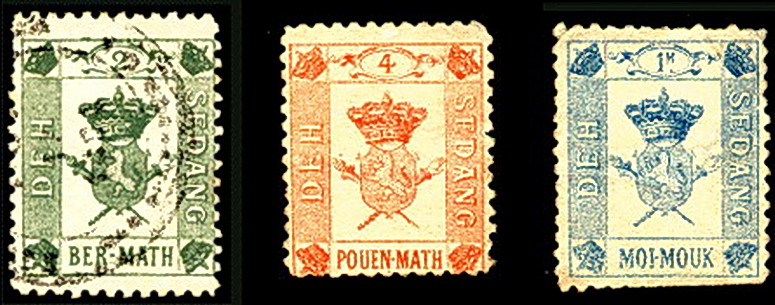
The confederation was Bahnar, Rengao and Sedang, and it was made with French administrative backing and the help of the Catholic missionaries. It lasted from 1888 to 1890 and did not survive its inventor’s departure.
Two things belong on this page rather than on its own. A Sedang man’s name survives from it: Mayréna was proclaimed king after making alliance with the Sedang leader Pim. That is very likely the only Sedang individual named anywhere in the nineteenth-century European record. And the second: the kingdom bore the Sedang name and nothing in it was Sedang. See The kingdom of the Sedang.
The French, and how little they governed
The instrument of colonial rule in a Sedang village was the tyulang, a villager the French appointed as liaison: he was to start French programs, collect taxes and pass on policy, and “he had little real local authority.” The handbook is blunt about what that produced — the tyulang was a buffer, and if Sedang villagers wished to ignore French directives they did so, often with impunity.
And then the 1930s, from Hickey, in the clause that matters: during the pacification many Sedang villages allied against the French, and they also attacked Sedang villages that aided the French.
The flat version of this — that the Sedang strongly resisted French colonization — is true and empty. Hickey’s is true and costly. The Sedang resistance to France was also a Sedang civil war, and we print that because a library that only prints the flattering half is not a record.
First
From page 741 of the American handbook, verbatim:
“The first highland tribe to receive U.S. military training and equipment, the Sedang were also the first tribe to actively resist the Viet Cong.”
And the same book, later: the Sedang were the first highland people of the Republic of Vietnam trained by the US Special Forces. It records a Sedang village attacked by a Viet Cong force in June 1962 whose people, armed only with traditional weapons, drove the attackers off.
We cannot square this with the usual account, which begins the whole program at Buon Enao among the Rhade in late 1961. Two different claims to being first, one of them printed twice in the Army’s own handbook. We are not going to resolve it by choosing the one that suits us. We print both and say we do not know. See The American years and Mike Force and SOG.
The camps, and the absences
Dak Pek, established December 1962 to watch the infiltration routes, attacked in the spring of 1970, and captured on May 16, 1974 after tanks broke in. Dak To, closed in 1968 when the camp moved west to Ben Het. Dak Seang. Dak Sut.
At Dak To in November 1967 — a valley floor ringed by ridges, double and triple canopy, bamboo eight inches thick — the American 4th Infantry Division and 173rd Airborne fought the PAVN 1st Division for three weeks. Three hundred and sixty-one Americans killed, fifteen missing, 1,441 wounded, forty helicopters lost. Hill 875 is in Sedang country. The Army’s own history of the battle names one village, Bak Ri, and only as the place where a North Vietnamese sergeant walked in to surrender. It counts no civilians, and it does not name the thirty-man Montagnard platoons that climbed the hills with the American companies. See The battles fought on our land.
In April 1972 the offensive came here first. Tan Canh fell on April 24 to a regiment with eighteen tanks and wire-guided missiles; Dak To II fell on April 25, the defenders crossing the Dak Poko under fire; Kon Tum itself was besieged from May 2.
Now the thing this section is actually about. We read the standard published accounts of Dak To, of Kham Duc, and of the siege of Kon Tum. They name the divisions, the regiments, the hills, the aircraft losses and the tanks. They do not name the people whose mountains these are. The account of the fighting at Kham Duc, which took place in Ca Dong country, names Nùng and lowland Vietnamese soldiers and their dependents; the account of the battle of Kon Tum says nothing whatever about civilians.
The absence is the story. Somebody lived on Hill 875 before it was Hill 875. See Battles on our land.
The dam
A 220-megawatt project on the Se San, one of a cascade, with feasibility studies going back to 1993. An international rivers organization examining it in 2011 — because it was being registered as a carbon-offset project — found that seventy-four percent of the river’s flow would be diverted, cutting dry-season flows downstream by sixty-seven percent; that about four hundred households faced displacement, including approximately 909 ethnic Sedang people; and that the forests the project would take were, for those communities, the main source of food when the crops fail.
Nine hundred and nine Sedang, displaced for a scheme presented as climate mitigation. See The dams and Lower Sesan 2.
The mountain turns out to be worth money
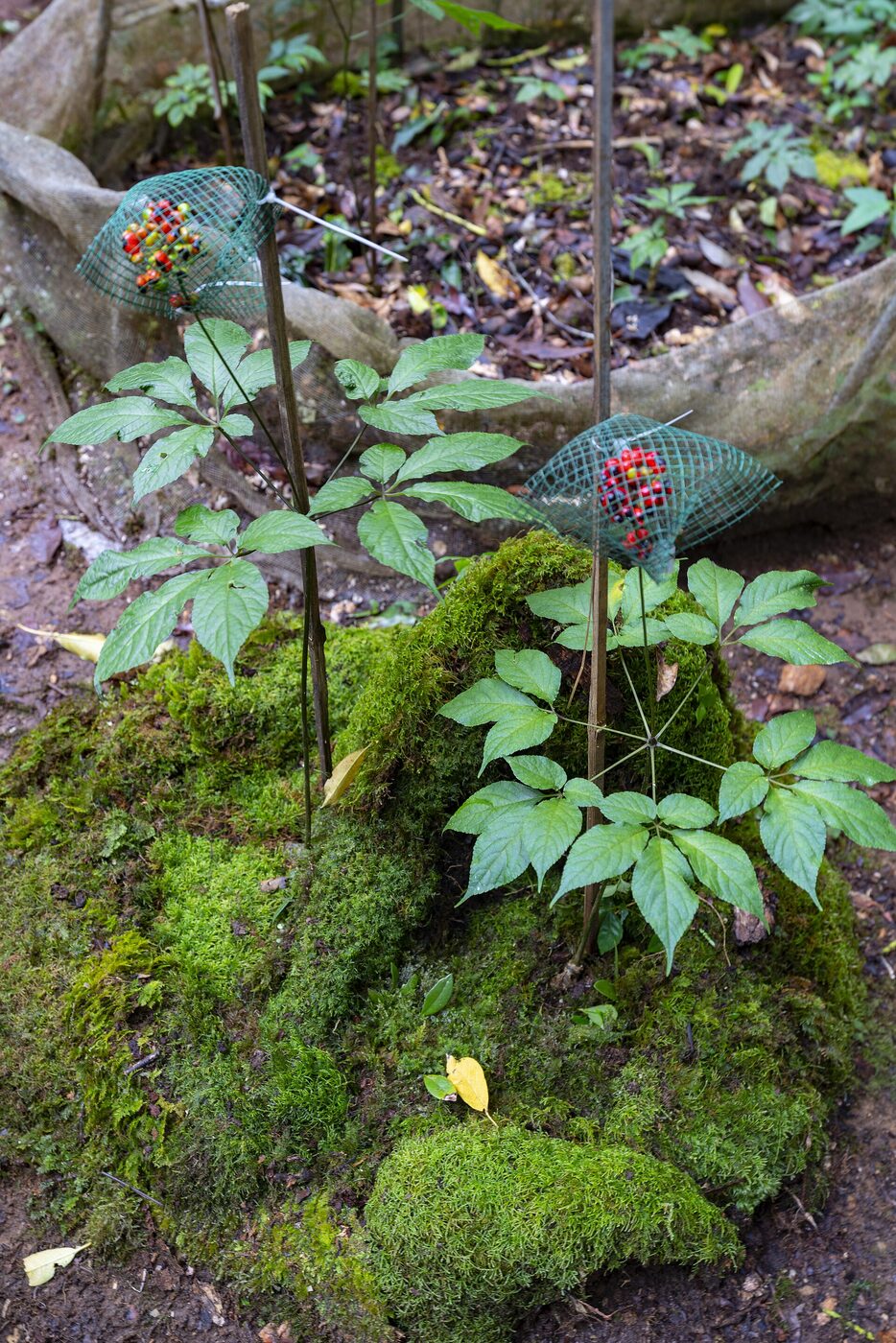

Panax vietnamensis grows above twelve hundred meters on and around Ngoc Linh, from which it takes its name. It was first identified as a separate species in 1973. It takes about ten years to mature. It is now considered threatened, and the two named threats are over-harvesting, theft from cultivation plots, and genetic contamination from faster-maturing false ginseng planted lower down. A state drug-materials farm was put on the mountain in 1979; a conservation center followed in 2004.
The one scholarly account we could open says this about the money, and we quote it exactly because of what it does not say:
“Ngoc Linh Ginseng is a medicinal plant with high economic value and has been selected by the Prime Minister of Vietnam as a national brand product. Ngoc Linh ginseng development has helped a lot of households in Nam Tra My mountainous district, Quang Nam, Vietnam escape from poverty and become billionaires in just 4 years.”
Nam Tra My is Xơ Đăng and Ca Dong country. The sentence says households and district and national brand and Prime Minister. It does not say Xơ Đăng.
So here is what we will say, carefully. The mountain the Sedang have always lived on turned out to be worth a great deal of money. The published accounts of that money describe districts, brands and decisions, and do not describe the Sedang. And the plant’s own scientific record lists theft from the plots as one of the two main threats to it. Somebody is stealing it from somebody. Nobody has written down who. See Pushed off the land.
The people of this people
This is the shortest gallery in this library and we are going to say why rather than pad it.
| Name | What is recorded |
|---|---|
| Pim | The Sedang leader with whom Mayréna made alliance in 1888. Almost certainly the only Sedang individual named in the nineteenth-century European record |
| A Núk (1936–2016) | A sapper who used eight charges to destroy sixteen American aircraft in the attack on the airfield at Pleiku; made a Hero of the People’s Armed Forces on September 19, 1967 |
| Y Buông (b. 1945) | A cook on the Dak To battlefield; made a Hero of the People’s Armed Forces in 1972; a member of the National Assembly from 1976 to 1981 |
Two things about that table rather than around it.
First: the only two Sedang whose names have entered any encyclopedia both fought on the other side. One against the airfield at Pleiku; one at Dak To, which is his own country. We print them because they are Sedang and because they are there, and because a record that only carries the people who fought our way is not a record. See Highlanders on the other side.
Second, look at the names. A Núk. Y Buông. Sedang men’s names take A and women’s take Y — the same pattern as the Bahnar next door, and the reverse of the Rhade, where Y is the men’s prefix. The pattern is visible in every Sedang name in the record. We could not find a single source that states the rule, only sources that display it. We are calling it an observation, not a fact, until an elder confirms it. See Names and words.
The epic we cannot read
We did not expect this section to exist.
The Sedang have an epic literature, and it has been collected and studied. Three peer-reviewed papers by a named scholar at a Vietnamese university are published on it: on the customs depicted in the Xơ Đăng epic, including the marriage ceremony and the rules of hospitality (2013); on social organization and community cohesion in the Xơ Đăng epic (2017); and, with a co-author, on the artistic similarities between the Xơ Đăng epic and the Bahnar epic (2023). Their references point to materials compiled by a research institute in 2006, 2007 and 2009 — which places the Sedang texts inside the great Central Highlands epic collection of that decade, the one that issued bilingual volumes with the original language facing the Vietnamese.
If that is right, then somewhere there are printed volumes of Sedang oral literature in Sedang.
And here is what we have of it: nothing. The journal’s pages gave us metadata and no text. We do not have the titles of the Sedang epics. We do not have the Sedang word for the genre — the Bahnar call theirs hơamon, and whether the Sedang word is a cousin of that or something else entirely, we do not know. We do not have the names of the singers, or where and when they were recorded, or how many exist.
We are printing this section empty on purpose. A Sedang reader should know that their literature exists in print somewhere, even if this page cannot yet quote a line of it. See Gongs and epics.
How many
| Figure | Year | Who is counting |
|---|---|---|
| 80,000 | 1959 | a North Vietnamese source, cited by Hickey |
| 57,376 | 1960 | Saigon, cited by Hickey |
| 40,000 | 1962 | a missionary estimate |
| between 40,000 and 80,000 | 1966 | the US Army handbook’s own hedge |
| 25,000–40,000 | 1967 | Kenneth Smith, for Dak To and Tu Mo Rong districts only |
| 96,766 | “1985 census” | the Encyclopedia of World Cultures — but Vietnam’s censuses fall in 1979, 1989, 1999, 2009 and 2019, so treat the year as the encyclopedia’s, not as a fact |
| 127,148 | 1999 | Vietnamese census, via a non-Vietnamese summary |
| 98,000 speakers | 2007 | Ethnologue — this counts the language |
| 212,277 | 2019 | Vietnamese census, via a non-Vietnamese summary — this counts the nationality |
| 909 | 2011 | Sedang to be displaced by one dam |
Three things those rows say.
One. Eighty thousand against fifty-seven thousand, in consecutive years, from two governments counting the same mountains. That gap is the colonial problem in one line.
Two. The two live figures measure different things. 212,277 is the nationality — Todrah, Monom, Halang and Kayong speakers included. 98,000 is the language. The difference between them is the classification argument of this page, expressed as a subtraction.
Three. Nobody on any of those rows is Sedang. See How many Dega there are.
What we do not have
A line of the Sedang epic. It exists, it has been studied, and we have not read it. This is the single most valuable thing anyone could send us.
The descent rule. Not recorded anywhere we could reach, for a people of two hundred thousand.
How the iron was made. The furnace, the bellows, the ore, the smith’s standing. Fifty pages of American handbook and not one of them asks.
The Sedang sections of the 1952 Coutumier, which is in print and which nobody writing in English seems to have opened.
The mission’s unpublished Sedang dictionary, which is sitting in an archive in Paris.
Who is taking the ginseng.
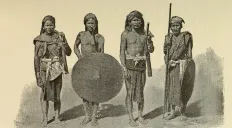
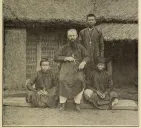
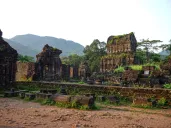
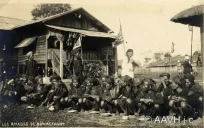
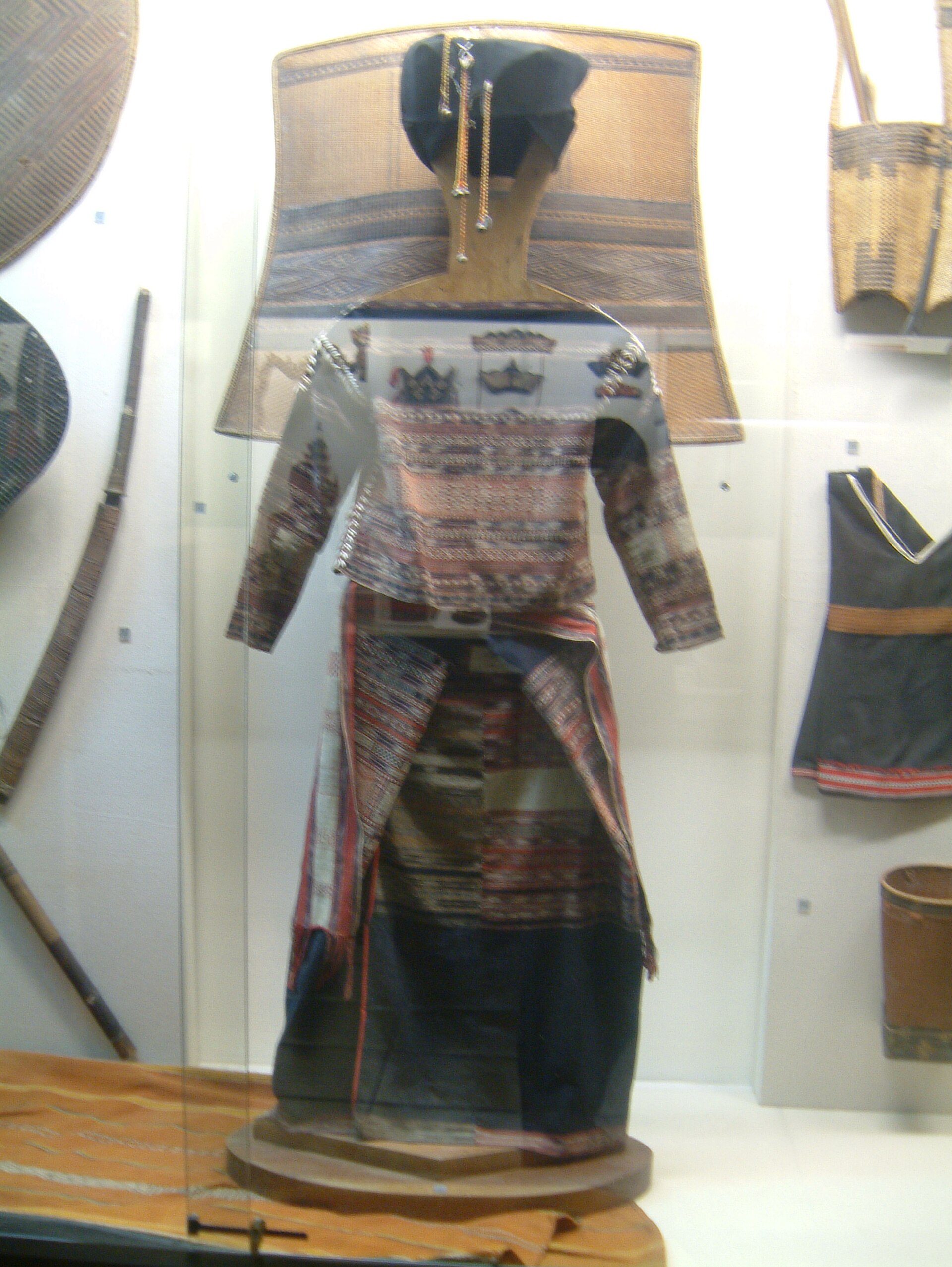
And any photograph of a Sedang person. We looked. The free visual record of this people is a handful of objects photographed behind glass in a museum in Hanoi — a gong, a basket, a costume, a model of a house. There is no free photograph of a Sedang village, of a rong standing in its own country, of Ngoc Linh, or of any named Sedang person. The entire free visual record of a people of two hundred thousand is a few dozen objects in a case in the capital of the state that governs them. If you have a photograph, we want it. See How to record an elder.
Terms
- kan hngii / tyin
- The house chief, and his wife — who is the household’s religious head, holds the rice soul, performs the agricultural rites and distributes the rice.
- mahua
- The vital soul, which leaves the body six days after death.
- mahua phae
- The rice soul, living in the upper half of the longhouse, which is the only part where rice may be cooked.
- mahua pla
- The soul hearth. To be expelled from a Sedang village is to be ostracized from this fire.
- petyao / bojau
- The shaman, male or female; and the sorcerer.
- tara / a-pia
- The thunder gods; and the beings who stand to animals as the thunder gods stand to people.
- tyulang
- The villager the French appointed as their liaison, who had little real authority and was largely ignored.
- To-drah / Kmrang
- Those who live in the sparse forest; those who live in the dense forest.
See also: The kingdom of the Sedang, The Kon Tum mission, The Bahnar, The smaller peoples, Battles on our land.
Sources
- Joann L. Schrock and others, Minority Groups in the Republic of Vietnam, DA Pam 550-105 (1966), Sedang chapter roughly pp. 739–790 — by a distance the fullest account of Sedang life in English, and produced for the Department of the Army as a handbook for personnel who would be living in Sedang villages. Its last section advises its readers on how to approach us. Every passage quoted on this page was checked against its own full text
- Gerald C. Hickey, The Major Ethnic Groups of the South Vietnamese Highlands, RAND RM-4041 (1964), Sedang at pp. 59–64 — the subgroup glosses, the village offices with their Sedang terms, the Knda, the tara, the mahua, the iron workers, Pim, and the civil war of the 1930s. Written under contract to the United States military during a war in which Sedang men were being recruited
- Kenneth D. Smith, Ngữ-vựng Sedang / Sedang Vocabulary (SIL, Kon Tum and Saigon, 1967); Phonology and Syntax of Sedang (dissertation, 1975); Sedang Grammar (Canberra, 1979); and Từ-điển Xơ-đăng–Anh–Việt–Pháp (2000) — the only scientific description of the language there is. A real gift, made in order to translate scripture, and the scripture was never finished
- George Devereux, “Functioning Units in Ha(rh)ndea(ng) Society,” Primitive Man 10 (1937), 1–8 — eight pages, and the only item in the standard reference bibliography for this people
- Paul Guilleminet, Coutumier de la tribu Bahnar, des Sedang et des Jarai de la province de Kontum (EFEO, 1952) — the law the Kon Tum courts applied between 1908 and 1939, written down by the administrator who applied it. Its Sedang sections are the largest untouched source on this people
- Lê Ngọc Bình, “Một số phong tục trong sử thi Xơ Đăng” (2013) and “Social Organization and Community Cohesion in Xo-Dang Epic” (2017); and Nguyen Ngoc Chien and Lê Ngọc Bình, “Some artistic similarities between the Xo Dang epic and the Bahnar epic” (2023), all in the Dalat University Journal of Science — the published scholarship on a literature this page cannot quote
- Chuong Van Huynh and others, “Indigenous knowledge in relation to climate change: adaptation practices used by the Xo Dang people of central Vietnam,” Heliyon 6:12 (2020) — eighty-seven households in Bac Tra My in August 2019; the ghost forests, Pế Tru, and the banana bud
- International Rivers, comments on the Thuong Kon Tum hydropower project, June 2, 2011 — the 909, and the seventy-four percent diversion
- Encyclopedia of World Cultures, “Sedang”; Glottolog, Sedang; and PHOIBLE 2.0 for the two competing phoneme inventories
Compiled September 2026. No Vietnamese government or state media source is used as a source; the classification of the six subgroups, the claim that the Tơ Đrá smelted from ore, the two festival names and the two twentieth-century biographies reach this page only through non-Vietnamese summaries, and are labeled as such where they appear. Several passages that circulate in secondary accounts of the Sedang were checked against the 1966 handbook’s own full text and are not in it; they are not printed here. Four things on this page are open and marked in the text: the descent rule, which nobody has published; whether the Sedang or the Rhade were first armed by the United States, on which the Army’s handbook and the standard account disagree; the exact size of the Sedang vowel inventory, where the famous figure may rest on a misread total; and the Sedang epic, which exists in print and which we have not read. Upland district names inside Quảng Nam and Quảng Ngãi are given plain, as highland places, while the two provinces keep their own spelling. If you can correct a word, a village or a date here, we want it — and if you have a photograph of a Sedang village, we want that most of all.