










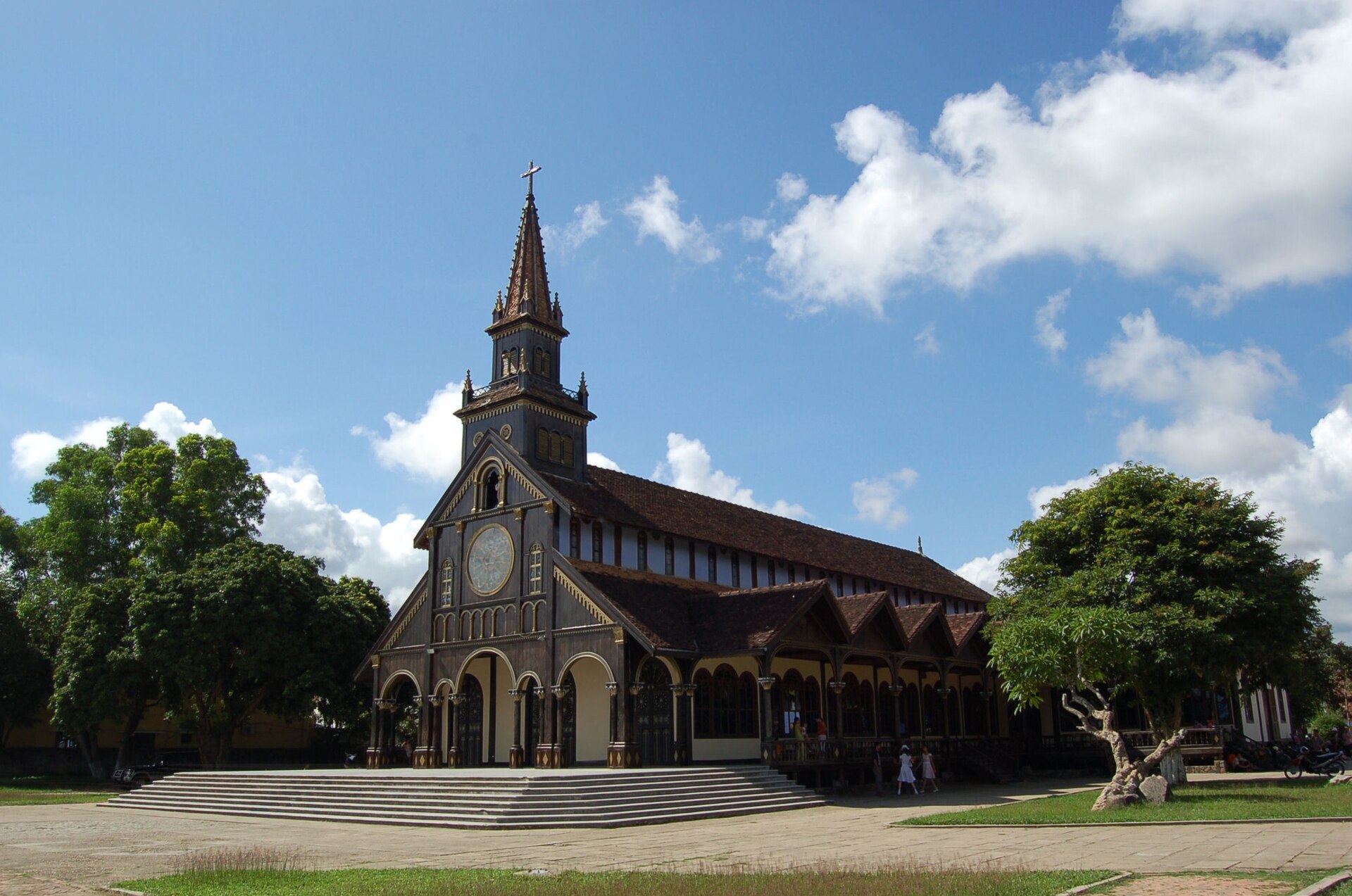
On March 27, 1975, in a town that had fallen eleven days earlier, the French bishop of Kon Tum consecrated a Vietnamese successor so that the diocese would not be left headless when he was expelled. Within eighteen months the minor seminary, the major seminary and the school that had trained highland catechists since 1908 were all shut, and the number of priests had fallen from about a hundred to forty-five. What kept the church alive in the villages for the next fifteen years was not the hierarchy. It was two hundred and ninety-seven highland lay catechists, the yao phu, some of whom went to prison for it. Today seventy-two percent of the Catholics of the diocese of Kon Tum are highlanders — and a Mass said in a house in Ngoc Hoi district can still be broken up by ten officials who switch off the lights and take the missal away.

A word about what this page is not
Readers who know the Chinese case will reach for the word “underground,” and it does not fit here. Vietnam has one Catholic hierarchy, in communion with Rome, whose bishops are appointed after consultation between the Vatican and Hanoi. There is also a state-sponsored lay body, the Committee for Solidarity of Vietnamese Catholics, which the Bishops’ Conference has never endorsed. The distinction that decides what actually happens in a highland village is a different one: whether a parish is recognized and a building registered. Almost everything in the second half of this page follows from that one administrative fact. See The Law on Belief and Religion.
March 1975: a bishop keeps a diary
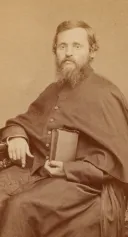
Paul-Leon Seitz of the Paris Foreign Missions had been in the highlands since November 1952, first as vicar apostolic and, from 1960, as bishop of Kon Tum. He had come to it after fifteen years in Hanoi, where he ran an orphanage that at its height held some seven hundred children. He was sixty-eight in the spring of 1975, and he wrote down what happened. The diary was published in Paris two years later as Le temps des chiens muets — the time of the mute dogs, from Isaiah: watchdogs that cannot bark.
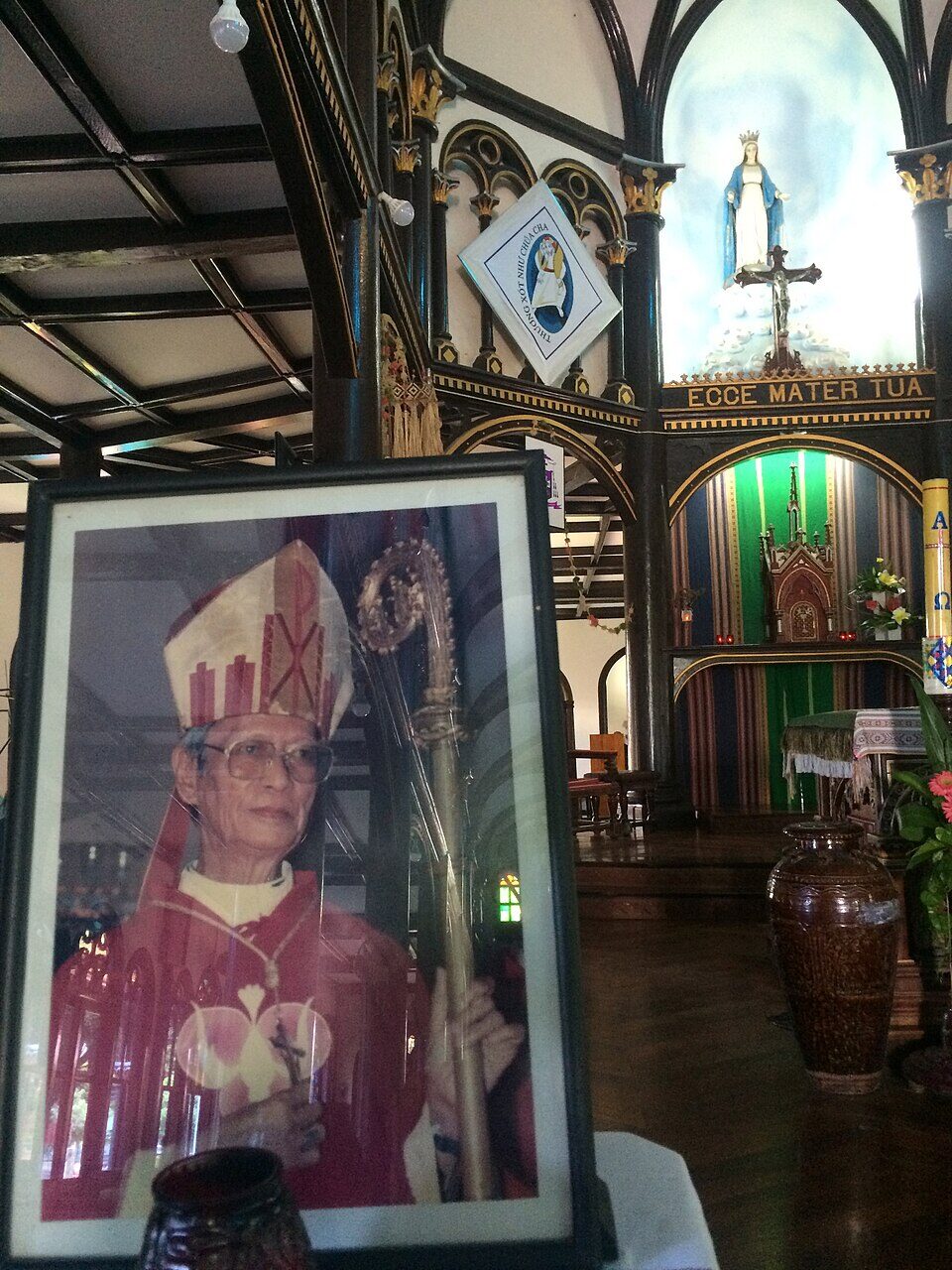

On Monday, March 17, with the South Vietnamese army gone from Kon Tum, he was stopped on a road by armed men. He did not pretend to be anyone else.
“I am the Bishop of Kon Tum. I have come to visit the priest of this parish. There — do you see that cross over there? That is where I want to go.”
He was taken to the local commander, who knew who he was, and let go with a safe-conduct.
Ten days later he used a faculty the Holy See had given him against exactly this situation.
“I decided at once to use that faculty. I sent for the Vietnamese priest I had long had in mind. I handed him the letter of authorization the Holy See had sent me and told him that in the name of the Holy Father I was asking him to accept the office of coadjutor bishop…”
“I performed the rite of episcopal consecration for the man who would, as of right, be my successor…”
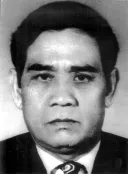
The priest was Alexis Pham Van Loc, then fifty-six, who had run the Kon Tum minor seminary from 1957 to 1969 and had been director of the Cuenot catechists’ school since 1974. He took the motto Omnium servum — servant of all. Within eighteen months both of the institutions he had directed would be closed, and he would be the man left holding the diocese.
The entry that matters most to us is from Saturday, April 5. Highlanders who had been herded into wartime resettlement camps were being sent back to their ruined villages, and the priests were not allowed to walk back with them.
“They had to leave behind the crop they had just sown, their houses, their goods… That is proof enough that the presence of priests alongside the ethnic people was simply forbidden.”
That sentence is the thesis of everything that followed. What was done to the highland Catholic Church after 1975 was not done chiefly to its buildings or to its bishops. It was done to the road between a priest and a village.
On August 12, 1975 the provincial Military Management Committee required Seitz and every foreign missionary priest in the diocese to leave the country. The diocese’s own history puts it in one line: “buộc Đức cha Phaolô Kim (Paul Seitz) Giám mục Giáo Phận, cùng tất cả các cha thừa sai ngoại quốc… phải hồi hương”. Kim was his Vietnamese name; Vietnamese Catholics still call him Duc cha Phaolo Kim. He flew out of Saigon with nine other French priests and nuns, all of whom had worked in Kon Tum. Reporters found him in Bangkok. “There is no longer a single foreigner in Kon Tum,” he said, and: “We were expelled without ever being told the reason.” He died in Paris in February 1984.
A note on these quotations. Seitz wrote in French. The passages above reach us through a Vietnamese translation that circulates among Catholics abroad, and the Bangkok remarks through a Vietnamese rendering of an English wire story. We have not read the French original, which is out of print. Treat the wording as close but not as Seitz’s own ink.
Two dioceses, and they are not the same church
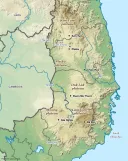
The highlands are divided between two Catholic dioceses, and the difference between them explains most of what follows.
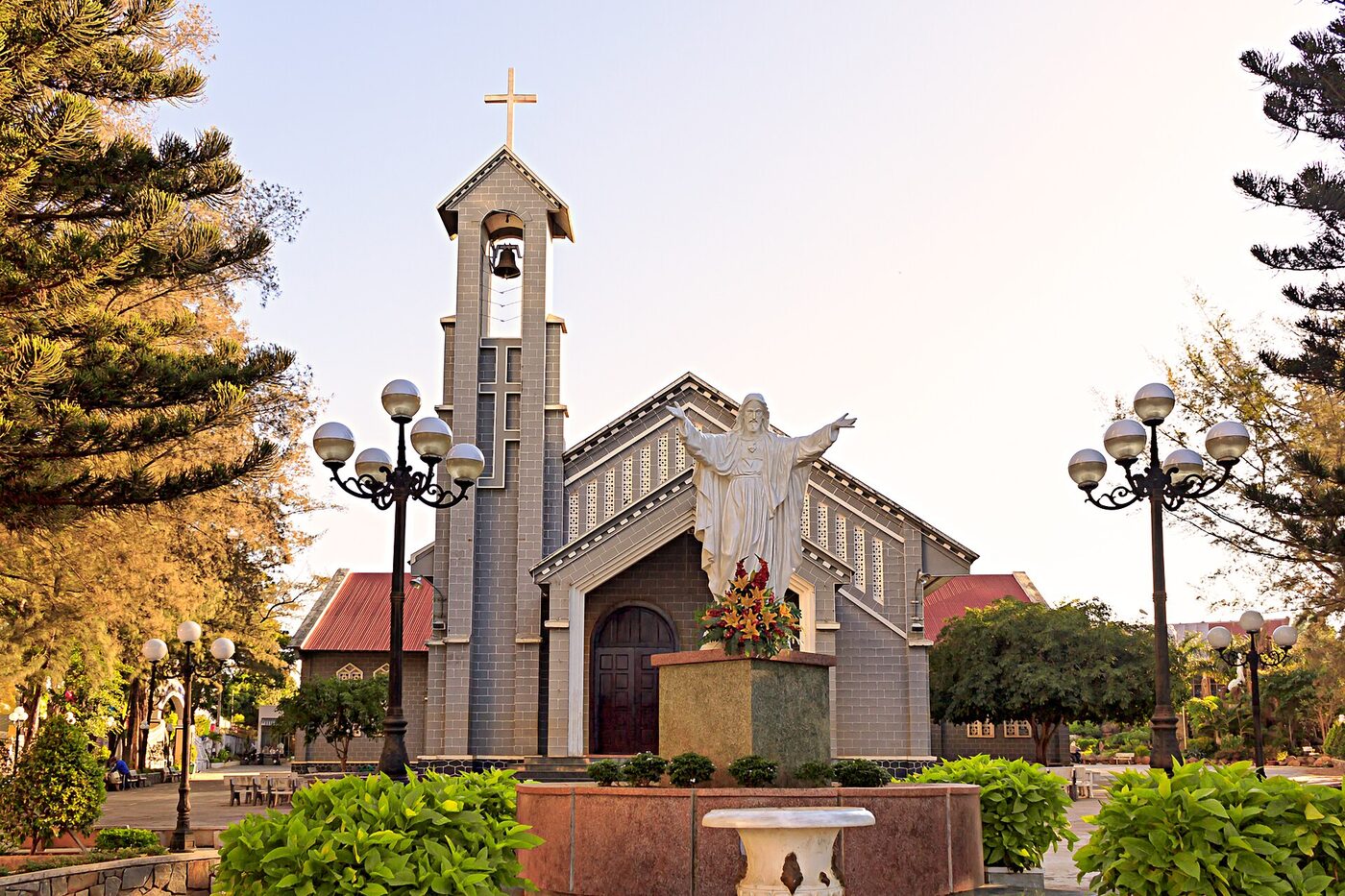

| Kon Tum | Ban Mê Thuột | |
|---|---|---|
| Mission founded | 1851, at Kon Tum | — |
| Apostolic vicariate | January 18, 1932 | — |
| Diocese | November 24, 1960 | June 22, 1967 |
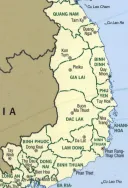
| Territory | Kon Tum and Gia Lai | Dak Lak, Dak Nong, part of Bình Phước |
| At foundation | 73,966 Catholics, 271 congregations, 66 priests (1960) | 56,719 Catholics, 33 parishes, 55 priests (1967) |
| Catholics, reported for 2022 | 394,274 (18.4% of the population) | 468,836 (14.3%) |
| Of whom highlanders | 287,206 of 396,040 (diocese’s own 2023 return) | 97,502 of 459,227 (diocesan figures for 2019) |
Seventy-two percent against twenty-one percent. Ban Me Thuot is a diocese of Vietnamese settlers with a highland minority inside it. Kon Tum is a highland church with a Vietnamese minority inside it. So the two halves of this story are told in different registers: in Ban Me Thuot the documented pressure falls on a bishop, a state-sponsored committee and a confiscated seminary in a provincial town; in Kon Tum it falls on whether a priest can get up a road to Dak Glei, and whether the shed the villagers built may stand.
The Kon Tum succession runs: Seitz to 1975; Alexis Pham Van Loc, 1975 to 1995; Pierre Tran Thanh Chung, coadjutor from 1981 and bishop from 1995 to 2003; Michel Hoang Duc Oanh, 2003 to 2015; and Aloysius Nguyen Hung Vi since October 2015. Ban Me Thuot: Pierre Nguyen Huy Mai from its foundation in 1967 until his death in office in August 1990 — twenty-three years, never retired, never replaced; then Joseph Trinh Chinh Truc, who had been appointed coadjutor in 1981 and waited nine years; Joseph Nguyen Tich Duc to 2006; Vincent Nguyen Van Ban from 2009; and, after the see stood without a resident bishop for two years and four months, John Baptist Nguyen Huy Bac, appointed in July 2024. The new bishop was born at Buon Ma Thuot in October 1967, four months after the diocese was created.
Two of those dates are worth pausing over. Tran Thanh Chung was appointed coadjutor of Kon Tum in March 1981 and consecrated in November 1981 — eight months, at a period when an episcopal consecration in Vietnam needed the state’s acquiescence. He then ran the diocese as coadjutor for fourteen years before he succeeded to it.
The priest famine
The diocese of Kon Tum counts its own losses, and the arithmetic is bleaker than any outside report.
“Gần 100 linh mục nay còn lại 45 vị.”
Nearly a hundred priests, and now forty-five are left.
And then, for the years that followed:
“Chỉ sau 13 năm, đã có tới 15 linh mục qua đời trong khi chỉ thêm có 4 linh mục mới.”
In only thirteen years, as many as fifteen priests died while only four new ones were added.
Fifteen out, four in. The average age of the clergy reached sixty-one. That was not attrition. It was the arithmetic of a closed door, and the doors had been closed in sequence:
- End of 1975 — “Tiểu chủng viện ngưng hoạt động”: the minor seminary ceases operating.
- 1975 — the Cuenot catechists’ school is forced to close.
- 1976 — “Đại chủng viện giải tán”: the major seminary is dissolved.
- August 25, 1976 — the seminary building itself, built of wood between 1935 and 1938, is closed.
- October 1977 — at Ban Me Thuot the remaining seminarians are moved into the bishop’s house; the seminary grounds become a political training institute, and are today a teacher training college.
- February 2, 1993 — “bắt đầu khai giảng khoá đầu tiên có 21 anh em”: at Kon Tum the first new course opens, with twenty-one men.
Seventeen years between the dissolution and the reopening. You can read the same gap off the faces of the clergy list. The present bishop of Kon Tum, Aloysius Nguyen Hung Vi, finished his course at the Pontifical College of St Pius X at Da Lat in 1977. He was ordained priest on April 7, 1990. Thirteen years between the end of a man’s formation and the laying-on of hands.
Two other lives carry it better than a table.
Joseph Pham Minh Cong was born in the north in 1935, ordained in Saigon in 1965, and served as an army chaplain in the highlands from 1971. He was imprisoned from 1975 to 1988 — thirteen years — and on release was barred from holding any post in the diocese for about fifteen more, during which he ministered quietly across the boundary in Ban Me Thuot. His position was regularized only in 2003, when he was given charge of fourteen parishes at once. He built two churches, retired in 2017, and died in January 2020; more than a hundred priests came to his funeral in Kon Tum cathedral. Thirteen years in prison and fifteen years shut out is the whole of the twenty-eight years between 1975 and 2003.
Francois Pham Ngoc Quang was a seminarian when the seminary closed under him. The French account of his ordination is worth quoting as printed:
“Le séminaire fut fermé et le jeune Quang, pour gagner sa vie, dut se faire embaucher dans une compagnie gouvernementale de transport de la province du Dông Nai, où il travailla pendant quatre ans. Par la suite, il s’inscrivit à l’université de Hô Chi Minh-Ville et y accomplit le cycle complet des études de médecine. En 1985, il était nommé médecin traitant dans la léproserie de Ben San.”
Four years in a state transport company, then a full medical degree, then fourteen years as the attending physician of the Ben San leprosarium. He was ordained priest at Pleiku on April 4, 2006, at the age of fifty, and intended to go on treating leprosy patients — there were some three thousand of them in the diocese — as a priest.
What the famine looked like from the pews is in a single French sentence from 2006:
“Le diocèse de Kontum… abrite 220 000 catholiques dont plus de la moitié (120 000) appartient à diverses minorités ethniques… dispersés dans environ 249 paroisses et annexes… le diocèse ne dispose que de 54 prêtres.”
Fifty-four priests for two hundred and forty-nine congregations, scattered across Kon Tum and Gia Lai.
The yao phu
This is the part of the story that belongs to us, and it is the reason there was still a church to re-staff in the 1990s.
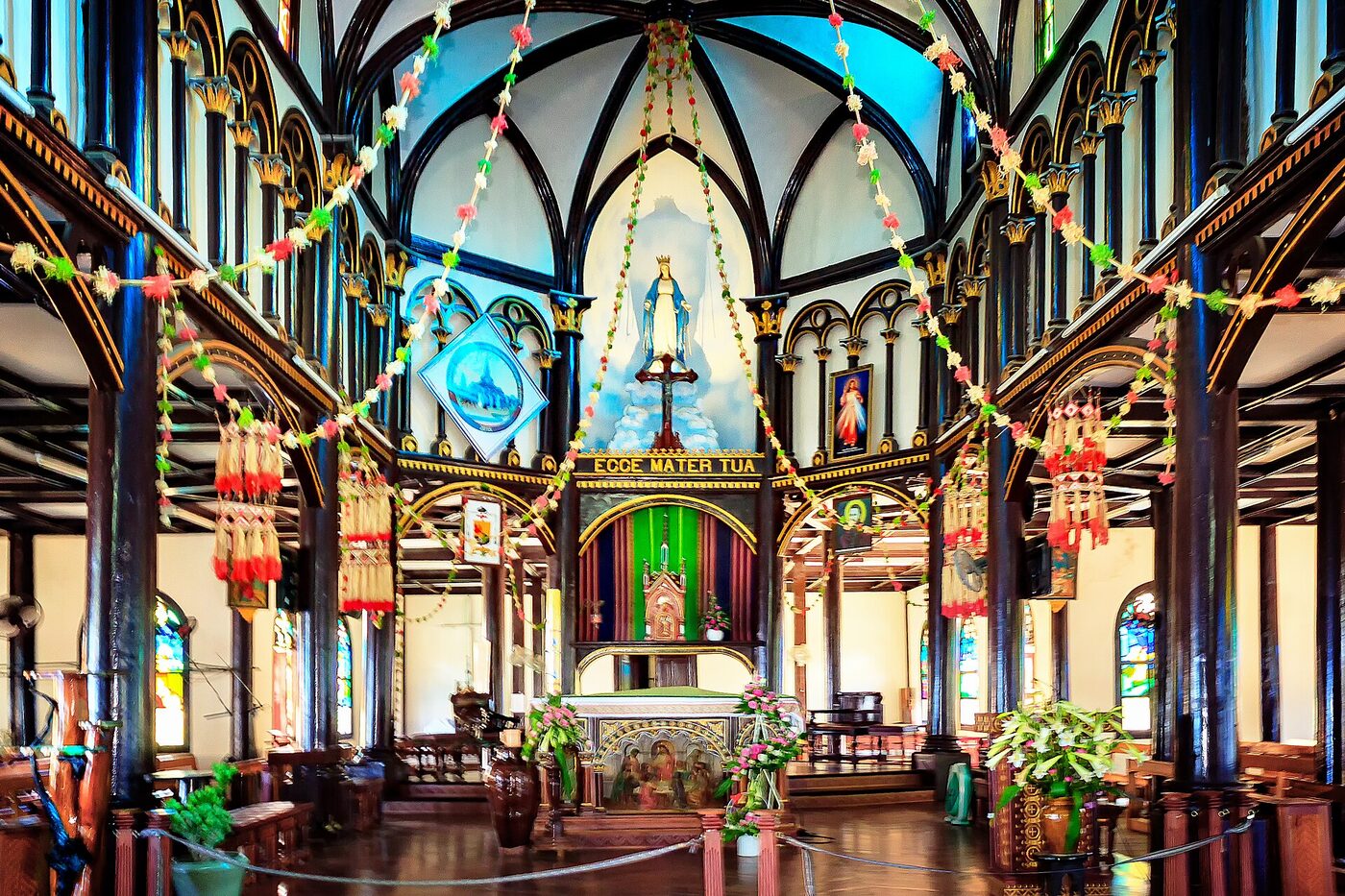

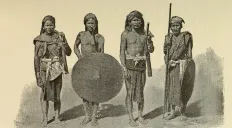
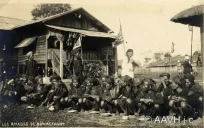
The catechists’ school at Kon Tum was built between 1905 and 1908 and named for Etienne-Theodore Cuenot, the coastal bishop who had sent the first missionaries inland in 1850. Father Martial Jannin, later the first vicar apostolic, opened it to take in Bahnar, Sedang, Rongao and Jarai boys for something over ten years of schooling and a three-year apprenticeship, and to send them home as yao phu — catechists, in Vietnamese giáo phụ. They rose through grades: apprentice, second grade, first grade, and finally bok-thầy, master catechist. The school’s first great harvest was the ordination of three Bahnar priests in 1932. See The Kon Tum mission, 1851.
After 1975 the school was shut and the priests were gone. What happened next is set down by the diocese in one sentence, and it is the sentence this page is built around:
“Không linh mục, không tu sĩ, không nơi thờ phượng, tất cả đều phó thác cho các Yao Phu bám trụ coi sóc!”
No priests, no religious, no place of worship — everything was handed over to the Yao Phu, who dug in and took care of it.
There were two hundred and ninety-seven of them in service in 1975. By 2004 there were one thousand one hundred and sixty-seven: four hundred Sedang, three hundred and ninety-four Bahnar, three hundred and seventy-three Jarai. The figures were given at a colloquium at Huế in April 2004 by Father Thomas Nguyen Van Thuong, with Bishop Hoang Duc Oanh and the Jarai missionary Tran Si Tin sitting beside him, and the dispatch that carried them also carried one name:
“Pore Hrao, au service de quatorze villages abritant 1 200 catholiques. Il est un des 233 giao phu encore vivants formés à l’école Cuénot.”
One man, fourteen villages, twelve hundred Catholics. One of the two hundred and thirty-three surviving graduates of the school the state had closed thirty years earlier.
Some of them went to prison for it, and here the diocese names them. The parish history of Dak Jak, in Dak Glei district, records:
“như chú Luy Nhah và chú G. Leonardi Glép, chú Simon Nhum, chú Liêm bị bắt đi tù tại trại giam T15 Plei Bông”
men like Luy Nhah and G. Leonardi Glep, Simon Nhum and Liem, who were arrested and imprisoned at the T15 camp at Plei Bong“Riêng chú Luy Nhah phải trãi qua 2 nhà tù T20 và T15.”
Luy Nhah alone had to pass through two prisons, T20 and T15.“chú Giacôbê Bỉng và chú Luy Dum bị bắt cải tạo tại huyện Đăk Glei nhiều lần”
Giacobe Bing and Luy Dum were taken for re-education in Dak Glei district many times.
Six names — Luy Nhah, G. Leonardi Glep, Simon Nhum, Liem, Giacobe Bing, Luy Dum — and two camps, T15 at Plei Bong in Mang Yang and T20. So far as we can find, this is the only published list anywhere of highland Catholic catechists imprisoned after 1975, and it comes from the diocese itself rather than from any human-rights report.
The school building did not survive them. On January 20, 1978 the Kon Tum town authorities came and pulled it down — “chính quyền Thị xã Kon Tum lúc bấy giờ đã đến phá dỡ trường” — and a state school went up on the site. On March 25, 2025, with the last remaining building declared unsafe and scheduled for demolition, the bishop’s house filed a formal objection, asking for restoration or a memorial instead, on the ground that the place had been the diocese’s first episcopal seat and carried more than a hundred and twenty years of the highland church’s history. A hundred and seventeen years after Jannin opened it, and forty-seven after the first demolition, the diocese was still asking.
The women’s counterpart is the Hoi dong Anh Phep La, the Daughters of the Miraculous Medal, founded at Easter 1947 by Bishop Jean Sion for highland women. In 2022 it counted a hundred and ninety-one sisters in thirty-one communities drawn from seven different peoples, running six centers that care for about six hundred and fifty orphaned and abandoned children. It is the largest single body of full-time personnel the diocese has, and it is highland and female.
The Jarai mission
On October 10, 1969, Bishop Seitz drove four Redemptorists out to Plei Kly in Phu Nhon district, Gia Lai, and handed them the Jarai: Father Anton Vuong Dinh Tai, Brother Leona Ho Van Quan, and two men then still deacons, Giuse Tran Si Tin and Phero Nguyen Duc Mau. There was no house. They slept in an abandoned classroom. Of perhaps a hundred and fifty thousand Jarai, by the Redemptorists’ own reckoning, about a hundred were Christian, and one Vietnamese-speaking priest at Cheo Reo was assigned to all of them.
The war reached them first. On March 15, 1971, in the attack on Phu Nhon district, Father Nguyen Duc Mau, Deacon Tran Si Tin, Brother Marco Dan and the catechist Nguyen Thi Chin were arrested along with some seventy other people. Tran Si Tin’s own account records what happened to the oldest of them: “Thầy Marcô Đàn vì thân già sức yếu… đã chết trong bưng vì bệnh sốt rét cấp tính sau gần hai tháng giam giữ” — Brother Marco Dan, being old and weak, died in the bush of acute malaria after nearly two months in detention. The survivors came out after about four months. Six weeks later two more of the fathers were taken for six days, and came back to find their tin chapel and kitchen destroyed by rockets.
Then the mission spent about twenty years making almost no converts. The missionaries lived among the Jarai, learned the language and the customs, and did not evangelize. Between 1969 and 1985 the count of Jarai baptisms runs, in one account, to six or seven people. The sources disagree about when it turned: the Redemptorist province dates the first twelve baptisms to Easter 1976 at Pleichuet, while the account carried by the Bishops’ Conference puts the beginning at Plei Kly in 1985, in preparation for a Marian year, with growth accelerating after 1988. Pleichuet and Plei Kly are different centers and both may be right.
What is not in dispute is where it ended up. At the fiftieth anniversary in October 2019, Redemptorists had baptized about forty thousand of the forty-five thousand Jarai Catholics; the mission community numbered some sixty-one thousand; twenty-nine Redemptorist priests and three brothers were serving in the diocese; and they had built fourteen churches and seventy-seven chapels at Plei Kly, Pleichuet and Cheo Reo. A Jarai New Testament had been made at Cheo Reo in 1973. See The Jarai.
Twenty silent years, and then forty thousand.
What was taken, and what the bishops wrote about it
On May 28, 2012 Bishop Michel Hoang Duc Oanh wrote to the chairman of the Kon Tum provincial People’s Committee about the imminent demolition of the Compassion Center at 12 Nguyen Hue street, to make room for a teacher training college. He listed what the diocese had lost: the Compassion Center, borrowed since 1978 and never given back; the convent of the Daughters of Charity next door, in existence since 1936; the monastery of the Handmaids of Divine Providence; the Church of Filial Piety; the Cuenot orphanage; the Kim Phuoc convent. He closed with a proverb and a request:
“Mất tiền mất bạc mất ít! Mất danh mất giá mất nhiều! Mất lòng tin, mất hết!”
To lose money and silver is to lose a little. To lose name and standing is to lose much. To lose trust is to lose everything.“Chúng tôi không xin ân huệ, chỉ mong được đối xử công bằng.”
We are not asking a favor. We only hope to be treated fairly.
The general rule is stated plainly in the American government’s own reporting: Catholic and Protestant representatives say the state has refused to return the churches, administrative buildings, hospitals, clinics and schools it seized between 1954 and 1975. On the other end of the process — registration of new parishes — the same report names the worst region in the country as Gia Lai, Dak Lak, Dak Nong, Kon Tum and Lam Dong. Which is to say: our five provinces.
Dak Jak, and the shed
Dak Jak parish sits in Dak Mon commune, Dak Glei district, eighty-five kilometers north of Kon Tum town. It takes in three communes and thirteen highland villages plus one Vietnamese community. At the end of 2014 it counted 5,059 Catholics, of whom 4,819 were Sedang, Holang and Jeh and 240 Kinh.
It had no resident priest between 1975 and 2004. The parish history says it in five words: “không có linh mục hiện diện”. People walked to Kon Tum cathedral for the sacraments. The yao phu held the place together, and six of them went to the camps. A resident priest, Father Daminh Tran Van Vu, was finally appointed in November 2011.
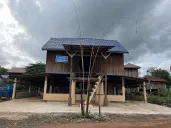
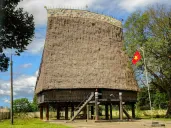
In April 2013 the parishioners built themselves somewhere to worship: a temporary structure of about a thousand square meters, put up because “Chính quyền không công nhận” — the authorities did not recognize the parish and would not permit a church. In May 2013 the shed was ordered demolished. In August 2014 a compromise was struck: the diocese would take the big shed down if a two-hundred-square-meter replacement were allowed. Nothing was allowed. Then, in January 2015, the order:
“từ ngày 07-17.01.2015 phải dỡ cho được ngôi nhà tạm nói trên và từ nay tới tháng 3 sẽ trục xuất cho được Linh mục Quản xứ ra khỏi giáo xứ và không cho bất kỳ Linh mục nào lên làm mục vụ tại huyện Đăk Glei này.”
Between 7 and 17 January 2015 the said temporary building must be taken down, and between now and March the parish priest is to be expelled from the parish, and no priest whatsoever is to be allowed up to do pastoral work in this district of Dak Glei.
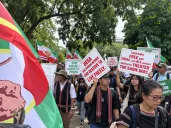
From January 13 the parishioners stood by the shed in shifts, day and night, to pray and to guard it.
Bishop Oanh offered to pay the fines himself, or to be taken to court, and asked the authorities in an open letter to look around the district and see who was really undermining people’s trust in the government. In June 2015 he told his own diocese something less quotable and more characteristic: “when you face problems, you need to show patience, become promoters of dialogue with the authorities.”
Masses stopped
Three episodes are documented well enough to set down in detail.
November 7, 2010, Kon Chro and Kbang districts, Gia Lai. Bishop Oanh had written to the provincial authorities on September 11 giving notice of a monthly schedule of Masses in those districts and asking for a written refusal if they objected. Fifty-seven days passed without an answer, so he went. At 6:30 in the morning at Yang Trung he said Mass in a family house; the householder was warned afterwards not to host another. At nine at An Trung he said Mass, and officials then asked him to sign a document, calling it an account of the facts rather than an official report. At two in the afternoon, twenty kilometers short of Son Lang in Kbang, armed security stopped the party, kept them waiting, told them no official was available, and turned them back at twenty past four; the family that was to have received them had been held at the People’s Committee all day. The next morning both householders were summoned and pressed to acknowledge fault for having hosted Mass. Both refused, citing the constitution. Human Rights Watch recorded that police later kept the bishop from celebrating Christmas Mass in Kbang district.
December 2015. Christmas Masses were stopped at Dak Lam parish in Dak Mon commune — the same commune as Dak Jak — for about five thousand people, and at the Sedang parish at Kon Pia in Tu Mo Rong district for more than three thousand. The priests lacked prior written registration; two were declared unwelcome. One of them was Father Daminh Tran Van Vu again.
March 22, 2023, Dak Nong commune, Ngoc Hoi district. About ten district officials broke up a Mass being said in a private house by Father Francois-Xavier Le Tien Tien, parish priest of Dak Giac. They called the house an illegal chapel and the congregation an unauthorized gathering, turned off the lights, took the missal and ordered the priest to report to district headquarters. The diocese’s communications officer, Father Thaddeus Vo Xuan Son, said afterwards:
“La façon dont ils ont troublé le caractère sacré de la célébration est honteuse.”
The way they disturbed the sacred character of the celebration is shameful.“Nous avons le devoir de protéger le caractère sacré de la messe. Personne n’a le droit d’offenser Dieu.”
We have a duty to protect the sacredness of the Mass. No one has the right to offend God.
That was three weeks before the tenth session of the Vietnam–Holy See Joint Working Group met at the Vatican.
Less pressure than the house churches, and what that sentence hides
When Human Rights Watch wrote its long report on the repression of highlanders in April 2002, the Catholic content of the whole document was three sentences:
“Catholicism took root in the highlands with the establishment of the French mission at Kontum in 1850.”
“Catholics have generally been under less pressure in the Central Highlands.”
“After the February 2001 demonstrations, however, ethnic minority Catholics in Kontum were called to a number of meetings in which local authorities warned them not to repeat the mistakes of the ‘Dega Protestants.’”
Three sentences, of which one is a date. The comparison is real and we do not dispute it — what was done to the Dega Protestant house churches after 2001 has no Catholic equivalent, and that page is told separately at The church they closed. But a reader should notice what “less pressure” is being measured against, and should notice too that nobody was writing the Catholic side down. We could not find a single highland Catholic named as arrested in the 2001 or 2004 waves. That may mean none was. It may equally mean that the organizations documenting the highlands in those years were looking at the Protestants, for the good reason that the Protestants were being destroyed.
By 2011 Human Rights Watch had a fuller sentence: highland Catholics in Kon Tum, Gia Lai and Dak Lak “also face harassment, forced renunciation of faith, and arrest, especially those allegedly associated with the ‘Ha Mon’ Catholic sect.”
Which brings us to the prisoners. In 2024 it was reported that eleven highland Christians sentenced between 2011 and 2016, to ninety years and eight months between them, had disappeared after their terms ran out. Five of them were Ha Mon Catholics.
| Name | Sentenced | Term |
|---|---|---|
| Runh | May 2013 | 10 years |
| A Kuin | arrested 2013 | 9 years 6 months |
| Run | November 2013 | 9 years |
| A Tik | April 2016 | 8 years |
| Dinh Kuh | April 2016 | 7 years |
All eleven were charged under Article 87 of the penal code, undermining national unity policy, and all should have been released, with probation, by 2024. Where these five men are we do not know. See Ha Mon.
Rome and Hanoi, and a house in Ngoc Hoi
Relations between the Holy See and Vietnam were broken in 1975 and contacts resumed in 1990. A joint working group was set up; a non-resident papal representative was appointed in 2011; the tenth session of the working group met at the Vatican on March 31, 2023; and on July 27, 2023 an agreement was concluded on the status of a resident papal representative. In December 2023 Archbishop Marek Zalewski was named to the post, the first ever, and took it up in Hanoi early in 2024.
Set three things from the same period side by side and draw your own conclusion.
- The United States Commission on International Religious Freedom, September 2024, on the diocese of Ban Me Thuot: “In 1990, the bishop of the Diocese of Ban Me Thuot in the Central Highlands spoke out against the state-controlled Catholic organization. The government then prevented him from attending a gathering of Catholic leaders even though he occupied a leadership position.” The report adds that the government “continues to target this diocese.” We deliberately do not name the bishop: in 1990 the see changed hands on August 4, and the report does not say which man it means.
- The same report, on appointments: “The GCRA’s 2021 training manual for government officials emphasized that the Vatican must report the selection of bishops or higher clergymen for approval by the government.”
- And in the same month as the tenth session of the working group, ten officials walked into a house in Ngoc Hoi district and switched off the lights during Mass.
The rapprochement is real at the level of nunciature and protocol. It has not yet reached Dak Glei.
What forty years looks like at the end of the road
In December 2014, at Krong No in Dak Nong, a bishop confirmed a hundred and ninety-four people under a makeshift tent. They were part of a community of about eight hundred Catholics, nearly all Mnong, scattered over some twenty villages, who until then had traveled more than sixty kilometers to reach Mass at Giang Son parish. Missionaries had first reached them in the 1960s. It was the first Eucharist celebrated among them at home.
That is the priest famine in its final form: not a headline, not an arrest. Eight hundred people and a tent, forty years late.
What we do not know
We have no evidence that Bishop Pham Van Loc was ever detained or confined, and we say nothing about it. We have found no documented numerical quota on ordinations — what is documented is case-by-case approval, which is a different and in some ways worse thing. We do not know what became of the fifty-odd Kon Tum priests who are in the count of a hundred in early 1975 and not in the count of forty-five after it: dead, expelled, imprisoned, or simply forbidden to function. And we have found no equivalent of the Dak Jak parish history for Ban Me Thuot, which means the catechists imprisoned in Dak Lak and Dak Nong have no names on any page we can reach.
If your family kept a yao phu’s papers, or if you know the name of a catechist who went to T15 or T20, we would like to record it. See How to record an elder and Reporting safely.
See also: The Kon Tum mission, 1851, The church they closed, Ha Mon, The Law on Belief and Religion.
Sources
- Giáo Phận Kontum, the diocese’s own published history — the 1960 figures (73,966 Catholics, 271 congregations, 66 priests); “Gần 100 linh mục nay còn lại 45 vị”; “Chỉ sau 13 năm, đã có tới 15 linh mục qua đời trong khi chỉ thêm có 4 linh mục mới”; “Không linh mục, không tu sĩ, không nơi thờ phượng…”; and the seminary closures of 1975 and 1976. Read in Vietnamese and checked line by line
- Sơ lược lịch sử Giáo phận Kontum (diocesan PDF) — the expulsion of August 12, 1975; the closing of the seminary building on August 25, 1976; the priest counts for 1992, 1995, 1998, 2002 and 2003; and the restart of formation on February 2, 1993 with twenty-one men
- Diocese of Kon Tum, Giới thiệu sơ lược về Giáo phận Kon Tum — “Tổng số giáo dân (2023): 396.040 (Người Kinh: 108.834 ; Người Thượng: 287.206)”. The ethnic breakdown, from the diocese itself
- Lược sử Giáo xứ Đăk Jâk — no priest from 1975 to 2004; the six named yao phu and the camps T15 Plei Bông and T20; 5,059 parishioners at December 30, 2014; the January 2015 order. Quoted above in the original
- Églises d’Asie (Missions Étrangères de Paris), dispatch of June 2004 on the Huế colloquium — “Ils étaient 297 giao phu en activités en 1975”; “On en compte aujourd’hui… 1 167”; “400 sont Sedang, 394 Bahnar et 373 Jarai”; the Cuénot school founded in 1908 by Jannin and forced to close in 1975; and Pore Hrao and his fourteen villages. Verified in French against the page
- Églises d’Asie, November 2001 — “Callixte Ba Nang Ly, ordonné prêtre le 18 octobre dernier par Mgr Pierre Trân Thanh Chung”, “le premier prêtre sedang de l’histoire”; the four Bahnar priests of the 1930s (Châu, Den and Hiêu in 1932, and a Cistercian of Kon Mahar in 1938); and Fathers Pierre Tis, Rongao, and Joseph A Roan, Bahnar, ordained in 1982 and 1992 and both then serving in France. The bishop used Bahnar as the liturgical language with simultaneous translation into Sedang and Vietnamese
- Églises d’Asie, May 2006 — Father Pham Ngoc Quang ordained at fifty, with the French sentences quoted above, and the diocese at 220,000 Catholics, 249 congregations and 54 priests
- Églises d’Asie, November 2010 — Bishop Hoang Duc Oanh’s own letters on the blocked pastoral visit of November 7, 2010, published in French translation; and the dispatch of March 2023 on the Mass broken up at Ngoc Hoi, with Father Vo Xuan Son’s two sentences
- Human Rights Watch, Repression of Montagnards (April 2002), chapter VII — the three Catholic sentences, quoted in full above because there are only three; and Montagnard Christians in Vietnam (March 2011), pp. 16–18, on Bishop Oanh’s pastoral letter and on Ha Mon
- United States Commission on International Religious Freedom, State-Controlled Religion and Religious Freedom in Vietnam (September 2024), pp. 22–25 — the 1990 Ban Me Thuot bishop, the continuing targeting of that diocese, and the 2021 training manual on episcopal appointments. Both passages verified against the PDF
- US Department of State, 2023 Report on International Religious Freedom: Vietnam — on unreturned property, and on parish registration being hardest in Gia Lai, Dak Lak, Dak Nong, Kon Tum and Lam Dong
- Bishop Michel Hoang Duc Oanh, letter to the chairman of the Kon Tum provincial People’s Committee, May 28, 2012 — the list of confiscated institutions and “Mất lòng tin, mất hết!”
- Vietnamese Redemptorist province and the Bishops’ Conference of Vietnam, on fifty years of the Jarai mission (October 10, 1969–2019) — the four founders, the arrests of March 15, 1971 and the death of Brother Marcô Đàn, the baptism totals, and the fourteen churches and seventy-seven chapels. Where the province and the conference give different dates for the first Jarai baptisms, both are given above
- Giuse Trần Sĩ Tín, CSsR, Hạt giống Kitô trong đất Jrai — the missionary’s own account of the 1971 arrests, read in an online extract rather than in the book
- Paul Seitz, Le temps des chiens muets (Flammarion, Paris, 1977) — the March and April 1975 diary. We have read it only in Vietnamese translation, and the French should be consulted before any of it is treated as his exact words. His earlier Des hommes debout (1975) we have not read at all
- Church in Chains and AsiaNews, July 2024, on the eleven highland Christian prisoners missing after their terms expired — the five Ha Mon Catholics named above, with their sentences, and the charge under Article 87
- gcatholic and the Vatican Annuario Pontificio as compiled there — the erection dates, the episcopal successions, and the statistics reported for December 31, 2022. Note that these are Annuario figures for 2022 even where they are published in 2023
- Giáo phận Ban Mê Thuột 55 năm nhìn lại (Catholic Bishops’ Conference of Vietnam) and the diocese’s own history — the 1967 foundation figures, the seminary moved in October 1977, the diocesan center returned on September 9, 2011, and the 2019 statistics including 97,502 highlanders among 459,227 Catholics
Compiled September 2026. The figures for priests, catechists and Catholics are the dioceses’ own published returns, Églises d’Asie’s reporting, and the Vatican’s statistics; no Vietnamese state source is used anywhere on this page, including for the official position. Highland personal names are written plainly; Vietnamese names and the titles of cited works keep their diacritics as printed. Where a diocese and a religious order give different dates for the same event, both are given.