














Coffee is the crop people associate with the highlands, and we write about it on Land taken for coffee. Rubber is the older story and the wider one. It came with the French, it was worked by people who died in great numbers doing it, and in our own time it has taken highland land on both sides of the border: from our villages in Gia Lai and Dak Lak for state plantations, and from our kin in Ratanakiri and southern Laos for the plantations of a company from Pleiku. This page follows the tree from the first seeds to the last complaint.

The colonial plantations
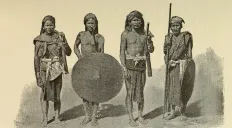
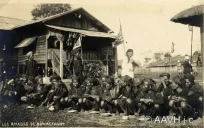
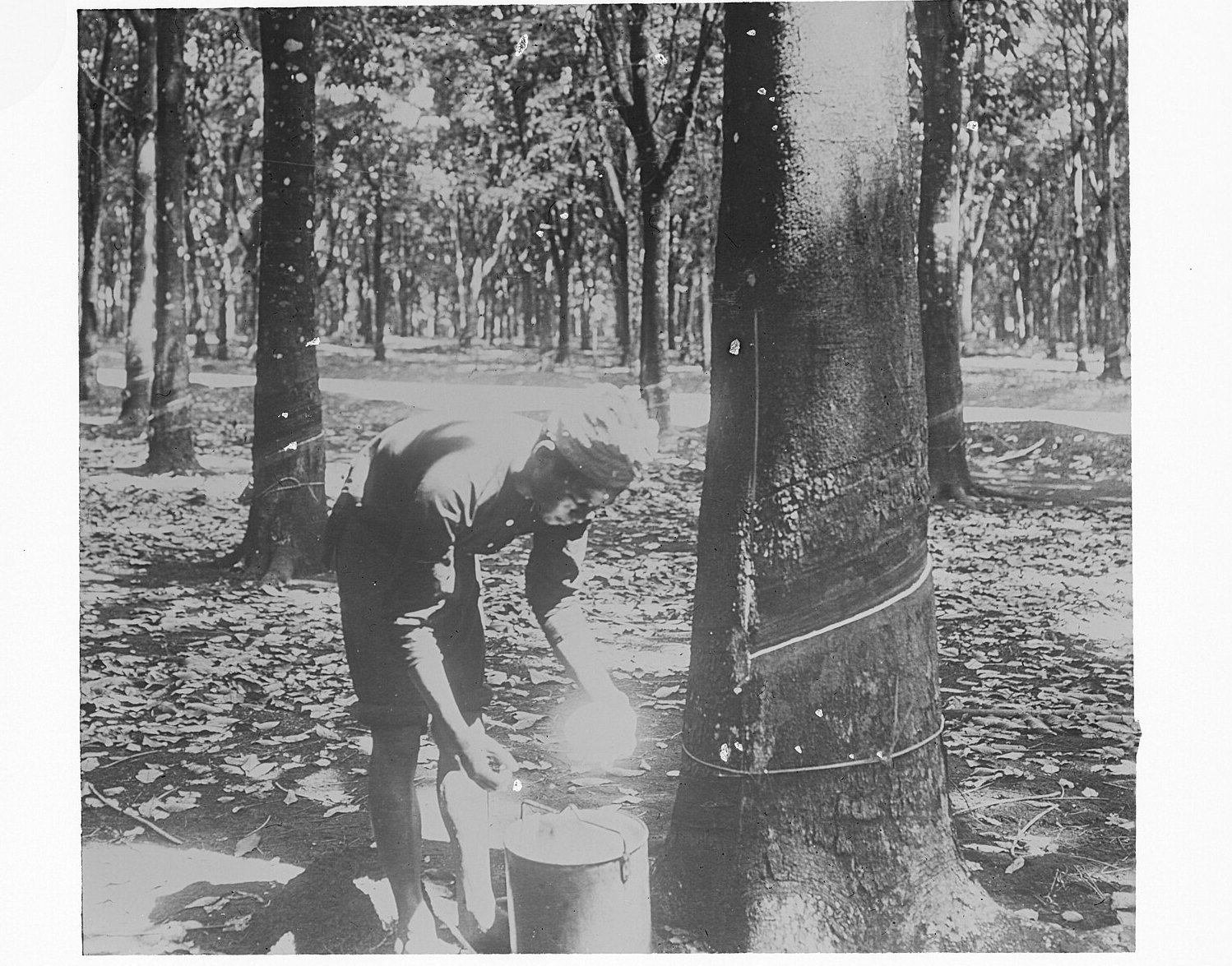
Hevea seeds reached the botanical garden in Saigon in 1897. Within thirty years French companies had cleared forest across the red basalt north of Saigon for plantations, and the largest were Michelin’s: the estate at Dầu Tiếng, founded in 1925, grew to about 12,400 hectares, the largest in the colony, and the estate at Phú Riềng covered some 5,500 hectares. Phú Riềng was in the country of the Stieng, our southernmost people; see The Stieng. The land was described as empty. A Saigon writer looking back on the record put it plainly: “In truth, numerous quasi-nomadic ethnic minorities, such as the Stieng, lived on the land.”
The labor was brutal. Colonial inspection figures for eleven of the twenty largest plantations, those with more than 700 workers, “reveal death rates between 12% and 47% in 1926 and 1927.” At Phú Riềng, one year into operation, the death rate in 1927 was 17 percent, and nine in ten workers had malaria. Most of the workers were contract laborers recruited from the crowded provinces of the north. On February 4, 1930, the sixth day of Tết, some 1,300 workers at Phú Riềng struck and held the plantation for about a week before troops put it down; the leaders were tried on April 1 and one, Trần Tử Bình, was sent to Côn Sơn prison island for five years. The Communist Party made Phú Riềng Đỏ, Red Phú Riềng, into a founding legend. What it does not say is whose forest the plantation stood in.
The historian Michitake Aso has written the ecological history of the whole enterprise, and his point is ours: the plantation was not only a place where people were worked to death, it was a way of remaking land and the people on it. For highlanders the lesson of the colonial period was simple. When a plantation comes, the forest goes, and with it the land a village had farmed and rested in turn.
After 1975: state rubber
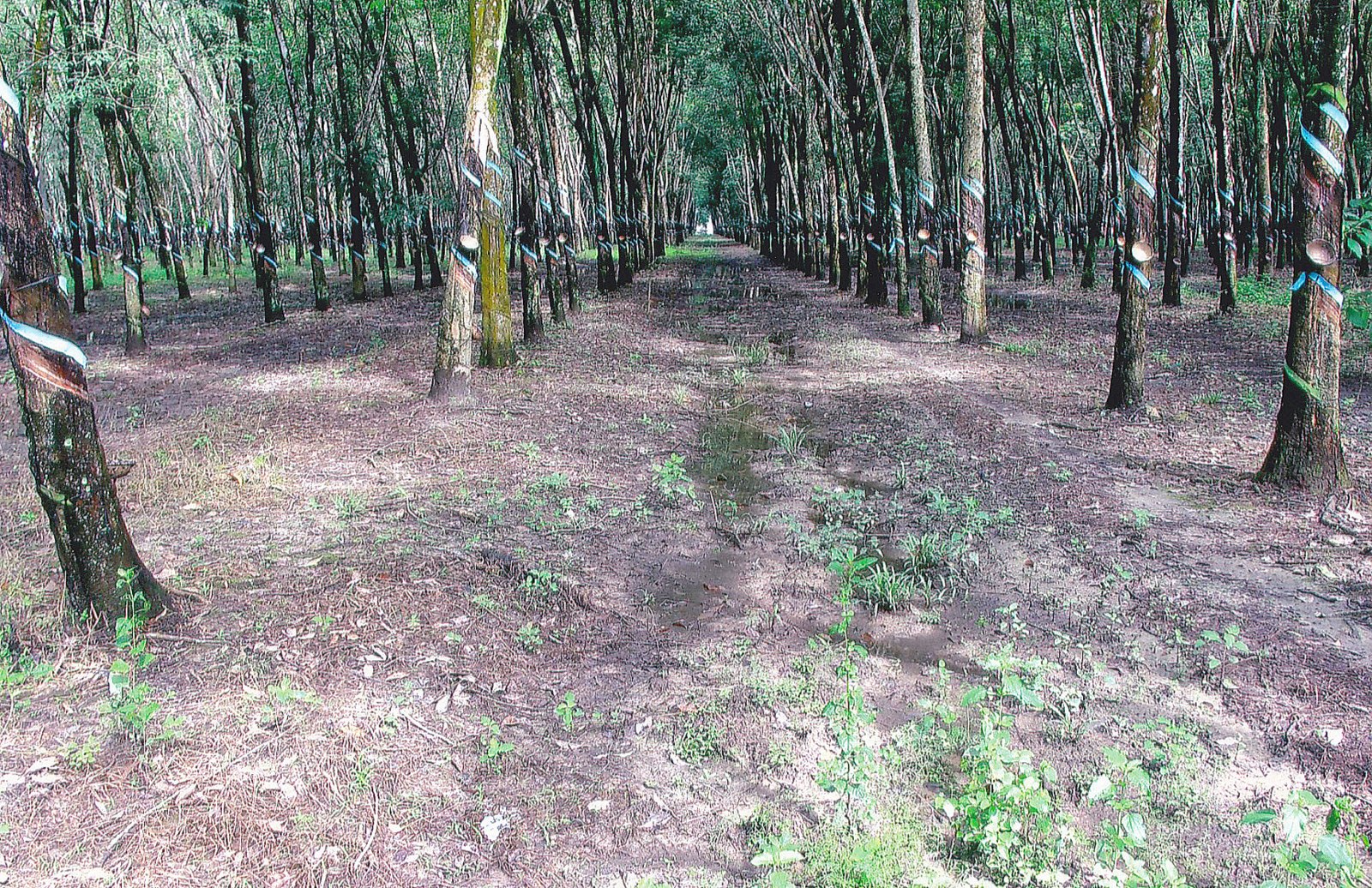

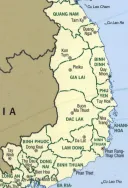
The new state nationalized the French estates and built its own. Through the 1980s and 1990s state rubber companies planted large areas of Gia Lai, Kon Tum and Dak Lak, on land that highland villages regarded as theirs. Human Rights Watch, in its 2002 report, opens its chapter on land with the words of a Jarai man from Gia Lai, speaking in March 2001, a month after the protests:
“The authorities confiscate our swidden fields or rice paddies and say it’s the property of the government. Just when our fields are ready for harvest, they take the land, plowing it over during the night to make coffee or rubber plantations.”
Another farmer told the same researchers how it had gone for his family: “In the past, during the time of my grandparents, my family’s land was larger. We had about three hectares. I had that land during the war, and my grandparents before me. It was enough to support my family, planting rice. Later, after liberation, they plowed it for rubber. From 1977 until now, they started taking my land.” It was, he said, “for a state rubber plantation. Since 1978, I’ve had less than half a hectare.” Three hectares to half a hectare, and the half-hectare on paper that was not his. See How we got pushed off our land and Land law and customary land.
After the protests of February 2001 the state answered with more of the same. In April 2001, Human Rights Watch recorded, the government announced a plan to send close to 100,000 soldiers, militia and their families into the highlands “to clear up to 230,000 hectares of land to plant rubber, cashews, cotton, coffee and pepper.” Land that was ours would be cleared by the army and planted with rubber, and the soldiers would stay.
Chu Prong, June 2010
One of the state plantations was the scene of one of the few open fights over rubber that have reached the record. Human Rights Watch, relaying the account printed in the provincial newspaper, reports that between June 10 and June 22, 2010 there were four clashes between villagers and the guards of a state rubber plantation in Chu Prong district, Gia Lai. On June 10 six young men entered the Team 24 lot of the Suối Mơ plantation and were accused of trying to take eighty kilograms of latex; on June 15 about thirty people from Tung village in Ia O commune entered a lot and, when guards stopped them, broke the bowls of latex; on June 19 about fifty people from Canh village in Bình Giáo commune came with iron bars and knives, and hundreds more with nailed sticks chased the guards off; on June 22 a crowd came back “to ‘take revenge,’” and hundreds of bowls of latex and three motorbikes were destroyed. That is the state’s account, and we print it as that. What it does not ask is why villagers with no land of their own were stealing latex from trees planted on their fields.
The answer the authorities gave was to reinforce the police in the three border districts of Duc Co, Ia Grai and Chu Prong and “broaden their search for recalcitrant Dega Protestant leaders.” On August 25 and 26, 2010, the police arrested four of them in Chu Prong: Ro Mah Hit, Kpuih Do, Kpa Thom and Ro Lah K’lanh, accused of inciting the “robberies and civil disturbances” of June. A dispute over land became, as it always does, a case about religion. See The years between and The church they closed.
Across the border
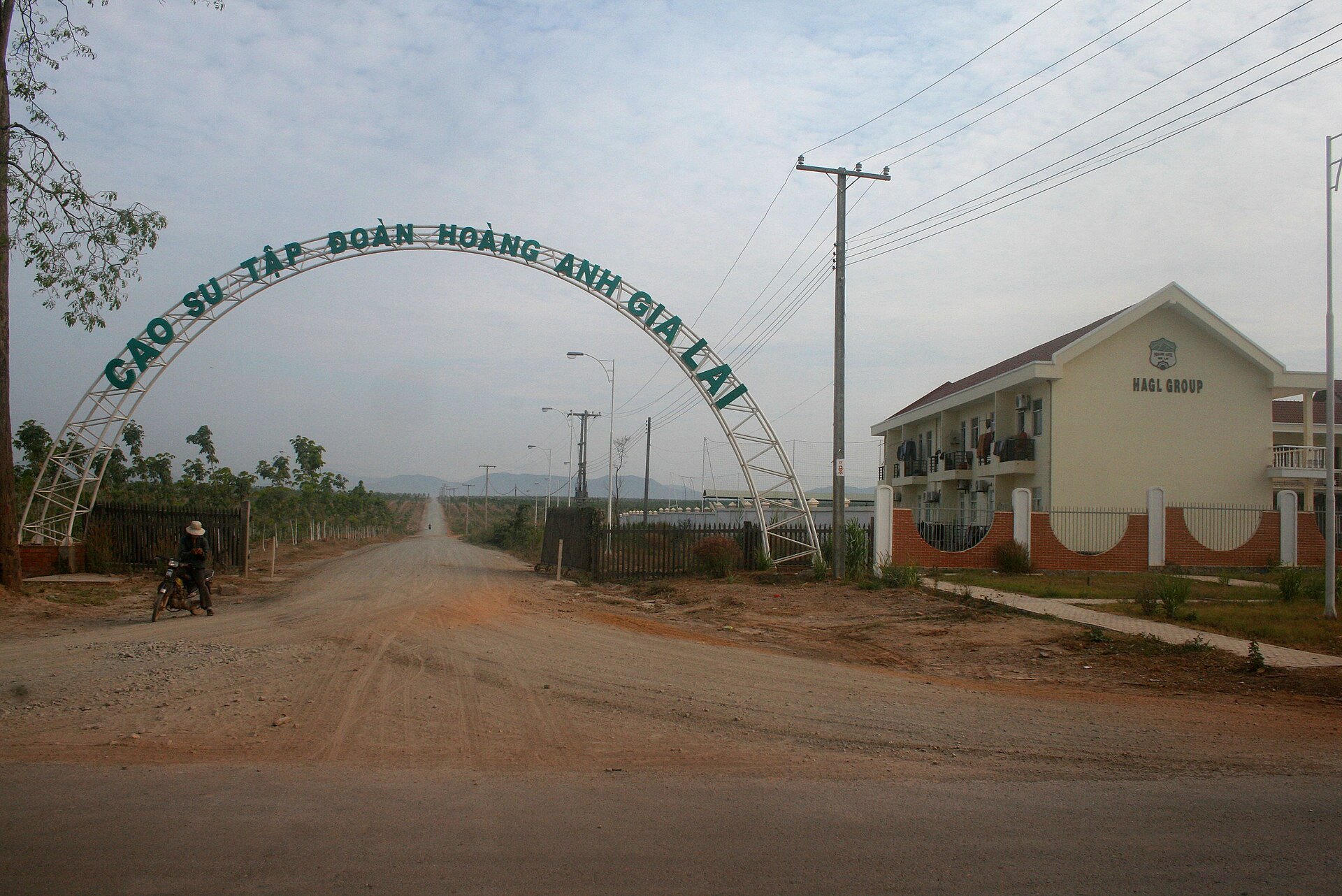

Hoang Anh Gia Lai was founded in Pleiku in 1990 as a furniture workshop and grew into one of Vietnam’s largest companies, with rubber at its center. In the 2000s it and the state-owned Vietnam Rubber Group went across the border, into the highlands of Cambodia and southern Laos where the Jarai, the Bunong and their neighbors live; see Kin across the border. On May 13, 2013 Global Witness published Rubber Barons, the report that put figures on it. Its findings, in its own words:
- “Hoang Anh Gia Lai and companies affiliated with it appear to have been allocated a total of 81,919 hectares of land. Of this, 47,370 hectares are in Cambodia, which has a legal limit of only 10,000 hectares per company.” The Cambodian holdings were “equivalent to 5% of the total size of Ratanakiri Province.”
- “The Vietnam Rubber Group and companies affiliated with it appear to have been allocated a total of 200,237 hectares of land, of which 161,344 hectares are in Cambodia. This suggests that VRG and its affiliates’ collective holdings are over sixteen times the legal size limit.”
- “HAGL and VRG have both received substantial foreign investments from Deutsche Bank and the International Finance Corporation, either directly or via intermediary funds.” The IFC, the World Bank’s private arm, had US$14.95 million in a fund holding nearly five percent of HAGL; Deutsche Bank held 3.4 million HAGL shares, worth about US$4.5 million.
- “Indigenous minority peoples’ spirit forests and burial grounds have been destroyed.”
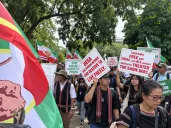
The villagers’ own words are in the report. A village elder near a HAGL subsidiary’s clearing: “Losing the forest is like losing life.” A villager on the consultation: “We are small people, so they do not consult us. They consult only with the Village and Commune Chiefs.” A man who lost six hectares: “I told the bulldozer driver not to clear my land and he stopped. The next day I returned to check and all of my land had completely disappeared.” In all four villages Global Witness visited near HAGL subsidiaries, people said it was the clearing of their resin trees, the trees a family taps for a living, that had hurt them most. On November 29, 2013 Global Witness reported that Deutsche Bank no longer held any significant stock in the company, six days after the report had recommended it divest. The bank did not say why.
The complaint
What followed is the best-documented land case anywhere in our highlands, because the villagers took the company’s financier to the World Bank. On February 10, 2014, fourteen villages in Ratanakiri, about 15,000 Jarai, Tampuan, Kachok and Kreung people whose land had been taken by three HAGL subsidiaries, filed a complaint with the Compliance Advisor Ombudsman of the International Finance Corporation. In September 2015, in mediation, the company acknowledged that it had made mistakes and apologized; three concessions were cut by more than half, keeping more than 10,500 hectares of the villages’ land out of the company’s hands. On March 26, 2019 the governor of Ratanakiri announced that sixty-four demarcated areas, 742 hectares of spirit mountains, burial forests and other sacred land, would be cut out of the concessions; in March 2020 the company cleared large areas of that land instead. In June 2024 twelve of the villages signed a memorandum of understanding under which the company is to return more than 700 hectares.
Sixteen years for seven hundred hectares of what had been twenty thousand. It is more than any village in Gia Lai has recovered from a state rubber company in fifty years, and it took a foreign bank, an international complaints office and a Cambodian land law that recognizes indigenous communal title to get it. The lesson is not that the system works. It is that the difference between Ratanakiri and Gia Lai is that in Ratanakiri there was somewhere to file.

What rubber does
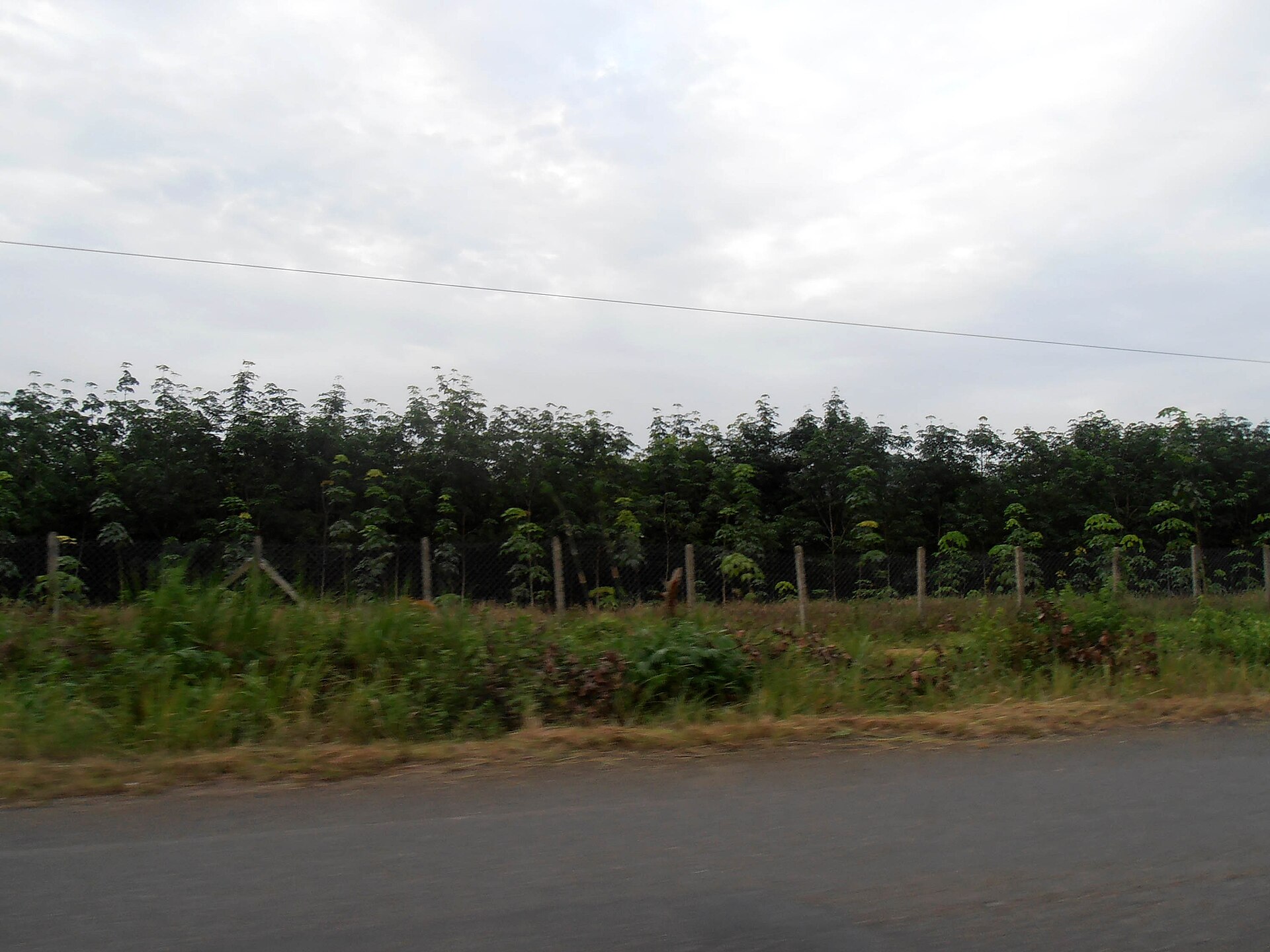
Rubber is the crop that takes everything. A coffee field can be a family’s; a rubber estate is a company’s, planted in blocks of thousands of hectares, worked by laborers who live in its lines, and tapped for thirty years. Nothing grows under it. It takes the forest and the fallow together, the burial grove with the swidden, and it takes them for a generation. That is why, from Phú Riềng in 1927 to Ratanakiri in 2013, the people who lived on the land before the trees were planted appear in the record only as a problem: workers who died, villagers who stole latex, minorities who were not consulted.
See also: Forests, logging and the sacred groves, The great migration, Roads, taxes and forced labor.
Sources
- Global Witness, Rubber Barons: How Vietnamese Companies and International Financiers Are Driving a Land Grabbing Crisis in Cambodia and Laos, May 13, 2013, DCHO library (also at globalwitness.org), and “Deutsche Bank divests from Vietnamese land grabber HAGL,” November 29, 2013
- Inclusive Development International, “Cambodia: Defending Indigenous rights and resources against HAGL land grab” — the complaint, the 2015 apology, the 2019 decision, the 2020 clearing and the 2024 agreement
- Human Rights Watch, Repression of Montagnards (2002), chapter VI — the Jarai man of March 2001 and the farmer whose land went to a state rubber plantation from 1977
- Human Rights Watch, Montagnard Christians in Vietnam (March 30, 2011) — the April 2001 clearance plan, and the Chu Prong clashes of June 2010 as reported in the Gia Lai provincial newspaper, which we quote only through HRW
- Michitake Aso, Rubber and the Making of Vietnam: An Ecological History, 1897–1975 (University of North Carolina Press, 2018)
- Saigoneer, “The harrowing history of Vietnam’s rubber plantations” (2019) — the 1926–27 death rates, the malaria figure and the Stieng
- Reference articles on the Michelin plantation at Dầu Tiếng and Phú Riềng Đỏ and their cited sources — areas, the 1927 death rate and the strike
Compiled September 2026.