













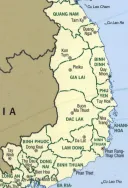









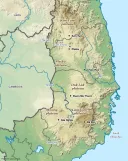
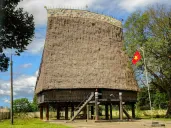
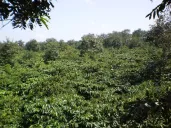








Under the coffee is the ore. Most of Vietnam’s bauxite lies under the Central Highlands, in the red laterite of Dak Nong and Lam Dong. In 2007 the government planned twenty-five mines and seven alumina plants there. Two plants were built, at Tan Rai and Nhan Co, and in 2026 the state and its partners were planning to double them and to add more. The projects set off the largest open political argument Vietnam had seen in decades, and almost none of it was about the people who live on the ore.
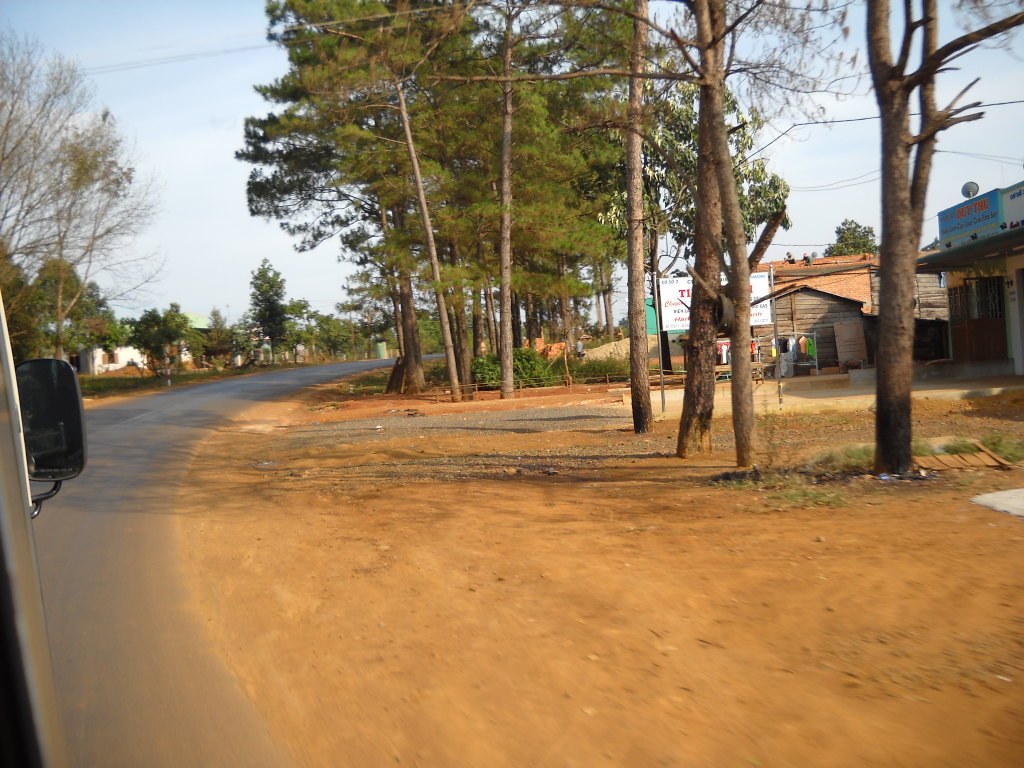

What was decided, and when
On November 1, 2007, the Prime Minister signed Decision 167, which authorized the mining of the Central Highlands’ bauxite in two phases, 2007–2015 and 2016–2025. At the time the country’s reserves were put at 5.5 billion metric tons, and 5.4 billion of them lay in the highlands. The plan named some twenty-five mines and seven alumina plants. Thirteen of the mines were in Dak Nong, holding some 3.4 billion metric tons, and five in Lam Dong, holding around 970 million; the rest were elsewhere in the highlands. The capital needed to 2025 was put at between 11.8 and 15.6 billion US dollars. The state coal and minerals corporation, Vinacomin, was to carry it out, and in 2008 it agreed with the American company Alcoa to study a mine and refinery in Dak Nong. We know of nothing that came of it.
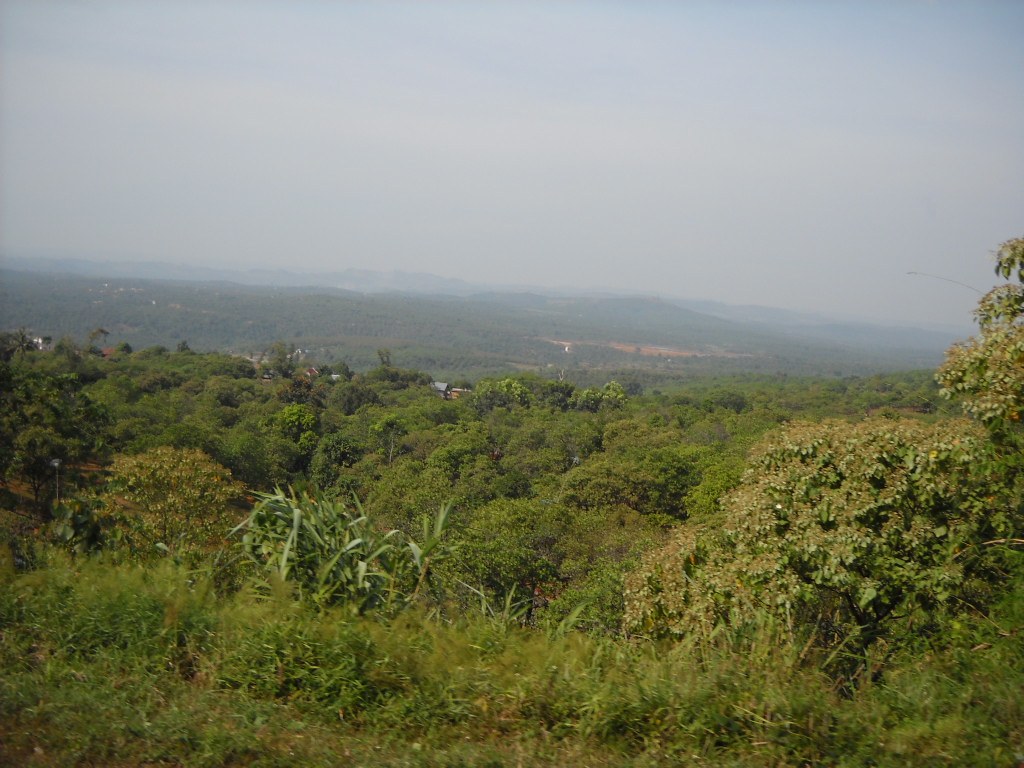

Two complexes were built.
| Tan Rai | Nhan Co | |
|---|---|---|
| Where | Loc Thang, Bao Lam district, Lam Dong | Nhan Co commune, Dak R’lap district, Dak Nong |
| Built | Construction began July 2008; trial production at the end of 2012; running from October 2013 | More than two years behind schedule; trial production in 2015; operating from November 2016, commercially from mid-2017 |
| Design output | 600,000 to 650,000 metric tons of alumina a year | 600,000 to 650,000 metric tons a year |
| Contractor | Chalieco, a subsidiary of the Aluminum Corporation of China | |
| Households affected (official) | 1,639, of which 404 ethnic minority | 861, of which 15 ethnic minority |
| Households relocated (official) | 700, of which 230 ethnic minority | 83, of which none ethnic minority |
The household figures are the government’s own, from a report of May 22, 2009. Critics at the time expected the land taken to be much larger than the official figures allowed, and a study published the same year counted 760 households to be resettled at Nhan Co, not 83. We cannot explain the difference, and nobody has published the names of the villages moved.

The argument that followed
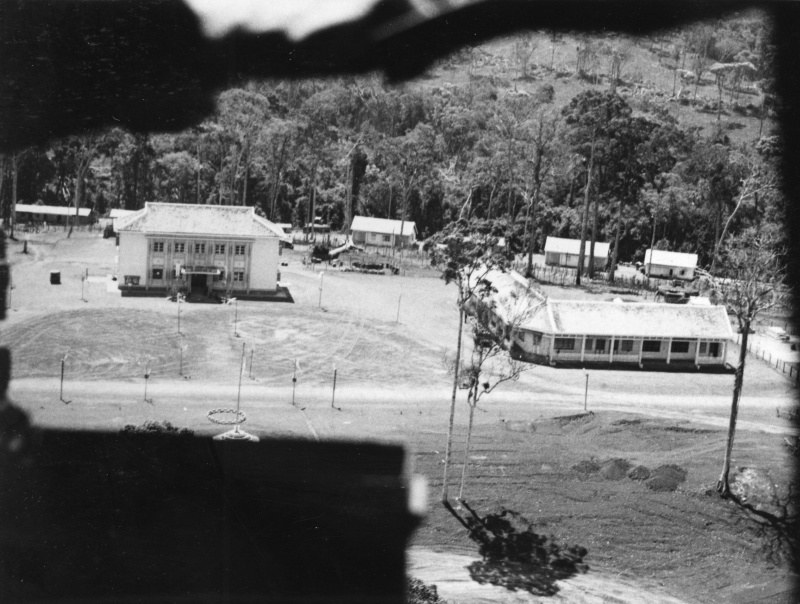
The bauxite plan produced something Vietnam had not seen: a long public campaign against a decided policy, led by people the state could not easily dismiss.
- January 5, 2009 — General Võ Nguyên Giáp, then in his late nineties and the most honored soldier in the country, writes to the Prime Minister asking that the projects be stopped. He recalls that Soviet and Hungarian scientists, in a program of the Soviet bloc’s economic council in the 1980s, had advised against mining here because of the risk of serious ecological damage, and he notes that the first hundreds of Chinese workers have arrived. By January 2011 he has written three public letters against the projects.
- February 2009 — Major General Nguyễn Trọng Vĩnh writes to the Politburo that if China mines the highlands, five, seven or ten thousand Chinese laborers will turn the region into a Chinese town and a military base.
- April 12, 2009 — A petition drafted by Professor Nguyễn Huệ Chi, the writer Phạm Toàn and Professor Nguyễn Thế Hùng asks that the projects be put to the National Assembly, that mining stop until then, and that the feasibility studies be made public. It opens with 135 signatures and later gathers more than 2,700 online. The website built around it, Bauxite Vietnam, hosted in France, becomes the center of the campaign.
- April 2009 — More than a thousand Catholics hold a vigil at Thái Hà parish in Hanoi; “no bauxite” T-shirts circulate.
- May–June 2009 — The National Assembly debates bauxite.
- June 11, 2009 — The legal scholar Cù Huy Hà Vũ sues the Prime Minister in the Hanoi People’s Court to have Decision 167 annulled. The court dismisses the suit on June 15; he appeals on July 3. He is later imprisoned on other charges.
- August 27–September 1, 2009 — Three bloggers who had written against the bauxite deal and Chinese influence are detained: Bùi Thanh Hiếu, Phạm Đoan Trang and Nguyễn Ngọc Như Quỳnh. The last is released on September 12.
- December 2009 — Denial-of-service attacks on the Bauxite Vietnam website begin.
- March 30, 2010 — Google reports that malicious software, spread through a doctored Vietnamese-language keyboard program, has been used to attack the blogs carrying the campaign.
- November 24, 2010 — Prime Minister Nguyễn Tấn Dũng tells the National Assembly the deposits may total 11 billion metric tons.
What the argument was about, and what it was not about
Read the objections in order and a pattern appears. The environmental case was about red mud, the waste left after alumina is extracted from bauxite: a caustic sludge with a pH of about 13, stored in open ponds. At Tan Rai it is almost half iron oxide, and each ton of alumina leaves between 0.4 and two tons of it. The ponds sit in the upper basin of the Dong Nai, which gives water to some twenty million people in twelve provinces. The security case was about Chinese contractors and Chinese workers in the strategic center of the country. The economic case was that the numbers did not work: by 2013 the writer Nguyên Ngọc calculated that each plant would lose hundreds of millions of dollars a year, and economists were still arguing the point in 2019.


All three are serious arguments and we dispute none of them. But notice who is missing. The English text of the petition of April 2009 has no word for ethnic groups, minorities, indigenous peoples or forest. Giáp’s letter does not mention the peoples of the plateau. In the campaign the highlands appear as a watershed, a strategic location and an investment. They rarely appear as somebody’s home. The gap runs through the scholarship too. The fullest history of the campaign, in the words of a 2024 review, “overlooks the perspective of Central Highlands inhabitants who are impacted the most,” and the reviewer judged that less a fault of the historian than the plain reality of the whole movement.
The exception is Nguyên Ngọc, who lived and worked in the highlands for decades. He argued in 2009 that the life of the highland peoples is bound to the land and the forest, a forest culture, and that if the forest went the peoples themselves would cease to exist. That is the argument we would make, made by somebody else, and it was a minority position inside a campaign that ran on national grounds, not ours.
404 households, and what a household is
The official figure for Tan Rai is 1,639 affected households, 404 of them ethnic minority, and 700 households moved, 230 of them ethnic minority. Set against 5.4 billion metric tons and billions of dollars, 404 looks like a rounding error, and that is how it was treated. In 2009 compensation for farmland was projected at about 2,200 dollars a hectare.
But a household in a highland village is not a house on a plot. It is a place in a kinship system, a share of communal land, a room in a longhouse and a set of obligations that only work at the distance a village puts people at. Move four hundred households and what is broken is not four hundred dwellings; it is however many villages those households made. The compensation is calculated on the dwelling. The official figures do not say which of our peoples the 404 households belonged to. Both plants stand on Ma, K’Ho and Mnong land, but no one has published the breakdown.

What has happened at the mines
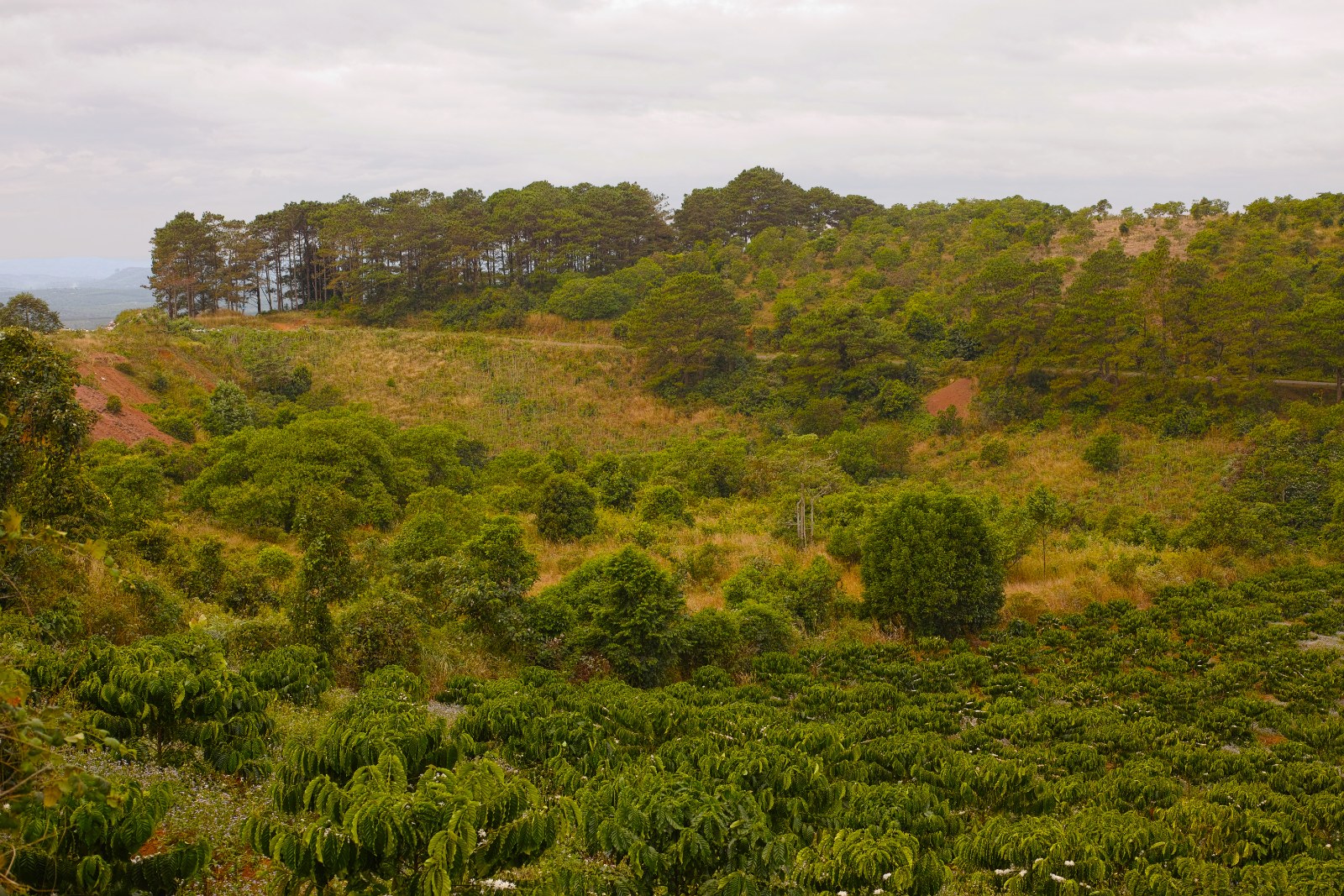
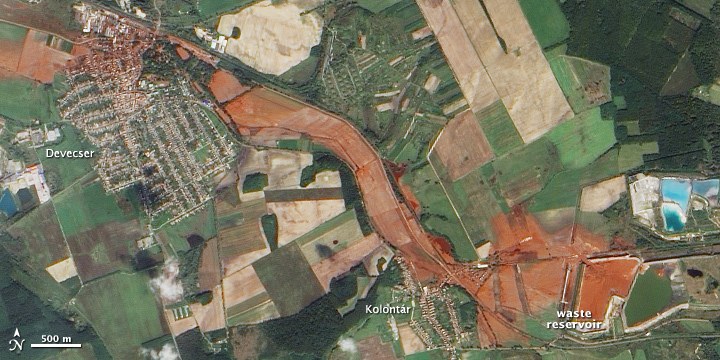
Both plants have had accidents. On October 8, 2014, the wall of a tailings pond at Tan Rai, holding the mud washed from the ore, broke and sent about 5,000 cubic meters into the Cai Bang lake below; it was not red mud. In July 2016 a pipe carrying caustic liquor at Nhan Co leaked about 9.6 cubic meters. People living on the Dak Dao stream below the plant reported fish dying and skin disease after touching the water. By 2019 there had been three incidents at Tan Rai and four at Nhan Co, by Radio Free Asia’s count. We know of no independent study of the water or the soil in either catchment.

Where it stands
Both complexes run. Since 2020 Vietnam has produced about 3.7 to 3.8 million metric tons of bauxite and about 1.4 to 1.5 million metric tons of alumina a year, far below the seven plants of the 2007 plan. The size of the deposit keeps changing on paper. It was 5.4 to 5.5 billion metric tons in 2007, 10 to 11 billion in 2010, 5.8 billion in the US Geological Survey’s figures of 2022 to 2024, when that made Vietnam’s reserves the second largest in the world, and 3.1 billion in the Survey’s 2026 edition, the third largest after Guinea and Australia.
The plan did not end in 2025. On July 18, 2023, Decision 866 on the national minerals master plan to 2030 listed bauxite as a strategic mineral, and by the Dak Nong authorities’ own account it set aside more than 1,670 square kilometers of that province for bauxite, about a quarter of its land. In 2024 the chairman of Dak Song district said more than half of his district was zoned for bauxite exploration, which froze roads and public works there. In April 2024 the state minerals group set out a 7.3 billion dollar plan to raise Nhan Co to about two million metric tons of alumina a year by 2030 and to build a second complex in Dak Nong. In February 2026 the province approved expansions of both plants to 1.2 million metric tons a year, a private group, THACO, has proposed another complex costing 4.4 billion dollars, and on July 26, 2026, the first Vietnamese aluminum was poured at a smelter beside the Nhan Co plant, built by a Chinese contractor. These plans are known almost entirely from trade publications repeating official announcements. Since July 1, 2025, Dak Nong, Lam Dong and Binh Thuan have been one province, called Lam Dong.
That is the fact to hold on to. Whatever has been dug so far, the planners mean to dig more, and what lies under Dak Nong and Lam Dong guarantees that the pressure on this land does not end with coffee.
The forest the mines need
Mining needs land cleared of forest. Under Lam Dong’s land-use plans, 25,149 hectares of forest are to be lost to mining projects, not all of them bauxite, and only 0.14 percent of the land converted for economic development was allotted to ethnic minority communities. See Forests and logging and Pushed off our land.
What we do not know. The names of the villages moved for Tan Rai and Nhan Co, and which of our peoples the 404 and 230 households belonged to. What happened to them at the resettlement sites, and what they were paid. Why the official count of households moved at Nhan Co is 83 and a study of the same year counted 760. Whether anyone has measured the water and soil below the red mud ponds. What the Soviet and Hungarian study of the 1980s actually said; no one has published it. What the new mines planned since 2023 will take, and from whom. We have found no first-hand account from any highland family moved for either plant.
Sources
- Jason Morris, “The Vietnamese Bauxite Mining Controversy: the Emergence of a New Oppositional Politics”, PhD dissertation, University of California, Berkeley, 2013 — Decision 167, the reserves and mines of the 2007 plan, the cost, the two plants, the household figures from the government’s report 91/BC-CP of May 22, 2009, red mud, the 2009 sequence, Nguyễn Trọng Vĩnh’s letter
- Bauxite mining in Vietnam — an overview of the plan and the Alcoa agreement
- Radio Free Asia, “Vietnam Set To Open Mine,” March 17, 2009 — Giáp’s letter, the Soviet advice, Nguyễn Thành Sơn on red mud, Nguyên Ngọc on the forest culture
- The petition of April 12, 2009, in English
- Jason Morris-Jung, Unearthing Politics: Environment and Contestation in Post-socialist Vietnam (Palgrave, 2021), chapter 2 — the COMECON study; Duy D. Trinh, review in Pacific Affairs, May 23, 2024 — the 2,700 signatures and the quotation
- Human Rights Watch, Vietnam: The Party vs. Legal Activist Cu Huy Ha Vu, May 26, 2011 — the lawsuit; Reporters Without Borders, September 14, 2009 — the three bloggers; Freedom House, Freedom on the Net 2011: Vietnam; Committee to Protect Journalists, Attacks on the Press 2010; Google, March 30, 2010 — the attacks on the website and the blogs; TIME, January 18, 2011 — Giáp’s three letters
- Bloomberg, November 24, 2010 — the 11 billion tons; Bloomberg via SMM, March 18, 2011 — Alcoa
- Hoa Hoang, Sustainable Development and Exhaustible Resources: The Case of Bauxite Mining in Vietnam, MA thesis, Wright State University, 2009 — the 760 households, compensation, the Dong Nai basin
- Tran Minh Huan and Vu Duc Loi, “Red Mud Issues in Vietnam,” ICSOBA, 2017 — the composition of Tan Rai’s red mud; Lai Quang Tuan and Ji Whan Ahn, Journal of Energy Engineering 27(3), 2018 — red mud per ton of alumina
- US Geological Survey, Minerals Yearbook: Vietnam (2012–2022) and Mineral Commodity Summaries: Bauxite and Alumina (2024, 2026) — locations, start dates, production and reserves
- Radio Free Asia, October 2014 — the Tan Rai tailings pond; Radio Free Asia Vietnamese, April 8, 2019 — the Nhan Co leak, the Dak Dao stream, the count of incidents, the economics; Radio Free Asia Vietnamese, April 10, 2024 — Dak Song; Nguyên Ngọc, interview with Radio France Internationale, March 4, 2013
- Reuters, April 9, 2024 — the 7.3 billion dollar plan; US-ASEAN Business Council and ChemAnalyst, 2023–2025 — Decision 866 and the Dak Nong zoning; AL Circle and aluminum trade press, 2026 — the expansions, the THACO proposal, the first aluminum; Vietnam Briefing, June 12, 2025 — the merger of provinces
- Mongabay, April 2024 — forest land planned for mining in Lam Dong, the 0.14 percent
Compiled September 2026. We do not have a current account of what happened to the households moved for Tan Rai and Nhan Co, or of conditions at the resettlement sites. If you were moved for either project, that is exactly the gap: read reporting safely, then write to us.