



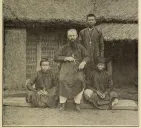
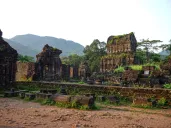









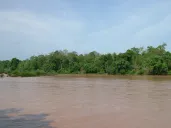

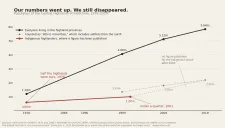
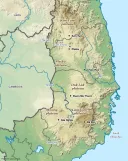
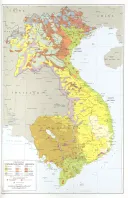





The highlands were forest country, and the forest was ours: farmland in rotation, hunting ground, the place of the spirits and of the dead. After 1975 the forest became state property, managed by state forest enterprises and cleared for settlers and coffee, until less than a fifth of the region was under trees. What remains is being handed back in small pieces of poor land, while logs cut in our kin’s forests across the border come the other way, through Gia Lai, by the hundred thousand cubic meters. This page is about who owns the forest, who cuts it, and what a forest is to the people who lived in it.

What a forest is
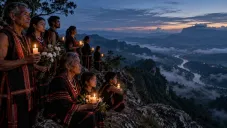
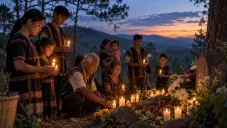
To a land registry a forest is land without a crop on it. To us it was never that. A village kept forest it did not farm: the grove of the spirits, the burial forest, the water source, the hillside resting between rice crops. A team of Vietnamese and American scholars who worked with Bahnar communities between 2022 and 2024 put it in the language of the discipline: “The forest is not empty space but a socially populated domain inhabited by yang”; “Each place possesses its own Yang.” They concluded that Bahnar belief “may thus be seen as a cultural pattern of thoughts and actions that helps to protect biodiversity, building upon centuries of successful and largely sustainable human interactions with the sacred forest environment.” The Ede of Dak Lak tell the same thing as a story: the legend of the Cư H’Lam forest, where the dead “turned into forest spirits, turning the whole hill into a sacred forest,” and where anyone who cuts a tree to build a house will see “the house … immediately collapse or burn.” See The rice year and Hunting, the crossbow and the forest.
From village forest to state forest
After 1975 the state took the forest. In Dak Lak, Human Rights Watch reported in 2002 from a 1996 study, “sixty-four state Farms and forty-two state Forest Enterprises controlled 86 percent of the land in Dak Lak, including virtually all of the high quality land.” The settlers took the rest. A 1996 provincial survey found migrant households occupying an average of 1.26 hectares each, and “at that rate, provincial authorities said, the new migrants could have destroyed as much as 100,000 hectares of forest for agricultural clearing during the prior twenty years.” Newcomers, HRW added, “also encroached upon cattle grazing grounds and areas where ethnic minorities collected non-timber forest products such as bamboo, rattan, and bamboo shoots.”
One village’s petition, from a hamlet on the edge of Buon Ma Thuot, tells the story in order. Dated April 27, 1995, it records that “beginning in 1986 the government began to appropriate the village land, with much of it going to a state tree nursery operated by the provincial forestry service.” In 1990 “the forestry service turned over forty hectares of land to an ethnic Vietnamese person from another province, who planted trees and cashews on the land.” In 1995 “the forestry unit employed armed units to further confiscate village land.” The villagers wrote again on October 24, 2000: “five full years have gone by, and we have received no reply.” A Mnong man from Dak Mil told the same researchers: “In my village from 1994-2000 the Vietnamese took our land—even plowing over our cemetery to build their houses. People were very unhappy when they plowed over the cemetery but did not dare oppose them.”
How much was lost
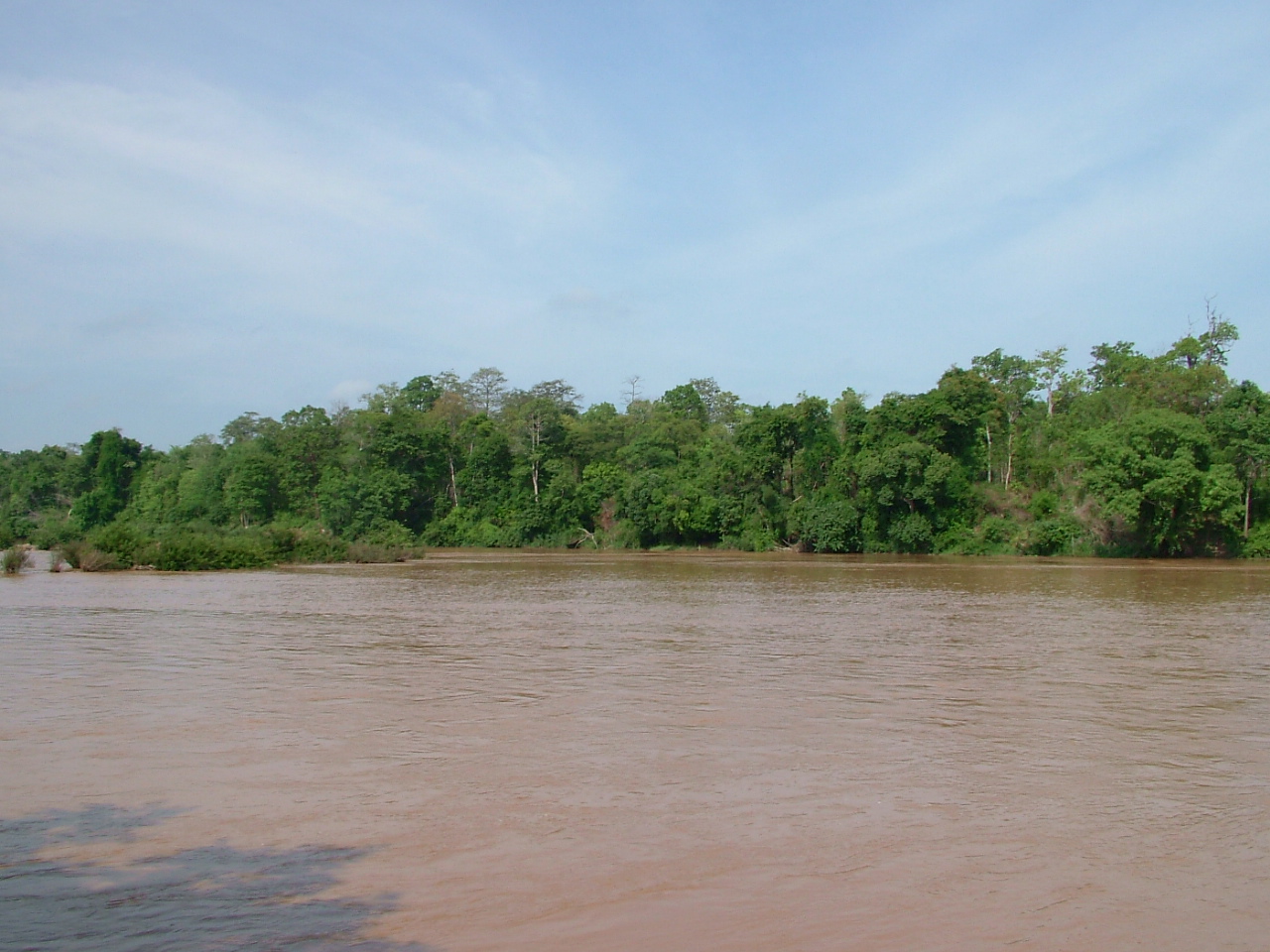

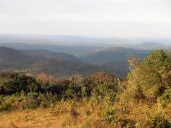
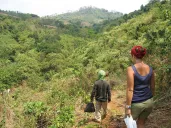
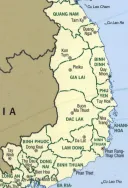
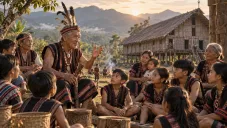
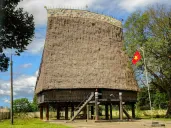
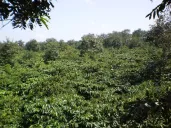
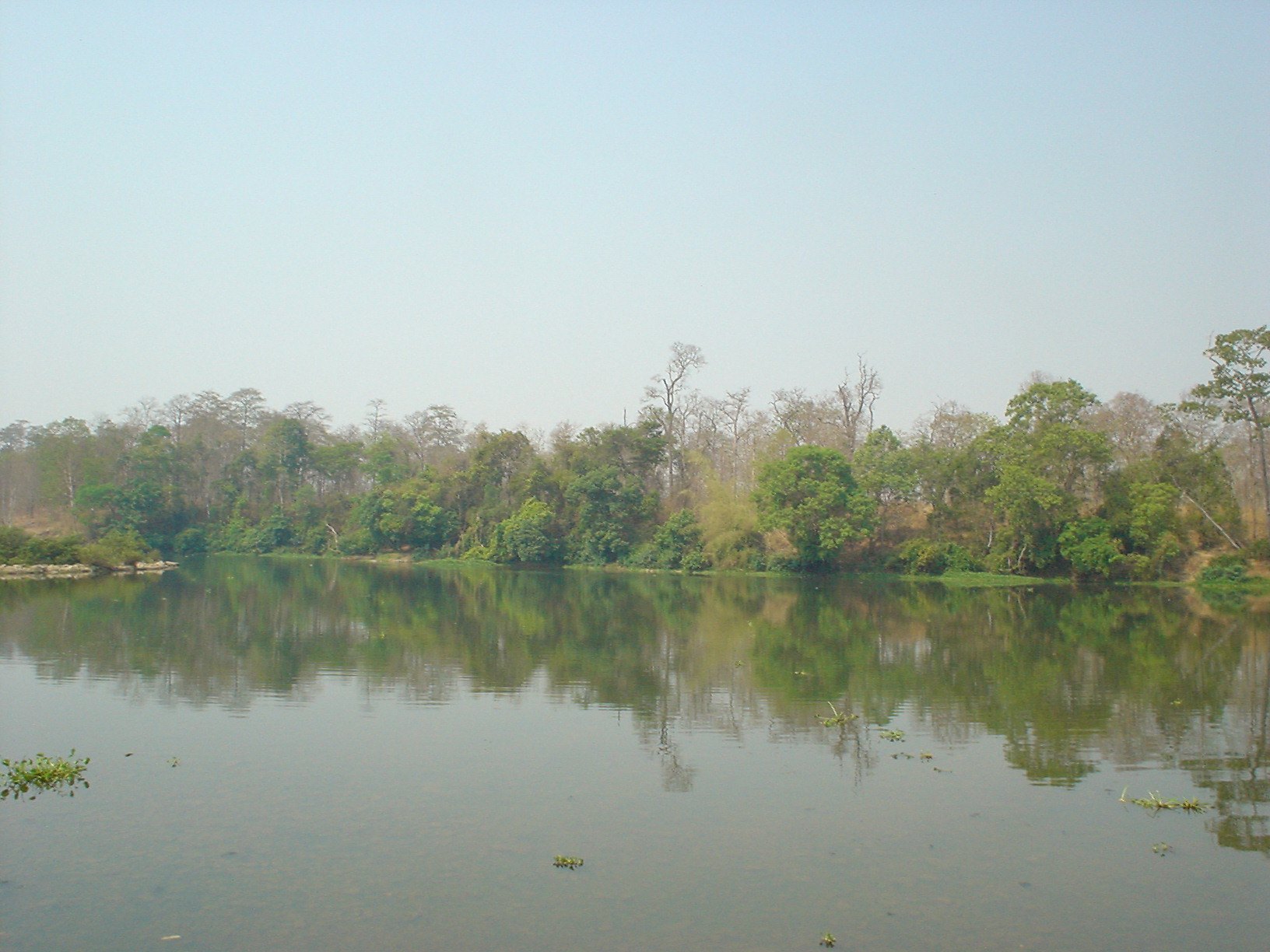
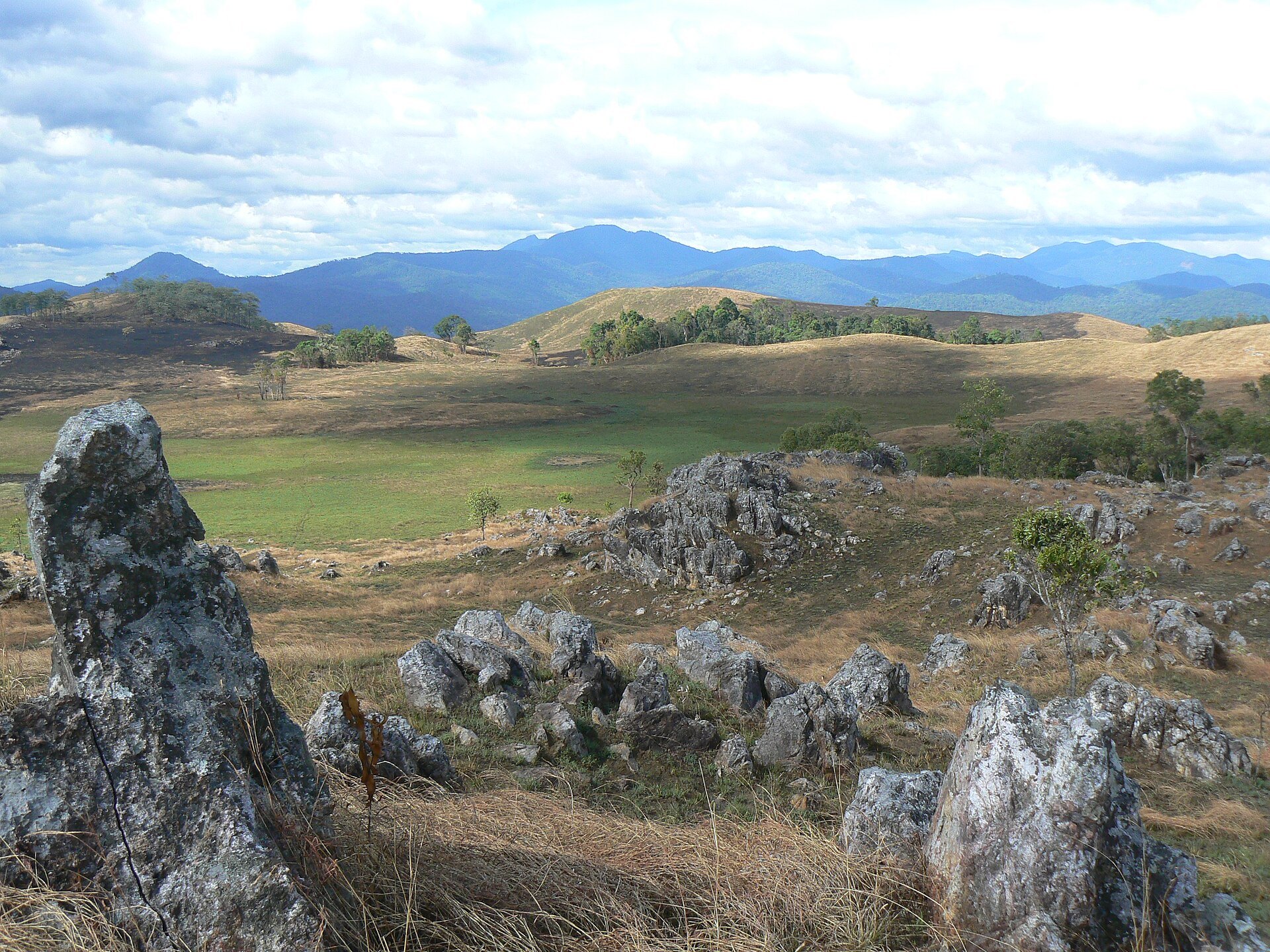
Coffee Watch, in its 2026 report, found that tropical forest cover in the Central Highlands fell from 42.8 percent in 1990 to 19 percent by 2020, the loss “most rapid between 1995 and 2010,” the years of the coffee boom; see Land taken for coffee and The great migration. Official figures are higher, partly because definitions of forest differ; they are the state’s, and we do not use them. What was lost was not only trees. The open dipterocarp forest of the lowland west of Buon Ma Thuot, the forest in the photograph at the head of this page, now survives mainly inside Yok Don National Park, established in 1991 on the Srepok and expanded since to about 1,155 square kilometers, the largest national park in the country by some counts. It is the last large piece of the forest that once ran unbroken from Ban Don to the Cambodian border, and hunting is the greatest threat inside it.
Handing it back
Since the 1990s the state has allocated forest land to households, and since the 2000s, in places, to communities. The results have been studied, and the studies are not kind. Thomas Sikor and Trần Ngọc Thanh, who followed a pilot allocation in an Ede village in Dak Lak, found that it “took an exclusive approach to devolution by assigning ownership-type rights on forest to local actors, obliging those to protect the forest against encroachment by other actors, and centering governance in the state,” and that “in this particular case, exclusive devolution failed to diminish the gap between state and customary regulations, created conflicts among local actors, and contributed to forest loss.” The International Work Group for Indigenous Affairs records that “in 2015, only 26% of the total area of forest land was allocated to households and 2% of that land was allocated to communities for management,” and that “some communities complained that the quality of the forests allocated to households and communities was low, with no plant cover and difficult to generate income from these forest lands.” Another study of the system summarizes it: “Households and communities do not legally own allocated forestland, and it is still the state which stipulates how forests are managed.”
In our words: villages that had managed their forest as a whole for generations have received it back, if at all, in scraps, and as a duty rather than a right. Schemes that pay villagers to protect state forest have been studied more favorably; a study of 404 indigenous households in the Central Highlands found that payments for forest environmental services “increased households’ employment and income from activities related to natural forests.” The forest they are paid to protect remains the state’s.
Meanwhile the forest enterprises themselves are converted. In Lâm Đồng, the researchers Thomas Sikor and Tô Xuân Phúc recorded, “provincial authorities converted 5,000 ha of forestland managed by the company (about 25% of the company’s total land) to agriculture and then leased this land to 19 rubber companies”; in M’Drak, Dak Lak, where about 70 percent of one commune’s residents are indigenous or ethnic minority migrants, “six of the commune’s fifteen villages grow crops on the company’s land, even though the practice is illegal.” The company holds the paper; the villages farm; the law calls the villages the trespassers.
The spirit forests
We have found no independent study of what has happened to the spirit groves and burial forests on the Vietnamese side; the Bahnar study above is the closest. Our best documentation comes from across the border, where Vietnamese rubber companies cleared the same kinds of places for the same crop. Global Witness reported in 2013 that Hoang Anh Gia Lai held rights to 47,370 hectares of concessions in Ratanakiri, “equivalent to 5% of the total size of Ratanakiri Province,” and that “in three villages near Hoang Anh Oyadav, Heng Brother and CRD’s rubber concessions, village chiefs and elders described how the companies had destroyed spirit forest sites and burial grounds.” One village chief said his community had lost more than a thousand hectares of forest; a village near another Vietnamese concession estimated it had been deprived of 10,000 resin trees, “as well as access to their spirit forests and burial grounds.” An elder’s summary, which the report used as a caption: “Losing the forest is like losing life.” See Rubber and Kin across the border.
.png)
Logs across the border

The forest that was cleared in Gia Lai is now replaced, in the timber yards of Pleiku, by forest cut in Ratanakiri. In May 2017 the Environmental Investigation Agency published Repeat Offender, which documented the trade in one season. On September 30, 2016 the Gia Lai provincial people’s committee issued a decision that “permits the importation of 300,000m3 of logs from Cambodia into Gia Lai via five designated border crossings located in Duc Co and Chu Prong districts,” border defense posts 721, 723, 727, 729 and 731. Cambodia has banned the export of logs since 1996. The logs came anyway, from Ratanakiri’s protected forests, including a community forest inside Virachey National Park: “It is estimated that at the height of the logging operation, between early December and January 2017, about 100 log carriers were crossing into Vietnam every day, amounting to approximately 110,000m3 of illegal logs being exported in just 55 days.” In all, “from December 2016 until February 2017, around 300,000m3 of timber has been stolen and smuggled — nearly all as logs — out of Cambodia into Vietnam under this model, and processed by Vietnamese Customs, in a trade worth at least $75 million.” EIA’s summary of how: “The devastation of Ratanakiri’s protected areas is not permitted by the Government of Cambodia — or, in many cases, by local indigenous people — but is enabled by corrupt Cambodian officials and security force personnel in the pay of Vietnamese timber traders.” Bribes of up to US$45 a cubic meter went to Vietnamese officials, more than US$13 million in the season.
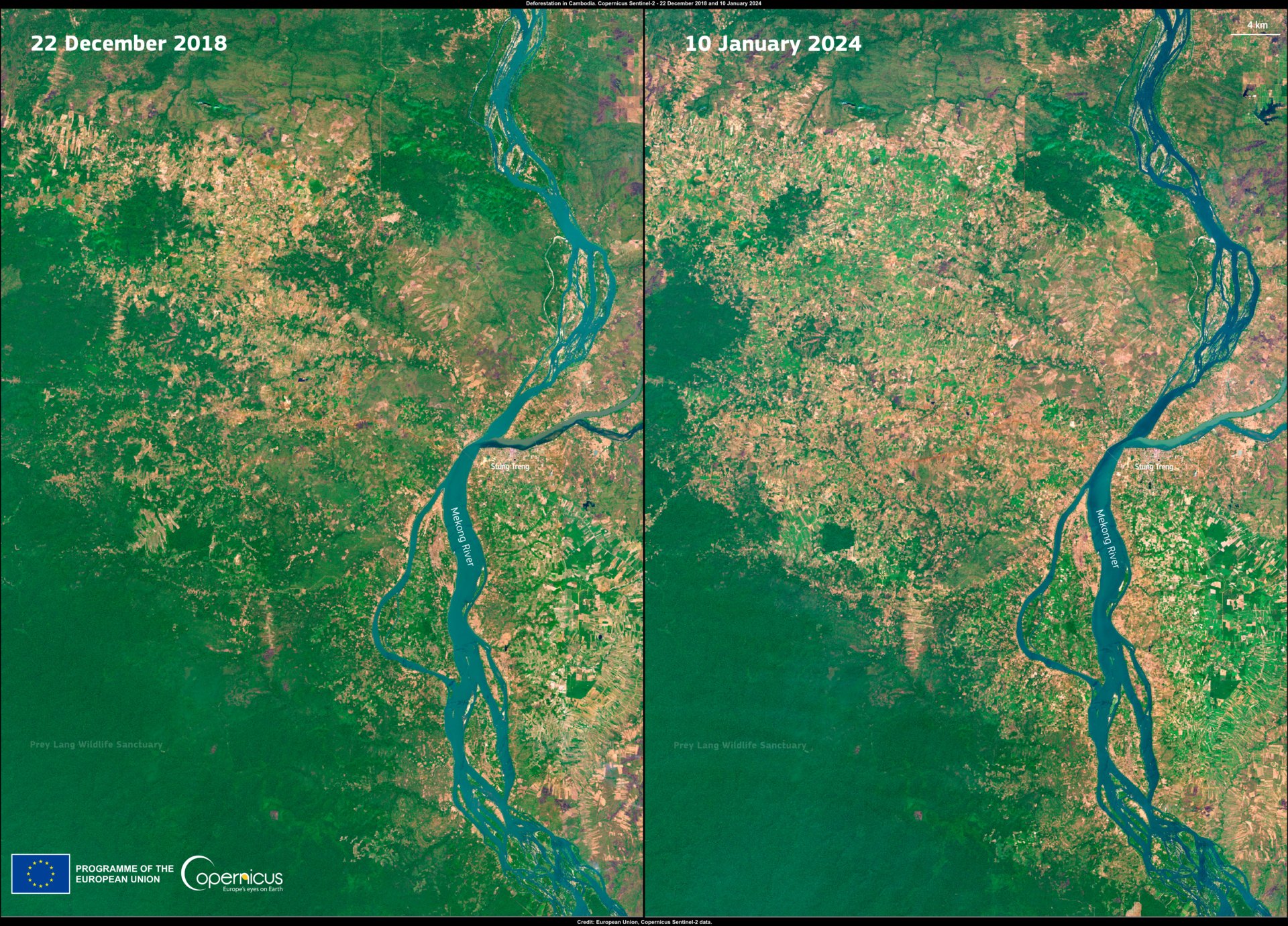
It did not stop. EIA’s follow-up, Serial Offender (2018), recorded that in 2017 “Vietnam Customs reported an incredible 435,764m³ of logs and sawn timber imports from Cambodia, worth a combined $213 million,” and that its investigators had “documented 31 sites where illegal logging was occurring and three Vietnamese logging camps across the north-eastern corner of” Virachey National Park. In October 2019 Forest Trends reported: “Cambodia has had a log export ban since 1996, but continues to export to Vietnam. Annually, around 500,000 m3 of Cambodian timber still crosses the border into Vietnam each year,” and that “in some cases, provincial authorities have allowed the continued import of high-risk timber as a way to finance their local economic agendas.” The satellite images above, of Stung Treng downstream of Ratanakiri, show what that looks like from space over five years.
What we have not found
We have not found an independent study of the sacred and burial forests on the Vietnamese side, or a documented prosecution of a highland villager on a charge of destroying forest since 2004, though we have no doubt there have been many. These are exactly the things a village can record for itself: where the spirit grove was, what stands there now, who was fined or taken for cutting or farming in a forest that had been theirs. See How to record an elder and Documenting an incident.
See also: Hunting, the crossbow and the forest, The dams, Lower Sesan 2, The elephants of Ban Don.
Sources
- Human Rights Watch, Repression of Montagnards (2002), chapter V and chapter VI — the state enterprises, the 1996 survey, the Buon Ma Thuot petition and the Dak Mil villager
- Trần Hoài, K. David Harrison, Trần Phước Lâm Huy and Khuất Thanh Sơn, “Yang, forest animism, and environmental perception among the Bahnar in the Central Highlands of Vietnam,” PLOS One (2026); Nguyen Thi Kim Ngan, “Legends of Forest Spirits in the Central Vietnamese Highlands,” in Environment and Narrative in Vietnam (Springer, 2024)
- Thomas Sikor and Trần Ngọc Thanh, “Exclusive versus inclusive devolution in forest management: Insights from forest land allocation in Vietnam’s Central Highlands,” Land Use Policy 24 (2007); Thomas Sikor and Tô Xuân Phúc, “Conflicts in Vietnam’s forest areas,” ETFRN News 55 (2014); Mucahid Mustafa Bayrak, “State of Forest Governance in Vietnam: Where Are the Local Communities?” (Springer, 2019)
- International Work Group for Indigenous Affairs, Vietnam
- Pham Van Truong and others, “Impact of payments for forest environmental services on households’ livelihood: a case study in the Central Highlands of Vietnam,” Environment and Development Economics 28 (2023)
- Global Witness, Rubber Barons (2013), DCHO library
- Environmental Investigation Agency, Repeat Offender: Vietnam’s persistent trade in illegal timber (May 2017), DCHO library, with its press release of May 8, 2017; and Serial Offender (2018)
- Forest Trends, advisory of October 21, 2019
- Naina Rao, Mongabay, July 22, 2026, on Coffee Watch, Robusta’s Reckoning
- Yok Don National Park: Key Biodiversity Areas factsheet and the reference article
Compiled September 2026.