








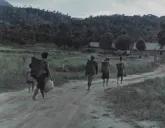

After April 1975 our leaders went to prison without trial, our soldiers went to the camps or to the forest, and our pastors went to both. The men who reached Cambodia fought on for seventeen years on corn and poisoned potatoes, waiting for orders from a president who had already been dead for most of that time. The men who came home from the camps, our own villages recorded, lived a year or two and then died. Almost none of it was ever tried in a court, and most of it has still never been counted.

Detention without a court
There are no trial records to find, and that is by design. Detention for re-education rested on a 1961 resolution of the North Vietnamese National Assembly, carried south after the war: an initial three years, renewable without limit, ordered administratively. In May 1976 a regulation of the Provisional Revolutionary Government capped it at three years. Many of our men were held far longer than that, and none of them had been convicted of anything.
The categories taken were specific. Men who had worked with the US Special Forces or with FULRO. Every highland leader from the Ministry for Ethnic Minorities, and everyone who had been active in a provincial administration. Pastors, elders, teachers, village headmen. A CIA assessment of December 1983 put it the same way: tribal leaders who had served in Saigon’s Ministry of Ethnic Minorities, and those with a long relationship with American advisers, were arrested in 1975 and placed in re-education camps.
The treatment was what it was elsewhere in Vietnam — solitary confinement with beatings, shackles and leg irons, reduced rations, hard labor by day and self-criticism at night — and it is worth saying plainly that the best descriptions of camp life that exist are by Vietnamese officers, not by highlanders. We have not found a single first-person Dega account of the inside of a re-education camp: not a ration, not a work detail, not a punishment cell, in one of our own voices. That silence is itself part of what happened.
The camps we can name
Four, and only four.
- Gia Trung, in Gia Lai–Kon Tum. Amnesty International records that most of a group of southern intellectuals arrested in 1976 and sent without trial for re-education were held there, and lists it among Vietnam’s long-term political prisons.
- Buon Ma Thuot prison, where Nay Luett was first held.
- A plantation camp near Buon Ma Thuot, given in one account as Mewal (Buon Tha); we have not been able to corroborate the name anywhere else.
- Xuân Phước in Phú Yên, the camp known as A-20, where Nay Luett was held last. Amnesty lists A-20 at Xuân Phước independently; the account that places Nay Luett there spells it Sơn Phước.
That is the whole list. Amnesty International’s own 1990 report on Vietnam contains the sentence that explains why it is so short: reports indicated that a number of Montagnard pastors were still in detention, “but information about this latter group is scarce.” The international human rights movement, on the record, in 1990, saying it could not see us.
Nay Luett, and the question his family can settle
Nay Luett had been Minister for Ethnic Minorities. He went from Buon Ma Thuot prison to a plantation camp to Phú Yên, and he had tuberculosis. Four accounts of what happened to him exist, and they cannot all be true.
| Account | Time held | Death |
|---|---|---|
| A Mnong man, to Human Rights Watch (2001) | “In 1975 the [North] Vietnamese put our leader Nay Luett in prison for ten years.” | Not stated |
| Our own records | Nine years of imprisonment and torture | Died at home in his village, within two months of release |
| Montagnard Support Group | Nine years | As above |
| Mike Benge, from interviews with camp survivors and the family (2010) | Eight years; medicine withheld, malnutrition, the tuberculosis returned | Died February 14, 1984 — in captivity |
Nine years or ten. Eight years and a date. Dead in a camp, or dead in his own village two months after they let him go. Somebody knows which, and it is not an archive — it is a family. His life is on Paul Nưr and Nay Luett. The same source that gives the February 1984 date also gives an account of what was done to his body afterward that is too specific, too terrible and too thinly sourced for us to print; we have not been able to corroborate it anywhere, and we say so rather than repeat it.
Two other names belong here and are not yet properly established. Our own records say that Ksor Rot, a highland senator of the Republic of Vietnam, was executed, and that Paul Nur was murdered in a prison in Hanoi. That is our own record of our own men. Vietnam tried neither man and has published nothing about either death, so there is no state record to set beside it and none to set against it. What we are missing is not an outside stamp but the rest of our own account: who brought the news out, in what year, and to whom. If you know, write to us.
What the villages said the camps did
In December 2000, eight villagers of a village in Krong Ana district, Dak Lak, wrote an account of what had been done to our people and got it out of the country. Human Rights Watch obtained the original, in Ede, in July 2001. It is the closest thing to a Dega document about the camps that we have.
It says the government put the Dega intelligentsia in jail, tortured them and killed some of them secretly. It says the men who came back from detention lived one or two years and then died unexpectedly, and that our retired officials suffered paralysis, which the villagers attributed to poisoned injections. It says they have all passed away secretly. What the villagers saw, they saw: the men came home, lived a year or two and died, and the retired officials were left without the use of their bodies. The injections are their explanation for it, and an explanation of something done behind a clinic door is not a thing anyone can test from outside. Nobody has ever counted those deaths — not Amnesty, not Human Rights Watch, and not the state that caused them. What would settle it is a list: the men, village by village, with the date each came home and the date each died. Only the families can make it.
One woman’s own account survives from a little later. An Ede church leader from a hamlet near Buon Ma Thuot told Human Rights Watch in April 2001 that she had been arrested in 1985 for FULRO activities and imprisoned in a dark cell for a year. When she came out she began to preach, and was arrested again, beaten at the provincial police station and put on probation. What she was told is on The church they closed: that our religion is FULRO and not a real religion.
Release, which was not the end of the sentence
The first highland pastors came out around 1980, and the state’s own internal papers — later obtained by Human Rights Watch — complain that they immediately resumed preaching. Mass amnesties followed in 1987 and 1988; by 1989 officials said 130 former officers and officials of the Saigon government were still held. And the Krong Ana villagers describe what release meant for the men of our own villages: a year, perhaps two, and then a funeral.
Nor did it end for the families. Land taken while a man was inside was not given back; families of men who later left for America often lost what little they had, as a punishment addressed to someone who was no longer there.
The forest
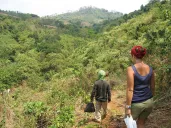
The men who were not caught went into the forest, and the force that came out of it lasted seventeen years. Our pages on FULRO and Mondulkiri, 1992 carry the institutional history; what follows is what the years themselves were like.
It was organized as three battalions. One tried to cross Laos for Thailand and was never heard of again. One negotiated passage with the Khmer Rouge through northern Cambodia and was held in the west of the country and used against the Vietnamese army. One stayed in Mondulkiri, and that is the one the United Nations found in 1992. Command after our president’s death passed, by two separate diaspora accounts, to Y Ghok Nie Krieng, with Rong Nay as his deputy; Y Ghok Nie Krieng left with the group that reached Thailand in 1985.
The arithmetic of those years is brutal and disputed. Human Rights Watch puts the strength at about 7,000 in the early 1980s. By September 1992 there were about 400 left in Mondulkiri. Nobody has ever accounted for the difference.
| Figure | Who gave it |
|---|---|
| More than 8,000 fighters killed or captured by 1979 | Nate Thayer, Phnom Penh Post, September 1992 |
| Reduced to about 2,000 fighters by 1979 | Phnom Penh Post, June 2001 |
| FULRO itself admitted 2,000 killed since 1981; about 2,000 insurgents still operating | CIA, December 1983 — an American intelligence estimate of a force the United States had armed and then left, attributing the first number to FULRO without saying who in FULRO gave it |
| Over 8,000 died in the jungle of starvation, disease, tiger attack and wounds; an estimated 60,000 Dega killed between 1975 and 1982 | Our own records — a count which gives no teller and no method, and neither does any other figure in this table |
| Ten thousand went into the forest; a few hundred were alive seventeen years later | Michael Hayes, 2025 |
Their weapons and provisions came from the Khmer Rouge, which had become the movement’s main backer by 1977, until the Khmer Rouge parted ways with FULRO by 1986 and the supply stopped. And the alliance was never an alliance: FULRO officers were lured to Phnom Penh under Khmer Rouge rule and died in Tuol Sleng, while the movement went on taking weapons from the regime that was killing its own officers in a torture prison. That claim is checkable against the S-21 prisoner lists, and we intend to check it.
How they lived
They were rice people who could not plant rice, because the enemy kept them moving. They lived on corn, jungle cucumbers, pumpkins and hot green peppers, and for part of every year on a poisonous potato that had to be processed for five days to get the toxin out. “We must eat it slowly until our bodies get used to it or it will kill you,” Lieutenant Colonel Y Hinnie told a reporter in 1992. “But the poison is also the medicine we use to cure snakebites.” Of the forest itself he said only: the food we get from the forest, and the forest belongs to FULRO.
There was no medicine and there were no schools. One soldier had lain paralyzed from a snakebite for three months. They had malaria, and a tree they used against it. Many of them had nothing but the clothes they stood in and a rifle. Every morning Y Hinnie listened to the shortwave — the Voice of America, the BBC, Christian radio — because that was the whole of their contact with the world.
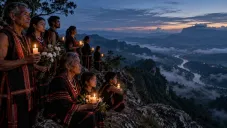
And every night they prayed. There were five encampments with Evangelical churches and one Catholic church in the main camp; log pews cut and laid in clearings under thirty-meter hardwoods, green leaves for kneeling, lamps burning lumps of tree resin, nearly forty people sharing one Bible at Mass, more than 350 at the evening Evangelical service. “The communists will not let us pray,” Y Hinnie said. “In our land under the communists, people pray at home secretly or in the ricefields. They cannot worship together like we do in the jungle. Here we are free.” Pastor Bdasu Kbong, fifty-two years old and from Da Lat — a man of about thirty-five when he went into the forest — asked the reporters to take a message out: we are very tired, ask the Christians of other countries to pray for us, and we will pray for them.
Waiting for a dead man
The first thing they asked the outsiders who found them was whether anyone could help them find their president. They had been waiting for contact and orders from Y Bhăm Êñuôl since 1975. He had been killed in Phnom Penh in April of that year, seventeen years before; when they were told, they sat in silence and some of them wept. They asked for proof from the United Nations before they would believe it. See Phnom Penh, the captivity and the death.
They also asked to send a letter to U Thant, the Secretary-General of the United Nations. He had been dead for eighteen years. Two men, both long dead, both still being addressed by an army in a forest.
They handed over 194 rifles — old, and perfectly maintained — with about 2,500 rounds and a single grenade launcher with one round for it. Seventeen years in the wet, and the weapons were clean. “We the Montagnard people,” the statement read, “have today put down our arms and have agreed to dismantle our military and political movement.” Not only the army. The movement.
The last patrol
In May 1990 Colonel Y Peng Ayun sent six men into Vietnam. In June they were ambushed and four of them were killed. The two who lived, Captain Y Ngo’m Mlo and Y Bhim Nieth, hid in the Central Highlands living on roots, wild pumpkins, frogs and fruit until the captain’s broken foot healed, shooting game until the ammunition ran out. In December 1992 they walked back into their base camp expecting a welcome and found it deserted: the huts abandoned, the refuse rotting where it lay. Their army had surrendered and flown to America without them. They wandered five months more, and on May 16, 1993, at a village called Bougra about thirty kilometers from the Vietnamese border, they found a Uruguayan battalion of the United Nations and asked for help.
The country filling up behind them
While this went on, the highlands were being settled. Between 1976 and 1996 Dak Lak alone took 311,764 planned migrants and roughly 350,000 more who came on their own. The Ede and the Mnong had been 48 percent of the province’s people in 1975; by the end they were 20 percent. Across the highlands the Kinh share rose from 5 percent in 1940 to 66 percent by 1989. Families resettled off their own land lost the longhouse and the swidden with it. That story is on The great migration.
What we do not know
We have found no first-person Dega account of the inside of a re-education camp. We have no list of the men who were taken, no list of those who died in the camps, and no independent record of any trial of a FULRO member in the 1980s — because, as far as we can tell, there were no trials. We do not know whether Nay Luett died in a camp or at home. We do not know what became of the battalion that walked into Laos. And of the 2,504 Montagnards the United States recorded as eligible for refugee consideration after 1985, 893 were given an interview appointment and did not appear; nobody has ever asked, on the record, what happened to those 893 people.
If a member of your family was held after 1975, their name belongs in Prisoner records, with your consent. If they came home and then died, that belongs in the memorial register.
Sources
- Human Rights Watch, Repression of Montagnards (2002) — chapter III on who was taken, the 7,000 of the early 1980s and the 1992 surrender; chapter VII for the Ede church leader; chapter V for the migration figures; and Appendix F, the report written by eight villagers of Krông Ana district on December 15, 2000
- Amnesty International, Viet Nam: “Renovation” (doi moi), the law and human rights in the 1980s, ASA 41/001/1990 — the 1961 resolution and the three-year rule, the conditions, Gia Trung, the 1987–88 amnesties, and the scarcity of information about Montagnard pastors
- Amnesty International, Viet Nam: Long-Term Political Prisoners, ASA 41/004/1991 — the list of camps including Gia Trung and A-20 at Xuân Phước, and naming no Montagnard prisoner at all
- CIA Directorate of Intelligence, Vietnam: Repressing Ethnic Minorities and Religious Groups (December 1983) — who was arrested in 1975, the 2,000 insurgents and the 2,000 admitted dead, and the settlement policy
- Nate Thayer with Michael Hayes, “Montagnard Army Seeks U.N. Help,” Phnom Penh Post, September 12, 1992 — the food, the poisonous potatoes, the shortwave radio, the absence of medicine and schools, and the search for the president
- Nate Thayer, “Lighting the darkness: FULRO’s jungle Christians,” Phnom Penh Post, September 25, 1992 — the churches in the forest, the resin lamps, the shared Bibles, and Pastor Bdasu Kbong
- “The Last ‘Lost’ Patrol,” Phnom Penh Post, July 2, 1993 — Y Ngo’m Mlo and Y Bhim Nieth
- Mark Lioi, “The Montagnards – a 70-year saga of betrayal,” Phnom Penh Post, June 8, 2001 — the FULRO cadres who died in Tuol Sleng, and the 1979 strength
- “Montagnards End Fight Against Hanoi,” Washington Post, October 11, 1992 — the surrender statement and the inventory of weapons
- Mike Benge, The History of the Involvement of the Montagnards of the Central Highlands in the Vietnam War (2010) — Nay Luett’s three camps and the February 1984 date, and the three battalions. An American advocate’s account, from interviews with survivors and the family
- Our own records, and the Montagnard Support Group — Y Ghok Nie Krieng, Ksor Rot and Paul Nur, and the casualty figures. Dega organizations’ own accounts, sharing wording and therefore counting as one source, not two
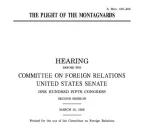
- US Senate Committee on Foreign Relations, The Plight of the Montagnards, March 10, 1998 — the arrest of April 13, 1975 and the escape of January 16, 1976, the family held back four years, and the refugee figures including the 893 who did not appear
- Michael Hayes, “FULRO: a war of their own in Cambodia,” Asia Times, April 9, 2025
Compiled September 2026. Where the counts of the dead conflict, every version we found is in the tables above.