




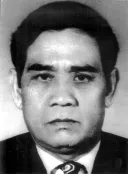
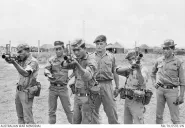
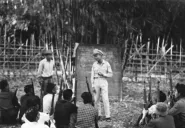
At the end of 1968, days before he was to sign a settlement with Saigon, FULRO men and Cambodian officers took his headquarters and moved him to Phnom Penh. He was held there for six years, still called president by the fighters in the forest and still signing papers for them. On April 20, 1975 he walked out of the French Embassy at the head of about 150 of our people. Nobody who has written about it saw any of them again. That they were killed is not in doubt. By whose order, and at whose asking, has never been established.
The seizure
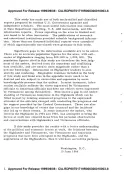
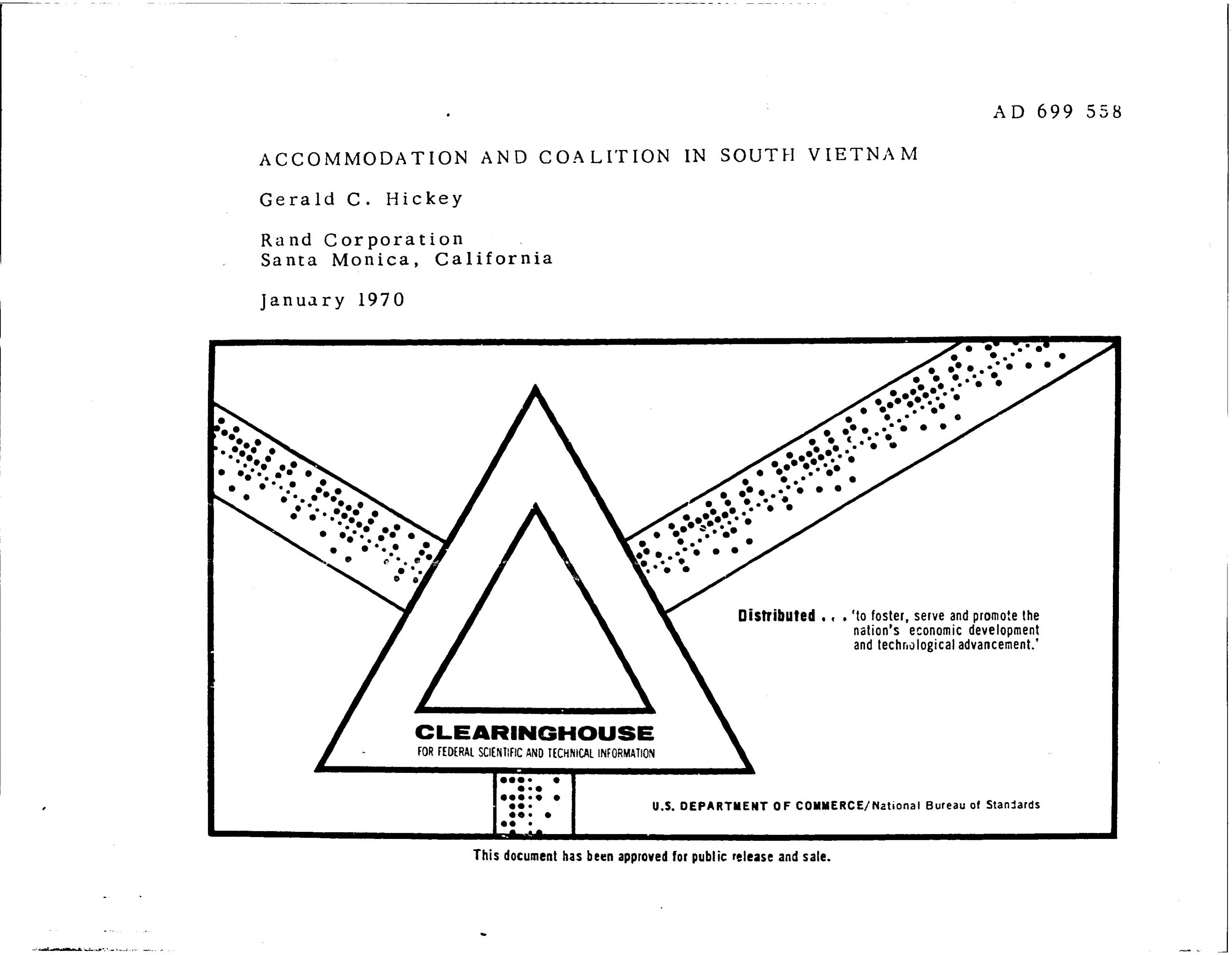
Hickey’s account, written a year later, is the clearest. The talks at Ban Me Thuot in December 1968 had gone well enough that his deputies, Y Dhe Adrong and Y Bling Buon Krong Pang, signed an agreement with the government on December 19 while he went back to consult his staff in Cambodia. Then: “Just before his departure to sign the agreements, a force of FULRO dissidents, some of whom were active in the 1965 revolt, accompanied by a group of Cambodian-Cham, including a few officers of the Royal Khmer Army, captured Y Bham’s headquarters. Y Bham and his family were sent to Phnom Penh, and since then they have remained in Cambodia as have the FULRO dissidents.” The government took the agreement as valid without him: “on February 1, 1969, President Thieu and high government officials presided over a ceremony in Ban Me Thout welcoming the FULRO leaders and 700 troops back into the fold.”
Human Rights Watch, following Hickey’s later book, adds who held him and why: “Several Cambodian army battalions surrounded the FULRO headquarters in Mondolkiri and escorted Enuol to Phnom Penh, where he was kept under virtual house arrest by Les Kosem and Um Savuth, who wanted to prevent him from leaving and cutting a deal with the Vietnamese government.” Other accounts put it differently: that FULRO militants overthrew him and exiled him; that he was detained by FULRO dissidents; that he was kept at Colonel Um Savuth’s residence for the next six years. Our own records say instead that he had withdrawn from FULRO on August 15, 1968 and gone on with a separate movement, the Front de Libération des Hauts-Plateaux Montagnards.
Several of our own community accounts give December 30, 1968 for the seizure itself. No contemporary document we have reached names a day, which is what anyone would expect of something done inside FULRO in a foreign capital that kept no register for us. We give the date as ours, and we would like to know which account it first came from. Les Kosem, the Cham officer of the Royal Cambodian Army whose objectives were Cambodian, is described on The men of FULRO.
Six years under guard
He was not silent in Phnom Penh, and he was not forgotten. The record of those years is thin, but it is a record.
- Our own records say that on October 20, 1973 he named Kpa Koi vice-president of the movement.
- In July 1974 the American embassy in Saigon reported that Kpa Koi, leading a band of perhaps two hundred in the forests of Darlac, claimed to be his representative, and that the provincial representative of the consulate had been shown “a photocopy in Rhade, with a French translation,” which “appeared to have been signed by Y-Bham Enoul,” with photographs. The minister Nay Luett confirmed that in his opinion Kpa Koi “does in fact have authority in writing from Y-Bham Enoul to head the FULRO movement in Vietnam.” The embassy’s comment was that “this certification of Kpa Koi as Y-Bham Enoul’s rep, if, indeed, the document is authentic, adds stature to Kpa Koi among the Montagnards.”
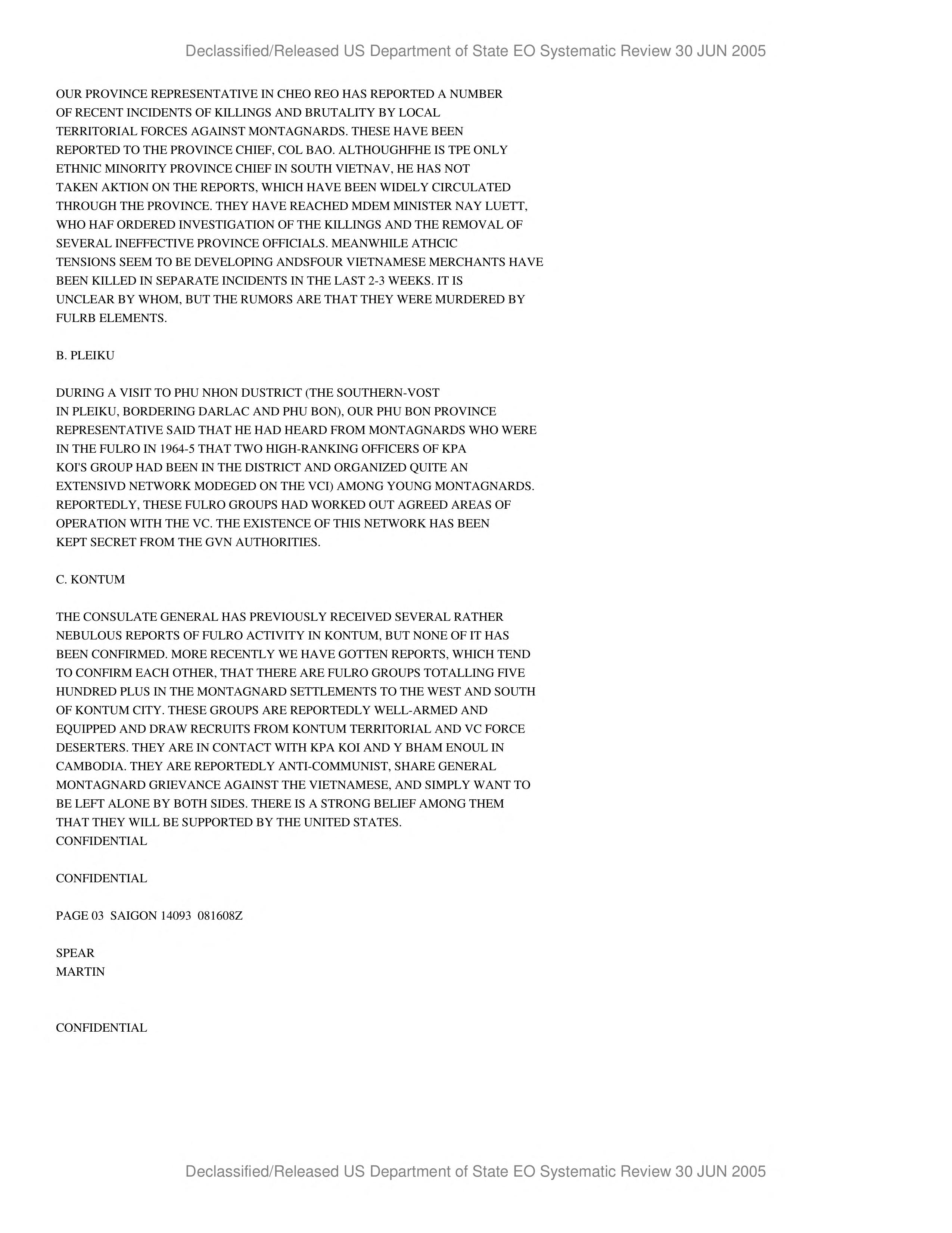
- In November 1974 the embassy reported FULRO groups “totalling five hundred plus in the Montagnard settlements to the west and south of Kontum City,” well armed, drawing recruits from deserters on both sides: “They are in contact with Kpa Koi and Y Bham Enoul in Cambodia. They are reportedly anti-Communist, share general Montagnard grievance against the Vietnamese, and simply want to be left alone by both sides. There is a strong belief among them that they will be supported by the United States.”
- An academic account of Kok Ksor’s life says Y Bham Enuol named him FULRO’s chief of staff in 1974, from the same captivity.
A man held under guard in a foreign capital was still, on paper, the authority every armed group in the highlands claimed. That is the measure of what his name was worth to our people, and it is why the news of 1992 landed the way it did.
April 1975
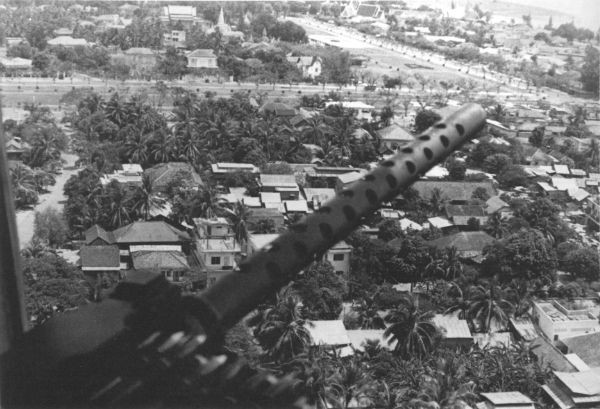
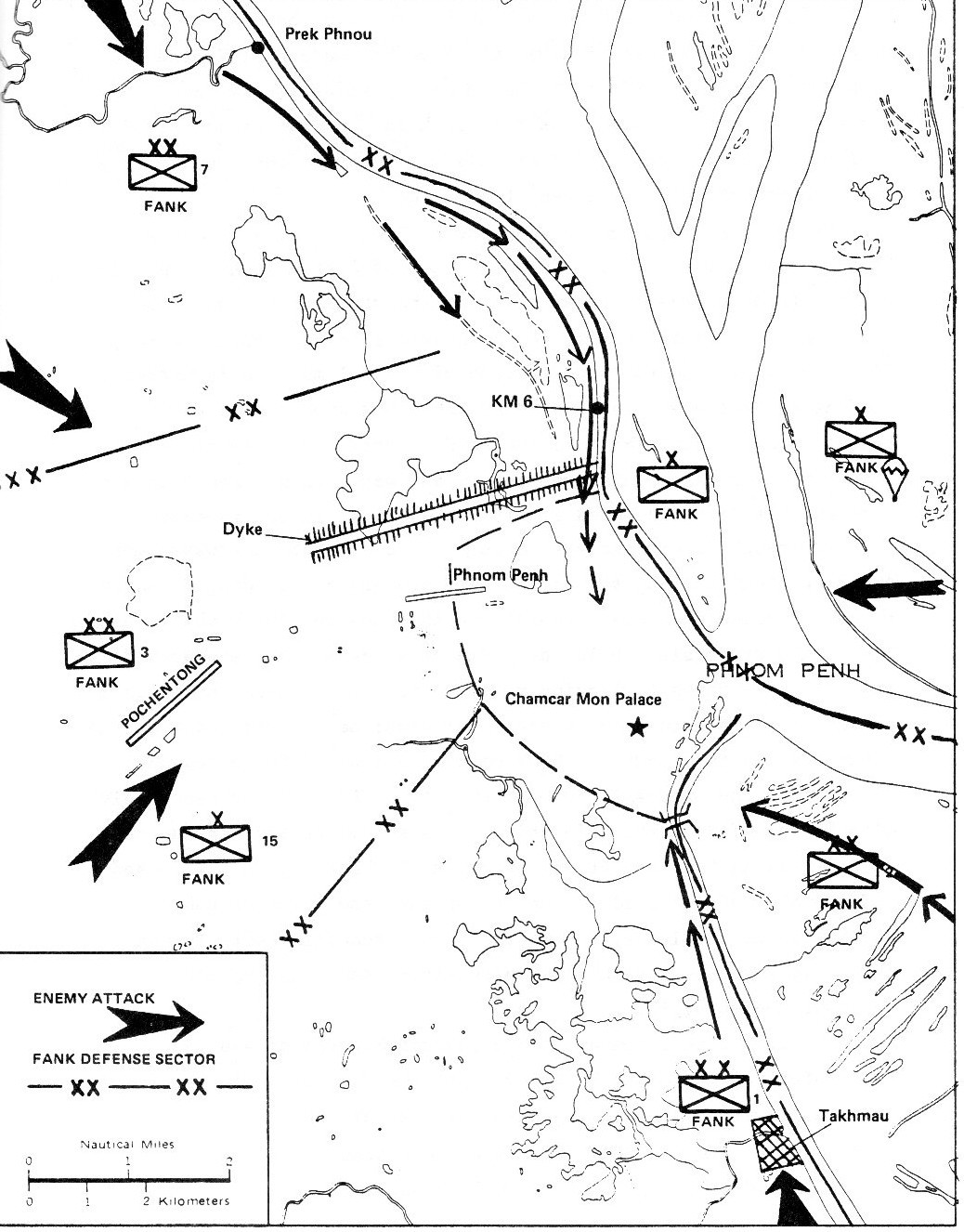
The Americans left Phnom Penh by helicopter on April 12, 1975. The Khmer Rouge entered the city on April 17. Y Bham Enuol, his family, and the FULRO people in the city took refuge in the French Embassy along with several hundred foreigners and a large number of Cambodians.

The family that went into the compound with him is the one in the photograph we hold, which is on the photographs page. It shows fifteen people. No published account names any of them, or says how many were in Phnom Penh in April 1975, or what became of them. Our own records do name them, and we set the names down here so that they are on the record with his.
His family
In the Rhade way he was known as Ama H’Ni, the father of H’Ni, and his wife as Ami H’Ni, her mother; the children carry their mother’s clan name, Êban, because among the Rhade descent runs through the mother (see Dega women).
Eight children, a wife and a son-in-law: eleven names, from our own records. Which of them were in the embassy compound on April 20, 1975, and whether any of them lived, is not written anywhere we have found. If you are of this family, or knew it, write to us.
The only eyewitness account we have been able to read is that of Father François Ponchaud, who was inside. On Sunday, April 20, he writes, two Khmer Rouge leaders asked to see all the Cambodians, Chinese and Vietnamese in the embassy and told them: “you are brothers and you must join the rest of the population in rebuilding our country.” Then: “Around 10 o’clock, a pitiful column of about eight hundred people walked quietly through the embassy gates to an unknown future. … I can still see one hundred and fifty FULRO mountaineers, men and women who had fought the Saigon regime, the Vietcongs in Vietnam and the Khmers Rouges in Cambodia, to defend their territory. They had counted on France, and she let them down. They marched away sorrowfully but with their heads high. Mr Y Bam, founder of the movement, and Colonel Y Bun Suor, their chief, led the way.” He does not say where they were taken.
What happened after the column left the gate is not settled. The versions are these:
| Account | What it says |
|---|---|
| Ponchaud (1978), eyewitness | They left the embassy on April 20, 1975, about 150 of them, led by Y Bham and Colonel Y Bun Suor. Their fate is not stated. |
| Human Rights Watch (2002) | “They were all taken out by the Khmer Rouge and executed.” No place or date. |
| Accounts following Barry Petersen’s memoir | Marched to the Lambert stadium, near the embassy, and executed there. This rests on one book. |
| Pierre K’briuh, 1992 | “President Y-Bham Enuol and his entourage were executed by the Khmer Rouge in 1975.” |
| Our own records | Killed with his wife and children and more than a hundred followers after the French Embassy gave them up. |
Whether the embassy could have done otherwise was later put to a French court, in a case brought by the widow of Ung Boun Hor, the president of the Cambodian National Assembly, who was handed over from the same compound in the same days. In January 2010 the Paris Court of Appeal ordered the investigation reopened. It concerned his case, not ours; nobody has ever brought ours. The embassy’s own position was that it had no legal protection to give: the vice-consul, Jean Dyrac, was holding a compound the new authorities did not recognize.
We state plainly what we believe and what we cannot prove. That he and the FULRO people with him left the embassy on April 20, 1975 is attested by a man who watched them go. That they were killed is accepted by every account we have found, our own and others’. Where, on what day, and by whose order, is not established, and the number who died with him is given as anything from about a hundred to about a hundred and fifty.

Who killed him, and who wanted it
Every published account says the Khmer Rouge killed him. Among our own people another belief is widely held: that Hanoi had a hand in it — that the men who took the column at the embassy gate knew who he was because they had been told. We should be straight about the standing of each of those statements.
What is documented. Phnom Penh was in Khmer Rouge hands from April 17, 1975. On April 20 the embassy was made to send out the Cambodians and others sheltering in it, and Y Bham Enuol and about 150 FULRO people walked out into a Khmer Rouge cordon. From that moment they were in Khmer Rouge custody, and no one has reported seeing any of them alive afterwards.
What is not documented. No order, no unit, no officer and no place of execution is named in any record we have found. No Khmer Rouge document naming him has been published, as far as we can establish. There is no grave, and there has never been an inquiry into the deaths of these 150 people, in Cambodia or anywhere else. The accounts that give the Lambert stadium are later reconstructions, not records.
What our people believe. That the killing was done at Vietnam’s asking, or with its knowledge. We record the belief because it is held sincerely and widely by the people this library is written for, and because a record is worth little if it sets down only the parts that carry footnotes. We also say plainly: we have found no evidence for it. No document, no witness, no captured order.
What can be said about the belief. In April 1975 Hanoi and the Khmer Rouge were not yet enemies; the border war between them began in 1977 and the invasion in 1978, so a request in that direction was possible in principle, and both governments treated FULRO as an enemy force. Against it stands the fact that the Khmer Rouge needed no instruction: that month they were killing soldiers, officials and armed groups tied to the old regime and to foreigners across the whole country, and FULRO was an armed movement inside their territory. And there is the turn that fits neither story neatly. In 1977 the same Khmer Rouge made an agreement with what was left of FULRO to exchange information, and armed it against Vietnam; the movement whose president they had killed became their ally for a decade, until FULRO broke with them in 1986. That part of the story is on FULRO, 1964–1992.
What would settle it. Khmer Rouge records for Phnom Penh in April 1975, now held in Cambodia; the French Embassy’s own files for those days; Vietnamese archives of the period; and the testimony of anyone who was in that column and lived. If you know of any of these, or hold anything yourself, write to us. We would rather publish a correction than keep a comfortable version.
Was it genocide?
We say it was. This is not a figure of speech, and it is worth setting out the ground it stands on, and the ground it does not.
The definition. The Genocide Convention of 1948 defines genocide, in Article II, as acts — killing members of the group among them — “committed with intent to destroy, in whole or in part, a national, ethnical, racial or religious group, as such.” The words that matter here are in part. International courts have held that the part must be a substantial one, and that substantial is not only a question of numbers: the appeals chamber in the Krstić case held that if the targeted part is emblematic of the group or essential to its survival, that supports a finding that it is substantial.
What was destroyed in April 1975. Not a random group of refugees. The president of the Dega movements, the men who had led them for seventeen years, and their families, taken together as a body and killed together. A people that had been governed, taught, petitioned for and represented by that group of men lost all of them in a morning. The fighters left in the forest were still waiting for orders from a man who had been dead since 1975 when they were found in 1992.
How many. Our own count, as it is held in the community, is more than three hundred people, counting the families. The only eyewitness figure that has been published is Father Ponchaud’s: a hundred and fifty FULRO men and women in the column that left the embassy on April 20. Other published accounts say “his entourage” or about a hundred and fifty. Nobody has ever counted the FULRO households that were living elsewhere in Phnom Penh under guard, and nobody has ever tried. Until someone does, we give our figure as ours and the published ones as theirs, and we do not pretend the difference is settled.
What no court has done. The Khmer Rouge tribunal, the ECCC, convicted Nuon Chea of genocide against the Cham and the Vietnamese and Khieu Samphan of genocide against the Vietnamese, in the judgment of November 16, 2018; the appeal chamber upheld Khieu Samphan’s conviction on September 22, 2022. Its jurisdiction ran from April 17, 1975 — three days before our people were taken from the embassy. The Dega were never named as a victim group in any charge, the removals from the French Embassy were never adjudicated as a crime, and no investigator from that court, or from any other, has ever asked our families what happened to them. That is not a finding that it was not genocide. It is a finding that nobody with the power to decide has ever looked.
What we say, and what we would need. We say that the destruction of the leadership of a people, with their families, because of who they were and what they led, is genocide within the meaning of the Convention, and we say it in the same terms as the rest of our case, which is set out on How we died. To have it established rather than asserted would take the Khmer Rouge records for Phnom Penh in April 1975, the French Embassy files, a count of the dead with names, and the testimony of anyone who survived. We are looking for all four. If you hold any part of it, write to us.
Seventeen years of waiting
The men he had left in the forest did not know. In September 1992, when journalists reached the last FULRO unit in Mondulkiri, its commander, Colonel Y Peng Ayun, asked them: “Please, can you help us find our president, Y’Bham Enuol? We have been waiting for contact and orders from our president since 1975. Do you know where he is?” Nate Thayer, who was there, wrote that neither the colonel nor his men knew their leader had been executed seventeen years before: “They fell silent when informed; some wept quietly.” The colonel’s answer was a soldier’s: “We are the troops of President Y Bham Enuol. If he has died, we want proof from the United Nations.” The proof came in a letter from Pierre K’briuh, a leader of the former FULRO troops in the United States who had himself been jailed by Hanoi until the early 1980s, printed in the Phnom Penh Post: “President Y-Bham Enuol and his entourage were executed by the Khmer Rouge in 1975. Therefore, based on common sense, lay down your weapons and appeal at once to the U.N.” Human Rights Watch was told later that learning of his death was a major element in the decision to lay down arms.
That story is told in full on Mondulkiri, 1992.
What we do not know
- Which of his family were with him in Phnom Penh in April 1975, and whether any of them survived.
- Where and on what day he was killed.
- Who Colonel Y Bun Suor was, beyond Ponchaud’s one sentence, and whether Kpa Doh, the FULRO commander, was in the compound with him.
- Whether any record of the handover survives in Cambodian or French files.
If a member of his family, or of the families of the 150, is living, we would be glad to be corrected. How to reach us.
Sources
- François Ponchaud, Cambodia: Year Zero (1978), the chapter on the French Embassy — the column of April 20, 1975, the 150, and the two who led them
- Human Rights Watch, Repression of Montagnards (2002), the historical chapter — the house arrest, the executions, and the effect of the 1992 news, citing Gerald Hickey, Free in the Forest (1982), p. 190
- Gerald C. Hickey, Accommodation and Coalition in South Vietnam, RAND P-4213 (1970), DCHO library, also on the Internet Archive — the seizure of the headquarters and the signature of December 19, 1968
- “Montagnard Army Seeks U.N. Help,” Phnom Penh Post, September 12, 1992 and Nate Thayer, “Lighting the darkness: FULRO’s jungle Christians” (1992, reposted 2013) — Colonel Ayun’s question and K’briuh’s answer
- US Embassy Saigon, Mission Weekly, July 18–24, 1974 (cable Saigon 9749), DCHO library, and FULRO Activities Outside Darlac Province, November 8, 1974 (cable Saigon 14093), DCHO library; also on the Internet Archive, 1974-144543 and 1974-243335
- Joe P. Dunn, “Kok Ksor and the Struggle for Cultural Survival, Human Rights, and Religious Freedom for the Montagnards of the Central Highlands,” Athens Journal of History 10:1 (2024) — the appointment of Kok Ksor as chief of staff in 1974
- FIDH, “La Chambre de l’instruction de la Cour d’appel de Paris relance une procédure pour des actes de torture commis au Cambodge,” February 2, 2010 — the French inquiry into the embassy in April 1975
- Convention on the Prevention and Punishment of the Crime of Genocide (1948), Article II
- ICTY, Prosecutor v. Krstić, appeals judgment, April 19, 2004, paras. 8–12 — destroying a group “in part”
- ECCC, summary of the judgment in Case 002/02, November 16, 2018 — the genocide convictions for the Cham and the Vietnamese
- Our own records — the names of his family, August 15, 1968, December 30, 1968, October 20, 1973, and the account of his death
Compiled September 2026. The place and date of his death are not established; every version we found is in the table above.