














Two men who tried the other route. Both were BAJARAKA founders, both went to prison for it under Diem, and both then took office inside the government that had jailed them — one as a province administrator who became the first highlander in a Saigon cabinet, one as the minister who held that ministry to the last week of the Republic. Both died in the hands of the government that came next.
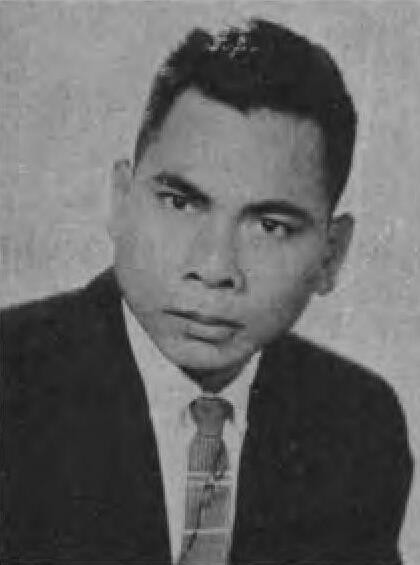

1958: the same cell
The two men enter the record together, in the list of arrests that followed the demonstrations of October 1958. The CIA study of 1966 gives the committee as it was taken: “Y Bham Enoul, Rhade and President of Bajaraka; Touneh-Yeh, Chairman of the Dalat (Koho) Committee; Nay Luett, Chairman of the Pleiku (Jarai) Committee; Paul Nur, Chairman of the Kontum (Bahnar) Committee; and Y Ju Ebam and Y Thih Ebam, Rhade and members of the Bajaraka Central Committee, were arrested.” Human Rights Watch, following Hickey, says they “were imprisoned in underground solitary cells in Dalat for three months,” and that Paul Nur and Y Bham Enuol were released in 1959. Hickey has the six leaders other than Y Bham serving “sentences of from two to five years”; the CIA has them “sentenced to four years in prison but some were not released until 1964”; our own records say six years. Nay Luett was among those held until the change of government. Paul Nur was forty-one in 1966, according to a press digest of that year; a Vietnamese-language account gives his birth as July 7, 1925, at Kon Ro Bang near Kontum. Nay Luett was forty in April 1975 and born in Phu Bon, according to the American embassy’s note on the cabinet; the same account gives May 3, 1935. Hickey adds that his mother was Mdhur and his father Hroy, two of the Jarai groups of the Cheo Reo valley. We give the birth dates as the community and those sources give them.

1964: the fork
Diem was overthrown on November 1, 1963. General Khanh took power on January 30, 1964, and “attempted to improve the situation in the Highlands and correct some of the Highlanders’ grievances.” On February 10 the last of the BAJARAKA prisoners, Y Bham Enuol, was released, and Khanh “named a number of Highlander leaders, including Y Bham, to government positions in the Highlands.” Paul Nur became deputy province chief of Kontum for highlander affairs; Y Bham Enuol, deputy chief of Darlac. Nay Luett went to work at Cheo Reo as an interpreter for the American aid mission, USOM, and, by one American who served with him, did intelligence work as well. Seven months later five CIDG camps rose in revolt, and Y Bham Enuol was in Cambodia leading FULRO.
Paul Nur stayed. Nay Luett stayed. That is the fork this page is about, and the men who took each branch believed they were doing the same thing by other means.
The office, and then the ministry
What they were given to work with grew slowly. A Bureau of Highland Affairs in 1957 became a directorate under the Khanh government in 1964. In 1966 — on June 22, by the Vietnamese record — the directorate was raised to a Special Commissariat for Highland Affairs, and Paul Nur was named to head it. Hickey, writing in 1967, calls it “the highest position in the GVN ever attained by a Highlander,” and the CIA, in the same year, noted that the appointment “had met one of the eight demands of FULRO.” Nay Luett, by then, was “in charge of Special Projects in the Commission for Highland Affairs.” When the constitutional government was formed in November 1967, “the High Commission became the Ministry for Ethnic Minorities’ Development,” and Paul Nur was its first minister, in the cabinet of November 9, 1967. President Thieu had signed the Statut Particulier for the highlands on August 29 of that year. Six highlanders, one of them a FULRO member, sat in the National Assembly.
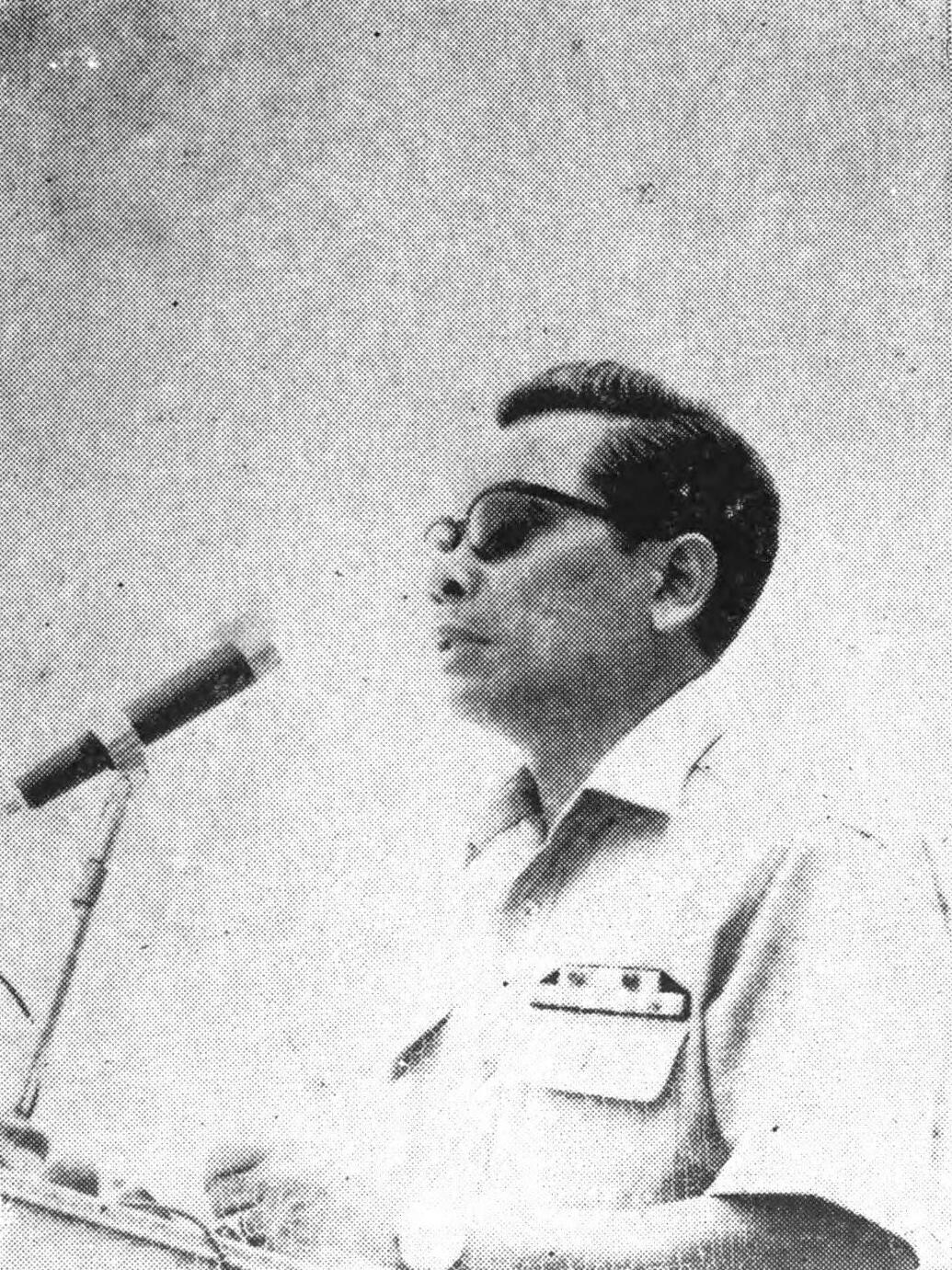

February 1, 1969: a Dega man on each side of the table
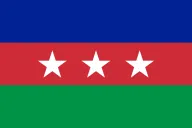
The settlement with FULRO was negotiated in December 1968. Y Bham Enuol came to Ban Me Thuot, then went back to consult his staff, “while his deputies Y Dhe Adrong and Y Bling Buon Krong Pang continued discussions with Minister Paul Nur and the Prime Minister’s staff.” The agreement they signed on December 19, 1968 “concerned a flag for the Highlanders, an important role for Y Bham, an increased number of Highlander administrators, and integration of FULRO military units into the Regional Forces.” Vietnamese accounts of the terms add the detail that the flag was to be a movement’s pennant and not a national flag, that the ministry was to be led by a highlander, that a highland province chief or deputy chief would be named in provinces with a large highland population, and that highland territorial forces would serve under highland officers. Y Bham Enuol was seized before he could sign; the story is on his own page. The government took the agreement as valid regardless, and “on February 1, 1969, President Thieu and high government officials presided over a ceremony in Ban Me Thout welcoming the FULRO leaders and 700 troops back into the fold.” Paul Nur signed for the Republic of Vietnam; Y Dhe Adrong signed for the movement, and is reported to have declared that from that day FULRO no longer existed in the highlands. One source names the FULRO signatory as Y Dhon Adrong, the movement’s first vice-president; Hickey and the Vietnamese accounts say Y Dhe.
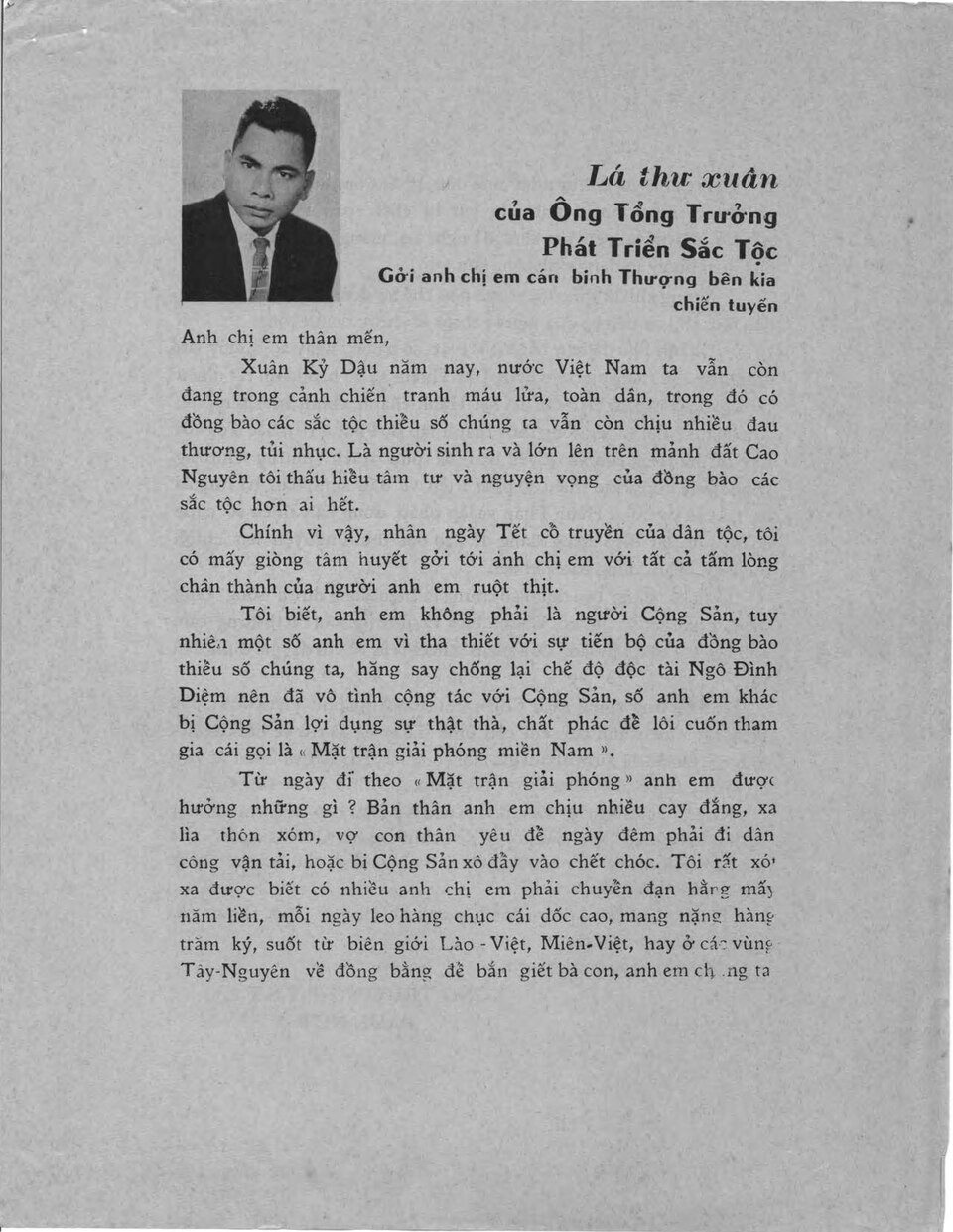
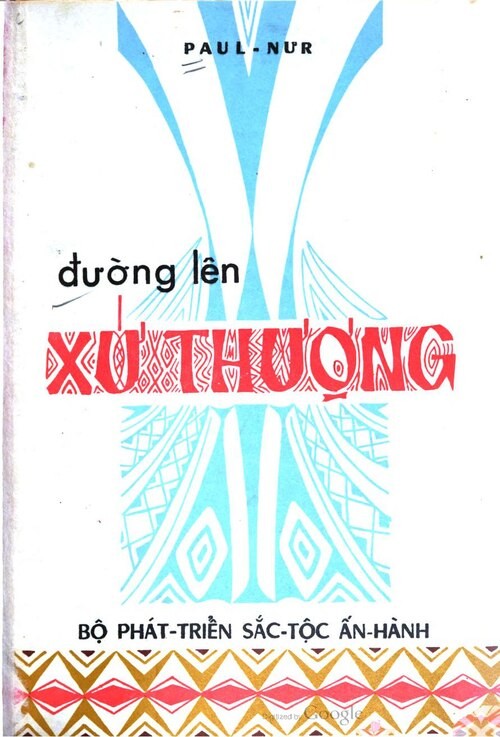
A month earlier the ministry had printed a Tết letter over Paul Nur’s name, addressed to highland cadres and soldiers on the other side of the front line, in Vietnamese, highland languages and Khmer, and the American propaganda office had run it off as leaflet 3070. It is the ministry speaking to highlanders who had gone to the other side, in the same weeks that it was bringing back the ones who had gone to Cambodia. The leaflet is in our library, and so is the collection of statutes, decrees and speeches on highland policy that he published as minister in 1970, Đường Lên Xứ Thượng. He had printed an earlier essay on highland policy in Vietnamese history through the same ministry in 1966; we have not yet found a copy.
Nay Luett’s ministry, 1971 to 1975
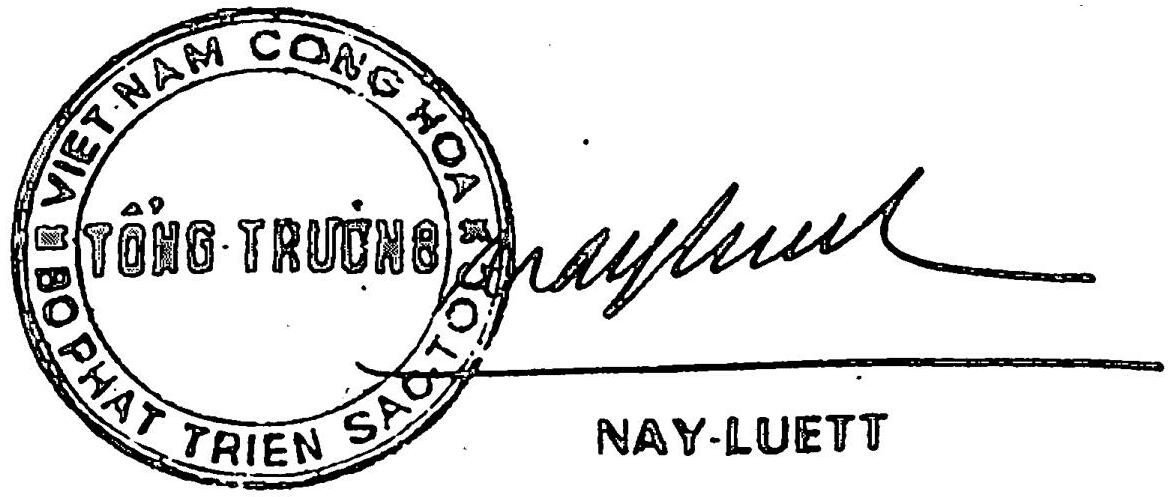
In June 1971 Nay Luett replaced Paul Nur as minister, and held the post until the end. The embassy’s note on him in April 1975 is the nearest thing to an official biography we have: “Nay Luett is 40 and was born in Phu Bon Province. He is graduate of National Institute of Administration. He has served in military and served as specialist in Directorate of Montagnard Affairs. He has held post of Minister of Ethnic Development since June 1971.”
Human Rights Watch summarizes what he did with the office: “In 1971 Nay Luett, an ethnic Jarai, was appointed as minister for ethnic minority development. He and colleagues such as Pierre K’Bruih worked to make the ministry a center for ethnonationalism, Hickey said, ‘where mountain country leaders gathered and participated in planning.’” The American press noticed him. In June 1972 the Christian Science Monitor described him as determined to see that land reform was carried out in the highlands; in December 1972 Time quoted him saying he would move fast. In March 1973 the embassy recorded that he had pushed for the removal of the province chief of Phu Bon “almost since day Nghiem took office,” and got it. In July 1974, shown the document by which Y Bham Enuol had appointed Kpa Koi to lead FULRO in Vietnam, he told the Americans that in his opinion the signature was real. On April 14, 1975, sixteen days before the end, he was named again in the cabinet announced that day, the last but one of the Republic.

The Ministry for the Development of Ethnic Minorities was the only Dega institution in the machinery of any state in the twentieth century. What it could actually do was limited — it had a budget and almost no leverage over the province chiefs, the army, or the land registry — but it existed, it was staffed by highlanders, it published books about us in our own capital, and for the better part of a decade there was a place in a capital city where a village could send a complaint.
April 4, 1975
Ban Me Thuot had fallen on March 11 and the highlands were being abandoned. On April 4, 1975 there was an emergency meeting at the ministry between Nay Luett, his senior staff, and the Americans: the deputy ambassador, George Jacobson, and two officers who had spent years with highlanders, Edward Sprague and Colonel Lamar Prosser. Our own records say that Nay Luett asked for protection for the highland leaders and people, because he knew what was coming, and proposed a Montagnard force of fifty thousand, with American support, to defend the Central Highlands; and that Jacobson and the Saigon government refused. An American who served in the highlands, Michael Benge, wrote of the same meeting that “Jacobson promised Minister Nay Luette that if the communists attacked Saigon, he and his entire staff and their families would be evacuated — they never were,” and that the Americans told him FULRO and other highlanders should go to the jungle and fight on, with support that “never materialized.”
Twenty-six days later Saigon fell.
It is worth sitting with what was being asked. Not evacuation, not asylum, not money: permission and arms to defend the plateau after the army that had been defending it had gone. The man who made that request had been in Diem’s prisons in 1958 and in a Saigon ministry since 1971. He was, by then, entirely out of routes.
How both of them died
Nay Luett was imprisoned after 1975 and held for nine years. He died in 1983, shortly after his release. Dega accounts hold that the authorities removed his brain for analysis afterward. That is our own account of what was done to one of our leaders, nine years in a prison the state has never opened and has published nothing about. The historian William Chickering, in A War of Their Own (2025), suggests that he died of a spontaneous bleed in the brain. We give both, and we say what each one is: ours comes from the people around him, and Chickering’s is a reconstruction at fifty years’ distance. If your family carries what was said at the time, we would like to record it.
The published record is thinner than ours and does not agree with itself. A Mnong man told Human Rights Watch in 2001: “In 1975 the [North] Vietnamese put our leader Nay Luett in prison for ten years.” Hickey’s chronology says only that highland leaders were jailed and that Nay Luett later died. Louis Wiesner, in 1988, wrote that “Nay Luett and Paul Nur were among those left behind. They both died in reeducation camps”; John Prados, that he “is reported to have died in a reeducation camp”; a veteran who served with him, that he died in a re-education camp. Our own records, and the Vietnamese-language accounts that follow them, say he came home to his village after nine years and died there within two months. The difference is between dying inside the wire and dying just outside it, and we do not think the state that held him would recognize a distinction.
Paul Nur died in prison. Our own records say a prison in Hanoi; Wiesner says a re-education camp. Nobody has published a date, and a Vietnamese-language account that gives his birth to the day gives his death only as after 1975, in a camp.
Neither man had taken up arms after 1964. Both had spent the intervening decade arguing inside a state’s institutions for the people that state was dispossessing. That is what they were imprisoned for, and it disposes of the idea that the reprisals after 1975 were aimed at fighters.
The argument between the two routes
Dega politics from 1964 to 1975 was a running argument between the men in Mondulkiri and the men in Saigon, and it was never settled because both sides lost. The ministry could not stop the land program; the movement could not win. Every peaceful route was tried by somebody, and the people who tried them are the ones who died in prison. When we say the case is now pursued only by political and legal means, we are not proposing something new. We are going back to what Paul Nur and Nay Luett were doing, with the advantage of being outside the country while we do it.
See also: Y Bham Enuol, BAJARAKA, 1958, Re-education and the forest, 1975–1992, The Franco-Rhade school and the Collège Sabatier, Kok Ksor.
Sources
- CIA, The Highlanders of South Vietnam: A Review of Political Developments and Forces (June 1966), DCHO library — the arrests of 1958, the sentences, the releases and appointments of 1964, and Paul Nur’s appointment in 1966
- Gerald C. Hickey, The Highland People of South Vietnam: Social and Economic Development, RAND RM-5281 (1967), DCHO library, and Accommodation and Coalition in South Vietnam, RAND P-4213 (1970), DCHO library — the sentences, the commissariat and ministry, the December 1968 terms and the ceremony of February 1, 1969
- Human Rights Watch, Repression of Montagnards (2002), the historical chapter, citing Gerald Hickey, Free in the Forest (1982) — the cells at Dalat, the 1959 releases, the cabinet post, Nay Luett’s ministry, and the Mnong witness of 2001
- US Embassy Saigon, cables of April 14, 1975 on the new cabinet (biographic notes and the list of ministers), April 2, 1973, and Mission Weekly, July 18–24, 1974, DCHO library
- Ambassador Bunker to President Johnson, August 1967, Foreign Relations of the United States, 1964–1968, vol. V, doc. 264 — the Statut Particulier
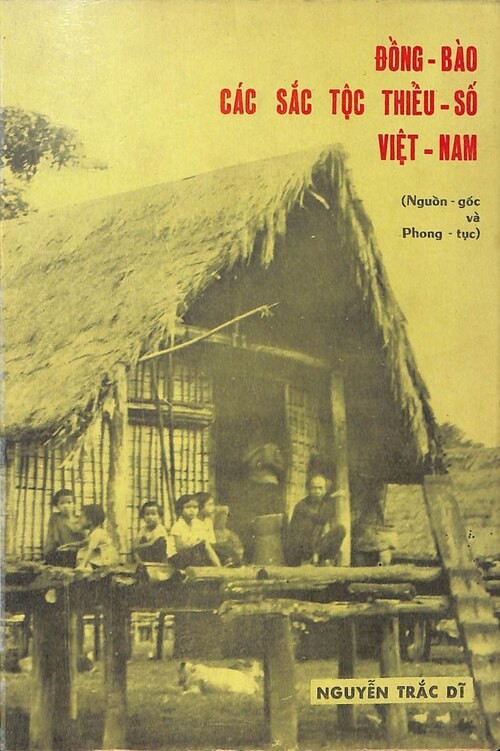
- Paul Nur, Đường Lên Xứ Thượng: Các văn kiện căn bản (Saigon, 1970), DCHO library; the ministry’s Spring Letter leaflet of January 1969, DCHO library; Nguyễn Trắc Dĩ, Đồng Bào Các Sắc Tộc Thiểu Số (Saigon, 1972), DCHO library
- Michael D. Benge, “The Montagnard Political Movements and FULRO,” Sentinel, September 2018 — the meeting of April 4, 1975; Jim Morris, review of A War of Their Own, Sentinel, February 2025 — Nay Luett at Cheo Reo in 1964
- William H. Chickering, A War of Their Own (Casemate, 2025) — Nay Luett’s death; Louis A. Wiesner, Victims and Survivors (1988) and John Prados, The Hidden History of the Vietnam War (1995) — the deaths in camp
- Nguyễn Văn Huy, “Cộng đồng người Thượng trên cao nguyên miền Trung,” parts 3 and 4 (2023) — the dates of the highland offices and the terms of December 1968, from the Vietnamese side
- Our own records — the six-year sentence, the appointments of 1964, the meeting of April 4, 1975, and the deaths
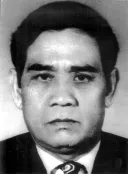
Compiled September 2026. The portraits of Paul Nur come from the ministry’s own publications; we have found no photograph of Nay Luett that we are certain we may publish, only his signature. Records of the Ministry for the Development of Ethnic Minorities would be a significant find — if you know where any survive, please write.