







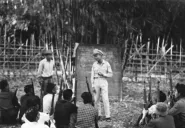
Most of our Protestants belong to congregations the state does not recognize. The largest state-recognized Protestant body is the Evangelical Church of Vietnam (South), and the choice put to highland house churches for twenty-five years has been the same: join it, or be named Dega Protestants, a label the state treats as separatism. This page is about the recognized church, what registration requires and costs, what happens to those who refuse, and the independent churches whose members now fill the prisons.

The recognized church
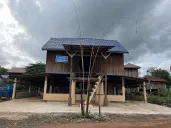
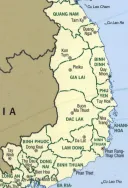
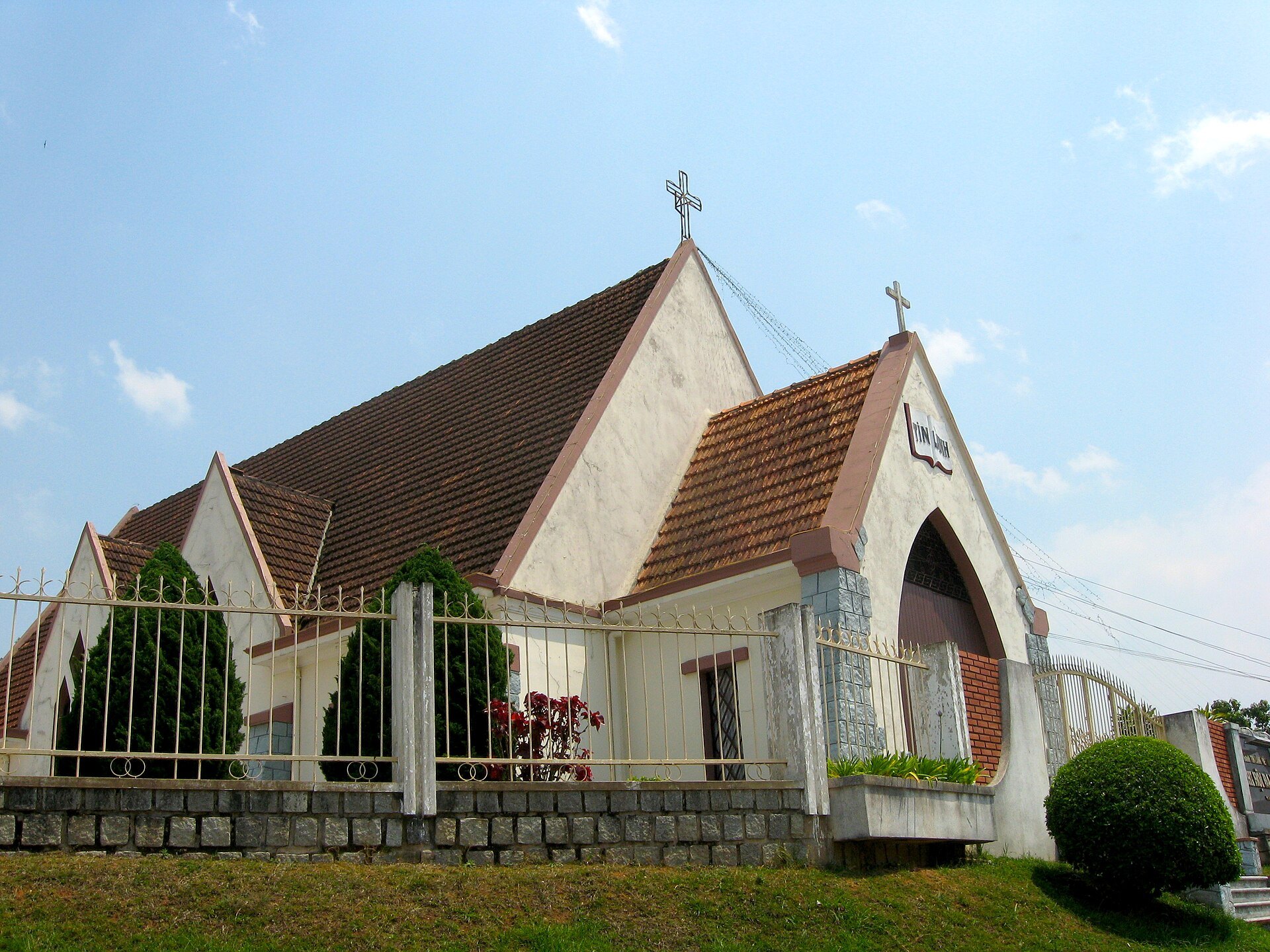
The Evangelical Church of Vietnam descends from the mission the Christian and Missionary Alliance opened at Đà Nẵng in 1911; an independent Vietnamese church was constituted by 1929, and its missionaries went into the highlands in the early 1930s. Since the division of the country there have been a northern and a southern church, and the southern church was given legal recognition in 2001. The US Commission on International Religious Freedom describes it now: “With 700,000 followers, the ECVN-South is the largest Protestant organization in Vietnam,” a General Alliance “overseeing a network of 2,281 branches at the local level, as of April 2024.” Historically a great many of its congregations were ours. Today many of us still worship in it, and its highland branches are the ones with buildings: “The state has allocated land to 32 branches of the ECVN-South in the Central Highlands to build religious facilities from 2005 to the present.”
Recognition comes with a role. USCIRF records that “authorities force independent Montagnard Protestants to join the ECVN-South and threaten them with punishment if they refuse to comply.” It records pastors of the recognized church appearing on provincial police television: on February 4, 2023 a pastor accusing the leaders of the independent Evangelical Church of Christ of “taking advantage of religion for political purposes”; in March 2024 another saying that religious freedom must be within the framework of the Party and the state, two days before a missionary of that independent church was sentenced to thirteen years. It records one Ede pastor of the recognized church who “publicly insisted that there was no crackdown on Montagnard Christians from 2001 to 2008,” and another who “publicly supported the government’s policy toward Montagnards, including the ongoing crackdown.”
What registration requires
Under the prime minister’s Instruction No. 1 of February 2005, Human Rights Watch reported, Protestant groups seeking registration “must submit applications to local authorities providing the names of their adherents, along with their photographs and biographical information, and certify that the group will not allow its members to engage or be involved in protests, riots, and ‘reactionary’ organizations such as Dega Protestantism or FULRO.” The Law on Belief and Religion of 2016, in force from January 1, 2018, kept the principle and lengthened the road: a group must first obtain a certificate of registration of its activities, and only after five years of continuous operation may it apply to be recognized as a religious organization with legal personality. Article 5 of the law lets the authorities refuse any activity they judge to “infringe upon national security” or “encroach upon social morality”; Decree 95, in force from March 2024, gives ten of its thirty-three articles to the suspension of religious activity for what it calls serious infractions. The UN Special Rapporteur on freedom of religion, after his visit in 2014, put the objection in one sentence: “registration should be an offer by the State, not a compulsory legal requirement.” See The Law on Belief and Religion.
A congregation that has not been granted registration is not merely unapproved. Its ordinary Sunday meeting is an offense, and its leader can be charged under Article 331 of the Criminal Code, abusing democratic freedoms, or Article 116, undermining the unity policy; see The laws used against us.
Join, or be named
After 2001. In the years after the February 2001 protests the government closed the highland churches wholesale. Human Rights Watch recorded in 2006 that “during 2005, twenty-nine of the 1,200 ethnic minority churches closed by the government after the 2001 protests were approved for official registration and re-opened.” Twenty-nine of twelve hundred.
2006. “During the first months of 2006, provincial and local authorities and police and government-approved pastors from the officially recognized Evangelical Church of Vietnam (ECVN) convened mandatory monthly meetings in villages in Gia Lai province. During these meetings — some of which were held in the local soccer field — villagers were asked to sign forms pledging to follow the ECVN.” A Jarai woman of Ia Grai described one:
“The pastor said if everyone follows his religion, there will be no problems in the future with the authorities. Authorities from the province, district, and commune were there to make people afraid not to sign. People were afraid — not of being beaten — but of encountering problems in the future. The authorities keep a register of who joined [the ECVN pastor’s church] and those who didn’t. Some of us did not sign. We want to follow Christianity — not a political directive. We believe in God; not in a particular person. In our faith, we follow the Bible, not a particular pastor or political leader. The authorities twist it around and say that if we don’t follow [the ECVN pastor], we are Tin Lanh Dega.”
In Dak Nong that spring villagers were told they would have to sign a document titled Quyết định, decision, affirming their support for the recognized church; in parts of Gia Lai the authorities announced a six-month campaign, to September 2006, to push highlanders to recant and join it. “People suspected of being political activists or ‘Dega Christians’ are summoned to local police stations for questioning, often on a weekly basis … In some areas people are forced to sign pledges without being given a chance to read the text.”
2010. The Gia Lai provincial press, as HRW quoted it, boasted that 97 households in Chu Se had “voluntarily” abandoned Dega Protestantism and that 567 households in Krong Pa had committed to “renouncing” it; the ceremonies are on The church they closed.
2014. The UN Special Rapporteur was told by Protestant representatives “about cases in rural areas in which different Protestant parishes were merged into one single parish for purposes of ‘easier management’.”
2024 and 2025. USCIRF: in September 2024 the Dak Lak police “detained evangelist Y Thinh Nie for repeatedly refusing to join the state-controlled church,” and in October “held a public denunciation to pressure more than 20 Montagnard Christians to join the registered church.” In 2025 there were “multiple reports of authorities using physical violence and threats to intimidate and interrogate house church Christians and coerce individuals to renounce their faith or affiliation with their church and instead join the government-approved Evangelical Church of Vietnam-South.” Y Thinh Nie was sentenced to nine years in May 2025.
The independent churches
USCIRF names the two largest: “Among the independent house churches formed in the Central Highlands, the Dega Protestant Church and Evangelical Church of Christ of the Central Highlands (ECCCH) attracted the most followers.” Their members are prosecuted under the national security articles of the Criminal Code:
- Y Krec Bya, a missionary of the Central Highlands Evangelical Church of Christ, sentenced in March 2024 to thirteen years in prison and five years of house arrest under Article 116.
- Nay Y Blang, born 1976, an Ede member of the same church in Sông Hinh, Phú Yên, who had already served five and a half years from 2005; arrested May 18, 2023 for using his house for prayer meetings and online communion with the church’s leaders; sentenced January 26, 2024 to four years and six months under Article 331.
- Y Pum Buonya, an evangelist of the same church, arrested and beaten in December 2023, forced to recant before his assembled village, and found hanging from a tree on March 8, 2024 after being summoned to meet the police.
- Y Thinh Nie, Ro Cham Grong and Y Po Mlo, sentenced in 2025 to between seven and nine years under Article 116; pastor Y Nuen Ayun, arrested in October 2025 under the same article.
More are on Our defenders and prisoners and The prisoner records.
A hard thing to say
Some pastors of the recognized church have said in public that there is no persecution in the highlands. We do not judge them. A pastor with a registered church and a building on allocated land has a congregation to protect, and the state knows exactly what it is asking of him when it puts him in front of a camera. But their statements are not evidence that what others document does not happen, and a church that must deny the arrest of its neighbors to keep its roof is not free either. Registration is not the opposite of persecution. It is the shape persecution takes when it has won.
See also: The church they closed, The highland Catholic Church, Writing our languages.
Sources
- US Commission on International Religious Freedom, State-Controlled Religion and Religious Freedom in Vietnam (September 2024), pp. 22–24, DCHO library; Annual Report 2025; Annual Report 2026; Vietnam Country Update (December 2025), DCHO library; assessment of the Law on Belief and Religion (November 2019)
- Human Rights Watch, No Sanctuary (June 2006), DCHO library; Montagnard Christians in Vietnam (March 2011), DCHO library; “We’ll All Be Arrested Soon” (April 2025) — Nay Y Blang
- Heiner Bielefeldt, press statement, Hanoi, July 31, 2014
- Christian Solidarity Worldwide, on Y Pum Buonya, April 23, 2024; Morningstar News, on Decree 95, February 28, 2024
- Chung Van Hoang, “Evangelizing Post-Đổi Mới Vietnam” (ISEAS, 2017) — the mission history
Compiled September 2026.