





Most of us who were resettled went to the United States, and a smaller number to Canada. But the second country to take us was not Canada. It was Finland, in May 2005, a month before the first flight to Vancouver, and about seventy-five of our people went there. Nobody has written a word about them in twenty-one years. That is the shape of everything on this page: small groups, precisely documented on the day they left, and then silence.
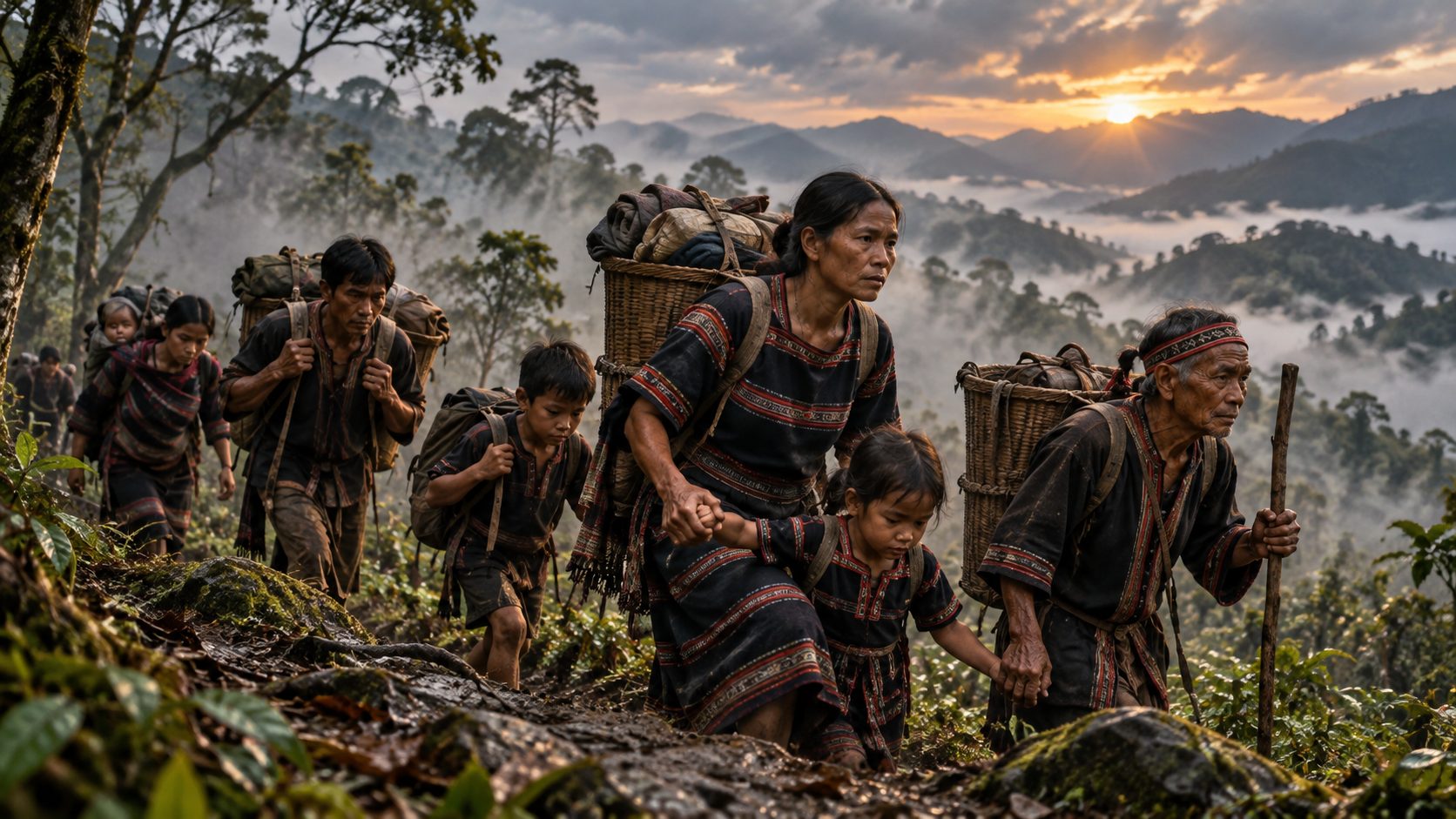
Finland came first
On May 11, 2005, twenty-seven of our people flew from Phnom Penh to Oulu, on the Finnish coast, after a briefing from the refugee agency. They were the first group out of seventy-two who had been accepted for resettlement in Finland. A second group was due to follow in early June, after taking a Finnish orientation course. They had come out of the Central Highlands after the crackdown on the protests of April 2004, following the more than a thousand who came out after the protests of February 2001. See The protests of 2001 and Easter week, 2004.
Finland’s own immigration service records the same event from the other end. Its quota-refugee tables show a selection mission to Thailand and Cambodia running from January 23 to February 13, 2005, and a footnote explaining that places unused in the 2004 quota were filled at the start of 2005 on that mission: “From Cambodia 75 vietnamese quota refugees were selected.” Quota refugees normally reach Finland one to two years after being chosen. These went in three months.
Seventy-two accepted, seventy-five selected. We do not reconcile the two numbers, because neither source explains the gap and the likeliest reasons — two or three cases falling out between selection and departure — are guesses.
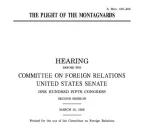
The corroboration was sitting in our own source list the whole time, unread. On the tarmac at Phnom Penh a month later, a UNHCR resettlement officer explained to a reporter what was new about the flight to Canada: “Montagnards have been resettled in the US and Finland, but this is the first group to go to Canada.”
One more thing about the Finnish record, and it is the thing that runs through this whole page. Migri’s tables record nationality: Vietnam, seventy-five. The word Montagnard does not appear in Finnish government statistics, and neither does Dega. Finland knows how many Vietnamese nationals it took from Cambodia in 2005. It does not know it took us.
And then nothing
We searched for what became of them, in Finnish and in English, in the national press and in Oulu’s own regional paper, in university work on how quota refugees settle in Oulu, and in the Finnish Refugee Council. There is nothing. Not one follow-up item in twenty-one years, beyond a UNHCR feature of August 2006 whose title we can see — “Montagnards find peace and new homeland in Finland” — and whose text we could not read, because the agency’s own site is closed to automated reading.
Oulu had 463 people born in Vietnam living in it in 2024. No published source distinguishes the refugees of 2005 from anyone else in that number. We do not know whether the families are still there, whether they moved on to North Carolina as resettled people often do, or how many of them there now are.
Canada, June 2005: eight people
Eight of us flew out of Phnom Penh on the morning of Wednesday, June 22, 2005, in new clothes, with what they owned in plastic bags marked by the International Organization for Migration. Seven men and one woman. They were going to Vancouver, and they said they did not know anything about Canada.
Y Kla, forty-three, and his nephew Dieu Lanh had been arrested in their village in Dak Nong in May 2004, after villagers protested against the restrictions on religious freedom and the taking of land. Y Kla said the police accused us of having helped the French in the 1950s and the Americans in the 1960s. Released, the two men left the village and hid in the forest, where Y Kla’s son brought them food, before making the journey to Cambodia; they came under UNHCR protection on August 8. Through a translator, waiting outside the terminal, Y Kla said what he wanted: “When we get to Canada we hope Canada will support us and give us education.” Dieu Lanh said, “We need religious freedom and our land back.” And going in through the door Y Kla said one more thing:
“I hope to get my family sponsored so they can come, too.”
So far as we can find, Y Kla and Dieu Lanh are the only Dega people ever quoted by name on their way to Canada or in it.
Ten weeks later the same paper went to see them. The article is not the account of new lives beginning that it is usually taken for. Its headline is “Montagnards Struggle With New Life in Canada,” and it is about how hard it was. The eight had gone first to Welcome House, run by the Immigrant Services Society of British Columbia, and then to a rented house on Bonaccord Drive in southeast Vancouver; their main sponsor was Vancouver’s Vietnamese Alliance Church, which helped them find it. The support rates reported — about CDN$953 a month for a couple, of which CDN$520 was rent, and CDN$473 for a single person — look like the government assistance rate rather than private sponsorship, but we could not read that article in full and we do not state it as settled. Nor can we confirm the report in it that at least thirty more were expected that October; nothing else we found corroborates that.
Canada, February 2011: fifty people, from a compound
In November 2010 the Cambodian government told UNHCR to close its refugee center in Phnom Penh. Twenty-five of us flew out on the evening of Monday, February 7, 2011, bound for Quebec City. Twenty-five more followed before the end of that week.
What the fifty had behind them is the part this page never had. They had been living in the center in Phnom Penh for between one and six years. Thirty-three were female and seventeen male. The oldest was sixty-seven. Two were babies born in the previous six months, which is to say two children who had never been anywhere else. During those years UNHCR had been able to teach them basic English and some computer skills. Then they went to Quebec in February.
The arithmetic on this page was also wrong, and here it is correctly. Of the twenty-five who were not going to Canada, ten had been refused refugee status and were to be deported to Vietnam; ten were still being assessed; four were to be resettled in the United States; and one more had been accepted to the United States as an immigrant. The American cases were family reunification — the US embassy said they would be met by relatives who had sponsored them. The Canadian ones were not. Nobody in Canada was waiting for them.
The UNHCR regional spokeswoman, Kitty McKinsey, said: “We are extremely grateful to Canada for opening its doors. Resettlement is a very valuable protection tool.”
Fifty of our people arrived in Quebec City in the winter of 2011 and, so far as the open record goes, no Canadian publication has ever written about them. We searched in English and in French, by city, from 2012 to now: Quebec City, Montreal, Vancouver, Toronto, Calgary, Winnipeg, London. There is no local journalism, no community profile, no obituary, no named person. The standard scholarly study of how Vietnamese refugees settled across Canada covers the cohort of 1979 and 1980 and does not mention the Central Highlands, or any of our peoples, or Cambodia, at all.
Nobody counts us as us
There is no Canadian government figure for Dega resettlement, and there cannot be one. Canada’s published resettlement data breaks down by province of destination, by category, by age and by sex. It does not record ethnicity. A Dega refugee from Vietnam is recorded as Vietnamese, and that is the end of it. Finland does the same. UNHCR counts by country of origin. Three systems, one blindness, and the effect is that the only reason anyone knows Finland took seventy-five of us is that a UN press officer happened to say “Montagnards” out loud in May 2005.
| Where | How many | When, and from where |
|---|---|---|
| Finland | 72 accepted, 27 in the first group to Oulu; 75 selected by the Finnish mission | May and June 2005, from Cambodia |
| Canada | 8 | June 22, 2005, from Cambodia, to Vancouver — the first group to Canada |
| Canada | 50, in two flights of 25 | February 2011, from Cambodia, to Quebec City |
| United States | 4 resettled, 1 admitted as an immigrant | February 2011, from the same closing center |
| Philippines | 13, in transit only | May 27, 2016, from Cambodia |
| Sweden | no figure, no year, no town | a single clause in a UN news item of May 2005 |
| Abroad, all destinations | “approximately 1,300” | 2001 to 2006, from Cambodia — Human Rights Watch gives no country breakdown at all |
Canada’s documented total across both episodes is fifty-eight. Finland’s is seventy-two or seventy-five. Against the thirteen hundred resettled abroad between 2001 and 2006, Finland alone is five or six percent of it — and Finland was not only ahead of Canada, it took more of us than Canada ever has.
Sweden, and the countries with nothing
One sentence in one UN news item of May 11, 2005 says “Others have gone to Sweden.” That is the entire evidence. We searched in Swedish for it — the resettlement vocabulary, the immigration agency’s own quota statistics, the press — and found no number, no year, no town and no corroboration. It is either a real resettlement that nobody wrote up or a slip for Finland, and we are not able to say which.
For Norway, Denmark, Germany and the Netherlands we found nothing at all: no resettlement of our people to any of them, ever, in any source we could reach. Germany appears only as a country Human Rights Watch asked in November 2025 to take more of us, and the request is about Vietnamese refugees generally. For Australia we found no resettlement either.
The Philippines, and thirteen people who vanish from the record
Thirteen of us who crossed into Ratanakkiri in November 2014 were the only ones out of more than two hundred arrivals to be granted refugee status. In January 2016 a Cambodian interior ministry official explained the plan: they would be transferred to the Philippines, and “the idea as of now is that they are in transition, it’s not their final destination.” UNHCR’s regional press officer confirmed they were leaving on Friday, May 27, 2016, in line with the agreement reached between the parties, and had no further details. One of the group had died the month before, by suicide, in a residence UNHCR had provided in Phnom Penh.
The Philippines runs a transit arrangement with UNHCR for exactly this purpose — a place to wait while a third country is found. Where the thirteen went, or whether they ever left, we could not find out. Ten years, and nothing published. This and the Finland silence are the two largest holes on the page.
France, and a list made in 1981
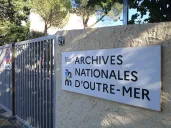
Of a Dega community in France there is no account at all. There is at least a document. The archive of the Paris Foreign Missions holds the papers of Jacques Dournes, the missionary who spent eight years among the Sre and thirteen among the Jarai, and its published finding aid lists, at shelfmark 3740/051(2), an item titled “Montagnards France. 1981” — a printed list of members of the diaspora of Vietnam’s ethnic minorities present in France. Next to it, at 3740/051(1), is a typescript letter from Vietnam about the oppression of the minorities, dated 1975. The same collection holds his papers from the minority-rights groups he worked with at the end of the 1970s.
We have not read the list. It is a physical item in Paris and only the finding aid is online. We do not know how many names are on it, whether any of them are ours rather than Cham or another minority, or who compiled it. What it establishes is that in 1981 somebody in France thought there were enough highlanders there to be worth writing down, and we give the shelfmark so that a reader in Paris can go and look.
What did reach France is documented in one case, and he was not one of us. Po Dharma, born in Ninh Thuận in 1948, was a FULRO leader who was badly wounded in Cambodia in December 1970, left the army with Les Kosem’s permission, went to France, took a doctorate in 1986 and became the historian of Champa at the École française d’Extrême-Orient. He was never allowed back. He was Cham, and we say so, but he is the proof that people from FULRO reached France and built lives there. Of the 407 FULRO fighters and their families who came out of Mondulkiri in 1992, the published accounts say many were given asylum in the United States — many, not all, and nothing we found closes that word. See Mondulkiri, 1992 and The men of FULRO.
Y Bham Enuol and the other FULRO leaders took refuge in the French embassy in Phnom Penh in April 1975, before the Khmer Rouge took them away. We have found no record of what became of their families, in France or anywhere else. See Y Bham Enuol in Phnom Penh.
Thailand now, and the door that closed
In November 2025, Human Rights Watch published interviews with thirty-four Vietnamese refugees and asylum seekers in Bangkok, more than twenty of them Montagnard and Hmong, conducted between July and October. It recorded two raids in Nonthaburi: in February 2025, more than sixty of our people were taken, several of them recognized refugees; in October 2025, seventy, of whom forty-two had been determined by UNHCR to be refugees or were awaiting processing. It asked countries that have resettled Vietnamese refugees before — “such as Australia, Canada, Germany, and other European states” — to consider taking more of those at serious risk.
It gives no figure for how many have actually been resettled out of Thailand, to anywhere, and names no country that has taken any. We looked for such a figure and there is none.
The best population figure we have is nine years old: about 150 Montagnard families living in Bangkok in March 2017. In the same report the Thailand director of the Montagnard Assistance Project said where the hope lay then: “Given the current US administration, our hope is in Canada… the Montagnards remain a forgotten people.” Canada took none of them. Nine years later Human Rights Watch is asking Canada again.
And there is the case that joins the two halves of this page. Y Quynh Buondap, a recognized refugee who had been in Thailand for six years, was arrested in Bangkok in June 2024 after traveling into the city to attend an interview at the Canadian embassy. He was arrested on the way to his resettlement. Ottawa did not move: asked about its human-rights advocacy with Vietnam, Global Affairs Canada answered that “Canada’s comprehensive partnership with Vietnam includes co-operation on upholding international law, working together to facilitate trade, enhance economic co-operation and growing people-to-people ties.” On November 28, 2025, Thailand handed him to Vietnam. His case is on his own page.
Set the two sentences beside each other. In 2011 a UN spokeswoman in Phnom Penh: extremely grateful to Canada for opening its doors. In 2025 a Canadian department, about a man arrested on his way to a Canadian embassy: trade, economic co-operation, people-to-people ties.
Every organization we have is American
There is no Dega or Montagnard association in Canada, none in Europe, none in Australia. Every Dega organization we know of, our own included, is registered in the United States. Outside North Carolina there are Dega people; there is no Dega institution anywhere. That is worth saying because it explains part of the silence on this page: a family in Oulu or in Quebec City has nobody to be counted by.
Help us fill this page
If your family was resettled in Finland, in Canada, in Sweden, in the Philippines or anywhere other than the United States, we would like to record when you came, from which camp, and where families live now. We will not publish names or places without your agreement. The twenty-seven who landed at Oulu on May 11, 2005 and the fifty who landed at Quebec City in February 2011 are the two groups we most want to hear from. See Our organizations and Asylum today.
What we could not get
The two UNHCR features about the Finland group, of May 2005 and August 2006, exist and we could not read either; the agency’s site is closed to automated reading and no syndicated copy exists anywhere else we looked. They are a few minutes’ work for anyone with an ordinary browser and they are the single most valuable outstanding item for this page. We could not establish what happened to the thirteen sent to the Philippines, or find any Canadian account of the fifty who went to Quebec City, or corroborate the Sweden claim, or obtain a per-country breakdown of Human Rights Watch’s thirteen hundred.
A practical note on the links below: the two Cambodia Daily articles from 2005 return a server error on their bare addresses and load when any query string is appended. They are the two that carry the best material, and if they go we lose Y Kla’s sentence about his family.
Sources
- UN News, “Two dozen Vietnamese Montagnards go to Finland as refugees – UN,” May 11, 2005 — the 27 flying to Oulu as the first of 72 accepted, the second group due in June, the sentence about Sweden, and the note that Canada was by then also accepting us
- Finnish Immigration Service, quota refugee statistics — the selection mission to Thailand and Cambodia of January 23 to February 13, 2005, the footnote recording that 75 Vietnamese quota refugees were selected from Cambodia against the unused 2004 quota, and the fact that the tables record nationality and not ethnicity
- The Cambodia Daily, Lee Berthiaume, “Refugee Group Leaves for New Future in Canada,” June 23, 2005 — the eight, the IOM bags, the UNHCR officer’s statement that Finland came before Canada, Vancouver as the first Montagnard population there, and the words of Y Kla and Dieu Lanh. And Wency Leung, “Montagnards Struggle With New Life in Canada,” September 6, 2005 — Welcome House, the Immigrant Services Society of British Columbia, the Vietnamese Alliance Church as sponsor, the house on Bonaccord Drive and the support rates. We could not obtain the second article in full and have marked what rests on it
- The Cambodia Daily, Simon Marks, “Montagnards Risk Harsh Treatment After UN Center Closes,” February 5, 2011, and Phann Ana, “25 Montagnards Leave Cambodia for Canada,” February 9, 2011 — the two flights to Quebec City, Kitty McKinsey’s words, the one-to-six years in the center, the 33 women and 17 men, the oldest at 67, the two babies, the English and computer lessons, and the breakdown of the remaining twenty-five
- The Cambodia Daily, George Wright, January 21, 2016 and May 26, 2016 — the thirteen, the transfer to the Philippines as transition rather than destination, and the death in Phnom Penh the month before
- Institut de Recherche France-Asie, finding aid to the Fonds Jacques Dournes, 01D02/3740 — item 3740/051(2), “Montagnards France. 1981”, a printed list of the diaspora of Vietnam’s ethnic minorities present in France; and item 3740/051(1), a 1975 typescript letter on the oppression of the minorities. Neither has been read
- Human Rights Watch, “Thailand: Vietnamese Refugees at Risk from Hanoi,” November 13, 2025 — the thirty-four interviews, the two Nonthaburi raids and their numbers, and the appeal to Australia, Canada, Germany and other European states. And No Sanctuary (2006) — the approximately 1,300 resettled abroad since 2001, for which the report gives no country breakdown
- Human Rights Watch, World Report 2026: Thailand — the return of Y Quynh Buondap on November 28, 2025; and Repression of Montagnards, chapter III (2002) — the French embassy in Phnom Penh, 1975
- Athena Tacet, “Montagnards: Escaping Vietnam, stateless in Thailand,” Al Jazeera, March 24, 2017 — the 150 families in Bangkok, and Grace Bui on Canada and on being a forgotten people
- The Globe and Mail, “Vietnamese activist fights extradition from Thailand amid fading hopes Canada will intervene” — the arrest in Bangkok after traveling to the Canadian embassy interview, and the statement from Global Affairs Canada. Two companion reports, on the arrest and on the extradition order, cover the same case
- Radio Free Asia, on Y Quynh Buondap and Canada, January 10, 2025
- Feng Hou, “The resettlement of Vietnamese refugees across Canada over three decades,” WIDER Working Paper 2017/188 — checked and found to contain no mention of Montagnards, Degar, or any of our peoples, and to cover the 1979–80 cohort only. We cite it for what is not in it
- Not read, and worth reading: UNHCR, “Montagnards find peace and new homeland in Finland” (August 2006) and “Vietnamese Montagnards head to Finland for resettlement” (May 2005). Both are on the agency’s own site, which is closed to automated reading, and neither appears anywhere else
Compiled September 2026. Canada, Finland and UNHCR all count refugees by country of origin and not by people, and the limit that puts on every figure here is set out above. Where a source and an account in circulation disagree, the source wins.