

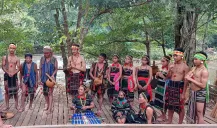
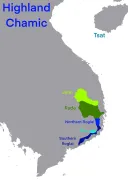
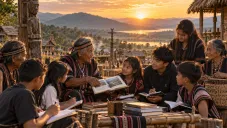
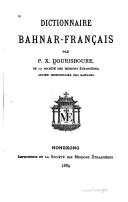

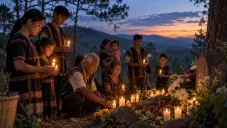

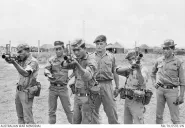
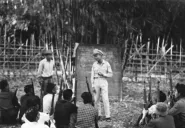
Every photograph in this library has a source and a license, and we credit each one. This page lists where pictures of the highlands and of our peoples can be found, which of them may be reused and on what terms, what the licenses mean, and how we credit what we use, so that families, teachers and writers can do the same. It ends with what matters more than any license: the safety and dignity of the people in the pictures.
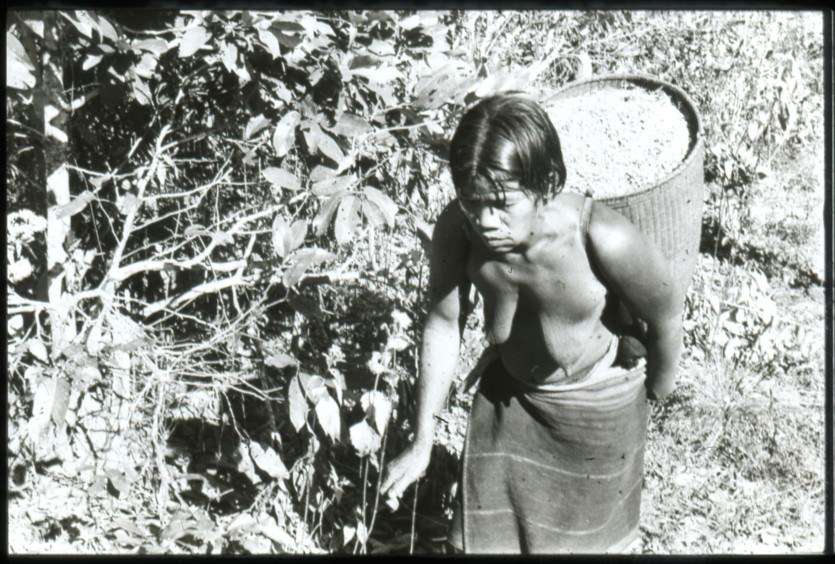

Where to look
The collections below are the ones we use most. Their terms differ a great deal, from “use freely” to “look but do not copy”, and a picture being online says nothing about which it is.
- Wikimedia Commons
- The largest free collection, with photographs, scans and maps from many contributors, old and new. Start with the categories Degar people, Montagnards, E De people, Jarai, Bahnar people, Mnong people, Central Highlands (Vietnam) and FULRO. Every file states its license on its own page, and that page is the one to cite. Check it rather than trusting the label alone: the photographs of Emperor Bao Dai’s visit to Darlac in 1933, for example, are marked public domain on Commons, but some carry a copyright mark from the collection they were scanned from, the Flickr account they were copied from has closed, and we have not been able to establish when their photographer died. The category Dak Son Massacre contains graphic photographs of the dead.
- US National Archives
- The Army’s color photographs of Vietnam, 1963–73 (series 111-CCV, about 18,000 images), the Signal Corps photographs (111-SC), the Marine Corps photographs (127-GVB and 127-GVC), the US Information Agency files (306-PS) and the Air Force photographs (342-B), with films and maps. Work made by federal employees on duty is not under copyright, and the Archives says copies may generally be published without permission or fees, but it also warns that a small share of its holdings are under copyright and that it does not confirm the status of any photograph. Check the “use restrictions” field of each catalog record, and credit the photograph by its number.
- Marine Corps History Division, on Flickr
- Marine Corps photographs and the donated collections of Marines and war correspondents, including the Bru country of Quang Tri and the highlands around Pleiku. The photo pages carry a CC BY 2.0 license. The archive asks that every use credit the Marine Corps or the photographer, and it warns that donated collections may carry other restrictions.
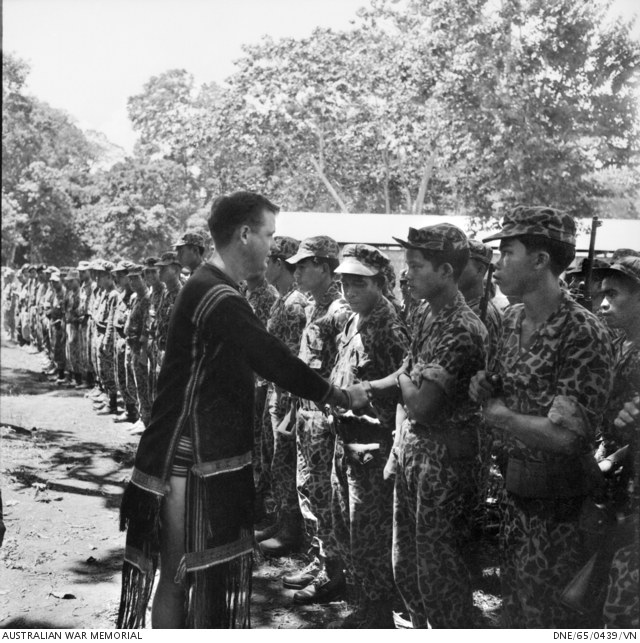
- Australian War Memorial
- Photographs of the Australian advisors who served with highland units, among them the Truong Son Force at Dam San. Most items are marked “Copyright expired – public domain” and may be reproduced without permission, but not all: some are marked “status to be assessed”. Check each item and give its accession number.
- Texas Tech University, Virtual Vietnam Archive
- About seven million pages of documents, photographs, oral histories and film. Items are the archive’s copyright unless stated otherwise, and may be used for educational and noncommercial purposes with credit to the Vietnam Center and Sam Johnson Vietnam Archive. To publish an item, you must sign the archive’s request-to-publish agreement and use the credit line it supplies.
- Smithsonian Institution
- The National Anthropological Archives hold sixteen prints by Gerald Hickey of Jarai, Jeh and Stieng people in the 1960s (Photo Lot 73-34), including the Jarai “King of Fire”; ask the archive for terms. The Smithsonian’s Open Access items, which are marked CC0, may be reused freely.
- University of Nebraska–Lincoln
- The journalist Beverly Deepe Keever’s photographs of highland villages, strategic hamlets and the An Lac airlift of 1962–63. They are for educational use only: link to them, but do not copy them.
- French archives
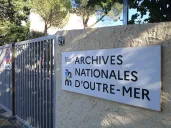
- The Archives nationales d’outre-mer in Aix-en-Provence hold more than 140,000 pictures from the colonies, and allow free reuse, even commercial, with a credit giving the archive and the document’s reference, though photographers’ own rights may still apply. Gallica, the digital library of the Bibliothèque nationale de France, allows free noncommercial reuse with the credit “Source gallica.bnf.fr / BnF”. The French army’s image archive, the ECPAD, holds some 100,000 photographs of Indochina from 1945 to 1956, including reports from the highlands, but its downloads are for private use only; publishing needs its permission and a fee. The École française d’Extrême-Orient and the Musée du quai Branly have large collections that are not open for reuse without a request.
- Internet Archive and HathiTrust
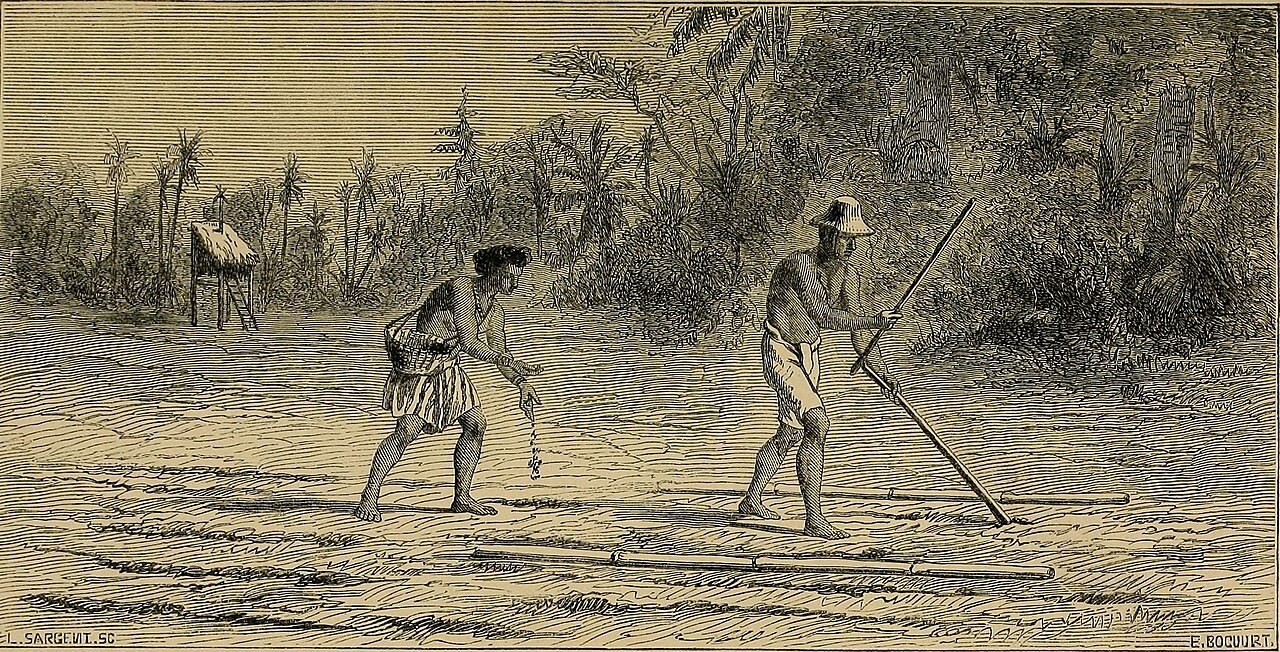
- Scanned books and reports, many with photographs, drawings and maps: the travelers’ accounts of the nineteenth century, the French expeditions, and the US Army’s Minority Groups in the Republic of Vietnam of 1966, whose drawings we use often (it is in our library). HathiTrust asks that books scanned by Google not be re-hosted or used commercially, even when they are in the public domain.
More archives, including collections of documents, are on Archives and collections.
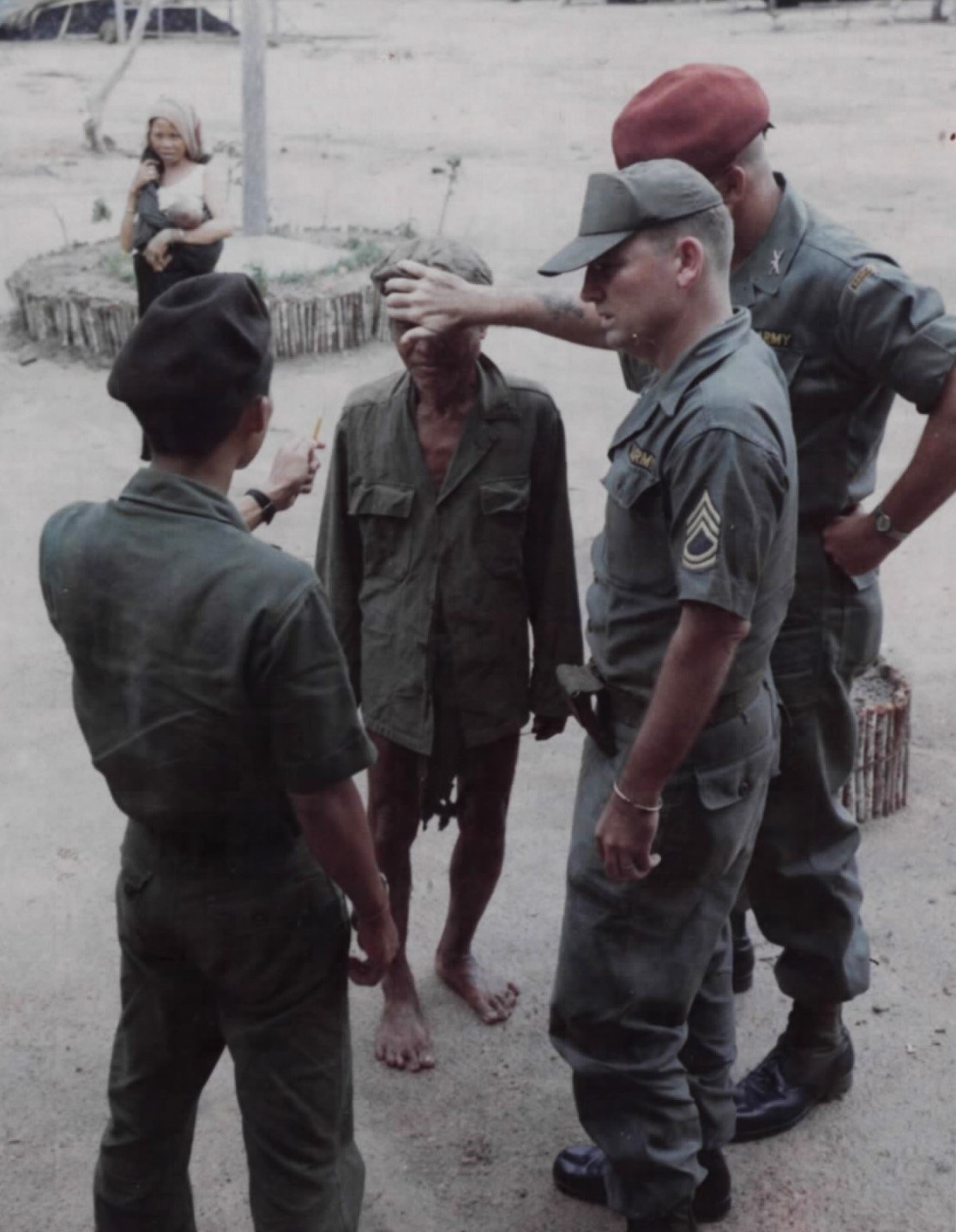

What the licenses mean
- Public domain
- No copyright, because it has expired or never existed. You may use the picture freely. We still say where it came from.
- Public Domain Mark
- A label, used by the Australian War Memorial among others, saying that the picture has been identified as free of known copyright. It is a statement about the picture, not a promise, and it may not hold in every country.
- CC0
- The owner has given up all rights, as far as the law allows. Use it freely; credit is courteous. It does not give up other people’s rights, such as the privacy of a person in the picture.
- CC BY
- Use it freely, but you must credit the author, link to the license, and say if you changed the picture.
- CC BY-SA
- As CC BY, and if you change the picture and publish the result, you must share it under the same license.
- GFDL
- An older free license. Credit the author and include or link the license, following the instructions on the file’s page.
- No known copyright restrictions
- The label used by the institutions in Flickr Commons. It can mean that copyright has expired, or that the institution owns it and chooses not to enforce it. The institution gives no guarantee.
- Educational or noncommercial use only
- You may use the picture in teaching or on a noncommercial page with credit, but not sell it or publish it in a book without asking. Read each archive’s own terms.
- All rights reserved
- Do not use it without the owner’s written permission. Most news photographs are in this class, even when they are easy to find online.
The law, in brief
- United States. Work made by a federal employee as part of the job has no copyright. That does not cover a photograph a soldier took privately, off duty, or a report written by a contractor. The Army’s 1966 handbook on the highland peoples, for example, was written under contract by a research center at American University; it is treated as out of copyright for other reasons.
- France. Copyright lasts for the author’s life and seventy years after. A photograph taken in the highlands in 1950 by an army photographer who died in 1990 is protected until the end of 2060.
- Vietnam. Photographs are protected for 75 years from first publication. A photograph published in 1975 is protected until about 2050.
- Everywhere. A picture in the public domain in the United States may still be protected in another country, and the reverse.

How we credit
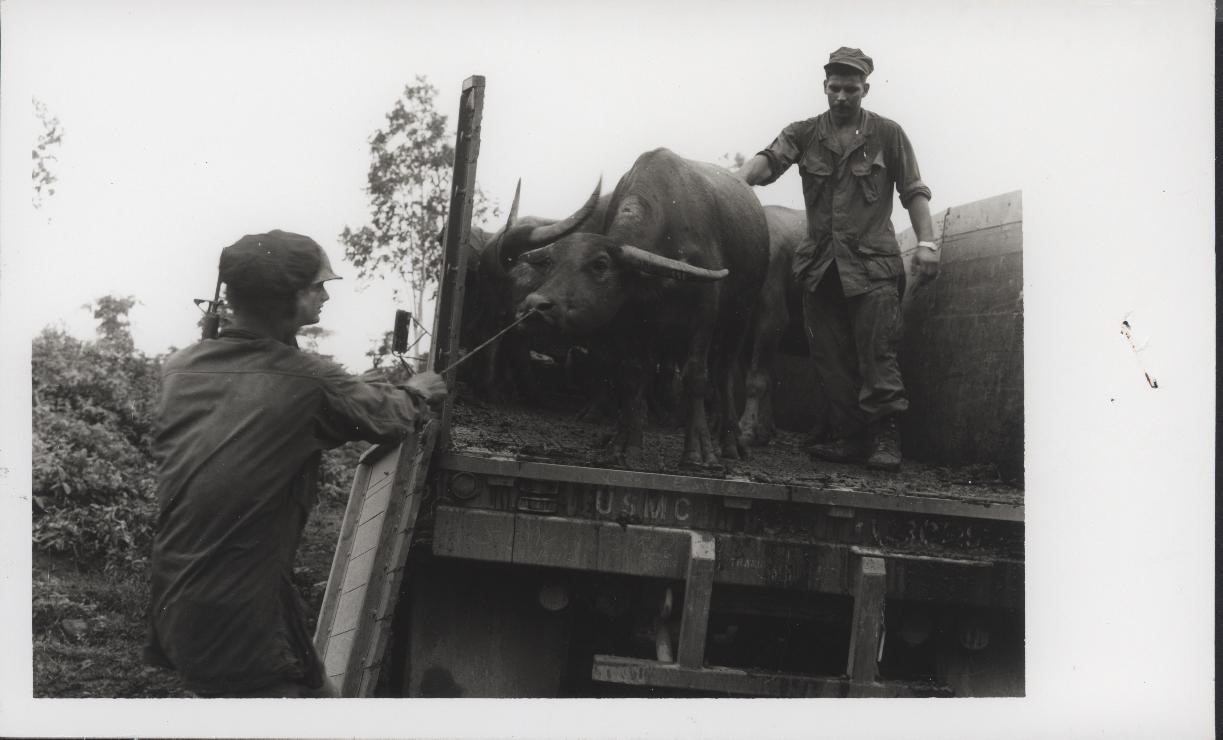
Under every photograph we give what it shows, when and where if known, the photographer, the collection and the reference number, where we found it, and the license, with a link to the page the file came from. The same four things, in shorter form, are what Creative Commons recommends: the title, the author, the source and the license. For example:
.jpg)
The caption says what happened and to whom; the credit says who took it, where it is kept, and on what terms we use it. When a caption says less than we would like, as when an archive recorded the name of the American in a photograph and not the name of the highlander, we say so rather than guess.
Where we use an illustration rather than a photograph, its caption ends with the word “Illustration”, so that no one mistakes it for a record of a real event.
Before you share a photograph
- Know where it came from. A picture found on social media is usually under full copyright, with no license to reuse it and often no known author. Do not publish it as evidence unless you know who took it, when and where.
- Faces put people at risk. Do not publish a recognizable face of anyone in the highlands, or of their family, without their consent. See Reporting safely. No license, not even CC0, gives away the rights of the people in a picture.
- Think before showing the dead. Photographs of people killed, including children, exist on public sites. We do not reproduce them, and we ask others not to.
- Keep the original file. Copies lose the information about when and where a photograph was taken, and a photograph meant as evidence must be kept untouched. See How to document an incident.
The people in the pictures
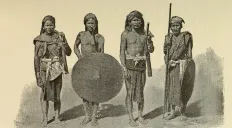
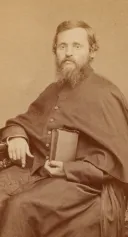
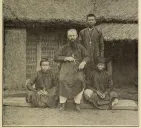
Most old photographs of our peoples were taken by outsiders: colonial officers, missionaries, soldiers, journalists, anthropologists. Their captions often name the photographer and not the subject, and some use words for us that we would not use. Even the US Army’s handbook of 1966 advised its soldiers not to photograph highlanders until they were sure it would not offend them. When we use these pictures we try to say who the people were, where we can, and to describe them in our own words.
Indigenous archives elsewhere have begun to mark their collections with simple labels, drawn up with the communities concerned, that say who the material belongs to and how it may be shared: “family”, “community use only”, “culturally sensitive”. The Local Contexts project provides them free. They are not licenses, but they record the protocols that a license cannot.
,_Cambodia,_and_Laos_-_during_the_years_1858,_1859,_and_1860_(1864)_(14596335258).jpg)
Your own photographs
Old family photographs of weddings, villages, the camps and the first years in America are often the only record of what they show. Keep the originals dry and out of the light, scan or photograph them, and write down on a separate sheet who is in each picture, where, when, and who took it, while someone who knows is still alive. How to record an elder’s story explains how to do this alongside a recorded interview. If you would like your photographs kept in this library, contact us; we will credit them as you wish and will not publish a face without consent.
Sources
- Creative Commons, legal codes of CC BY 4.0, CC BY 2.0 and CC BY-SA 4.0; CC0 1.0 and Public Domain Mark 1.0 deeds; “Recommended practices for attribution”
- 17 U.S.C. §§ 101 and 105; French Code de la propriété intellectuelle, articles L123-1 and L123-3; Vietnam, Law on Intellectual Property No. 50/2005/QH11, article 27
- US National Archives, Reference Information Paper 90, part 4; “Permissions and copyright”; “Searching the National Archives Catalog for Still Photographs” (April 21, 2020)
- Marine Corps History Division, Archives Branch, Flickr profile and photo pages
- Australian War Memorial, copyright page and item records
- Texas Tech University, Virtual Vietnam Archive, copyright and reproductions pages
- Smithsonian Institution, Open Access FAQ; National Anthropological Archives, Photo Lot 73-34
- University of Nebraska–Lincoln, Archives & Special Collections, Beverly Deepe Keever papers
- Archives nationales d’outre-mer, “Les fonds iconographiques” and “La réutilisation des archives”; Bibliothèque nationale de France, commercial reuse; ECPAD, Indochina collection, FAQ and conditions of use; École française d’Extrême-Orient, photothèque; Musée du quai Branly, terms of online use
- HathiTrust, access and use policy; Flickr Commons, usage
- Local Contexts, Traditional Knowledge Labels and Notices
- Minority Groups in the Republic of Vietnam (US Army, 1966), in our library — the advice on photographing
Compiled September 2026. Archives change their terms; check the page of each item before reusing it.