



Sixty-one thousand of our men fought beside the Americans between 1961 and 1975, by the count the United States Senate itself uses. The United States brought some of the survivors to North Carolina in 1986 and 1992 because of that service, and has twice passed resolutions honoring it. It has never counted one of them as a veteran. This page sets out what the record shows: the men, the Americans who stood by them, what Congress has said, and the gap between honoring and recognizing that remains open.
.jpg)
The alliance
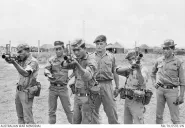
From 1961 the villages of Darlac were armed and trained by the Central Intelligence Agency and US Army Special Forces, and the program grew into the Civilian Irregular Defense Group and the Mobile Strike Forces. The story of the fighting is on Mike Force and SOG and The American years; this page is about what became of the men.
The figures the United States Senate adopted in 2023 are the best short summary of the scale. The resolution records “an estimated 61,000 Montagnards, out of an estimated population of 1,000,000, fought alongside the United States and the Army of the Republic of Vietnam (ARVN) forces”; that “an estimated 43,000 Montagnards were organized into ‘Civilian Irregular Defense Groups’”; that at its peak the program had “approximately 50 operational bases, with each base containing a contingent of two United States Army officers and ten enlisted men”; that “another 18,000 Montagnards were reportedly enlisted into mobile strike forces”; and that “the lives of thousands of members of the United States Armed Forces were saved as a result of the heroic actions of the Montagnards.”
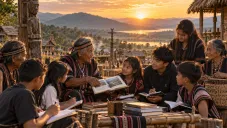
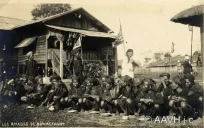
The bond was personal. Twelve Americans lived in a camp with several hundred of our men, ate with them, learned some of their language, and depended on them to stay alive. The Encyclopedia of North Carolina puts it plainly: the Green Berets “often bonded with the Montagnard militia, who were regarded as courageous fighters and fiercely loyal friends.” Many of those Americans came home to Fort Bragg. That is why this story ends in North Carolina.
What service cost after 1975
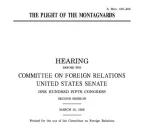
When the war ended, the men who had worn American uniforms were the first people the new state came for. Y Hin Nie, who had served with the Special Forces and later led the Montagnard Dega Association in Greensboro, told the United States Senate in 1998:
“During the Vietnam War, many of us were compatriots with U.S. Army groups. Our association with the Special Forces was evidence of the Montagnards’ status as traitors to the post-1975 Communist Government of Vietnam.”
They went to the camps or to the forest; see Re-education and the forest and The men of FULRO. John F. Sommer Jr., who had been a medic with the 4th Infantry Division in the highlands in 1968 and spoke for the American Legion at the same hearing, said what the men in the forest had been waiting for:
“Many of the Montagnards held out some degree of hope at the time of the total U.S. withdrawal from South Vietnam in 1975, that their American allies would be returning to the Highlands to rejoin them. That was not to be.”
And what he thought his country owed them: “In 1961, when we approached them to serve with us, they had not been involved in the fray. But we recruited them, we trained them, we armed them, and then in 1975, we left them twisting in the wind.”
Coming to North Carolina

The men who came out of the forest came out as soldiers, and it was as soldiers that the United States took them. The State Department’s account to the Senate in 1998, in the words of Assistant Secretary Julia Taft, is the official record:
- 1986. “In 1985, a group of 201 Montagnards made their way to the Thai-Cambodian border following ten years’ of resistance activities based in the jungles of Cambodia”; they were resettled in North Carolina in November 1986. When their plane landed in Greensboro at the end of that November, United Press International reported, it “was greeted by 200 Americans — many of them Green Berets who fought with the fierce mountain warriors 20 years ago.” One of them, John Amundson, told the reporter: “As far as I’m concerned, these people are POWs just returning from the war.” The public radio station WUNC, looking back in 2015, said they were “granted refugee status in recognition of their support to the U.S. Special Forces during the Vietnam War.”
- 1992. A group of 398, found by United Nations peacekeepers in Mondulkiri in September 1992, was “quickly processed and moved to the United States,” and “also resettled in North Carolina”; see Mondulkiri, 1992.
- Why there. “These Montagnards were resettled in North Carolina because of the intense interest of North Carolina communities, led by Vietnam veterans in the area, in resettling the Montagnards.”
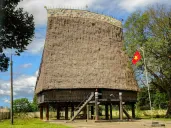
The veterans who did that founded Save the Montagnard People in 1986, the year the first group arrived. The organization says many of its members were Special Forces soldiers who “lived with and led the Montagnard hill tribes.” It keeps land near Asheboro, North Carolina, with a Rhade longhouse and a cemetery for our people. The community that grew from those arrivals is on North Carolina.
Remembered
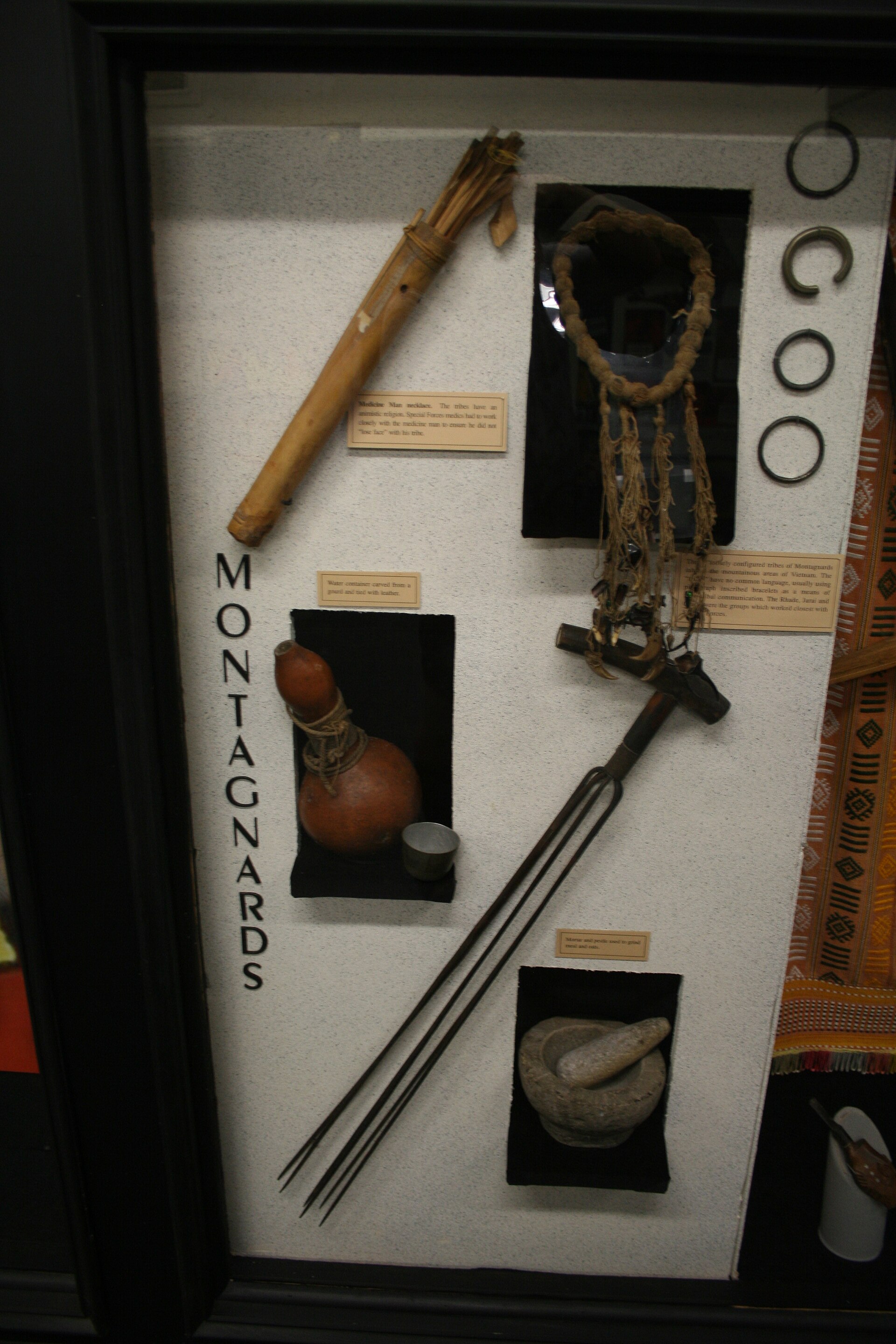
The Airborne and Special Operations Museum in Fayetteville, beside Fort Bragg, holds our objects among the Army’s: crossbows, bracelets, knives, the things a Green Beret brought home from a camp. It showed an exhibition, Warrior Bonds: U.S. Army Special Forces and Montagnards in Vietnam, until February 2026. The bracelet itself, the one American soldiers wore as a sign of friendship, is on The bracelet. When the medic Gary Rose received the Medal of Honor in 2017 for a mission in Laos in 1970, NPR’s account recorded that his team flew in “with their Vietnamese allies, called the Montagnards.” The men who flew with him had no medals to receive.
What the Senate has said
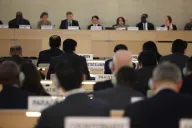
Twice the United States Senate has put the alliance on the record. On February 4, 2016, Senators Richard Burr and Thom Tillis of North Carolina introduced S. Res. 362; on October 4, 2023, Senators Tillis and Ted Budd introduced S. Res. 395, “Recognizing the contributions of the Montagnard indigenous tribespeople of the Central Highlands of Vietnam to the United States Armed Forces during the Vietnam War, and condemning the ongoing violation of human rights by the Government of the Socialist Republic of Vietnam.” The 2023 resolution states that after the war “the United States Government resettled large numbers of Montagnards, mostly in North Carolina,” and that “an estimated several thousand Montagnards currently reside in North Carolina.” It “recognizes the contributions of the Montagnards who fought loyally and bravely with United States Armed Forces during the Vietnam War” and “urges the President and Congress to develop policies that support Montagnards and other marginalized ethnic minority and indigenous populations in Vietnam.”
A resolution is a statement, not a law. It carries no benefit, no status and no burial right. What it does carry is the United States’ own figures and its own words, and they are the ones we quote on this page.
Not counted as veterans
American veterans’ benefits depend on “active service,” and the federal regulation that lists the groups “considered to have performed active military, naval, air, or space service,” 38 CFR § 3.7, does not include the highland irregulars of Vietnam. A man who commanded a company of the Mobile Strike Force for six years, and spent the next ten in the forest and the next thirty in Greensboro, is in law a refugee who became a citizen, and nothing else.
The United States has shown that it can do otherwise. The Hmong Veterans’ Service Recognition Act, enacted on March 23, 2018 as part of that year’s appropriations law, gave burial in a national cemetery run by the Department of Veterans Affairs, though not Arlington, to citizens and permanent residents who had “served honorably with a special guerrilla unit or irregular forces operating from a base in Laos in support of the Armed Forces” between February 28, 1961 and May 7, 1975, for deaths on or after the day it was signed. The Department of Veterans Affairs estimated that between 6,900 and 9,700 people might be eligible. It is a modest right: a grave among American soldiers. But it is a right, and the men of the Special Forces camps in the Central Highlands, who served the same years in the same war, do not have it. The law says Laos; it does not say Vietnam.
We are not aware of any bill in Congress that would extend that right, or any other recognition, to our veterans. If one exists, or is being drafted, we would like to know.
The roll
The men of 1986 were soldiers in 1975 and are old men now. Each year fewer of them are left, and each one who dies takes with him a service record that exists nowhere else, because the camps kept no rolls and the ones the Americans kept were mostly lost or destroyed. We are collecting the names, units, camps and years of our veterans, and the dates of those who have died, for a roll of honor. Their families in North Carolina hold the photographs, the bracelets, the discharge papers and the letters from the Americans they served with. If you hold any of it, please read How to record an elder and Documenting an incident, and contact us.
See also: The bracelet, Mike Force and SOG, North Carolina, What Washington has said.
Sources
- US Senate, S. Res. 395, 118th Congress, introduced October 4, 2023; and S. Res. 362, 114th Congress, February 4, 2016 — the figures of 61,000, 43,000 and 18,000 and the quoted clauses
- US Senate, Committee on Foreign Relations, The Plight of the Montagnards, March 10, 1998 (S. Hrg. 105–465), DCHO library — the statements of Y Hin Nie, John F. Sommer Jr. and Julia V. Taft
- Surry Roberts, “Montagnards,” Encyclopedia of North Carolina (2006), via NCpedia
- WUNC, “This is my home now,” April 14, 2015
- Save the Montagnard People — the organization’s own account of itself
- Airborne and Special Operations Museum Foundation, Warrior Bonds exhibition
- NPR, “Medal of Honor awarded to Army medic,” October 23, 2017
- 38 CFR § 3.7; 38 U.S.C. § 2402(a)(10), as added by the Hmong Veterans’ Service Recognition Act (Consolidated Appropriations Act, 2018, signed March 23, 2018); and the Department of Veterans Affairs’ burial-eligibility guidance for Hmong and Lao veterans
- United Press International, “Soldiers aid resettlement of Montagnard warriors,” November 26, 1986
- Human Rights Watch, Repression of Montagnards (2002), chapter III
Compiled September 2026. This page describes the law as we understand it and is not legal advice.