




In 1966 the United States Army published a handbook that told its own personnel, in one identical line repeated for nineteen of our peoples, to stay away from our women. The same book recorded that in Darlac six or seven of every ten of our babies died before their first birthday, and that Rhade law puts the land in the women’s keeping. A year later the Army’s review of its own counterinsurgency work in the highlands mentioned Montagnards forty-three times and women not once. That is the shape of this page: our women are all through the ethnography and almost entirely absent from the record of the war itself.

What the war was taking from
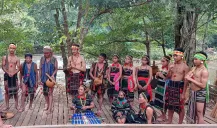
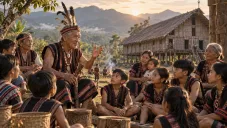
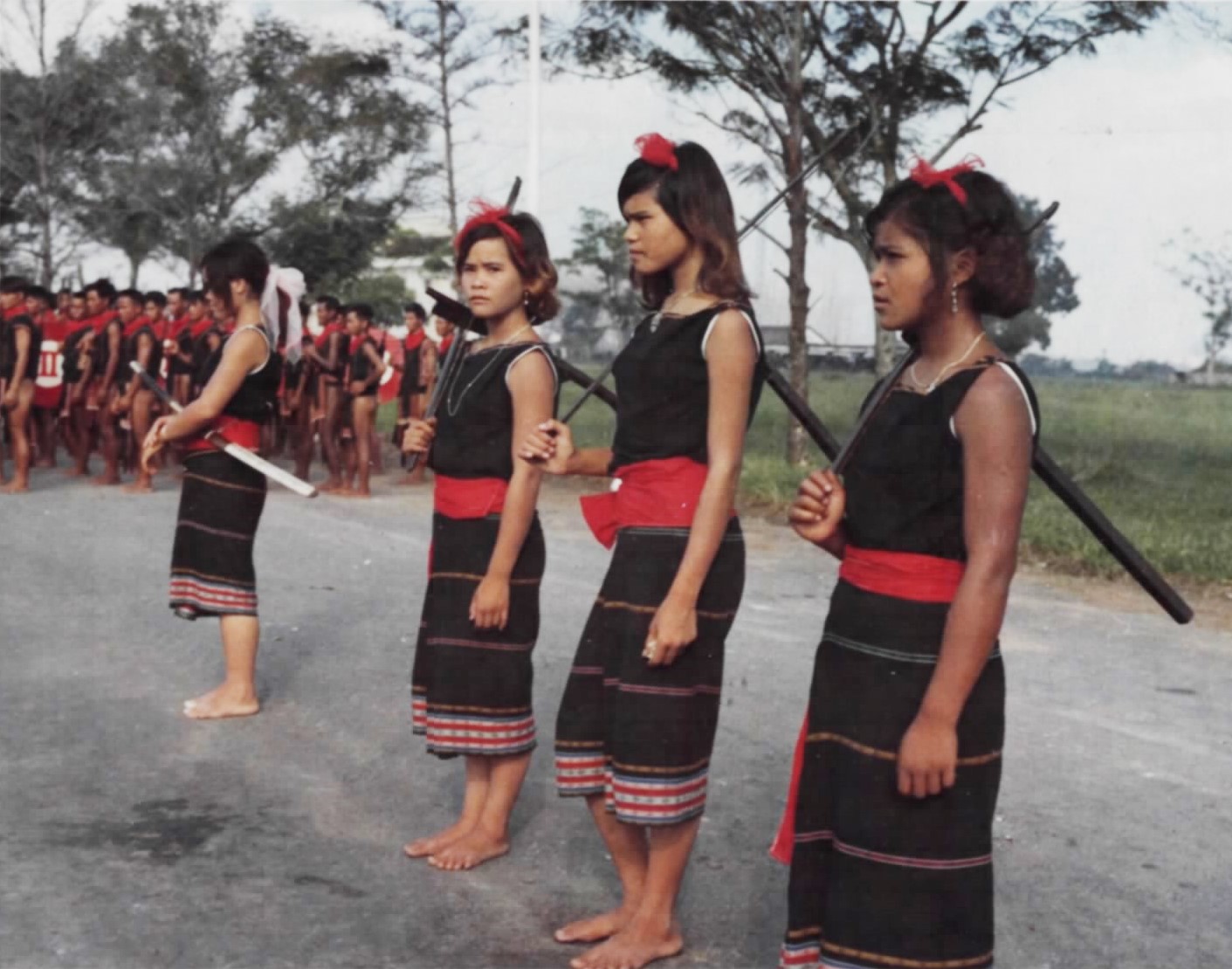
Among the Rhade, the Jarai and the Mnong the important property belongs to the women. They own the longhouses, the harvests, the domestic animals, the gongs and the jars, and they hold title to the land; children take their mother’s clan name; the eldest woman of the senior line is po lan, proprietor of the land. The men who hold office, one American account observed of the Rhade, are less leaders in their own right than instruments of the women.
The law itself says so, and it says it in our own idiom. Rhade traditional law, the 1966 handbook records, states that the women must keep watch over and preserve the land, that “the land must never be like a horse without a master, like oxen without a guard,” and that nobody owns the land, the water or the woods — “nobody can lay hands on them, nobody can appropriate them.” See Customary law and the village court and Dega women.
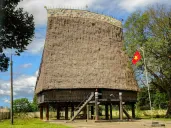
That is the thing the war was working on. Every relocation moved a household out of a longhouse the women owned and off land held in the female line, and put it in a single-family house. The same handbook noticed the loss without following it through: a man moved to a small house in a resettlement program misses the sociability and the security of the longhouse and takes the first chance to go back to it. Nobody wrote down what it did to the women whose house it was.
The widow
In March 1966 a United States Senate report described who was in the refugee sites: mostly children, women and older persons, with few men between sixteen and forty. In the same year, the Army handbook described what a widow’s life in a highland village was. Of the Hre it says that a married woman is the most respected female, while a widow is almost completely ignored; that remarriage is difficult though necessary; and that a widow often has no help farming her ricefields.
The customary provisions differ by people. A Koho widow takes the jars and the other valuables. A Stieng widow is compelled to marry her dead husband’s brother. Among one people a widow may not remarry until the tomb has been wholly abandoned; among another she must sacrifice a pig at the grave if she remarries within nine to twelve months. Among another again it is bad luck to meet a widow when setting out to hunt.
The United States wrote both of those documents in the same year: one saying that the war was producing widows on a large scale, the other describing what our villages did with a widow. It never put them side by side. We have found no figure of any kind — not one, for any year between 1954 and 1975 — for highland widowhood, for female-headed households, or for the sex ratio in a refugee settlement.
Six or seven in ten
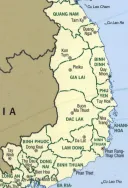
The handbook gives one number for our children, and it is the only highland-specific one we have found for the war years. In the Darlac region, it says, the average mortality of infants under one year is 60 to 70 percent, and a further 10 to 15 percent of children between one and five die. Malaria kills the most. It gives no source and no method, and we print it with that said — but it is a United States government figure for the heartland of the American program in the highlands, and if it is even half right it describes a catastrophe nobody treated as one.
The woman who was there at every birth was a village woman. Among the Bahnar a midwife assists and blows into the newborn’s ear. Among the Halang the village matrons act as midwives and the mother gives birth sitting. Among the Jarai the pregnant woman’s house is closed to everyone but the old village midwife, who combines physical care with incantations and stays three days. Among the Koho she is called the mo boai, and a second may be sent for if the labor is hard. Among the Rhade the midwife does not see the woman again between the diagnosis and the birth, and it is she who names the child.
That arrangement depended entirely on the village holding together. Every relocation broke it, and no source we have found follows what happened next.
The handbook gives one further reason our women did not reach a clinic, and it is the Army’s reason rather than ours. We print it as a briefing book explaining our women to American personnel, and not as a finding: Rhade women are very modest, and it takes great courage for them to call for medical aid; it is hard for a Rhade woman to lift a skirt in front of a man, and the most ordinary obstetric practice frightens her. That is the documentary reason the mission hospitals trained highland women as nurses and midwives instead of relying on outsiders — the work of Minh Quý and the Ban Me Thuot leprosarium is on Missions and doctors.
Eight girls
In 1967 an American report noted that the Asia Foundation, recognizing the need, had granted scholarships to eight highland girls to study home economics at a school in Saigon. Eight, out of a highland population then put at about a million. That is the whole of what we have found on the schooling of our girls during the war. See Schools, language and the university gap.
Three women who went to Cambodia
One account survives of our women inside FULRO. A Rhade girl called H’li Nie Hrah, sister of the Protestant minister Y Ham Nie Hrah, had met Kok Ksor while they were at school in Buon Ma Thuot. When she turned eighteen she decided to go to Cambodia and find him. She and two other young women whose men were also there made the journey with guides handing them on stage by stage, and she arrived at a secret FULRO camp deep in the northeast of the country on an elephant. They married the next day, and he left again immediately for his recruiting work. She got out of Phnom Penh before the city fell, on a flight that had to turn back for a repair, so that the papers reached the aircraft only at the last moment.
That account comes from her family, which is the best place it could come from, because nobody else was on the road with her. It is also the only narrative of a Dega woman in the FULRO story that anyone has written down — not because the others left no trace, but because nobody has yet sat down with them. How many women were in those camps, what work they did, how many children were born there and how many died: all of that is still inside living memory and none of it is on paper. The account above exists because one family told it. See How to record an elder.
The line repeated nineteen times
The 1966 handbook gives each of our peoples a numbered section called “Place of Men, Women, and Children in the Society.” The Army’s ethnographers were required to describe our women. And in each chapter, under advice for personnel, the same sentence appears with the name changed: outsiders should not get involved with Bahnar women, with Bru women, with Cua women, Halang, Hre, Hroi, Jarai, Jeh, Katu, Koho, Ma, Mnong, Muong, Raglai, Rengao, Rhade, Sedang, Stieng — and Cham. Six of them add the reason: this could create distrust and dissension.
Read it for what it is. It records what the Army expected to happen and what it was protecting, which was the trust of the village, not the safety of the women. It records nothing whatever about what did happen.
On that, we must be blunt. We have found no documented, attributable incident of sexual violence against a Dega woman between 1954 and 1975 in any source we could reach. Not one. The strongest thing in the declassified record is not sexual: in 1966 the CIA’s own review of the highlands recorded an allegation that Vietnamese troops had slaughtered highlanders’ buffalo indiscriminately and had even shot at highland women for sport, wounding at least one seriously. The phrase “for sport” is the assessment of the United States’ own intelligence service, and the same document returns no match at all for the word rape.
Our own law had provisions. Rhade law deals with rape in several articles; where the girl is under the age of puberty the blood price is exacted, and in other cases the penalty turns on whether the woman is the wife or daughter of a poor man or a rich one.
The absence in the published record is an absence of asking. The places it would be, if it is anywhere, are the American inspector-general files and war-crimes working-group records in the national archives, courts-martial records, the Senate refugee hearings, missionary field correspondence, and the asylum statements filed in North Carolina after 1986. We have not been able to reach any of them.
What the economist left out
In 1967 the man who wrote the standard study of highland economic development used the word “women” eight times in the whole document — cutting brush, following the men to plant seed, weeding, weaving. He referred to markets fifteen times and never named a woman trader. The word midwife does not appear in it at all. Our women owned the harvest, the animals, the jars and the land, and the economist of the highlands wrote them out of the highland economy.
What they did do is in the ethnography: the same light loom across the whole plateau, several pieces of wood and four sets of threads, weaving coarse bright cotton and ramie; China grass grown in the garden and woven into the family’s clothes; their own dyes. The loom is made of loose sticks, which is to say it travels. What our women carried when a village was moved, nobody wrote down.
What we have not found
No figures on widowhood, female-headed households or displacement by sex, for any year. No camp-level data on maternal or infant mortality, rations or obstetric care at any named highland settlement. No description of a refugee camp from a woman’s point of view. Nothing usable on highland women in the People’s Army or the National Liberation Front — the Western scholarship on women in the revolution is about Kinh women. No highland woman decorated, executed or imprisoned in these years. Nothing on what the war did to marriage payments. And, above all, almost no Dega woman speaking in her own voice.
One book exists that would change this page: the memoir of H’Yoanh Buonya, a Jarai woman from near Cheo Reo who fled in 1975 at sixteen and reached North Carolina in November 1986 — eleven years in the forest and the camps. We have not been able to read it, and we will not quote it until we have. Beyond that, the women who lived these years are alive. See How to record an elder.
Sources
- Joann L. Schrock and others, Minority Groups in the Republic of Vietnam, Department of the Army Pamphlet 550-105 (1966) — the infant mortality in Darlac at page 693; Rhade law on the women and the land at 717; the widow among the Hre at 190; the modesty of Rhade women and medical aid at 684; the midwives of each people; the loom; the longhouse and resettlement; the Rhade law on rape at 689; and the instruction about outsiders and our women, which appears twenty times in the volume
- Gerald C. Hickey, The Major Ethnic Groups of the South Vietnamese Highlands, RAND RM-4041 (1964) — the women’s property rights, the ownership of houses, animals, gongs, jars and land, and the po lan
- Gerald C. Hickey, The Highland People of South Vietnam: Social and Economic Development, RAND RM-5281 (1967) — the eight scholarships at page 69, and the eight mentions of women in the whole report
- CIA, The Highlanders of South Vietnam: A Review of Political Developments and Forces (June 1966) — the allegation that Vietnamese troops shot at highland women for sport
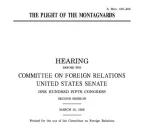
- US Senate, Subcommittee to Investigate Problems Connected with Refugees and Escapees, Refugee Problems in South Vietnam, S. Rep. 89-1058 (March 1966) — that the refugees were mostly children, women and older persons
- A Review of United States Military Counterinsurgency Activities with Selected Minority Groups in South Vietnam (May 1967) — searched for our women and containing nothing about them
- Joe P. Dunn, “Kok Ksor and the Struggle for Cultural Survival,” Athens Journal of History 10 (2024) — H’li Nie Hrah and the journey to the FULRO camp, from the family’s own account
- Harriet Hill and H’Yoanh Buonya, Escaping Viet Nam — H’Yoanh’s Story — named here because it exists and because it is the book this page needs; we have not read it
- Anne de Hauteclocque-Howe, Les Rhadés: une société de droit maternel (CNRS, 1987) — fieldwork in Darlac and the standard work on Rhade women; we have not been able to consult it
Compiled September 2026. The sections on violence set out only what a source states and say what the evidence is; where we found nothing, we have said that we found nothing rather than filling the space.